Kirjojen hintavertailu. Mukana 11 342 296 kirjaa ja 12 kauppaa.

Kirjahaku

Etsi kirjoja tekijän nimen, kirjan nimen tai ISBN:n perusteella.

1000 tulosta hakusanalla Wayne Mutza

Empirical Asset Pricing

Empirical Asset Pricing

Wayne Ferson

MIT Press
2019
sidottu
An introduction to the theory and methods of empirical asset pricing, integrating classical foundations with recent developments.This book offers a comprehensive advanced introduction to asset pricing, the study of models for the prices and returns of various securities. The focus is empirical, emphasizing how the models relate to the data. The book offers a uniquely integrated treatment, combining classical foundations with more recent developments in the literature and relating some of the material to applications in investment management. It covers the theory of empirical asset pricing, the main empirical methods, and a range of applied topics.The book introduces the theory of empirical asset pricing through three main paradigms: mean variance analysis, stochastic discount factors, and beta pricing models. It describes empirical methods, beginning with the generalized method of moments (GMM) and viewing other methods as special cases of GMM; offers a comprehensive review of fund performance evaluation; and presents selected applied topics, including a substantial chapter on predictability in asset markets that covers predicting the level of returns, volatility and higher moments, and predicting cross-sectional differences in returns. Other chapters cover production-based asset pricing, long-run risk models, the Campbell-Shiller approximation, the debate on covariance versus characteristics, and the relation of volatility to the cross-section of stock returns. An extensive reference section captures the current state of the field. The book is intended for use by graduate students in finance and economics; it can also serve as a reference for professionals.

The Valley Forge Winter

The Valley Forge Winter

Wayne Bodle

Pennsylvania State University Press
2002
sidottu
2003 Choice Outstanding Academic Title Of the many dramatic episodes of the American Revolution, perhaps none is more steeped in legend than the Valley Forge winter. Paintings show Continentals huddled around campfires and Washington kneeling in the frozen woods, praying for his army’s deliverance. To this day schoolchildren are taught that Valley Forge was the “turning point of the Revolution”—the event that transformed a ragged group of soldiers into a fighting army. But was Valley Forge really the “crucible of victory” it has come to represent in American history? Now, two hundred and twenty-five years later, Wayne Bodle has written the first comprehensive history of the winter encampment of 1777–78. The traditional account portrays Valley Forge in the 1770s as a desolate wilderness far removed from civilian society. Washington’s army was forced to endure one of the coldest winters in memory with inadequate food and supplies, despite appeals to the Continental Congress. When the mild weather of spring finally arrived, the Prussian baron Friedrich von Steuben drilled the demoralized soldiers into a first-rate army that would go on to stunning victories at Monmouth and, eventually, at Yorktown.Bodle presents a very different picture of Valley Forge—one that revises both popular and scholarly perceptions. Far from being set in a wilderness, the Continental Army’s quarters were deliberately located in a settled area. And although there was a provisions crisis, Washington overstated the case in order to secure additional support. (A shrewd man, Washington mostly succeeded at keeping his army supplied with food, clothing, and munitions. Farmers from the interior provided food that ensured that the army didn’t starve.) As for Steuben’s role in training the soldiers, Bodle argues that it was not the decisive factor others have seen in the army’s later victories. The freshness of Bodle’s approach is that he offers a complete picture of events both inside and outside the camp boundaries. We see what happens when two armies descend on a diverse and divided community. Anything but stoically passive, the Continentals were effective agents on their own behalf and were actively engaged with their civilian hosts and British foes. The Valley Forge Winter is an example of the “new military history” at its best—a history that puts war back into its social context.
The Valley Forge Winter

The Valley Forge Winter

Wayne Bodle

Pennsylvania State University Press
2002
pokkari
2003 Choice Outstanding Academic Title Of the many dramatic episodes of the American Revolution, perhaps none is more steeped in legend than the Valley Forge winter. Paintings show Continentals huddled around campfires and Washington kneeling in the frozen woods, praying for his army’s deliverance. To this day schoolchildren are taught that Valley Forge was the “turning point of the Revolution”—the event that transformed a ragged group of soldiers into a fighting army. But was Valley Forge really the “crucible of victory” it has come to represent in American history? Now, two hundred and twenty-five years later, Wayne Bodle has written the first comprehensive history of the winter encampment of 1777–78. The traditional account portrays Valley Forge in the 1770s as a desolate wilderness far removed from civilian society. Washington’s army was forced to endure one of the coldest winters in memory with inadequate food and supplies, despite appeals to the Continental Congress. When the mild weather of spring finally arrived, the Prussian baron Friedrich von Steuben drilled the demoralized soldiers into a first-rate army that would go on to stunning victories at Monmouth and, eventually, at Yorktown.Bodle presents a very different picture of Valley Forge—one that revises both popular and scholarly perceptions. Far from being set in a wilderness, the Continental Army’s quarters were deliberately located in a settled area. And although there was a provisions crisis, Washington overstated the case in order to secure additional support. (A shrewd man, Washington mostly succeeded at keeping his army supplied with food, clothing, and munitions. Farmers from the interior provided food that ensured that the army didn’t starve.) As for Steuben’s role in training the soldiers, Bodle argues that it was not the decisive factor others have seen in the army’s later victories. The freshness of Bodle’s approach is that he offers a complete picture of events both inside and outside the camp boundaries. We see what happens when two armies descend on a diverse and divided community. Anything but stoically passive, the Continentals were effective agents on their own behalf and were actively engaged with their civilian hosts and British foes. The Valley Forge Winter is an example of the “new military history” at its best—a history that puts war back into its social context.
A Time to Speak Out

A Time to Speak Out

Wayne C. Bartee

Praeger Publishers Inc
2000
sidottu
Among the surprising events in Eastern Europe in 1989, none astonished the world more than the nonviolent overthrow of the East German Communist regime. This book examines the collapse of East Germany as it unfolded in one city, Leipzig. Analyzing the leading role of the GDR's second largest city, Bartee combines chronological and descriptive narration of events with an in-depth critique of leading actors and groups. Prominent among these are the Protestant churches and the array of opposition groups concerned for peace, freedom, human rights, justice, and the environment. Bartee focuses in particular on the famous peace prayer services in St. Nicholas Church and the protest activities of the groups as they expanded into the mass demonstrations of late 1989. Using surveys and interviews with participants, as well as Leipzig archives, this study examines the motivations and methods of the demonstrators. Bartee concludes that, while the prayer services provided hope, inspiration, and information, the strong desire for a free, open society served as the group's chief motivation.
The Missing Corpse

The Missing Corpse

Wayne Fanebust

Praeger Publishers Inc
2005
sidottu
The grave robbing of one of the country's wealthiest Gilded Age merchants—Alexander T. Stewart, the Merchant Prince of Manhattan—set off a firestorm in the media, and one of the most celebrated police investigations in the city's history. Immortalized in Mark Twain's humorous story, The Stolen White Elephant, this crime captured the imagination of the American public. Against the backdrop of high society Manhattan, and Gilded Age decadence, this book chronicles the case of the missing body of the Merchant of Manhattan and reveals some of the more unseemly and unusual sides of nineteenth century urban life. Along with the likes of Carnegie, Rockefeller, Vanderbilt, and Morgan, Alexander T. Stewart made his fortune during the years when America industrialized. By the time of his death in 1876, Stewart, known as the Merchant Prince of Manhattan, had amassed a fortune estimated between $40 and $50 million. Snubbed by other Manhattan elites, he died lonely and miserable, his body interred in a vault at St. Mark's churchyard in Manhattan, awaiting relocation to the Long Island suburb he had dreamed of planning. But on the morning of November 7, 1878, the vault was discovered to have been emptied, the body gone. Few clues remained at the scene, and the public and press began speculating about the identity of the culprits. Grave robbing was not uncommon in the 19th century, as medical schools needed cadavers for their experiments but were often barred from using them; grave robbers seized the opportunity. Others speculated that a ransom was the motive, or that the stunt was meant as a political statement,a backlash against the wealthy. The newspapers fought fiercely for exclusive coverage and stories that could outdo their rivals. Suspects were arrested, but released when it was revealed that publicity had motivated their false confessions. And local clergy took the opportunity to equate the grave robbery with other sinful behavior, such as drinking and prostitution. Spiritualists and clairvoyants offered their services, but were quickly dismissed by the police and the press. The police continued to bungle the investigation, and ultimately the body was never recovered.
Legends of Blood

Legends of Blood

Wayne Bartlett; Flavia Idriceanu

Praeger Publishers Inc
2006
sidottu
Of all the fictional monsters that have pierced society's collective consciousness, none has been so persistent or seductive as the vampire. Tales of the undead preying upon the blood of the living have survived in one form or another for thousands of years and across cultures. Legends of Blood traces this fascinating history from the myths of Ancient Greece and Egypt through the Gothic literature of 19th century Europe and up to present day, emphasizing how the tales of this alluring creature tap into humanity's most basic and primal fears. Wayne Bartlett and Flavia Idriceanu's highly readable yet impeccably researched book is a must-have for vampire enthusiasts and scholars alike. Drawing upon such sources as obscure and ancient myths, Romantic literature, and the novels of Anne Rice, Legends of Blood sheds new light on the pervasiveness of the vampire myth. Bartlett and Idriceanu illustrate the relationships that subsist between vampires and witchcraft, religion and sexuality, and show how the myth has adapted to the various intellectual trends of European history. Other topics include real-life vampirism such as the macabre tale of Elizabeth Bathory who murdered some 650 girls and bathed in their blood to restore her legendary beauty.
The Origins of Christian Morality

The Origins of Christian Morality

Wayne A. Meeks

Yale University Press
1995
pokkari
By the time Christianity became a political and cultural force in the Roman Empire, it had come to embody a new moral vision. This wise and eloquent book describes the formative years—from the crucifixion of Jesus to the end of the second century of the common era—when Christian beliefs and practices shaped their unique moral order.Wayne A. Meeks examines the surviving documents from Christianity's beginnings (some of which became the New Testament) and shows that they are largely concerned with the way converts to the movement should behave. Meeks finds that for these Christians, the formation of morals means the formation of community; the documents are addressed not to individuals but to groups, and they have among their primary aims the maintenance and growth of these groups. Meeks paints a picture of the process of socialization that produced the early forms of Christian morality, discussing many factors that made the Christians feel that they were a single and "chosen" people. He describes, for example, the impact of conversion; the rapid spread of Christian household cult-associations in the cities of the Roman Empire; the language of Christian moral discourse as revealed in letters, testaments, and "moral stories"; the rituals, meetings, and institutionalization of charity; the Christians' feelings about celibacy, sex, and gender roles; and their sense of the end-time and final judgment. In each of these areas Meeks seeks to determine what is distinctive about the Christian viewpoint and what is similar to the moral components of Greco-Roman or Jewish thought.
In Search of the Early Christians

In Search of the Early Christians

Wayne A. Meeks

Yale University Press
2002
sidottu
A central figure in the reconception of early Christian history over the last three decades, Wayne A. Meeks offers here a selection of his most influential writings on the New Testament and early Christianity. His essays illustrate recent changes in our thinking about the early Christian movement and pose provocative questions regarding the history of this period. Meeks explores a fascinating range of topics, from the figure of the androgyne in antiquity to the timeless matter of God’s reliability, from Paul’s ethical rhetoric to New Testament pictures of Christianity’s separation from Jewish communities. Meeks’ introduction offers a retrospective on New Testament studies of the past thirty years and explains the intersection of these studies with a variety of exploratory and revisionist movements in the humanities, embracing social theory, history, anthropology, and literature. In an epilogue the author reflects on future directions for New Testament scholarship.
The First Urban Christians

The First Urban Christians

Wayne A. Meeks

Yale University Press
2003
pokkari
In this classic work, Wayne A. Meeks analyzes the earliest extant documents of Christianity—the letters of Paul—to describe the tensions and the texture of life of the first urban Christians. In a new introduction, he describes the evolution of the field of New Testament scholarship over the past twenty years, including new developments in fields such as archaeology and social history.Praise for the earlier edition:“Many readers are likely to join me in feeling that they have never been so close to their mixed and mixed-up spiritual ancestors as Meeks helps them to be. For those who are open to the possibility that they can find fresh angles on the familiar, this book is not only recommended; it is urged.”—Martin E. Marty, Christian Century“A much-needed authoritative study.”—J. L. Houlden, Times Literary Supplement"Those with any historical bent will be intrigued by the way a story usually overlaid with thick layers of theological speculation is unraveled. . . . And those who simply have an interest in how groups form in any era . . . will be fascinated by this case study of one particular community that has ramifications for understanding all other communities."—Robert McAfee Brown, New York Times Book Review "Should fascinate any reader with an interest in the history of human thought."--Phoebe-Lou Adams, Atlantic Monthly
James Fenimore Cooper

James Fenimore Cooper

Wayne Franklin

Yale University Press
2007
sidottu
The authoritative biography of James Fenimore Cooper, author of the Leather-Stocking Tales and representative figure of the early American republic"For Franklin, Cooper wasn't just a major American writer; he was one of the supreme inventors of the American imagination."—Christopher Benfey, New Republic James Fenimore Cooper (1789–1851) invented the key forms of American fiction—the Western, the sea tale, the Revolutionary War romance. Furthermore, Cooper turned novel writing from a polite diversion into a paying career. He influenced Herman Melville, Richard Henry Dana, Jr., Francis Parkman, and even Mark Twain—who felt the need to flagellate Cooper for his “literary offenses.” His novels mark the starting point for any history of our environmental conscience. Far from complicit in the cleansings of Native Americans that characterized the era, Cooper’s fictions traced native losses to their economic sources. Perhaps no other American writer stands in greater need of a major reevaluation than Cooper. This is the first treatment of Cooper’s life to be based on full access to his family papers. Cooper’s life, as Franklin relates it, is the story of how, in literature and countless other endeavors, Americans in his period sought to solidify their political and cultural economic independence from Britain and, as the Revolutionary generation died, stipulate what the maturing republic was to become. The first of two volumes, James Fenimore Cooper: The Early Years covers Cooper’s life from his boyhood up to 1826, when, at the age of thirty-six, he left with his wife and five children for Europe.
James Fenimore Cooper

James Fenimore Cooper

Wayne Franklin

Yale University Press
2017
sidottu
A definitive new biography of James Fenimore Cooper, early nineteenth-century master of American popular fiction"It will be the definitive biography and foremost study of Cooper’s fiction and nonfiction for the foreseeable future.”— Allan Axelrad, California State University, Fullerton American author James Fenimore Cooper (1789–1851) has been credited with inventing and popularizing a wide variety of genre fiction, including the Western, the spy novel, the high seas adventure tale, and the Revolutionary War romance. America’s first crusading novelist, Cooper reminds us that literature is not a cloistered art; rather, it ought to be intimately engaged with the world. In this second volume of his definitive biography, Wayne Franklin concentrates on the latter half of Cooper’s life, detailing a period of personal and political controversy, far-ranging international travel, and prolific literary creation. We hear of Cooper’s progressive views on race and slavery, his doubts about American expansionism, and his concern about the future prospects of the American Republic, while observing how his groundbreaking career management paved the way for later novelists to make a living through their writing. Franklin offers readers the most comprehensive portrait to date of this underappreciated American literary icon.
Queen's Throat

Queen's Throat

Wayne Koestenbaum

Da Capo Press Inc
2001
pokkari
This passionate love letter to opera, lavishly praised and nominated for a National Book Critics Circle Award when it was first published, is now firmly established as a cult classic. In a learned, moving, and sparklingly witty melange of criticism, subversion, and homage, Wayne Koestenbaum illuminates mysteries of fandom and obsession, and has created an exuberant work of personal meditation and cultural history.
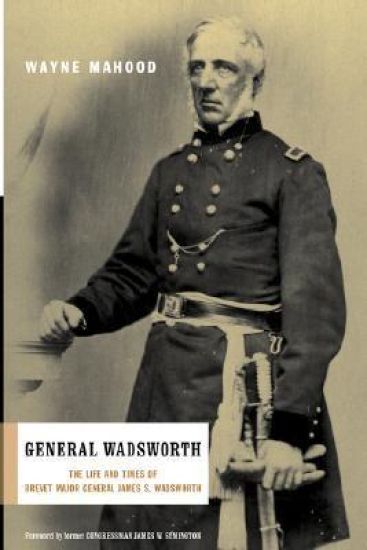
General Wadsworth

General Wadsworth

Wayne Mahood

Da Capo Press Inc
2003
sidottu
James S. Wadsworth was a successful lawyer and influential New York politician when the Civil War broke out. His wealth, strong anti-slavery views, and active support of President Lincoln made him a controversial public figure in the early war years. In 1863, he was given a field command and proved himself to be one of the Union's most able and daring commanders, although he died before the war ended. His battlefield boldness and righteous resolve to end slavery is, as former U.S. Congressman James W. Symington says, "a vivid reminder that our Civil War was, indeed, fought on moral grounds."
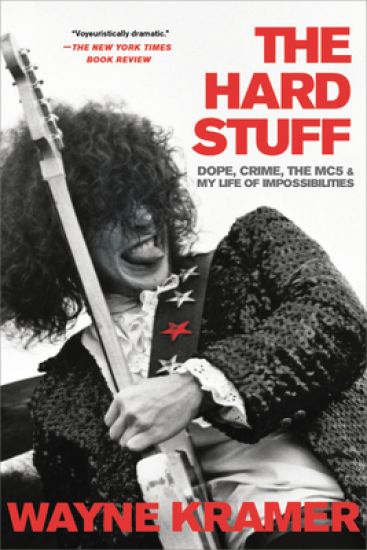
The Hard Stuff: Dope, Crime, the Mc5, and My Life of Impossibilities
The first memoir by Wayne Kramer, legendary guitarist and cofounder of quintessential Detroit proto-punk legends The MC5 "Voyeuristically dramatic."-THE NEW YORK TIMES BOOK REVIEW In January 1969, before the world heard a note of their music, the MC5 was on the cover of Rolling Stone. Led by legendary guitarist Wayne Kramer, the band was a reflection of the times: exciting, sexy, violent, chaotic, and even out of control. The missing link between free jazz and punk rock, the MC5 toured the country, played alongside music legends, and had a rabid following, their music acting as the soundtrack to the blossoming blue collar youth movement. Kramer wanted to redefine what a rock 'n' roll group was capable of, and though there was power in reaching for that, it was also a recipe for personal and professional disaster. The band recorded three major label albums but, by 1972-it was all over. Kramer's story is (literally) a revolutionary one, but it's also the deeply personal struggle of an addict and an artist, a rebel with a great tale to tell. From the glory days of Detroit to the junk-sick streets of the East Village, from Key West to Nashville and sunny L.A., in and out of prison and on and off of drugs, Kramer's is the classic journeyman narrative, but with a twist: he's here to remind us that revolution is always an option.
Systematic Theology Workbook: Study Questions and Practical Exercises for Learning Biblical Doctrine
An essential resource to support student's learning experience and enhance comprehension of systematic theology.This workbook accompanies the 2nd edition of Wayne Grudem's widely used Systematic Theology. Following the textbook's structure, it features review material and exercises for every chapter, and all major areas of Christian doctrine are covered, including: The Word of GodGodHumanityChrist and the Holy SpiritThe Application of RedemptionThe ChurchThe FutureSections in each workbook chapter include: Opening Prayer: oriented around the content of the chapter to help prepare reader's hearts as they get ready to study and reflect.Chapter Review: questions to help the reader identify and interact with key concepts.Thinking Critically: questions for readers to consider on how the content should influence their beliefs and actions.Personal Engagement: practical application questions that connect theology to daily life.The workbook further maintains the clear writing, friendly tone, and frequent applications to life found in the textbook. Students will benefit from this hands-on engagement with the important teachings in Systematic Theology.
Systematic Theology Pack, Second Edition: A Complete Introduction to Biblical Doctrine [With DVD]
Gain an In-Depth Understanding of Christian Theology The Systematic Theology Pack, Second Edition contains everything you need to develop a solid understanding of Christian theology, whether you are enrolled in a class or learning on your own.The Systematic Theology Pack, Second Edition includes: Systematic Theology, Second Edition, the most widely-used text of the last 25 years in its discipline has been thoroughly revised and expanded (all 57 chapters) for the first time while retaining the features that have made it the standard in its field: clear explanations, an emphasis on each doctrine's scriptural basis, and practical applications to daily lifeSystematic Theology Workbook, following the textbook's structure, it features review material and exercises for every chapter, and all major areas of Christian doctrineSystematic Theology Video Lectures, featuring a video lecture for each of the 57 chapters in the textbook, over eight and a half hours of video contentSystematic Theology Laminated Sheet, a quick reference guide to the central concepts in the textbookThe Systematic Theology Pack, Second Edition provides a complete introduction to biblical doctrine for students, independent learners, or anyone interested in learning Christian theology.A note on updates to the Systematic Theology, Second Edition textbook. With several hundred pages of new content, this new edition now includes the following distinctive features.Updated, fuller analysis of several recent controversies within evangelicalism, including the eternal relationship between the Father and the Son in the Trinity, the question of God's atemporal eternity, the role of women in the church, "seeker-sensitive" churches, miraculous gifts of the Holy Spirit, and contemporary worship musicNew, thoughtful critiques of open theism, the "new perspective on Paul," Molinism (or "middle knowledge"), "Free Grace" theology, and the preterist view of Christ's second comingCompletely revised, stronger chapter on the clarity of ScriptureCompletely revised, stronger chapter on creation and evolution (including a longer critique of theistic evolution)New discussion of how biblical inerrancy applies to some specific "problem verses" in the GospelsAdditional material respectfully explaining evangelical Protestant differences with Roman Catholicism, Protestant liberalism, and Mormonism.Completely updated bibliographiesAll Scripture quotations updated from RSV to ESVAn explanation of why monogenes in John 3:16 and elsewhere should be translated as "only begotten" rather than merely "only" (this is a change from the first edition)A contemporary worship song added at the end of each chapter (while retaining the traditional hymns as well)Numerous other updates and corrections