Human Trafficking: A Comprehensive Exploration into Modern Day Slavery examines the legal, socio-cultural, historical, and political aspects of human trafficking and modern-day slavery. While most texts only cover sex trafficking and labor trafficking, this text takes a more inclusive approach, provide coverage of what is currently known about organ trafficking, child marriage, and child soldiers as well. These topics are explored within the borders of the United States as well as across the world. The reality is that this problem is not limited to one country or, even, one continent. Technology and globalization have made this an international crisis that requires a collaborative and cooperative international response. The goal of this text is to provide an accurate understanding of all forms of human trafficking and current responses to this crime.
In an era of heightened partisanship and increased polarization, The Contemporary Congress offers a clear and concise introduction to legislative processes. Perfect as a brief core or supplementary text for undergraduate courses, Loomis and Schiller construct a comprehensive portrait of the U.S. Congress, from defining congressional structures and procedures, to outlining the process of elections, and analyzing presidential-congressional relations. The seventh edition focuses on two parallel trends: an increasingly partisan and polarized Congress, and a growing executive power. In addition, the authors make some early observations of relations between the Congress and the Trump Administration. New coverage includes the art of electioneering, the pressures of campaign fundraising, and updated policy goals of the political parties that shape the congressional agenda. From a late night deciding vote by Senator John McCain (R-AZ), to the rise and fall of Freedom Caucus member Representative Tim Huelskamp (R-KS), a new “Spotlight” feature provides brief case studies of decisions made by individual members to illustrate the constant balance that they must strike between their party and their constituents, and what happens when they get that balance wrong.
In The Mindful Way to Wellness Workbook, therapists Mari A. Lee, LMFT, and Wendy Quinton, LCSW offer a compassionate, research-based workbook for healing from sexual compulsivity, pornography addiction, betrayal trauma, love addiction, trauma bonding, substance abuse, grief, anger, and relational pain. Through a blend of relatable stories, educational insights, self-assessments, guided imagery scripts, mindfulness practices, somatic tools, and expressive art activities, this workbook supports your journey toward wellness. Each chapter offers encouraging guidance and practical steps to help you move through pain, loosen the grip of harmful patterns, and reconnect with your sense of wholeness. Whether you're a therapist seeking meaningful resources for your clients or an individual or couple navigating a path of recovery, The Mindful Way to Wellness Workbook is a trusted and healing companion-offering space for reflection, restoration, and lasting change.
**Selected for 2025 Doody’s Core Titles® with "Essential Purchase" designation in Fundamentals** Learn the concepts and skills and develop the clinical judgment you need to provide excellent nursing care! Fundamentals of Nursing, 12th Edition prepares you to succeed as a nurse by providing a solid foundation in critical thinking, clinical judgment, nursing theory, evidence-based practice, and person-centered care in all settings. With illustrated, step-by-step guidelines, this book makes it easy to learn important skills and procedures. Care plans are presented within a nursing process framework that is coordinated with clinical judgement, and case studies show how to apply concepts to nursing practice. From an expert author team led by Patricia Potter and Anne Perry, this bestselling nursing textbook helps you develop the understanding and clinical judgment you need to succeed in the classroom and in your career. UPDATED! Content reflects the latest evidence-based practice, including the most current information on infection control standards, oxygenation, technology in health care, and more UPDATED! More than 80 new photos and images present updated skills and represent the diversity of nurses and patients throughout UNIQUE! Critical Thinking section incorporates clinical judgment and critical thinking to help you develop these valuable skills. The unique critical thinking/clinical judgment model is visually depicted by a series of progressive images that demonstrate the application of the nursing process, critical thinking, and clinical judgment - and how they all tie together UNIQUE! Reflective Learning questions in every clinical chapter are associated with each of the six clinical judgment skills and coordinate directly with the case study presented in the care plan UNIQUE! Building Competency boxes in every chapter incorporate nursing competencies, e.g., person-centered care, safety, and evidence-based practice. Each box presents a clinical situation followed by several open-ended questions designed to help you understand and apply these core competencies UNIQUE! Caring for Patients with Chronic Illness chapter helps prepare you to address the unique health care needs of patients who have complex, long-term, chronic disease, who face the physical and emotional impacts of the illness, and the therapies used to treat it Evidence-Based Practice boxes reflect current research and include a PICOT question, a summary of the results of a research study, and the impact the study has made in nursing practice. Where applicable, these EBP boxes will focus on “Never Events” (those events that are completely preventable, dangerous to patients, and non-reimbursable) and new related research Case studies in all clinical chapters tie together the care plan, concept map, and reflective learning exercises Clear delegation coverage notes which skills can and cannot be delegated and indicate exactly which tasks to delegate. Many chapters incorporate delegation considerations into the chapter case study and there is also a delegation section in every skill and procedural guideline Planning and Outcomes Identification sections include sections on Outcomes, Setting Priorities, and Teamwork and Collaboration to help you plan and prioritize comprehensive patient care Teamwork and Collaboration headings highlight information to help you work effectively both within the nursing team and within the larger healthcare team, allowing you to make the best use of available healthcare resources to improve patient care Implementation sections include health promotion, acute care, and restorative and continuing care to prepare you for all levels of care in all settings Patient Teaching boxes help you plan effective teaching by first identifying an outcome, then developing strategies on how to teach, and finally implementing measures to evaluate learning Focus on Older Adult boxes highlight key aspects of nursing assessment and care for this population Cultural Care boxes summarize cultural considerations related to the chapter topic and provide practical guidelines for how to meet patients’ cultural needs and preferences Nursing Assessment Questions boxes help you learn to effectively phrase questions for patients More than 50 skills are generously illustrated in a two-column format that includes rationales for each step alongside clear, step-by-step instructions for providing safe nursing care. Rationales cite current evidence-based research Key terms at the beginning of each chapter help you learn the most important terminology for that area of content Five review questions for each chapter include answers both in the book and on the Evolve companion website (with rationales) Unexpected Outcomes and Related Interventions for skills alert you to possible problems and appropriate nursing action. More than 30 procedural guidelines provide streamlined, step-by-step instructions for performing very basic skills A consistent five-step nursing process framework for clinical chapters coordinates completely with the accompanying clinical judgment skills used for each step More than 20 concept maps visually demonstrate planning care for patients with multiple nursing diagnoses NOC outcomes, NIC interventions, and nursing diagnoses in care plans reflect the standard used by institutions nationwide More than 20 care plans demonstrate the application of the five-step nursing process to individual patient problems to help you understand how a plan is developed and how to evaluate care. Patients in the care plan extend to the Reflective Learning activities at the end of each clinical chapter Evidence-Based Practice chapter helps you understand how nursing research serves as the basis for determining best practice, and the critical importance of this continually evolving dynamic Safe Patient Handling Guidelines are included in the Patient Safety and Quality chapter Practical study tools on the Evolve companion website include skills video clips, skills checklists, printable key points, answers to the review questions in the book, a fluid & electrolytes tutorial, a concept map creator, an audio glossary, and more Key points are tied to the chapter objectives and neatly summarize the most important content for each chapter to help you review and evaluate your learning
Make this portable pocket reference your constant companion in the clinical setting! The Clinical Companion for Fundamentals of Nursing, 12th Edition, includes the hard-to-remember facts, lab values, and abbreviations that are essential to providing optimal nursing care. Organized by the major concepts and principles of a nursing fundamentals course, this text features a quick-access format with summary tables and bulleted lists. The Clinical Companion makes retrieving, reviewing, and retaining clinical facts and figures easier than ever! NEW! Completely updated content reflects the latest care standards throughout ENHANCED! Content on seizures, bleeding or hemorrhage, choking, confused patients, alcohol withdrawal, syncope, and medication is now easier to find in the Emergent Clinical Situations chapter Clinical Judgment chapter guides you through how to develop and apply clinical judgment skills in the clinical setting Body system assessment chapters help you learn to take a systematic and thorough approach to health assessment Detailed information on drug calculations, safety, compatibilities, conversions, administration, and more help you prevent medication errors and ensure safe practice Current guidelines for pressure ulcer prevention and care can now be referenced quickly while on the job Health care terminology section provides you with a better understanding of clinical terms as they are encountered Tabular, list, and outline content formats make information easy to find and review Small, portable size makes this resource easy to carry around during clinical practice Completely updated with the latest care standards throughout.
in the professional world as a starting point for collaboration; rather than leaving decisions to just one person, dissent offers the opportunity to rethink or reinvent an idea, leading, one hopes, to a better result. When dissensus occurs in a federal court, however, it raises the question of whether this difference of opinion maintains the integrity of the judiciary or undermines its legitimacy. In Judging on a Collegial Court: Influences on Federal Appellate Decision Making, Virginia Hettinger, Stefanie Lindquist, and Wendy Martinek examine the dynamic that gives rise to such dissensus in federal appeals courts, revealing how the appellate process shapes the content and the consistency of the law.The authors examine horizontal dissensus in the minority of cases in which there are dissenting or concurring--as opposed to unanimous--opinions. Primarily investigating why judges on the appeals courts agree or disagree with one another regarding the outcomes of the cases before them, the authors also examine vertical dissensus and ask why judges affirm or reverse lower court judges whose cases are decided on appeal. Focusing on the behavioral aspects of disagreement within a panel and between the levels of the federal judicial hierarchy, the authors reveal the impact of individual attitudes or preferences on judicial decision-making, and hence on political divisions in the broader society.
In a very short time, LGBTQ issues have moved from the margins to the mainstream of American political life. The 1969 Stonewall Riots are commonly considered the start of the modern gay rights movement in the United States and within a few short years the number of gay groups and gay magazines precipitously increased. As gay civil society expanded, homosexuality transformed from a social identity to a political identity. On the basis of that identity, gay and lesbian activists engaged the political system to secure social and political rights in direct competition with religious traditionalism. This book investigates the development and the political implications of the LGBTQ rights movement in the United States. Oldmixon, Blackstone, and Watson aim to understand and explain the role of this movement in pluralistic, contemporary political life in the United States. Highlighting the cultural narrative, the book considers how the rights movement emerged and developed historically, at the mass level, and in the context of political institutions. First examining the science of sexuality, the book then discusses the development of an equal rights movement and the public’s attitudes on gays and lesbians. LGBTQ voting and representation, policies that involve gay rights, and a comparative perspective are also addressed. The book makes sure to not only examine lesbian, gay, and bisexual rights, but to also include discussion of transgender rights and the broader queer community. Queer Politics is a comprehensive, much-needed text for LGBTQ politics classes. Using the lens of cultural theory, the book examines how exactly such a marginalized group moved from the fringes to the mainstream of American political life.
In a very short time, LGBTQ issues have moved from the margins to the mainstream of American political life. The 1969 Stonewall Riots are commonly considered the start of the modern gay rights movement in the United States and within a few short years the number of gay groups and gay magazines precipitously increased. As gay civil society expanded, homosexuality transformed from a social identity to a political identity. On the basis of that identity, gay and lesbian activists engaged the political system to secure social and political rights in direct competition with religious traditionalism. This book investigates the development and the political implications of the LGBTQ rights movement in the United States. Oldmixon, Blackstone, and Watson aim to understand and explain the role of this movement in pluralistic, contemporary political life in the United States. Highlighting the cultural narrative, the book considers how the rights movement emerged and developed historically, at the mass level, and in the context of political institutions. First examining the science of sexuality, the book then discusses the development of an equal rights movement and the public’s attitudes on gays and lesbians. LGBTQ voting and representation, policies that involve gay rights, and a comparative perspective are also addressed. The book makes sure to not only examine lesbian, gay, and bisexual rights, but to also include discussion of transgender rights and the broader queer community. Queer Politics is a comprehensive, much-needed text for LGBTQ politics classes. Using the lens of cultural theory, the book examines how exactly such a marginalized group moved from the fringes to the mainstream of American political life.
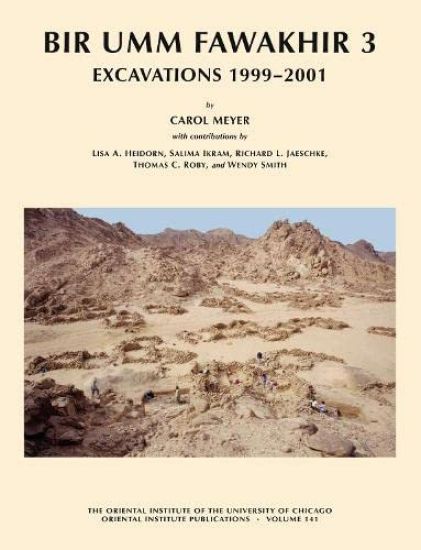
Bir Umm Fawakhir 3 is the last of the final reports on the archaeological surveys and excavations at the Byzantine site of Bir Umm Fawakhir in the central Eastern Desert of Egypt; it remains the only intensively studied ancient Egyptian gold-mining operation, and one of very few completely mapped towns of the era. Along with other recent excavations and surveys, it demonstrates the Byzantine empire's continuing activities in the Eastern Desert, not abandonment, as had long been believed. Four survey seasons, in 1992, 1993, 1996, and 1997, succeeded in dating the site to the fifth- and sixth-century Coptic/Byzantine period, mapping in detail the main settlement and one of the fourteen outlying settlements, and determining that it was a gold-mining operation. The goals of the 1999 excavations and the 2001 study season reported in this volume were to answer questions about the site and its occupants that surveys alone could not address, primarily the history of occupation of the site and the status of its occupants. The 1999 excavations of a sample of the houses and middens were undertaken to provide more information about the occupants and their well-being or lack thereof. Two houses, two middens, and one single-room outbuilding were excavated. Like the earlier Roman-period stone quarries in the desert, the miners seem to have worked intermittently and abandoned, or nearly so, the sitebetween mining campaigns. The pottery study extends the corpora published with previous seasons, and the chapter on small finds discusses the wine jar dockets (dipinti), coins, jewelry, emeralds, metal, glass, and other objects. Analysis of the faunal material during the 2001 study season supports the picture of a town well provided with meat, not only sheep and goats but also an unusual amount of beef. The volume is rounded out by an archaeobotanical study and the conservators' reports, including the construction of a barricade at the entrance to the site to help preserve it. A final chapter summarizes what can now be said about life and work at ancient Bir Umm Fawakhir.
This book addresses an international human rights issue: women's economic enfranchisement, specifically, their equal access to property using Akan widows from Ghana as a case study. The insidious effects of European colonialism contribute to the devaluation of Akan women beginning with gender roles imposed in childhood and continuing through inheritance practices that leave widows destitute. A close examination of Akan widows in their everyday, sociocultural contexts through ethnographic methods reveals the impact of property rights violations not only on the economic conditions of women and their children but also their psychosocial, spiritual, and moral well-being. Despite progressive national laws, many Akan widows lose access to the homes and farms they shared with their husbands, leaving them and their children destitute. According to customary law, those properties belong not to individuals, but to the husband's maternal family line of which his wife and children are not a part. Yet the Akan people are not without compassion, and Akan women without resilience. Some community leaders and in-laws do assist the widow and her children. In addition, some Akan widows do resist, persevere, and even thrive. Some gain peace through spiritual practices, and stability through innovative economic ventures with other widows and allies including international social workers. By deepening our understanding of the impact of property rights violations on women's lives as well as the ways in which some communities support them, and they actively resist such domination, we can extend the range of possible remedies to those who remain mired in challenges and in need of support.
This catalogue documents an exhibition at the Kelsey Museum of Archaeology of watercolor paintings by American artist Wendy Artin and selected objects from the Museum's permanent collections. Wendy Artin has been working for over a decade on a series of watercolors of ancient Greek and Roman sculptures and related subjects. She is thus a fresh presence in a long line of artists who draw inspiration from antiquity. Indeed, this tradition has very ancient precedents. The exhibition and catalogue place a selection of 47 of Artin's paintings--including landscapes and figure paintings as well as images of ancient sculptures--in dialogue with 14 objects drawn from the Kelsey's collections, among them works of Greek art inspired by Egyptian precedents, examples of Roman imperial portraits that were copied in numerous media for circulation around the empire, and reproductions of the same figure types featured in some of Artin's paintings (such as Aphrodite Rising from the Sea). Wendy Artin's masterful watercolors offer new and arresting ways of looking at ancient sculptures and buildings--and of remembering the classical past. Includes 81 colour illustrations.