Kirjahaku
Etsi kirjoja tekijän nimen, kirjan nimen tai ISBN:n perusteella.
1000 tulosta hakusanalla Wendy Howles
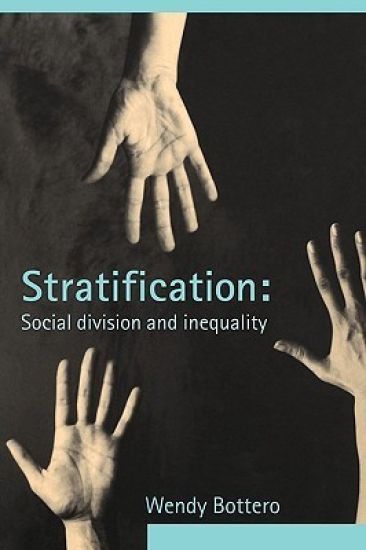
Offering a fresh and exciting new perspective on differentiation and inequality, this absorbing book investigates how our most personal choices (of sexual partners, friends, consumption items and lifestyle) are influenced by hierarchy and social difference. Exploring the topics of assortative mating; social capital; friendship networks and cultural identity; the book examines how hierarchy affects our tastes and leisure time activities, and who we choose (and hang on to) as our friends and partners. This book:* introduces debates on stratification by exploring its effect on everyday social relations* relates class inequalities to broader processes of social division and cultural differentiation, exploring the associational and cultural aspects of hierarchy* explores how groups draw on social, economic and cultural resources, using cultural 'cues', to admit some and exclude others from their social circle* explores new theoretical approaches to stratification: drawing on cultural theories of class, social interaction approaches, and research on differential associationThe book has a novel and fresh new way of looking at a well-established area in sociology - social stratification.
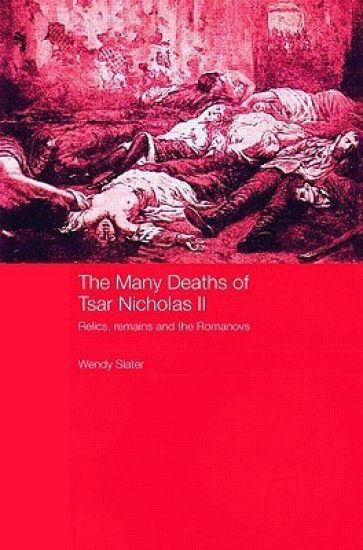
How did Nicholas II, Russia’s last Tsar, meet his death? Shot point blank in a bungled execution by radical Bolsheviks in the Urals, Nicholas and his family disappeared from history in the Soviet era. But in the 1970s, a local geologist and a crime fiction writer discovered the location of their clandestine mass grave, and secretly removed three skulls, before reburying them, afraid of the consequences of their find. Yet the history of Nicholas’ execution and the discovery of his remains are not the only stories connected with the death of the last Tsar. This book recounts the horrific details of his death and the thrilling discovery of the bones, and also investigates the alternative narratives that have grown up around these events. Stories include the contention that the Tsar’s killing was a Jewish plot, in which Nicholas’ severed head was taken to Moscow as proof of his death; tales of would-be survivors of the execution, self-confessed children of the Tsar claiming their true identity; and accounts of miracles performed by Nicholas, who was made a saint by the Russian church in 2000. Not least among these alternative narratives is the romanticization of the Romanovs, epitomized by the numerous photographs of the family released from the Russian archives.
In August 1904 Sir Francis Younghusband's invasion force reached the forbidden city of Lhasa. The British invasion of Tibet in 1903 acted as a catalyst for change in a world transformed by revolution, war and the rise of a new order. Using unofficial government sources, private papers and the diaries and memoirs of those involved, this book examines the impact of Younghusband's invasion and its aftermath inside Tibet.
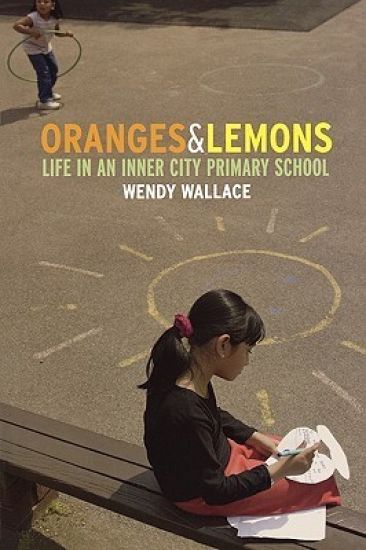
This warts-and-all look inside an inner city primary school is an intimate and charming account of how people at Edith Neville primary school approach issues that face urban schools everywhere. The author's insightful journalistic eye focuses on how individuals cope with government initiatives, the needs of the pupils and the community at large.Focusing on the progress of individual children, in some cases from the time they start nursery, this book illuminates contemporary urban school life and provides a human account of major and minor successes, and failures, over a twelve-month period in a passionate but complex educational community. The book highlights how:the school community works to give equal chances to all childrenstaff strive to include children with special needs the school community enlist the support of parents who mistrust the systemstaff manage distressed and distressing behaviour.In the background the school's managers endeavour to meet targets and inspections, while containing teacher stress and retaining a vision of the broader purpose of education.
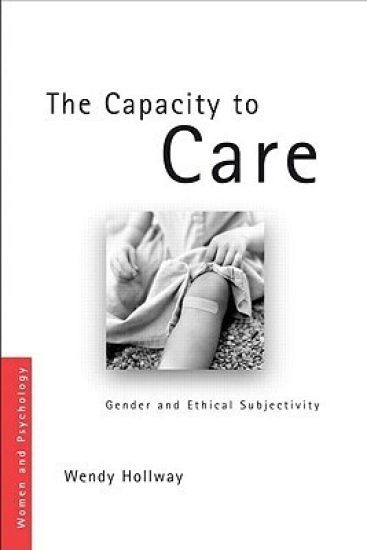
Wendy Hollway explores a subject that is largely absent from the topical literature on care. Humans are not born with a capacity to care, and this volume explores how this capacity is achieved through the experiences of primary care, gender development and later, parenting.In this book, the author addresses the assumption that the capacity to care is innate. She argues that key processes in the early development of babies and young children create the capability for individuals to care, with a focus on the role of intersubjective experience and parent-child relations. The Capacity to Care also explores the controversial belief that women are better at caring than men and questions whether this is likely to change with contemporary shifts in parenting and gender relations. Similarly, the sensitive domain of the quality of care and how to consider whether care has broken down are also debated, alongside a consideration of what constitutes a ‘good enough’ family.The Capacity to Care provides a unique theorization of the nature of selfhood, drawing on developmental and object relations psychoanalysis, as well as philosophical and feminist literatures. It will be of relevance to social scientists studying gender development, gender relations and the family as well as those interested in the ethics of care debate.
How did Nicholas II, Russia’s last Tsar, meet his death? Shot point blank in a bungled execution by radical Bolsheviks in the Urals, Nicholas and his family disappeared from history in the Soviet era. But in the 1970s, a local geologist and a crime fiction writer discovered the location of their clandestine mass grave, and secretly removed three skulls, before reburying them, afraid of the consequences of their find. Yet the history of Nicholas’ execution and the discovery of his remains are not the only stories connected with the death of the last Tsar. This book recounts the horrific details of his death and the thrilling discovery of the bones, and also investigates the alternative narratives that have grown up around these events. Stories include the contention that the Tsar’s killing was a Jewish plot, in which Nicholas’ severed head was taken to Moscow as proof of his death; tales of would-be survivors of the execution, self-confessed children of the Tsar claiming their true identity; and accounts of miracles performed by Nicholas, who was made a saint by the Russian church in 2000. Not least among these alternative narratives is the romanticization of the Romanovs, epitomized by the numerous photographs of the family released from the Russian archives.
Written for Higher Education educators, managers and policy-makers, Plagiarism, the Internet and Student Learning combines theoretical understandings with a practical model of plagiarism and aims to explain why and how plagiarism developed. It offers a new way to conceptualize plagiarism and provides a framework for professionals dealing with plagiarism in higher education.Sutherland-Smith presents a model of plagiarism, called the plagiarism continuum, which usefully informs discussion and direction of plagiarism management in most educational settings. The model was developed from a cross-disciplinary examination of plagiarism with a particular focus on understanding how educators and students perceive and respond to issues of plagiarism. The evolution of plagiarism, from its birth in Law, to a global issue, poses challenges to international educators in diverse cultural settings. The case studies included are the voices of educators and students discussing the complexity of plagiarism in policy and practice, as well as the tensions between institutional and individual responses. A review of international studies plus qualitative empirical research on plagiarism, conducted in Australia between 2004-2006, explain why it has emerged as a major issue. The book examines current teaching approaches in light of issues surrounding plagiarism, particularly Internet plagiarism. The model affords insight into ways in which teaching and learning approaches can be enhanced to cope with the ever-changing face of plagiarism. This book challenges Higher Education educators, managers and policy-makers to examine their own beliefs and practices in managing the phenomenon of plagiarism in academic writing.
Effective teaching for gifted and talented students is high on the agenda of school systems across the world. Written by leading international scholars in the field, Effective Teaching in Gifted Education presents a thoroughly enlightening analysis of the practice of schools judged to be outstanding in their effective teaching of gifted and talented students.Eight in-depth case studies draw upon the voices of school leaders, classroom teachers and students to illustrate and explore Gifted and Talented provision across a range of educational settings and circumstances, including: differentiated teaching and learning in an urban City Technology Collegegifted education in an inner-city, multi-ethnic school and a rural comprehensive schoolschool ethos, student voice and motivation in a girls' grammar schoolcurricular depth, enrichment and interactive teaching in a boys' grammar schoollearning in a residential summer school for gifted students.Providing a rich evidence base, these and other examples place best practice within a framework of theory and policy. School leaders, Gifted and Talented Co-ordinators and classroom practitioners reading this book will understand the principles behind the practice, as well as how and why to apply the practice in their own schools.This distinctive book will also be immensely useful to all those involved with Gifted and Talented education programmes and schemes and those following Continuing Professional Development and school leadership programmes, as well as NQTs, M-level students and researchers in education.
The Struggle for Jerusalem's Holy Places
Wendy Pullan; Maximilian Sternberg; Lefkos Kyriacou; Craig Larkin; Michael Dumper
Routledge
2013
sidottu
The Struggle for Jerusalem’s Holy Places investigates the role of architecture and urban identity in relation to the political economy of the city and its wider state context seen through the lens of the holy places. Reflecting the broad disciplinary backgrounds of the authors, this book provides perspectives from architecture, urbanism, and politics, and provides in-depth investigations of historical, ethnographic and policy-related case studies. The research is substantiated by fieldwork carried out in Jerusalem over the past ten years as part of the ESRC Large Grants project ‘Conflict in Cities’. By analysing new dynamics of radicalisation through land seizure, the politicisation of parklands and tourism, the strategic manipulation of archaeological and historical narratives and material culture, and through examination of general appropriation of Jerusalem’s varied rituals, memories and symbolism for factional uses, the book reveals how possibilities of co- existence are seriously threatened in Jerusalem. Shedding new light on the key role played by everyday urban life and its spatial settings for any future political agreements about the city and its religious sites, this book is a useful reference work for students and scholars of Middle East Studies, Architecture, Religion and Urban Studies.
The Struggle for Jerusalem's Holy Places
Wendy Pullan; Maximilian Sternberg; Lefkos Kyriacou; Craig Larkin; Michael Dumper
Routledge
2013
nidottu
The Struggle for Jerusalem’s Holy Places investigates the role of architecture and urban identity in relation to the political economy of the city and its wider state context seen through the lens of the holy places. Reflecting the broad disciplinary backgrounds of the authors, this book provides perspectives from architecture, urbanism, and politics, and provides in-depth investigations of historical, ethnographic and policy-related case studies. The research is substantiated by fieldwork carried out in Jerusalem over the past ten years as part of the ESRC Large Grants project ‘Conflict in Cities’. By analysing new dynamics of radicalisation through land seizure, the politicisation of parklands and tourism, the strategic manipulation of archaeological and historical narratives and material culture, and through examination of general appropriation of Jerusalem’s varied rituals, memories and symbolism for factional uses, the book reveals how possibilities of co- existence are seriously threatened in Jerusalem. Shedding new light on the key role played by everyday urban life and its spatial settings for any future political agreements about the city and its religious sites, this book is a useful reference work for students and scholars of Middle East Studies, Architecture, Religion and Urban Studies.
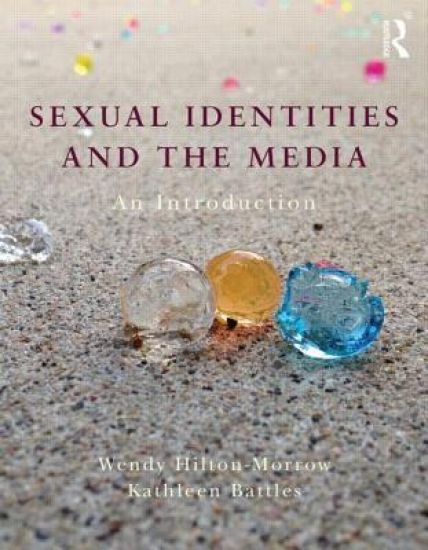
Sexual Identities and the Media encourages students to examine media as a site of negotiation for how people make sense of their own and others’ sexual identities. Taking a critical/cultural approach, Wendy Hilton-Morrow and Kathleen Battles weave together theory, synthesis of existing research, and original analysis of contemporary media examples in order to explore key areas of debate, including: an historical context for contemporary GLBTQ representations; the advantages and limitations of media visibility, including a discussion of the strengths and limitations of stereotype research and the quest for "positive" representations; the role of consumer culture in constructing GLBTQ identities; strategies of mainstream media resistance by GLBTQ community members, including oppositional/queer reading strategies and the production of media products by and for the GLBTQ community; the complexities of comedy as a popular narrative device in GLBTQ portrayals; the closet as a structuring metaphor in both GLBTQ identities and engagement with media; media representations of GLBTQ bodies as sites of non-normative desires and gender identities.Featuring an enormous range of discussion questions and case studies—from celebrity coming-out narratives, transgender models, and slash fiction writers to Glee and Modern Family—this textbook offers a timely, informative, and demystifying introduction to this vital intersection in contemporary culture.
The SEN Handbook for Trainee Teachers, NQTs and Teaching Assistants
Wendy Spooner
Routledge
2010
nidottu
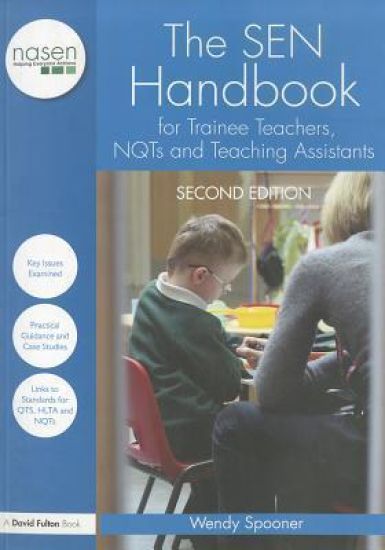
Accessibly written with the needs of trainee teachers and Higher Level Teaching Assistants in mind, this new edition of Wendy Spooner’s popular SEN Handbook provides an up-to-the-minute introduction to key issues. Student teachers and teaching assistants will find the case studies and vignettes invaluable as they bring these issues to life, and present important opportunities for reflection on how these issues relate to practice. Core standards for teachers, QTS and HLTA qualifications are highlighted enabling the reader to understand exactly what is expected of them – and how to achieve it. Coverage includes:self-assessment of your own attitudes towards SEN issueslegal definitions and current legislation and guidanceidentification, assessment and support for children with SENs across the Key Stagesissues of inclusion and exclusiona range of teaching approaches and strategiesschool-based training and SEN issues that may arisefurther reading, websites and resources lists. Practical and comprehensive, this is an invaluable resource for all teaching professionals working towards providing inclusive learning environments.
Understanding the Te Whariki Approach
Wendy Lee; Margaret Carr; Brenda Soutar; Linda Mitchell
Routledge
2012
sidottu
Understanding the Te Whariki Approach is a much–needed source of information for those wishing to extend and consolidate their understanding of the Te Whariki approach, introducing the reader to an innovative bicultural curriculum developed for early childhood services in New Zealand. It will enable the reader to analyse the essential elements of this approach to early childhood and its relationship to quality early years practice.Providing students and practitioners with the relevant information about a key pedagogical influence on high quality early years practice in the United Kingdom, the book explores all areas of the curriculum, emphasising: strong curriculum connections to families and the wider community; a view of teaching and learning that focuses on responsive and reciprocal relationships with people, places and things; a view of curriculum content as cross-disciplinary and multi-modal; the aspirations for children to grow up as competent and confident learners and communicators, healthy in mind, body, and spirit, secure in their sense of belonging and in the knowledge that they make a valued contribution to society; a bicultural framework in which indigenous voices have a central place.Written to support the work of all those in the field of early years education and childcare, this is a vital text for students, early years and childcare practitioners, teachers, early years professionals, children’s centre professionals, lecturers, advisory teachers, head teachers and setting managers.
Understanding the Te Whariki Approach
Wendy Lee; Margaret Carr; Brenda Soutar; Linda Mitchell
Routledge
2012
nidottu
Understanding the Te Whariki Approach is a much–needed source of information for those wishing to extend and consolidate their understanding of the Te Whariki approach, introducing the reader to an innovative bicultural curriculum developed for early childhood services in New Zealand. It will enable the reader to analyse the essential elements of this approach to early childhood and its relationship to quality early years practice.Providing students and practitioners with the relevant information about a key pedagogical influence on high quality early years practice in the United Kingdom, the book explores all areas of the curriculum, emphasising: strong curriculum connections to families and the wider community; a view of teaching and learning that focuses on responsive and reciprocal relationships with people, places and things; a view of curriculum content as cross-disciplinary and multi-modal; the aspirations for children to grow up as competent and confident learners and communicators, healthy in mind, body, and spirit, secure in their sense of belonging and in the knowledge that they make a valued contribution to society; a bicultural framework in which indigenous voices have a central place.Written to support the work of all those in the field of early years education and childcare, this is a vital text for students, early years and childcare practitioners, teachers, early years professionals, children’s centre professionals, lecturers, advisory teachers, head teachers and setting managers.
In August 1904 Sir Francis Younghusband's invasion force reached the forbidden city of Lhasa. The British invasion of Tibet in 1903 acted as a catalyst for change in a world transformed by revolution, war and the rise of a new order. Using unofficial government sources, private papers and the diaries and memoirs of those involved, this book examines the impact of Younghusband's invasion and its aftermath inside Tibet.