
Kirjahaku
Etsi kirjoja tekijän nimen, kirjan nimen tai ISBN:n perusteella.
1000 tulosta hakusanalla William L Perry
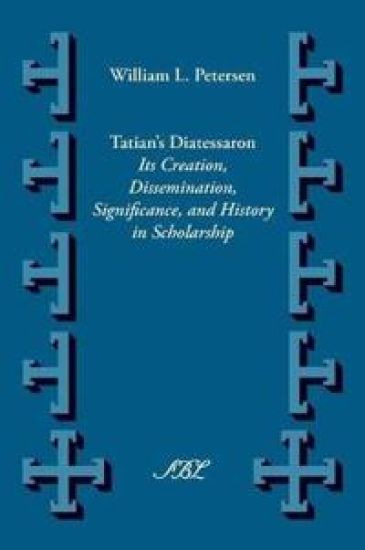


Did I Ever Tell You about the Whale? or Measuring Technology Maturity
William L. Nolte; James W. Bilbro
Information Age Publishing
2008
nidottu
Technology maturity: What is it, and why is it important?For more than ten years, the Government Accountability Office (GAO) has criticized federal agencies for a history of cost and schedule overruns on a significant portion of their procurement programs. GAO has repeatedly reported that the use of immature technologies in programs is a primary cause for these overruns. In spite of these repeated reports, the problems in government procurement have not improved. In fact, recent reports indicate that the problems are getting worse.One cause of this worsening situation might be that, while GAO identified lack of technology maturity as a problem, they did not tell how to measure technology maturity, or conversely, its lack.This groundbreaking work attempts to fill this gap by examining the current state of technology maturity measurement, pointing out strengths and weaknesses of available measures, and proposing a complete technology maturity assessment as a potential solution. The book also includes a discussion of risk during technology development.
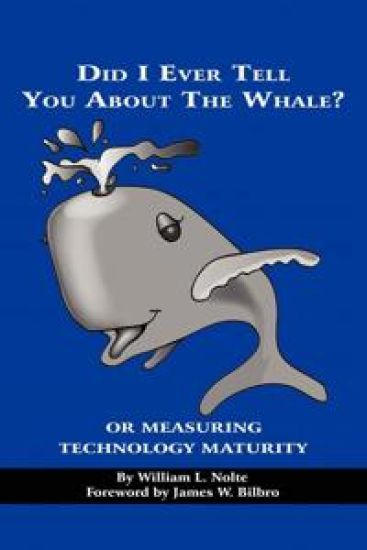
Did I Ever Tell You about the Whale? or Measuring Technology Maturity
William L. Nolte; James W. Bilbro
Information Age Publishing
2008
sidottu
Technology maturity: What is it, and why is it important?For more than ten years, the Government Accountability Office (GAO) has criticized federal agencies for a history of cost and schedule overruns on a significant portion of their procurement programs. GAO has repeatedly reported that the use of immature technologies in programs is a primary cause for these overruns. In spite of these repeated reports, the problems in government procurement have not improved. In fact, recent reports indicate that the problems are getting worse.One cause of this worsening situation might be that, while GAO identified lack of technology maturity as a problem, they did not tell how to measure technology maturity, or conversely, its lack.This groundbreaking work attempts to fill this gap by examining the current state of technology maturity measurement, pointing out strengths and weaknesses of available measures, and proposing a complete technology maturity assessment as a potential solution. The book also includes a discussion of risk during technology development.

Deepwater Petroleum Exploration & Production
William L. Leffler; Gordon Sterling; Richard Pattarozzi
PennWell Books
2011
sidottu
The new second edition of this authoritative book has retained all the virtues of the best-selling original, explaining the unique challenges of oil and gas exploration and production in the world's deepwater provinces. New chapters on geology and geophysics, rigs, and service vehicles are included, and the engineering and scientific schemes used in deepwater are covered in greater detail. Case studies in several chapters give practical examples, while the final chapter presents the latest technology employed in a ""third wave"" of industry evolution. Contents: Foreword IntroductionA century getting readyLetting go of the pastGeology and geophysicsExploring the deepwaterDrilling rigsDrilling and completing the wellDevelopment systems Fixed structuresFloating productions systemsSubsea systemsTopsidesPipelines, flowlines, and risersOffshore support vesselsTechnology and the third wave

For 45 years, William Leffler's Petroleum Refining in Nontechnical Language has been the go-to best seller for anyone needing to know the fundamentals of refining. Fluid prose, easy-to-understand graphics, and helpful analogies (like the "beer bottle principle") make the refining processing schemes clear. Each chapter was carefully written in nontechnical language to give the reader a basic understanding of the refining industry. The book can be used for self-study, as a classroom textbook, or as a quick reference.As always, Leffler's classic unit-by-unit description follows the oil molecules from the oil patch through the refinery to the consumer. In this edition, the industry's technological progress is brought up to date. In addition, Leffler adds a new chapter on the impact of hydraulic fracking on oil price setting in refining markets and another on competitive positioning.

A comprehensive overview of NGLs from production in the oil patch to consumption in the fuel and petrochemical industries. Leffler covers everything from gas plants, logistics, storage and refinery operations to the chemistry necessary to have a full understanding of the whole value chain.
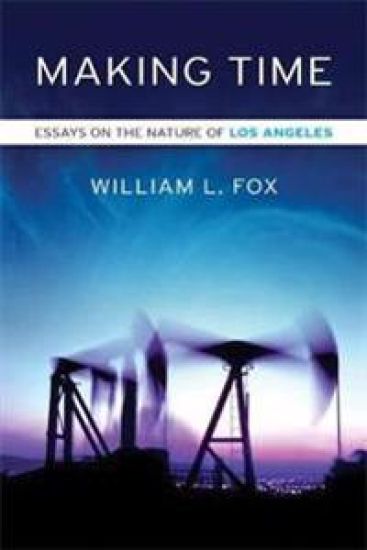
William L. Fox is a longtime explorer of cognition and landscape  the notion of what makes a space into a place. In this book he turns his gaze on Los Angeles, a city dominated by the movie industry, which specializes in bringing places from far away in time into what we experience as here and now  making time, in essence. Time, Fox tells us, is the most invisible nature of all,  its effects are always and everywhere around us."The five essays of this collection take us to the Le Brea Tar Pits and local oilfields, the telescopes and telecommunication towers of Mt. Wilson, massive landfills, the Forest Lawn Memorial and Griffith parks, a Hollywood special effects firm, and the Jet Propulsion Laboratory. All of these facilities are devoted to manipulating time on our behalf, be it how we represent prehistory, attempt to maintain an identity after death, or make movies on Mars.A master of combining science, history, and his own experiences into a riveting read, Fox will make you look at L.A.  and any urban landscape  in an entirely new way.


Abba Isn't Daddy and Other Biblical Surprises: What Catholics Really Need to Know about Scripture Study
William L. Burton O. F. M.
AVE MARIA PRESS
2019
nidottu
Fr. William L. Burton, O.F.M., doesn't want you to be intimidated by studying the Bible. In fact, as a scripture scholar, he believes reading God's Word is not only educational but also fun and entertaining. "The Bible is filled with surprises " he says.In Abba Isn't Daddy and Other Biblical Surprises, Burton answers a number of fascinating questions that help you become more familiar with the Bible and your Catholic faith.Have you ever wondered whether "Christ" is Jesus' last name?Did you know that when Jesus called God "Abba" he didn't really mean the familiar "Daddy" as you may have been taught?Could the Our Father have originally been a Jewish prayer?Burton answers these questions and many others in Abba Isn't Daddy and Other Biblical Surprises: What Catholics Really Need to Know about Scripture Study. The book will satisfy your curiosity about biblical subjects you've heard of and passages you've wondered about but never really pondered deeply nor understood.Burton, a renowned scripture, introduces you to basic principles of scripture study and aids in your exploration of intriguing questions about the life of Jesus.In part 1, Burton examines the history of the Bible, tools for scripture study, and the importance of archaeological, cultural, and linguistic discoveries for understanding the Bible. He also offers a fascinating explanation of how the geography of Israel played a crucial role in the Bible's content and development.In part 2, Burton addresses interesting questions related to the origin and meaning of topics in the New Testament.Abba Isn't Daddy and Other Biblical Surprises is a perfect resource to encourage you to learn the principles of scripture study and undertake a deeper reading of the Bible.

This title offers new understanding of fire in the Rockies from a landscape-scale, multi-century perspective. "Fire Ecology in Rocky Mountain Landscapes" brings a century of scientific research to bear on improving the relationship between people and fire. In recent years, some scientists have argued that current patterns of fire are significantly different from historical patterns, and that landscapes should be managed with an eye toward re-establishing past fire regimes. At the policy level, state and federal agencies have focused on fuel reduction and fire suppression as a means of controlling fire. Geographer William L. Baker takes a different view, making the case that the available scientific data show that infrequent episodes of large fires followed by long interludes with few fires led to naturally fluctuating landscapes, and that the best approach is not to try to change or control fire but to learn to live with it. In "Fire Ecology in Rocky Mountain Landscapes", Baker reviews functional traits and responses of plants and animals to fire at the landscape scale; explains how scientists reconstruct the history of fire in landscapes; elaborates on the particulars of fire under the historical range of variability in the Rockies; and, considers the role of Euro-Americans in creating the landscapes and fire situations of today. In the end, the author argues that the most effective action is to rapidly limit and redesign people-nature interfaces to withstand fire, which he believes can be done in ways that are immediately beneficial to both nature and communities.
This title offers new understanding of fire in the Rockies from a landscape-scale, multi-century perspective. "Fire Ecology in Rocky Mountain Landscapes" brings a century of scientific research to bear on improving the relationship between people and fire. In recent years, some scientists have argued that current patterns of fire are significantly different from historical patterns, and that landscapes should be managed with an eye toward re-establishing past fire regimes. At the policy level, state and federal agencies have focused on fuel reduction and fire suppression as a means of controlling fire. Geographer William L. Baker takes a different view, making the case that the available scientific data show that infrequent episodes of large fires followed by long interludes with few fires led to naturally fluctuating landscapes, and that the best approach is not to try to change or control fire but to learn to live with it. In "Fire Ecology in Rocky Mountain Landscapes", Baker reviews functional traits and responses of plants and animals to fire at the landscape scale; explains how scientists reconstruct the history of fire in landscapes; elaborates on the particulars of fire under the historical range of variability in the Rockies; and, considers the role of Euro-Americans in creating the landscapes and fire situations of today. In the end, the author argues that the most effective action is to rapidly limit and redesign people-nature interfaces to withstand fire, which he believes can be done in ways that are immediately beneficial to both nature and communities.


William Jackson bestows a rich collection that presents the depth of American generosity. Drawing upon an abundant variety of genres--myths, proverbs, poems, letters, short stories, news stories, folktales, sermons, and essays--this interesting and useful collection documents the religious dimensions of American philanthropy. The Wisdom of Generosity not only chronicles the manifestations of philanthropy but also reveals philanthropy's integral connection with American history and how Americans are still striving to fulfill their original promises. This Reader offers classic yet fresh resources for reflecting on the heritage of American giving.
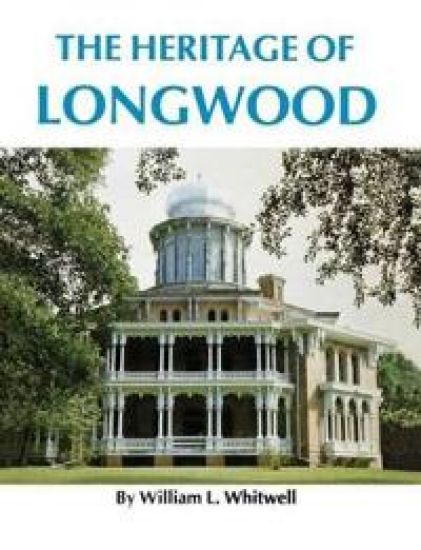
Longwood in Natchez, Mississippi, is a celebration of American eccentricity. Dr. Haller Nutt, who made a fortune in cotton during the pre-Civil War boom, wanted a home that would be different, one with ""character."" His dream was romantic--to evoke past cultures by using the best from any era.A Philadelphia architect, Samuel Sloan, published a work in 1851 called The Model Architect which featured an ""Oriental Villa"" in octagonal form with a Byzantine-Moorish dome on top. Using this design, Sloan set about to create a magnificent mansion for Nutt. In April 1861, Nutt's dreams were smashed by the Civil War. Construction on the mansion came to a halt as the northern workers abruptly dropped their tools and returned to their homes. Many of the tools are still in the unfinished interior exactly as they were left. Local laborers completed the basement portion of Longwood. It was here the Nutt family lived while the Civil War swirled across the South. Dr. Nutt died in 1864.Seemingly lost from reality, today Longwood is the picturesque shell of one of America's most bizarre houses--a wonderful example of architectural folly and nineteenth-century mentality.

The Insanity Defense and the Mad Murderess of Shaker Heights
William L. Tabac
Kent State University Press
2018
nidottu
They have no witnesses. They have no case. With this blunt observation, Mariann Colby—an attractive, church-going Shaker Heights, Ohio, mother and housewife—bet a defense psychiatrist that she would not be convicted of murder. A lack of witnesses was not the only problem that would confront the State of Ohio in 1966, which would seek to prosecute her for shooting to death Cremer Young Jr., her son’s nine-year-old playmate: Colby had deftly cleaned up after herself by hiding the child’s body miles from her home and concealing the weapon. Thus, this “highly intelligent” woman, as she would be described at her trial, had hedged a little on her wager. Not only were there no witnesses to the crime, but there was not a shred of physical evidence to pin the slaying on her. Under the usual forensic standards, her wager was spot on; the probabilities were that she would get away with it. But as the Shaker Heights police found themselves stymied by an investigation that was going nowhere, Mariann Colby upped the ante a bit. Under intense questioning, she broke down, claiming the gun had accidentally discharged. The state thought it had its capital murder case, but Mariann Colby’s bet against it would be right on the money.As her trial unfolds in the book, the imprecision of her insanity defense confounds the judges, and psychiatrists disagree about her diagnosis. To make matters worse, the panel of judges that initially tried Colby was so confused by what they’d heard that they did not reach a decision consistent with the law of the state. This led to a second trial and more conflicting psychiatric opinions, another controversial judgment, and clashing trial outcomes.After reading The Insanity Defense and the Mad Murderess of Shaker Heights, readers—and the many childhood friends of the slain boy whose painful reminiscences are set forth in the book—will contemplate whether Mariann Colby did indeed get away with murder. In addition, those interested in legal history will find much of value in Tabac’s discussions of the case and its use of an insanity defense strategy.

An Administrator's Guide to Better Teacher Mentoring
William L. Fibkins
Rowman Littlefield Education
2011
sidottu
This book address a major gap in the current mentoring programs at the secondary level. Staff development resources are often concentrated on helping new teachers be successful in their early school experience. Yes, a good idea, but a limited vision. Meanwhile many veteran teachers go without the mentoring assistance they need to be effective classroom teachers. While a few become mentors themselves, many veteran teachers just settle, slowly giving up, and become at risk of failure, burnout, and thinking only of retirement. This book is a call to school superintendents, building administrators, department chairs, school board members, union leaders, parent leaders, and teacher educators to address the need to provide ongoing mentoring for all teachers.