How Can Reliability Analysis Impact Your Company’s Bottom Line?While reliability investigations can be expensive, they can also add value to a product that far exceeds its cost. Affordable Reliability Engineering: Life-Cycle Cost Analysis for Sustainability & Logistical Support shows readers how to achieve the best cost for design development testing and evaluation and compare options for minimizing costs while keeping reliability above specifications. The text is based on the premise that all system sustainment costs result from part failure. It examines part failure in the design and sustainment of fielded parts and outlines a design criticality analysis procedure that reflects system design and sustainment.Achieve the Best Cost for Life-Cycle SustainmentProviding a framework for managers and engineers to develop and implement a reliability program for their organizations, the authors present the practicing professional with the tools needed to manage a system at a high reliability at the best cost. They introduce analytical methods that provide the methodology for integrating part reliability, failure, maintainability, and logistic math models. In addition, they include examples on how to run reliability simulations, highlight tools that are commercially available for such analysis, and explain the process required to ensure a design will meet specifications and minimize costs in the process.This text:Demonstrates how to use information gathered from reliability investigationsProvides engineers and managers with an understanding of a reliability engineering program so that they can perform reliability analysesSeeks to resolve uncertainty and establish the value of reliability engineeringAffordable Reliability Engineering: Life-Cycle Cost Analysis for Sustainability & Logistical Support focuses on reliability-centered maintenance and is an ideal resource for reliability engineers and managers. This text enables reliability professionals to determine the lowest life-cycle costs for part selection, design configuration options, and the implementation of maintenance practices, as well as spare parts strategies, and logistical resources.
Stress and Health: Biological and Psychological Interactions is a brief and accessible examination of psychological stress and its psychophysiological relationships with cognition, emotions, brain functions, and the peripheral mechanisms by which the body is regulated. Updated throughout, the Third Edition covers two new and significant areas of emerging research: how our early life experiences alter key stress responsive systems at the level of gene expression; and what large, normal, and small stress responses may mean for our overall health and well-being.
William R. Watson (1887-1973) began working for an art dealer in Montreal in 1905 just two days after he arrived from England, and in 1908 he opened his own business. From the outset, he was eager to sell the work of Canadian painters – no small ambition at the time, for Montreal art collectors were still in the thrall of the European masters. But by the time Mr Watson retired in 1958, a revolution in taste had occurred, and Canadian artists could not produce enough canvases to meet the demand for their work. As the first art dealer consistently to encourage Canada’s painters, the Watson Art Galleries were a signal force in bringing about this change. These are Mr Watson’s recollections of struggle and triumph, written late in life and edited by his daughters, Claire and Louise. They include good-humoured anecdotes and recollections of the art business, of collectors like William Van Horne and Harry Norton, and of the painters who became Watson’s friends – among them James W. Morrice, Maurice Cullen, Clarence Gagnon, Robert Pilot, M.A. Suzor Cote, A.Y. Jackson, and Arthur Lismer. One chapter is devoted to the author’s persistent search for the scattered paintings of Cornelius Krieghoff, a quest responsible for the eventual acclaim Krieghoff received. The book is illustrated with photographs of the art centres and artists that Watson knew. Many of them he took himself. These attractive memoirs will appeal to those interested in Canadian art, and to those who enjoy a good story about figures in Canada’s cultural past.
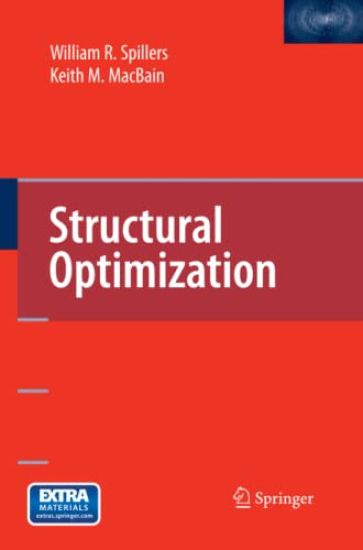
Structural Optimization is intended to supplement the engineer’s box of analysis and design tools making optimization as commonplace as the finite element method in the engineering workplace. It begins with an introduction to structural optimization and the methods of nonlinear programming such as Lagrange multipliers, Kuhn-Tucker conditions, and calculus of variations. It then discusses solution methods for optimization problems such as the classic method of linear programming which leads to the method of sequential linear programming. It then proposes using sequential linear programming together with the incremental equations of structures as a general method for structural optimization. It is furthermore intended to give the engineer an overview of the field of structural optimization.
A House in Berlin is an epic novel covering the period from 1939 to the summer of 1944. It follows actual events, and provides plausible interactions between fictional and historical characters. *****During World War II, Germany wasn't a pleasant environment. It was especially difficult for: - Dieter, an army officer who served in the Great War. His wounded leg had never fully healed. When called up again, he was initially confined to a desk job in army intelligence. He was passing information to the British and risked being shot as a spy; - Clara, the woman Dieter loved, had a mysterious past and was afraid for her life;- Ernst, a top salesman for Krupp before the war, lost his job when Hitler stopped all sales of steel outside the Reich. Unable to find other employment, he accepted a commission in the army;- Paula, who left and divorced Ernst when he could no longer support her life style; - Berthold, Ernst's brother, who enlisted in the Luftwaffe but was too tall to fit in the cockpit of a fighter;- Karl, a fanatic Nazi and Himmler's nephew, who served in the SS but was disgraced in battle. With his uncle's help Karl found a job as a Gestapo inspector, which gave him leverage to pursue Dieter, his competitor for Clara.As the war progressed and went badly for Germany, life became even less pleasant for: - Berthold, shot down over the coast of England;- Dieter, suddenly removed from his desk job, trained hastily as a tank commander, and sent to the Russian front. Himmler arranged that he was to be kept in action until he was killed;- Clara, hiding under a fake identity because the Gestapo suspected she was Jewish;- Heinz, a brilliant Panzer general fired by Hitler for lack of satisfactory progress in terrible winter conditions; - and - - Klaus, a Bavarian noble who learned that Hitler survived the bomb he planted. ****As things fall apart, Dieter and Clara flee. Karl and his Gestapo henchman wait for them and spring their trap.
He had always struggled with it: d j vu - that unsettling feeling that something you are experiencing right now has actually happened in every detail some time in your own past. You can't anticipate it; you are minding your own business when suddenly you have a powerful, inexplicable sensation that you remember this moment, or the angle of the sunlight, or the smell of a specific perfume. But in Baxter's case, this troubling experience occurred so often that it happened not only in waking moments, but it also invaded his dreams; nearly every night he had the same dream, and within that dream, while he was sleeping, he experienced d j vu. His was d j r v - I have dreamed this before.