Kirjojen hintavertailu. Mukana 11 699 587 kirjaa ja 12 kauppaa.

Kirjahaku

Etsi kirjoja tekijän nimen, kirjan nimen tai ISBN:n perusteella.

1000 tulosta hakusanalla Zack Hamilton

Forbidden History Forgotten Empires

Forbidden History Forgotten Empires

Zack D History

BUG-IN EXPERT
2025
pokkari
Why do so many great civilizations vanish from the history we're taught? Forbidden History: Forgotten Empires uncovers the rise and sudden collapse of ancient powers erased from our textbooks. From the mighty empires that shaped trade, science, and religion to the civilizations that mysteriously disappeared, this book brings back the forgotten stories that mainstream history overlooks. Packed with fascinating trivia, lost facts, and forbidden accounts, it's not just a history book-it's also the perfect gift for men who have everything, history buffs, and curious readers alike. Inside you'll explore: ✔ The forgotten empires that once ruled continents but barely made it into modern textbooks✔ Captivating stories of collapse, conquest, and erasure✔ Ancient mysteries that continue to baffle historians✔ A trivia-filled style that makes this book a Christmas gift, birthday present, or stocking stuffer Whether you're searching for a world history book, ancient history book, or a unique gift for men, this edition delivers untold truths and captivating stories in every chapter. �� Get a Copy today and Enjoy The Perfect Gift of History in your hands.

Democracy

Democracy

Naomi Zack

Oxford University Press
2023
nidottu
Very Short Introductions: Brilliant, Sharp, Inspiring Democracy refers to both ideal and real forms of government. The concept of democracy means that those governed — the demos — have a say in government. But different conceptions of democracy have left many out. Naomi Zack provides here a fresh treatment of the history of this idea and its key conceptions. In the ancient world, direct and representative democracy in Athens and Rome privileged elites, as did democratic deliberative bodies in Africa, India, the Middle East, and China. Plato, Aristotle, and Cicero were sceptical of mob-rule dangers of democracy. The medieval and renaissance periods saw legislative checks on monarchy, notably the Magna Carta. The social contract theories of Thomas Hobbes, John Locke, and Jean-Jacques Rousseau matched political expectations that national government be based on consent, for the benefit of those governed. The American Revolution established a new sovereignty, based on British government tradition. By contrast, the French Revolution heralded universal humanitarian ideals. In the nineteenth century, Jeremy Bentham, John Stuart Mill, Immanuel Kant, and Karl Marx focused on the democratization of society. Mary Wollstonecraft had championed women's education and rights and Mill advocated further for that cause. Movements for the abolition of slavery, women's suffrage, and labour unionization were organized. World War II brought a reset in the twentieth century, with new democratic governments for many countries, including India and South Africa, and new ideals. Karl Popper, Hannah Arendt, and John Rawls emphasized orderly government transition, inclusion, and fairness. Equalitarian goals have concerned racial and ethnic minorities, as well as women. The twenty-first century has brought fresh challenges, including disasters and uninformed electorates. Democracy among nations is a future goal. ABOUT THE SERIES: The Very Short Introductions series from Oxford University Press contains hundreds of titles in almost every subject area. These pocket-sized books are the perfect way to get ahead in a new subject quickly. Our expert authors combine facts, analysis, perspective, new ideas, and enthusiasm to make interesting and challenging topics highly readable.
Intersectionality

Intersectionality

Naomi Zack

OXFORD UNIVERSITY PRESS INC
2024
sidottu
In Intersectionality, philosopher Naomi Zack presents a novel philosophical account of intersectionality - the process by which people already oppressed, experience more oppression because of their intersecting identities. Examples include women who experience racism or poor people who are under-served. Identifying such intersections allows for more precise analysis of oppression, as well as newly recognized identities, such as blackwomen or homeless people of colour. Zack here explores the meaning of intersectionality through analysis of current events and controversies including the #MeToo movement, the COVID-19 pandemic, and class opportunities for minorities in higher education. Her analysis develops a robust definition of intersectionality in terms of inclusion, recognition, and diversity; works out ontological issues about the relationship between persons, labels, and identity; explores the distinction between abstract philosophical thinking and activism; and discusses how intersectionality can be an effective basis for empowerment, as well as understanding. Zack's distinctively philosophical account explains how intersectionality, considered as a method of analysis, works and can be employed in many areas of progressive thought across varying disciplines. She concludes that identifying and challenging the injustice of oppressions logically requires a broad humanistic framework, that intersectionality cannot be reduced to mere talk of diversity and inclusion, and that intersectionality itself is a progressive method of analysis worthy of philosophical attention.
Say No to the Devil

Say No to the Devil

Ian Zack

University of Chicago Press
2015
sidottu
Who was the greatest of all American guitarists? You probably didn't name Gary Davis, but many of his musical contemporaries considered him without peer. Bob Dylan called Davis "one of the wizards of modern music." Bob Weir of the Grateful Dead - who took lessons with Davis - claimed his musical ability "transcended any common notion of a bluesman." And the folklorist Alan Lomax called him "one of the really great geniuses of American instrumental music." But you won't find Davis alongside blues legends Robert Johnson and Muddy Waters in the Rock and Roll Hall of Fame. Despite almost universal renown among his contemporaries, Davis lives today not so much in his own work but through covers of his songs by Dylan, Jackson Browne, and many others, as well as in the untold number of students whose lives he influenced. The first biography of Davis, Say No to the Devil restores "the Rev's" remarkable story. Drawing on extensive research and interviews with many of Davis' former students, Ian Zack takes readers through Davis' difficult beginning as the blind son of sharecroppers in the Jim Crow South to his decision to become an ordained Baptist minister and his move to New York in the early 1940s, where he scraped out a living singing and preaching on street corners and in storefront churches in Harlem. There, he gained entry into a circle of musicians that included, among many others, Lead Belly, Woody Guthrie, and Dave Van Ronk. But in spite of his tremendous musical achievements, Davis never gained broad recognition from an American public that wasn't sure what to make of his trademark blend of gospel, ragtime, street preaching, and the blues. His personal life was also fraught, troubled by struggles with alcohol, women, and deteriorating health. Zack chronicles this remarkable figure in American music, helping us to understand how he taught and influenced a generation of musicians.
Say No to the Devil

Say No to the Devil

Ian Zack

University of Chicago Press
2016
nidottu
Who was the greatest of all American guitarists? You probably didn’t name Gary Davis, but many of his musical contemporaries considered him without peer. Bob Dylan called Davis “one of the wizards of modern music.” Bob Weir of the Grateful Dead—who took lessons with Davis—claimed his musical ability “transcended any common notion of a bluesman.” And the folklorist Alan Lomax called him “one of the really great geniuses of American instrumental music.” But you won’t find Davis alongside blues legends Robert Johnson and Muddy Waters in the Rock and Roll Hall of Fame. Despite almost universal renown among his contemporaries, Davis lives today not so much in his own work but through covers of his songs by Dylan, Jackson Browne, and many others, as well as in the untold number of students whose lives he influenced. The first biography of Davis, Say No to the Devil restores “the Rev’s” remarkable story. Drawing on extensive research and interviews with many of Davis’s former students, Ian Zack takes readers through Davis’s difficult beginning as the blind son of sharecroppers in the Jim Crow South to his decision to become an ordained Baptist minister and his move to New York in the early 1940s, where he scraped out a living singing and preaching on street corners and in storefront churches in Harlem. There, he gained entry into a circle of musicians that included, among many others, Lead Belly, Woody Guthrie, and Dave Van Ronk. But in spite of his tremendous musical achievements, Davis never gained broad recognition from an American public that wasn’t sure what to make of his trademark blend of gospel, ragtime, street preaching, and the blues. His personal life was also fraught, troubled by struggles with alcohol, women, and deteriorating health. Zack chronicles this remarkable figure in American music, helping us to understand how he taught and influenced a generation of musicians.
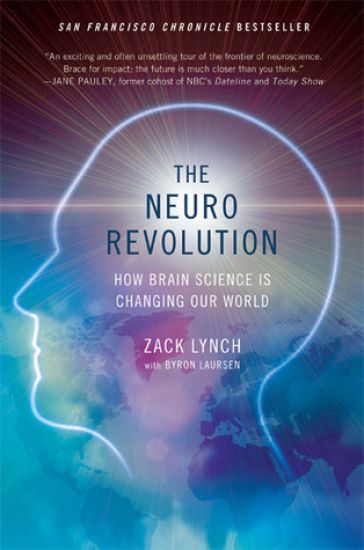
The Neuro Revolution

The Neuro Revolution

Lynch Zack; Laursen Byron

Saint Martin's Griffin,U.S.
2010
pokkari
Neurotechnology---brain imaging and other new tools for both understanding and influencing our brains---is accelerating the pace of change almost everywhere, from financial markets to law enforcement to politics to advertising and marketing, artistic expression, warfare, and even religious belief. The Neuro Revolution introduces you to the brilliant people leading this worldwide transformation for a unique insider's glimpse into the startling future now appearing at our doorstep. From foolproof lie detectors to sure-fire investment strategies to super-enhanced religious and aesthetic experiences, the insights and revelations within The Neuro Revolution will foster wonder, debate, and in some cases consternation. Above all, though, they need to be understood by those who will be most affected---all of us.
Networking for People Who Hate Networking
Shows how the networking-averse can succeed by working with the very traits that make them hate traditional networking Written by a proud introvert who is also an enthusiastic networker Includes field-tested tips and techniques for virtually any situation Are you the kind of person who would rather get a root canal than face a group of strangers? Does the phrase working a room make you want to retreat to yours? Does traditional networking advice seem like its in a foreign language? Devora Zack, an avowed introvert and a successful consultant who speaks to thousands of people every year, feels your pain. She found that most networking advice books assume that to succeed you have to become an outgoing, extraverted person. Or at least learn how to fake it. Not at all. There is another way. This book shatters stereotypes about people who dislike networking. Theyre not shy or misanthropic. Rather, they tend to be reflective - they think before they talk. They focus intensely on a few things rather than broadly on a lot of things. And they need time alone to recharge. Because theyve been told networking is all about small talk, big numbers and constant contact, they assume its not for them. But it is Zack politely examines and then smashes to tiny fragments the dusty old rules of standard networking advice. She shows how the very traits that ordinarily make people networking-averse can be harnessed to forge an approach that is just as effective as more traditional approaches, if not better. And she applies it to all kinds of situations, not just formal networking events. After all, as she says, life is just one big networking opportunity - a notion readers can now embrace. Networking enables you to accomplish the things that are important to you. But you cant adopt a style that goes against who you are - and you dont have to. I have never met a person who did not benefit tremendously from learning how to network - on his or her own terms, Zack writes. You do not succeed by denying your natural temperament; you succeed by working with your strengths.
Singletasking

Singletasking

Devora Zack

Readhowyouwant
2015
pokkari
Zack speaks three to four times a month, and her previous books were featured in 100+ international newspapers, magazines, radio shows, and online media. He takes on the societal pressure for multitasking at the expense of safety, sanity, and personal effectiveness. It is sure to generate controversy and debate in a world addicted to multitasking. Zack's mix of irreverent humor, real - world examples, solid science, and exercises and tools make this book entertaining and practical.
Philosophy of Science and Race
First published in 2003. In this concisely argued, short new book, well-known philosopher Naomi Zack explores the scientific and philosophical problems in applying a biological conception of race to human beings. Through the systematic analysis of up-to-date data and conclusions in population genetics, transmission genetics, and biological anthropology, Zack provides a comprehensive conceptual account of how race in the ordinary sense has no basis in science. Her book combats our everyday understanding of race as a scientifically supported taxonomy of human beings, and in conclusion challenges us to be clear about what we mean by race and what it would require to remedy racism.
Philosophy of Science and Race
First published in 2003. In this concisely argued, short new book, well-known philosopher Naomi Zack explores the scientific and philosophical problems in applying a biological conception of race to human beings. Through the systematic analysis of up-to-date data and conclusions in population genetics, transmission genetics, and biological anthropology, Zack provides a comprehensive conceptual account of how race in the ordinary sense has no basis in science. Her book combats our everyday understanding of race as a scientifically supported taxonomy of human beings, and in conclusion challenges us to be clear about what we mean by race and what it would require to remedy racism.
Globalization in Africa

Globalization in Africa

Alfred Zack-Williams

Lexington Books
2016
sidottu
This book presents critical perspectives on the impacts of globalization in Africa with particular reference to the crisis of development and governance, the crisis of peace and security, and the environmental crisis. It explores both global and local factors that exacerbate these crises, and seeks solutions to these challenges. With a strong slant on African experience and perspectives, the book reveals that globalization has presented Africa with both challenges and opportunities for governance and existence in an increasingly inter-connected planet.
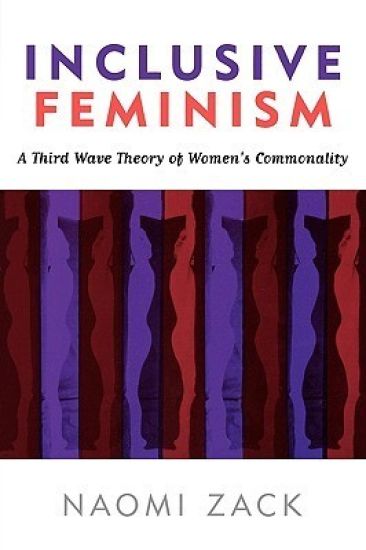
Inclusive Feminism

Inclusive Feminism

Naomi Zack

Rowman Littlefield Publishers
2005
sidottu
Second Wave feminism collapsed in the early 1980s when a universal definition of women was abandoned. At the same time, as a reaction to the narcissism of white middle class feminism, 'intersectionality' led to many different feminisms according to race, sexual preference and class. These ongoing segregations make it impossible for women to unite politically and they have not ended exclusion and discrimination among women, especially in the academy. In Inclusisve Feminism, Naomi Zack provides a universal, relational definition of women, critically engages both Anglo and French feminists and shows how women can become a united historical force, with the political goal of ruling in place of men.
Inclusive Feminism

Inclusive Feminism

Naomi Zack

Rowman Littlefield Publishers
2005
nidottu
Second Wave feminism collapsed in the early 1980s when a universal definition of women was abandoned. At the same time, as a reaction to the narcissism of white middle class feminism, "intersectionality" led to many different feminisms according to race, sexual preference and class. These ongoing segregations make it impossible for women to unite politically and they have not ended exclusion and discrimination among women, especially in the academy. In Inclusisve Feminism, Naomi Zack provides a universal, relational definition of women, critically engages both Anglo and French feminists and shows how women can become a united historical force, with the political goal of ruling in place of men.
Ethics for Disaster

Ethics for Disaster

Naomi Zack

Rowman Littlefield Publishers
2009
sidottu
Ethics for Disaster addresses the moral aspects of hurricanes, earthquakes, tornadoes, plane crashes, Avian Flu pandemics, and other disasters. Naomi Zack explores how these catastrophes illuminate the existing inequalities in society. By employing the moral systems of utilitarianism, deontology, and virtue ethics to analyze the consequences of recent natural disasters, Zack reveals the special plight of the poor, disabled, and infirm when tragedy strikes. Zack explores the political foundations of social contract theory and dignitarianism and invites readers to rethink the distinction between risk in normal times and risk in disaster. Using both real life and fictional examples, Zack forcefully argues for the preservation of normal moral principles in times of national crisis and emergency, stressing the moral obligation of both individuals and government in preparing for and responding to disaster..
Ethics for Disaster

Ethics for Disaster

Naomi Zack

Rowman Littlefield Publishers
2010
nidottu
Ethics for Disaster addresses the moral aspects of hurricanes, earthquakes, tornadoes, plane crashes, Avian Flu pandemics, and other disasters. Naomi Zack explores how these catastrophes illuminate the existing inequalities in society. By employing the moral systems of utilitarianism, deontology, and virtue ethics to analyze the consequences of recent natural disasters, Zack reveals the special plight of the poor, disabled, and infirm when tragedy strikes. Zack explores the political foundations of social contract theory and dignitarianism and invites readers to rethink the distinction between risk in normal times and risk in disaster. Using both real life and fictional examples, Zack forcefully argues for the preservation of normal moral principles in times of national crisis and emergency, stressing the moral obligation of both individuals and government in preparing for and responding to disaster..