Although the modern age is often described as the age of democratic revolutions, the subject of popular founding has not captured the imagination of contemporary political thought. Most of the time, democratic theory and political science treat as the object of their inquiry normal politics, institutionalized power, and consolidated democracies. This study shows why it is important for democratic theory to rethink the question of democracy's beginnings. Is there a founding unique to democracies? Can a democracy be democratically established? What are the implications of expanding democratic politics in light of the question of whether and how to address democracy's beginnings? Kalyvas addresses these questions and scrutinizes the possibility of democratic beginnings in terms of the category of the extraordinary, as he reconstructs it from the writings of Max Weber, Carl Schmitt, and Hannah Arendt and their views on the creation of new political, symbolic, and constitutional orders.
The book examines the origins and development of the modern liberal tradition and explores the relationship between republicanism and liberalism between 1750 and 1830. The authors consider the diverse settings of Scotland, the American colonies, the new United States, and France and examine the writings of six leading thinkers of this period: Adam Smith, Adam Ferguson, James Madison, Thomas Paine, Germaine de Staël, and Benjamin Constant. The book traces the process by which these thinkers transformed and advanced the republican project, both from within and by introducing new elements from without. Without compromising civic principles or abandoning republican language, they came to see that unrevised, the republican tradition could not grapple successfully with the political problems of their time. By investing new meanings, arguments, and justifications into existing republican ideas and political forms, these innovators fashioned a doctrine for a modern republic, the core of which was surprisingly liberal.
"Informative . . . I recommend it to practitioners and patients alike." --Andrew Weil, MD, author of Eight Weeks to Optimum Health and Mind Over Meds International bestselling author Dr. Andreas Michalsen uncovers the natural cures that will transform your health and change your life Sunlight. Forest bathing. Fasting. Cold-water baths. Bloodletting. Leeches. Cupping. These ways of healing have been practiced in different cultures around the world for centuries. But as a cardiologist working with the most high-tech medical tools, Dr. Andreas Michalsen was taught that these practices were medieval and outdated, even dangerous. As he saw surprising results in his patients, however, Dr. Michalsen explored more deeply those seemingly "outdated" methods of healing. The more he researched, the more he was convinced by the power of natural medicine--naturopathy--to heal the human body. Over the past few decades, Dr. Michalsen has published the most cutting-edge scientific research on the efficacy of natural medicine. At the prestigious Charit University Hospital in Berlin, Dr. Michalsen has successfully treated thousands of patients using elements found in nature--sunlight, water, nourishing foods, medicinal plants and animals. The culmination of years of research and clinical knowledge, The Nature Cure explains how and why naturopathy works. Dr. Michalsen breaks down the science behind natural ways of healing and shows how we can incorporate these methods into our everyday lives to trigger our body's self-healing mechanism. Thoughtfully written and filled with science, history, case studies, and practical guidance, this illuminating book shares knowledge that has changed the lives of thousands of patients, teaching you what your body needs to heal--without medicine riddled with side effects or invasive procedures. Discover methods of healing that don't just cover up your symptoms, but actually address the root cause of illness.
The exclusion problem casts doubt on the idea that mental events can have a causal impact on other events in virtue of their mental properties. While many responses to the problem focus on the relationship between mental and physical properties, some analyze other concepts involved, such as the completeness of the physical and overdetermination. However, surprisingly little effort has been made to investigate the exact role causation plays in the problem. An underlying premise of the debate thus seems to be that the problem remains the same regardless of what theory of causation one presupposes. To show that this premise is false, I offer a version of the problem that is more carefully developed than the often sketchy versions discussed in the literature. I then analyze how the problem's dynamic and its nature change depending on what theory of causation one presupposes. The results of this analysis can help to explain why and how some of the standard responses are not convincing, at least as responses to my version of the exclusion problem. In some respects, that version is stronger, and, in other respects, it is weaker than versions more commonly discussed. As a result, standard responses may not convince as responses to my version but succeed as responses to other versions. Because of that, I review some of these alternative versions with respect to their virtues and vices and conclude the dissertation by defending my version as the one most suitable for future debate and research.Dissertation Discovery Company and University of Florida are dedicated to making scholarly works more discoverable and accessible throughout the world. This dissertation, "Excluding Thoroughly" by Falke, Andreas, was obtained from University of Florida and is being sold with permission from the author. The content of this dissertation has not been altered in any way. We have altered the formatting in order to facilitate the ease of printing and reading of the dissertation.
The exclusion problem casts doubt on the idea that mental events can have a causal impact on other events in virtue of their mental properties. While many responses to the problem focus on the relationship between mental and physical properties, some analyze other concepts involved, such as the completeness of the physical and overdetermination. However, surprisingly little effort has been made to investigate the exact role causation plays in the problem. An underlying premise of the debate thus seems to be that the problem remains the same regardless of what theory of causation one presupposes. To show that this premise is false, I offer a version of the problem that is more carefully developed than the often sketchy versions discussed in the literature. I then analyze how the problem's dynamic and its nature change depending on what theory of causation one presupposes. The results of this analysis can help to explain why and how some of the standard responses are not convincing, at least as responses to my version of the exclusion problem. In some respects, that version is stronger, and, in other respects, it is weaker than versions more commonly discussed. As a result, standard responses may not convince as responses to my version but succeed as responses to other versions. Because of that, I review some of these alternative versions with respect to their virtues and vices and conclude the dissertation by defending my version as the one most suitable for future debate and research.Dissertation Discovery Company and University of Florida are dedicated to making scholarly works more discoverable and accessible throughout the world. This dissertation, "Excluding Thoroughly" by Falke, Andreas, was obtained from University of Florida and is being sold with permission from the author. The content of this dissertation has not been altered in any way. We have altered the formatting in order to facilitate the ease of printing and reading of the dissertation.
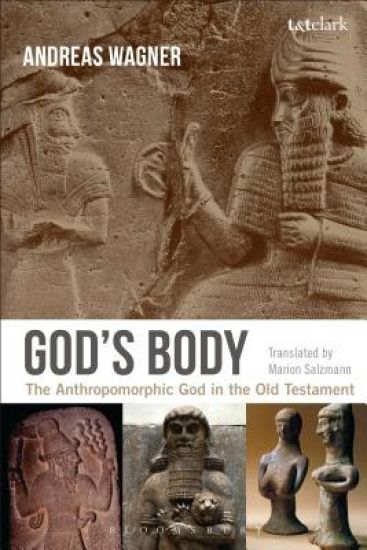
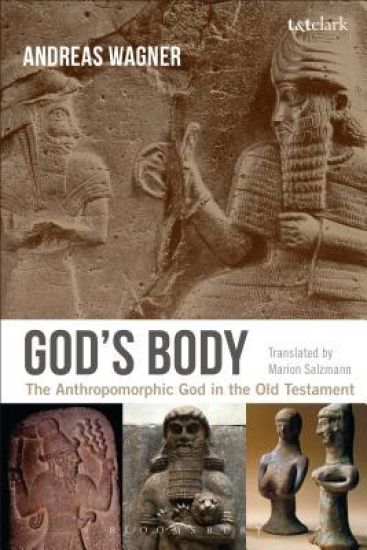
Images of the body in ancient Near Eastern civilizations are radically different from body images today, which in turn creates significant consequences for our understanding of the biblical notion of God’s human shape and the frequent and widespread misconceptions therein. Andreas Wagner illuminates such frequent and widespread misconceptions, and reveals the sometimes distant pictorial world of ancient body images. He contrasts these with contemporary models and makes the matter of the Old Testament concept of God’s human form accessible and clear.Wagner begins by introducing readers to aspects of anthropomorphism, the study of body parts, and Israel’s basic understanding of the human body. He then turns specifically to the body of God, analysing why and how certain body parts are emphasized or regularly employed in the biblical text when it tries to describe God. Wagner draws out the theological aspects of the ways in which God’s body is described as well as considering the diverse range of ancient Near Eastern perspectives on God, and the ways in which ancient cultures constructed and understood deities. Wagner concludes by looking at how the depiction of God in the Old Testament fits with the concept of mankind made in God’s image. Enhanced by over fifty illustrations, God’s Body will lead the debate in biblical anthropomorphism for years to come.
Images of the body in ancient Near Eastern civilizations are radically different from body images today, which in turn creates significant consequences for our understanding of the biblical notion of God’s human shape and the frequent and widespread misconceptions therein. Andreas Wagner illuminates such frequent and widespread misconceptions, and reveals the sometimes distant pictorial world of ancient body images. He contrasts these with contemporary models and makes the matter of the Old Testament concept of God’s human form accessible and clear.Wagner begins by introducing readers to aspects of anthropomorphism, the study of body parts, and Israel’s basic understanding of the human body. He then turns specifically to the body of God, analysing why and how certain body parts are emphasized or regularly employed in the biblical text when it tries to describe God. Wagner draws out the theological aspects of the ways in which God’s body is described as well as considering the diverse range of ancient Near Eastern perspectives on God, and the ways in which ancient cultures constructed and understood deities. Wagner concludes by looking at how the depiction of God in the Old Testament fits with the concept of mankind made in God’s image. Enhanced by over fifty illustrations, God’s Body will lead the debate in biblical anthropomorphism for years to come.
This research note presents a complete treatment of the connection between topological circle planes and topological generalized quadrangles. The author uses this connection to provide a better understanding of the relationships between different types of circle planes and to solve a topological version of the problem of Apollonius. Topological Circle Planes and Topological Quadrangles begins with a foundation in classical circle planes and the real symmetric generalized quadrangle and the connection between them. This provides a solid base from which the author offers a more generalized exploration of the topological case. He also compares this treatment to the finite case. Subsequent chapters examine Laguerre, Möbius, and Minkowski planes and their respective relationships to antiregular quadrangles. The author addresses the Lie geometry of each and discuss the relationships of circle planes-the "sisters" of Möbius, Laguerre, and Minkowski planes - and concludes by solving a topological version of the problem of Apollonius in Laguerre, Möbius, and Minkowski planes. The treatment offered in this volume offers complete coverage of the topic. The first part of the text is accessible to anyone with a background in analytic geometry, while the second part requires basic knowledge in general and algebraic topology. Researchers interested in geometry-particularly in topological geometry-will find this volume intriguing and informative. Most of the results presented are new and can be applied to various problems in the field of topological circle planes. Features
Twenty centuries existence of Christianity is enough time to evaluate its impact not only on world history but also on the quality of life of human mankind and even more on the happiness of every unique individual being on this earth. What is the answer to the question of Jesus: "when the Son of man comes, will he find faith on earth?" An ordinary thinking person presents his sincere opinion, not as an expert but as a common mortal, who confronted with the inevitable questions of existence, attempts to answer them with common sense and good will as the main criteria. He does not claim that his aspects represent the only truth. But he may assure the reader that though these thoughts are shared with many other co-mortals, they seldom have been openly expressed. If nothing else, inside this book may be traced a novel, fresh look at the Love of Jesus, which "casts out fear."
Again and again in this collection, Andreas Thomas returns to this mysterious predicament: why is it that the human being seems to take such a perverse, if guilt-ridden, delight in actively shunning the good? Life would obviously be easier for us all if we "loved our neighbor"--and though we have clear instructions on just how to accomplish that we refuse to follow them! The real why is not whether God exists but why did He choose to prove to us that His Creation was truly an act of Love. By sacrificing His own Son to the very human mystery of Death, God has reopened, in effect, the road to communication between the sacred and the profane...
Dag Hammarskj ld, Angela King, Gra a Machel, Eleanor Roosevelt, Helvi Sipil , Carlo Urbani, Sergio Vieira de Mello, Nadia Younes. They are heroes. Heroes of the United Nations. Thousands of people are employed by the United Nations and other international organizations in the most dangerous spots around the world, where intestine wars, famine, drought, and natural disasters are killing millions of innocents every day. They are heroes who chose to spend most of their life in poor and under-developed countries in order to make a difference, to improve and save the lives of as many people as possible. They don t represent a country, they don t travel first class, they don t go to lavish diplomatic dinners and parties. Instead, they risk their own life for world peace and security, for providing food and clean water to the poorest people on Earth, for fostering gender equality and social justice, for promoting and nurturing human rights and sustainable development.
This book breaks new ground on general management and how you systematically transform a business for high performance. By giving the reader specific ideas and methodologies, it details a path to change a business in a fundamental way, making it a more effective competitor that delivers consistently strong profit growth. This means that over time everything will improve from the effectiveness in the marketplace, to the efficiency of internal operations to the way management runs the business and the way the employees think about it.Based on a 30 year career in general management, the insights of the book have been born and proven successful in the field. Andreas Kramvis has led very successful transformations of multi-million dollar enterprises in disparate industries. The core teachings have been tested methodically in tough industrial situations with real success.if you are embarking on a career, a mid-level manager or are already running a business, you will find plenty of ideas and suggestions to enhance what you are doing. You will learn a tried and tested methodology of managing which has produced consistently great results and lasting business transformations.
This Monograph presents a theory of cognitive development. The theory argues that the mind develops across three fronts. The first refers to a general processing system that defines the general potentials of mind to develop cognitive strategies and skills. The second refers to a hypercognitive system that governs self-understanding and self-regulation. The third involves a set of specialized structural systems that are responsible for the representation and processing of different reality domains.
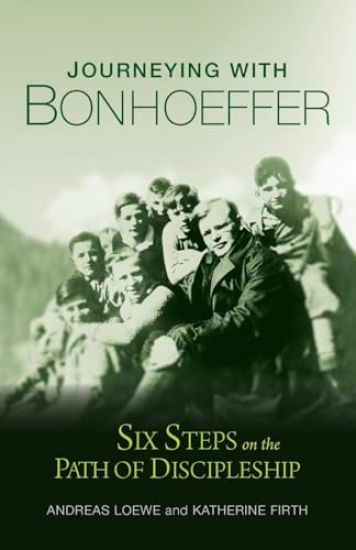
Join the Dean of Melbourne, Dr. Andreas Loewe, and academic and poet Dr. Katherine Firth for six weekly reflections as we journey through what it means to be faithful followers of Jesus today in Journeying with Bonhoeffer: Six Steps on the Path of Discipleship.Dietrich Bonhoeffer is a theologian whose life and work resonate profoundly in our times. He transcended barriers of race, denomination, and language, dedicating his life to the pursuit of truth and justice. His courageous efforts included leading an underground seminary and participating in the resistance against the Nazi regime, actions that ultimately led to his imprisonment, internment in concentration camps, and execution. Bonhoeffer's inspiring writings continue to challenge and inspire believers to consider the true essence of discipleship and the practical outworking of their faith.In 2020, the world commemorated the 75th anniversary of Bonhoeffer's martyrdom, a poignant reminder of his enduring legacy. The reflections in Journeying with Bonhoeffer, initially delivered as Dean Andreas' Lent Addresses in 2019, delve into the themes of discipleship through the lens of Bonhoeffer's profound theological insights. These reflections are grounded in the Gospel of Luke and Bonhoeffer's seminal work, The Cost of Discipleship, which calls Christians to a radical and authentic following of Christ.Dr. Katherine Firth contributes significantly to this journey with her compelling new biography of Bonhoeffer, first presented at St James' King Street in Sydney. Her work offers fresh perspectives on Bonhoeffer's life, capturing the depth of his spiritual journey, his political convictions, and his poetic expressions. Firth's translations of Bonhoeffer's poems and prayers reveal the rich interplay of spirituality, politics, and literary craft in his writings, providing readers with a deeper understanding of his thoughts and experiences.Journeying with Bonhoeffer invites participants to explore six steps on the path of discipleship, each reflection encouraging a deeper engagement with Bonhoeffer's teachings and the Gospel. The series is designed to foster contemplation, discussion, and practical application, making it a valuable resource for individuals and groups seeking to deepen their faith and commitment to following Jesus in today's complex world.Through this journey, Loewe and Firth offer a thoughtful and enriching exploration of what it means to live as faithful disciples of Christ. By engaging with Bonhoeffer's life and writings, participants are encouraged to confront the challenges of their own faith journeys, inspired by Bonhoeffer's example of courage, integrity, and unwavering devotion to God's call. Journeying with Bonhoeffer is more than a series of reflections; it is an invitation to transform one's understanding of discipleship and to live out that calling with renewed purpose and conviction.
The study of biblical Aramaic, an ancient Semitic language from which the Hebrew alphabet was derived, is necessary for understanding texts written during certain periods of early Jewish and Christian history and is especially important for the study of the books of Daniel and Ezra. This new textbook is a thorough guide to learning to read and translate biblical Aramaic and includes an introduction to the language, examples of texts for practice translations, and helpful comparison charts.