Kirjojen hintavertailu. Mukana 11 627 380 kirjaa ja 12 kauppaa.

Kirjahaku

Etsi kirjoja tekijän nimen, kirjan nimen tai ISBN:n perusteella.

1000 tulosta hakusanalla Ashley Atkinson

Dwelling in Fiction Volume 46

Dwelling in Fiction Volume 46

Ashley R. Brock

NORTHWESTERN UNIVERSITY PRESS
2023
nidottu
Explores the affective, ethical, and political demands that difficult reading places on readers of midcentury Latin American literature The radical formal experiments undertaken by writers across Latin America in the mid-twentieth century introduced friction, opacity, and self-reflexivity to the very act of reading. Dwelling in Fiction: Poetics of Place and the Experimental Novel in Latin America explores the limitations and the possibilities of literature for conveying place-specific forms of life. Focusing on authors such as JosÉ MarÍa Arguedas, JoÃo GuimarÃes Rosa, and Juan JosÉ Saer, who are often celebrated for universalizing regional themes, Ashley R. Brock brings a new critical lens to Latin American writers who were ambivalent toward their era’s “boom.” Beyond mere resistance to or critique of the commodification and political instrumentalization of rural topics and types, this countertrend of critical regionalism positions readers themselves as outsiders, pushing them to engage their senses, to train their attention, and to learn to dwell in unknown textual landscapes. Dwelling in Fiction draws on a transnational community of thinkers and writers to show how their midcentury aesthetic practices of sensorial pedagogy anticipate contemporary turns toward affect, embodiment, decoloniality, and ecological thought.

Dwelling in Fiction Volume 46

Dwelling in Fiction Volume 46

Ashley R. Brock

NORTHWESTERN UNIVERSITY PRESS
2023
sidottu
Explores the affective, ethical, and political demands that difficult reading places on readers of midcentury Latin American literature The radical formal experiments undertaken by writers across Latin America in the mid-twentieth century introduced friction, opacity, and self-reflexivity to the very act of reading. Dwelling in Fiction: Poetics of Place and the Experimental Novel in Latin America explores the limitations and the possibilities of literature for conveying place-specific forms of life. Focusing on authors such as JosÉ MarÍa Arguedas, JoÃo GuimarÃes Rosa, and Juan JosÉ Saer, who are often celebrated for universalizing regional themes, Ashley R. Brock brings a new critical lens to Latin American writers who were ambivalent toward their era’s “boom.” Beyond mere resistance to or critique of the commodification and political instrumentalization of rural topics and types, this countertrend of critical regionalism positions readers themselves as outsiders, pushing them to engage their senses, to train their attention, and to learn to dwell in unknown textual landscapes. Dwelling in Fiction draws on a transnational community of thinkers and writers to show how their midcentury aesthetic practices of sensorial pedagogy anticipate contemporary turns toward affect, embodiment, decoloniality, and ecological thought.
A Return to Justice

A Return to Justice

Ashley Nellis

Rowman Littlefield Publishers
2017
nidottu
Juveniles who commit crimes often find themselves in court systems that do not account for their young age, but it wasn’t always this way. The original aim of a separate juvenile justice system was to treat young offenders as the children they were, considering their unique child status and amenability for reform. Now, after years punishing young offenders as if they were adults, slowly the justice system is making changes that would allow the original vision for juvenile justice to finally materialize. In its original design, the founders focused on treating youth offenders separately from adults and with a different approach. The hallmarks of this approach appreciated the fact that youth cannot fully understand the consequences of their actions and are therefore worthy of reduced culpability. The original design for youth justice prioritized brief and confidential contact with the juvenile justice system, so as to avoid the stigma that would otherwise mar a youth’s chances for success upon release. Rehabilitation was seen as the priority, and efforts to redirect wayward youth were to be implemented when possible and appropriate. The original tenets of the juvenile justice system were slowly dismantled and replaced with a system more like the adult criminal justice system, one which takes no account of age. In recent years, the tide has turned again. The number of incarcerated youth has been cut in half nationally. In addition, juvenile justice practices are increasingly guided by scholarship in adolescent development that confirms important differences between youth and adults. And, states and localities are choosing to invest in evidence based approaches to juvenile crime prevention and intervention rather than in facilities to lock up errant youth. This book assesses the strategies and policies that have produced these important shifts in direction. Important contributing factors include the declining incidence of youth-committed crime, advances in adolescent brain science, nationwide budgetary concerns, focused advocacy with policymakers and practitioners, and successful public education campaigns that address extreme sanctions for youth such as solitary confinement and life sentences without the possibility of parole. Yet more needs to be done. The U.S. Supreme Court has recently voiced its unfaltering conclusion that children are different from adults in a series of landmark cases. The question now is how to take advantage of the opportunity for juvenile justice reform of the kind that would reorient the juvenile justice system to its original intent both in policy and practice, and would return to a system that treats children as children. Using case examples throughout, Nellis offers a compelling history and shows how we might continue on the road to reform.
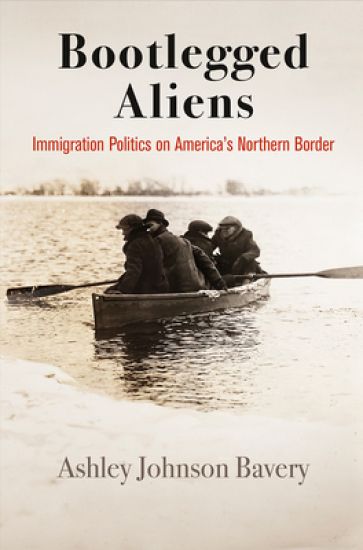
Bootlegged Aliens

Bootlegged Aliens

Ashley Johnson Bavery

University of Pennsylvania Press
2020
sidottu
In contemporary discourse, much of the discussion of U.S. border politics focuses on the Southwest. In Bootlegged Aliens, however, Ashley Johnson Bavery considers the North as a borderlands region, demonstrating how this often-overlooked border influenced government policies toward illegal immigration, business and labor union practices around migrant labor, and the experience of being an illegal immigrant in early twentieth-century industrial America. Bavery examines how immigrants, politicians, and employers helped shape national policies toward noncitizen laborers. In the process, she uncovers the northern industrial origins of an exploitative system that emerged on America's border with Canada, whose legacy remains central to debates about America's borders today. Bavery begins in the 1920s to explore how that decade's immigration restrictions launched an era of policing and profiling that excluded America's foreign born from the benefits of citizenship. On the border between Detroit and Windsor, Canada, this process turned certain Europeans into undocumented immigrants, a group the press and policymakers referred to as bootlegged aliens. Over the next decade, deportation and policing practices stigmatized entire communities of ethnic Europeans regardless of their legal status. Moreover, restrictive laws allowed manufacturers to exploit workers in new ways. By the Great Depression, citizenship had become an invisible boundary that excluded hundreds of thousands of laborers from New Deal entitlements. Accepted wisdom suggests that the 1924 Immigration Act had allowed ethnic Europeans to shed ties to their homelands and assimilate into the "melting pot" of American culture by the 1930s. Bavery challenges this perspective, finding that, instead of forging a common culture with their fellow workers, European immigrants coming through Canada to Detroit faced statewide registration drives, exclusion from key labor unions, and disqualification from the Works Progress Administration, the cornerstone of America's nascent welfare state. In the heart of industrial America, Bootlegged Aliens reveals, citizenship was highly contingent.
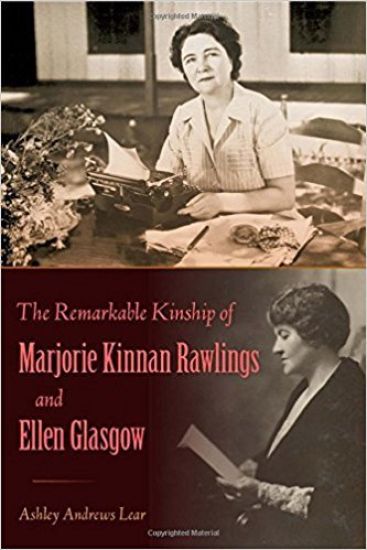
The Remarkable Kinship of Marjorie Kinnan Rawlings and Ellen Glasgow

The Remarkable Kinship of Marjorie Kinnan Rawlings and Ellen Glasgow

Ashley Andrews Lear

University Press of Florida
2018
sidottu
Ashley Lear's The Remarkable Kinship of Marjorie Kinnan Rawlings and Ellen Glasgow examines the documents collected by Rawlings on Glasgow, along with her personal notes, to better understand the experiences that brought these two women writers together and the importance of literary friendships between women writers. This study sheds new light on the complexities of their professional success and personal struggles, both of which led them to find friendship and sympathy with one another.
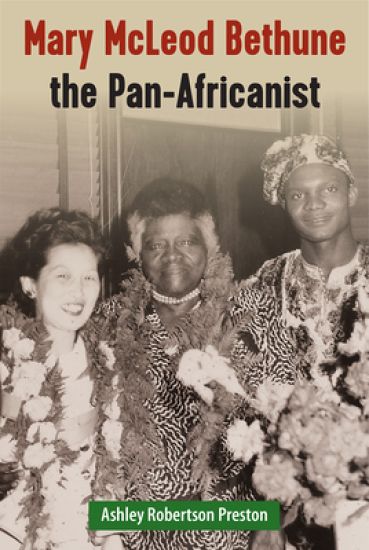
Mary McLeod Bethune the Pan-Africanist

Mary McLeod Bethune the Pan-Africanist

Ashley Robertson Preston

University Press of Florida
2023
pokkari
Highlighting Bethune’s global activism and her connections throughout the African diaspora.This book examines the pan-Africanism of Mary McLeod Bethune through her work, which internationalized the scope of Black women’s organizations to create solidarity among Africans throughout the diaspora. Broadening the familiar view of Bethune as an advocate for racial and gender equality within the United States, Ashley Preston argues that Bethune consistently sought to unify African descendants around the world with her writings, through travel, and as an advisor.Preston shows how Bethune’s early involvement with Black women’s organizations created personal connections across Cuba, Haiti, India, and Africa and shaped her global vision. Bethune founded and led the National Council of Negro Women, which strengthened coalitions with women across the diaspora to address issues in their local communities. Bethune served as director of the Division of Negro Affairs for the Franklin D. Roosevelt administration, and later as associate consultant for the United Nations alongside W.E.B. DuBois and Walter White, using her influence to address diversity in the military, decolonization, suffrage, and imperialism. Mary McLeod Bethune the Pan-Africanist provides a fuller, more accurate understanding of Bethune’s work, illustrating the perspective and activism behind Bethune’s much-quoted words: “For I am my mother’s daughter, and the drums of Africa still beat in my heart.Publication of this work made possible by a Sustaining the Humanities through the American Rescue Plan grant from the National Endowment for the Humanities.
Mary McLeod Bethune the Pan-Africanist

Mary McLeod Bethune the Pan-Africanist

Ashley Robertson Preston

University Press of Florida
2023
sidottu
Highlighting Bethune’s global activism and her connections throughout the African diaspora.This book examines the pan-Africanism of Mary McLeod Bethune through her work, which internationalized the scope of Black women’s organizations to create solidarity among Africans throughout the diaspora. Broadening the familiar view of Bethune as an advocate for racial and gender equality within the United States, Ashley Preston argues that Bethune consistently sought to unify African descendants around the world with her writings, through travel, and as an advisor.Preston shows how Bethune’s early involvement with Black women’s organizations created personal connections across Cuba, Haiti, India, and Africa and shaped her global vision. Bethune founded and led the National Council of Negro Women, which strengthened coalitions with women across the diaspora to address issues in their local communities. Bethune served as director of the Division of Negro Affairs for the Franklin D. Roosevelt administration, and later as associate consultant for the United Nations alongside W.E.B. DuBois and Walter White, using her influence to address diversity in the military, decolonization, suffrage, and imperialism. Mary McLeod Bethune the Pan-Africanist provides a fuller, more accurate understanding of Bethune’s work, illustrating the perspective and activism behind Bethune’s much-quoted words: “For I am my mother’s daughter, and the drums of Africa still beat in my heart.Publication of this work made possible by a Sustaining the Humanities through the American Rescue Plan grant from the National Endowment for the Humanities.
Love and Depth in the American Novel

Love and Depth in the American Novel

Ashley C. Barnes

University of Virginia Press
2020
sidottu
Love and Depth in the American Novel seeks to change how we think about the American love story and how we imagine the love of literature. By examining classics of nineteenth-century American literature, Ashley Barnes offers a new approach to literary theory that encompasses both New Historicism and the ethical turn in literary studies.Couples like Huck and Jim and Ishmael and Queequeg have grounded the classic account of the American novel as exceptionally gothic and antisocial. Barnes argues instead for a model of shared intimacy that connects the evangelical sentimental best seller to the high art of psychological realism. In her reading of works by Harriet Beecher Stowe, Nathaniel Hawthorne, Herman Melville, Elizabeth Stoddard, Henry James, and others in the context of nineteenth-century Protestant-Catholic debates about how to know and love God, what emerges is an alternate tradition of the American love story that pictures intimacy as communion rather than revelation. Barnes uses that unacknowledged love story to propose a model of literary critical intimacy that depends on reading fiction in its historical context.
Love and Depth in the American Novel

Love and Depth in the American Novel

Ashley C. Barnes

University of Virginia Press
2020
pokkari
Love and Depth in the American Novel seeks to change how we think about the American love story and how we imagine the love of literature. By examining classics of nineteenth-century American literature, Ashley Barnes offers a new approach to literary theory that encompasses both New Historicism and the ethical turn in literary studies.Couples like Huck and Jim and Ishmael and Queequeg have grounded the classic account of the American novel as exceptionally gothic and antisocial. Barnes argues instead for a model of shared intimacy that connects the evangelical sentimental best seller to the high art of psychological realism. In her reading of works by Harriet Beecher Stowe, Nathaniel Hawthorne, Herman Melville, Elizabeth Stoddard, Henry James, and others in the context of nineteenth-century Protestant-Catholic debates about how to know and love God, what emerges is an alternate tradition of the American love story that pictures intimacy as communion rather than revelation. Barnes uses that unacknowledged love story to propose a model of literary critical intimacy that depends on reading fiction in its historical context.
Science Communication Online

Science Communication Online

Ashley Rose Mehlenbacher

Ohio State University Press
2019
sidottu
Uncloistered by the web, science is finding its way into previously unimagined audiences. Whether collecting data in one's backyard to help wildlife experts manage wolf populations or even funding research out of one's own pocket, nonexperts can engage science at an unprecedented scale. As science communication has moved online, a range of important new genres have emerged that put professionals and the public into conversation with each other. In Science Communication Online: Engaging Experts and Publics on the Internet, Ashley Rose Mehlenbacher takes up these "trans-scientific" genres to explore how scientists are adapting their communications, how publics are increasingly involved in science, and how boundaries between experts and nonexperts continue to shift. Bringing together genre studies and the rhetoric of science, Mehlenbacher examines a range of new forms of science communication that challenge traditional presumptions about experts and nonexperts-including Twitter and Reddit AMAs, crowdfunding proposals such as Kickstarter and Experiment.com, civic-minded databases such as Safecast, and the PLOS blogging network. Science Communication Online illustrates the unique features of these genres and connects them to their rhetorical functions and the larger context leading to their emergence and evolution-from the democratization of science, challenges to expertise and expert status, and new political economies. Science Communication Online captures the important moment we find ourselves in now-one not defined by science and society but science in society.
Deformative Fictions

Deformative Fictions

Ashley Hope Pérez

OHIO STATE UNIVERSITY PRESS
2024
sidottu
Tapping a rich vein of Latin American literature, Deformative Fictions by Ashley Hope P rez excavates works that unsettle, defamiliarize, and disrupt access to the conventional pleasures of reading and interpretation. Close readings highlight the nuances of texts that have been misread, underread, or fetishized because they depart from literary norms, including fiction by Roberto Bola o and Silvina Ocampo. Interweaving rhetorical and narratological analysis with reflections on the ethical stakes of writing, reading, and interpreting deformative fictions and fictional cruelty, P rez issues a resounding entreaty for us to expand our understandings of the value of narrative beyond the logics of utility and comfort. Doing so, she contends, allows readers to embrace the full possibilities of the relationships among authors, readers, and the worlds we inhabit on and off the page. In defamiliarizing the act of reading, deformative fictions reacquaint us with its ethical weight.
On Edge

On Edge

Ashley Lawson

OHIO STATE UNIVERSITY PRESS
2024
sidottu
Ashley Lawson's On Edge presents a new picture of postwar American literature, arguing that biases against genre fiction have unfairly disadvantaged the legacies of authors like Shirley Jackson, Patricia Highsmith, and Leigh Brackett. Each of these women navigated a male-dominated postwar publishing world without compromising their values. Their category-defying treatment of gender roles and genre classifications created suspense in their work that spoke to the tensions of the "Age of Anxiety." Lawson engages with foundational voices in American literature, genre theory, and feminism to argue that, by merging the dominant mode of literary realism with fantastical or heightened elements, Brackett, Jackson, and Highsmith responded to the big questions of their era with startling and unnerving answers. By elevating genre play to a marker of literary skill, Lawson contends, we can secure these writers a more prominent place within the canon of midcentury American literature and open the door for the recovery of their similarly innovative peers.
Science Communication Online

Science Communication Online

Ashley Rose Mehlenbacher

Ohio State University Press
2019
pokkari
Uncloistered by the web, science is finding its way into previously unimagined audiences. Whether collecting data in one's backyard to help wildlife experts manage wolf populations or even funding research out of one's own pocket, nonexperts can engage science at an unprecedented scale. As science communication has moved online, a range of important new genres have emerged that put professionals and the public into conversation with each other. In Science Communication Online: Engaging Experts and Publics on the Internet, Ashley Rose Mehlenbacher takes up these "trans-scientific" genres to explore how scientists are adapting their communications, how publics are increasingly involved in science, and how boundaries between experts and nonexperts continue to shift. Bringing together genre studies and the rhetoric of science, Mehlenbacher examines a range of new forms of science communication that challenge traditional presumptions about experts and nonexperts-including Twitter and Reddit AMAs, crowdfunding proposals such as Kickstarter and Experiment.com, civic-minded databases such as Safecast, and the PLOS blogging network. Science Communication Online illustrates the unique features of these genres and connects them to their rhetorical functions and the larger context leading to their emergence and evolution-from the democratization of science, challenges to expertise and expert status, and new political economies. Science Communication Online captures the important moment we find ourselves in now-one not defined by science and society but science in society.
Deformative Fictions

Deformative Fictions

Ashley Hope Pérez

OHIO STATE UNIVERSITY PRESS
2024
pokkari
Tapping a rich vein of Latin American literature, Deformative Fictions by Ashley Hope P rez excavates works that unsettle, defamiliarize, and disrupt access to the conventional pleasures of reading and interpretation. Close readings highlight the nuances of texts that have been misread, underread, or fetishized because they depart from literary norms, including fiction by Roberto Bola o and Silvina Ocampo. Interweaving rhetorical and narratological analysis with reflections on the ethical stakes of writing, reading, and interpreting deformative fictions and fictional cruelty, P rez issues a resounding entreaty for us to expand our understandings of the value of narrative beyond the logics of utility and comfort. Doing so, she contends, allows readers to embrace the full possibilities of the relationships among authors, readers, and the worlds we inhabit on and off the page. In defamiliarizing the act of reading, deformative fictions reacquaint us with its ethical weight.
Medieval Conduct

Medieval Conduct

Ashley Kathleen

University of Minnesota Press
2001
sidottu
Medieval conduct texts provided behavioral guidelines for men, women and children on a wide range of issues, including food, fashion and general behaviour. These nine papers, resulting from sessions of the International Congress on Medieval Studies held at Western Michigan University between 1992 and 1995, focus on the role of gender and social status in the interpretation of these texts. Didactic and literary texts are examined including Courtesy books aimed at gentlemen, Christine de Pizan's works, Middle High German advice poems, educational treatises, trial records, devotional texts and dramatic works.
Out in Africa

Out in Africa

Ashley Currier

University of Minnesota Press
2012
nidottu
Visibility matters to activists-to their social and political relevance, their credibility, their influence. But invisibility matters, too, in times of political hostility or internal crisis. Out in Africa is the first to present an intimate look at how Namibian and South African lesbian, gay, bisexual, and transgender (LGBT) organizations have cultivated visibility and invisibility as strategies over time. As such, it reveals the complexities of the LGBT movements in both countries as these organizations make use of Western terminology and notions of identity to gain funding even as they work to counter the perception that they are “un-African.”Different sociopolitical conditions in Namibia and South Africa affected how activists in each country campaigned for LGBT rights between 1995 and 2006. Focusing on this period, Ashley Currier shows how, in Namibia, LGBT activists struggled against ruling party leaders’ homophobic rhetoric and how, at the same time, black LGBT citizens of South Africa, though enjoying constitutional protections, greater visibility, and heightened activism, nonetheless confronted homophobic violence because of their gender and sexual nonconformity.As it tells the story of the evolving political landscape in postapartheid Namibia and South Africa, Out in Africa situates these countries’ movements in relation to developments in pan-African LGBT organizing and offers broader insights into visibility as a social movement strategy rather than simply as a static accomplishment or outcome of political organizing.
Southern Tufts

Southern Tufts

Ashley Callahan; Madelyn Shaw

University of Georgia Press
2015
sidottu
Southern Tufts is the first book to highlight the garments produced by northwestern Georgia’s tufted textile industry. Though best known now for its production of carpet, in the early twentieth century the region was revered for its handtufted candlewick bedspreads, products that grew out of the Southern Appalachian Craft Revival and appealed to the vogue for Colonial Revival–style household goods. Soon after the bedspreads became popular, enterprising women began creating hand-tufted garments, including candlewick kimonos in the 1920s and candlewick dresses in the early 1930s. By the late 1930s, large companies offered machine-produced chenille beach capes, jackets, and robes. In the 1940s and 1950s, chenille robes became an American fashion staple. At the end of the century, interest in chenille fashion revived, fueled by nostalgia and an interest in recycling vintage materials.Chenille bedspreads, bathrobes, and accessories hung for sale both in roadside souvenir shops, especially along the Dixie Highway, and in department stores all over the nation. Callahan tells the story of chenille fashion and its connections to stylistic trends, automobile tourism, industrial developments, and U.S. history. The well-researched and heavily illustrated text presents a broad history of tufted textiles, as well as sections highlighting individual craftspeople and manufacturers involved with the production of chenille fashion.