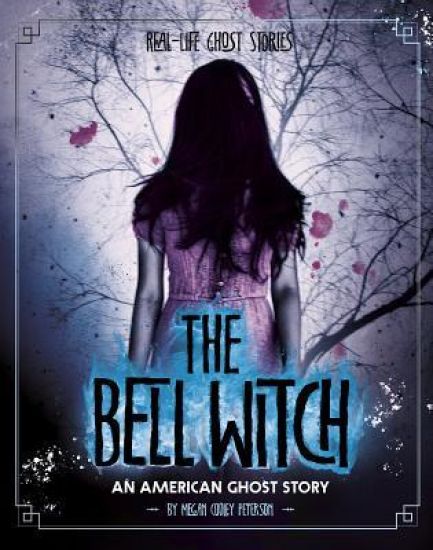
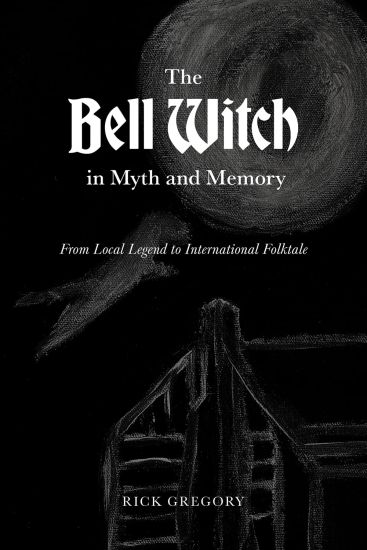
The haunting of the Bell family at their home in Tennessee started out harmless enough with knocking and scratching noises. But soon members of the family were scratched, kicked, and slapped by a spirit who identifies herself as a witch named Kate Batts. Centuries later, this legendary ghost story continues to haunt all who hear it.
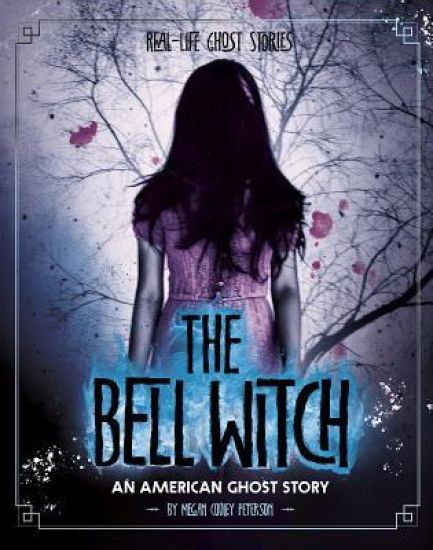
The haunting of the Bell family at their home in Tennessee started out harmless enough with knocking and scratching noises. But soon members of the family were scratched, kicked, and slapped by a spirit who identifies herself as a witch named Kate Batts. Centuries later, this legendary ghost story continues to haunt all who hear it.
Do you love spiders? Did you know there's a spider that lives underwater but breathes air? Read this book to learn about the diving bell spider's amazing adaptations.
Peter Bell: A Tale in Verse is a long narrative poem by William Wordsworth, written in 1798, but not published until 1819. Synopsis: In a tone of straight-faced humour the prologue tells of the poet's travels over the face of the earth and through the heavens in a boat of the imagination, which urges him to choose some exotic or otherworldly theme. The poet rejects the suggestion, and opts for the more homely subject of Peter Bell. The poem proper begins with a description of him as a hard-hearted sinner, impervious to the softening influence of nature, who makes his living as an itinerant hawker (or potter, in Wordsworth's northern expression) of earthenware. One night, while walking through Swaledale by night, he loses his way. He comes across an ass standing untended, gazing into the river Swale, and he tries to ride away on it, but the ass does not respond to his furious beating of it. Peter sees the face of a corpse in the river, and faints from shock. On recovering consciousness he drags the dead man, once the owner of the ass, onto dry land. The ass now consents to start for home, taking Peter with him. A loud cry is heard in the distance, which, though Peter does not know it, comes from the dead man's young son, who is searching for his father. Unnerved by this, and by the sight of the bloody wounds he has inflicted on the ass, Peter begins to feel unaccustomed pangs of conscience. His mind turns to his many past sins, and as he passes an outdoor Methodist meeting his heart responds to the preacher's calls for repentance. The ass reaches the home of the dead man, whose wife is waiting for him. She learns that she is a widow, and her children orphans. And now is Peter taught to feel That man's heart is a holy thing; And Nature, through a world of death, Breathes into him a second breath, More searching than the breath of spring. The poem closes with Peter downcast by his experiences, but eventually emerging as a better man.......... William Wordsworth (7 April 1770 - 23 April 1850) was a major English Romantic poet who, with Samuel Taylor Coleridge, helped to launch the Romantic Age in English literature with their joint publication Lyrical Ballads (1798). Wordsworth's magnum opus is generally considered to be The Prelude, a semiautobiographical poem of his early years that he revised and expanded a number of times. It was posthumously titled and published, before which it was generally known as "the poem to Coleridge".Wordsworth was Britain's Poet Laureate from 1843 until his death from pleurisy on 23 April 1850. Early life: Main article: Early life of William Wordsworth The second of five children born to John Wordsworth and Ann Cookson, William Wordsworth was born on 7 April 1770 in Wordsworth House in Cockermouth, Cumberland, part of the scenic region in northwestern England known as the Lake District. His sister, the poet and diarist Dorothy Wordsworth, to whom he was close all his life, was born the following year, and the two were baptised together. They had three other siblings: Richard, the eldest, who became a lawyer; John, born after Dorothy, who went to sea and died in 1805 when the ship of which he was captain, the Earl of Abergavenny, was wrecked off the south coast of England; and Christopher, the youngest, who entered the Church and rose to be Master of Trinity College, Cambridge. Wordsworth's father was a legal representative of James Lowther, 1st Earl of Lonsdale and, through his connections, lived in a large mansion in the small town. He was frequently away from home on business, so the young William and his siblings had little involvement with him and remained distant from him until his death in 1783. However, he did encourage William in his reading, and in particular set him to commit to memory large portions of verse, including works by Milton, Shakespeare and Spenser.....
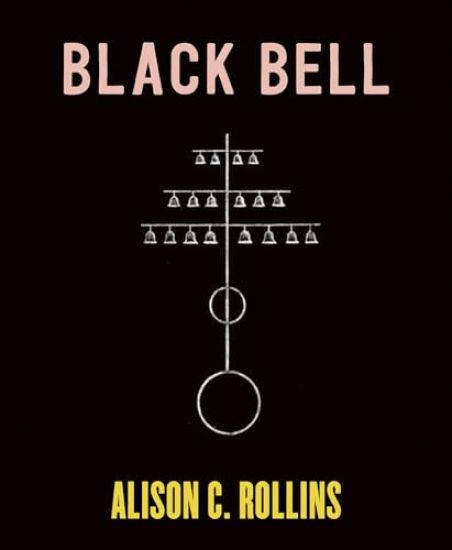
Sweeping from the eighteenth century to futurist fabulations, Black Bell harmonizes poetry with performance art practices in an investigation of fugitivity.Inspired by the nineteenth century image of an enslaved woman wearing iron horns and bells, Alison C. Rollins's Black Bell continues an exploration of cataloging individual experience and collective memory. As Rollins sets out to resuscitate and embody the archive, we see a chorus of historical figures like Eliza Harris, Henry "Box" Brown, and Lear Green; readers can listen in as Phillis Wheatley takes a Turing test or venture through Dante's Inferno remixed with Wu-Tang Clan's 36 Chambers. Poems travel across time and space, between the eighteenth century and futuristic fabulations, vibrating with fugitive frequencies, sounds of survival, and nerve-wracking notes tuned toward love and liberation. Black Bell navigates what it means to be both invisible and spectacle, hidden and on display, allowing lyric language to become the material for fashioning wearable sculptures akin to Nick Cave's "soundsuits." Integrating performance art practices, metalwork, and sonic, Black Bell becomes multimedia meditation on freedom seeking, furthering the possibilities of both the page and the canvas of the poet's body.
Noted historian-cum-university president genially shares his discoveries; When David Emory Shi, a leading historian and writer, left the classrooms of Davidson College for the president's office of Furman University in 1994, he took with him his interest in the past, in people, and in the process of becoming educated. Determined to elude the academic ivory tower and the swamp of administration, Shi continued his study of the connections between past and present, self and society. He also became a popular speaker on topics of public interest as well as a newspaper columnist and radio commentator with a loyal following throughout the country. Shi's miscellany of speeches and columns, collected in this volume, display both his desire to link academe to the real world and his infectious enthusiasm for liberal learning. Shi's meditations reflect his ever-widening circle of interests - from Martin Luther King Jr., the Marquis de Lafayette, and the artist Cecilia Beaux to Transcendentalism and nineteenth-century reform. Shi offers innovative interpretations on topics ranging from the fate of books in the digital age to America's conflicted fascination with the simple life, from George Washington's rules for civility to the Montgomery bus boycott. Published as part of Furman University's 175th anniversary celebration, The Bell Tower and Beyond features tributes to distinguished Furman alumni, celebrations of university traditions, and black-and-white drawings by North Carolina architect and Furman alumnus Ronald Boozer that were prepared especially for this volume. The Bell Tower and Beyond also includes selections on Greenville and its citizens, the South, America's past, and contemporary culture.
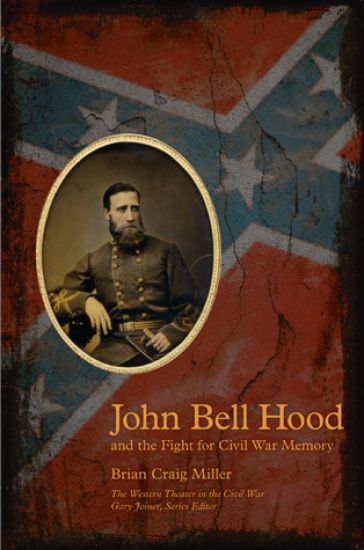
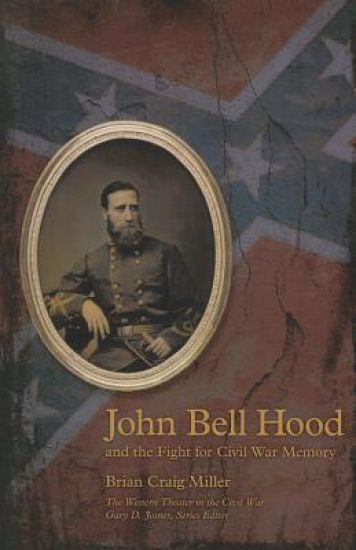
"Previous biographers have poorly understood Hood within the culture of his times, but Miller's study is a refreshing look at this important theme. Relying on the perspective of memory studies and the experience of amputees, he adds new dimensions to our understanding of Hood and the Civil War." --Earl J. Hess, author of In the Trenches at Petersburg: Field Fortifications and Confederate Defeat "Miller is particularly strong on the cultivation of Hood's legend as part of the Lost Cause narrative. . . . He has done nice work in areas previously neglected, offering the first new research on Hood to emerge in years." --David Coffey, author of John Bell Hood and the Struggle for Atlanta Some Southern generals, like Lee and Jackson, have stood the test of time, celebrated in their place in history. And then there are generals like John Bell Hood, reviled and ridiculed by generations of Civil War historians as one of the inglorious architects of the Confederate disgrace in the Western Theater. The time has come to rethink this long-held notion, argues Brian Miller, in his comprehensive new biography, John Bell Hood and the Fight for Civil War Memory, and to reassess John Bell Hood as a man, a myth, and a memory. In this first biography of the general in more than twenty years, Miller offers a new, original perspective, directly challenging those historians who have pointed to Hood's perceived personality flaws, his alleged abuse of painkillers, and other unsubstantiated claims as proof of his incompetence as a military leader. This book takes into account Hood's entire life--as a student at West Point, his meteoric rise and fall as a soldier and Civil War commander, and his career as a successful postwar businessman. In many ways, Hood represents a typical southern man, consumed by personal and societal definitions of manhood that were threatened by amputation and preserved and reconstructed by Civil War memory. Miller consults an extensive variety of sources, explaining not only what Hood did but also the environment in which he lived and how it affected him. What emerges is a more nuanced, balanced portrait, unfettered by the one-sided perceptions of previous historical narratives. It gives Hood the fair treatment he has been denied for far too long. By looking at Hood's formative years, his wartime experiences, and his postwar struggles to preserve his good name, this book opens up a provocative new perspective on the life of this controversial figure. Brian Craig Miller is an assistant professor of history at Emporia State University. He is the author of The American Memory: Americans and Their History in 1877.
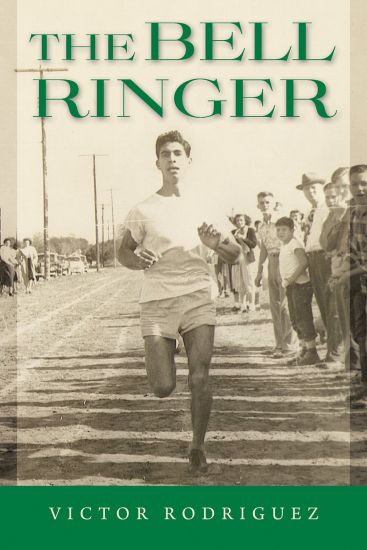
This is the story of Victor Rodriguez, star track athlete and San Antonio educator. From his earliest days in South Texas in the 1940s he broke many barriers. As a football player and track star he set records and won trophies at Edna High School, at Victoria College, and at North Texas State College. At each stage of his education, he often found himself the only Mexican American in his group.He developed his sports prowess from nine years of early morning running to the church in Edna, to ring the bell before Mass. He earned the first Hispanic scholarships as an athlete at both Victoria Junior College and North Texas State College. After graduating in 1955, he began a career in the San Antonio School District, ultimately retiring in 1994 after twelve years as Superintendent of the District. As a pioneer Mexican American educator in San Antonio, he brought dignity and respect to the people of the Westside, where he remains a role model today.
A century after it first opened its doors, the ""Little Creamery in Brenham"" is still going strong, gaining new fans every day. This charming book celebrating Blue Bell's first 100 years tells the story of the ideas, people, and Jersey cows that made Blue Bell Ice Cream the delicious sensation it is today. Filled from cover to cover with historic photographs, colorful artwork, vintage ads, and interesting facts, the book gives readers a taste of what makes Blue Bell ""the best ice cream in the country."" The story begins when Blue Bell wasn't called Blue Bell and didn't yet make ice cream, takes readers through three generations of the family-run business, and culminates with details about the company's special centennial festivities. The story of the company's unique combination of can-do spirit, small-town values, and old-fashioned optimism is told along with fun tidbits of information about its flavors, people, and frozen treats. You'll come across amusing anecdotes such as the tale of the Jelly Terror and the time when Blue Bell went to outer space. Don't be surprised if you feel compelled to run out for a half-gallon or two as you read!
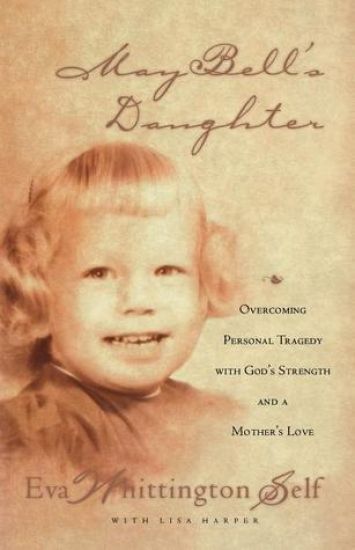
Driving on a dark, snowy road, 17-year-old Eva Whittington's car suddenly fishtailed on an icy patch, careened through the guardrail, and flipped over twice. Hurtled into the back of the car, Eva noticed her legs splayed awkwardly on the seat?legs, she would later learn, that would never again walk.Coming to grips with life in a wheelchair was heartrending. Broken in body and spirit, Eva struggled to make sense of her life, to find hope for her future. "Why, God, why?" she screamed heavenward. "What did I do to deserve this?"Though no answer came then, God had blessed Eva with a mother named May Bell, who loved the Lord, heart and soul. In the months following the accident, Eva began to seek the One who so richly dwelt in her mother. As she read her Bible and prayed, pouring out all of her despair, something changed. She began to hope.Today, Eva's story of overcoming tragedy to find purpose and joy in life is an inspiration to all. An energetic wife, mother of two preschoolers, and nationwide speaker at events such as Focus on the Family's Renewing The Heart conferences, she shares how God's strength sustains in times of trouble. Read Eva's story and grab hold of her infectious joy and hope?and let the Lord begin a new work in you, whatever circumstances you may face.
Lily Bell: Worthy of Love is timeless fable written for children yet touches the heart of all ages, especially those with special needs who long to be included. It is a story of a frail yet determined dove named Lily Bell who is unable to fly. With the help of her family and some unlikely friends, she journeys through the forest to finally find what she has been searching for: her purpose and worth. Lily Bell realizes that she can do all of the things with her friends, just in a different way.The moral of the story is we are all wonderfully made with a unique purpose and plan for our lives. Through our brokenness or "imperfections," we are able to help others. With the "perfect" self-image being projected on to today's generation, the story of Lily Bell: Worthy of Love is a heart-warming, uplifting, and relevant change that delivers a strong message of acceptance, friendship, and courage in a way that children will understand and adults will appreciate: we are all worthy of love.
Lily Bell: Worthy of Love is timeless fable written for children yet touches the heart of all ages, especially those with special needs who long to be included. It is a story of a frail yet determined dove named Lily Bell who is unable to fly. With the help of her family and some unlikely friends, she journeys through the forest to finally find what she has been searching for: her purpose and worth. Lily Bell realizes that she can do all of the things with her friends, just in a different way.The moral of the story is we are all wonderfully made with a unique purpose and plan for our lives. Through our brokenness or "imperfections," we are able to help others. With the "perfect" self-image being projected on to today's generation, the story of Lily Bell: Worthy of Love is a heart-warming, uplifting, and relevant change that delivers a strong message of acceptance, friendship, and courage in a way that children will understand and adults will appreciate: we are all worthy of love.
The autobiography of a courageous singer-songwriter, activist, and American icon."Barbara Dane is someone who is willing to follow her conscience. She is, if the term must be used, a hero."—Bob DylanA renowned folk, blues, and jazz singer who performed with some of the twentieth century’s most celebrated musicians, from Louis Armstrong to Bob Dylan. A proud progressive who has tirelessly championed racial equality and economic justice in America, and who has traveled the world to sing out against war and tyranny. An organizer, a venue owner, a record label founder, and a woman who has charted her own creative and political path for more than ninety years. Barbara Dane has led an epic, trailblazing life in music and activism, and This Bell Still Rings tells her story in her own adventurous voice. Dane’s memoir charts her trajectory from singing in union halls and at factory gates in World War II–era Detroit, to her rise as a respected blues and jazz singer, to her prominence as a folk musician frequently performing at and participating in civil rights and peace demonstrations across the US and abroad—from post-revolutionary Cuba to wartime Vietnam. This Bell Still Rings illuminates “one of the true unsung heroes of American music” (Boston Globe), and it offers a wealth of inspiration for artists, activists, and anyone seeking a life defined by courage and integrity.
Mount Bell. Take one extraordinary small town. Add a whole lot of far-from-ordinary people. A Recipe for disaster -- and love. (Country cooking recipes included)Born on the 4th of July: This July 4th promises more fireworks than the ones at the county fair -- Jake and Laura will make a few of their own and maybe they can find a love Born On The Fourth Of July. (Funnel Cake Recipe)Chocolate Covered Cheri: Jedadiah Blackheart has had one thing on his mind and that's getting his assistant, Cheri Dodson, in a vat of chocolate so he can lick it all off. Cheri knows Jedadiah is up to something, and it's certainly no good for her. Or is it? (Devilishly Good Fudge Pie Recipe)The Witching Hour: Hazel's spells always work, just not quite the way they're supposed to. Drake, the hunky werewolf next door, has an appetite for a certain witch... and it's all for her own good. Who ever heard of a virgin witch? (Sweet Potato Casserole Recipe)SnowFyer: Seth has never met a woman whose panties he couldn't get into. He is the frontman for SnowFyer, a hard rock band with a bad reputation. Among Scarlett's many talents is driving Seth crazy. (Sausage and Apple Pie Recipe)Opposites Attract: Steven's a werewolf so he doesn't particularly care for cats, but this one is so persistent Felina Eldridge simply can't resist the handsome man next door. Curiosity being ninety percent of a cat's make-up, Felina sets out to find out exactly what kind of lover a werewolf would make. (Chicken Pot Pie Recipe)
Some Southern generals, like Lee and Jackson, have stood the test of time, celebrated in their place in history. And then there are generals like John Bell Hood, reviled and ridiculed by generations of Civil War historians as one of the inglorious architects of the Confederate disgrace in the Western Theater. The time has come to rethink this long-held notion, argues Brian Miller, in his comprehensive new biography, John Bell Hood and the Fight for Civil War Memory, and to reassess John Bell Hood as a man, a myth, and a memory.In this first biography of the general in more than twenty years, Miller offers a new, original perspective, directly challenging those historians who have pointed to Hood’s perceived personality flaws, his alleged abuse of painkillers, and other unsubstantiated claims as proof of his incompetence as a military leader. This book takes into account Hood’s entire life—as a student at West Point, his meteoric rise and fall as a soldier and Civil War commander, and his career as a successful postwar businessman. In many ways, Hood represents a typical southern man, consumed by personal and societal definitions of manhood that were threatened by amputation and preserved and reconstructed by Civil War memory. Miller consults an extensive variety of sources, explaining not only what Hood did but also the environment in which he lived and how it affected him.What emerges is a more nuanced, balanced portrait, unfettered by the one-sided perceptions of previous historical narratives. It gives Hood the fair treatment he has been denied for far too long. By looking at Hood’s formative years, his wartime experiences, and his postwar struggles to preserve his good name, this book opens up a provocative new perspective on the life of this controversial figure.
Apparently, slumber parties in the mid-South 1970s were plied with a strange ritual. At midnight attendees would gather before a mirror and chant “I don’t believe in the Bell Witch” three times to see if the legendary spook would appear alongside their own reflections—a practice that echoes the “Bloody Mary” pattern following the execution of Mary Queen of Scots centuries ago. But that small circuit of preteen gatherings was neither the beginning nor the end of the Bell Witch’s travels. Indeed, the legend of the haint who terrorized the Bell family of Adams, Tennessee, is one of the best-known pieces of folklore in American storytelling—featured around the globe in popular-culture references as varied as a 1930s radio skit and a 1980s song from a Danish heavy metal band. Legend has it that “Old Kate” was investigated even by the likes of future president Andrew Jackson, who was reported to have said, “I would rather fight the British ten times over than to ever face the Bell Witch again.” While dozens of books and articles have thoroughly analyzed this intriguing tale, this book breaks new ground by exploring the oral traditions associated with the poltergeist and demonstrating her regional, national, and even international sweep. Author Rick Gregory details the ways the narrative mirrors other legends with similar themes and examines the modern proliferation of the story via contemporary digital media. The Bell Witch in Myth and Memory ultimately explores what people believe and why they believe what they cannot explicitly prove—and, more particularly, why for two hundred years so many have sworn by the reality of the Bell Witch. In this highly engaging study, Rick Gregory not only sheds light on Tennessee’s vibrant oral history tradition but also provides insight into the enduring, worldwide phenomenon that is folklore.