Kirjojen hintavertailu. Mukana 11 342 296 kirjaa ja 12 kauppaa.

Kirjahaku

Etsi kirjoja tekijän nimen, kirjan nimen tai ISBN:n perusteella.

1000 tulosta hakusanalla Benedict Boo

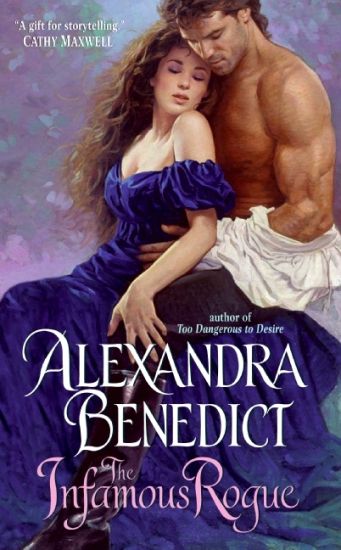
The Infamous Rogue

The Infamous Rogue

Benedict Alexandra

Avon Books
2009
pokkari
They paid no mind to society's prying eyes ...The daughter of a wealthy bandit, Sophia Dawson once lost herself in the arms of Black Hawk, the most infamous pirate ever to command the high seas. But now, determined to put her sinful past behind her, she prepares to enter society as the bride of a well-born nobleman who knows nothing of her scandalous youth. All goes according to plan until her ex-lover-now a respectable sea captain but just as handsome and dangerous as ever-appears and once again tempts her with desire. From the moment he sees Sophia again, James Hawkins wants only one thing: Revenge. He'll see to it that the reckless beauty pays for abandoning their heated affair. And so begins a battle of wills that can end only in utter ruin ...or wicked surrender.

Little Red Train: Faster, Faster

Little Red Train: Faster, Faster

Benedict Blathwayt

Red Fox
2000
nidottu
Click-clack, clicketty-clack, whoo . . . eee! Disaster! The fast rain to Pebblecombe has broken down. Everyone on the train wants to get to the fair and enjoy a great day out but now they're all stuck on the tracks. It is up to the Little Red Train and Duffy Driver to save the day. Do the little Red Train speeds up and is determined to get her passengers to the fair on time. As Duffy remarks at the end of the journey, 'You're the Little Red Express now!' Follow the train on its speedy journey and marvel at the wealth of detail in every picture.
Little Red Train: Green Light

Little Red Train: Green Light

Benedict Blathwayt

Random House Childrens Books
2003
pokkari
When Duffy the driver is told to keep on going until the lights change, that's exactly what he does - so he doesn't even notice that he's driven Little Red Train right under the channel to France! With a minimal text and bright, busy pages, Ben Blathwayt's picture books have enormous appeal for young children.
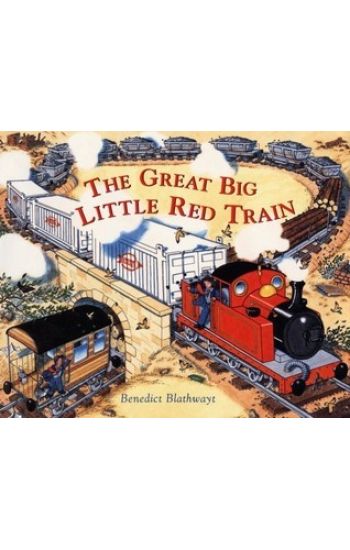
Little Red Train: Great Big Train

Little Red Train: Great Big Train

Benedict Blathwayt

Random House Childrens Books
2004
pokkari
When a lorry driver scoffs at the Little Red Train for looking old and useless, Duffy is quite upset. And the Little Red Train doesn't look quite so useless, or little, after all! Ben Blathwayt's Little Red Train books, with minimal text and big, busy pages full of intricate detail, have enormous appeal for young children.
Little Red Train's Race to the Finish

Little Red Train's Race to the Finish

Benedict Blathwayt

Random House Childrens Books
2009
pokkari
Another charming tale in The Little Red Train series which will appeal to all little boys and girls obsessed with engines, trains and things that go!The nasty Swish Train drivers have challenged Duffy and Jack to a race and the winner gets to keep the Little Red Train's very last route!
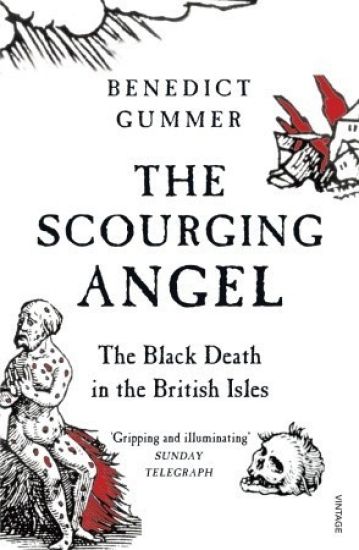
Scourging Angel

Scourging Angel

Benedict Gummer

Ccv
2010
pokkari
Nothing experienced in human history, before or since, eclipses the terror, tragedy and scale of the Black Death, the disease which killed millions of people in Medieval Europe. By the time it completed its pestilential journey through the British Isles in 1350, the Black Death had left half the population dead.
Little Red Train: To The Rescue

Little Red Train: To The Rescue

Benedict Blathwayt

Random House Childrens Books
1998
pokkari
Another charming tale in The Little Red Train series which will appeal to all little boys and girls obsessed with engines, trains and things that go! There's a big surprise around every bend in the railway track to Birchcombe village - but Duffy Driver, The Little Red Train and all their friends are ready to come to the rescue EVERY time!
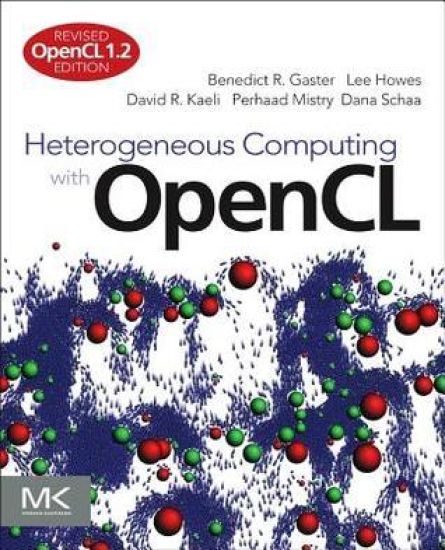
Heterogeneous Computing with OpenCL

Heterogeneous Computing with OpenCL

Benedict Gaster; Lee Howes; David R. Kaeli; Perhaad Mistry; Dana Schaa

Morgan Kaufmann Publishers In
2012
nidottu
Heterogeneous Computing with OpenCL, Second Edition teaches OpenCL and parallel programming for complex systems that may include a variety of device architectures: multi-core CPUs, GPUs, and fully-integrated Accelerated Processing Units (APUs) such as AMD Fusion technology. It is the first textbook that presents OpenCL programming appropriate for the classroom and is intended to support a parallel programming course. Students will come away from this text with hands-on experience and significant knowledge of the syntax and use of OpenCL to address a range of fundamental parallel algorithms. Designed to work on multiple platforms and with wide industry support, OpenCL will help you more effectively program for a heterogeneous future. Written by leaders in the parallel computing and OpenCL communities, Heterogeneous Computing with OpenCL explores memory spaces, optimization techniques, graphics interoperability, extensions, and debugging and profiling. It includes detailed examples throughout, plus additional online exercises and other supporting materials that can be downloaded at http://www.heterogeneouscompute.org/?page_id=7 This book will appeal to software engineers, programmers, hardware engineers, and students/advanced students.
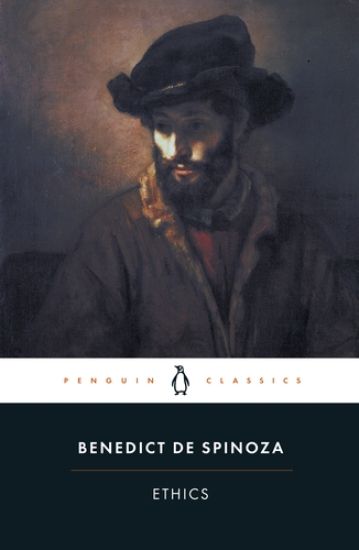
Ethics

Ethics

Benedict Spinoza

Penguin Classics
1996
pokkari
'The noblest and most lovable of the great philosophers ... ethically he is supreme' Bertrand RussellPublished shortly after his death in 1677, the Ethics is Spinoza's greatest work - a fully cohesive philosophical system that strives to provide a picture of reality and to comprehend the meaning of an ethical life. It defines in turn the nature of God, the mind, human bondage to the emotions and the power of understanding - moving from a consideration of the eternal, to speculate upon humanity's place in the natural order and the path to attainable happiness. A work of elegant simplicity, the Ethics is a brilliantly insightful consideration of the possibility of redemption through philosophical reflection.Translated by Edwin Curley with an Introduction by Stuart Hampshire
The End of Loneliness

The End of Loneliness

Benedict Wells

PENGUIN BOOKS
2019
nidottu
From internationally bestselling author Benedict Wells, a sweeping novel of love and loss, and of the lives we never get to live " D]azzling storytelling...The End of Loneliness is both affecting and accomplished -- and eternal." --John Irving "An exquisitely wrought and utterly absorbing meditation upon life, loss and love." --Ian McEwan Jules Moreau's childhood is shattered after the sudden death of his parents. Enrolled in boarding school where he and his siblings, Marty and Liz, are forced to live apart, the once vivacious and fearless Jules retreats inward, preferring to live within his memories - until he meets Alva, a kindred soul caught in her own grief. Fifteen years pass and the siblings remain strangers to one another, bound by tragedy and struggling to recover the family they once were. Jules, still adrift, is anchored only by his desires to be a writer and to reunite with Alva, who turned her back on their friendship on the precipice of it becoming more. But, just as it seems they can make amends for time wasted, invisible forces - whether fate or chance - intervene. A kaleidoscopic family saga told through the fractured lives of the three Moreau siblings, alongside a faltering, recovering love story, The End of Loneliness is a stunning meditation on the power of our memories, of what can be lost and what can never be let go. With inimitable compassion and luminous, affecting prose, Benedict Wells contends with what it means to find a way through life, while never giving up hope you will find someone to go with you.
Music and Social Justice

Music and Social Justice

Benedict Cathy

Oxford University Press Inc
2021
sidottu
In this book author Cathy Benedict challenges and reframes traditional ways of addressing many of the topics we have come to think of as social justice. Offering practical suggestions for helping both teachers and students think philosophically (and thus critically) about the world around them, each chapter engages with important themes through music making and learning as it presents scenarios, examples of dialogue with students, unit ideas and lesson plans geared toward elementary students (ages 6-14). Taken-for-granted subjects often considered beyond the understanding of elementary students such as friendship, racism, poverty, religion, and class are addressed and interrogated in such a way that honours the voice and critical thinking of the elementary student. Suggestions are given that help both teachers and students to pause, reflect and redirect dialogue with questions that uncover bias, misinformation and misunderstandings that too often stand in the way of coming to know and embracing difference. Guiding questions, which anchor many curricular mandates, are used throughout in order to scaffold critical and reflective thinking beginning in the earliest grades of elementary music education. Where does social justice reside? Whose voice is being heard and whose is being silenced? How do we come to think of and construct poverty? How is it that musics become used the way they are used? What happens to songs initially intended for socially driven purposes when their significance is undermined? These questions and more are explored encouraging music teachers to embrace a path toward socially just engagements at the elementary and middle school levels.
Music and Social Justice

Music and Social Justice

Benedict Cathy

Oxford University Press Inc
2021
nidottu
In this book author Cathy Benedict challenges and reframes traditional ways of addressing many of the topics we have come to think of as social justice. Offering practical suggestions for helping both teachers and students think philosophically (and thus critically) about the world around them, each chapter engages with important themes through music making and learning as it presents scenarios, examples of dialogue with students, unit ideas and lesson plans geared toward elementary students (ages 6-14). Taken-for-granted subjects often considered beyond the understanding of elementary students such as friendship, racism, poverty, religion, and class are addressed and interrogated in such a way that honours the voice and critical thinking of the elementary student. Suggestions are given that help both teachers and students to pause, reflect and redirect dialogue with questions that uncover bias, misinformation and misunderstandings that too often stand in the way of coming to know and embracing difference. Guiding questions, which anchor many curricular mandates, are used throughout in order to scaffold critical and reflective thinking beginning in the earliest grades of elementary music education. Where does social justice reside? Whose voice is being heard and whose is being silenced? How do we come to think of and construct poverty? How is it that musics become used the way they are used? What happens to songs initially intended for socially driven purposes when their significance is undermined? These questions and more are explored encouraging music teachers to embrace a path toward socially just engagements at the elementary and middle school levels.
Papal Overlordship and European Princes, 1000-1270

Papal Overlordship and European Princes, 1000-1270

Benedict Wiedemann

Oxford University Press
2021
sidottu
Papal Overlordship and European Princes, 1000-1270 offers a new perspective on the political history of the central Middle Ages by focusing on the alliances between popes and rulers who claimed a special relationship with the successor of St Peter. Rather than seeing these relationships as attempts by the popes to assert their lordship and monarchy over the entire world, as many past narratives have, this study asks what rulers got out of these relationships, what they meant, and how they were constructed. Papal government - in fact much pre-modern government in general - was based around replying to petitions. Thus, rulers and subjects, by entering into a relationship with the pope, were able to petition Rome and have their requests approved and given the sanction of papal authority. Papal power was enlisted in the causes of petitioners. All of these relationships - between the popes and the kings of England, Aragon, Sicily, Hungary, Portugal, and a myriad of further polities - have at one time or another been called 'feudal', a word that explains little or nothing about the nature and expectations of the alliance. The second strand of this study examines how these relationships were constructed and how words and concepts circulated. Eventually terms like 'fief' and 'vassal', and ideas about deposition of vassal-kings, were introduced into the political discourse around papal authority over 'their' kings. It always remained the case, however, that rulers sought out papal overlordship because of the opportunity it gave them to adopt and adapt papal power for their own purposes.
Complicating Articulation in Art Cinema

Complicating Articulation in Art Cinema

Benedict Morrison

Oxford University Press
2021
sidottu
Complicating Articulation in Art Cinema argues that art cinema draws attention to its disjointed, multi-parted form, but that criticism has too frequently sought to explain this complexity away by stitching the parts together in totalizing readings. This stitching together has often relied on the assumption that the solution to art cinema's puzzles lies in interpreting each film as the expression of a focalizing character's internal disturbance. This book challenges this assumption. It argues that the attempt to explain formal complexity through this character-centric approach reduces formal achievements and enigmatic characters to inadequate approximations of one another. Reference to character cannot fully tame unschematic and unpredictable combinations of - and collisions between - contradictory levels of narration, clashing styles, discontinuously edited shots, jarring allusions, dislocated genre signifiers, and intermedial elements. Through close analyses of films by Roberto Rossellini, Robert Bresson, Luis Buñuel, Terence Davies, Peter Greenaway, and Kelly Reichardt, Complicating Articulation in Art Cinema offers an ethics of criticism that suggests that the politics of art cinema's eccentric form are limited by character-centred readings. Each of the featured films presents inarticulate characters, whose emotional and intellectual lives are unknowable, further complicating the relationship between character and form. This book argues that, by acknowledging this resistance to interpretation, critics can think in new ways about art cinema's interrogation of the possibilities of knowledge.
Scripts of Terror: The Stories Terrorists Tell Themselves

Scripts of Terror: The Stories Terrorists Tell Themselves

Benedict Wilkinson

Oxford University Press, USA
2020
sidottu
This book explores terrorism as a strategic choice-- one made carefully and deliberately by rational actors. Through an analysis of the terrorist groups of Egypt, Saudi Arabia and Yemen, this book charts a series of different strategic 'scripts' at play in terrorist behavior, from survival, to efforts in mobilizing a supporter base, through to the grinding attrition of a long terrorist campaign. The theme that runs through all the organizations is the unbridgeable gap between their strategic vision, and what actually unfolds. Regardless of which script terrorists follow, they often fall short of achieving their political ambitions. And yet, despite its frequent failure, the terrorist strategy is returned to time and again-- people continue to join such groups, and to commit mindless acts of violence. Scripts of Terror explores the reasons behind this. It asks why, if terrorism is so rarely successful and so hard to pull off, its approach remains an appealing one. And it examines how terrorists formulate their strategies, and how they envisage achieving their ambitions through violence. Most importantly, it explores why they so often fail.
Samuel Coleridge-Taylor's Hiawatha

Samuel Coleridge-Taylor's Hiawatha

Benedict Taylor

OXFORD UNIVERSITY PRESS INC
2025
sidottu
The Hiawatha trilogy of cantatas (1898--1900), based on Henry Wadsworth Longfellow's poem The Song of Hiawatha, were some of the most popular and widely performed pieces of music in the opening decade of the twentieth century. As a result, their young African British composer, Samuel Coleridge-Taylor (1875--1912), became widely celebrated in the UK and North America. In this volume, Benedict Taylor examines the musical and political significance of Coleridge-Taylor through the reception history of his Hiawatha trilogy. Coleridge-Taylor's music and efforts on behalf of the African diaspora were made largely from within the white frame in which he grew up and highlight the difficulties of transcultural or interracial mediation at this point in history. Longfellow's source text already constitutes a contested narrative of ethnic identity and appropriation through its epic framing of Native American history from a white, settler perspective. And further complicating the story, the success of Hiawatha made Coleridge-Taylor a focal point for African American attempts at cultural recognition. Not only does Hiawatha afford the chance to explore the music of one of the most important composers of colour in the Western classical music tradition, but the work and its reception forms a prism with which to analyse questions of canonicity, marginalization, race, and identity from the composer's own day to the present.
Samuel Coleridge-Taylor's Hiawatha

Samuel Coleridge-Taylor's Hiawatha

Benedict Taylor

OXFORD UNIVERSITY PRESS INC
2025
nidottu
The Hiawatha trilogy of cantatas (1898--1900), based on Henry Wadsworth Longfellow's poem The Song of Hiawatha, were some of the most popular and widely performed pieces of music in the opening decade of the twentieth century. As a result, their young African British composer, Samuel Coleridge-Taylor (1875--1912), became widely celebrated in the UK and North America. In this volume, Benedict Taylor examines the musical and political significance of Coleridge-Taylor through the reception history of his Hiawatha trilogy. Coleridge-Taylor's music and efforts on behalf of the African diaspora were made largely from within the white frame in which he grew up and highlight the difficulties of transcultural or interracial mediation at this point in history. Longfellow's source text already constitutes a contested narrative of ethnic identity and appropriation through its epic framing of Native American history from a white, settler perspective. And further complicating the story, the success of Hiawatha made Coleridge-Taylor a focal point for African American attempts at cultural recognition. Not only does Hiawatha afford the chance to explore the music of one of the most important composers of colour in the Western classical music tradition, but the work and its reception forms a prism with which to analyse questions of canonicity, marginalization, race, and identity from the composer's own day to the present.
Common Wealth, Common Good

Common Wealth, Common Good

Benedict Wagner-Rundell

Oxford University Press
2015
sidottu
Common Wealth, Common Good is a study of the political discourse of the Commonwealth of Poland-Lithuania in the late seventeenth and early eighteenth centuries. It argues that the Polish-Lithuanian political tradition was preoccupied during this period with moral concepts, in particular that of public virtue, understood as the subordination of private interests to the common good. Polish-Lithuanian politicians and commentators analysed their politics primarily in moral terms, arguing that the Commonwealth existed for the promotion of virtue, and depended for its survival upon on the retention of virtue among rulers and citizens. They analysed the acute political dysfunction that the Commonwealth experienced from the late seventeenth century as the result of corruption in the body politic. Proposals for reform of the Commonwealth's government aimed at reversing this corruption and restoring virtuous government in the service of the common good. Benedict Wagner-Rundell analyses the most important political treatises, including reform proposals, of the late seventeenth and early eighteenth century, to demonstrate how virtue was central to contemporaries' understanding of the Commonwealth and its situation. He also argues that a concern with promoting virtue drove the development of local government during this period, and animated efforts for reform of the Commonwealth at the Sejm (Parliament) of 1712-13, and during the General Confederation of Tarnogród of 1715-17, a mass uprising by the Polish-Lithuanian nobility against King Augustus II. Placing the subject in international context, Common Wealth, Common Good argues that the Polish-Lithuanian political tradition's continuing preoccupation with virtue set it apart from republican traditions elsewhere in early-modern Europe and North America, where thinkers were beginning to consider whether self-interest could be harnessed as a positive political force. The Polish-Lithuanian tradition's failure to match such developments elsewhere in Europe arguably demonstrates its backwardness: however, its emphasis on the need for political systems to be underpinned by shared values still has great relevance today.
Passion's Fictions from Shakespeare to Richardson

Passion's Fictions from Shakespeare to Richardson

Benedict S. Robinson

Oxford University Press
2021
sidottu
Passion's Fictions traces the intimate links between literature and the sciences of mind and soul from the age of Shakespeare to the rise of the novel. It chronicles the emergence of new sciences of the passions between the sixteenth and eighteenth centuries, and it argues that this history was shaped by rhetoric that contained the most extensively particularized discourse on the passions, offering principles for moving and affecting the passions of others in concrete social scenes. This rhetoric of the passions centered on narrative as the instrument of a non-theoretical knowledge of the passions in their particularity, predicated on an account of passion as an intimate relation between an impassioned mind and an impassioning world: rhetoric offers a kind of externalist psychology, formalized in the relation of passion to action and underwriting an account of narrative as a means of both moving passion and knowing it. This volume describes the psychology of the passions before the discipline of psychology, tracing the influence of rhetoric on theories of the passions from Francis Bacon to Adam Smith and using that history to read literary works by Shakespeare, Milton, Haywood, Richardson, and others. Narrative offers a means of knowing and moving the passions by tracing them to the events and objects that generate them; the history of narrative practices is thus a key part of the history of the psychology of the passions at a critical moment in its development.