Kirjahaku
Etsi kirjoja tekijän nimen, kirjan nimen tai ISBN:n perusteella.
1000 tulosta hakusanalla Benjamin Ströbele
The Life of An American Jew in Israel: Benjamin H. Freedman-in His Own Words
Benjamin H. Freedman; Albert Einstein; Samuel Untermeyer
Createspace Independent Publishing Platform
2012
nidottu
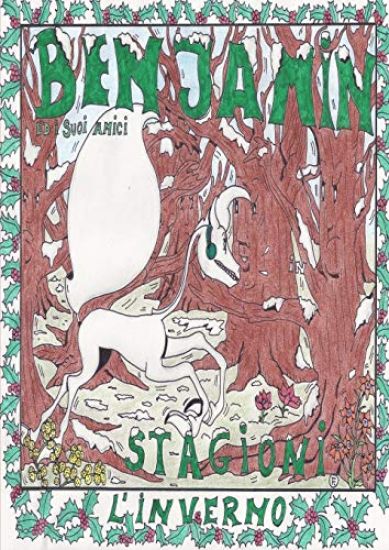
Brevi storie di un cavallo di nome Benjamin ed i suoi amici animali,ambientato in inverno.
*A BBC Radio 4 Book of the Week* Benjamin Zephaniah, who travelled the world for his art and his humanitarianism, tells the one story that encompasses it all: the story of his life. In the early 1980s when punks and Rastas were on the streets protesting about unemployment, homelessness and the National Front, Benjamin’s poetry could be heard at demonstrations, outside police stations and on the dance floor. His mission was to take poetry everywhere, and to popularise it by reaching people who didn’t read books. His poetry was political, musical, radical and relevant. By the early 1990s, Benjamin had performed on every continent in the world (a feat which he achieved in only one year) and he hasn’t stopped performing and touring since. Nelson Mandela, after hearing Benjamin’s tribute to him while he was in prison, requested an introduction to the poet that grew into a lifelong relationship, inspiring Benjamin’s work with children in South Africa. Benjamin would also go on to be the first artist to record with The Wailers after the death of Bob Marley in a musical tribute to Nelson Mandela.The Life and Rhymes of Benjamin Zephaniah is a truly extraordinary life story which celebrates the power of poetry and the importance of pushing boundaries with the arts.
Autobiography Of Benjamin Franklin
Benjamin Franklin
Createspace Independent Publishing Platform
2012
nidottu
Benjamin's Travel
Duke University Press
2018
pokkari
Walter Benjamin's writings are popular among Chinese scholars, but variances of translation and interpretation have created an understanding of Benjamin that bears little resemblance to how Western scholars discuss and use Benjamin. This special issue uses that dissemblance as a starting point to explore what Benjamin's writings have meant and continue to mean, bringing these multiple different versions of Benjamin into conversation. Contributors explore Benjamin’s fascination with the spiritual power of color, connect his youthful fascination with Chinese thought with his later writings, compare his ideas to the work of Chinese filmmaker Jia Zhangke and Vietnamese author Bùi Anh Tu?n, and analyze his experiments in imbuing book reviews with social commentary. This issue also includes a new translation of Benjamin's essay "Chinese Paintings at the National Gallery." Contributors: Walter Benjamin, Briankle G. Chang, Astrid Deuber-Mankowsky, Peter Fenves, Martin Jay, Matthew Lau, Duy Lap Nguyen, Richard A. Rand
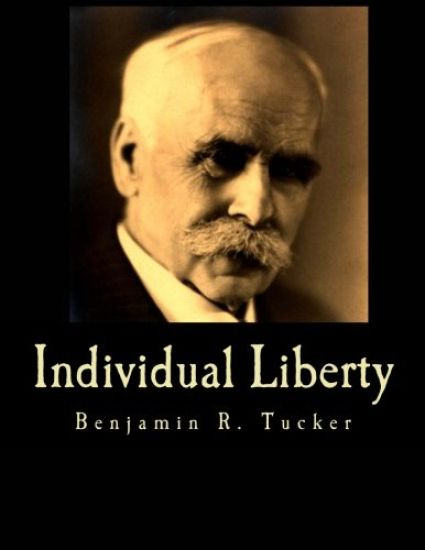
Individual Liberty (Large Print Edition): Selections From the Writings of Benjamin R. Tucker
Benjamin R. Tucker
Createspace Independent Publishing Platform
1926
nidottu
LARGE PRINT EDITION More at LargePrintLiberty.com Selections from the writings of Benjamin R. Tucker.
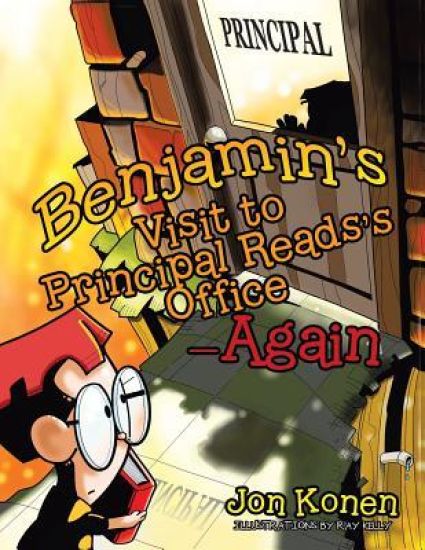
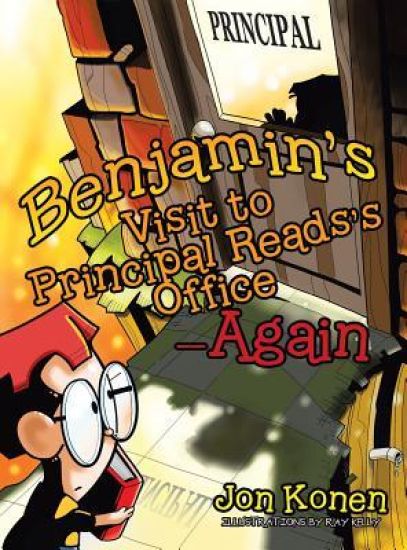
A trip to the principal's office is something students do not necessarily look forward to. After all, it usually means someone did something wrong. But does it have to? Author Jon Konen's Benjamin's Visit to Principal Reads's Office-Again starts like all his other visits to the principal's office. Benjamin misbehaves in class, and his teacher send him to the principal's office for a "discussion." But this time, it's different. They just sit there. Benjamin hears the principal make phone calls to students' parents about their children's positive behaviors and achievements. And they exercise Maybe these visits aren't as scary as you might think. Benjamin's Visit to Principal Reads's Office is an entertaining children's story, but its lessons go beyond children. Parents and educators will learn about alternatives to punishment that can help students who have behavior issues. And they work. When something works, everyone benefits.
Newbery Award-winning author Marguerite Henry's beloved novel about a boy who would do anything to paint is now available in a refreshed paperback edition. Benjamin West was born with an extraordinary gift--the gift of creating paintings of people, animals, and landscapes so true to life they "took one's breath away." But Benjamin is part of a deeply religious Quaker family, and Quaker beliefs forbid the creation of images. Because Benjamin's family didn't approve of his art, he had to make his own painting supplies. The local Native Americans taught him how to mix paints from earth, clay, and plants. And his cat, Grimalkin, sacrificed hair from his tail for Ben's brushes. This classic story from Newbery Award-winning author Marguerite Henry features the original text with gorgeous new cover art.
Benjamin Noldmanns Geschichte der Aufklärung in Abyssinien
Adolph Freiherr Von Knigge
Createspace Independent Publishing Platform
2013
nidottu
Adolph Freiherr von Knigge: Benjamin Noldmanns Geschichte der Aufkl rung in Abyssinien Edition Holzinger. Taschenbuch Berliner Ausgabe, 2013 Vollst ndiger, durchgesehener Neusatz mit einer Biographie des Autors bearbeitet und eingerichtet von Michael Holzinger Erstdruck: G ttingen (Johann Christian Dieterich) 1791. Textgrundlage ist die Ausgabe: Adolph Freiherr von Knigge: Der Traum des Herrn Brick. Essays, Satiren, Utopien. Herausgegeben von Hedwig Voegt, Berlin: R tten & Loening, 1979. Herausgeber der Reihe: Michael Holzinger Reihengestaltung: Viktor Harvion Umschlaggestaltung unter Verwendung des Bildes: Adolph Freiherr von Knigge in Oberhauptmannsuniform (Pastell, um 1793)
Hale started as a young Jehu in his father's single coach business, and at age 26 he was managing the family business. He then organized and consolidated opposing stage lines to launch the Eastern Stage Company. During the difficult times of economic hardship in Newburyport, Hale continued to provide passenger and mail service from Newburyport to Boston and Portsmouth NH. In 1814, Hale purchased a large brick building for the new Wolfe Tavern which became the headquarters of Eastern Stage. The Eastern Stage Company was successful and became an acknowledged power in the stagecoach industry for more than 20 years. In 1833, Eastern had 500 horses and 60 stages, was debt-free, and had no accidents or injuries. Hale was later awarded a Presidential appointment as the Postmaster in Newburyport, a prestigious position in town.
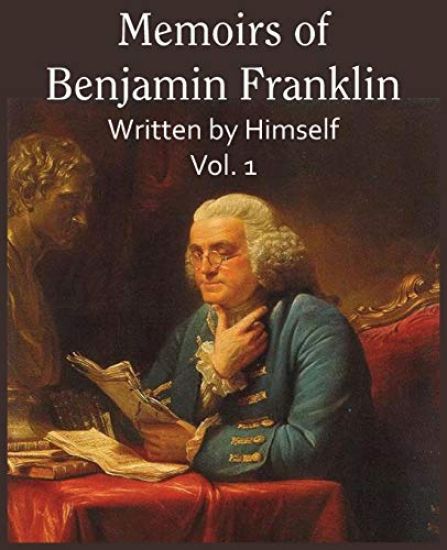
Memoirs of Benjamin Franklin; Written by Himself Vol. 1
Benjamin Franklin
Bottom of the Hill Publishing
2014
pokkari
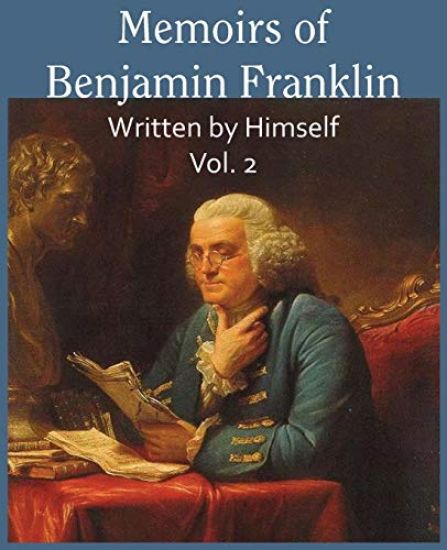
Memoirs of Benjamin Franklin; Written by Himself Vol. 2
Benjamin Franklin
Bottom of the Hill Publishing
2014
pokkari
If the Future has any remedy for this situation, do not hesitate to provide it. That is to say, Ike and Claire Wanzandae, HELP HELP HELP HELP. I am (perhaps not for long), Benjamin FranklinIke Saturday has seen better days. For one thing, his pen pal, Benjamin Franklin (yes, that Benjamin Franklin), is the target of an angry mob after Ike's plan to help the Founding Fathers with some intel from the future seriously backfired. For another, he's decided to mail himself back in time with the help of his girlfriend, Claire Wanzandae, and it's not a particularly comfortable way to travel.Once Ike tracks B-Freezy down in 1776, it becomes clear that his pal is less than impressed with the irritating, modern-day rescuer, partially because Ike has a habit of making things worse for Ben, and partially because Ben is incredibly cranky when not in the presence of numerous meat pies. Which speaks to another issue for the pair: they have no money, no food, and basically no plan for saving the country. But Claire won't be able to cover for Ike back home in the future forever, and the British are looking pretty impatient, so Ike and B-Freezy will have to come up with something quickly if they want to avoid an epic, history-destroying disaster.In this hilarious sequel to Benjamin Franklin: Huge Pain in My . . . , Adam Mansbach and Alan Zweibel take Ike and B-Freezy's antics to the next level as this ill-paired (and sometimes actually ill) duo hold the future of the world in their not-so-capable hands.
The private letters of a statesman are always inviting material for historians and when he has claim to literary fame as well the correspondence assumes a double significance. Benjamin Disraeli (1804-1881) belonged to an age that gave pride of place to the written word as an instrument of both business and pleasure. This volume includes 363 letters (many previously unpublished) from his school boy days to his establishment in the Tory camp under the patronage of Lord Lyndhurst. Most prominent are Disraeli's letters to his sister, Sarah, with whom he corresponded frequently over several decades. To her he confided his hopes, interspersed with his observations and descriptions of social, literary and political events. The letters to Sarah supply a skeleton around which Disraeli's young manhood can be reconstructed and shed valuable light on the remaining documents in the volume. The correspondence also includes accounts of his tour of the Low Countries and the Rhine in 1824, his adventurous trip to Spain, Greece, the Near East and Egypt in 1830, his tense negotiations with publishers and his campaign to shine as a member of aristocratic society and win political patronage. The letters demonstrate the fine eye for detail and the capacity for self-dramatization and literary conceits which mark his novels. With their annotations they also provide a remarkably detailed account of life in the upper reaches of English society as viewed from below, and of Disraeli's ambitions to enter that life.