Kirjojen hintavertailu. Mukana 11 342 296 kirjaa ja 12 kauppaa.

Kirjahaku

Etsi kirjoja tekijän nimen, kirjan nimen tai ISBN:n perusteella.

1000 tulosta hakusanalla Colin Lago

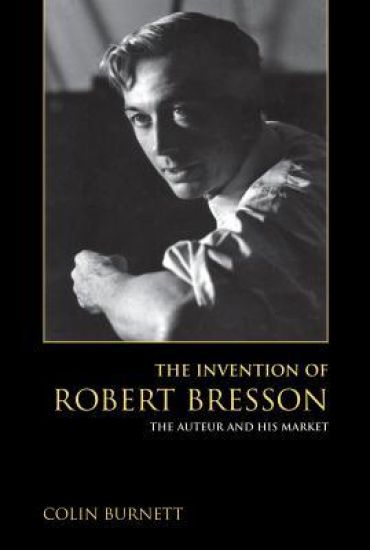
The Invention of Robert Bresson

The Invention of Robert Bresson

Colin Burnett

Indiana University Press
2016
sidottu
Challenging the prevailing notion among cinephiles that the auteur is an isolated genius interested primarily in individualism, Colin Burnett positions Robert Bresson as one whose life's work confronts the cultural forces that helped shape it. Regarded as one of film history's most elusive figures, Bresson (1901–1999) carried himself as an auteur long before cultural magazines, like the famed Cahiers du cinéma, advanced the term to describe such directors as Jacques Tati, Alfred Hitchcock, and Jean-Luc Godard. In this groundbreaking study, Burnett combines biography with cultural history to uncover the roots of the auteur in the alternative cultural marketplace of midcentury France.
The Invention of Robert Bresson

The Invention of Robert Bresson

Colin Burnett

Indiana University Press
2016
pokkari
Challenging the prevailing notion among cinephiles that the auteur is an isolated genius interested primarily in individualism, Colin Burnett positions Robert Bresson as one whose life's work confronts the cultural forces that helped shape it. Regarded as one of film history's most elusive figures, Bresson (1901–1999) carried himself as an auteur long before cultural magazines, like the famed Cahiers du cinéma, advanced the term to describe such directors as Jacques Tati, Alfred Hitchcock, and Jean-Luc Godard. In this groundbreaking study, Burnett combines biography with cultural history to uncover the roots of the auteur in the alternative cultural marketplace of midcentury France.
The Rise and Fall of Development Theory

The Rise and Fall of Development Theory

Colin Leys

Indiana University Press
2009
pokkari
"He has this wonderful and rare capacity to delineate the most complex of arguments in the most limpid prose. He never takes refuge in jargon. He demolishes pretentiousness. He is disarmingly honest. He hits you between the eyes. He is not afraid to be a lone voice as, increasingly, nowadays he is, the still small voice of humane sanity in an increasingly barbarous and market-oriented world. He makes immediate sense to anybody voting marginally to the left of Genghis Khan, Mrs. Thatcher or Newt Gingrich." —John Lonsdale, Fellow of Trinity College, Cambridge. This book is a "stock-taking" of development theory at the end of the 20th century. It argues that the assumptions on which development theory has rested since the 1950s no longer hold. The postcolonial "third world" for which development theory was originally developed has fractured into increasingly diverse regions, while the end of the postwar regime of regulated international trade and capital movements has drastically curtailed the scope for state economic intervention. A much broader based, more historical and more explicitly political theoretical effort is now called for.
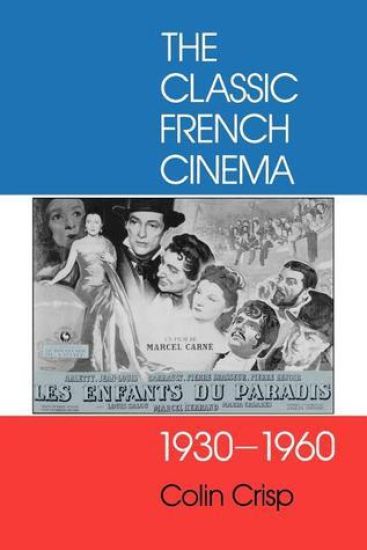
The Classic French Cinema, 1930-1960

The Classic French Cinema, 1930-1960

Colin Crisp

Indiana University Press
1997
pokkari
"We can usually expect something fresh and different to emerge from Australia, and this study is no exception." —American Cinematographer "An important contribution to cinema history . . . especially impressive in its analysis of the French cinema industry, in terms of both mode of production and personnel, and in its analysis of the French technological base." —Richard Abel From 1930 to 1960, France produced some of the most famous films ever made, such as Jean Vigo's Zéro de conduite and Jean Cocteau's Orphée. Here Colin Crisp investigates this critical period and details the extraordinary ingenuity of French filmmakers, who worked under economic and technological constraints that affected both the production and the consumption of films.
Africa Since Independence

Africa Since Independence

Colin Legum

Indiana University Press
1999
pokkari
Activist, scholar, and political journalist Colin Legum assesses Africa's experience since independence and offers judicious predictions about the continent's future. Covering 50 years of sweeping change, this provocative and insightful book examines Africa's struggle for democracy, mounting economic problems, and AIDS.
Philosophical Provocations

Philosophical Provocations

Colin McGinn

MIT Press
2017
sidottu
Pithy, direct, and bold: essays that propose new ways to think about old problems, spanning a range of philosophical topics.In Philosophical Provocations, Colin McGinn offers a series of short, sharp essays that take on philosophical problems ranging from the concept of mind to paradox, altruism, and the relation between God and the Devil. Avoiding the usual scholarly apparatus and embracing a blunt pithiness, McGinn aims to achieve as much as possible in as short a space as possible while covering as many topics as possible. Much academic philosophical writing today is long, leaden, citation heavy, dense with qualifications, and painful to read. The essays in Philosophical Provocations are short, direct, and engaging, often challenging philosophical orthodoxy as they consider issues in mind, language, knowledge, metaphysics, biology, ethics, and religion.McGinn is looking for new ways to think about old problems. Thus he writes, about consciousness, "I think we have been all wrong," and goes on to suggest that both consciousness and the unconscious are mysteries. Summing up his proposal on altruism, he remarks, "My suggestion can now be stated, somewhat brutally, as follows: human altruism is the result of parasitic manipulation." He takes a moment to reflect: "I really don't know why it is good to be alive, though I am convinced that the standard suggestions don't work." McGinn gets straight to the point and states his position with maximum clarity. These essays offer provocative invitations to think again.
Species of Mind

Species of Mind

Colin Allen; Marc Bekoff

Bradford Books
1999
pokkari
The heart of this book is the reciprocal relationship between philosophical theories of mind and empirical studies of animal cognition.Colin Allen (a philosopher) and Marc Bekoff (a cognitive ethologist) approach their work from a perspective that considers arguments about evolutionary continuity to be as applicable to the study of animal minds and brains as they are to comparative studies of kidneys, stomachs, and hearts. Cognitive ethologists study the comparative, evolutionary, and ecological aspects of the mental phenomena of animals. Philosophy can provide cognitive ethology with an analytical basis for attributing cognition to nonhuman animals and for studying it, and cognitive ethology can help philosophy to explain mentality in naturalistic terms by providing data on the evolution of cognition. This interdiscipinary approach reveals flaws in common objections to the view that animals have minds.The heart of the book is this reciprocal relationship between philosophical theories of mind and empirical studies of animal cognition. All theoretical discussion is carefully tied to case studies, particularly in the areas of antipredatory vigilance and social play, where there are many points of contact with philosophical discussions of intentionality and representation. Allen and Bekoff make specific suggestions about how to use philosophical theories of intentionality as starting points for empirical investigation of animal minds, and they stress the importance of studying animals other than nonhuman primates.
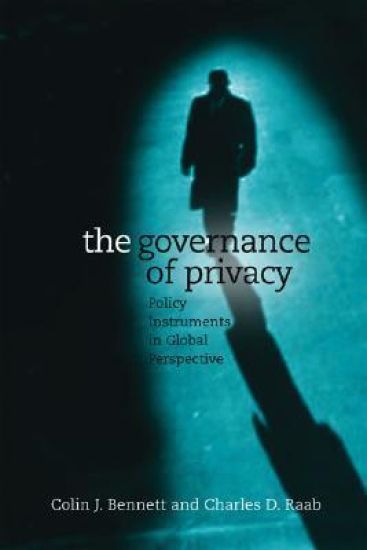
The Governance of Privacy

The Governance of Privacy

Colin J. Bennett; Charles Raab

MIT Press
2006
pokkari
Analyzes privacy policy instruments available to contemporary industrial states, from government regulations and transnational regimes to self-regulation and privacy enhancing technologies.Privacy protection, according to Colin Bennett and Charles Raab, involves politics and public policy as much as it does law and technology. Moreover, the protection of our personal information in a globalized, borderless world means that privacy-related policies are inextricably interdependent. In this updated paperback edition of The Governance of Privacy, Bennett and Raab analyze a broad range of privacy policy instruments available to contemporary advanced industrial states, from government regulations and transnational regimes to self-regulation and privacy-enhancing technologies. They consider two possible dynamics of privacy regulation-a "race to the bottom," with competitive deregulation by countries eager to attract global investment in information technology, versus "a race to the top," with the progressive establishment of global privacy standards.Bennett and Raab begin by discussing the goals of privacy protection, the liberal and individualist assumptions behind it, and the neglected relationship between privacy and social equity. They describe and evaluate different policy instruments, including the important 1995 Directive on Data Protection from the European Union, as well as the general efficacy of the "top-down" statutory approach and self-regulatory and technological alternatives to it. They evaluate the interrelationships of these policy instruments and their position in a global framework of regulation and policy by state and non-state actors. And finally, they consider whether all of this policy activity at international, national, and corporate levels necessarily means higher levels of privacy protection.
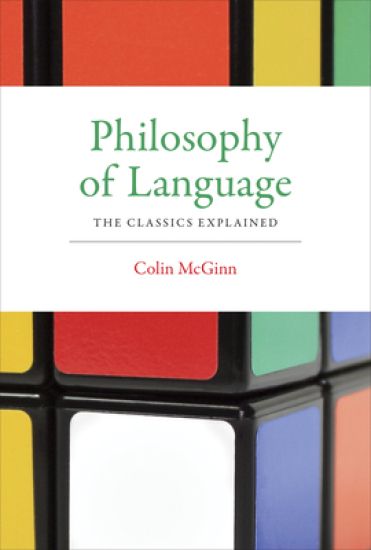
Philosophy of Language

Philosophy of Language

Colin McGinn

MIT Press
2016
pokkari
An introduction to philosophy of language through systematic and accessible explanations of ten classic texts by such thinkers as Frege, Kripke, Russell, and Putnam.Many beginning students in philosophy of language find themselves grappling with dense and difficult texts not easily understood by someone new to the field. This book offers an introduction to philosophy of language by explaining ten classic, often anthologized, texts. Accessible and thorough, written with a unique combination of informality and careful formulation, the book addresses sense and reference, proper names, definite descriptions, indexicals, the definition of truth, truth and meaning, and the nature of speaker meaning, as addressed by Frege, Kripke, Russell, Donnellan, Kaplan, Evans, Putnam, Tarski, Davidson, and Grice. The explanations aim to be as simple as possible without sacrificing accuracy; critical assessments are included with the exposition in order to stimulate further thought and discussion.Philosophy of Language will be an essential resource for undergraduates in a typical philosophy of language course or for graduate students with no background in the field. It can be used in conjunction with an anthology of classic texts, sparing the instructor much arduous exegesis.ContentsFrege on Sense and Reference * Kripke on Names * Russell on Definite Descriptions * Donnellan's Distinction * Kaplan on Demonstratives * Evans on Understanding Demonstratives * Putnam on Semantic Externalism * Tarski's Theory of Truth * Davidson's Semantics for Natural Language * Grice's Theory of Speaker Meaning
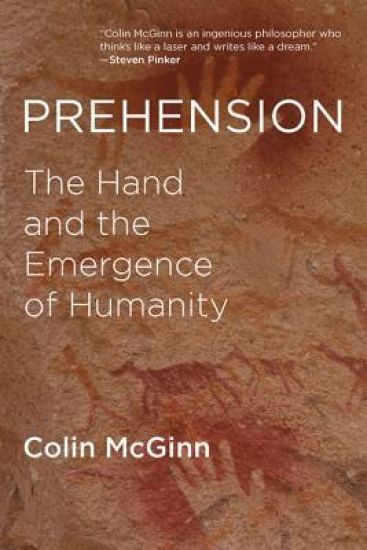
Prehension

Prehension

Colin McGinn

MIT Press
2017
pokkari
In praise of the hand: A philosopher considers the crucial role of the hand in human evolution, particularly with respect to language. "McGinn is an ingenious philosopher who thinks like a laser and writes like a dream."-Steven PinkerThis book is a hymn to the hand. In Prehension, Colin McGinn links questions from science to philosophical concerns to consider something that we take for granted: the importance of the hand in everything we do. Drawing on evolutionary biology, anatomy, archaeology, linguistics, psychology, and philosophy, among other disciplines, McGinn examines the role of the hand in shaping human evolution. He finds that the development of our capacity to grasp, to grip, to take hold (also known as prehension) is crucial in the emergence of Homo sapiens.The human species possesses language, rational thought, culture, and a specific affective capacity; but there was a time when our ancestors had none of these. How did we become what we so distinctively are, given our early origins? McGinn, following Darwin and others, calls the hand the source of our biological success. When our remote ancestors descended from trees, they adopted a bipedal gait that left the hands free for other work; they began to make tools, which led to social cooperation and increased brain capacity. But McGinn goes further than others in arguing for the importance of the hand; he speculates that the hand played a major role in the development of language, and presents a theory of primitive reference as an outgrowth of prehension. McGinn sings the praises of the hand, and evolution, in a philosophical key. He mixes biology, anthropology, analytical philosophy, existential philosophy, sheer speculation, and utter amazement to celebrate humans' achievement of humanity.
Logic Primer, third edition

Logic Primer, third edition

Colin Allen; Michael Hand

MIT PRESS LTD
2022
nidottu
The new edition of a comprehensive and rigorous but concise introduction to symbolic logic. Logic Primer offers a comprehensive and rigorous introduction to symbolic logic, providing concise definitions of key concepts, illustrative examples, and exercises. After presenting the definitions of validity and soundness, the book goes on to introduce a formal language, proof theory, and formal semantics for sentential logic (chapters 1-3) and for first-order predicate logic (chapters 4-6) with identity (chapter 7). For this third edition, the material has been reorganized from four chapters into seven, increasing the modularity of the text and enabling teachers to choose alternative paths through the book. New exercises have been added, and all exercises are now arranged to support students moving from easier to harder problems. Its spare and elegant treatment makes Logic Primer unique among textbooks. It presents the material with minimal chattiness, allowing students to proceed more directly from topic to topic and leaving instructors free to cover the subject matter in the way that best suits their students. The book includes more than thirty exercise sets, with answers to many of them provided in an appendix. The book's website allows students to enter and check proofs, truth tables, and other exercises interactively.
The Story of Cruel and Unusual

The Story of Cruel and Unusual

Colin Dayan

MIT PRESS LTD
2024
pokkari
A searing indictment of the American penal system that finds the roots of the recent prisoner abuse at Abu Ghraib and Guant namo in the steady dismantling of the Eighth Amendment's prohibition of "cruel and unusual" punishment. The revelations of prisoner abuse and torture at Abu Ghraib and more recently at Guant namo were shocking to most Americans. And those who condemned the treatment of prisoners abroad have focused on U.S. military procedures and abuses of executive powers in the war on terror, or, more specifically, on the now-famous White House legal counsel memos on the acceptable limits of torture. But in The Story of Cruel and Unusual, Colin Dayan argues that anyone who has followed U.S. Supreme Court decisions regarding the Eighth Amendment prohibition of "cruel and unusual" punishment would recognize the prisoners' treatment at Abu Ghraib and Guant namo as a natural extension of the language of our courts and practices in U.S. prisons. In fact, it was no coincidence that White House legal counsel referred to a series of Supreme Court decisions in the 1980s and 1990s in making its case for torture.Dayan traces the roots of "acceptable" torture to slave codes of the nineteenth century that deeply embedded the dehumanization of the incarcerated in our legal system. Although the Eighth Amendment was interpreted generously during the prisoners' rights movement of the late 1960s and 1970s, this period of judicial concern was an anomaly. Over the last thirty years, Supreme Court decisions have once again dismantled Eighth Amendment protections and rendered such words as "cruel" and "inhuman" meaningless when applied to conditions of confinement and treatment during detention. Prisoners' actual pain and suffering have been explained away in a rhetorical haze--with rationalizations, for example, that measure cruelty not by the pain or suffering inflicted, but by the intent of the person who inflicted it. The Story of Cruel and Unusual is a stunningly original work of legal scholarship, and a searing indictment of the U.S. penal system.
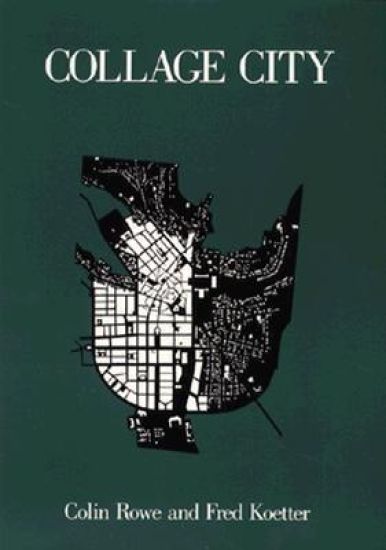
Collage City

Collage City

Colin Rowe; Fred Koetter

MIT Press
1984
pokkari
This book is a critical reappraisal of contemporary theories of urban planning and design and of the role of the architect-planner in an urban context. The authors, rejecting the grand utopian visions of "total planning" and "total design," propose instead a "collage city" which can accommodate a whole range of utopias in miniature.
As I Was Saying

As I Was Saying

Colin Rowe

MIT Press
1999
pokkari
Colin Rowe has achieved legendary status as one of a handful ofoutstanding studio teachers of architecture and urban design to emergewithin the last two generations.Colin Rowe has achieved legendary status as one of a handful of outstanding studio teachers of architecture and urban design to emerge within the last two generations. His writings reveal the powerful insight and dispassionate, authoritative intelligence that mark him as one of the preeminent architectural thinkers of this perplexing half century.Divided into three volumes, in more or less chronological order, As I Was Saying includes articles, essays, eulogies, lectures, reviews, and memoranda. Some appeared only in obscure journals, and many are published here for the first time.
As I Was Saying

As I Was Saying

Colin Rowe

MIT Press
1999
pokkari
Colin Rowe has achieved legendary status as one of a handful of outstanding studio teachers of architecture and urban design to emerge within the last two generations. His writings reveal the powerful insight and dispassionate, authoritative intelligence that mark him as one of the preeminent architectural thinkers of this perplexing half century.Divided into three volumes, in more or less chronological order, As I Was Saying includes articles, essays, eulogies, lectures, reviews, and memoranda. Some appeared only in obscure journals, and many are published here for the first time.
Levinas

Levinas

Colin Davis

University of Notre Dame Press
1997
nidottu
In recent years, there has been a resurgence of interest in the work of Emmanuel Levinas, widely recognized as one of the most important yet difficult philosophers of the twentieth century. In this much-needed introduction, Davis unpacks the concepts at the center of Levinas's thought-alterity, the Other, the face, infinity-concepts which have previously presented readers with major problems of interpretation. Davis traces the development of Levinas's thought over six decades, describing the context in which he worked, and the impact of his writings. He argues that Levinas' work remains tied to the ontological tradition with which he wants to break, and demonstrates how his later writing tries to overcome this dependency by its increasingly disruptive, sometimes opaque, textual practice. He discusses Levinas's theological writings and his relationship to Judaism, as well as the reception of his work by contemporary thinkers, arguing that the influence of his work has led to a growing interest in ethical issues among poststructuralist and postmodernist thinkers in recent years. Comprehensive and clearly written, this book is essential reading for students and teachers in Continental philosophy, French studies, literary theory, and theology.
Paul Cullen, John Henry Newman, and the Catholic University of Ireland, 1845–1865
The history of the Catholic University of Ireland has long been overshadowed by the personality and writings of its first rector, John Henry Newman. Newman—an official candidate for sainthood and author of the renowned The Idea of a University—played a vital role in the foundation of the university. But Colin Barr's new study paints a richer portrait of CUI's history by focusing on the university itself and on the influence of Paul Cullen, archbishop of Armagh and then Dublin. Most historians have based their treatments of the Catholic University of Ireland on Newman's own voluminous correspondence and later writings, and have tended to uncritically accept Newman's own understanding of his role in Dublin and his relationship with Cullen. Newman has been cast in the role of a liberal, creative visionary who was frustrated at every turn by the obscurantist, ultramontane Cullen. Barr seeks to reassess Cullen's role in the founding and history of the University by utilizing previously unavailable sources and by relocating the history of the Catholic University in its Irish context. Paul Cullen, John Henry Newman, and the Catholic University of Ireland, 1845-1865 presents a more balanced treatment of both the University and of Newman and Cullen's role in its history. The resulting text is a fascinating story of determination, conflict, and failure.
The Navy in the Post-Cold War World

The Navy in the Post-Cold War World

Colin S. Gray

Pennsylvania State University Press
1994
sidottu
The Navy in the Post-Cold War World is the first book to invite the reader to think strategically—that is, in means-ends terms—about the navy in the new post-Soviet era. It provides a unique synthesis of strategic theory, defense analysis, and history. Colin Gray first explains how sea power "works"; explores the strategic relationship among sea, land, and air power, with particular attention to the course of a conflict viewed as a whole; and ventures boldly into the region of the meaning of space strategy for maritime power and the relevance of that power in the still emerging post-Cold War security environment.The Navy in the Post-Cold War World is unusual because it is written by an internationally recognized general strategic theorist and analyst rather than by a long-standing naval writer. Gray is thus better able to view naval issues in proper perspective. Gray delves deeply into the role of sea power as an enabling agent and team player in the overall enterprise of national and international security. He provides the most current assessment of what sea and space power mean for each other as well as envisioning the future of maritime-oriented defense.
The Navy in the Post-Cold War World

The Navy in the Post-Cold War World

Colin S. Gray

Pennsylvania State University Press
1994
pokkari
The Navy in the Post-Cold War World is the first book to invite the reader to think strategically—that is, in means-ends terms—about the navy in the new post-Soviet era. It provides a unique synthesis of strategic theory, defense analysis, and history. Colin Gray first explains how sea power "works"; explores the strategic relationship among sea, land, and air power, with particular attention to the course of a conflict viewed as a whole; and ventures boldly into the region of the meaning of space strategy for maritime power and the relevance of that power in the still emerging post-Cold War security environment.The Navy in the Post-Cold War World is unusual because it is written by an internationally recognized general strategic theorist and analyst rather than by a long-standing naval writer. Gray is thus better able to view naval issues in proper perspective. Gray delves deeply into the role of sea power as an enabling agent and team player in the overall enterprise of national and international security. He provides the most current assessment of what sea and space power mean for each other as well as envisioning the future of maritime-oriented defense.