

Kirjahaku
Etsi kirjoja tekijän nimen, kirjan nimen tai ISBN:n perusteella.
1000 tulosta hakusanalla Conrad Mbewe
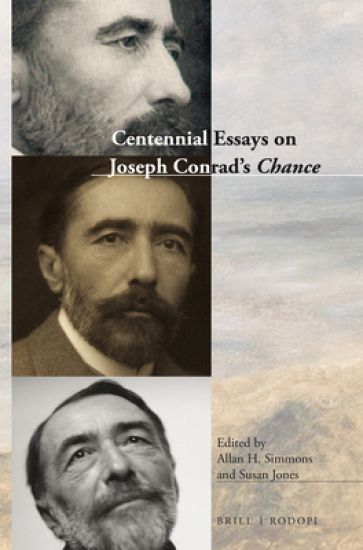
Centennial Essays on Joseph Conrad's Chance
BRILL
2015
nidottu
When Joseph Conrad’s novel Chance appeared in serial form in the New York Herald in 1912 and in book form in 1914 it established the author’s financial security for the first time. Following years of struggle to reach a wide audience for his fiction, Conrad benefitted from the American marketing of this novel for the women readers of romance. Aggressive advertising promoted the writer’s new focus on a female protagonist and Conrad’s division of the story’s location between land and sea. The novel proved popular and lucrative. Yet in spite of its economic success, Chance remains one of Conrad’s less well-known narratives. This fresh new collection of essays from both young and established scholars opens up a lively critical debate taking Chance beyond the status of best-selling romance. In a striking re-evaluation of the novel these writers examine Chance’s innovative narrative strategies, its up-to-the-minute commentary on female politics, contemporary ethics, as well as its antecedents in classical debate and the significance of Conrad’s last use of his seaman narrator Marlow.
The Joseph Conrad Program in Narrative Processing
HELION COMPANY
2026
sidottu

Little Lit Reading Writg&conrad&hamlet Pkg
PEARSON
2009
nidottu
Das Familienbuch Des Johann Conrad Schweighauser: Ein Basler Selbstzeugnis Aus Den Jahren 1663 - 1712
Julia Grutter
Schwabe Verlagsgruppe AG
2012
sidottu
Familienbuch als Selbstzeugnis Das Familienbuch von Johann Conrad Schweighauser (1648-1713), das er zwischen 1663 und 1712 verfasst hat, steht im Zentrum dieser kommentierten Edition. Schweighauser wurde 1648 in Basel als Sohn eines Notars geboren. Mit 15 Jahren wurde er in die Geschafte seines Vaters eingefuhrt und 1673 zum Notar gewahlt. Zwei Jahre zuvor hatte er Valeria Stocklin (1649-1720/29) geheiratet, mit der er zwolf Kinder hatte, wovon sechs das Kindesalter uberlebten. Schweighausers politische Karriere begann am 30. November 1691 mit seiner Wahl zum Sechser der Rebleuten-Zunft; 1710 folgte die Wahl in den Kleinen Rat der Stadt Basel. Seine politische Laufbahn nimmt im Familienbuch jedoch nur wenig Raum ein: Zu Beginn der Eintrage stehen ausserordentliche Ereignisse im Vordergrund, zu denen das Auftauchen eines Zwergs, der Sturz eines Menschen in den Rhein, aber auch die Beobachtung von Kometen zu zahlen sind. Letztere thematisiert Matthias Boos in seinem Beitrag '... ein ernstlich zeichen seines zorns. Darstellung und Deutung der Kometen von 1664/65 in Johann Conrad Schweighausers Familienbuch'. Im Verlauf des Familienbuchs verschiebt sich der Schwerpunkt auf die Aufzeichnung familiarer Angelegenheiten, wie beispielweise Geburten, Taufen oder Hochzeiten. Diese geben einen Einblick in die sozialen Beziehungen Schweighausers, wie Silvia Flubacher und Elijah Strub im Kapitel 'Taufpatenschaften als Form der sozialen Vernetzung' aufzeigen. Der historische Kontext und das familiare Umfeld werden in den Beitragen von Simone Zweifel beleuchtet: 'Basel zu Zeiten Johann Conrad Schweighausers' und 'Johann Conrad Schweighauser und seine Familie'.

Robert Dexter Conrad
OmniScriptum
2026
pokkari

Gervais Et Conrad
Les 400 Coups
2026
sidottu
A Historical Guide to Joseph Conrad
Oxford University Press Inc
2010
sidottu
Born to Polish parents in what is now known as the Ukraine, Joseph Conrad would become one of the greatest writers in the English language. With works like Lord Jim, The Nigger of the "Narcissus," and Heart of Darkness, he not only solidified his place in the panethon of great novelists, but also established himself as a keen-eyed chronicler of the social and political themes that animated the contemporary world around him. The original essays assembled here by John G. Peters showcase the abundance of historical material Conrad drew upon to create his varied literary corpus. Essays show how the author mined his early life as a sailor to pen gripping, realistic tales of nautical life while issuing scathing indictments of colonialism and capitalist cupidity in works like Almayer's Folly and Heart of Darkness. His unique sense of himself as an outsider is explored in relation to his pointed political novels that critiqued corruption and terrorism, most notably in Nostromo and The Secret Agent. In addition to his major works, essays consider Conrad's contributions as an innovative modernist and his unique role in the nineteenth-century literary marketplace. Complete with an up-to-date bibliography and illustrated chronology, A Historical Guide to Joseph Conrad provides an invaluable resource to the life and work of the major novelist.
A Historical Guide to Joseph Conrad
Oxford University Press Inc
2009
nidottu
Born to Polish parents in what is now known as the Ukraine, Joseph Conrad would become one of the greatest writers in the English language. With works like Lord Jim, The Nigger of the ¨Narcissus,¨ and Heart of Darkness, he not only solidified his place in the panethon of great novelists, but also established himself as a keen-eyed chronicler of the social and political themes that animated the contemporary world around him. The original essays assembled here by John G. Peters showcase the abundance of historical material Conrad drew upon to create his varied literary corpus. Essays show how the author mined his early life as a sailor to pen gripping, realistic tales of nautical life while issuing scathing indictments of colonialism and capitalist cupidity in works like Almayer's Folly and Heart of Darkness. His unique sense of himself as an outsider is explored in relation to his pointed political novels that critiqued corruption and terrorism, most notably in Nostromo and The Secret Agent. In addition to his major works, essays consider Conrad's contributions as an innovative modernist and his unique role in the nineteenth-century literary marketplace. Complete with an up-to-date bibliography and illustrated chronology, A Historical Guide to Joseph Conrad provides an invaluable resource to the life and work of the major novelist.
The Strange Short Fiction of Joseph Conrad
Daphna Erdinast-Vulcan
Oxford University Press
1999
sidottu
This study engages with the troubled question of authorial subjectivity and ethics in Modernism in general and in Conrad's short fiction in particular, and offers an original theoretical perspective, inspired by the work of Derrida and the early philosophical writings of M. M. Bakhtin. Part One of the book focuses on the relational dynamics in 'Under Western Eyes' and 'The Secret Sharer', and develops a 'heterobiographical' reading matrix, which serves as a psycho-textual and philosophical approach to modes of authorial presence in the text. Part Two offers close readings of ten short stories spanning the whole of Conrad's career and clustered into five chapters--'Writing and Fratricide', 'The Pathos of Authenticity', 'The Poetics of Cultural Despair', 'The Romantic paradox', and 'Addressing the Woman'. This part of the book engages with the interpretative problems posed by these stories through a cultural-historical perspective, linking Conrad's essentially Romantic sensibility and his unique position on the threshold of Modernism with some of the issues that have emerged from the 'Postmodern turn': the relationship between metaphysics and subjectivity, the conception of inter-subjectivity as prior to and constitutive of subjectivity; the permeability of textual and psychological boundary-lines; and the desire for subjective aesthetization. These issues, which can all be traced back to the cultural crisis of the turn of the century, are still with us at the close of the millennium.
Oxford Reader's Companion to Conrad
Owen Knowles; Gene M. Moore
Oxford University Press
2001
nidottu
'Scholarly, ambitious and scrupulous'. This is how the TLS recently described the Oxford Reader's Companion Series. In September 2000, the book which pioneered the series, The Oxford Reader's Companion to Dickens came out in paperback. Now the Oxford Reader's Companions to Hardy, Trollope, Conrad, and George Eliot will follow on from that success. In this format these books are designed specifically to appeal to students of literature. Each contains a more comprehensive and accessible range of information than any other reference work on these writers. Jozef Teodor Konrad Korzeniowski had an astonishing life. 'Pole, Catholic, and nobleman' is how he described himself as at the age of 5. He was born in the Ukraine of Polish parents and spent his childhood in exile. It was only after fifteen years at sea that he began writing in English, his third language and the one whose genius had, as he put it, 'adopted' him. Owen Knowles and Gene M. Moore, together with their team of distinguished Advisers and Contributors, have created a unique and authoritative reference work on all things Conradian. Over 400 entries cover Conrad's novels, stories, essays, and reviews; his friends, family, and associates; films and adaptations; ships and voyages; places associated with his life and works; his influences and sources; his reputation and critical approaches to his work; historical contexts to his life. Entries include: Conrad's life: health, Polish inheritance, the sea, ships and voyages People: Borys Conrad, Apollo and Ewa Korzeniowski, J. M. Barrie, Stephen Crane, Stefan Zeromski Places: America, Bangkok, Berdyczow, Congo, Cracow, Marseilles Novels: Almayer's Folly, Lord Jim, Nostromo Stories, essays, and reviews: 'An Anarchist', 'Typhoon', 'Autocracy and War', 'Legends', 'Tales of the Sea' Influences and Sources: James Brooke, Alighieri Dante, Charles Dickens, Napoleon Bonaparte, Emile Zola Characters: Almayer family, Mr Jones, Jim, Captain Mitchell, Nostromo, the Professor, Edith Travers Reputation: biographies, films, influences on other writers, portraits and other images, translations Historical context: First World War, Polish question, women's suffrage movement In addition to the A-Z entries the Companion offers extra material: a classified contents list with headwords grouped in thematic batches, Conrad's family tree, a useful chronology spanning Conrad's life, maps showing Conrad's travels, an index of references to Conrad's works, and an alphabetical list of frequently cited texts.
Tracing the Aesthetic Principle in Conrad s Novels sets out to revolutionize our reading of Joseph Conrad s works and challenge the critical heritage that accompanies them. Levin identifies the emergence of an aesthetic principle in Conrad s novels and theorizes that principle through the concept of the otherwise present, which Levin defines as that which provokes desire and perpetuates it by barring its appeasement. This book offers a detailed analysis of Lord Jim, Nostromo, Under Western Eyes, The Arrow of Gold and Suspense, alongside a poststructuralist-inspired explication of Conrad s literary vision and its defining principle. This study is an important source for both the newcomers and the initiated to Conrad s oeuvre.
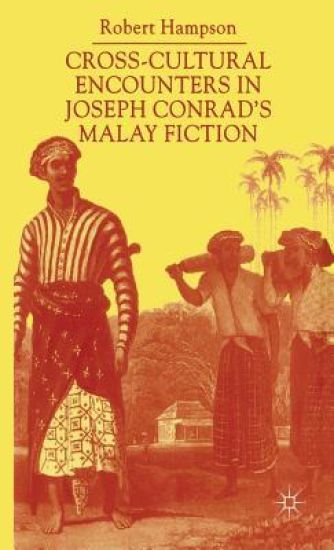
Cross-Cultural Encounters in Joseph Conrad’s Malay Fiction
R. Hampson
Palgrave Macmillan
2000
sidottu
This is the first major study to bring together for examination all of Conrad's Malay fiction: the early novels, Almayer's Folly , An Outcast of the Islands , and Lord Jim ; the two later novels, Victory and The Rescue ; and various short stories, such as The Lagoon and Karain . The volume focuses on cross-cultural encounters, cultural identity and cultural dislocation, paying particular attention to issues of race and gender. He also situates Conrad's fiction in relation to earlier English accounts of South-East Asia.
The Imperial Quest and Modern Memory explores relationships between narrative and imperium in the context of Western Modernism by examining the Quest as a vexed trope in Heart of Darkness, Passage to India, TheSheltering Sky, and The Quiet American. The book takes stock of twentieth century theory regarding the Quest--as archetype, trope, and construct, considers the dominant expression and the imperial organization of this trope in Western culture and iconography from the Dark Ages to the Age of Empire, explores the ways in which this trope both lingers and changes in the context of Western Modernism, and finally gauges its permutations in Modern discourse. The Imperial Quest and Modern Memory's central claim is that the Modern novel simultaneously reinscribes and subverts Western and imperial manifestations of the Quest. Heart of Darkness, Passage to India, TheSheltering Sky, and The Quiet American are remarkably Modern and subversive narratives. They participate in the revolutionary projects of early and high Modernism and are often in marked opposition to imperial praxis. Yet they are also profoundly influenced by the deep ideological and metaphoric structures of Western culture. Thus, the Quest trope--specifically in its Western and imperial manifestations--lingers in Modern Memory and certainly in the Modern novel. This expansive study emphasizes intriguing intersections between past and present, culture and archetype, norm and narrative, memory and contemporaneity.
The Imperial Quest and Modern Memory explores relationships between narrative and imperium in the context of Western Modernism by examining the Quest as a vexed trope in Heart of Darkness, Passage to India, TheSheltering Sky, and The Quiet American. The book takes stock of twentieth century theory regarding the Quest--as archetype, trope, and construct, considers the dominant expression and the imperial organization of this trope in Western culture and iconography from the Dark Ages to the Age of Empire, explores the ways in which this trope both lingers and changes in the context of Western Modernism, and finally gauges its permutations in Modern discourse. The Imperial Quest and Modern Memory's central claim is that the Modern novel simultaneously reinscribes and subverts Western and imperial manifestations of the Quest. Heart of Darkness, Passage to India, TheSheltering Sky, and The Quiet American are remarkably Modern and subversive narratives. They participate in the revolutionary projects of early and high Modernism and are often in marked opposition to imperial praxis. Yet they are also profoundly influenced by the deep ideological and metaphoric structures of Western culture. Thus, the Quest trope--specifically in its Western and imperial manifestations--lingers in Modern Memory and certainly in the Modern novel. This expansive study emphasizes intriguing intersections between past and present, culture and archetype, norm and narrative, memory and contemporaneity.
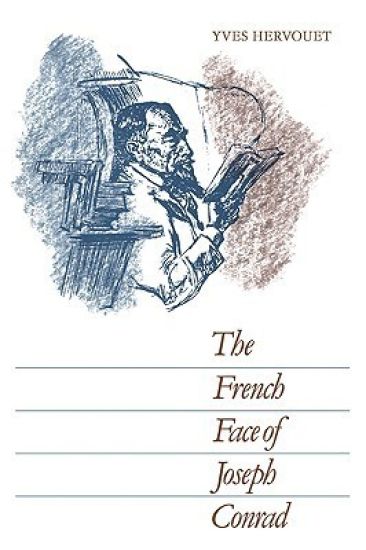
The French Face of Joseph Conrad
Yves Hervouet; Lindsay Newman
Cambridge University Press
2008
pokkari
Joseph Conrad has up to now been regarded as a novelist with 'dual' Polish and English national affinities. This study argues for a triple identity by presenting the French face of Conrad's work, and demonstrates that his knowledge of the French language and its literature (which preceded his acquisition of the English language) has profound implications for the study of the novels. A survey of Conrad's literary and cultural background leads into an analysis of the effect on his writing of numerous French authors, chief among them Flaubert, Maupassant and Anatole France. Documenting these influences chronologically, Yves Hervouet builds up a picture of Conrad at work. In addition he discusses in more theoretical terms their aesthetic, philosophical and technical aspects and examines possible implications for Conrad's creative originality. A large-scale account of Conrad's extensive involvement with the French literary tradition, Yves Hervouet's book is a milestone in our understanding of his work. It will have a major impact on Conrad scholarship and as a study of cross-cultural influence, it will be of interest to all students of comparative literature in the period.
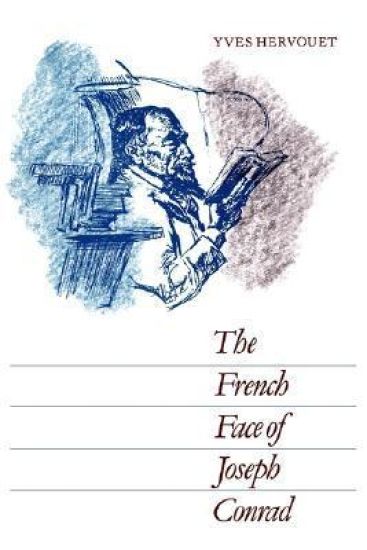
The French Face of Joseph Conrad
Yves Hervouet; Lindsay Newman
Cambridge University Press
1990
sidottu
Joseph Conrad has up to now been regarded as a novelist with ‘dual’ Polish and English national affinities. This study argues for a triple identity by presenting the French face of Conrad’s work, and demonstrates that his knowledge of the French language and its literature (which preceded his acquisition of the English language) has profound implications for the study of the novels. A survey of Conrad’s literary and cultural background leads into an analysis of the effect on his writing of numerous French authors, chief among them Flaubert, Maupassant and Anatole France. Documenting these influences chronologically, Yves Hervouet builds up a picture of Conrad at work. In addition he discusses in more theoretical terms their aesthetic, philosophical and technical aspects and examines possible implications for Conrad’s creative originality. The first large-scale account of Conrad’s extensive involvement with the French literary tradition, Yves Hervouet’s book is a milestone in our understanding of his work. It will have a major impact on Conrad scholarship and as a study of cross-cultural influence, it will be of interest to all students of comparative literature in the period.
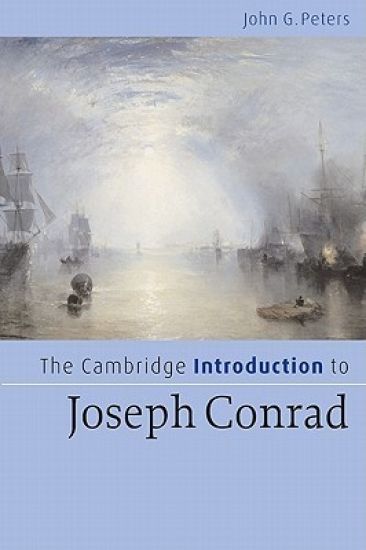
Joseph Conrad is one of the most intriguing and important modernist novelists. His writing continues to preoccupy twenty-first-century readers. This introduction by a leading scholar is aimed at students coming to Conrad's work for the first time. The rise of postcolonial studies has inspired interest in Conrad's themes of travel, exploration, and racial and ethnic conflict. John Peters explains how these themes are explored in his major works, Nostromo, Lord Jim and Heart of Darkness, as well as his short stories. He provides an essential overview of Conrad's fascinating life and career and his approach to writing and literature. A guide to further reading is included which points to some of the most useful secondary criticism on Conrad. This is a most comprehensive and concise introduction to studying Conrad, and will be essential reading for students of the twentieth-century novel and of modernism.
Joseph Conrad is one of the most intriguing and important modernist novelists. His writing continues to preoccupy twenty-first-century readers. This introduction by a leading scholar is aimed at students coming to Conrad's work for the first time. The rise of postcolonial studies has inspired interest in Conrad's themes of travel, exploration, and racial and ethnic conflict. John Peters explains how these themes are explored in his major works, Nostromo, Lord Jim and Heart of Darkness, as well as his short stories. He provides an essential overview of Conrad's fascinating life and career and his approach to writing and literature. A guide to further reading is included which points to some of the most useful secondary criticism on Conrad. This is a most comprehensive and concise introduction to studying Conrad, and will be essential reading for students of the twentieth-century novel and of modernism.