Kirjojen hintavertailu. Mukana 11 717 486 kirjaa ja 12 kauppaa.

Kirjahaku

Etsi kirjoja tekijän nimen, kirjan nimen tai ISBN:n perusteella.

1000 tulosta hakusanalla Content Team Audiolearn

Web Content Credibility

Web Content Credibility

Adam Wierzbicki

Springer International Publishing AG
2018
sidottu
This book introduces readers to Web content credibility evaluation and evaluation support. It highlights empirical research and establishes a solid foundation for future research by presenting methods of supporting credibility evaluation of online content, together with publicly available datasets for reproducible experimentation, such as the Web Content Credibility Corpus. The book is divided into six chapters. After a general introduction in Chapter 1, including a brief survey of credibility evaluation in the social sciences, Chapter 2 presents definitions of credibility and related concepts of truth and trust. Next, Chapter 3 details methods, algorithms and user interfaces for systems supporting Web content credibility evaluation. In turn, Chapter 4 takes a closer look at the credibility of social media, exemplified in sections on Twitter, Q&A systems, and Wikipedia, as well as fake news detection. In closing, Chapter 5 presents mathematical and simulation models of credibility evaluation, before a final round-up of the book is provided in Chapter 6.Overall, the book reviews and synthesizes the current state of the art in Web content credibility evaluation support and fake news detection. It provides researchers in academia and industry with both an incentive and a basis for future research and development of Web content credibility evaluation support services.
Procedural Content Generation in Games

Procedural Content Generation in Games

Noor Shaker; Julian Togelius; Mark J. Nelson

Springer International Publishing AG
2018
nidottu
This book presents the most up-to-date coverage of procedural content generation (PCG) for games, specifically the procedural generation of levels, landscapes, items, rules, quests, or other types of content. Each chapter explains an algorithm type or domain, including fractal methods, grammar-based methods, search-based and evolutionary methods, constraint-based methods, and narrative, terrain, and dungeon generation. The authors are active academic researchers and game developers, and the book is appropriate for undergraduate and graduate students of courses on games and creativity; game developers who want to learn new methods for content generation; and researchers in related areas of artificial intelligence and computational intelligence.
Visual Content Indexing and Retrieval with Psycho-Visual Models
This book provides a deep analysis and wide coverage of the very strong trend in computer vision and visual indexing and retrieval, covering such topics as incorporation of models of Human Visual attention into analysis and retrieval tasks. It makes the bridge between psycho-visual modelling of Human Visual System and the classical and most recent models in visual content indexing and retrieval. The large spectrum of visual tasks, such as recognition of textures in static images, of actions in video content, image retrieval, different methods of visualization of images and multimedia content based on visual saliency are presented by the authors. Furthermore, the interest in visual content is modelled with the means of the latest classification models such as Deep Neural Networks is also covered in this book. This book is an exceptional resource as a secondary text for researchers and advanced level students, who are involved in the very wide research in computer vision,visual information indexing and retrieval. Professionals working in this field will also be interested in this book as a reference.
From Content-based Music Emotion Recognition to Emotion Maps of Musical Pieces
The problems it addresses include emotion representation, annotation of music excerpts, feature extraction, and machine learning. The book chiefly focuses on content-based analysis of music files, a system that automatically analyzes the structures of a music file and annotates the file with the perceived emotions. Further, it explores emotion detection in MIDI and audio files. In the experiments presented here, the categorical and dimensional approaches were used, and the knowledge and expertise of music experts with a university music education were used for music file annotation. The automatic emotion detection systems constructed and described in the book make it possible to index and subsequently search through music databases according to emotion. In turn, the emotion maps of musical compositions provide valuable new insights into the distribution of emotions in music and can be used to compare that distribution in different compositions, or to conduct emotional comparisons of different interpretations of the same composition.
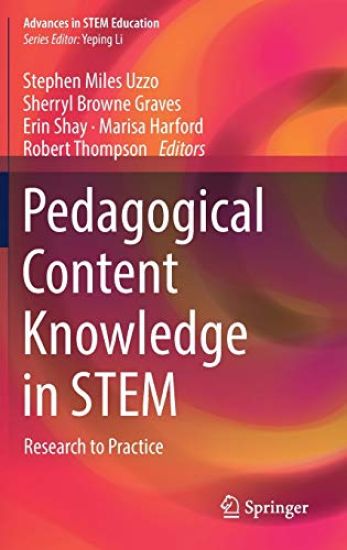
Pedagogical Content Knowledge in STEM

Pedagogical Content Knowledge in STEM

Springer International Publishing AG
2018
sidottu
This volume represents both recent research in pedagogical content knowledge (PCK) in science, technology, engineering and math (STEM), as well as emerging innovations in how PCK is applied in practice. The notion of “research to practice” is critical to validating how effectively PCK works within the clinic and how it can be used to improve STEM learning. ?As the need for more effective educational approaches in STEM grows, the importance of developing, identifying, and validating effective practices and practitioner competencies are needed. This book covers a wide range of topics in PCK in different school levels (middle school, college teacher training, teacher professional development), and different environments (museums, rural). The contributors believe that vital to successful STEM education practice is recognition that STEM domains require both specialized domain knowledge as well as specialized pedagogical approaches. The authors of this work were chosen because of their extensive fieldwork in PCK research and practice, making this volume valuable to furthering how PCK is used to enlighten the understanding of learning, as well as providing practical instruction. This text helps STEM practitioners, researchers, and decision-makers further their interest in more effective STEM education practice, and raises new questions about STEM learning.
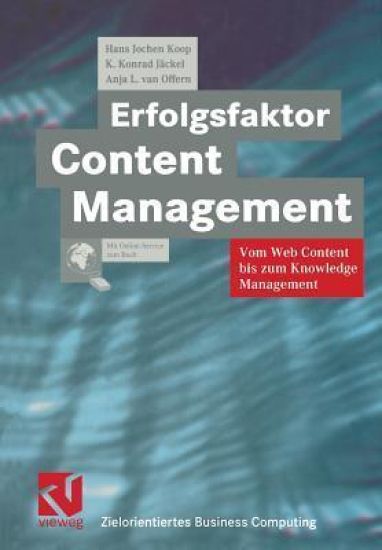
Erfolgsfaktor Content Management

Erfolgsfaktor Content Management

Hans Jochen Koop; K. Konrad Jäckel; Anja L. van Offern

Springer Vieweg
2014
nidottu
Content Management ist eine der Kernkompetenzen auf dem Weg zur Marktführerschaft. Das Buch bietet den State-of-the-Art und richtet sich an Verantwortliche aller angesprochenen Branchen: Vom Industrieunternehmen über den Handel bis zum Dienstleistungssektor. Vermittelt wird konkrete Praxis, inklusive Technik, Organisation, Geschäftsprozesse, Personal und Marketing.
Visual Content Processing and Representation

Visual Content Processing and Representation

Springer-Verlag Berlin and Heidelberg GmbH Co. K
2003
nidottu
The purpose of VLBV 2003 was to provide an international forum for the d- cussion of the state of the art of visual content processing techniques, standards, and applications covering areas such as: video/image analysis, representation and coding, communications and delivery, consumption, synthesis, protection, and adaptation. The topics of special interest include all the areas relevant to image communications nowadays, from representation and coding to content classi?cation, adaptation, and personalization. A meeting covering such a wide range of topics takes many years to develop. So, please follow a brief story of the evolution of this relevant and specialized forum and of its adaptation to the prevailing interests along time. At the beginning of 1993, the idea of a specialized workshop to discuss topics in advanced image communications came in Lausanne, Switzerland, at a m- ting of the steering committee of the International Picture Coding Symposium. Therefore, the so-called International Workshop on Coding Techniques for Very Low Bit-rate Video VLBV was born as low bit-rate research was considered to be the leading edge. The ?rst workshop was held at the University of Illinois at Urbana-Champaign, USA, in 1993; the second at the University of Essex in Colchester, UK, in April 1994; the third at NTT in Tokyo, Japan, in November 1995;thefourthattheUniversityofLink¨ oping,Sweden,inJuly1997;the?fthin Urbana (again) in October 1998. Until this last workshop, VLBV life was closely tied with MPEG-4, that is to low bit-rate research.
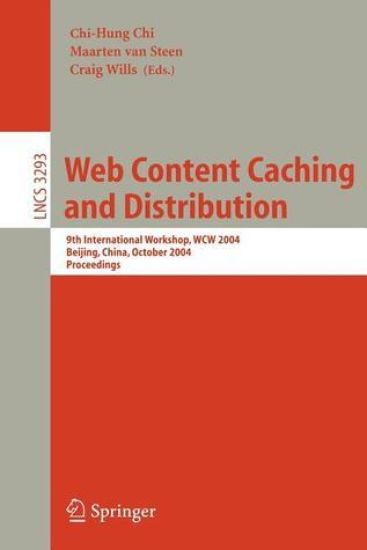
Web Content Caching and Distribution

Web Content Caching and Distribution

Springer-Verlag Berlin and Heidelberg GmbH Co. K
2004
nidottu
Since the start of the International Workshop on Web Caching and Content Distribution (WCW) in 1996, it has served as the premiere meeting for researchers and practitioners to exchange results and visions on all aspects of content caching, distribution, and delivery. Building on the success of the previous WCW meetings, WCW 2004 extended its scope and covered interesting research and deployment areas relating to content services as they move through the Internet. This year, WCW was held in Beijing, China. Although it was the first time that WCW was held in Asia, we received more than 50 high quality papers from five continents. Fifteen papers were accepted as regular papers and 6 papers as synopses to appear in the proceedings. The topics covered included architectural issues, routing and placement, caching in both traditional content delivery networks as well as in peer-- peer systems, systems management and deployment, and performance evaluation. We would like to take this opportunity to thank all those who submitted papers to WCW 2004 for their valued contribution to the workshop. This event would not have been possible without the broad and personal support and the invaluable suggestions and contributions of the members of the program committee and the steering committee.
E-Content

E-Content

Springer-Verlag Berlin and Heidelberg GmbH Co. K
2005
sidottu
Technologies develop rapidly and reach hurricane levels of velocity but quality E-Content and innovative applications lag behind. This book addresses the question how content industries change within a digital environment and what role information and communication technologies play in transforming the competitive landscape. The authors argue that post-industrial societies tend to pay substantial amounts for equipment and gadgets but invest far too little in the quality of the content. As a result, much effort is and has to be spent on the enhancement of E-Content. The contributions give an elaborate overview of:- the specifics, challenges and prospects of content in the network economy; - market developments of digital media services; - paid content business models; - impacts on scientific publishing; - developments in the field of E-Learning; - the interplay between technology and content with the example of interactive digital TV; - the mobile games market; - emerging new cross media markets; - the need to enhance the usability of websites and mobile applications; - how digital applications might be used to capture and store our personal experiences. A final chapter shows the prospects of the European E-Content market and gives an overview of valuable initiatives and resources dealing with the topic of E-Content.
Visual Content Processing and Representation

Visual Content Processing and Representation

Springer-Verlag Berlin and Heidelberg GmbH Co. K
2006
nidottu
This book is a post-conference publication and contains a selection of papers presented at the VLBV workshop in 2005, which was held in Sardinia, Italy, on September 15-16. VLBV 2005 attracted very high interest among the scienti?c community, and the workshop received 85 submissions. Fifty-?ve papers were accepted and presented in three poster sessions focusing on “New Perspectives in Handling Multimedia Data”, “Wavelet Based Compression: Advances and Perspectives”, and “Applications of Distributed Video Coding”. Beyondprovidingaforumforthepresentationofhigh-qualityresearchpapers in various complementary aspects of visual content processing and distribution, the workshop gave the opportunity of exchanging ideas and opinions on hot topics in the ?elds by means of three open panels. The ?rst was devoted to the role of standards, with the attempt of both panelists and audience to provide answers to challenging questions on the success of standards, their industrial spino?, and the involvement of academic people in standardization activities. The second panel aimed to discuss the advances and the perspectives of wavelet based compression. The third one focused on the applications of distributed video coding; the discussion mainly regarded the real performance of such an approach in video coding when compared with traditional approaches. In addition to these components, the program was enriched by two sti- lating invited talks given by world-renowned researchers in the ?eld: “Digital Cinema”, by Michael W. Marcellin and “Distributed Video Coding”, by Bernd Girod.
Multimedia Content Representation, Classification and Security

Multimedia Content Representation, Classification and Security

Springer-Verlag Berlin and Heidelberg GmbH Co. K
2006
nidottu
We would like to welcome you to the proceedings of MRCS 2006, Workshop on Multimedia Content Representation, Classi?cation and Security, held Sept- ber 11–13, 2006, in Istanbul, Turkey. The goal of MRCS 2006 was to provide an erudite but friendly forum where academic and industrial researchers could interact, discuss emerging multimedia techniques and assess the signi?cance of content representation and security techniques within their problem domains. We received more than 190 submissions from 30 countries. All papers were subjected to thorough peer review. The ?nal decisions were based on the cri- cisms and recommendations of the reviewers and the relevance of papers to the goals of the conference. Only 52% of the papers submitted were accepted for inclusion in the program. In addition to the contributed papers, four distinguished researchers agreed to deliver keynote speeches, namely: – Ed Delp on multimedia security – Pierre Moulin on data hiding – John Smith on multimedia content-based indexing and search – Mar´ ?o A. T. Figueiredo on semi-supervised learning.
Multimedia Content Analysis and Mining

Multimedia Content Analysis and Mining

Springer-Verlag Berlin and Heidelberg GmbH Co. K
2007
nidottu
Welcome to the International Workshop on Multimedia Content Analysis and Mining, MCAM 2007. Our workshop gives a snapshot of the current wor- wide research in multimedia analysis. Through recent advances in computing, networking, and data storage, multimedia will create new interesting technical possibilities in a wide range of ?elds, such as entertainment, commerce, science, medicine, and public safety. To bene?t from this potential, developers need - liable techniques for the analysis, search, and management of multimedia data, as well as distributed system architectures in which these techniques can be embedded to e?ectively help the users. Recently, there have been many workshops and meetings dedicated to M- timedia, but most of them followed the standard pattern consisting mainly of oral and poster presentations. We all feel that there is a need for a meeting that really is a workshop, i.e., one that provides a lot of opportunities for discussions and dissemination. Consequently, the format of the workshop consists of 4 p- els on hot topics in multimedia followedby discussions and poster presentations. The topics of the panels are: Multimedia Analysis and Applications, Multi- dia Search and Mining, P2P Streaming, and Security. This volume contains a number of invited contributions from experts in the area as well as the selected regular contributions. This year 139 submissions from 13 countries were submitted and 46 were accepted for presentation at the conference after being reviewed by the Program Committee members.
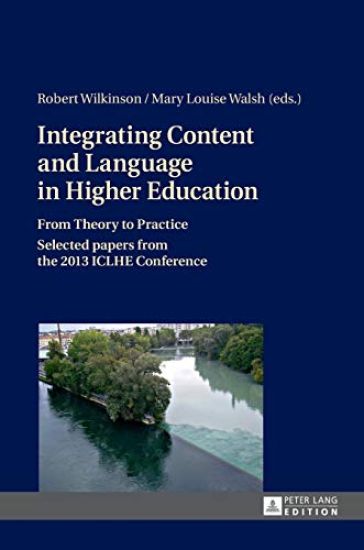
Integrating Content and Language in Higher Education
Higher education has seen dramatic changes in the past quarter of a century, notably in the language used for instruction. Universities worldwide are increasingly switching to English enabling them to attract a wide student population. This book presents a new collection of original papers showing how universities apply content and language integrated learning to their instructional contexts. The papers highlight the challenges of theory, policy, programme and course design, integration, and teacher and student competences. The diverse international contexts addressing not just English will be of particular interest to university teachers, educational administrators, linguists and others wishing to understand the instructional landscape of higher education today.
Integrating Content and Language in Higher Education
This book offers a collection of original papers showing how Higher education institutions have coped with changing the language of instruction. It points out that Higher education institutions have undergone radical change in the past decades; of which the shift to English-medium instruction, as well as bi- or plurilingual programmes, is one notable example. The papers comprise new research on teaching and learning through an additional language, and its impact on professional development for university teachers, programme and course development, as well as quality assurance. The articles span different international contexts, and provide education developers, university teachers, educational administrators, language experts, and others, with global perspectives on the professional practices of university teachers.