Kirjojen hintavertailu. Mukana 11 627 220 kirjaa ja 12 kauppaa.

Kirjahaku

Etsi kirjoja tekijän nimen, kirjan nimen tai ISBN:n perusteella.

1000 tulosta hakusanalla Craig Brian Larson

The Theology of the Czech Brethren from Hus to Comenius

The Theology of the Czech Brethren from Hus to Comenius

Craig D. Atwood

Pennsylvania State University Press
2013
pokkari
Craig Atwood addresses the serious lack of comprehensive treatments in English of the Moravians. The Moravian Church, or Unity of the Brethren, was the first Western church to make separation of church and state a matter of doctrine and policy. The Unity’s vision for social and educational reform also sets it apart. Its theology centers on the key concepts of faith, love, and hope. The Unity—the heartbeat of the so-called Czech Reformation—was engaged with society and with other churches and did not retreat to isolationism, as did several movements in the Radical Reformation. Rather, the Unity continued to evolve as political and theological climates changed.
Community of the Cross

Community of the Cross

Craig D. Atwood

Pennsylvania State University Press
2012
pokkari
Bethlehem, Pennsylvania, was a unique colonial town. It was the first permanent outpost of the Moravians in North America and served as the headquarters for their extensive missionary efforts. It was also one of the most successful communal societies in American history. Bethlehem was founded as a "congregation of the cross" where all aspects of personal and social life were subordinated to the religious ideal of the community. In Community of the Cross, Craig D. Atwood offers a convincing portrait of Bethlehem and its religion. Visitors to Bethlehem, such as Benjamin Franklin, remarked on the orderly and peaceful nature of life in the community, its impressive architecture, and its "high" culture. However, many non-Moravians were embarrassed or even offended by the social and devotional life of the Moravians. The adoration of the crucified Jesus, especially his wounds, was the focus of intense devotion for adults and children alike. Moravians worshiped the Holy Spirit as "Mother," and they made the mystical marriage to Christ central to their marital intimacy. Everything, even family life, was to be a form of worship. Atwood reveals the deep connection between life in Bethlehem and the religious symbolism of controversial German theologian Nicholas von Zinzendorf, whose provocative and erotic adoration of the wounds of Jesus was an essential part of private and communal life. Using the theories of René Girard, Mary Douglas, and Victor Turner, Atwood shows that it was the Moravians’ liturgy and devotion that united the community and inspired both its unique social structure and its missionary efforts.
Debating God's Economy

Debating God's Economy

Craig Prentiss

Pennsylvania State University Press
2013
pokkari
What would a divinely ordained social order look like? Pre–Vatican II Catholics, from archbishops and theologians to Catholic union workers and laborers on U.S. farms, argued repeatedly about this in the late nineteenth and early twentieth centuries. Debating God’s Economy is a history of American Catholic economic debates taking place during the generation preceding Vatican II. At that time, American society was rife with sociopolitical debates over the relative merits and dangers of Marxism, capitalism, and socialism; labor unions, class consciousness, and economic power were the watchwords of the day. This was a time of immense social change, and, especially in the light of the monumental social and economic upheavals in Russia and Europe in the early twentieth century, Catholics found themselves taking sides. Catholic subcultures across America sought to legitimize—or, in theological parlance, “sanctify”—diverse economic systems that were, at times, mutually exclusive. While until now the faithful—both scholars and nonscholars—have typically spoken of “the Catholic Social Tradition” as if it were an established prescription for curing social ills, Prentiss maintains that the tradition is better understood as a debate grounded in a common mythology that provides Catholics with a distinctive vocabulary and touchstone of authority.
After Gun Violence

After Gun Violence

Craig Rood

Pennsylvania State University Press
2019
sidottu
Mass shootings have become the “new normal” in American life. The same can be said for the public debate that follows a shooting: blame is cast, political postures are assumed, but no meaningful policy changes are enacted. In After Gun Violence, Craig Rood argues that this cycle is the result of a communication problem. Without advocating for specific policies, Rood examines how Americans talk about gun violence and suggests how we might discuss the issues more productively and move beyond our current, tragic impasse.Exploring the ways advocacy groups, community leaders, politicians, and everyday citizens talk about gun violence, Rood reveals how the gun debate is about far more than just guns. He details the role of public memory in shaping the discourse, showing how memories of the victims of gun violence, the Second Amendment, and race relations influence how gun policy is discussed. In doing so, Rood argues that forgetting and misremembering this history leads interest groups and public officials to entrenched positions and political failure and drives the public further apart.Timely and innovative, After Gun Violence advances our understanding of public discourse in an age of gridlock by illustrating how public deliberation and public memory shape and misshape one another. It is a search to understand why public discourse fails and how we can do better.
After Gun Violence

After Gun Violence

Craig Rood

Pennsylvania State University Press
2019
pokkari
Mass shootings have become the “new normal” in American life. The same can be said for the public debate that follows a shooting: blame is cast, political postures are assumed, but no meaningful policy changes are enacted. In After Gun Violence, Craig Rood argues that this cycle is the result of a communication problem. Without advocating for specific policies, Rood examines how Americans talk about gun violence and suggests how we might discuss the issues more productively and move beyond our current, tragic impasse.Exploring the ways advocacy groups, community leaders, politicians, and everyday citizens talk about gun violence, Rood reveals how the gun debate is about far more than just guns. He details the role of public memory in shaping the discourse, showing how memories of the victims of gun violence, the Second Amendment, and race relations influence how gun policy is discussed. In doing so, Rood argues that forgetting and misremembering this history leads interest groups and public officials to entrenched positions and political failure and drives the public further apart.Timely and innovative, After Gun Violence advances our understanding of public discourse in an age of gridlock by illustrating how public deliberation and public memory shape and misshape one another. It is a search to understand why public discourse fails and how we can do better.
Effective College Management

Effective College Management

Craig Johnson; Bruce W. Tuckman

Praeger Publishers Inc
1987
sidottu
Based on a model that was tested over several years at a large university, this book offers the reader expert, realistic, step-by-step guidance. The first two chapters present the model itself and tell why and under what conditions it was developed; its strengths and weaknesses; what principles it is based on, and how it is applied. The next chapters tell the reader exactly how to do it: the demonstrator will learn how to identify and set goals, plan strategies for goal attainment, carry out their plans and measure them. They will also see how to allocate resources, distribute dollars to faculty members, and much more. The final chapter presents the successes and failures of outcome management as a strategy for organizational management within a university setting.
The White House Speaks

The White House Speaks

Craig A. Smith; Kathy B. Smith

Praeger Publishers Inc
1994
sidottu
This work treats presidential leadership as persuasive communication. The major theories of presidential leadership found in the literature establish the central role of persuasion, and introduce the interpretive systems approach to political communication as a theoretical framework for the study of presidential leadership as persuasion. Case studies examine recent presidents' use of public persuasion to perform their leadership functions. Particular attention is devoted to coalitional constraints on presidential pardoning rhetoric, presidential leadership through the politics of division, the political significance of conflicting political narratives, the sermonic nature of much 20th-century presidential discourse, the difficulties inherent in persuading the public to make sacrifices, and the dangers of relying too heavily on public rhetoric. The concluding chapter considers the rhetoric that contributed to the demise of the Bush presidency, the election of Bill Clinton, and the challenges facing the Clinton presidency.
The Quest for Charisma

The Quest for Charisma

Craig R. Smith

Praeger Publishers Inc
2000
sidottu
Smith examines the major canons of classical rhetorical theory by demonstrating their influence on Christian speakers. He begins by explaining why charisma has become a misused term. He then explores why writing about charisma has been so difficult in terms of the academic prejudice in favor of objectivity and reason. He then constructs a three- level definition of charisma to replace the current one. After analyzing the charisma of Jesus in terms of the three personae he developed as teacher, human, and messiah, Smith argues that his power arose from this rich development of character. The textual charisma of the Gospel narrators is explored in terms of their narrative techniques, and Smith then examines the concept of ethos, the use of emotion in persuasion, and explicates the theories of leading existential thinkers to develop advanced notions of human responsibility and transcendent spirituality. These two notions are used to refine and improve previous definitions of charisma. Smith then establishes a matrix that crosses levels of charisma with different types of identification. This work will be of particular interest to scholars, students, and researchers involved with Christianity, philosophy, and persuasion.
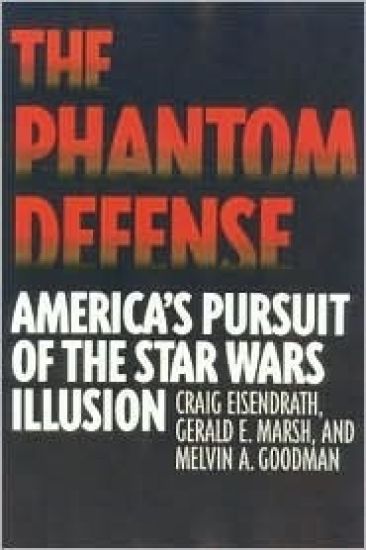
The Phantom Defense

The Phantom Defense

Craig Eisendrath; Melvin A. Goodman; Gerald E. Marsh

Praeger Publishers Inc
2001
sidottu
Drawn from the authors' insider information and expertise, a thought-provoking book discusses the effectiveness of the United States missile defense system and shows how thoughtful diplomacy is the key to meeting security goals.
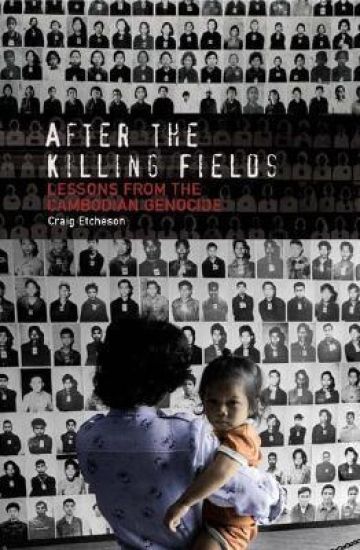
After the Killing Fields

After the Killing Fields

Craig Carlyle Etcheson

Praeger Publishers Inc
2005
sidottu
For 25 years, Cambodia's Khmer Rouge have avoided responsibility for their crimes against humanity. For 30 long years, from the late 1960s to the late 1990s, the Cambodian people suffered from a war that has no name. Arguing that this series of hostilities, which included both civil and external war, amounted to one long conflict—The Thirty Years War—Craig Etcheson demonstrates that there was one constant, churning presence that drove that conflict: the Khmer Rouge. New findings demonstrate that the death toll was approximately 2.2 million people—about half a million more than commonly believed. Detailing the struggle of coming to terms with what happened in Cambodia, Etcheson concludes that real justice is not merely elusive but may, in fact, be impossible for crimes on the scale of genocide.This book details the work of a unique partnership, Yale University's Cambodian Genocide Program, which laid the evidentiary basis for the forthcoming Khmer Rouge tribunal and also played a key role in the international advocacy necessary for the tribunal's creation. It presents the information collected through the Mass Grave Mapping Project of the Documentation Center of Cambodia and reveals that the pattern of killing was relatively uniform throughout the country. Despite regular denial of knowledge of the mass killing among the surviving leadership of the Khmer Rouge, Etcheson demonstrates that they were not only aware of it, but that they personally managed and directed the killing.
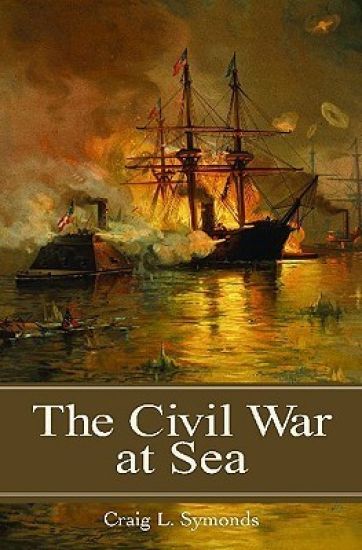
The Civil War at Sea

The Civil War at Sea

Craig L. Symonds

Praeger Publishers Inc
2009
sidottu
This work provides an assessment of the crucial roles played by the Union and Confederate navies in the Civil War. From Craig Symonds, author of the 2009 Lincoln Prize award-winner Lincoln and His Admirals, comes a fascinating look at the era when American naval power came of age. Thoroughly researched and excitingly written, it brings to light a wealth of new information on a pivotal aspect of the Civil War. The Civil War at Sea covers navies on both sides of the conflict, examining key issues such as the impact of emergent technologies, the effectiveness of the Union's ambitious strategy of blockading, the odyssey of Confederate commerce raiders, the role of naval forces on the western rivers, and the difficulty of conducting combined sea and ground operations against the major Southern port cities. For Civil War buffs, fans of military and technological history, and other interested readers, it is insightful, essential reading.
Maritime Counterproliferation Operations and the Rule of Law
Allen examines the maritime counterproliferation activities of nations participating in the Proliferation Security Initiative, as set out in their Statement of Interdiction Principles. He explains the framework for conducting maritime interception activities, examines the importance of intelligence to PSI operations, and assesses the legal issues raised by those operations.The threat of WMD use by terrorist groups and rogue regimes has added new urgency to global security discussions. Responses to the dangers posed by WMD include the nonproliferation regime, safeguards for WMD materials while in transit, export controls, treaties on terrorism, Security Council resolutions, and the new Protocol to the Convention for the Suppression of Unlawful Acts Against the Safety of Maritime Navigation.The existing nonproliferation regime will never, by itself, provide an adequate level of security. As a result, risk management strategies must include layered counterproliferation activities and consequence management. Counterproliferation measures may include maritime interdictions. The Proliferation Security Initiative, a cooperative undertaking launched in 2003, provides a framework for those interdictions. The framework was formalized in the Statement of Interdiction Principles.After providing an overview of the threats posed by WMD proliferation, this book surveys the nonproliferation regime and counterproliferation measures states have adopted to supplement it. It next provides an overview of maritime interception operations and the intelligence issues surrounding them, before turning to the laws governing such operations. It then examines each of the actions described in the PSI Statement of Interdiction Principles to assess their compliance with applicable laws. Finally, it looks at the laws that establish the responsibility of states for taking unwarranted counterproliferation actions against vessels.
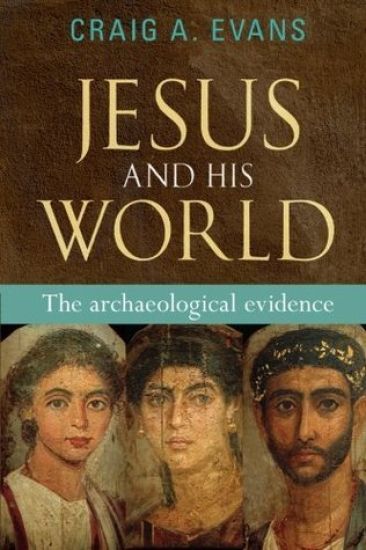
Jesus and His World

Jesus and His World

Craig Evans

SPCK Publishing
2012
nidottu
What does archaeology tell us about Jesus and the world in which he lived? How accurate are the Gospel accounts of first-century Galilee and Judea? Has the tomb of Jesus really been found? Informed by the latest archaeological research, and illustrated throughout with photographs of key findings, this fascinating book opens up the subject for people of all religious backgrounds. It will help readers gain a much clearer and more accurate picture of life in the Roman world during first century, and enable them to understand and critique the latest theories - both sober and sensational - about who Jesus was and what he stood for.
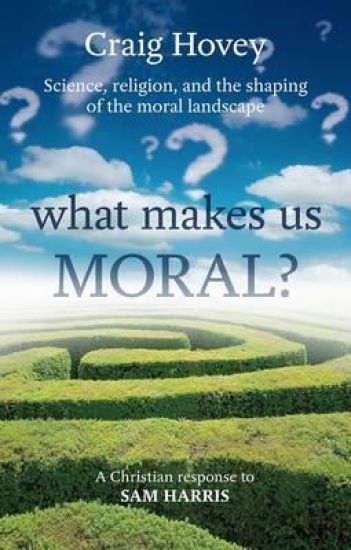
What Makes Us Moral?

What Makes Us Moral?

Craig R. Hovey

SPCK Publishing
2012
nidottu
Is science really all we need to make moral decisions? Will there come a time when reason and science alone can tell us everything we need to know about human values? Will this brave new world be better than the current one? Is religion making its last stand in this debate? Theologian and ethicist Craig Hovey exposes the flaws in the idea that science alone answers our moral questions. He directly engages the latest book by Sam Harris, The Moral Landscape: How Science Can Determine Human Values on a host of questions. Hovey argues that Harris' views about human well-being owe and unacknowledged debt to Judaism and Christianity, while his vision of a purely rational moral progress is a fantasy. Hovey draws on Christian morality to give a strikingly different vision of human well-being - one that is more interesting as well as more concrete and beautiful.
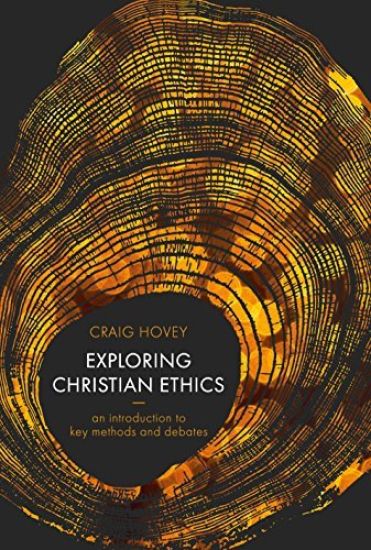
Exploring Christian Ethics

Exploring Christian Ethics

Craig Hovey

SPCK Publishing
2018
nidottu
Talking about ethics tends to involve talking about what we should or, more often, shouldn't do. We talk about setting limits on actions that, for whatever reason, we think are either wrong or somehow harmful to ourselves or others. The aim of this book, however, is to explore Christian ethics within a wider, more positive framework - one that that views Christianity's moral resources as part of the good news that it proclaims to all creation. Ethics, says Hovey, need not be characterized primarily by negative prohibitions, limits, and tiresome hand-wringing. Rather, it's about a joyful and worshipful way of living, which flows naturally out of the abundant goodness God's life and character, as revealed in Jesus.
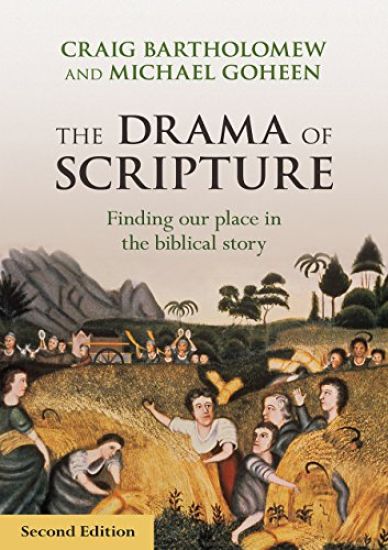
The Drama of Scripture

The Drama of Scripture

Craig Bartholomew

SPCK Publishing
2014
nidottu
The second - thoroughly updated and revised - edition of a bestselling textbook that surveys the grand narrative of the Bible, demonstrating how the biblical story forms the foundation of a Christian worldview. The Drama of Scripture provides an engaging overview of the storyline and theology of the Bible. The authors work their way through the Bible as a drama with six acts - creation, sin, Israel, Jesus, mission and new creation. Their study provides an introduction to the Bible and a commentary on important passages, while helping the reader relate their story to the Bible story at each point.
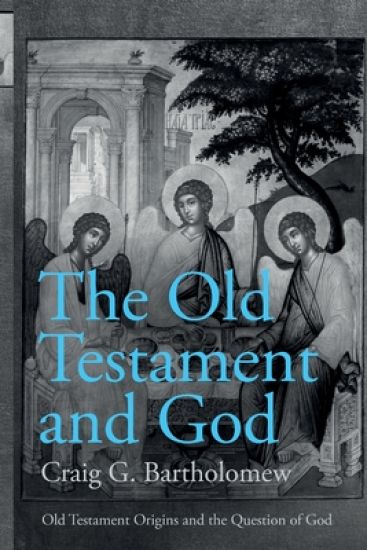
The Old Testament and God

The Old Testament and God

Craig G. Bartholomew

SPCK Publishing
2022
nidottu
In The Old Testament and God, Craig G. Bartholomew offers an innovative, compelling new introduction that takes a critical realist approach to our understanding of the history, literature and theology of the Old Testament. Opening up a distinctly theological interpretation, he explores the key questions that arise from reading the Old Testament against its environment and pays close attention to intertextuality – both within the Old Testament itself and between the Old and New Testaments. Packed full of brilliant insight, this is a fresh, illuminating account of the question of God in the context of Old Testament interpretation today. The Old Testament and God is the first volume in a ground-breaking new series, Old Testament Origins and the Question of God, which acts as a companion series to N. T. Wright’s Christian Origins and the Question of God. Thorough and eye-opening, it is ideal for both students and professors of Old Testament studies who are looking for a big-picture, holistic narrative approach to the Old Testament that still takes into account its own unique challenges. A paradigm-shifting study, The Old Testament and God will leave you with a deeper, comprehensive understanding of the literary, historical and theological dimensions of the Old Testament, its interpretation, and its function as part of Christian scripture. Its cutting-edge approach has far-reaching implications for all areas of theological enquiry, making it essential reading for all serious students of the Bible and theology today.
Human Factors in Flight: Student Workbook

Human Factors in Flight: Student Workbook

Craig S. Funk

Avebury Technical
1995
nidottu
This student workbook is designed to help identify and master the key concepts in the Human Factors in Flight textbook. It provides the essential student materials which supplement the student text learning package. Each section provides performance objectives, followed by questions to prepare students for class discussion and examinations.
Human Factors in Flight Instructor's Guide

Human Factors in Flight Instructor's Guide

Craig S. Funk

Avebury Aviation
1998
nidottu
Designed to help the instructor to present concepts in human factors, this guide is presented in lecture-note format with each unit outlining performance objectives, questions and answers, references to pages in the main text and large-print summaries for overhead projection. The numbering relates to the unit questions in the Student Workbook. A set of objective questions on each unit is also provided as well as prepared tests.
The Road to Love Canal

The Road to Love Canal

Craig E. Colten; Peter N. Skinner

University of Texas Press
1995
pokkari
The toxic legacy of Love Canal vividly brought the crisis in industrial waste disposal to public awareness across the United States and led to the passage of the Superfund legislation in 1980. To discover why disasters like Love Canal have occurred and whether they could have been averted with knowledge available to waste managers of the time, this book examines industrial waste disposal before the formation of the Environmental Protection Agency in 1970.Colten and Skinner build their study around three key questions. First, what was known before 1970 about the hazards of certain industrial wastes and their potential for causing public health problems? Second, what were the technical capabilities for treating or containing wastes during that time? And third, what factors other than technical knowledge guided the actions of waste managers before the enactment of explicit federal laws?The authors find that significant information about the hazards of industrial wastes existed before 1970. Their explanations of why this knowledge did not prevent the toxic legacy now facing us will be essential reading for environmental historians and lawyers, public health personnel, and concerned citizens.