Kirjojen hintavertailu. Mukana 11 699 587 kirjaa ja 12 kauppaa.

Kirjahaku

Etsi kirjoja tekijän nimen, kirjan nimen tai ISBN:n perusteella.

1000 tulosta hakusanalla Craig Read

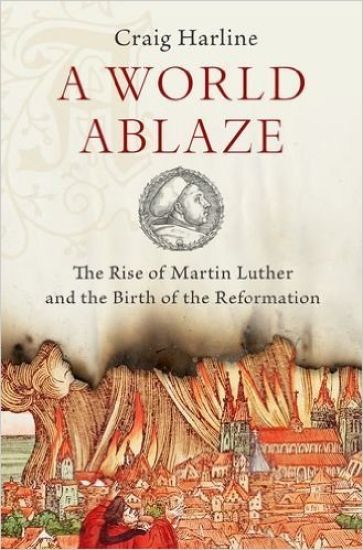
A World Ablaze

A World Ablaze

Craig Harline

Oxford University Press Inc
2017
sidottu
October 2017 marks five hundred years since Martin Luther nailed his 95 theses to the church door in Wittenberg and launched the Protestant Reformation. At least, that's what the legend says. But with a figure like Martin Luther, who looms so large in the historical imagination, it's hard to separate the legend from the life, or even sometimes to separate assorted legends from each other. Over the centuries, Luther the man has given way to Luther the icon, a polished bronze figure on a pedestal. In A World Ablaze, Craig Harline introduces us to the flesh-and-blood Martin Luther. Harline tells the riveting story of the first crucial years of the accidental crusade that would make Luther a legendary figure. He didn't start out that way; Luther was a sometimes-cranky friar and professor who worried endlessly about the fate of his eternal soul. He sought answers in the Bible and the Church fathers, and what he found distressed him even more -- the way many in the Church had come to understand salvation was profoundly wrong, thought Luther, putting millions of souls, not least his own, at risk of damnation. His ideas would pit him against numerous scholars, priests, bishops, princes, and the Pope, even as others adopted or adapted his cause, ultimately dividing the Church against itself. A World Ablaze is a tale not just of religious debate but of political intrigue, of shifting alliances and daring escapes, with Luther often narrowly avoiding capture, which might have led to execution. The conflict would eventually encompass the whole of Christendom and served as the crucible in which a new world was forged. The Luther we find in these pages is not a statue to be admired but a complex figure -- brilliant and volatile, fretful and self-righteous, curious and stubborn. Harline brings out the immediacy, uncertainty, and drama of his story, giving readers a sense of what it felt like in the moment, when the ending was still very much in doubt. The result is a masterful recreation of a momentous turning point in the history of the world.
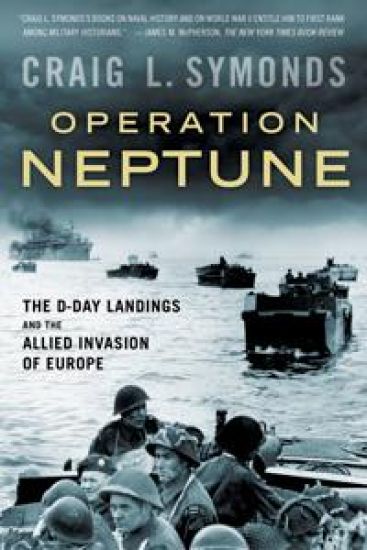
Operation Neptune

Operation Neptune

Craig L. Symonds

Oxford University Press Inc
2016
nidottu
Seventy years ago, more than six thousand Allied ships carried more than a million soldiers across the English Channel to a fifty-mile-wide strip of the Normandy coast in German-occupied France. It was the greatest sea-borne assault in human history. The code names given to the beaches where the ships landed the soldiers have become immortal: Gold, Juno, Sword, Utah, and especially Omaha, the scene of almost unimaginable human tragedy. The sea of crosses in the cemetery sitting today atop a bluff overlooking the beaches recalls to us its cost. Most accounts of this epic story begin with the landings on the morning of June 6, 1944. In fact, however, D-Day was the culmination of months and years of planning and intense debate. In the dark days after the evacuation of Dunkirk in the summer of 1940, British officials and, soon enough, their American counterparts, began to consider how, and, where, and especially when, they could re-enter the European Continent in force. The Americans, led by U.S. Army Chief of Staff General George C. Marshall, wanted to invade as soon as possible; the British, personified by their redoubtable prime minister, Winston Churchill, were convinced that a premature landing would be disastrous. The often-sharp negotiations between the English-speaking allies led them first to North Africa, then into Sicily, then Italy. Only in the spring of 1943, did the Combined Chiefs of Staff commit themselves to an invasion of northern France. The code name for this invasion was Overlord, but everything that came before, including the landings themselves and the supply system that made it possible for the invaders to stay there, was code-named Neptune. Craig L. Symonds now offers the complete story of this Olympian effort, involving transports, escorts, gunfire support ships, and landing craft of every possible size and function. The obstacles to success were many. In addition to divergent strategic views and cultural frictions, the Anglo-Americans had to overcome German U-boats, Russian impatience, fierce competition for insufficient shipping, training disasters, and a thousand other impediments, including logistical bottlenecks and disinformation schemes. Symonds includes vivid portraits of the key decision-makers, from Franklin Roosevelt and Churchill, to Marshall, Dwight Eisenhower, and Admiral Sir Bertram Ramsay, who commanded the naval element of the invasion. Indeed, the critical role of the naval forces--British and American, Coast Guard and Navy--is central throughout. In the end, as Symonds shows in this gripping account of D-Day, success depended mostly on the men themselves: the junior officers and enlisted men who drove the landing craft, cleared the mines, seized the beaches and assailed the bluffs behind them, securing the foothold for the eventual campaign to Berlin, and the end of the most terrible war in human history.
Grassroots Global Governance

Grassroots Global Governance

Craig M. Kauffman

Oxford University Press Inc
2017
sidottu
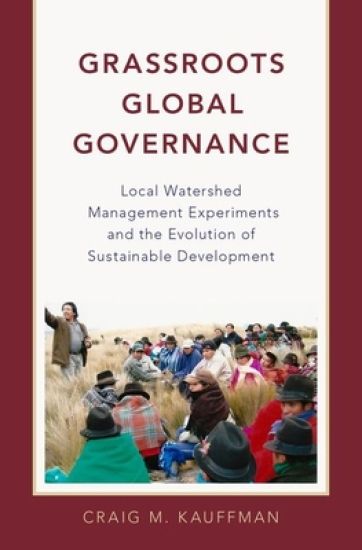
When international agreements fail to solve global problems like climate change, transnational networks attempt to address them by implementing global ideaspolicies and best practices negotiated at the global levellocally around the world. Grassroots Global Governance not only explains why some efforts succeed and others fail, but also why the process of implementing global ideas locally causes these ideas to evolve. Drawing on nodal governance theory, the book shows how transnational actors success in putting global ideas into practice depends on the framing and network capacity-building strategies they use to activate networks of grassroots actors influential in local social and policy arenas. Grassroots actors neither accept nor reject global ideas as presented by outsiders. Instead, they negotiate whether and how to adapt them to fit local conditions. This contestation produces experimentation, and results in unique institutional applications of global ideas infused with local norms and practices. Grassroots actors ultimately guide this process due to their unique ability to provide the pressure needed to push the process forward. Experiments that endure are perceived as successful, empowering those actors involved to activate transnational networks to scale up and diffuse innovative local governance models globally. These models carry local norms and practices to the international level where they challenge existing global approaches and stimulate new global governance institutions. By guiding the way global ideas evolve through local experimentation, grassroots actors reshape international actors thinking, discourse, organizing, and the strategies they pursue globally. This makes them grassroots global governors. To demonstrate this, the book compares transnational efforts to implement local Integrated Watershed Management programs across Ecuador and shows how local experiments altered the global debate regarding sustainable development and stimulated a new global movement dedicated to changing the way sustainable development is practiced. In doing so, the book reveals the grassroots level as not merely the object of global governance, but rather a terrain where global governance is constructed.
What Makes Time Special?

What Makes Time Special?

Craig Callender

Oxford University Press
2023
nidottu
As we navigate through life we instinctively model time as having a flowing present that divides a fixed past from open future. This model develops in childhood and is deeply saturated within our language, thought and behavior, affecting our conceptions of the universe, freedom and the self. Yet as central as it is to our lives, physics seems to have no room for this flowing present. What Makes Time Special? demonstrates this claim in detail and then turns to two novel positive tasks. First, by looking at the world "sideways" - in the spatial directions — it shows that physics is not "spatializing time" as is commonly alleged. Even relativity theory makes significant distinctions between the spacelike and timelike directions, often with surprising consequences. Second, if the flowing present is an illusion, it is a deep one worthy of explanation. The author develops a picture whereby the temporal flow arises as an interaction effect between an observer and the physics of the world. Using insights from philosophy, cognitive science, biology, psychology and physics, the theory claims that the flowing present model of time is the natural reaction to the perceptual and evolutionary challenges thrown at us. Modeling time as flowing makes sense even if it misrepresents it.
Voices of the Vietnam POWs

Voices of the Vietnam POWs

Craig Howes

Oxford University Press Inc
1993
nidottu
In the first book to explore the entire range of memoirs, biographies, and group histories published since America's Vietnam POWs returned home, Craig Howes describes how these captives drew upon their national heritage to compose a collective history while still in prison, and how individual POWs have responded to this Official Story. Examining what racial, cultural, and political assumptions support this shared Official Story, Howes places the POWs' experiences squarely in the centre of American history, and within those larger clashes of opinion and belief which characterized the nation's response to the Vietnam War. The result is an engrossing study of what these captivity narratives can tell us about the POWs, their jailors, and America's Vietnam legacy.
Geochemical Reaction Modeling

Geochemical Reaction Modeling

Craig M. Bethke

Oxford University Press Inc
1996
sidottu
Geochemical reaction modeling plays an increasingly vital role in several areas of geoscience, from environmental geochemistry and petroleum geology to the study of geothermal and hydrothermal fluids. This book provides an up-to-date overview of the use of numerical methods to model reaction processes in the Earth's crust and on its surface. Early chapters develop the theoretical foundations of the field, derive a set of governing equations, and show how numerical methods can be used to solve these equations. Other chapters discuss the distribution of species in natural waters; methods for computing activity coefficients in dilute solutions and in brines; the complexation of ions into mineral surfaces; the kinetics of precipitation and dissolution reactions; and the fractionation of stable isotopes. Later chapters provide a large number of fully worked calculation examples and case studies demonstrating the modeling techniques that can be applied to scientific and practical problems. Students in atmospheric science will benefit from the wealth of information and practical applications this book has to offer.
The Gospel of John in the Sixteenth Century

The Gospel of John in the Sixteenth Century

Craig S. Farmer

Oxford University Press Inc
1997
sidottu
This book is a wide-ranging study of Johannine exegesis in the sixteenth century, centered on the John commentary of Wolfgang Musculus (1497-1563), an influential leader of the Protestant Reformation. Farmer compares Musculus's exegesis of the Johannine miracle stories not only with that of other sixteenth-century commentators but also with ancient and medieval commentaries.
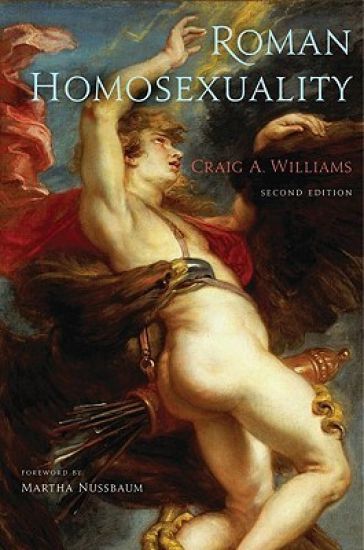
Roman Homosexuality

Roman Homosexuality

Craig A. Williams

Oxford University Press Inc
1999
sidottu
This comprehensive study of Roman sexuality and the ideologies of masculinity discusses a wide range of ancient texts, arguing that native Roman concepts of masculinity did not rely on the distinction between homosexuality and heterosexuality, but were instead structured around such antitheses as free vs. slave, dominant vs. subordinate, and masculine vs. effeminate.
Meat-Eating and Human Evolution

Meat-Eating and Human Evolution

Craig B. Stanford; Henry T. Bunn

Oxford University Press Inc
2001
sidottu
When, why, and how early humans began to eat meat are three of the most fundamental unresolved questions in the study of human origins. Before 2.5 million years ago the presence and importance of meat in the hominid diet is unkown. After stone tools appear in the fossil record it seems clear that meat was eaten in increasing quantities, but whether it was obtained through hunting or scavenging remains a topic of intense debate. This book takes a novel and strongly interdisciplinary approach to the role of meat in the early hominid diet, inviting well-known researchers who study the human fossil record, modern hunter-gatherers, and nonhuman primates to contribute chapters to a volume that integrates these three perspectives. Stanford's research has been on the ecology of hunting by wild chimpanzees. Bunn is an archaeologist who has worked on both the fossil record and modern foraging people. This will be a reconsideration of the role of hunting, scavening, and the uses of meat in light of recent data and modern evolutionary theory. There is currently no other book, nor has there ever been, that occupies the niche this book will create for itself.
Passionate Engines

Passionate Engines

Craig DeLancey

Oxford University Press Inc
2002
sidottu
DeLancey shows that our best philosophical and scientific understanding of the emotions provides essential insights on key questions in the philosophy of mind and artificial intelligence. This is the first such book to offer this perspective. Passionate Engines also provides a bold new approach to the study of the mind based on the latest scientific research and along the way, provides an accessible overview of the science of emotion, with minimal jargon and explanation of the technical issues that arise. It is accessible to a wide range of readers, including philosophers, psychologists, computer scientists, and others in disciplines touching on cognitive science.
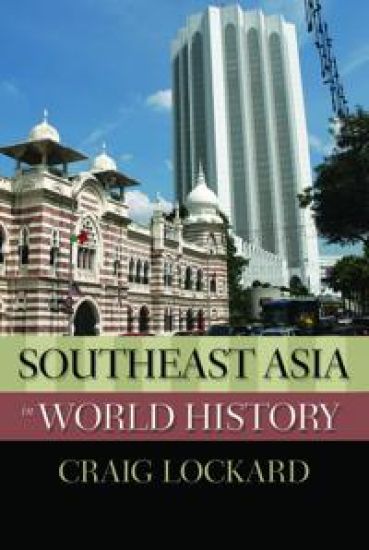
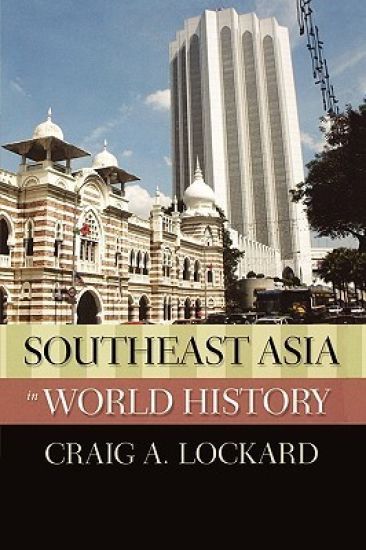
Southeast Asia in World History

Southeast Asia in World History

Craig Lockard

Oxford University Press Inc
2009
sidottu
This book will sketch an outline of Southeast Asian history from earliest times to the present, showing how the diverse political, economic, social, and cultural patterns developed over several thousand years and the role played by the region in the larger world. Approximately one third will be devoted to the centuries before 1500 CE, when civilizations and kingdoms emerged and some Southeast Asians became active in Asian and Pacific maritime trade networks. It will discuss the connections to India and China, the great kingdoms such as Angkor, the maritime trade, and the emergence of diverse cultural traditions, including the Theravada Buddhist, Islamic, and Vietnamese realms. Another third covers the period of Western expansion and colonization between 1500 and 1941, when various Western nations began to gradually influence and then reshape the region and Southeast Asians became more deeply involved with world trade. This includes an extensive discussion of the impact of colonialism on Southeast Asian societies, cultures, economies and politics. The final third examines the rise of nationalism and independence movements, decolonization, the wars in Indochina, and the links between past, present, and future.
Passionate Engines

Passionate Engines

Craig DeLancey

Oxford University Press Inc
2004
nidottu
In this unique contribution to philosophical debate, Craig DeLancey shows that our best understanding of emotion provides essential insight on key issues in philosophy of mind and artificial intelligence. DeLancey offers us a bold new approach to the study of the mind based on the latest scientific research, and provides an accessible overview of the science of emotion and explanation of the technical issues that arise, with minimal jargon.
Handbook of Evidence-based Treatment Manuals for Children and Adolescents
In this second edition of Handbook of Evidence-Based Child and Adolescent Treatment Manuals, LeCroy gathers fifteen varied program manuals and brief summaries of the research supporting each, ensuring that practitioners will truly understand the tools they are using. A completely revised and expanded edition of the handbook's previous editions, this is an essential guide to some of the best programs for helping children and teens.
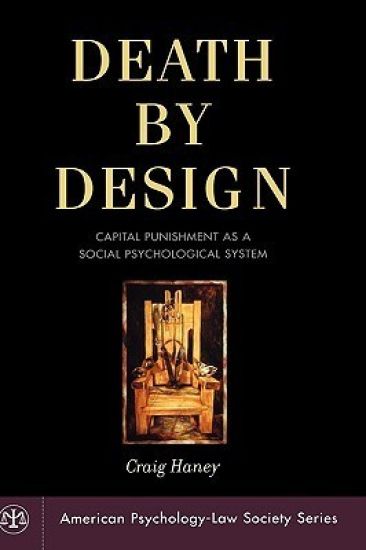
Death by Design

Death by Design

Craig Haney

Oxford University Press Inc
2005
sidottu
How can otherwise normal, moral persons - as citizens, voters, and jurors - participate in a process that is designed to take the life of another? In DEATH BY DESIGN, research psychologist Craig Haney argues that capital punishment, and particularly the sequence of events that lead to death sentencing itself, is maintained through a complex and elaborate social psychological system that distance and disengage us from the true nature of the task. Relying heavily on his own research and that of other social scientists, Haney suggests that these social psychological forces enable persons to engage in behavior from which many of them otherwise would refrain. However, by facilitating death sentencing in these ways, this inter-related set of social psychological forces also undermines the reliability and authenticity of the process, and compromises the fairness of its outcomes. Because these social psychological forces are systemic in nature - built into the very system of death sentencing itself - Haney concludes by suggesting a number of inter-locking reforms, derived directly from empirical research on capital punishment, that are needed to increase the fairness and reliability of the process. The historic and ongoing public debate over the death penalty takes place not only in courtrooms, but also in classrooms, offices, and living rooms. This timely book offers stimulating insights into capital punishment for professionals and students working in psychology, law, criminology, sociology, and cultural area studies. As capital punishment receives continued attention in the media, it is also a necessary and provocative guide that empowers all readers to come to their own conclusions about the death penalty.
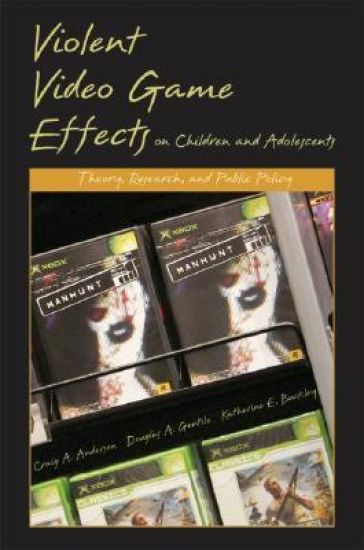
Violent Video Game Effects on Children and Adolescents

Violent Video Game Effects on Children and Adolescents

Craig A. Anderson; Douglas A. Gentile; Katherine E. Buckley

Oxford University Press Inc
2007
sidottu
Violent video games are successfully marketed to and easily obtained by children and adolescents. Even the U.S. government distributes one such game, America's Army, through both the internet and its recruiting offices. Is there any scientific evidence to support the claims that violent games contribute to aggressive and violent behaviour? Anderson, Gentile, and Buckley first present an overview of empirical research on the effects of violent video games, and then add to this literature three new studies that fill the most important gaps. They update the traditional General Aggression Model to focus on both developmental processes and how media-violence exposure can increase the likelihood of aggressive and violent behaviour in both short and long-term contexts. Violent Video Game Effects on Children and Adolescents also reviews the history of these games' explosive growth, and explores the public policy options for controlling their distribution. Anderson et al. describe the reaction of the games industry to scientific findings that exposure to violent video games and other forms of media violence constitutes a significant risk factor for later aggressive and violent behavior. They argue that society should begin a more productive debate about whether to reduce the high rates of exposure to media violence, and delineate the public policy options that are likely be most effective. As the first book to unite empirical research on and public policy options for violent video games, Violent Video Game Effects on Children and Adolescents will be an invaluable resource for student and professional researchers in social and developmental psychology and media studies.
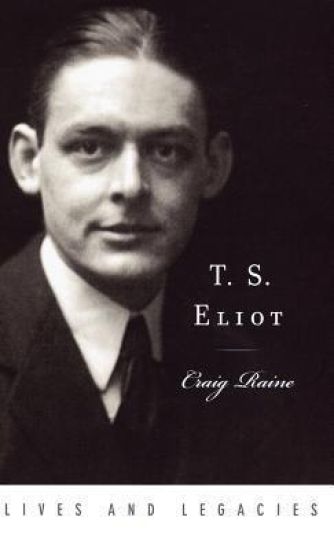
T. S. Eliot

T. S. Eliot

Craig Raine

Oxford University Press Inc
2007
sidottu
The winner of the Nobel Trize for Literature, the twentieth century's most famous poet and its most influential literary arbiter, T.S. Eliot has long been thought to be an obscure and difficult poet--forbiddingly learned, maddeningly enigmatic. Now, in this brilliant exploration of T.S. Eliot's work, prize-winning poet Craig Raine reveals that, on the contrary, Eliot's poetry (and drama and criticism) can be seen as a unified and coherent body of work. Indeed, despite its manifest originality, its radical experimentation, and its dazzling formal variety, his verse yields meaning just as surely as other more conventional poetry. Raine argues that an implicit controlling theme--the buried life, or the failure of feeling--unfolds in surprisingly varied ways throughout Eliot's work. But alongside Eliot's desire "to live with all intensity" was also a distrust of "violent emotion for its own sake." Raine illuminates this paradoxical Eliot--an exacting anti-romantic realist, skeptical of the emotions, yet incessantly troubled by the fear of emotional failure--through close readings of such poems as "The Love Song of J Alfred Prufrock," "Gerontion," The Hollow Men, Ash Wednesday, and many others. The heart of the book contains extended analyses of Eliot's two master works--The Waste Land and Four Quartets. Raine also examines Eliot's criticism--including his coinage of such key literary terms as the objective correlative, dissociation of sensibility, the auditory imagination--and he concludes with a convincing refutation of charges that Eliot was an anti-Semite. Here then is a volume absolutely indispensable for all admirers of T.S. Eliot and, in fact, for everyone who loves modern literature.
Southeast Asia in World History

Southeast Asia in World History

Craig Lockard

Oxford University Press Inc
2009
nidottu
Here is a brief, well-written, and lively survey of the history of Southeast Asia from ancient times to the present, paying particular attention to the region's role in world history and the distinctive societies that arose in lands shaped by green fields and forests, blue rivers and seas. Craig Lockard shows how for several millennia Southeast Asians, living at the crossroads of Asia, enjoyed ever expanding connections to both China and India, and later developed maritime trading networks to the Middle East and Europe. He explores how the people of the region combined local and imported ideas to form unique cultures, reflected in such striking creations as Malay sailing craft, Javanese gamelan music, and batik cloth, classical Burmese and Cambodian architecture, and social structures in which women have often played unusually influential roles. Lockard describes colonization by Europeans and Americans between 1500 and 1914, tracing how the social, economic, and political frameworks inherited from the past, combined with active opposition to domination by foreign powers, enabled Southeast Asians to overcome many challenges and regain their independence after World War II. The book also relates how Malaysia, Singapore, Thailand, Indonesia, and Vietnam are now among the fastest growing economies in the world and play a critical role in today's global marketplace.
Roman Homosexuality

Roman Homosexuality

Craig A. Williams

Oxford University Press Inc
2010
nidottu
Ten years after its original publication, Roman Homosexuality remains the definitive statement of this interesting but often misunderstood aspect of Roman culture. Learned yet accessible, the book has reached both students and general readers with an interest in ancient sexuality. This second edition features a new foreword by Martha Nussbaum, a completely rewritten introduction that takes account of new developments in the field, a rewritten and expanded appendix on ancient images of sexuality, and an updated bibliography.
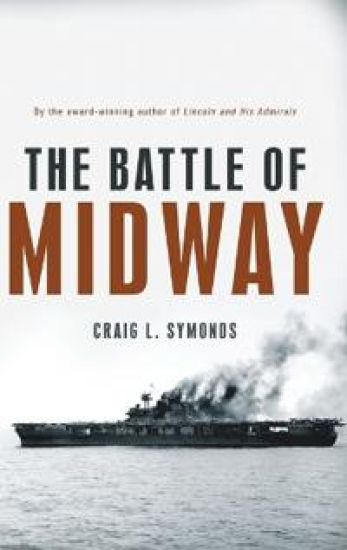
The Battle of Midway

The Battle of Midway

Craig L. Symonds

Oxford University Press Inc
2012
sidottu
There are few moments in American history in which the course of events tipped so suddenly and so dramatically as at the Battle of Midway. At dawn of June 4, 1942, a rampaging Japanese navy ruled the Pacific. By sunset, their vaunted carrier force (the Kido Butai) had been sunk and their grip on the Pacific had been loosened forever. In this absolutely riveting account of a key moment in the history of World War II, one of America's leading naval historians, Craig L. Symonds paints an unforgettable portrait of ingenuity, courage, and sacrifice. Symonds begins with the arrival of Admiral Chester A. Nimitz at Pearl Harbor after the devastating Japanese attack, and describes the key events leading to the climactic battle, including both Coral Sea--the first battle in history against opposing carrier forces--and Jimmy Doolittle's daring raid of Tokyo. He focuses throughout on the people involved, offering telling portraits of Admirals Nimitz, Halsey, Spruance and numerous other Americans, as well as the leading Japanese figures, including the poker-loving Admiral Yamamoto. Indeed, Symonds sheds much light on the aspects of Japanese culture--such as their single-minded devotion to combat, which led to poorly armored planes and inadequate fire-safety measures on their ships--that contributed to their defeat. The author's account of the battle itself is masterful, weaving together the many disparate threads of attack--attacks which failed in the early going--that ultimately created a five-minute window in which three of the four Japanese carriers were mortally wounded, changing the course of the Pacific war in an eye-blink. Symonds is the first historian to argue that the victory at Midway was not simply a matter of luck, pointing out that Nimitz had equal forces, superior intelligence, and the element of surprise. Nimitz had a strong hand, Symonds concludes, and he rightly expected to win.
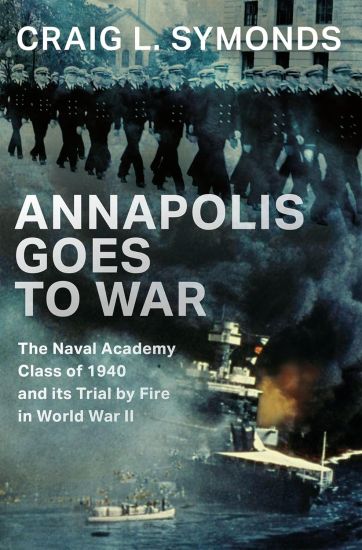
Annapolis Goes to War

Annapolis Goes to War

Craig L. Symonds

OXFORD UNIVERSITY PRESS INC
2025
sidottu
America's preeminent naval historian offers a history of the Second World War based on the experiences of the young officers--fresh out of the United States Naval Academy--who served on its front lines. They arrived in Annapolis as teenagers the year Hitler re-occupied the Rhineland and graduated as young men the week the British Army evacuated Dunkirk. Annapolis Goes to War tells the story of their four transformative years at the Naval Academy, and then four more annealing years in the cauldron of war. More than a hundred of them were on duty in Pearl Harbor on December 7, 1941. Ten of them died that day-seven remain entombed in the USS Arizona still. Over the next four years, these former Midshipmen participated in virtually every significant engagement in both the Atlantic and the Pacific, from Pearl Harbor to Tokyo Bay, from North Africa to Normandy. They were at the front edge of the war in battleships, carriers, destroyers, submarines, and airplanes, and led Marine Corps units ashore. Some experienced the war as prisoners of the Japanese. Fifty-six of them died in the Second World War, the greatest wartime loss any service academy ever experienced. Taking readers into and through the lives of these young men in wartime, Craig Symonds offers a poignant and powerful story of adjustment, growth, pain, loss, and eventually triumph. Using their diaries, memoirs, and letters, he evokes unforgettably their trials and bonds, their loss of innocence and their discovery of the meaning of sacrifice. Annapolis Goes to War is essential reading for anyone seeking to understand the experience of fighting the bloodiest war in human history.