
Kirjahaku
Etsi kirjoja tekijän nimen, kirjan nimen tai ISBN:n perusteella.
1000 tulosta hakusanalla Daniel Keyes

Memoirs of the Life and Gospel Labors of the Late Daniel Wheeler
Daniel Wheeler
Kessinger Pub
2005
pokkari


The Christian Pastorate: Its Character, Responsibilities, and Duties / By Daniel P. Kidder.
Daniel Parish Kidder
University of Michigan Library
1899
sidottu
Speech of Hon. Daniel Webster, to the young men of Albany. Wednesday, May 28, 1851.
Daniel Webster
University of Michigan Library
2011
pokkari
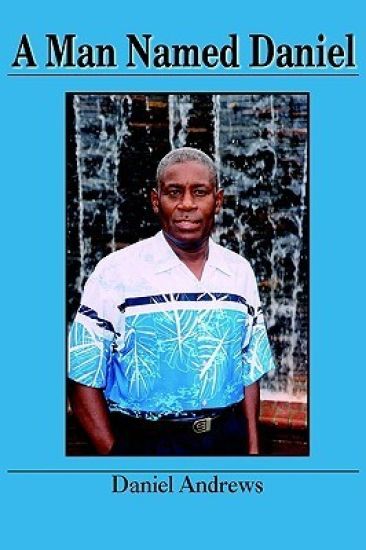
This book is about the life of a man named Daniel. He was a hard rock kid who grew up the hard way, yet he had hope. He hoped for a better day and a better life. His dream in life was to become a boxer. Every Wednesday and Friday he would watch fights with his uncle who later encouraged him to pursue his dreams. In April of 1959, Daniel left South Carolina headed for Washington DC. In 1960, he entered the Golden Gloves Amateur Boxing. In 1962, His life as an amateur fighter was over when he fought his first professional fight. Although Daniel didn't gain much popularity, he had the honor to train with a few popular fighters. A few of the fighters that he trained with were Ray Robinson, Muhammad Ali, and Joe Frazier. In this book Daniel talks about his encounter with Lena Horn and Joe Louis. He also talks about some experiences in professional fighting.




First published in 1876, "Daniel Deronda" was George Eliot's final novel. Controversial in its time for its morally ambiguous characterizations and its sympathy for the proto-Zionist movement, the novel is regarded today as one of the great social satires of the Victorian era. The story begins with the meeting of Daniel Deronda and the beautiful but stubborn and selfish, Gwendolen Harleth, whom he witnesses loses all her money at a game of roulette. The following day, Gwendolen learns that her family is bankrupt and consequently pawns her necklace, which is fortunately returned to her in a sympathetic gesture by Daniel. Faced with the loss of the family fortune in an economic downturn, Gwendolen ponders her options for obtaining financial security. She is reluctant to take a position as a governess desiring to become an actress and singer instead. Ultimately she chooses to marry the wealthy but manipulative Henleigh Mallinger Grandcourt, a decision she quickly regrets. Meanwhile Daniel becomes acquainted with Mirah Lapidoth, a young Jewish woman, whom he rescues from drowning. Daniel seeking a purpose in his life begins to identify with the cause of establishing a Jewish nation. Through the portrayals of Gwendolen and Daniel, Eliot provides a robust tale of the search for meaning amidst the decadence and materialism of Victorian British society. This edition is printed on premium acid-free paper and includes an introduction by Esther Wood.

Originally published in 1973. Professor Nathans illuminates the changes wrought by Jacksonian democracy on the career of Daniel Webster, a major political figure, and on the destiny of a major political party, the Whigs. Daniel Webster was a creative anachronism in the Jacksonian era. His career illustrates the fate of a generation of American politicians, reared to rule in a traditional world of defined social classes where gentlemen led and the masses followed. With extensive research into primary sources, Nathans interprets Webster as a leader in the older political tradition, hostile to permanent organized political parties and fearful of social strife that party conflict seemed to promote. He focuses on Webster's response to the rise of entrenchment of voter-oriented partisan politics. He analyzes Webster's struggle to survive, comprehend, and finally manipulate the new politics during his early opposition to Jackson; his roles in the Bank War and the nullification crisis; and the contest for leadership within the Whig Party from 1828 to 1844. Webster and the Whigs resisted and then belatedly attempted to answer the demands of the new egalitarian mass politics. When Webster failed as an apologist for government by the elite, he became a rhapsodist of American commercial enterprise. Seeking a new power base, he adapted his public style to the standards of simplicity and humility that the voters seemed to reward. Nathans shows, however, that Webster developed a realistic vision of the common bonds of Jacksonian society—of the basis for community—that would warrant anew the trust needed for the kind of leadership he offered. The meaning of Webster's career lies in these attempts to bridge the old and new politics, but his attempt was doomed to ironic and revealing failure. Nathans studies Webster's impact on the Whig party, showing that his influence was strong enough to thwart the ambitions of his rivals Henry Clay and John C. Calhoun but not strong enough to achieve his own aspirations. Nathans argues that Webster, through his efforts to increase his authority within the party, merely revealed his true weakness as a sectional leader. His successful blocking of Clay and Calhoun brought about a deadlock that significantly hastened the transfer of power to men more committed to strong party organization and more talented at voter manipulation. Webster's dilemma was the crisis of an entire political generation reared for a traditional world and forced to function in a modern one.
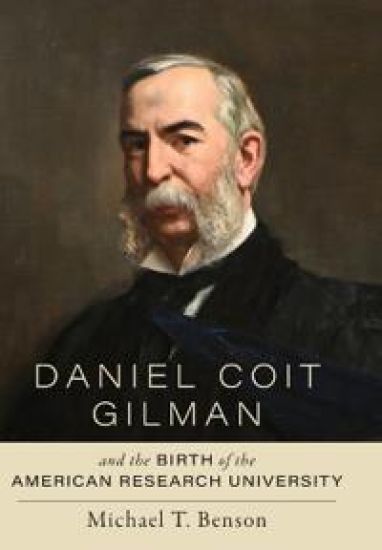
Daniel Coit Gilman and the Birth of the American Research University
Michael T. Benson
Johns Hopkins University Press
2022
sidottu
One of the most remarkable education leaders of the late nineteenth century and the creator of the modern American research university finally gets his due.Daniel Coit Gilman, a Yale-trained geographer who first worked as librarian at his alma mater, led a truly remarkable life. He was selected as the third president of the University of California; was elected as the first president of Johns Hopkins University, where he served for twenty-five years; served as one of the original founders of the Association of American Universities; and—at an age when most retired—was hand-picked by Andrew Carnegie to head up his eponymous institution in Washington, DC.In Daniel Coit Gilman and the Birth of the American Research University, Michael T. Benson argues that Gilman's enduring legacy will always be as the father of the modern research university—a uniquely American invention that remains the envy of the entire world. In the past half-century, nothing has been written about Gilman that takes into account his detailed journals, reviews his prodigious correspondence, or considers his broad external board service. This book fills an enormous void in the history of the birth of the "new" American system of higher education, especially as it relates to graduate education. The late 1800s, Benson points out, is one of the most pivotal periods in the development of the American university model; this book reveals that there is no more important figure in shaping that model than Daniel Coit Gilman.Benson focuses on Gilman's time deliberating on, discussing, developing, refining, and eventually implementing the plan that brought the modern research university to life in 1876. He also explains how many university elements that we take for granted—the graduate fellowships, the emphasis on primary investigations and discovery, the funding of the best laboratory and research spaces, the scholarly journals, the university presses, the sprawling health sciences complexes with teaching hospitals—were put in place by Gilman at Johns Hopkins University. Ultimately, the book shows, Gilman and his colleagues forced all institutions to reexamine their own model and to make the requisite changes to adapt, survive, thrive, compete, and contribute.

Daniel Carl Solander, Naturalist on the "Endeaver"
Roy Anthony Rauschenberg
American Philosophical Society Press
1968
pokkari
