Kirjojen hintavertailu. Mukana 12 435 130 kirjaa ja 12 kauppaa.

Kirjahaku

Etsi kirjoja tekijän nimen, kirjan nimen tai ISBN:n perusteella.

1000 tulosta hakusanalla David H Short

Who Loses Wins. Winning Weight Loss Battles
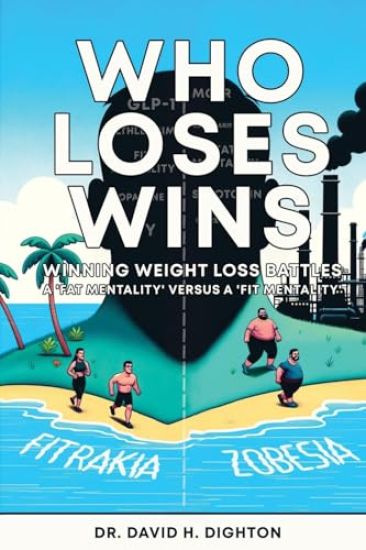
The calories we eat, and the calories we use while exercising, are the focus of every book on dieting and slimming, but typically, one key topic is missing - mentality. What drives some of us to become overweight and to fail repeatedly to lose weight, and what drives others to be slim, fit and athletic. Without suppressing our 'Fat Mentality', every weight-loss strategy is bound to last only a short time.Psychologically, we all have a 'Fat Mentality' and 'Fit Mentality'. These two components of our eating and exercise mindset co-exist, and are forever in opposition. The 'Fat Mentality' promotes our inactivity, self-indulgence and weight gain; our 'Fit Mentality' drives our desire for activity and the disciplined control of everything we do. Because they direct what we eat, and what exercise we choose to do, they will affect our body weight.A better understanding of the 'Fat Mentality' is crucial to everyone who has repeatedly failed to lose weight. Because it can so easily overwhelm whatever strategy we adopt, ignoring it is not an option for those who wish to succeed. In matters of weight control, we must consider our attitude to food and exercise, alongside food calories, portion sizes, carbohydrates in food, and the latest information about our genes, gut hormones and gut biome. A discussion of all the long-known, and new weight loss interventions, will enable individuals to choose the strategies that suit them best.Given the liability of overweight people to diabetes and heart disease, I have added something new to the weight loss debate. Which foods are best for the heart and circulation.Explore within -- How to break free from a 'Fat Mentality' mindset.- How to cultivate a 'Fit Mentality' mindset.- About calories and portion sizes.- About appetite control.- About carbohydrates.- About food that can be good or bad for your arteries.- About your metabolism.- About ketones.- About your hormones.- About your genes.- About gut hormones.- About the gut biome.- About exercise.- About medical and psychological help.- About appetite suppressants.- About bariatric surgery.- About dieting myths.
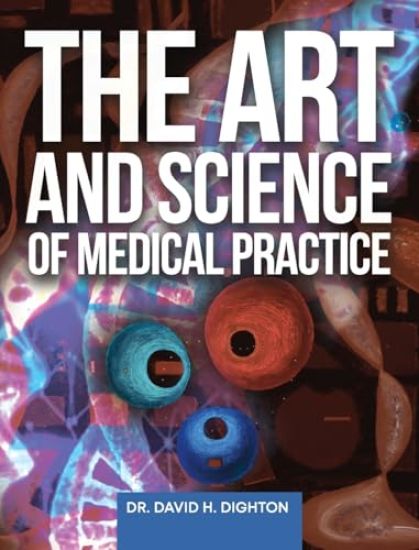
The Art and Science of Medical Practice

The Art and Science of Medical Practice

David H Dighton

Dr D H Dighton trading as Loughton Clinic
2024
pokkari
This book contains many practical tips about how to practise medicine, judged as successful by patients. These tips result from 55-years of medical practice experience, using both its art and science; its judgement tools, methods and creative processes, rather than anonymous, check-box ticking algorithmic processing. Everyday medical practices save lives and reduce suffering, but with problematic cases both independent thought and creativity are often necessary. Scientific medicine has provided us with many indispensable tools, but it is the art of medicine that defines how best to use them to fulfil our patient's needs. Applying the science of medicine can be as effective as a bowl of cold soup served to stranded, freezing and frightened mountaineers. Even though it contains every ingredient necessary to sustain life, the soup alone might not uplift their spirits enough for the journey ahead. For that, knowing how to handle people is the essential art. Only the art of medical practice serves this purpose for patients.No matter how much science we apply to a clinical situation, someone, sometime, will need to draw a line between what is 'normal' and 'abnormal'; between what is acceptable and the unacceptable, and between what is clinically advisable, risky or ineffective. Science has provided doctors with the means to draw such lines of distinction, but not the ability to know where best to draw them for each patient. That remains a medical art.Some controversial medical topics discussed are: The relative importance of scientific medicine and the art of medicine. The challenge of cultural diversity and our personal biases.Why the poor suffer five times more disease than the wealthy. The statistical paradox, informed consent and patient agreement. The merit of doctors and nurses performing in 'attached' and 'detached' modes.The relative merits of medical training rather the education of experience. The sovereignty of medical learning, ability, and practice and the duties it imposes. Why doctors in the UK are leaving the medical profession ('Drexit')?The contents will be most pertinent to all medical students, doctors, nurses, paramedics, and anyone unfortunate enough to be a patient. It could also be pertinent to those still at school, considering a career in medicine.Only those with a strong interest in their fellow man should attempt to practise the art of medicine. They will need to be brave enough, and irreverent enough of regulatory bureaucracy, to practise it in the future. The reason is simple. Medical science alone is used to define the regulatory high ground. While the progressive impenetrability and detached nature of scientific knowledge helps to grow its mystique, the art of medicine is being simultaneously derided and undervalued. This is because the art of medical practice is impossible to regulate and there are no means to measure its indispensable merits.
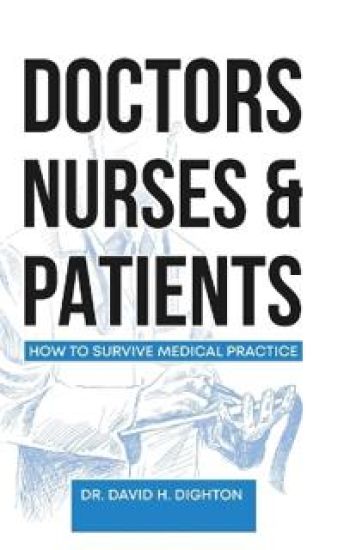
Doctors, Nurses & Patients

Doctors, Nurses & Patients

David H Dighton

Dr D H Dighton trading as Loughton Clinic
2024
pokkari
Doctors, nurses and patients need to understand one another. With that in mind, this book describes the many characters they can each portray. In the first chapter, I describe 120 caricatures of doctors and nurses, together with many pertinent and amusing anecdotes, some of which are deadly serious.In the second chapter, I describe 70 patient types of patient, together with many illustrative anecdotes.In the third chapter, I explore the interrelationship between patients, doctors and nurses, and how they relate to medical bureaucracy. This is important now that it affects the morbidity and mortality of patients and the working conditions of nurses and doctors in the UK.When considered as characters, doctors, nurses and patients each play their role in different ways. How each doctor and nurse behaves can affect a patient's quality of life and also their morbidity and mortality. Doctors and nurses gain an advantage when they understand their patients well, and patients will benefit when they understand the difference, various types of doctor and nurse can make to their life. Doctors and nurses are not all equally effective when treating people, and patients deserve to know why this is. This book will not only enable doctors and nurses to better understand those they treat, it will also help patients decide who they should allow to treat them. Some doctors and nurses prefer to treat patients as numbers, others insist on treating patients as sentient human beings. Most specialist doctors now only treat specific problems, whereas once we had general physicians and surgeons capable of much more. Only GPs have kept their ability to treat all-comers. Although I refer mainly to doctors and nurses, I must acknowledge that many others care for patients. They include pharmacists, hairdressers, carers, counsellors, social workers, paramedics and friends. They should assume that they are all included in my descriptions. In the 1960s when I first worked as a junior doctor, patients had relationships with doctors that were more formal than today. Doctors then came from rich educated families, and many had experienced the work doctors did as members of their family. Those who practiced medicine had a vocation and were middle-class. Those who became nurses and doctors represented those given to public duty, and not to business. Their aim was to serve. Many would have pursued their vocation, even if their work had been unpaid. Things have changed considerably, but has it been for the better?The media and medical bureaucrats have made patients aware that every doctor is a potential Dr. Harold Shipman, and every nurse a potential Lucy Letby, until proven otherwise. The result has been that doctors and nurses have changed their approach to patients. Some now see patients as potential litigants. Everything doctors and nurses do now has a medico-legal dimension, with everything that is said or done, recorded and audited for the satisfaction of managers with MBAs and law degrees, many of whom should run baked-bean factories, not medical facilities. One unfortunate result has been that the focus of some nurses and doctors has had to move from patient care to consider the needs of the corporate management system controlling them. The actions of doctors and nurses has thus changed, and with it the doctor-patient and nurse-patient relationship, but not for the better. Bureaucracy has raised patient expectations, while the services they can access in the UK have become less. My hope is for patients, doctors and nurses to better understand one another. I have aimed to make the information provided both useful and amusing.
The Art and Science of Medical Practice

The Art and Science of Medical Practice

David H Dighton

Dr D H Dighton trading as Loughton Clinic
2024
sidottu
The medical students and doctors who read this book will learn many practical tips about how to practise medicine, judged as successful by patients. These tips result from 55-years of medical practice experience, using both its art and science; its judgement tools, methods and creative processes, rather than anonymous, check-box ticking algorithmic processing. Everyday medical practices save lives and reduce suffering, but with problematic cases both independent thought and creativity are often necessary. Scientific medicine has provided us with many indispensable tools, but it is the art of medicine that defines how best to use them to fulfil our patient's needs. Applying the science of medicine can be as effective as a bowl of cold soup served to stranded, freezing and frightened mountaineers. Even though it contains every ingredient necessary to sustain life, the soup alone might not uplift their spirits enough for the journey ahead. For that, knowing how to handle people is the essential art. Only the art of medical practice serves this purpose for patients.No matter how much science we apply to a clinical situation, someone, sometime, will need to draw a line between what is 'normal' and 'abnormal'; between what is acceptable and the unacceptable, and between what is clinically advisable, risky or ineffective. Science has provided doctors with the means to draw such lines of distinction, but not the ability to know where best to draw them for each patient. That remains a medical art.Some controversial medical topics discussed are: The relative importance of scientific medicine and the art of medicine. The challenge of cultural diversity and our personal biases.Why the poor suffer five times more disease than the wealthy. The statistical paradox, informed consent and patient agreement. The merit of doctors and nurses performing in 'attached' and 'detached' modes.The relative merits of medical training rather the education of experience. The sovereignty of medical learning, ability, and practice and the duties it imposes. Why doctors in the UK are leaving the medical profession ('Drexit')?The contents will be most pertinent to all medical students, doctors, nurses, paramedics, and anyone unfortunate enough to be a patient. It could also be pertinent to those still at school, considering a career in medicine.Only those with a strong interest in their fellow man should attempt to practise the art of medicine. They will need to be brave enough, and irreverent enough of regulatory bureaucracy, to practise it in the future. The reason is simple. Medical science alone is used to define the regulatory high ground. While the progressive impenetrability and detached nature of scientific knowledge helps to grow its mystique, the art of medicine is being simultaneously derided and undervalued. This is because the art of medical practice is impossible to regulate and there are no means to measure its indispensable merits.
Poems for Recycling Lives

Poems for Recycling Lives

David H Dighton

MediCause
2024
pokkari
1.Senryu for Life, 2.Poetic Thoughts of Love, Life & LossWithin are many haiku (senryu) and longer poetic forms. All express common life relationship situations, but in particular the judgement biases which affect our thoughts, feelings and decisions in matters of love and its loss.As a physician with five decades of experience, I depart here from my usual role and attempt to go where poetic content lives: beyond the peaks of exact meaning, through the valleys of essence and personal interpretation, into the realms of the spiritual; the all-accepting, non-judgmental frames of mind so few have time for. From what other aspect of consciousness can one express feelings of love, beauty, stress and loss, all of which lack explicit definition, but all of which have their serious individual implications? In any collection of thoughts like this, only a few will resonate with each person. Our search for knowledge and direction is always a similar quest. My aim is for each reader to find at least one item they regard as a gem; one that speaks to them and enables a better understanding of life and its commonest source of happiness and stress -relationships.
Backbone

Backbone

David H Wagner

Watkins Publishing
2016
nidottu
'David Wagner is a transformational teacher and dedicated leader, on a committed path of service, guiding others to awaken to their inner wisdom and authentic power.' Gabrielle Bernstein, New York Times bestselling author of Miracles Now. So many self-help books on the market have a feminine edge and do not speak directly to a man's masculinity. The message that men have been given so far is that they have to get in touch with their feminine side if they want to embrace change. This book blows this theory out of the water and is a total game changer. It enables men to transform entirely, working with their masculinity instead of against it. Straight talking, down-to-earth and humorous Wagner addresses the challenges that modern men typically face, asking the reader to join him in a series of profound self-examination exercises and questions covering life purpose, male identity, spirituality, self-limitation, sexuality, relationships, fatherhood and more. Every chapter is highly practical and also includes observations and examples from David's own life journey as well as insights gained from the many clients and groups he has worked with over the years. Men all over the world will be saying: 'Finally a book that actually speaks to me in my language'.
Beyond the Nation-State

Beyond the Nation-State

David H. Kamens

Emerald Publishing Limited
2012
sidottu
The book examines the effects of education in creating global citizens who share a world culture. This occurs within an international system that still remains decentralized, composed of independent nation-states as major actors. Prof. Kamens argues that as globalization intensifies, this system of nation-states becomes more saturated and dense with structure. Intensified globalization has produced a world society, thanks to the spread of global capitalism, education, democracy and bureaucracy. The upshot is that world culture travels quickly and produces 'recipes' for the development of an 'imagined community' that has increasing commonalities across societies. The book examines the role of education in diffusing such attitudes and models, as global citizens confront national institutions.
Unbecoming Cinema

Unbecoming Cinema

David H. Fleming

Intellect Books
2017
sidottu
Unbecoming Cinema explores the notion of cinema as a living, active agent, capable of unsettling and reconfiguring a person’s thoughts, senses, and ethics. Film, according to David H. Fleming, is a dynamic force, arming audiences with the ability to see and make a difference in the world. Drawing heavily on Deleuze’s philosophical insights, as well as those of Guattari and Badiou, the book critically examines unsettling and taboo footage, from suicide documentaries to art therapy films, from portrayals of mental health and autism to torture porn. In investigating the effect of film on the mind and body, Fleming’s shrewd analysis unites transgressive cinema with metaphysical concepts of the body and mind. A PDF version of this book is available for free in open access via the OAPEN Library platform, Unbecoming Cinema. It has been made available under a Creative Commons Attribution 4.0 International Public License and is part of Knowledge Unlatched.
Secrets of the Masters

Secrets of the Masters

David H. Freeman

Ark Group
2015
nidottu
This inspirational handbook is packed with hundreds of proven tools, tips, and techniques for increasing revenue and forging relationships with clients and colleagues that will last you a lifetime. The rainmaking secrets revealed will enable you to: Find practice niches; Apply alternative fees; Accelerate cross-selling; Categorise your key targets; Use social media effectively; Identify and build personal strengths; Deliver exceptional levels of client service; Build powerful internal and external networks; Get client meetings and maximise their effectiveness; Improve lateral success and enhance lateral integration; and Make business development a career-long, sustainable process. Secrets of the Masters features a highly regarded team of over two dozen law firm marketing and business development experts who offer their insight, experiences, and real-world tips on attracting, retaining, and growing your client base. Each chapter also includes an extensive range of business development approaches and mini case studies, along with a useful planning worksheet which prompts you to make decisions and take action. PLUS...Within the complimentary CD-Rom you'll find all the supporting worksheets and checklists featured throughout the book, along with a personal business development plan template to help you tailor your strategies. "Secrets of the Masters" is the most comprehensive, yet practical "how to" guide I've seen for developing business in the legal industry. Whether you're a young lawyer starting to build a practice and reputation, or a seasoned practitioner looking to achieve the next level of success, this book is your roadmap. Simply stated, if you heed its principles, you will make more money." - Jonathan Fitzgarrald, Chief Marketing Officer of Greenberg Glusker and author of BADfortheBRAND.com
Creating a Cross-Serving Cultureshift

Creating a Cross-Serving Cultureshift

David H Freeman

Ark Group
2015
nidottu
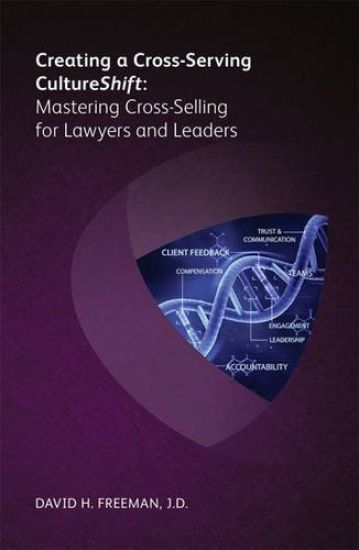
Are you making the most of your firm's cross-selling opportunities? On average, in a typical firm, 20% of the lawyers are high-performing rainmakers. They know the secrets to capitalising on business development opportunities and they often manage to secure big clients. A further 20% are doing little in the way of business development. The rest (around 60%) are sitting somewhere in the middle. They're bringing in business, but more needs to be done to find that extra revenue. How can this 60% really capitalise on making more money? More and more law firm leaders are turning to cross-selling. Develop a cross-serving culture to cross-sell In many cases, cross-selling in the legal sphere is a lot easier said than done. It should be easy to get more work in different practice areas from your existing clients, but organisational challenges and working cultures can often stand in the way of cross-selling success. How can your firm overcome these challenges and make the most of this traditionally untapped revenue stream? Creating a Cross-Serving CultureShift: Mastering Cross-Selling for Lawyers and Leaders is a practical guide dedicated to helping you achieve exactly this. Packed with clear, actionable guidance on how to attract, retain and grow a client base, it provides scores of practical tips to help you and your firm become a true master of cross-selling. To address the crux of the challenge at most firms - adjusting mindsets and cultural attitudes of lawyers to encourage cross-practice collaboration - the book outlines a proven strategy to address the cultural change that is necessary to a successful cross-selling initiative. The guide will also show you how to: Initiate excellent communication between practice groups Educate your teams to ensure they have a deep understanding of the services offered by other lawyers at your firm Instill a culture of trust and empathy between lawyers so a cross-serving culture can develop more easily Implement an active client feedback programme Achieve higher levels of client service, so you become the firm your clients turn to for important work Implement a compensation system that rewards team-based behaviours Encourage personal accountability Employ proactive leaders who are committed to driving key cross-serving behaviours Why this guide is a real-game changer Learn from David Freeman, one of the world's leading authorities on maximising cross-selling in law firms. He has over 30 years' experience and was recognised as the top "Law Firm Business Development Consultant and Coach" in National Law Journal surveys in the US. Actively increase the amount of lawyer time and energy that is devoted to cross-selling at your firm. Uncover 13 key 'Accelerators' that will help your future business development success. Drive greater cross-selling success with the Appendix designed for firm leaders, offering a practical, high-level checklist of major activities. In addition to the author's perceptions, this book includes insights from law firm leaders who have provided input based on a survey conducted specifically for this project. What your peers are saying "In my opinion, David is the world's leading authority on practical aspects of maximizing cross-selling in law firms." Elizabeth Anne "Betiayn" Tursi, Global Chair and Co-Founder, Women in Law Empowerment Forum "David Freeman has a keen understanding of the art of cross-selling and the benefits it brings. His professional background and experience allows him to articulate the case for team centered business development in a way that motivates and inspires even the most reluctant professional.." Peter Kellett, Chairman and CEO, Dykema "David Freeman has literally written the book on cross-selling. This is NOT a 30,000 foot view but rather he gives us boots on the ground, practical guidance from years of overcoming obstacles in every type of law firm culture." Doug Hoover, CMO/Director of Marketing & Business Development, Schiff Hardin LLP
The Prop Maker's Workshop Manual

The Prop Maker's Workshop Manual

David H Rigden

The Crowood Press Ltd
2018
nidottu
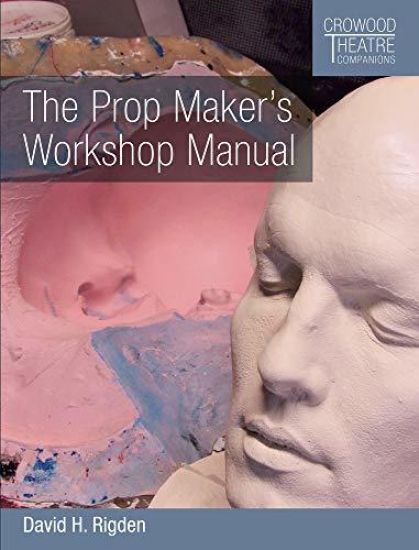
For many people, even within the theatre industry, prop making is something of a 'dark art', practised by gifted individuals who manage to produce intricate works battling against short deadlines. However, the skills of prop making are relevant to many industries and contexts, whether for art projects, carnival floats, live action role-play (LARP), model railways or film and television. The options and applications are endless, but the traditional skills remain the same. The Prop Maker's Workshop Manual is a definitive guide to the materials and practices used within the professional performing arts industries, covering both traditional techniques and modern practices. Supported by original hand-drawn illustrations and over 300 colour photographs, topics covered include: paper mache and card construction; flexible canes and withies; timber and steel frameworks; sculpting, moulding and casting processes; texture and paint techniques; GRP and epoxy resins; thermoformable plastics, including Plastazote and Wonderflex and finally, an introduction to life casting.
Saint Jordan of Bristol

Saint Jordan of Bristol

David H. Higgins

New Generation Publishing
2015
pokkari
DAVID H. HIGGINS, M.A. (Cambridge), was Head of the Department of Italian Studies at the University of Bristol until retirement in 1995. His main professional field was the cultural and political history of Italy from Late Antiquity, through medieval to the Renaissance, together with comparative philology and linguistics. This was accompanied by an interdisciplinary professional interest in comparative early medieval British and Italian archaeology and history. His major publications include the critical apparatus of Dante's Divine Comedy in the World Classics series, Oxford University Press (1981, 2nd edition 1993, reprinted 2008), and many articles and reviews in journals such as Dante Studies, The Modern Language Review, The Journal of Ecclesiastical History and archaeological serials including the Transactions of the Bristol and Gloucestershire Archaeological Society, The Council for British Archaeology - South West, Bristol and Avon Archaeology and short works for the Bristol branch of the Historical Association.
The End of Schooling

The End of Schooling

David H M Wright

Austin Macauley Publishers
2017
nidottu
How much the prosperity of both individuals and nations would burgeon if only more funding could be provided for education is a popular contemporary view. Class sizes made smaller, curricula more expertly designed, teachers more wide-ranging in their interests and competence. This mechanistic outlook is challenged. Education, like pure art, seeks to fathom the world's depths without ever totally reaching its bedrock. Participants need to be ready for surprise. To be left feeling mystified, wondering, overwhelmed. In a Nature never still, each generation has to face environments in novel ways. Education's incomparable brief, then, is to deal with the real demands made on humanity. Definite answers are unavailable. Invitations are to share interminable journeying. To find delight in evanescent experiences. Not to seek arrival at supposedly perfect destinations.