Kirjojen hintavertailu. Mukana 11 717 486 kirjaa ja 12 kauppaa.

Kirjahaku

Etsi kirjoja tekijän nimen, kirjan nimen tai ISBN:n perusteella.

1000 tulosta hakusanalla David a McIntee

The Anthropological Character of Theology

The Anthropological Character of Theology

David A. Pailin

Cambridge University Press
2009
pokkari
This study looks at the various ways in which theological conclusions are affected by the rationality of those who produce them. The author's critique of the study of theology arises out of a conviction that theology has to establish its credibility as a mode of understanding if it is to be of value. In considering what follows once it is recognised that - since theologians are human - their conclusions are affected by the nature of human thought, Dr Pailin offers a clarification of faith, belief and reason, and how they are related to each other. The book shows that while theology can no longer credibly pretend to divine authority in determining the truth in all disciplines, it is committed to understanding the fundamental character of reality as a whole. Against the conservative backlash in religious thought, and the secularist trend towards scepticism when references are made to the reality of God, the author takes up the challenge of current thinking to show that it is possible for theology to affirm God's reality in a positive way which is, at the same time, self-critically aware of the human character of thought.
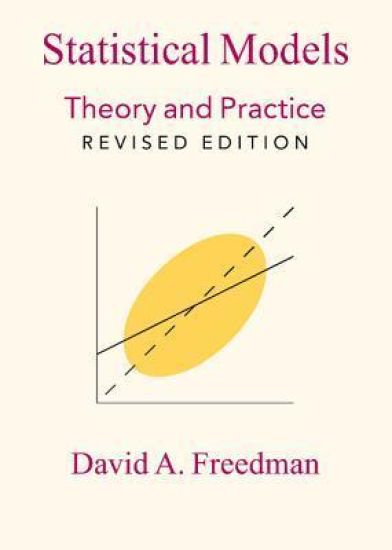
Statistical Models

Statistical Models

David A. Freedman

Cambridge University Press
2009
sidottu
This lively and engaging book explains the things you have to know in order to read empirical papers in the social and health sciences, as well as the techniques you need to build statistical models of your own. The discussion in the book is organized around published studies, as are many of the exercises. Relevant journal articles are reprinted at the back of the book. Freedman makes a thorough appraisal of the statistical methods in these papers and in a variety of other examples. He illustrates the principles of modelling, and the pitfalls. The discussion shows you how to think about the critical issues - including the connection (or lack of it) between the statistical models and the real phenomena. The book is written for advanced undergraduates and beginning graduate students in statistics, as well as students and professionals in the social and health sciences.
Death by Moderation

Death by Moderation

David A. Koplow

Cambridge University Press
2009
sidottu
This book addresses an important but little-noticed phenomenon in the revolutionary world of military technology. Across a wide range of otherwise-unrelated weapons programs, the Pentagon is now pursuing arms that are deliberately crafted to be less powerful, less deadly, and less destructive than the systems they are designed to supplement or replace. This direction is historically anomalous; military forces generally pursue ever-bigger bangs, but the modern conditions of counter-insurgency warfare and military operations 'other than war' (such as peacekeeping and humanitarian assistance) demand a military capable of modulated force. By providing a capacity to intervene deftly yet effectively, the new generations of 'useable' weaponry should enable the U.S. military to accomplish its demanding missions in a manner consistent with legal obligations, public relations realities, and political constraints. Five case studies are provided, regarding precision-guided 'smart bombs', low-yield nuclear weapons, self-neutralizing anti-personnel land mines, directed-energy anti-satellite weapons, and non-lethal weapons.
Statistical Models and Causal Inference

Statistical Models and Causal Inference

David A. Freedman

Cambridge University Press
2009
pokkari
David A. Freedman presents here a definitive synthesis of his approach to causal inference in the social sciences. He explores the foundations and limitations of statistical modeling, illustrating basic arguments with examples from political science, public policy, law, and epidemiology. Freedman maintains that many new technical approaches to statistical modeling constitute not progress, but regress. Instead, he advocates a 'shoe leather' methodology, which exploits natural variation to mitigate confounding and relies on intimate knowledge of the subject matter to develop meticulous research designs and eliminate rival explanations. When Freedman first enunciated this position, he was met with scepticism, in part because it was hard to believe that a mathematical statistician of his stature would favor 'low-tech' approaches. But the tide is turning. Many social scientists now agree that statistical technique cannot substitute for good research design and subject matter knowledge. This book offers an integrated presentation of Freedman's views.
The Process of Investment in the Soviet Union

The Process of Investment in the Soviet Union

David A. Dyker

Cambridge University Press
2010
pokkari
This 1983 book presents a comprehensive account of the cycle of fixed capital investment in the Soviet Union, from strategic decision-taking in the Kremlin down to the level of individual building sites. Dr Dyker places the subject in the context of welfare economics and decision-taking theory, but the book's emphasis is on the detailed empirical analysis of Soviet material. It includes analysis of the Soviet design and construction sectors and the developments in Soviet procedures for assessing investment effectiveness, as well as a unique series of case studies of individual investment projects. In a concluding chapter Dr Dyker assesses overall investment effectiveness in the Soviet Union, and looks at Soviet investment planning and Soviet development strategy.
Reforming the World Bank

Reforming the World Bank

David A. Phillips

Cambridge University Press
2011
pokkari
In the many studies of the World Bank, a critical issue has been missed. While writers have looked at the Bank's political economy, lending, conditions, advice, ownership and accounting for issues such as the environment, this study looks at the Bank as an organization - whether it is set up to do the job it is supposed to do and, if not, what should be done about it. This book is about the problems of organization and reorganization as much as it is about the problems of assisting third-world development, and it is a case study in flawed organizational reform as much as a critique of the way development assistance is managed. It covers the period that starts at the time of the first major reorganization, in 1987 under President Barber Conable, and ends at the time of the resignation of Paul Wolfowitz, in 2007, but it focuses especially on what happened during the tenure of James Wolfensohn.
Explaining the Evidence

Explaining the Evidence

David A. Lagnado

Cambridge University Press
2021
pokkari
How do we make sense of complex evidence? What are the cognitive principles that allow detectives to solve crimes, and lay people to puzzle out everyday problems? To address these questions, David Lagnado presents a novel perspective on human reasoning. At heart, we are causal thinkers driven to explain the myriad ways in which people behave and interact. We build mental models of the world, enabling us to infer patterns of cause and effect, linking words to deeds, actions to effects, and crimes to evidence. But building models is not enough; we need to evaluate these models against evidence, and we often struggle with this task. We have a knack for explaining, but less skill at evaluating. Fortunately, we can improve our reasoning by reflecting on inferential practices and using formal tools. This book presents a system of rational inference that helps us evaluate our models and make sounder judgments.
Fundamentalism in American Religion and Law

Fundamentalism in American Religion and Law

David A. J. Richards

Cambridge University Press
2010
sidottu
Why, from Reagan to George Bush, have fundamentalists in religion and in law (originalists) exercised such political power and influence in the United States? Why has the Republican Party forged an ideology of judicial appointments (originalism) hostile to abortion and gay rights? Why and how did Barack Obama distinguish himself among Democratic candidates not only by his opposition to the Iraq war but by his opposition to originalism? This book argues that fundamentalism in both religion and law threatens democratic values and draws its appeal from a patriarchal psychology still alive in our personal and political lives and at threat from the constitutional developments since the 1960s. The argument analyzes this psychology (based on traumatic loss in intimate life) and resistance to it (based on the love of equals). Obama's resistance to originalism arises from his developmental history as a democratic, as opposed to patriarchal, man who resists the patriarchal demands on men and women that originalism enforces - in particular, the patriarchal love laws that tell people who and how and how much they may love.
Statistical Models and Causal Inference

Statistical Models and Causal Inference

David A. Freedman

Cambridge University Press
2009
sidottu
David A. Freedman presents here a definitive synthesis of his approach to causal inference in the social sciences. He explores the foundations and limitations of statistical modeling, illustrating basic arguments with examples from political science, public policy, law, and epidemiology. Freedman maintains that many new technical approaches to statistical modeling constitute not progress, but regress. Instead, he advocates a 'shoe leather' methodology, which exploits natural variation to mitigate confounding and relies on intimate knowledge of the subject matter to develop meticulous research designs and eliminate rival explanations. When Freedman first enunciated this position, he was met with scepticism, in part because it was hard to believe that a mathematical statistician of his stature would favor 'low-tech' approaches. But the tide is turning. Many social scientists now agree that statistical technique cannot substitute for good research design and subject matter knowledge. This book offers an integrated presentation of Freedman's views.
Science and Corporate Strategy

Science and Corporate Strategy

David A. Hounshell; John Kenly Smith

Cambridge University Press
1988
sidottu
Based on voluminous corporate records and extensive interviews with key employees, Science and Corporate Strategy: Du Pont R and D, 1902–1980 provides a comprehensive, critical study of research and development in a large US corporation. Du Pont was among a handful of US corporations that established formal research and development laboratories at the turn of the century to improve competitive positions in their respective industries. Initially, Du Pont's executives viewed R&D as an important though not central part of the corporations strategy. However the gains made by the company's laboratories soon demonstrated that R&D would be a critical ingredient in the firm's success. The industrial research and development laboratory became a major part of corporate structure; science became a central part of corporate strategy.
Foundations in Public Economics

Foundations in Public Economics

David A. Starrett

Cambridge University Press
1988
pokkari
In this book, Professor David Starrett organizes within a single framework the major theoretical foundations of modern public sector economics. He presents a unified treatment of market failure that encompasses externalities, pure public goods, local public goods and natural monopolies. Professor Starrett then develops and assesses the efficacy of the various planning procedures - including representative voting, benefit cost analysis, incentive compatible design mechanisms and the free market. He devotes attention to both national and local issues, with the aim of identifying those methods that are best suited to each arena separately. Special attention is paid to financial arrangements, techniques for eliciting necessary information that is not readily available, and identification of biases that will result from incorrect procedures. This study will be useful to graduate students and economists who are interested in public finance or welfare economics.
The Anthropological Character of Theology

The Anthropological Character of Theology

David A. Pailin

Cambridge University Press
1990
sidottu
This study looks at the various ways in which theological conclusions are affected by the rationality of those who produce them. The author's critique of the study of theology arises out of a conviction that theology has to establish its credibility as a mode of understanding if it is to be of value. In considering what follows once it is recognised that - since theologians are human - their conclusions are affected by the nature of human thought, Dr Pailin offers a clarification of faith, belief and reason, and how they are related to each other. The book shows that while theology can no longer credibly pretend to divine authority in determining the truth in all disciplines, it is committed to understanding the fundamental character of reality as a whole. Against the conservative backlash in religious thought, and the secularist trend towards scepticism when references are made to the reality of God, the author takes up the challenge of current thinking to show that it is possible for theology to affirm God's reality in a positive way which is, at the same time, self-critically aware of the human character of thought.
Justice and the Genesis of War

Justice and the Genesis of War

David A. Welch

Cambridge University Press
1993
sidottu
Studies of the causes of wars generally presuppose a ‘realist’ account of motivation: when statesmen choose to wage war, they do so for purposes of self-preservation or self-aggrandizement. In this book, however, David Welch argues that humans are motivated by normative concerns, the pursuit of which may result in behaviour inconsistent with self-interest. He examines the effect of one particular type of normative motivation - the justice motive - in the outbreak of five Great Power wars: the Crimean war, the Franco-Prussian war, World War I, World War II, and the Falklands war. Realist theory would suggest that these wars would be among the least likely to be influenced by considerations other than power and interest, but the author demonstrates that the justice motive played an important role in the genesis of war, and that its neglect by theorists of international politics is a major oversight.
Justice and the Genesis of War

Justice and the Genesis of War

David A. Welch

Cambridge University Press
1995
pokkari
Studies of the causes of wars generally presuppose a ‘realist’ account of motivation: when statesmen choose to wage war, they do so for purposes of self-preservation or self-aggrandizement. In this book, however, David Welch argues that humans are motivated by normative concerns, the pursuit of which may result in behaviour inconsistent with self-interest. He examines the effect of one particular type of normative motivation - the justice motive - in the outbreak of five Great Power wars: the Crimean war, the Franco-Prussian war, World War I, World War II, and the Falklands war. Realist theory would suggest that these wars would be among the least likely to be influenced by considerations other than power and interest, but the author demonstrates that the justice motive played an important role in the genesis of war, and that its neglect by theorists of international politics is a major oversight.
Environmental Toxicology

Environmental Toxicology

David A. Wright; Pamela Welbourn

Cambridge University Press
2002
pokkari
Environmental Toxicology is a comprehensive introductory textbook dealing with most aspects of the subject, from the molecular to the ecosystem level. Early chapters deal with basic and advanced concepts, methods and approaches. The next tier discusses the environmental toxicology of individual or groups of substances. The third part addresses complex issues, in which many of the concepts, approaches and substances covered in earlier tiers are incorporated. The fourth part includes chapters on risk assessment, rehabilitation and regulatory toxicology. The book concludes with a summary of present and future areas of emphasis. Each chapter contains a comprehensive list of references and further reading, case studies from different jurisdictions, and student exercises. Environmental Toxicology is primarily a textbook for undergraduate and graduate students in environmental toxicology, environmental chemistry, ecotoxicology, applied ecology, environmental management, and risk assessment. It will also be valuable for specialists in ecology, environmental science, and chemistry.
Essentials of Electromagnetics for Engineering

Essentials of Electromagnetics for Engineering

David A. de Wolf

Cambridge University Press
2000
sidottu
Essentials of Electromagnetics for Engineering provides a clearly-written introduction to the key physical and engineering principles of electromagnetics. Throughout the book, the author describes the intermediate steps in mathematical derivations that many other textbooks leave out. The author begins by examining Coulomb’s law and simple electrostatics, covering in depth the concepts of fields and potentials. He then progresses to magnetostatics and Maxwell’s equations. This approach leads naturally to a discussion of electrodynamics and the treatment of wave propagation, waveguides, transmission lines, and antennas. At each stage, the author stresses the physical principles underlying the mathematical results. Many homework exercises are provided, including several in Matlab and Mathematica formats. The book contains a separate chapter on numerical methods in electromagnetics, and a broad range of worked examples to illustrate important concepts. It is suitable as a textbook for undergraduate students of engineering and applied physics taking introductory courses in electromagnetics.
Essentials of Electromagnetics for Engineering

Essentials of Electromagnetics for Engineering

David A. de Wolf

Cambridge University Press
2012
pokkari
Essentials of Electromagnetics for Engineering, first published in 2000, provides a clearly written introduction to the key physical and engineering principles of electromagnetics. Throughout the book, the author describes the intermediate steps in mathematical derivations that many other textbooks leave out. The author begins by examining Coulomb's law and simple electrostatics, covering in depth the concepts of fields and potentials. He then progresses to magnetostatics and Maxwell's equations. This approach leads naturally to a discussion of electrodynamics and the treatment of wave propagation, waveguides, transmission lines, and antennas. At each stage, the author stresses the physical principles underlying the mathematical results. Many homework exercises are provided, including several in Matlab and Mathematica formats. The book contains a separate chapter on numerical methods in electromagnetics, and a broad range of worked examples to illustrate important concepts. It is suitable as a textbook for undergraduate students of engineering and applied physics taking introductory courses in electromagnetics.
Non-Lethal Weapons

Non-Lethal Weapons

David A. Koplow

Cambridge University Press
2006
pokkari
Too often, military and law enforcement authorities have found themselves constrained by inadequate weaponry. An emerging category of 'non-lethal weapons' carries promise for resolving this dilemma, proffering new capabilities for disabling opponents without inflicting death or permanent injury. This array of much more sophisticated technologies is being developed, and could emerge for use by soldiers and police in the near future. These augmented capabilities carry both immense promise and grave risks: they expand the power of law enforcement and military units, enabling them to accomplish assigned missions with greater finesse and reduced casualties. But they may also be misused - increasing maligned applications and inspiring leaders to over-rely upon a myth of 'bloodless combat'. This book explores the emerging world of non-lethal weapons by examining a series of case studies - recent real-world scenarios from five confrontations around the world where the availability of a modern arsenal might have made a difference.
Statistical Models

Statistical Models

David A. Freedman

Cambridge University Press
2009
pokkari
This lively and engaging book explains the things you have to know in order to read empirical papers in the social and health sciences, as well as the techniques you need to build statistical models of your own. The discussion in the book is organized around published studies, as are many of the exercises. Relevant journal articles are reprinted at the back of the book. Freedman makes a thorough appraisal of the statistical methods in these papers and in a variety of other examples. He illustrates the principles of modelling, and the pitfalls. The discussion shows you how to think about the critical issues - including the connection (or lack of it) between the statistical models and the real phenomena. The book is written for advanced undergraduates and beginning graduate students in statistics, as well as students and professionals in the social and health sciences.
How I Met Myself Level 3

How I Met Myself Level 3

David A. Hill

Cambridge University Press
2001
pokkari
Cambridge English Readers is an exciting new series of original fiction, specially written for learners of English. Graded into six levels - from elementary to advanced - the stories in this series provide easy and enjoyable reading on a wide range of contemporary topics and themes. One icy winter’s evening in Budapest, a man runs straight into John Taylor as he walks home through the narrow streets. John falls over into the snow and looks up at the man’s face. ‘I felt very afraid. Because what I saw was me. My face looking down at me. My mouth saying sorry.’ Who is the man, and how will John’s life change?