
Kirjahaku
Etsi kirjoja tekijän nimen, kirjan nimen tai ISBN:n perusteella.
1000 tulosta hakusanalla Edgar M Struble
Works of Edgar Allan Poe - Volume 2
Edgar Allan Poe
Createspace Independent Publishing Platform
2017
nidottu
Sanders of the River (1911). By: Edgar Wallace: Commissioner Sanders is called upon by the British Government "to keep a watchful eye upon some quarte
Edgar Wallace
Createspace Independent Publishing Platform
2017
nidottu
Commissioner Sanders is called upon by the British Government "to keep a watchful eye upon some quarter of a million cannibal folk, who ten years before had regarded white men as we regard the unicorn." Written when world powers were vying for colonial honor, Sanders of the River encapsulates the beliefs and assumptions that motivated such quests. There is religious palava, raiding palava, and all the while, Bosambo, magnificent chief of the Ochori, watches on. .., . Richard Horatio Edgar Wallace (1 April 1875 - 10 February 1932) was an English writer. Born into poverty as an illegitimate London child, Wallace left school at age 12. He joined the army at age 21 and was a war correspondent during the Second Boer War, for Reuters and the Daily Mail. Struggling with debt, he left South Africa, returned to London, and began writing thrillers to raise income, publishing books including The Four Just Men (1905). Drawing on his time as a reporter in the Congo, covering the Belgian atrocities, Wallace serialised short stories in magazines such as The Windsor Magazine and later published collections such as Sanders of the River (1911). He signed with Hodder and Stoughton in 1921 and became an internationally recognised author. After an unsuccessful bid to stand as Liberal MP for Blackpool (as one of David Lloyd George's Independent Liberals) in the 1931 general election, Wallace moved to Hollywood, where he worked as a script writer for RKO studios. He died suddenly from undiagnosed diabetes, during the initial drafting of King Kong (1933). Wallace was such a prolific writer that one of his publishers claimed that a quarter of all books in England were written by him. As well as journalism, Wallace wrote screen plays, poetry, historical non-fiction, 18 stage plays, 957 short stories, and over 170 novels, 12 in 1929 alone. More than 160 films have been made of Wallace's work. He is remembered for the creation of King Kong, as a writer of 'the colonial imagination', for the J. G. Reeder detective stories, and for the The Green Archer serial. He sold over 50 million copies of his combined works in various editions, and The Economist describes him as "one of the most prolific thriller writers of the 20th] century", although few of his books are still in print in the UK....Wallace was born at 7 Ashburnham Grove, Greenwich, to actors Richard Horatio Edgar and Mary Jane "Polly" Richards, n e Blair. 4] 5] 6] Wallace's mother was born in 1843, in Liverpool, to an Irish Catholic family. Mary's family had been in show business, and she worked in the theatre as a stagehand, usherette, and bit-part actress until she married in 1867. Mary's husband, Captain Joseph Richards, was also born in Liverpool, in 1838; he was also from an Irish Catholic family. He and his father John Richards were both Merchant Navy captains, and his mother Catherine Richards came from a mariner family. When Mary was eight months pregnant, in January 1868, her husband died at sea. After the birth, destitute, Mary took to the stage, assuming the stage name "Polly" Richards. In 1872, Polly met and joined the Marriott family theatre troupe, managed by Mrs. Alice Edgar, her husband Richard Edgar, and their three adult children, Grace Edgar, Adeline Edgar, and Richard Horatio Edgar. Richard Horatio Edgar and Polly had a "broom cupboard" style sexual encounter during an after-show party. Discovering she was pregnant, Polly invented a fictitious obligation in Greenwich that would last at least half a year and obtained a room in a boarding house where she lived until her son's birth, on 1 April 1875. 7] During her confinement she had asked her midwife to find a couple to foster the child. The midwife introduced Polly to her close friend, Mrs Freeman, a mother of ten children, whose husband George Freeman was a Billingsgate fishmonger. On 9 April 1875, Polly took Edgar to the semi-literate Freeman family, and made arrangements to visit often....
Bones (1915). By: Edgar Wallace: Bones. Being Further Adventures in Mr. Commissioner Sanders' Country
Edgar Wallace
Createspace Independent Publishing Platform
2017
nidottu
Bones In London The new managing director of Schemes Ltd. has an elegant London office and a theatrically dressed assistant. However Bones, as he is better known, is bored. Luckily there is a slump in the shipping market and it is not long before Joe and Fred Pole pay Bones a visit. They are totally unprepared for Bones' unnerving style of doing business, unprepared for his unique style of innocent and endearing mischief. Bones It is a time when the major world powers are vying for colonial honors, a time of ju-ju, witch doctors, and an uneasy peace with Bosambo, impressive chief of the Ochori. When Commissioner Sanders goes on leave, the trusty Lieutenant Hamilton takes over administration of the African territories. However, yet again, the trouble-prone Francis Augustus Tibbetts, known as 'Bones', while meaning to assist, only manages to spread his own unique style of innocent and endearing mischief...... Richard Horatio Edgar Wallace (1 April 1875 - 10 February 1932) was an English writer. Born into poverty as an illegitimate London child, Wallace left school at age 12. He joined the army at age 21 and was a war correspondent during the Second Boer War, for Reuters and the Daily Mail. Struggling with debt, he left South Africa, returned to London, and began writing thrillers to raise income, publishing books including The Four Just Men (1905). Drawing on his time as a reporter in the Congo, covering the Belgian atrocities, Wallace serialised short stories in magazines such as The Windsor Magazine and later published collections such as Sanders of the River (1911). He signed with Hodder and Stoughton in 1921 and became an internationally recognised author. After an unsuccessful bid to stand as Liberal MP for Blackpool (as one of David Lloyd George's Independent Liberals) in the 1931 general election, Wallace moved to Hollywood, where he worked as a script writer for RKO studios. He died suddenly from undiagnosed diabetes, during the initial drafting of King Kong (1933). Wallace was such a prolific writer that one of his publishers claimed that a quarter of all books in England were written by him. As well as journalism, Wallace wrote screen plays, poetry, historical non-fiction, 18 stage plays, 957 short stories, and over 170 novels, 12 in 1929 alone. More than 160 films have been made of Wallace's work. He is remembered for the creation of King Kong, as a writer of 'the colonial imagination', for the J. G. Reeder detective stories, and for the The Green Archer serial. He sold over 50 million copies of his combined works in various editions, and The Economist describes him as "one of the most prolific thriller writers of the 20th] century", although few of his books are still in print in the UK.
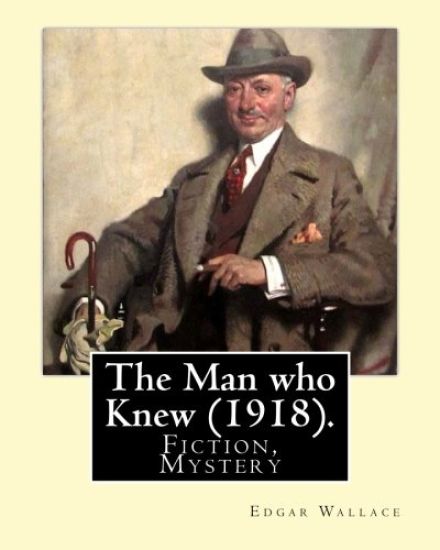
The Man who Knew (1918). By: Edgar Wallace: Fiction, Mystery
Edgar Wallace
Createspace Independent Publishing Platform
2017
nidottu
A youth is lying dead in Gray Square, Bloomsbury. Constable Wiseman is at the scene, as is the handsome Frank Merril, nephew of rich John Martin. Also there is May Nuttall, whose father was the best friend Martin ever had. A small, shabby man in an ill-fitting frock coat and large gold rimmed spectacles pulls a newspaper advertisement from the deceased's waistcoat pocket. 'At the Yard, ' whispers the constable to Frank, 'we call him The Man who Knows.'..... Richard Horatio Edgar Wallace (1 April 1875 - 10 February 1932) was an English writer. Born into poverty as an illegitimate London child, Wallace left school at age 12. He joined the army at age 21 and was a war correspondent during the Second Boer War, for Reuters and the Daily Mail. Struggling with debt, he left South Africa, returned to London, and began writing thrillers to raise income, publishing books including The Four Just Men (1905). Drawing on his time as a reporter in the Congo, covering the Belgian atrocities, Wallace serialised short stories in magazines such as The Windsor Magazine and later published collections such as Sanders of the River (1911). He signed with Hodder and Stoughton in 1921 and became an internationally recognised author. After an unsuccessful bid to stand as Liberal MP for Blackpool (as one of David Lloyd George's Independent Liberals) in the 1931 general election, Wallace moved to Hollywood, where he worked as a script writer for RKO studios. He died suddenly from undiagnosed diabetes, during the initial drafting of King Kong (1933). Wallace was such a prolific writer that one of his publishers claimed that a quarter of all books in England were written by him. As well as journalism, Wallace wrote screen plays, poetry, historical non-fiction, 18 stage plays, 957 short stories, and over 170 novels, 12 in 1929 alone. More than 160 films have been made of Wallace's work. He is remembered for the creation of King Kong, as a writer of 'the colonial imagination', for the J. G. Reeder detective stories, and for the The Green Archer serial. He sold over 50 million copies of his combined works in various editions, and The Economist describes him as "one of the most prolific thriller writers of the 20th] century", although few of his books are still in print in the UK..........
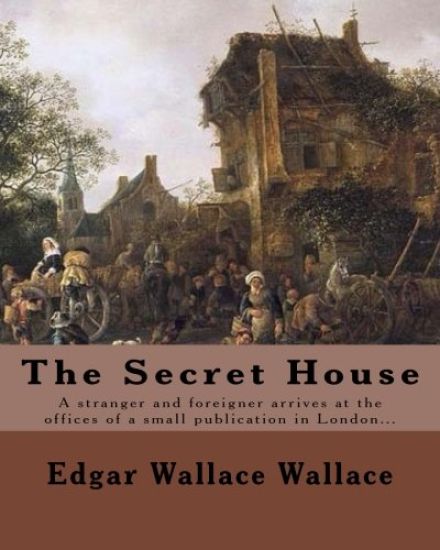
The Secret House. By: Edgar Wallace: A stranger and foreigner arrives at the offices of a small publication in London only to be faced by th
Edgar Wallace Wallace
Createspace Independent Publishing Platform
2017
nidottu
A stranger and foreigner arrives at the offices of a small publication in London only to be faced by the "editor" whose face is completely swathed in a veil. Nothing is as it seems, and it quickly becomes evident that both are bent on more than lively gossip about the elite. Blackmail and opportunism is the order of the day. When two men are found shot to death outside the door of Mr. Farrington the millionaire who just happens to live a few doors from T. B. Smith, the head of the secret police, the connections to blackmail are not long in coming. Were these men shot by the blackmailer? Who is actually what he seems to be?....... Richard Horatio Edgar Wallace (1 April 1875 - 10 February 1932) was an English writer. Born into poverty as an illegitimate London child, Wallace left school at age 12. He joined the army at age 21 and was a war correspondent during the Second Boer War, for Reuters and the Daily Mail. Struggling with debt, he left South Africa, returned to London, and began writing thrillers to raise income, publishing books including The Four Just Men (1905). Drawing on his time as a reporter in the Congo, covering the Belgian atrocities, Wallace serialised short stories in magazines such as The Windsor Magazine and later published collections such as Sanders of the River (1911). He signed with Hodder and Stoughton in 1921 and became an internationally recognised author. After an unsuccessful bid to stand as Liberal MP for Blackpool (as one of David Lloyd George's Independent Liberals) in the 1931 general election, Wallace moved to Hollywood, where he worked as a script writer for RKO studios. He died suddenly from undiagnosed diabetes, during the initial drafting of King Kong (1933). Wallace was such a prolific writer that one of his publishers claimed that a quarter of all books in England were written by him. As well as journalism, Wallace wrote screen plays, poetry, historical non-fiction, 18 stage plays, 957 short stories, and over 170 novels, 12 in 1929 alone. More than 160 films have been made of Wallace's work. He is remembered for the creation of King Kong, as a writer of 'the colonial imagination', for the J. G. Reeder detective stories, and for the The Green Archer serial. He sold over 50 million copies of his combined works in various editions, and The Economist describes him as "one of the most prolific thriller writers of the 20th] century", although few of his books are still in print in the UK.Wallace was born at 7 Ashburnham Grove, Greenwich, to actors Richard Horatio Edgar and Mary Jane "Polly" Richards, n e Blair. 4] 5] 6] Wallace's mother was born in 1843, in Liverpool, to an Irish Catholic family. Mary's family had been in show business, and she worked in the theatre as a stagehand, usherette, and bit-part actress until she married in 1867. Mary's husband, Captain Joseph Richards, was also born in Liverpool, in 1838; he was also from an Irish Catholic family. He and his father John Richards were both Merchant Navy captains, and his mother Catherine Richards came from a mariner family. When Mary was eight months pregnant, in January 1868, her husband died at sea. After the birth, destitute, Mary took to the stage, assuming the stage name "Polly" Richards. In 1872, Polly met and joined the Marriott family theatre troupe, managed by Mrs. Alice Edgar, her husband Richard Edgar, and their three adult children, Grace Edgar, Adeline Edgar, and Richard Horatio Edgar. Richard Horatio Edgar and Polly had a "broom cupboard" style sexual encounter during an after-show party. Discovering she was pregnant, Polly invented a fictitious obligation in Greenwich that would last at least half a year and obtained a room in a boarding house where she lived until her son's birth, on 1 April 1875....

Jack O' Judgment . By: Edgar Wallace: Richard Horatio Edgar Wallace (1 April 1875 - 10 February 1932) was an English writer.
Edgar Wallace
Createspace Independent Publishing Platform
2017
nidottu
From the 1950's Ward, Lock Dust Jacket: Jack O' Judgment, that light-hearted, insouciant, masked mystery man, who sets out to expose a gang of daring crooks who are amassing millions regardless of their methods, is a book to read at a sitting. We are carried, spell-bound, through every page of what can justly be described as one of the late Edgar Wallace's best and most exciting thrillers....... Richard Horatio Edgar Wallace (1 April 1875 - 10 February 1932) was an English writer. Born into poverty as an illegitimate London child, Wallace left school at age 12. He joined the army at age 21 and was a war correspondent during the Second Boer War, for Reuters and the Daily Mail. Struggling with debt, he left South Africa, returned to London, and began writing thrillers to raise income, publishing books including The Four Just Men (1905). Drawing on his time as a reporter in the Congo, covering the Belgian atrocities, Wallace serialised short stories in magazines such as The Windsor Magazine and later published collections such as Sanders of the River (1911). He signed with Hodder and Stoughton in 1921 and became an internationally recognised author. After an unsuccessful bid to stand as Liberal MP for Blackpool (as one of David Lloyd George's Independent Liberals) in the 1931 general election, Wallace moved to Hollywood, where he worked as a script writer for RKO studios. He died suddenly from undiagnosed diabetes, during the initial drafting of King Kong (1933). Wallace was such a prolific writer that one of his publishers claimed that a quarter of all books in England were written by him. As well as journalism, Wallace wrote screen plays, poetry, historical non-fiction, 18 stage plays, 957 short stories, and over 170 novels, 12 in 1929 alone. More than 160 films have been made of Wallace's work. He is remembered for the creation of King Kong, as a writer of 'the colonial imagination', for the J. G. Reeder detective stories, and for the The Green Archer serial. He sold over 50 million copies of his combined works in various editions, and The Economist describes him as "one of the most prolific thriller writers of the 20th] century", although few of his books are still in print in the UK.Wallace was born at 7 Ashburnham Grove, Greenwich, to actors Richard Horatio Edgar and Mary Jane "Polly" Richards, n e Blair. 4] 5] 6] Wallace's mother was born in 1843, in Liverpool, to an Irish Catholic family. Mary's family had been in show business, and she worked in the theatre as a stagehand, usherette, and bit-part actress until she married in 1867. Mary's husband, Captain Joseph Richards, was also born in Liverpool, in 1838; he was also from an Irish Catholic family. He and his father John Richards were both Merchant Navy captains, and his mother Catherine Richards came from a mariner family. When Mary was eight months pregnant, in January 1868, her husband died at sea. After the birth, destitute, Mary took to the stage, assuming the stage name "Polly" Richards. In 1872, Polly met and joined the Marriott family theatre troupe, managed by Mrs. Alice Edgar, her husband Richard Edgar, and their three adult children, Grace Edgar, Adeline Edgar, and Richard Horatio Edgar.......
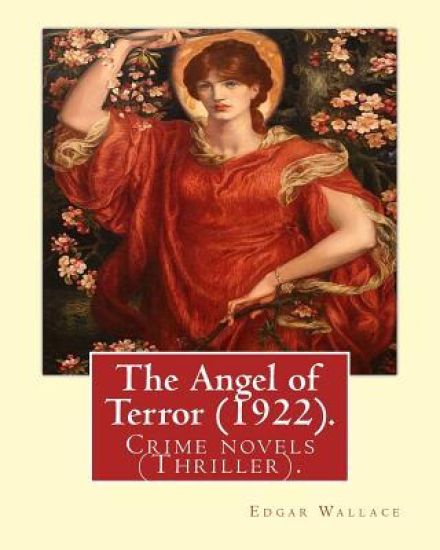
The Angel of Terror (1922). by: Edgar Wallace: Crime Novels (Thriller).
Edgar Wallace
Createspace Independent Publishing Platform
2017
nidottu
The Works Of Edgar Allan Poe: Volume II
Edgar Allan Poe
Createspace Independent Publishing Platform
2017
nidottu
Edgar Allan Poe was an American writer, editor, and literary critic. Poe is best known for his poetry and short stories, particularly his tales of mystery and the macabre. He is widely regarded as a central figure of Romanticism in the United States and American literature as a whole, and he was one of the country's earliest practitioners of the short story. Poe is generally considered the inventor of the detective fiction genre and is further credited with contributing to the emerging genre of science fiction. He was the first well-known American writer to try to earn a living through writing alone, resulting in a financially difficult life and career.Poe was born in Boston, the second child of two actors. His father abandoned the family in 1810, and his mother died the following year. Thus orphaned, the child was taken in by John and Frances Allan of Richmond, Virginia. They never formally adopted him, but Poe was with them well into young adulthood. Tension developed later as John Allan and Edgar repeatedly clashed over debts, including those incurred by gambling, and the cost of secondary education for the young man. Poe attended the University of Virginia for one semester but left due to lack of money. Poe quarreled with Allan over the funds for his education and enlisted in the Army in 1827 under an assumed name. It was at this time that his publishing career began, albeit humbly, with the anonymous collection of poems Tamerlane and Other Poems (1827), credited only to "a Bostonian". With the death of Frances Allan in 1829, Poe and Allan reached a temporary rapprochement. However, Poe later failed as an officer cadet at West Point, declaring a firm wish to be a poet and writer, and he ultimately parted ways with John Allan.
Edgar Allan Poe, Short novels
Edgar Allan Poe
Createspace Independent Publishing Platform
2017
nidottu

Edgar Huntly
Broadview Press Ltd
2018
nidottu
Edgar Huntly is a compelling tale of sleepwalking, murder, and frontier violence set in rural Pennsylvania in the 1780s. His memory and wits shaken by the scenes he has witnessed, ordinary republican citizen Edgar Huntly relates the unpredictable and catastrophic consequences of his chance encounter with Clithero Edny, a mysterious Irish immigrant whose unfortunate but violent history catches up with him in the New World. Huntly’s growing obsession with Clithero plunges both men into physical and mental danger, unsettling the colonial territories of the Delaware basin and the cognitive territory of Huntly’s own mind. Brown’s artful sensationalism transplants the European form of the gothic romance to the new United States, yielding one of the most exciting, metaphysically sophisticated, and historically self-aware novels in early American literary culture.

Fills a serious gap in German historical literature by providing the first political biography of Jung, a leading figure of the anti-Nazi Right. By the time of his death, Edgar Julius Jung (1894-1934) was well known in Germany and Europe as one of the foremost ideologues of the political movement that called itself the Conservative Revolution and as a right-wing opponent of the Nazis. He was speechwriter for and confidant of Franz von Papen (first Hitler's predecessor as chancellor, then Hitler's vice-chancellor), which put him at the center of political events right up until the Nazi seizure of power. Considered by Baldur von Schirach and Goebbels to be one of the worst enemies of the Nazis, Jung was assassinated by the Nazi regime in June 1934. The eleven years of Nazi rule that followed contributed to Jung's neglect by historians, as did distaste, since the war's end and the founding of the Federal Republic on democratic principles, for his strongly antidemocratic stance. Although there have been several studies on Jung's political thought,there has been until now no biography in German or English. Roshan Magub's book therefore fills a serious gap in German historical literature. It shows that Jung's opposition to National Socialism dates from the earliest days andthat he had a very close relationship with the Ruhr industry, which supported him financially and enabled him to reach a nationwide audience. Magub uses, for the first time, all the available material from the archives in Munich,Koblenz, Cologne, and Berlin, and the whole of Jung's Nachlass. Her book sheds new light on Jung and demonstrates his importance in Germany's political history. Roshan Magub holds a PhD from Birkbeck College, University of London.
With unprecedented access to Edgar Cayce's private letters and trance readings, Sidney Kirkpatrick delivers the definitive biography of the renowned psychic, religious seeker, and father of alternative medicine. Born in rural Kentucky in 1877, Edgar Cayce became known as "the sleeping prophet," and went on to lead an extraordinary life, helping and healing thousands. This is Cayce's fascinating story as it's never been told before.
The Lost Continent by Edgar Rice Burroughs, Science Fiction
Edgar Rice Burroughs
Borgo Press
2002
sidottu
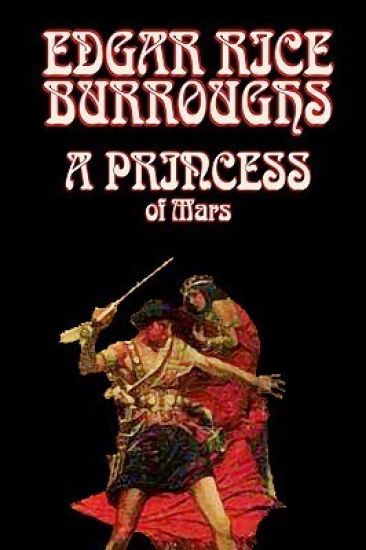
A Princess of Mars by Edgar Rice Burroughs, Science Fantasy
Edgar Rice Burroughs
Borgo Press
2002
sidottu

Pellucidar by Edgar Rice Burroughs, Science Fiction, Classics
Edgar Rice Burroughs
Borgo Press
2002
sidottu

Thuvia, Maid of Mars by Edgar Rice Burroughs, Science Fiction, Classics
Edgar Rice Burroughs
WILDSIDE PRESS
2003
pokkari
THUVIA, MAID OF MARS is the first Carter novel that does not feature John Carter as the central character -- he only makes a brief cameo appearance early on. Instead, the action mantle is taken up by Carthoris, Carter's son. Fortunately, though, Carthoris is every bit the swashbuckler that his father is. Princess Thuvia of Ptarth has been kidnapped by the vile Prince Astok of Dusar -- an abduction which nearly causes a world war on Barsoom. Young Carthoris, in his quest to free his beloved princess, runs across deserted cities, a forgotten kingdom, banths (10-legged Barsoomian lions), ethereal warriors, much swordplay, giant white apes, and on and on. . . . highly recommended.
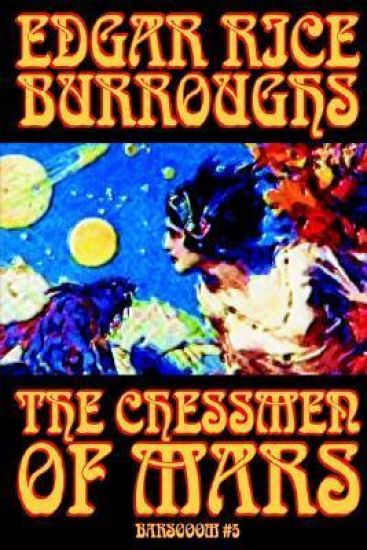
The Chessmen of Mars by Edgar Rice Burroughs, Science Fiction
Edgar Rice Burroughs
Wildside Press
2003
pokkari
#5 in Burroughs's Martian Barsoom series. Tara, Princess of Helium, John Carter's impetuous and headstrong daughter, flies into one of Barsoom's rare but fierce storm defying the elements. But the Martian storm is only the beginning: hurled half a planet off course, she's threatened by grotesque flesh eating monsters and barbarous warriors. Is the mysterious Panthan warrior friend or foe? As hero battles for maiden in a deadly game of living chess, the pieces are fighting men and the stakes are life and death!
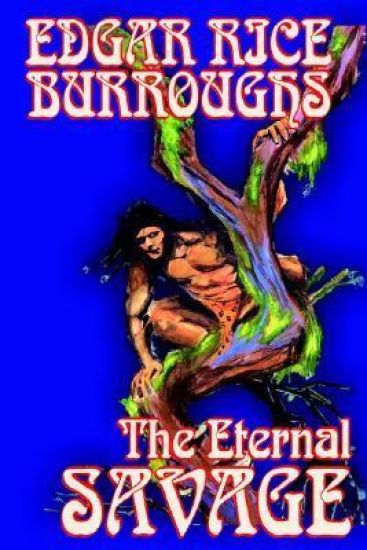
The Eternal Savage by Edgar Rice Burroughs, Fiction, Fantasy
Edgar Rice Burroughs
WILDSIDE PRESS
2004
pokkari
Nu, the son of Nu, his mighty muscles rolling beneath his smooth bronzed skin, moved silently through the jungle primeval. His handsome head with its shock of black hair, roughly cropped between sharpened stones, was high held, the delicate nostrils questioning each vagrant breeze for word of Oo, hunter of men. Now his trained senses catch the familiar odor of Ta, the great woolly rhinoceros, directly in his path, but Nu, the son of Nu, does not hunt Ta this day. Does not the hide of Ta's brother already hang before the entrance of Nu's cave? No, today Nu hunts the gigantic cat, the fierce saber-toothed tiger, Oo, for Nat-ul, wondrous daughter of old Tha, will mate with none but the mightiest of hunters. Only so recently as the last darkness, as, beneath the great, equatorial moon, the two had walked hand in hand beside the restless sea she had made it quite plain to Nu, the son of Nu, that not even he, son of the chief of chiefs, could claim her unless there hung at the thong of his loin cloth the fangs of Oo. "Nat-ul," she had said to him, "wishes her man to be greater than other men. She loves Nu now better than her very life, but if Love is to walk at her side during a long life Pride and Respect must walk with it." Her slender hand reached up to stroke the young giant's black hair. "I am very proud of my Nu even now," she continued, "for among all the young men of the tribe there is no greater hunter, or no mightier fighter than Nu, the son of Nu. Should you, single-handed, slay Oo before a grown man's beard has darkened your cheek there will be none greater in all the world than Nat-ul's mate, Nu, the son of Nu."