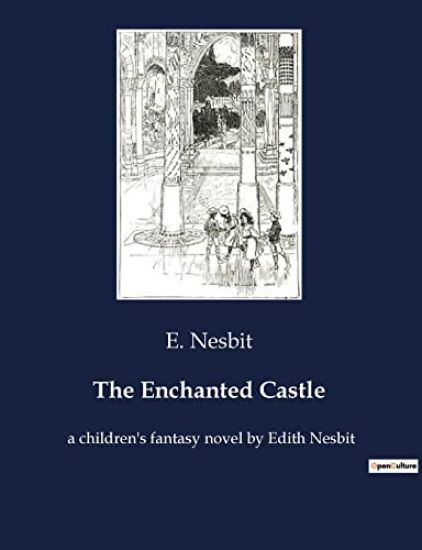
The enchanted castle of the title is a country estate in the West Country seen through the eyes of three children, Jerry, Jimmy, and Kathy, who discover it while exploring during the school holidays. The lake, groves and marble statues, with white towers and turrets in the distance, make a fairy-tale setting, and then in the middle of the maze in the rose garden, they find a sleeping fairy-tale princess. The "princess" tells them that the castle is full of magic, and they almost believe her. She shows them the treasures of the castle, including a magic ring she says is a ring of invisibility, but when it actually turns her invisible she panics and admits that she is the housekeeper's niece, Mabel, and was just play-acting. The children soon find that the ring has other magical powers such as making the "Ugly-Wugglies" (Guy Fawkes style dummies they had made to swell the audience at one of their play-performances) come to life. They eventually discover that the ring is actually granting their own wishes, and that the disturbing results stem from their failure to specify those wishes precisely. The Enchanted Castle was written for both children and adults. It combines descriptions of the imaginative play of children, reminiscent of The Story of the Treasure Seekers, with a magic more muted than in her major fantasies such as The Story of the Amulet.
This book examines the phenomenological anthropology of Edith Stein. It specifically focuses on the question which Stein addressed in her work Finite and Eternal Being: What is the foundational principle that makes the individual unique and unrepeatable within the human species? Traditional analyses of Edith Stein’s writings have tended to frame her views on this issue as being influenced by Aristotle and Thomas Aquinas, while neglecting her interest in the lesser-known figure of Duns Scotus. Yet, as this book shows, with regard to the question of individuality, Stein was critical of Aquinas’ approach, finding that of Duns Scotus to be more convincing. In order to get to the heart of Stein’s readings of Duns Scotus, this book looks at her published writings and her personal correspondence, in addition to conducting a meticulous analysis of the original codexes on which her sources were based. Written with diligence and flair, the book critically evaluates the authenticity of Stein’s sources and shows how the position of Scotus himself evolved. It highlights the originality of Stein’s contribution, which was to rediscover the relevance of Mediaeval scholastic thought and reinterpret it in the language of the Phenomenological school founded by Edmund Husserl.
This book examines the phenomenological anthropology of Edith Stein. It specifically focuses on the question which Stein addressed in her work Finite and Eternal Being: What is the foundational principle that makes the individual unique and unrepeatable within the human species? Traditional analyses of Edith Stein’s writings have tended to frame her views on this issue as being influenced by Aristotle and Thomas Aquinas, while neglecting her interest in the lesser-known figure of Duns Scotus. Yet, as this book shows, with regard to the question of individuality, Stein was critical of Aquinas’ approach, finding that of Duns Scotus to be more convincing. In order to get to the heart of Stein’s readings of Duns Scotus, this book looks at her published writings and her personal correspondence, in addition to conducting a meticulous analysis of the original codexes on which her sources were based. Written with diligence and flair, the book critically evaluates the authenticity of Stein’s sources and shows how the position of Scotus himself evolved. It highlights the originality of Stein’s contribution, which was to rediscover the relevance of Mediaeval scholastic thought and reinterpret it in the language of the Phenomenological school founded by Edmund Husserl.
Das Buch versammelt grundlegende Studien zu Edith Stein und ihren Lekturen von Homer, mittelalterlicher Literatur, Lessing, Schleiermacher, Hauptmann und dem Expressionismus. Es geht den Lektureeinflussen in Tradition, Spiritualitat und Begegnungen nach und untersucht dazu aktuelle Fragen um Glaube, Wissen und eine neue Phanomenologie. Ein literarisch intensiver und aus der rekonstruierten Bibliothek quellenerschlossener Bildungsgang wirkte auf die Froemmigkeitsentwicklung der spateren Karmelitin und befruchtete massgeblich ihre Denkwelt und mystisch eigene Position.
Der Band versammelt grundlegende Studien zur Klassik-Rezeption (Herder, Goethe, Schiller) und zur Psychoanalyse-Rezeption (Freud) Edith Steins, die langere Zeit im Gymnasium und als Deutschlehrerin tatig war denn als Karmelitin. Sie schrieb uber die genannten Autoren und zeigt in einem Literaturbrief eine ausserordentliche Literaturkenntnis; auch begrusst sie die neue "Tiefenpsychologie". Texte, Dokumente und Kommentare erganzen ihre Arbeit und den Denkweg einer Phanomenologin, deren Positionen ohne diese Fundamente nicht angemessen zu verstehen sind, weil sie dort auch ihren Ursprung haben. Der Band beschliesst - nach "Zugange" und "Wirkungszusammenhange" - die Trilogie "Edith Stein und die Literatur".
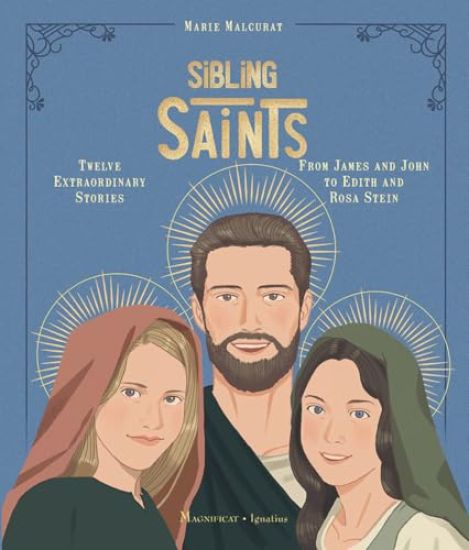
Through lively stories, comic strips, historical background, and prayers, get to know these brothers and sisters, models of faith and holiness: James and John; Lazarus, Martha, and Mary; Cosmas and Damian; Donatian and Rogatian; Ambrose, Marcellina, and Satyrus; Benedict and Scholastica; Cyril and Methodius, Bernard and Humbeline; Louis and Isabelle of France; The Martin Sisters; Elizabeth of the Trinity and Margaret; and Edith and Rosa Stein.
Gabriel Garc a M rquez's most political novel is the tragic story of General Sim n Bol var, the man who tried to unite a continent. Bol var, known in six Latin American countries as the Liberator, is one of the most revered heroes of the western hemisphere; in Garc a M rquez's brilliant reimagining he is magnificently flawed as well. The novel follows Bol var as he takes his final journey in 1830 down the Magdalena River toward the sea, revisiting the scenes of his former glory and lamenting his lost dream of an alliance of American nations. Forced from power, dogged by assassins, and prematurely aged and wasted by a fatal illness, the General is still a remarkably vital and mercurial man. He seems to remain alive by the sheer force of will that led him to so many victories in the battlefields and love affairs of his past. As he wanders in the labyrinth of his failing powers-and still-powerful memories-he defies his impending death until the last. The General in His Labyrinth is an unforgettable portrait of a visionary from one of the greatest writers of our time.
Sind Frauen anders als M nner? Welche Rolle haben Frauen am Arbeitsplatz? Gibt es typische Frauenberufe? Sehen Frauen die Person, M nner eher die Sache? Solche Fragen besch ftigen Edith Stein (1891-1942), promovierte Philosophin und Sch lerin von Edmund Husserl, in einer Zeit, die gepr gt ist von Weltwirtschaftskrise, Nationalsozialismus und vermehrter Frauenarbeit. Im Durchgang durch alle Lebensbereiche der Frau (Ehe, Mutterschaft, Familie, Bildung, Beruf, kirchliche Arbeit) erweist sich als Kennzeichen weiblicher Intersubjektivit t der Zusammenhang von Selbstverwirklichung und Pro-Existenz. Der erste Teil der Untersuchung stellt die Problemgeschichte der Frauenfrage dar, die von Beginn an um die Fragen einer Frauenidentit t, die Gleichheit oder Gleichwertigkeit der Geschlechter und die Rolle der Frauen in Familie, Arbeitsleben und Gesellschaft kreist. Im zweiten Teil wird der philosophische Ansatz Edith Steins zum Frausein in Beruf, Familie und Gesellschaft ausf hrlich vorgestellt, der abschlie end im Licht aktueller und gesellschaftlicher Positionen f r heute berpr ft wird. Mit dieser Untersuchung liegt erstmalig eine deutschsprachige Monographie zur Frauenfrage im Werk Edith Steins vor.
A tour of France, presented through the writings of thirty-three British and American authors, past and present, including Peter Mayle, Mark Twain, Edith Wharton, M. F. K. Fisher, Paul Theroux, and Ernest Hemingway, celebrates the country's food, people, cultures, and areas of interest. Original. 20,000 first printing.
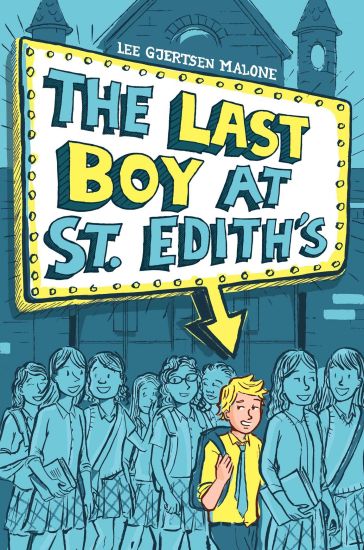
A seventh grade prankster is determined to escape the all-girls academy where he's the only boy--by getting expelled--in this "spectacular debut" (Kirkus Reviews) that's perfect for "fans of Jerry Spinelli's Crash and Loser" (Booklist). Seventh grader Jeremy Miner has a girl problem. Or, more accurately, a girls problem. 475 of them to be exact. That's how many girls attend his school, St. Edith's Academy. Jeremy is the only boy left after the school's brief experiment in co-education. And he needs to get out. But his mother--a teacher at the school--won't let him transfer, so Jeremy takes matters into his own hands: he's going to get expelled. Together with his best friend Claudia, Jeremy unleashes a series of hilarious pranks in hopes that he'll get kicked out with minimal damage to his permanent record. But when his stunts start to backfire, Jeremy has to decide how far he's willing to go and whom he's willing to knock down to get out the door.
Five Children and It is a children's novel by English author E. Nesbit. Plot: Like Nesbit's The Railway Children, the story begins when a group of children move from London to the countryside of Kent. The five children - Cyril, Anthea, Robert, Jane, and their baby brother, known as the Lamb - are playing in a gravel pit when they uncover a rather grumpy, ugly, and occasionally malevolent Psammead or sand-fairy, who has the ability to grant wishes. He persuades the children to take one wish each day to be shared among them, with the caveat that the wishes will turn to stone at sunset. This, apparently, used to be the rule in the Stone Age, when all that children wished for was food, the bones of which then became fossils. The five children's first wish is to be "as beautiful as the day". The wish ends at sunset and its effects simply vanish, leading the Psammead to observe that some wishes are too fanciful to be changed to stone. All the wishes go comically wrong. The children wish to be beautiful, but the servants do not recognise them and shut them out of the house. They wish to be rich, then find themselves with a gravel-pit full of gold spade guineas that no shop will accept as they are no longer in circulation, so they can't buy anything. A wish for wings seems to be going well, but at sunset the children find themselves stuck on top of a church bell tower with no way down, getting them into trouble with the gamekeeper who must take them home (though this wish has the happy side-effect of introducing the gamekeeper to the children's housemaid, who later marries him). Robert is bullied by the baker's boy, then wishes that he was bigger - whereupon he becomes eleven feet tall, and the other children show him at a travelling fair for coins. They also wish themselves into a castle, only to learn that it is being besieged, while a wish to meet real Red Indians ends with the children nearly being scalped.............. Edith Nesbit (married name Edith Bland; 15 August 1858 - 4 May 1924) was an English author and poet; she published her books for children under the name of E. Nesbit. She wrote or collaborated on more than 60 books of children's literature. She was also a political activist and co-founded the Fabian Society, a socialist organisation later affiliated to the Labour Party. Nesbit was born in 1858 at 38 Lower Kennington Lane in Kennington, Surrey (now part of Greater London), the daughter of an agricultural chemist, John Collis Nesbit, who died in March 1862, before her fourth birthday. Her sister Mary's ill health meant that the family travelled around for some years, living variously in Brighton, Buckinghamshire, France (Dieppe, Rouen, Paris, Tours, Poitiers, Angoul me, Bordeaux, Arcachon, Pau, Bagn res-de-Bigorre, and Dinan in Brittany), Spain and Germany, before settling for three years at Halstead Hall in Halstead in north-west Kent, a location which later inspired The Railway Children (this distinction has also been claimed by the Derbyshire town of New Mills). At eighteen, Nesbit met the bank clerk Hubert Bland in 1877. Seven months pregnant, she married Bland on 22 April 1880, though she did not immediately live with him, as Bland initially continued to live with his mother. Their marriage was a stormy one. Early on Nesbit discovered that another woman believed she was Hubert's fiancee and had also borne him a child.... Harold Robert Millar (1869 - 1942) was a prominent and prolific Scottish graphic artist and illustrator of the late nineteenth and early twentieth centuries.
The Enchanted Castle is a children's fantasy novel by Edith Nesbit first published in 1907. PLOT: The enchanted castle of the title is a country estate in the West Country seen through the eyes of three children, Gerald, James and Kathleen, who discover it while exploring during the school holidays. The lake, groves and marble statues, with white towers and turrets in the distance, make a fairy-tale setting, and then in the middle of the maze in the rose garden they find a sleeping fairy-tale princess. The "princess" tells them that the castle is full of magic, and they almost believe her. She shows them the treasures of the castle, including a magic ring she says is a ring of invisibility, but when it actually turns her invisible she panics and admits that she is the housekeeper's niece, Mabel, and was just play-acting. The children soon discover that the ring has other magical powers. 1] The Enchanted Castle was written for both children and adults. It combines descriptions of the imaginative play of children, reminiscent of The Story of the Treasure Seekers, with a magic more muted than in her major fantasies such as The Story of the Amulet. Edith Nesbit (married name Edith Bland; 15 August 1858 - 4 May 1924) was an English author and poet; she published her books for children under the name of E. Nesbit. She wrote or collaborated on more than 60 books of children's literature. She was also a political activist and co-founded the Fabian Society, a socialist organisation later affiliated to the Labour Party. Nesbit was born in 1858 at 38 Lower Kennington Lane in Kennington, Surrey (now part of Greater London), the daughter of an agricultural chemist, John Collis Nesbit, who died in March 1862, before her fourth birthday. Her sister Mary's ill health meant that the family travelled around for some years, living variously in Brighton, Buckinghamshire, France (Dieppe, Rouen, Paris, Tours, Poitiers, Angoul me, Bordeaux, Arcachon, Pau, Bagn res-de-Bigorre, and Dinan in Brittany), Spain and Germany, before settling for three years at Halstead Hall in Halstead in north-west Kent, a location which later inspired The Railway Children (this distinction has also been claimed by the Derbyshire town of New Mills). At eighteen, Nesbit met the bank clerk Hubert Bland in 1877. Seven months pregnant, she married Bland on 22 April 1880, though she did not immediately live with him, as Bland initially continued to live with his mother. Their marriage was a stormy one. Early on Nesbit discovered that another woman believed she was Hubert's fiancee and had also borne him a child. A more serious blow came later when she discovered that her good friend, Alice Hoatson, was pregnant with Hubert's child. She had previously agreed to adopt Hoatson's child and allow Hoatson to live with her as their housekeeper. After she discovered the truth, they quarrelled violently and she suggested that Hoatson and the baby should leave; her husband threatened to leave Edith if she disowned the baby and its mother. Hoatson remained with them as a housekeeper and secretary and became pregnant by Bland again 13 years later. Edith again adopted Hoatson's child. Nesbit's children were Paul Bland (1880-1940), to whom The Railway Children was dedicated; Iris Bland (1881-1950s); Fabian Bland (1885-1900); Rosamund Bland (1886-1950), to whom The Book of Dragons was dedicated; and John Bland (1898-1971) to whom The House of Arden was dedicated. Her son Fabian died aged 15 after a tonsil operation; Nesbit dedicated a number of books to him: Five Children and It and its sequels, as well as The Story of the Treasure Seekers and its sequels. Nesbit's adopted daughter Rosamund collaborated with her on the book Cat Tales.... Harold Robert Millar (1869 - 1942) was a prominent and prolific Scottish graphic artist and illustrator of the late nineteenth and early twentieth centuries. He is best known for his illustrations of children's books and fantasy literature.