Seamus Heaney’s American Odyssey describes, with a new archive of correspondence, interviews, and working drafts, the some 40 years that Seamus Heaney spent in the United States as a teacher, lecturer, friend, and colleague, and as an active poet on the reading circuit. It is anchored by Heaney’s appointments at Berkeley and Harvard, but it also follows Heaney’s readings “on the road” at three important points in his career. It argues that Heaney was initially receptive to American poetry and culture while his career was still plastic, but as he developed more assurance and fame, he became much more critical of America as a superpower, especially in the military reaction to 9/11. This study emphasizes “the heard Heaney” as much as the “writerly Heaney” by listening in on key poetry readings at different times and to recorded but unpublished lectures on American and British poets at Harvard. It includes accounts by his creative writing students, aspiring poets, who testify to his mentoring as well as modeling for them how one can be “a poet in the world” as he was most strikingly.
Seamus Heaney’s American Odyssey describes, with a new archive of correspondence, interviews, and working drafts, the some 40 years that Seamus Heaney spent in the United States as a teacher, lecturer, friend, and colleague, and as an active poet on the reading circuit. It is anchored by Heaney’s appointments at Berkeley and Harvard, but it also follows Heaney’s readings “on the road” at three important points in his career. It argues that Heaney was initially receptive to American poetry and culture while his career was still plastic, but as he developed more assurance and fame, he became much more critical of America as a superpower, especially in the military reaction to 9/11. This study emphasizes “the heard Heaney” as much as the “writerly Heaney” by listening in on key poetry readings at different times and to recorded but unpublished lectures on American and British poets at Harvard. It includes accounts by his creative writing students, aspiring poets, who testify to his mentoring as well as modeling for them how one can be “a poet in the world” as he was most strikingly.
Providing an ideal transition from introductory to advanced concepts, this book builds a foundation that allows electrical engineers to confidently proceed with the development of advanced EM studies, research, and applications. New topics include quasistatics, vector spherical wave functions, and wave matrices. Several application-oriented sections covering guided waves and transmission lines, particle dynamics, shielding, electromagnetic material characterization, and antennas have also been added. Mathematical appendices present helpful background information in the areas of Fourier transforms, dyadics, and boundary value problems.Key FeaturesProvides extensive end-of-chapter problems.Includes numerous solved examples with detailed explanations and interpretations.Introduces the reader to numerical electromagnetics and integral equations.Each chapter offers an introduction to an important application of electromagnetics.Emphasizes fundamentals, while covering all of the important topics in electromagnetics.
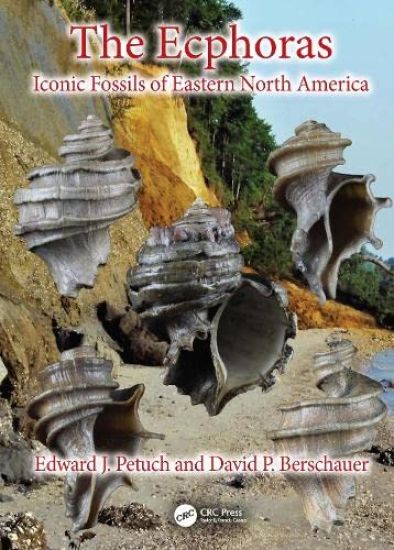
In the Miocene and Pliocene fossil shell beds of the eastern United States, the single most spectacular molluscan species radiation is seen in the ecphora shells (the Tribe Ecphorini). These bizarrely shaped gastropods, with their distinctive ribbed shell sculpture, represent a separate branch of the Subfamily Ocenebridae, Family Muricidae. Characteristically, these muricid gastropods are heavily ornamented with spiral ribs and cords and are considered some of the most beautiful and interesting groups of fossil mollusks found along the Atlantic Coastal Plain and Floridian Peninsula. The ecphoras are greatly sought after by fossil collectors.The ecphora faunas, and their individual species and subspecies, are illustrated and described in detail, along with photographs of ecphora-bearing geological units and in-situ specimens. The authors list the 67 known species and subspecies that are recognized as valid, arranged by the eight genera and five subgenera that encompass these taxa.
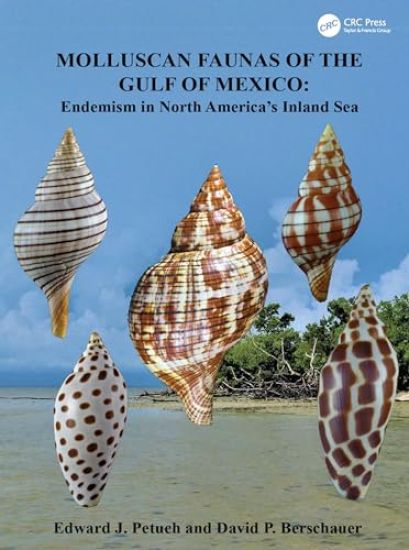
Recent biodiversity studies, reported here for the first time, have shown that the molluscan fauna of the Gulf of Mexico is far richer and more complex than previously thought. As a result of these new discoveries, the Gulf malacofauna is shown to contain large numbers of endemic species that reside within four separate biogeographical subdivisions of the larger Carolinian Molluscan Province: the Floridian, Suwannean, Texan, and Yucatanean Subprovinces. These four Gulf biotic components, with each supporting its own endemic fauna, are shown here to be separated by distinct ecological and oceanographic barriers. The resultant physical and genetic isolation has led to the evolution of spectacular sibling species radiations, many unknown and undescribed until now. Some of the most conspicuous and important of these are found in the gastropod families Fasciolariidae, Volutidae, Conidae, Muricidae, and Busyconidae, all of which are dominant predators in their respective benthonic ecosystems. The species within these ecologically important families, along with hundreds of endemic taxa in 50 other gastropod and bivalve families, are illustrated here in Molluscan Faunas of the Gulf of Mexico: Endemism in North America’s Inland Sea on 132 color plates and are discussed in detail in the individual chapters. Special attention is given to the mollusks of poorly studied and virtually unknown ecosystems such as those on the deep reefs off the Florida Keys and Dry Tortugas, the deep water coralline algal beds off western Florida, the Flower Garden Reefs off Texas, the petroleum seeps and brine pools of the Sigsbee Escarpment, the Campeche Bank Archipelago, and the deep water areas at the mouth of the Yucatan Channel.This new book is unlike previous taxonomic surveys of the Gulf of Mexico mollusks in that it highlights only the endemic species and genera and does not cover the large number of widespread Carolinian and Caribbean taxa that occur with them. In this aspect, the book is designed to be an augmentation to previous faunal surveys, adding hundreds more taxa that had been missed in these older surveys or were described after those earlier works had been published. The emphasis on endemic species and species complexes is meant to underscore the special nature of the Gulf of Mexico malacofauna, setting it aside from all others in the Tropical Western Atlantic Region.
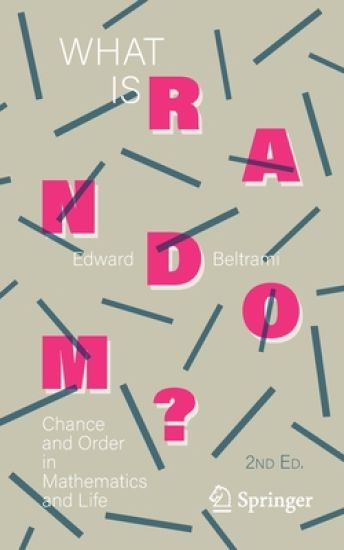
We all know what randomness is. Or do we? Randomness turns out to be one of those concepts that works just fine on an everyday level, but becomes muddled upon close inspection. People familiar with quantum indeterminacy tell us that order is an illusion and that the world is fundamentally random. Yet these same people also say that randomness is an illusion: The appearance of randomness is only a sign of our ignorance and inability to detect the pattern. By applying mathematical thinking, mathematician Edward Beltrami removes much of the vagueness that encumbers the concept of randomness. You will discover how to quantify what would otherwise remain elusive. As the book progresses, you will see how mathematics provides a framework for unifying how chance is interpreted across diverse disciplines. Communication engineering, computer science, philosophy, physics, and psychology join mathematics in the discourse to illuminate different facets of the same idea. Thisbook will provoke, entertain, and inform by challenging your ideas about randomness, providing different interpretations of what this concept means, and showing how order and randomness are really two sides of the same mysterious coin. This second edition brings the question of randomness into the twenty-first century, adding compelling new topics such as quantum uncertainty, cognitive illusions caused by chance, Poisson processes, and Bayesian probability. An expanded technical notes section offers deeper explorations of a variety of mathematical concepts. On the first edition: I strongly recommend [What is Random?] to all who are interested in science and would like to see how the ideas of both theoretical mathematics and statistics have been observed and used in real life throughout history. The American Statistician