
Kirjahaku
Etsi kirjoja tekijän nimen, kirjan nimen tai ISBN:n perusteella.
1000 tulosta hakusanalla Edwin Diamond



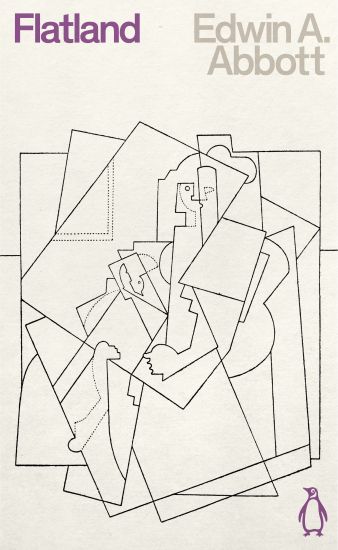
The book that influenced writers from Carl Sagan to Stephen Hawking, Flatland is set in a two-dimensional world where life exists only in lines and shapes - until one of its inhabitants, 'A. Square', has his perspective transformed forever. This brilliantly eccentric classic is an invitation to see beyond our own reality.'At once a playful brainteaser about geometry, a pointed satire of Victorian manners - and a strangely compelling argument about the greatest mysteries of the Universe' Wall Street Journal'Flatland could lead to very profound thought about our Universe and ourselves' Isaac Asimov
The inability of American society to tolerate the peculiar institutions embraced by Mormons was one of the major events in the religious history of nineteenth-century America. Zion in the Courts explores one aspect of this collision between the Mormons and the mainstream: the Mormons' efforts to establish their own court system--one appropriate to the distinctive political, social, and economic practices they envisioned as Zion--and the pressures applied by the federal legal system to bring them to heel. This first paperback edition includes two new introductory pieces in which the authors discuss the Mormon emphasis on settling disputes outside the court, a practice that foreshadows current trends toward arbitration and mediation.

Where do classical liberals stand on international relations? Does this differ from their views on domestic policy? And how does this stance vary from other liberal schools of thought? Here, author Edwin van de Haar draws on the writings of major classical liberal thinkers such as David Hume, Adam Smith, Ludwig von Mises and Friedrich Hayek to create an insightful and comprehensive overview of the classical liberal approach to foreign affairs. He delineates how classical liberals embrace a realistic view of human nature, recognising the basic social nature of individuals, yet acknowledging their propensity to quarrel, fight and use violence - and how this has consequently become an inevitable feature of international relations. He compares and contrasts this thinking with other forms of liberal thought, such as libertarianism, social liberalism and conservatism. And he also examines the much bigger difference between classical liberalism and non-liberal thinking on international relations. He argues that classical liberalism has a distinct, timeless and universalist approach to international relations - and that the unique ideas developed by classical liberal writers can, and should, be applied to contemporary world affairs.

An account of how anthropological methods can be combined with cognitive theory in studies of cognition. Drawing comparisons with navigation, this study argues that cultural systems have cognitive properties of their own that differ from the cognitive properties of the individuals within them.
This introduction to physical science combines a rigorous discussion of scientific principles with sufficient historical background and philosophic interpretation to add a new dimension of interest to the accounts given in more conventional textbooks. It brings out the twofold character of physical science as an expanding body of verifiable knowledge and as an organized human activity whose goals and values are major factors in the revolutionary changes sweeping over the world today. Professor Kemble insists that to understand science one must understand not only what the scientists have discovered, but how the discoveries were made, why the growth of scientific knowledge had to begin slowly, and what it has done to our habits of thought. He has written neither a history of science nor an introduction to the philosophy of science but an introduction to scientific concepts and principles that supplies as much of their historical and philosophical context as limits of space permit. The volume takes up in turn the story of the astronomy of ancient Greece, the Copernican revolution, the idea of the expanding sidereal universe, the rise of Newton's classical mechanics with its many astronomical applications, the concept of energy and its relation to heat, to steam engines, and to thermodynamics. The volume ends with an account of the successes and failures of classical kinetic-molecular theory of heat.

Beliefs and Superstitions of the Pennsylvania Germans
Edwin Miller Fogel
Metalmark Books
2009
pokkari
Originally published in 1915. This volume from the Cornell University Library's print collections was scanned on an APT BookScan and converted to JPG 2000 format by Kirtas Technologies. All titles scanned cover to cover and pages may include marks notations and other marginalia present in the original volume.

Proverbs of the Pennsylvania Germans is a follow-up and companion volume to Edwin Miller Fogel’s 1915 publication Beliefs and Superstitions of the Pennsylvania Germans. This volume focuses on the proverb in its broadest sense, including adages, aphorisms, and some appropriate idiomatic expressions. This “spontaneous expression of experience,” so widely used in the Germanic linguistic tradition, is in Fogel’s words “the very bone and sinew of the [Pennsylvania German] dialect.” This collection is the result of the author’s years of field research in Pennsylvania and comprises over two thousand proverbs dealing with all facets of folklife. Each entry is accompanied by an English translation and often, where applicable, a High German translation. Citations also note instances in which a parallel proverb had been documented in either a British or High German collection. The proverbs are arranged alphabetically by keyword, in the conventional style for a collection such as this one. Nearly one hundred proverbs deemed “vulgar,” which were originally published separately with only High German translations, have been reproduced as an appendix in this Metalmark edition.
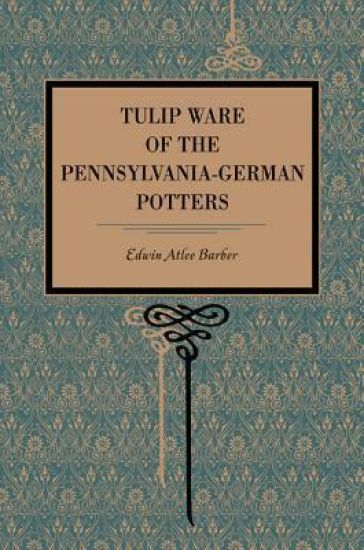
Tulip Ware of the Pennsylvania-German Potters
Edwin Atlee Barber
Pennsylvania State University Press
2011
pokkari
Published in 1903 by the Pennsylvania Museum, Tulip Ware of the Pennsylvania-German Potters is an in-depth look into the Pennsylvania German folk art known as slipware or redware. This volume introduces readers to the subject by detailing the international history of slip decoration and providing an overview of the technique and products throughout the world. Curator Edwin Atlee Barber delves into the specifics of the Pennsylvania German folk art by exploring tools and processes of manufacture, techniques and variations, decoration, motives, coloring, types, and practical uses for pottery, illustrated by numerous black-and-white images from the Pennsylvania Museum’s extensive collection. The volume also contains a detailed discussion of famous eighteenth- and nineteenth-century potters, primarily from Montgomery and Bucks Counties, including biographical information and illustrative photographs of their work. Particular attention is paid to the Pennsylvania German dialect and the important role it played in folk art. Barber provides translations of numerous Pennsylvania German inscriptions, a defining element of much of this art. Modern readers can still find many of the pieces featured in this volume on display in the American collection at the Philadelphia Museum of Art.

The Allegheny Pilot, first published in 1855, is an early travel guide to western Pennsylvania’s rivers and navigable waterways, complete with detailed maps, notes, and charts. Originally written for lumber raftsmen and even considered to be the “Lumberman’s Bible,” it remains an important document on the original path of the Allegheny and its tributaries, which have since been changed by the construction of the Kinzua Dam and other man-made alterations to the landscape. The book benefits not only from Babbitt’s own knowledge, experience, and research on the Allegheny, but also from his having “spent much time in conversing with many of the oldest settlers along the river, collecting from them, orally, many historical facts besides those pertaining to the navigation of the river.” The Allegheny Pilot is a fascinating look at a transient historical landscape in a time when the beginnings of modern industrialization began to push westward across the state’s frontiers, irrevocably changing them.

Strategies of the Silent in Medieval English Literature
Edwin D. Craun
Pennsylvania State University Press
2025
sidottu
Silence, like speech, is a mode of communication that can be used strategically. In Strategies of the Silent in Medieval English Literature, Edwin D. Craun investigates the silences in public life that punctuate talk in late Middle English literature.Centering his study on readings of canonical texts, including the works of Thomas Hoccleve, the anonymous Mum and the Sothsegger, William Langland’s Piers Plowman, John Lydgate’s translation of Guillaume de Deguileville’s Pelerinage de vie humaine, The Testimony of William Thorpe, a selection of the York cycle of passion plays, and The Book of Margery Kempes, Craun recovers the widespread moral discourse on silence developed by late medieval secular and clerical writers, who compiled materials from Roman popular morality and Stoic texts as well as Jewish wisdom books and Christian texts. These texts model how silence could play a role in effective government, respond to violent and angry antagonists, or in some cases to entirely obviate a good outcome. Through this nuanced exploration of the ethics of communication in medieval moral, narrative, and dramatic literature, Craun shows us that public silences, then as now, have strategies and consequences, dimensions that medieval imaginative writers explore subtly yet analytically in order to provoke ethical reflection and pragmatic action. Strategies of the Silent in Medieval English Literature offers original thematical and rhetorical insights into the written history of silence. It will appeal to scholars, graduate students, and advanced undergraduates interested in Middle English literature, history, and political thought.
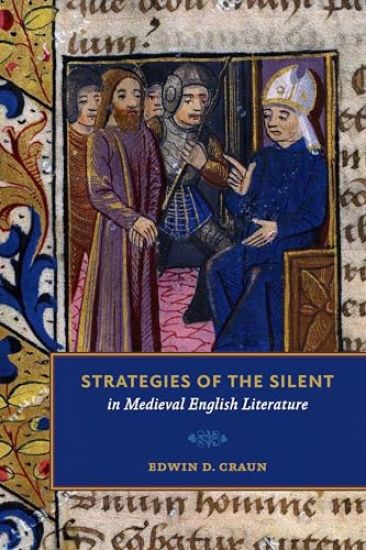
Strategies of the Silent in Medieval English Literature
Edwin D. Craun
Pennsylvania State University Press
2025
pokkari
Silence, like speech, is a mode of communication that can be used strategically. In Strategies of the Silent in Medieval English Literature, Edwin D. Craun investigates the silences in public life that punctuate talk in late Middle English literature.Centering his study on readings of canonical texts, including the works of Thomas Hoccleve, the anonymous Mum and the Sothsegger, William Langland’s Piers Plowman, John Lydgate’s translation of Guillaume de Deguileville’s Pelerinage de vie humaine, The Testimony of William Thorpe, a selection of the York cycle of passion plays, and The Book of Margery Kempes, Craun recovers the widespread moral discourse on silence developed by late medieval secular and clerical writers, who compiled materials from Roman popular morality and Stoic texts as well as Jewish wisdom books and Christian texts. These texts model how silence could play a role in effective government, respond to violent and angry antagonists, or in some cases to entirely obviate a good outcome. Through this nuanced exploration of the ethics of communication in medieval moral, narrative, and dramatic literature, Craun shows us that public silences, then as now, have strategies and consequences, dimensions that medieval imaginative writers explore subtly yet analytically in order to provoke ethical reflection and pragmatic action. Strategies of the Silent in Medieval English Literature offers original thematical and rhetorical insights into the written history of silence. It will appeal to scholars, graduate students, and advanced undergraduates interested in Middle English literature, history, and political thought.