Kirjojen hintavertailu. Mukana 11 241 044 kirjaa ja 12 kauppaa.

Kirjahaku

Etsi kirjoja tekijän nimen, kirjan nimen tai ISBN:n perusteella.

1000 tulosta hakusanalla Edwin Hodder

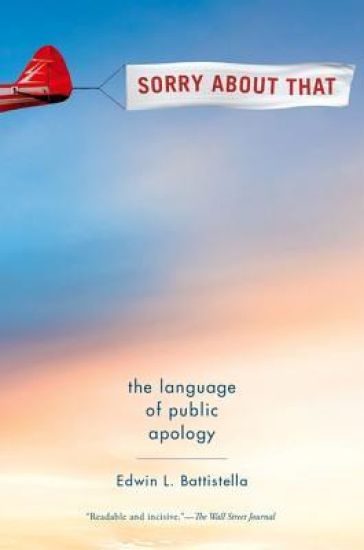
Sorry About That

Sorry About That

Edwin L. Battistella

Oxford University Press Inc
2014
sidottu
People do bad things. They misspeak, mislead, and misbehave. They lie, cheat, steal, and kill. Often, afterward, they apologize. In Sorry About That, linguist Edwin Battistella analyzes the public apologies of presidents, politicians, entertainers, and businessmen, situating the apology within American popular culture. Battistella offers the fascinating stories behind these apologies alongside his own analysis of the language used in each. He uses these examples to demonstrate the ways in which language creates sincere or insincere apologies, why we choose to apologize or don't, and how our efforts to say we are sorry succeed or fail. Each chapter expands on a central concept or distinction that explains part of the apology process. Battistella covers memorable apologies from McDonald's and Martha Stewart, Oprah Winfrey and James Frey, Mel Gibson and Jane Fonda, Bill Clinton and Barack Obama, and many more. Moving back and forth between examples and concepts, Battistella connects actual apologies with the broader social, ethical, and linguistic principles behind them. Readers will come away from the book better consumers of apologies-and better apologizers as well.
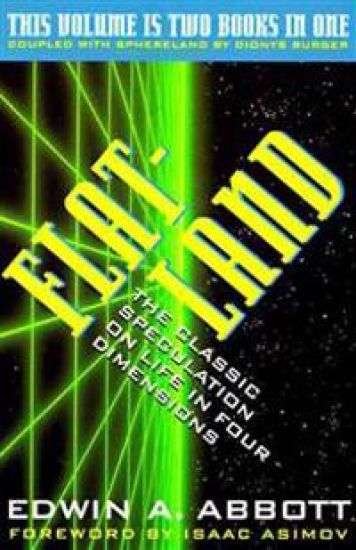
Flatland

Flatland

Edwin A. Abbott

Oxford University Press
2008
nidottu
'Upward, yet not Northward.' How would a creature limited to two dimensions be able to grasp the possibility of a third? Edwin A. Abbott's droll and delightful 'romance of many dimensions' explores this conundrum in the experiences of his protagonist, A Square, whose linear world is invaded by an emissary Sphere bringing the gospel of the third dimension on the eve of the new millennium. Part geometry lesson, part social satire, this classic work of science fiction brilliantly succeeds in enlarging all readers' imaginations beyond the limits of our 'respective dimensional prejudices'. In a world where class is determined by how many sides you possess, and women are straight lines, the prospects for enlightenment are boundless, and Abbott's hypotheses about a fourth and higher dimensions seem startlingly relevant today. This new edition of Flatland illuminates the social and intellectual context that produced the work as well as the timeless questions that it raises about the limits of our perception and knowledge. ABOUT THE SERIES: For over 100 years Oxford World's Classics has made available the widest range of literature from around the globe. Each affordable volume reflects Oxford's commitment to scholarship, providing the most accurate text plus a wealth of other valuable features, including expert introductions by leading authorities, helpful notes to clarify the text, up-to-date bibliographies for further study, and much more.
The Athenian Amnesty and Reconstructing the Law

The Athenian Amnesty and Reconstructing the Law

Edwin Carawan

Oxford University Press
2013
sidottu
This volume explores the amnesty which ended the civil war at Athens in 403 BC. Drawing upon ancient historians and speechwriters, together with the surviving inscriptions, it presents a new interpretation of the Athenian Amnesty in its original setting and in view of the subsequent reconstruction of laws and democratic institutions in Athens. Beginning with the evidence on the original agreement and the events that shaped it, the volume also discusses the major trials that challenged and reinterpreted key elements of the amnesty agreement, including the trial of Socrates. These studies reveal the Athenian Amnesty as a contractual settlement between the warring parties, a bargain for peace and reconciliation. The oath that came to symbolize the Amnesty was the closing to that contract, a pledge not to go back on the covenants that spelled out remedies and restrictions-not a promise to forgive and forget. The same contractual principle inspired major reforms of the restored democracy, barring litigation on settled claims and ensuring that new legislation did not conflict with the constitution. While this book deals largely with the ancient agreement, Carawan also draws perspectives from parallels in modern history, such as the post-apartheid settlement in South Africa, illustrating how the Athenian Amnesty is generally regarded as the model for political 'forgiveness' or 'pardon and oblivion' embraced in later conflict resolution.
The Juvenile Court System

The Juvenile Court System

Edwin Lemert

AldineTransaction
2010
nidottu
This volume is based on a detailed analysis of change in the law and in the administration of justice affecting juvenile off enders in California in the fifties and sixties. It addresses how procedural law develops on a long-term basis and under what conditions. It also examines the processes by which revolutionary changes occur in law and the extent to which social change can be directed or controlled by legislation.Social action to revise California's juvenile court law, which had remained little changed since 1915, began in 1958. Subsequently a small group of legal reformers who perceived anomalies in the law and in the underlying philosophy of the court overcame substantial resistance to effect revolutionary revisions of the law. Lemert examines their experience to determine how changes of such magnitude could take place after decades of gradual adaptations in the juvenile courts. His study also looks into the consequences of this change on the court and related agencies of law enforcement.The author sets forth a socio-legal theory of change-a conception of paradigms, normal evolution, and revolution in law. He applies this theory to data, with special attention to the resistance to legal change and the processes by which it gives way to the adaptive process of normal law. Lemert discusses the substantive aspects of juvenile law as it relates to human affect and meaning, touching on the existential elements of justice. Professionals dealing with juveniles, legal scholars, sociologists, and political scientists will find this book, with its emphasis on how to achieve more equitable administration of juvenile justice, has much to contribute to our understanding of the dynamics of social change.
Rhetorical Questions

Rhetorical Questions

Edwin Black

University of Chicago Press
1992
sidottu
From classical antiquity through the Renaissance, rhetoric was the prime vehicle of education in the West and the discipline that prepared students for civic life. With a comprehensiveness drawn from this tradition, Edwin Black here probes the incongruities between form and substance that open public discourse to significant interpretation. Locating rhetorical studies at the confluence of literature and politics, Black focuses on the ideological component of seemingly literary texts and the use of literary devices to advance political advocacy. The essays collected here range in subject matter from nineteenth-century oratory to New York Times editorials to the rhetoric of Richard Nixon. Unifying the collection are the concerns of secrecy and disclosure, identity, opposition, the scope of argument in public persuasion, and the historical mutability of rhetorical forms.
Dissent in American Religion

Dissent in American Religion

Edwin Scott Gaustad; John Corrigan

University of Chicago Press
2006
nidottu
"Dissent in American Religion", originally published in 1973, was the first book to present religious dissent in the United States as a pervasive but hidden and often-ignored stream in American life. The first volume in the "Chicago History of American Religion" series, it reviewed the history of our nation's longest dissenting tradition - a tradition older and richer in the realm of religion than in any other facet of national life. Indeed, Edwin Scott Gaustad argued that religious dissent was essential to the character of the American religious experience and stood in profound disagreement with society's orthodox values and beliefs. This new edition, which reinaugurates the "Chicago History of American Religion" series under the new editorship of John Corrigan, features new commentary by Gaustad and Corrigan on the past thirty years of American religious history and the importance of understanding dissent in American religion today.
The Last Hurrah

The Last Hurrah

Edwin O'Connor

University of Chicago Press
2016
nidottu
“We’re living in a sensitive age, Cuke, and I’m not altogether sure you’re fully attuned to it.” So says Irish-American politician Frank Skeffington—a cynical, corrupt 1950s mayor, and also an old-school gentleman who looks after the constituents of his New England city and enjoys their unwavering loyalty in return. But in our age of dynasties, mercurial social sensitivities, and politicians making love to the camera, Skeffington might as well be talking to us. Not quite a roman á clef of notorious Boston mayor James Michael Curley, The Last Hurrah tells the story of Skeffington’s final campaign as witnessed through the eyes of his nephew, who learns a great deal about politics as he follows his uncle to fundraisers, wakes, and into smoke-filled rooms, ultimately coming—almost against his will—to admire the man. Adapted into a 1958 film starring Spencer Tracy and directed by John Ford (and which Curley tried to keep from being made), Edwin O’Connor’s opus reveals politics as it really is, and big cities as they really were. An expansive, humorous novel offering deep insight into the Irish-American experience and the ever-changing nature of the political machine, The Last Hurrah reveals political truths still true today: what the cameras capture is just the smiling face of the sometimes sordid business of giving the people what they want.
Land Filled with Flies

Land Filled with Flies

Edwin N. Wilmsen

University of Chicago Press
1989
nidottu
"The image of a pristine isolation has been almost as common in research on foragers as in the popular media. Land filled with Flies is a sustanined argument against such views. Wilmsen marshals an enormous quantity of historical, archival, archeological, ethnographic, and survey data on the Kalahari Zhu to show how far from the reality these images are, how they have their own historical provenance, how they have been analytically distorting, and how they have proven politically pernicious for living groups like the Zhu."—Pauline Peters, Science"[A] major work. . . . Anthropologists will, and should, use Wilmsen's meticulously detailed study to revise their early lectures in the introductory course, and no future study of African 'foragers' should ignore it."—Parker Shipton, American Anthropologist"An impressive book. . . . The reader need only read the first few pages to judge both the quality and ambitiousness of the work. . . . Essential reading."—David R. Penna, Africa Today
Journeys with Flies

Journeys with Flies

Edwin N. Wilmsen

University of Chicago Press
1999
sidottu
From 1973 to 1994, anthropologist Edwin Wilmsen lived and worked among the Zhu, Mbanduru and Tswana people of the Kalahari desert in southern Africa. Thousands of miles from his home, immersed in what first seemed a radically different place and operating in languages he initially did not understand, he began a record of his impressions and reflections as a complement to his scientific fieldwork. This book weaves together the multilayered experiences of his life among these Kalahari people, capturing the intellectual challenges an anthropologist faces in the field, and the myriad and strange ways that unfamiliar experiences come to resonate with deeply personal thoughts and recollections. Combining biography, poetry and anthropology, Wilmsen portrays the intense realities of life in the Kalahari and carries the reader across space and time as events in the present trigger emotions and memories. Images of apartheid, for example, evoke memories of Wilmsen's childhood in the segregated South. Poems, journal entries and accounts of deepening personal relationships all intertwine as Wilmsen conveys the experiences he shares with his "subjects" in spite of vast differences in their backgrounds - extreme thirst under the desert sun, grief over the death of a child and the constant irritation of ubiquitous flies.
The Speaking Silence

The Speaking Silence

Edwin Shendelman

Tellwell Talent
2021
pokkari
How do you respond to your longing for a deeper life that touches all aspects of your being?In our challenging times, many are searching for ways to connect to inner resources of quiet and spiritual renewal. Some people turn to prayer, expressing the deep longing of their heart to connect to the divine. Other people draw their attention within, seeking the stillness of meditation.Prayer and meditation enliven the heart and enlighten the mind, opening the doors within us to greater peace and freedom. The Speaking Silence draws on the teachings of the some of the world's great spiritual traditions of prayer, meditation, and contemplation to present a contemporary guidebook to accompany your journey. Whether you are a religious person looking to tap the spiritual resources of your tradition or have a general interest in spirituality, or a seasoned explorer of consciousness and inner states, The Speaking Silence will provide a rich feast for your heart, mind, body and soul. Both practical and inspiring, this book will teach you some of the important concepts and ideas that can undergird the practices of prayer, meditation, and contemplation, along with a diversity of spiritual exercises to unfold them daily in your life.
The Speaking Silence

The Speaking Silence

Edwin Shendelman

Tellwell Talent
2021
sidottu
How do you respond to your longing for a deeper life that touches all aspects of your being?In our challenging times, many are searching for ways to connect to inner resources of quiet and spiritual renewal. Some people turn to prayer, expressing the deep longing of their heart to connect to the divine. Other people draw their attention within, seeking the stillness of meditation.Prayer and meditation enliven the heart and enlighten the mind, opening the doors within us to greater peace and freedom. The Speaking Silence draws on the teachings of the some of the world's great spiritual traditions of prayer, meditation, and contemplation to present a contemporary guidebook to accompany your journey. Whether you are a religious person looking to tap the spiritual resources of your tradition or have a general interest in spirituality, or a seasoned explorer of consciousness and inner states, The Speaking Silence will provide a rich feast for your heart, mind, body and soul. Both practical and inspiring, this book will teach you some of the important concepts and ideas that can undergird the practices of prayer, meditation, and contemplation, along with a diversity of spiritual exercises to unfold them daily in your life.
The Economy of Colonial America

The Economy of Colonial America

Edwin J. Perkins

Columbia University Press
1988
pokkari
The colonial era is especially appealing in regard to economic history because it represents a study in contrasts. The economy was exceptionally dynamic in terms of population growth and geographical expansion. No major famines, epidemics, or extended wars intervened to reverse, or even slow down appreciably, the tide of vigorous economic growth. Despite this broad expansion, however, the fundamental patterns of economic behavior remained fairly constant. The members of the main occupational groups - farmers, planters, merchants, artisans, indentured servants, and slaves - performed similar functions throughout the period. In comparison with the vast number of institutional innovations in the nineteenth and twentieth centuries, structural change in the colonial economy evolved gradually. With the exception of the adoption of the pernicious system of black slavery, few new economic institutions and no revolutionary new technologies emerged to disrupt the stability of this remarkably affluent commercial-agricultural society. Living standards rose slowly but fairly steadily at a rate of 3 to 5 percent a decade after 1650. (Monetary sums are converted into 1980 dollars so that the figures will be relevant to modern readers.) For the most part, this book describes the economic life styles of free white society. The term "colonists" is virtually synonymous here with inhabitants of European origin. Thus, statements about very high living standards and the benefits of land ownership pertain only to whites. One chapter does focus exclusively, however, on indentured servants and slaves. This book represents the author's best judgment about the most important features of the colonial economy and their relationship to the general society and to the movement for independence. It should be a good starting point for all - undergraduate to scholar - interested in learning more about the seventeenth and eighteenth centuries. This popular study, lauded by professors and scholars alike, has been diligently revised to reflect the tremendous amount of new research conducted during the last decade, and now includes a totally new chapter on women in the economy. Presenting a great deal of up-to-date information in a concise and lively style, the book surveys the main aspects of the colonial economy: population and economic expansion; the six main occupational groups (family farmers, indentured servants, slaves, artisans, great planters, and merchants); women in the economy; domestic and imperial taxes; the colonial monetary system; living standards for the typical family