Kirjojen hintavertailu. Mukana 11 342 296 kirjaa ja 12 kauppaa.

Kirjahaku

Etsi kirjoja tekijän nimen, kirjan nimen tai ISBN:n perusteella.

1000 tulosta hakusanalla Ellen Pollock

The Grief of God

The Grief of God

Ellen M. Ross

Oxford University Press Inc
1997
sidottu
Between the thirteenth and fifteenth centuries images of a wounded and bloody Christ proliferated in England, appearing in sermons, drama, church decorations, and spiritual treatises. Some scholars see these graphic portrayals of suffering as signs of a new emphasis on Jesus's humanity, while others see renewed emphasis on a terrifying God of vengeance. Ross, however, argues that these explanations have misunderstood the nature of medieval attitudes toward the suffering Christ. Analysing a wide range of textual and pictorial evidence, she finds that in their encounters with the wounded Jesus - the Saviour whose blood nurtures, feeds, and heals human persons - medieval believers found the God of mercy and love.
The Adman in the Parlor

The Adman in the Parlor

Ellen Gruber Garvey

Oxford University Press Inc
1996
nidottu
How did advertising come to seem natural and ordinary to magazine readers by the end of the nineteenth century? The Adman in the Parlor explores readers' interactions with advertising during a period when not only consumption but advertising itself became established as a pleasure. Garvey argues that readers' participation in advertising, rather than top-down dictation by advertisers, made advertizing a central part of American culture. Garvey's analysis interweaves such texts and artifacts as advertising trade journals, magazines addressed to elite, middle class, and poorer readerships, scrapbooks, medical articles, paper dolls, chromolithographed trade cards, and contest rules. She tracks new forms of fictional realism that contained brand name references, courtship stories, and other fictional forms. As magazines became dependant on advertising rather than sales for their revenues, women's magazines led the way in making consumers of readers through the interplay of fiction, editorials, and advertising. General magazines, too, saw little conflict between these different interests. Instead, advertising and fiction came to act on one another in complex, unexpected ways. Magazine stories illustrated the multiple desires and social meanings embodied in the purchase of a product. Garvey takes the bicycle as a case study, and tracks how magazines mediated among competing medical, commercial, and feminist discourses to produce an alluring and unthreatening model of women bicycling in their stories. Advertising formed the national vocabulary. At once invisible, familiar, and intrusive, advertising both shaped fiction of the period and was shaped by it. The Adman in the Parlor unearths the lively conversations among writers and advertisers about the new prevalence of advertising for mass-produced, nationally distributed products.
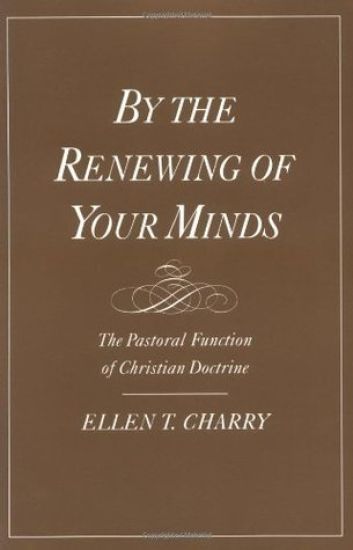
By the Renewing of Your Minds

By the Renewing of Your Minds

Ellen T. Charry

Oxford University Press Inc
1999
nidottu
Through close readings of a number of classic texts, Charry develops the thesis that classic Christian theology is thoroughly shaped by pastoral and moral purposes. Charry's hope is to show contemporary theologians how to teach the faith in a morally constructive fashion, transcending the current destructive opposition between 'academic' and 'pastoral' theology.
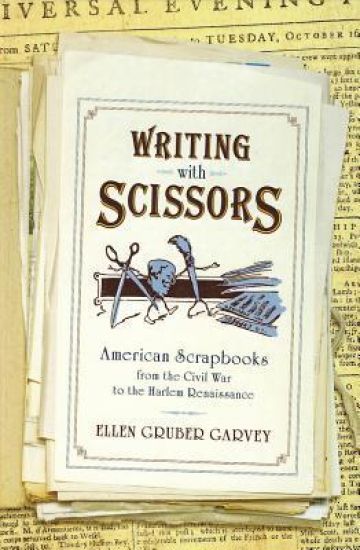
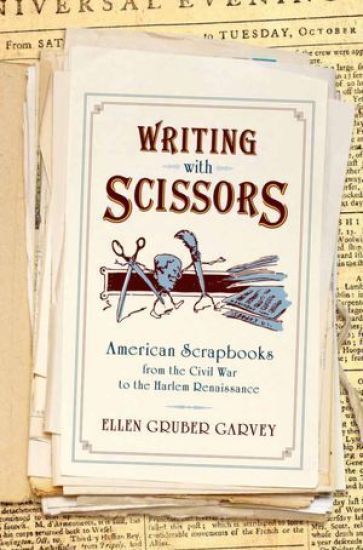
Writing with Scissors

Writing with Scissors

Ellen Gruber Garvey

Oxford University Press Inc
2012
sidottu
Scrapbooks have been around since printed matter began to flow into the lives of ordinary people, a flow that became an ocean in nineteenth-century America. Though libraries can show us the vast archive--literally thousands of dailies, weeklies, monthlies, quarterlies, and annuals were flooding the public once mass-circulation was common--we have little knowledge of what, and particularly how people read. Writing with Scissors follows swimmers through that first ocean of print. We know that thousands of people were making meaning out of the swirl of paper that engulfed them. Ordinary readers processed the materials around them, selected choice examples, and created book-like collections that proclaimed the importance of what they read. Writing with Scissors explores the scrapbook making practices of men and women who had varying positions of power and access to media. It considers what the bookmakers valued and what was valued by the people or institutions that sheltered them over time. It compares nineteenth-century scrapbooking methods with current techniques for coping with an abundance of new information on the Web, such as bookmarks, favorites lists, and links. The book is part of a developing literature in cultural studies and book history exploring reading practices of ordinary readers. Scholars interested in the burgeoning field of print culture have not yet taken full advantage of scrapbooks, these great repositories of American memory. Rather than just using evidence from scrapbooks, Garvey turns to the scrapbook as a genre on its own. Her book offers a fascinating view of the semi-permeable border between public and domestic realms, illuminating the ongoing negotiation between readers and the press.
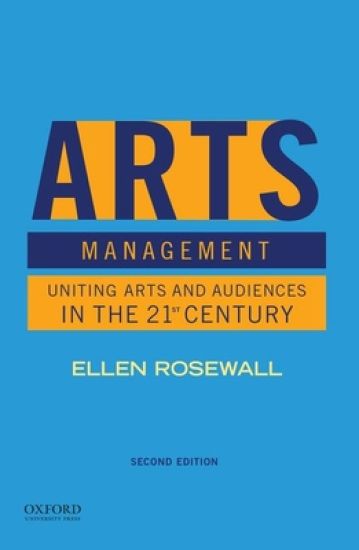
Arts Management: Uniting Arts and Audiences in the 21st Century
Arts Management serves students at both the undergraduate and graduate levels in the Introduction to Arts Management course. This edition combines both theory and practical approaches, and addresses major issues including incorporating new technology and research into management programs; new information on fundraising by using programs like Kickstarter; effectively using "futuring" exercises in organizational planning; and addressing issues of diversity and inclusion.
Oxford AQA GCSE History: Conflict and Tension: The Inter-War Years 1918-1939 Revision Guide (9-1)
This Conflict and Tension 1918-1939 Revision Guide is part of the popular Oxford AQA GCSE History series. Written by our original author team to match the new AQA specification, this guide covers exactly what your students require to succeed in the Paper 1 Conflict and Tension 1918-39 Wider World Depth Study exams. - Recap key events with clear visual diagrams and brief points - Apply knowledge with targeted revision activities that tests basic comprehension, then apply understanding towards exam-style questions - Review and track revision with progress checklists, suggested activity answers and Exam Practice sections - Step-by-step exam guidance based on the popular 'How to' student book feature - Examiner Tip features most up-to-date expert advice and identifies common exam mistakes - Boost student confidence on all AQA GCSE Conflict and Tension question types with revision activities such as Source Analysis and How Far Do You Agree - Perfect for use alongside the Student Book or as a stand-alone resource for independent revision. This revision guide helps your students Recap, Apply, and Review their way towards exam success.
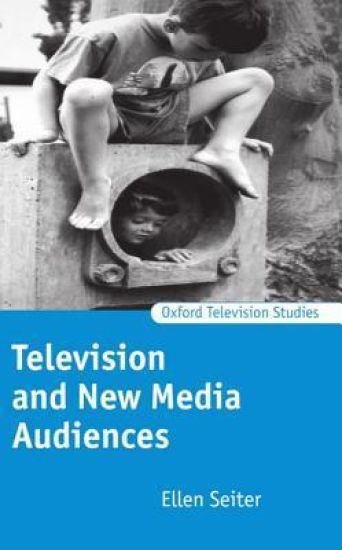
Television and New Media Audiences

Television and New Media Audiences

Ellen Seiter

Clarendon Press
1998
nidottu
Why is talk about television forbidden at certain schools? Why does a mother feel guilty about watching Star Trek in front of her four-year-old child? Why would retired men turn to daytime soap operas for entertainment? Cliches about television mask the complexity of our relationship to media technologies. Through case studies, the author explains what audience research tells us about the uses of technologies in the domestic sphere and the classroom, the relationship between gender and genre, and the varied interpretation of media technologies and media forms. Television and New Media Audiences reviews the most important research on television audiences and recommends the use of ethnographic, longitudinal methods for the study of media consumption and computer use at home as well as in the workplace. The book discusses reactions of audiences to many internationally known television programmes including The Flintstones, The Jetsons, Street Fighter, Mighty Morphin Power Rangers, X-Men, Sesame Street, Dallas, Star Trek, The Cosby Show, Teenage Mutant Ninja Turtles, National Geographic, etc.
Television and New Media Audiences

Television and New Media Audiences

Ellen Seiter

Clarendon Press
1998
sidottu
Why is talk about television forbidden at certain schools? Why does a mother feel guilty about watching Star Trek in front of her four-year-old child? Why would retired men turn to daytime soap operas for entertainment? Cliches about television mask the complexity of our relationship to media technologies. Through case studies, the author explains what audience research tells us about the uses of technologies in the domestic sphere and the classroom, the relationship between gender and genre, and the varied interpretation of media technologies and media forms. Television and New Media Audiences reviews the most important research on television audiences and recommends the use of ethnographic, longitudinal methods for the study of media consumption and computer use at home as well as in the workplace. The book discusses reactions of audiences to many internationally known television programmes including The Flintstones, The Jetsons, Street Fighter, Mighty Morphin Power Rangers, X-Men, Sesame Street, Dallas, Star Trek, The Cosby Show, Teenage Mutant Ninja Turtles, National Geographic, etc.
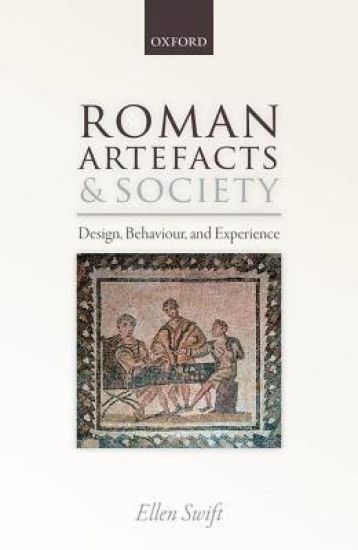
Roman Artefacts and Society

Roman Artefacts and Society

Ellen Swift

Oxford University Press
2017
sidottu
In this book, Ellen Swift uses design theory, previously neglected in Roman archaeology, to investigate Roman artefacts in a new way, making a significant contribution to both Roman social history, and our understanding of the relationships that exist between artefacts and people. Based on extensive data collection and the close study of artefacts from museum collections and archives, the book examines the relationship between artefacts, everyday behaviour, and experience. The concept of 'affordances'-features of an artefact that make possible, and incline users towards, particular uses for functional artefacts-is an important one for the approach taken. This concept is carefully evaluated by considering affordances in relation to other sources of evidence, such as use-wear, archaeological context, the end-products resulting from artefact use, and experimental reconstruction. Artefact types explored in the case studies include locks and keys, pens, shears, glass vessels, dice, boxes, and finger-rings, using material mainly drawn from the north-western Roman provinces, with some material also from Roman Egypt. The book then considers how we can use artefacts to understand particular aspects of Roman behaviour and experience, including discrepant experiences according to factors such as age, social position, and left- or right-handedness, which are fostered through artefact design. The relationship between production and users of artefacts is also explored, investigating what particular production methods make possible in terms of user experience, and also examining production constraints that have unintended consequences for users. The book examines topics such as the perceived agency of objects, differences in social practice across the provinces, cultural change and development in daily practice, and the persistence of tradition and social convention. It shows that design intentions, everyday habits of use, and the constraints of production processes each contribute to the reproduction and transformation of material culture.
Roman Artefacts and Society

Roman Artefacts and Society

Ellen Swift

Oxford University Press
2020
nidottu
In this book, Ellen Swift uses design theory, previously neglected in Roman archaeology, to investigate Roman artefacts in a new way, making a significant contribution to both Roman social history, and our understanding of the relationships that exist between artefacts and people. Based on extensive data collection and the close study of artefacts from museum collections and archives, the book examines the relationship between artefacts, everyday behaviour, and experience. The concept of 'affordances'—features of an artefact that make possible, and incline users towards, particular uses for functional artefacts—is an important one for the approach taken. This concept is carefully evaluated by considering affordances in relation to other sources of evidence, such as use—wear, archaeological context, the end—products resulting from artefact use, and experimental reconstruction. Artefact types explored in the case studies include locks and keys, pens, shears, glass vessels, dice, boxes, and finger-rings, using material mainly drawn from the north-western Roman provinces, with some material also from Roman Egypt. The book then considers how we can use artefacts to understand particular aspects of Roman behaviour and experience, including discrepant experiences according to factors such as age, social position, and left- or right-handedness, which are fostered through artefact design. The relationship between production and users of artefacts is also explored, investigating what particular production methods make possible in terms of user experience, and also examining production constraints that have unintended consequences for users. The book examines topics such as the perceived agency of objects, differences in social practice across the provinces, cultural change and development in daily practice, and the persistence of tradition and social convention. It shows that design intentions, everyday habits of use, and the constraints of production processes each contribute to the reproduction and transformation of material culture.
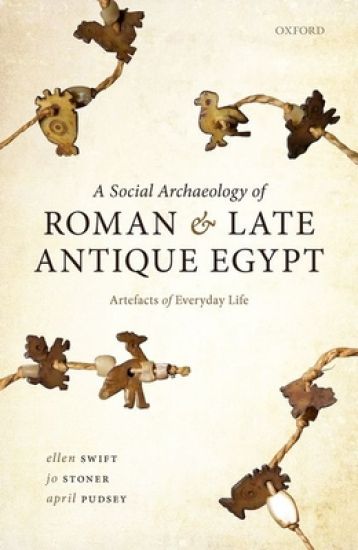
A Social Archaeology of Roman and Late Antique Egypt

A Social Archaeology of Roman and Late Antique Egypt

Ellen Swift; Jo Stoner; April Pudsey

Oxford University Press
2021
sidottu
Artefact evidence has the unique power to illuminate many aspects of life that are rarely explored in written sources, yet this potential has been underexploited in research on Roman and Late Antique Egypt. This book presents the first in-depth study that uses everyday artefacts as its principal source of evidence to transform our understanding of the society and culture of Egypt during these periods. It represents a fundamental reference work for scholars, with much new and essential information on a wide range of artefacts, many of which are found not only in Egypt but also in the wider Roman and late antique world. By taking a social archaeology approach, it sets out a new interpretation of daily life and aspects of social relations in Roman and Late Antique Egypt, contributing substantial insights into everyday practices and their social meanings in the past. Artefacts from University College London's Petrie Museum of Egyptian Archaeology are the principal source of evidence; most of these objects have not been the subject of any previous research. The book integrates the close study of artefact features with other sources of evidence, including papyri and visual material. Part one explores the social functions of dress objects, while part two explores the domestic realm and everyday experience. An important theme is the life course, and how both dress-related artefacts and ordinary functional objects construct age and gender-related status and facilitate appropriate social relations and activities. There is also a particular focus on wider social experience in the domestic context, as well as broader consideration of economic and social changes across the period.
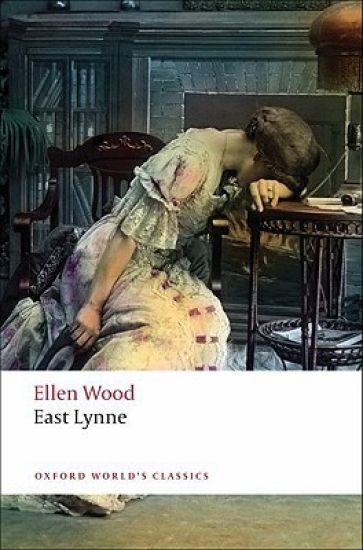
East Lynne

East Lynne

Ellen Wood

Oxford University Press
2008
nidottu
'Coward! Sneak! May good men shun him, from henceforth! may his Queen refuse to receive him! You, an earl's daughter! Oh, Isabel! How utterly you have lost yourself!' When the aristocratic Lady Isabel abandons her husband and children for her wicked seducer, more is at stake than moral retribution. Ellen Wood played upon the anxieties of the Victorian middle classes who feared a breakdown of the social order as divorce became more readily available and promiscuity threatened the sanctity of the family. In her novel the simple act of hiring a governess raises the spectres of murder, disguise, and adultery. Her sensation novel was devoured by readers from the Prince of Wales to Joseph Conrad and continued to fascinate theatre-goers and cinema audiences well into the next century. This edition returns for the first time to the racy, slang-ridden narrative of the first edition, rather than the subsequent stylistically 'improved' versions hitherto reproduced by modern editors. ABOUT THE SERIES: For over 100 years Oxford World's Classics has made available the widest range of literature from around the globe. Each affordable volume reflects Oxford's commitment to scholarship, providing the most accurate text plus a wealth of other valuable features, including expert introductions by leading authorities, helpful notes to clarify the text, up-to-date bibliographies for further study, and much more.
Pediatric Imaging Cases

Pediatric Imaging Cases

Ellen Chung

Oxford University Press Inc
2012
nidottu
Featuring 150 cases and over 400 high-quality images, Pediatric Imaging Cases offers a complete survey of the field of pediatric radiology. Cases are formatted as questions and answers, allowing for self-assessment, complete with relevant radiologic findings, differential diagnoses, teaching points, further steps in management, and suggested further readings. Part of the Cases in Radiology series, this book offers a comprehensive overview of the clinical issues of pediatric radiology: cardiovascular system, gastrointestinal system, genitourinary system, spine, neuroradiology, chest and airway, and musculoskeletal system. Ideal for residents preparing for board exams as well as seasoned clinicians wishing to test their knowledge, Pediatric Imaging Cases provides a thorough investigation of the field.
Writing with Scissors

Writing with Scissors

Ellen Gruber Garvey

Oxford University Press Inc
2012
nidottu
Men and women 150 years ago grappled with information overload by making scrapbooksthe ancestors of Google and blogging. From Abraham Lincoln to Susan B. Anthony, African American janitors to farmwomen, abolitionists to Confederates, people cut out and pasted down their reading. Writing with Scissors opens a new window into the feelings and thoughts of ordinary and extraordinary Americans. Like us, nineteenth-century readers spoke back to the media, and treasured what mattered to them. In this groundbreaking book, Ellen Gruber Garvey reveals a previously unexplored layer of American popular culture, where the proliferating cheap press touched the lives of activists and mourning parents, and all who yearned for a place in history. Scrapbook makers documented their feelings about momentous public events such as living through the Civil War, mediated through the newspapers. African Americans and women's rights activists collected, concentrated, and critiqued accounts from a press that they did not control to create "unwritten histories" in books they wrote with scissors. Whether scrapbook makers pasted their clippings into blank books, sermon collections, or the pre-gummed scrapbook that Mark Twain invented, they claimed ownership of their reading. They created their own democratic archives. Writing with Scissors argues that people have long had a strong personal relationship to media. Like newspaper editors who enthusiastically "scissorized" and reprinted attractive items from other newspapers, scrapbook makers passed their reading along to family and community. This book explains how their scrapbooks underlie our present-day ways of thinking about information, news, and what we do with it.
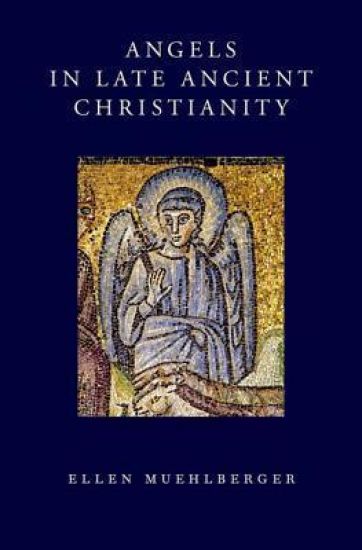
Angels in Late Ancient Christianity

Angels in Late Ancient Christianity

Ellen Muehlberger

Oxford University Press Inc
2013
sidottu
Ellen Muehlberger explores the diverse and inventive ideas Christians held about angels in late antiquity. During the fourth and fifth centuries, Christians began experimenting with new modes of piety, adapting longstanding forms of public authority to Christian leadership and advancing novel ways of cultivating body and mind to further the progress of individual Christians. Muehlberger argues that in practicing these new modes of piety, Christians developed new ways of thinking about angels. The book begins with a detailed examination of the two most popular discourses about angels that developed in late antiquity. In the first, developed by Christians cultivating certain kinds of ascetic practices, angels were one type of being among many in a shifting universe, and their primary purpose was to guard and to guide Christians. In the other, articulated by urban Christian leaders in contest with one another, angels were morally stable characters described in the emerging canon of Scripture, available to enable readers to render Scripture coherent with emerging theological positions. Muehlberger goes on to show how these two discourses did not remain isolated in separate spheres of cultivation and contestation, but influenced one another and the wider Christian culture. She offers in-depth analysis of popular biographies written in late antiquity, of the community standards of emerging monastic communities, and of the training programs developed to prepare Christians to participate in ritual, demonstrating that new ideas about angels shaped and directed the formation of the definitive institutions of late antiquity. Angels in Late Ancient Christianity is a meticulous and thorough study of early Christian ideas about angels, but it also offers a different perspective on late ancient Christian history, arguing that angels were central rather than peripheral to the emergence of Christian institutions and Christian culture in late antiquity.
No Illusions

No Illusions

Ellen Mickiewicz

Oxford University Press Inc
2014
sidottu
What will the next generation of Russian leaders be like? How will they regard the United States, democracy, free speech, and immigration? What do they think of their current leaders? And what sorts of tactics will they bring to international negotiating tables, political and otherwise? No Illusions provides an engaging, intimate, and unprecedented window onto the mindsets of the next generation of leaders in Russian politics, business, and economics. In it, Ellen Mickiewicz, one of the world's foremost experts on Russian media, politics and culture, draws on interviews with students in Russia's three most elite universities, the training grounds for all of the nation's leadership. Allowing these students to speak in their own words, she shares their thoughts on international relations, the domestic and international media, democracy, and their government. She also shows how their total immersion in the world of the internet -- an immersion that sets them apart from the current generation of Russian leadership and much of the rest of the country -- frames the way that they think and affects their trust in their leaders, the media, and their colleagues. They view the world around themselves with soberness and deep skepticism. Their worldviews are complex and often contradictory, reflecting complicated personalities who are adaptable, yet also subject to much internal strife. Many plan for future careers in politics while expressing ambivalence about the political process; they proclaim cosmopolitan worldviews and deeply xenophobic attitudes at the same time; they have favorable views of democracy, but not of the American model; they are shrewd critics of government propaganda and yet clearly have absorbed residue of Cold War paranoia. Mickiewicz also looks at the nation's recent protests and nascent political movements to show how they came about and to consider what promise they might hold for a more democratic Russia. She profiles several of Russia's up-and-coming leaders, including charismatic and controversial activist and politician Aleksei Navalny, perhaps one of the more formidable threats to the Putin regime. As this book shows, the next generation of Russian leaders will almost certainly hold a worldview different from the current one, but it is not likely to be a worldview that readily embraces American democracy. No Illusions is a thought-provoking and often surprising glimpse into the future of Russia's foreign relations.
The Six Stages Of Parenthood

The Six Stages Of Parenthood

Ellen Galinsky

Da Capo Press Inc
1987
pokkari
Almost all books for parents focus on the way children develop. Ellen Galinsky, instead, writes about how parents develop. Drawing on the work in adult development of Erik Erikson and Daniel Levinson, she describes six distinct stages in the life of a parent: the image-making that occurs during pregnancy; the nurturing role that swallows parents up from birth through the first couple of years; the authority parents must develop as small children show independence; the interpretive stage when parents explain the world and their values to school-age children; the interdependent stage when teenagers challenge authority; and the departure years when parents let go and take stock of their accomplishments and failures.
A World of Rivers

A World of Rivers

Ellen Wohl

University of Chicago Press
2012
nidottu
"A World of Rivers" explores the confluence of human and environmental change on ten of the great rivers of the world. Ranging from the Yellow River in China to Central Europe's Danube, the book journeys down the most important rivers in all corners of the globe. Wohl shows us how pollution, such as in the Ganges and in the Ob of Siberia, has affected biodiversity in the water. But rivers are also resilient, and Wohl stresses the importance of conservation and restoration to help reverse the effects of human carelessness and hubris. What these diverse rivers share is a critical role in shaping surrounding landscapes and biological communities, and Wohl's book ultimately makes a strong case for the need to steward positive change in the world's great rivers.
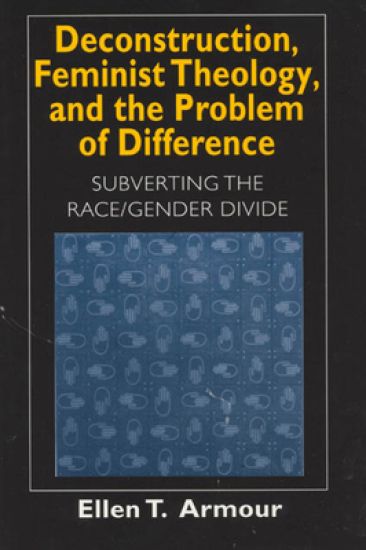
Deconstruction, Feminist Theology, and the Problem of Difference

Deconstruction, Feminist Theology, and the Problem of Difference

Ellen T. Armour

University of Chicago Press
1999
sidottu
The term "feminism" conjures up the promise of resistance to the various forms of oppression women face. But feminism's ability to fulfil this promise has been undermined by its failure to deal adequately with the difference that race makes for gender. In this book, Ellen T. Armour forges an alliance between deconstruction and feminist theology and theory by demonstrating deconstruction's usefulness in addressing feminism's trouble with race. Armour shows how the writings of Jacques Derrida and Luce Irigaray can be used to uncover feminism's white presumptions so that race and gender can be thought of differently. In concise terms she explores the possibilities and limitations for feminist theology of Derrida's conception of "woman" and Irigaray's "multiple woman," as well as Derrida's thinking on race and Irigaray's work on religion. Armour then points a way beyond the race/gender divide with the help of African-American theorists such as bell hooks, Hortense Spillers, and Patricia Hill Collins.