Morris dancing, one of the more peculiar of the English folk customs, has been greatly misunderstood. In The History of Morris Dancing, 1458-1750 John Forrest analyses a wealth of evidence to show that Morris dancing does not, as is often assumed, have pagan or ancient origins. He examines early documentation to draw Morris traditions into the wide area of communal custom and public celebrations, showing the passage of dance ideas between groups previously considered folklorically distinct. Careful, detailed and encyclopaedic, The History of Morris Dancing, 1458-1750, is an essential reference work for specialists in English drama and social historians of the period, as well as offering fascinating insight for those who enjoy Morris dancing.
Morris dancing, one of the more peculiar of the English folk customs, has been greatly misunderstood. In The History of Morris Dancing, 1458-1750 John Forrest analyses a wealth of evidence to show that Morris dancing does not, as is often assumed, have pagan or ancient origins. He examines early documentation to draw Morris traditions into the wide area of communal custom and public celebrations, showing the passage of dance ideas between groups previously considered folklorically distinct. Careful, detailed and encyclopaedic, The History of Morris Dancing, 1458-1750, is an essential reference work for specialists in English drama and social historians of the period, as well as offering fascinating insight for those who enjoy Morris dancing.
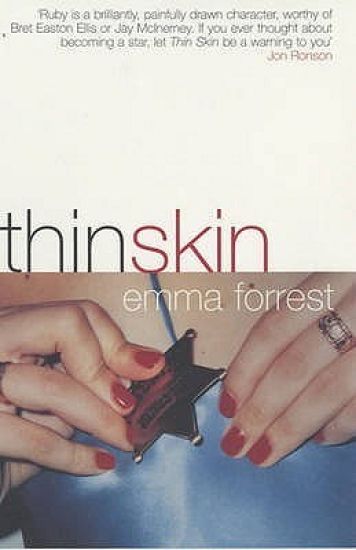
At 15, Ruby left home, got herself an agent and became a film star. Now 20, she is destructive and charming, and she cuts herself as a hobby. She has left the man who loves her, been fired by her agent, and is starring in a film opposite the delectable Asian. It is quite possibly her last chance.
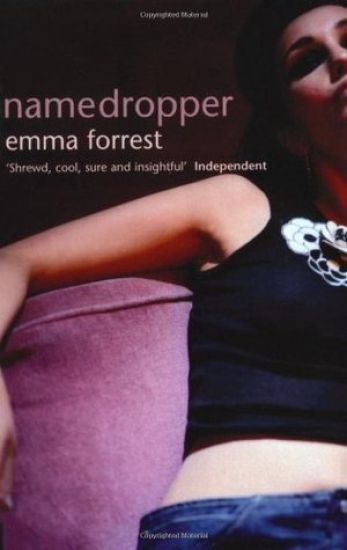
Meet Viva Cohen: a teenage schoolgirl bombshell. Her bedroom walls are plastered with posters of silver-screen legends, and underneath her school uniform she wears vintage thigh-high stockings. Her best friends are a drugged-out beauty queen and an ageing rock-star, and she lives in London with her gay uncle, Manny. Viva spends her days gate-crashing gigs, skiving her exams and trying to live life as glamorously as her number one icon, Elizabeth Taylor. But then she sets out on a pilgrimage: in search of real love, experience and Jack Nicholson. Wicked-tongued, star-fixated, clever and restless, Viva is like no other girl - and this is no ordinary summer ...
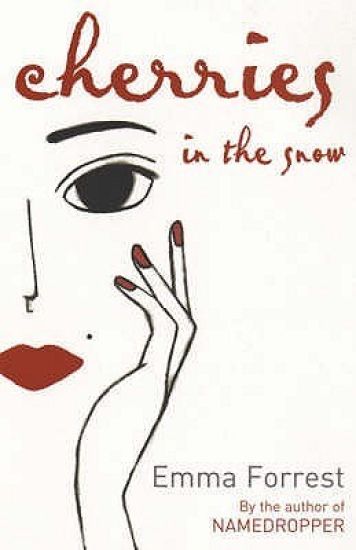
____________ ‘Shrewd, cool, sure and insightful' - Independent 'A literary Lolita' - Vanity Fair ‘Electric, irreverent prose. When people talk about voice, this is what they mean' - Ethan Hawke 'A gorgeous novel' - Julie Burchill ____________ In Sadie's head, she's a novelist. In real life, she spends her day searching for the ultimate way to say red at Grrl, an ultra hip make-up company. In her sex life, she's a modern-day Lolita who's never dated a man under forty. Then Sadie falls in love with Marley, a graffiti artist with a firm commitment to another woman: his eight-year-old daughter, Montana. Sadie isn't used to competing for a man's affections and certainly not with a little girl who is uncannily like herself. Real love could just be too grown up for her... Cherries in the Snow is a novel about womanhood, love, and lipstick. Flippant, sexy, acid and smart, this is Emma Forrest at her most dazzling.
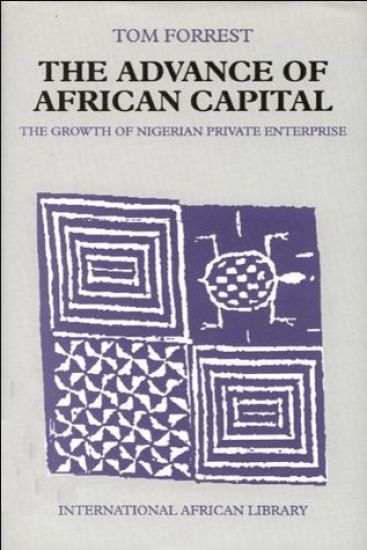
Combining ethnographic and historical perspectives, this study is the most detailed, most extensive account of medium- and large-scale African business yet published. It examines the strategies and patterns employed by business people from the colonial period to the present day and provides profiles of Nigeria's key entrepreneurs. Not only a valuable digest of business activities, this important study also challenges existing views about African enterprise and is highly relevant to policy-makers concerned with economic development.
In an intriguing and original style, these authors offer a rich resource for understanding the history, process, and value of feminist consciousness-raising for teachereducators and feminist teachers. Critical incidents in today’s classrooms involving values relativism, the rush to judgement, witnessing to vulnerability, cyber-bullying, and countering determinism in teacher education and research are analyzed using key concepts from philosophers and feminist theorists. Weaving together personal narrative, dramatization, literary allusion, and philosophical reconstruction, the authors examine and question the place of the personal in the teacher’s ethical responsibility for moral deliberation in pluralistic classrooms.This book is of tremendous value for teacher-educators engaged in helping pre-service teachers develop the critical and sensitive capacities needed to be the voice of authority in a classroom. The ethical questions that are raised have repercussions for teaching professional ethics in other caregiving professions. Going to the heart of the teacher’s worst fears and assumptions, this unique work offers a new approach to the analysis of case studies in philosophy of education.Published in English.
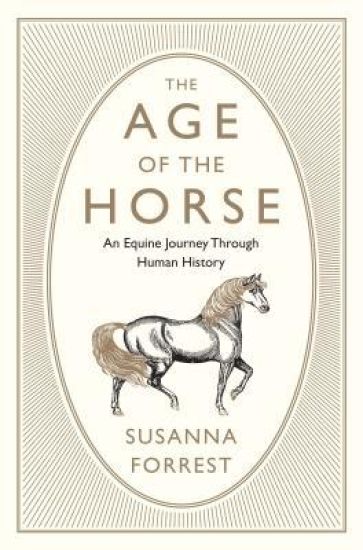
An essential book for anyone who's ever been captivated by horses, The Age of the Horse is a breathtaking exploration of the enduring connection between humans and Equus caballus. Equestrian expert Susanna Forrest presents a unique, sweeping panorama of the animal's prominent role in societies around the world and across time. Fifty-six million years ago, the earliest equid walked the earth--and beginning with the first-known horse-keepers of the Copper Age, the horse has played an integral part in human history. Combining fascinating anthropological detail and incisive personal anecdotes, Forrest draws from an immense range of archival documents as well as literature and art to illustrate how our evolution has coincided with that of horses. In paintings and poems (such as Byron's famous "Mazeppa"), in theater and classical music (including works by Liszt and Tchaikovsky), representations of the horse have changed over centuries, portraying the crucial impact that we've had on each other. Forrest deftly synthesizes this material with her own experience in the field, traveling the globe to give us a diverse, comprehensive look at the horse in our lives today: from Mongolia where she observes the endangered takhi, to a show-horse performance at the Palace of Versailles; from a polo club in Beijing to Arlington, Virginia, where veterans with PTSD are rehabilitated through interaction with horses. With passion and singular insight, Forrest investigates the complexities of human and horse coexistence, illuminating the multifaceted ways our cultures were shaped by this powerful creature.
Fifty-six million years ago, the proto-horse was a "twelve-pound runt" that balanced on feet with four toes. The first glimpse we have of what he looked like and how he was evolving are images found painted across the Paleolithic Lascaux Cave in southern France. Anthropologist and equestrian expert Susanna Forrest presents a singular, sweeping panorama of the animal's prominent role across time and in societies around the world. Combining fascinating anthropological detail and incisive personal anecdotes, Forrest illustrates how our evolution has coincided with that of horses. She deftly synthesizes historical material with her experience in the field, traveling the globe to give us a diverse, comprehensive look at the horse in our lives today: from Mongolia where she observes the endangered takhi, to a show-horse performance at the Palace of Versailles and then to Arlington, Virginia, where veterans with PTSD are rehabilitated through interaction with horses. Unique, passionate, and insightful, this book investigates the complexities of human and horse coexistence, brilliantly revealing the multifaceted ways our cultures were shaped by this powerful creature.
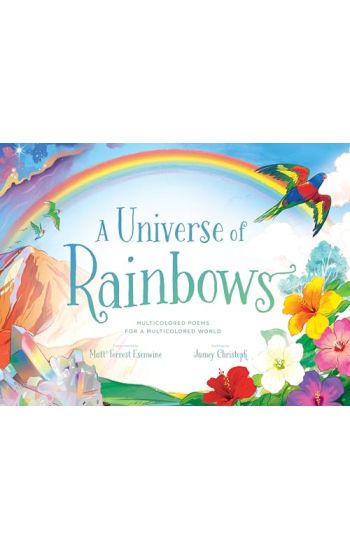
Rainbows in all their glory are celebrated in this STEAM-filled poetry collection from an all-star roster of children's poets. Perfect for Poetry Month and Earth Day. What do Yellowstone's Grand Prismatic Spring, Peru's Vinicunca mountain, the star Betelgeuse, and a drop of water have in common? Rainbows In this iridescent collection, Nikki Grimes, Irene Latham, Joyce Sidman, Janet Wong, and sixteen other poets explore bursts of color across nature.Each selection explores a new rainbow--and not just the ones in the sky. In haiku, free verse, and other forms, the poets capture marvels like crystals, pilot glories, Gouldian finches, and marble caves. Acclaimed illustrator Jamey Christoph brings each rainbow to life in brilliant color and playful detail. Informational sidebars flank each poem, offering scientific context for readers, and recommended resources and a glossary are also included. Part of Eerdmans' Spectacular STEAM for Curious Readers series. Poems by: Nikki GrimesMatt Forrest EsenwineRenee M. LaTulippeJoyce SidmanIrene LathamDavid L. HarrisonHeidi E. Y. Stemple & Jane YolenAmy Ludwig VanDerwaterAlma Flor Ada & F. Isabel CampoyRebecca Kai DotlichMarilyn SingerCharles WatersLaura Purdie SalasCharles GhignaLee WardlawJanet WongAllan WolfGeorgia Heard
Read's revolutionary work postulates that there is a hidden key to Pound's lifework, a hermetic coherence created from a pagan calendar that Pound devised and published in 1922 and from the Great Seal and Constitution of the United States. From these Read extrapolates an elaborate combination of heraldry, numerology, and geometry that he applies to Pound's entire poetic work. Discussing each canto separately, Read shows that the designs, paradigms, and arcana were deliberately constructed.
Forrest's long-awaited last work follows the last days of journalist Joubert Jones and his long relationship with his friend and mentor, the idealistic and doomed poet Leonard Foster.
A virtuosic epic applauded by Stanley Crouch as “an adventurous masterwork that provides our literature with a signal moment,” back in print in a definitive new edition “I have an awful memory for faces, but an excellent one for voices,” muses Joubert Jones, the aspiring playwright at the center of Divine Days. A kaleidoscopic whorl of characters, language, music, and Black experience, this saga follows Jones for one week in 1966 as he pursues the lore and legends of fictional Forest County, a place resembling Chicago’s South Side. Joubert is a veteran, recently returned to the city, who works for his aunt Eloise’s newspaper and pours drinks at her Night Light Lounge. He wants to write a play about Sugar-Groove, a drifter, “eternal wunderkind,” and local folk hero who seems to have passed away. Sugar-Groove’s disappearance recalls the subject of one of Joubert’s earlier writing attempts—W. A. D. Ford, a protean, diabolical preacher who led a religious sect known as “Divine Days.” Joubert takes notes as he learns about both tricksters, trying to understand their significance.Divine Days introduces readers to a score of indelible characters: Imani, Joubert’s girlfriend, an artist and social worker searching for her lost siblings and struggling to reconcile middle-class life with her values and Black identity; Eloise, who raised Joubert and whose influence is at odds with his writerly ambitions; (Oscar) Williemain, a local barber, storyteller, and founder of the Royal Rites and Righteous Ramblings Club; and the Night Light’s many patrons. With a structure inspired by James Joyce and jazz, Leon Forrest folds references to African American literature and cinema, Shakespeare, the Bible, and classical mythology into a heady quest that embraces life in all its tumult and adventure. This edition brings Forrest’s masterpiece back into print, incorporating hundreds of editorial changes that the author had requested (but were never made) when the book was picked up by W. W. Norton after a disastrous warehouse fire destroyed most of the inventory from the original printing of the book by Another Chicago Press.
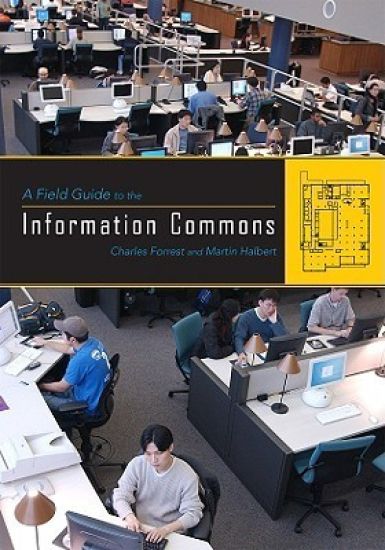
Our sources of information, and the practices we use to find it, are in a period of rapid flux. Libraries must respond by selecting, acquiring, and making accessible a host of new information resources, developing innovative services, and building different types of spaces to support changing user behaviors and patterns of learning. A Field Guide to the Information Commons describes an emerging library service model that embodies all three spheres of response: new information resources, collaborative service programs, and redesigned staff and user spaces. Technology has enabled new forms of information-seeking behavior and scholarship, causing a renovation of libraries that revisits the idea of the "commons"—a public place that is free to be used by everyone. A Field Guide to the Information Commons describes the emergence, growth, and adoption of the concept of the information commons in libraries. This book includes a variety of contributed articles, and descriptive, structured entries for various information commons in libraries across the country and around the world.
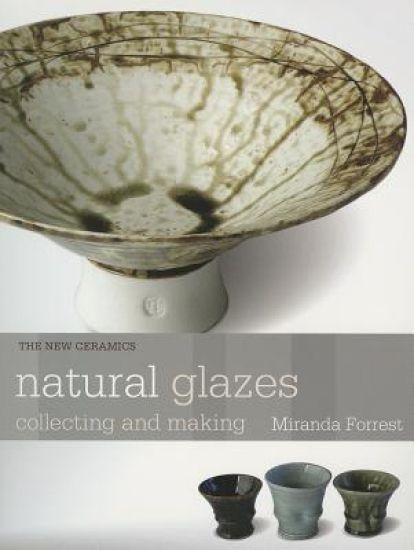
Like clay, all glaze materials come from the earth. Traditionally, stones, plants, and other natural materials provided the elements for ceramic surface decoration. In an age of synthetic and mass-produced glazes, handmade glazes from locally sourced ingredients allow artists to produce unique pieces that reflect their surrounding landscapes. In Natural Glazes, Miranda Forrest guides readers through the process of experimentation and discovery to make amazing hues from organic materials. Whether a glaze is mixed from scratch or local items are added to a commercial glaze, this concise book teaches the essential steps. A variety of glaze materials is available in any location, and Forrest shows artists how to recognize and gather appropriate ingredients and prepare them for blending. She explains how to work with vegetation and organic materials such as grass, wood, and seashells, giving step-by-step directions for mixing glazes and testing sample blends for optimal results. Natural Glazes covers application and firing techniques such as raku and offers health and environmental safety information. Natural Glazes contains full-color photographs of completed works, charts and tables providing firing times and other data, and insightful essays from other ceramic artists specializing in natural glaze work. Using found materials in glazes is a creative way to add a local touch to ceramics. With Natural Glazes, inspiration may be as close as your own backyard.
In this work Alan Forrest brings together some of the recent research on the Revolutionary army that has been undertaken on both sides of the Atlantic by younger historians, many of whom look to the influential work of Braudel for a model. Forrest places the armies of the Revolution in a broader social and political context by presenting the effects of war and militarization on French society and government in the Revolutionary period.Revolutionary idealists thought of the French soldier as a willing volunteer sacrificing himself for the principles of the Revolution; Forrest examines the convergence of these ideals with the ordinary, and often dreadful, experience of protracted warfare that the soldier endured.
Biblical Leadership takes the best of evangelical scholarship to make the leadership lessons of Scripture tangible for today's readers. All contributors are biblical scholars who not only think seriously about the texts covered in their individual chapters, but have committed their lives to teaching and living the truths therein. This volume walks through the sections of the Bible, gleaning insights from each biblical writer. Every chapter analyzes the original setting of the writing, extrapolates the leadership principles in the text, and provides advice on applying that theology of leadership. Presented in everyday language understandable to both professionals and practitioners, these lessons will equip current and upcoming leaders to make a Christlike impact.
A biblical theology of worship spanning both the Old and New Testaments While many books on worship focus on contemporary trends, Biblical Worship plumbs every book of the Bible to uncover its teaching on worship and then applies these insights to our lives and churches today. A team of respected evangelical scholars unearths insights into a variety of issues surrounding worship, including: The Old Testament concept of worshipWorship before the ExodusWorship in the Old Testament feasts and celebrationsWorship in the Psalms of Lament and Thanksgiving The New Testament concept of worshipWorship in the GospelsWorship in ActsWorship in the Pastoral Epistles, and much more. Pastors, worship leaders, instructors, and anyone who wants to grow in their knowledge of the Bible's full teaching on worship and how it applies today will benefit from this volume, part of the Biblical Theology for the Church series.