Kirjojen hintavertailu. Mukana 11 342 296 kirjaa ja 12 kauppaa.

Kirjahaku

Etsi kirjoja tekijän nimen, kirjan nimen tai ISBN:n perusteella.

1000 tulosta hakusanalla Frederick Locker

Narrative of the Life of Frederick Douglass, An American Slave
Published in 1845, this little book was widely read by the public in the North who knew little about the inner workings of slavery. It was favorably reviewed in the New York Tribune: "Considered merely as narrative, we have never read one more simple, true, coherent and warm with genuine feeling," and it had a great influence on public opinion across the Atlantic: "Taking all together, not less than one million of persons in Great Britain and Ireland have been excited by the book and its commentators." Here then is Douglass' powerful account of his journey, by way of determined self education, from slavery to being one of America's great statesmen and orators. Here then is Douglass' powerful account of his journey, by way of determined self education, from slavery to being one of America's great statesmen and orators.
Narrative of the Life of Frederick Douglass, An American Slave
Published in 1845, this little book was widely read by the public in the North who knew little about the inner workings of slavery. It was favorably reviewed in the New York Tribune: "Considered merely as narrative, we have never read one more simple, true, coherent and warm with genuine feeling," and it had a great influence on public opinion across the Atlantic: "Taking all together, not less than one million of persons in Great Britain and Ireland have been excited by the book and its commentators." Here then is Douglass' powerful account of his journey, by way of determined self education, from slavery to being one of America's great statesmen and orators. Here then is Douglass' powerful account of his journey, by way of determined self education, from slavery to being one of America's great statesmen and orators.
Narrative of the Life of Frederick Douglass, an American Slave
Do you want to read Narrative of the Life of Frederick Douglass, an American Slave? If so then keep reading...Former slave, impassioned abolitionist, brilliant writer, newspaper editor and eloquent orator whose speeches fired the abolitionist cause, Frederick Douglass (1818-1895) led an astounding life. Physical abuse, deprivation and tragedy plagued his early years, yet through sheer force of character he was able to overcome these obstacles to become a leading spokesman for his people. In this, the first and most frequently read of his three autobiographies, Douglass provides graphic descriptions of his childhood and horrifying experiences as a slave as well as a harrowing record of his dramatic escape to the North and eventual freedom. Published in 1845 to quell doubts about his origins - since few slaves of that period could write - the Narrative is admired today for its extraordinary passion, sensitive and vivid descriptions and storytelling power. It belongs in the library of anyone interested in African-American history and the life of one of the country's most courageous and influential champions of civil rights. A selection of the Common Core State Standards Initiative.What are you waiting for Narrative of the Life of Frederick Douglass, an American Slave is one click away, select the "Buy Now" button in the top right corner NOW
Narrative of the Life of Frederick Douglass

Narrative of the Life of Frederick Douglass

Frederick Douglass

Public Domain
2021
sidottu
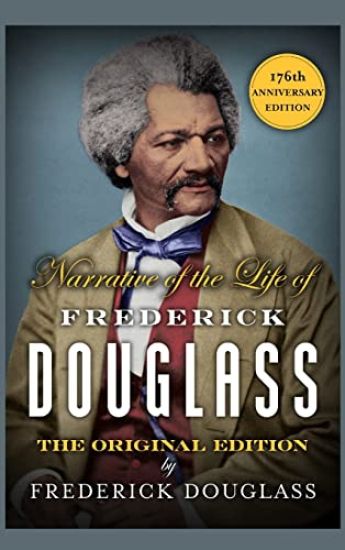
Narrative of the Life of Frederick Douglass: 176th Anniversary Edition (Illustrated)#1 OF THE TOP 10 BOOK OF ALL TIME - the story that moved millions and millions of readers with stark, naked stories of slavery as experienced by Frederick Douglass. Now you too can better understand the importance of equal rights from one of the most important books in human history.___________________________________________________________________________________- 176th Anniversary Edition -- this is the original version by Frederick douglass with the addition of illustrated images to better explain the meaning of this book.ABOUT THE AUTHORFrederick Douglass was the most important African American of the nineteenth century and one of the most significant writers and orators in American history.Douglass was born a slave and escaped at the age of twenty.He was Fortunate to have learned to read as a boy, and he would develop this skill forbidden to slaves to become one of the great writers of his era, in addition to becoming the most celebrated orator of the abolition movement.Over his lifetime he wrote three versions of his autobiography, all pf which are classics of the slave narrative and of American memoir.This former slave met with Lincoln in the White House and rejoiced in the victory of emancipation.He saw the promise of Reconstruction sashed by the resistance of former slaveholders and their allies, and he fought this betrayal as ferociously as he had fought slavery itself. As a lecturer he likely reached more listeners than any American of his century, and he lived with a modern dilemma of fame like few others of his era.Would you like to know more?Narrative of the Life of Frederick Douglass includes eleven chapters chronicling Douglass' life as a slave and his ambition to become a free man.Scroll up and click the "Add to Cart" button to receive your copy now.
Frederick Barbarossa

Frederick Barbarossa

G. A. Loud

REAKTION BOOKS
2025
sidottu
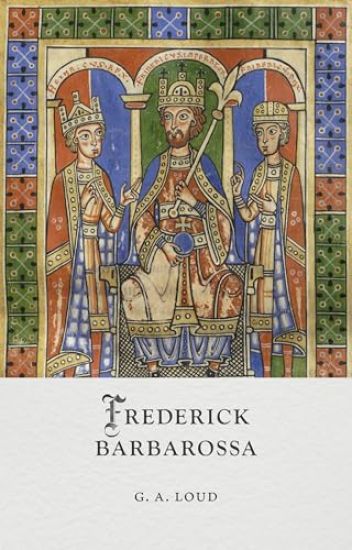
Frederick Barbarossa, also known as Frederick I, Holy Roman Emperor from 1155, was a dominant figure in late 12th-century European history. He is remembered as one of the greatest medieval German emperors; some even regard him as a German hero. He brought peace to Germany, fought to maintain control over Italian cities and engaged in a lengthy dispute with the papacy. Barbarossa died on a Crusade to reclaim the Holy Land for Christianity. But despite his efforts, his reign marked a decline in imperial authority, with defeats in Italy and growing local power among German princes. Frederick Barbarossa examines this paradox, revealing the realities and limitations of monarchical power in medieval Europe. This is a cogent, original and up-to-date analysis of Barbarossa, suitable for both students and the general reader.
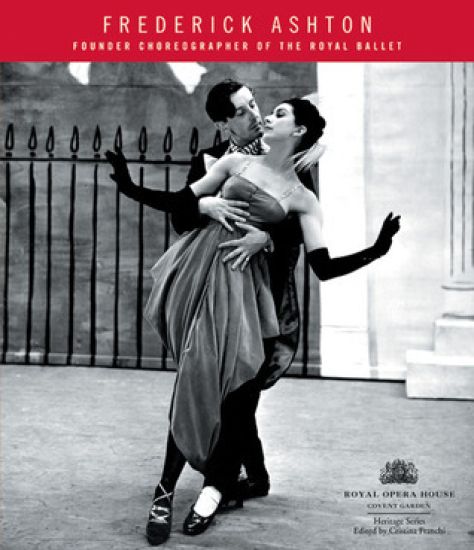
Frederick Ashton

Frederick Ashton

OBERON BOOKS
2005
nidottu
2004 marks the centenary of the birth of Frederick Ashton, Founder Choreographer of The Royal Ballet, whose work defined the English style of ballet. Inspired to dance by Anna Pavlova, encouraged by Ninette de Valois (Founder of the Royal Ballet), Ashton's career as dancer, choreographer and director, spans the Company's history from its earliest days. His influence is still seen today in the repertory and style that informs the Company, with ballets such as La Fille mal gard e, Ondine and Fa ade. This is the first of a series of books in the Royal Opera House Heritage Series, featuring a unique collection of images from the Royal Opera House Archives. The Series celebrates some of the legendary figures from the world of ballet and opera who have been associated with the Royal Opera House and its resident Companies, The Royal Ballet and The Royal Opera.
Frederick Douglass and the Atlantic World

Frederick Douglass and the Atlantic World

Fionnghuala Sweeney

LIVERPOOL UNIVERSITY PRESS
2008
sidottu
This book takes as its subject the effect of extraterritorial sites - Ireland, Haiti, Egypt - on Frederick Douglass' writing, self-construction, national, class and racial identity, and status as representative US American man. The most prolific African American writer of the nineteenth century embarked, after his escape from slavery in 1838, on a public career that would span the century and three continents. The narrative of his life in slavery remains a seminal work in the literary and historical canons of the United States, and has recently been included in the corpus of the American Renaissance. Much critical attention has been placed on Douglass' activities within the United States, his effect on socio-political reform, and relationship to an oppressed and marginalized community of African Americans. Yet much of his literary and political development occurred outside the United States. This innovative book focuses specifically on Douglass' Atlantic encounters, literal and literary, against the backdrop of slavery, emancipation, and western colonial process. Sweeney's study will be of interest to those working in the fields of history, literature and cultural studies; to scholars of Douglass; those interested in American and Irish Studies, Black Atlantic studies and postcolonialism; and those engaged in critical work on the literary and historical implications of the United States as empire.
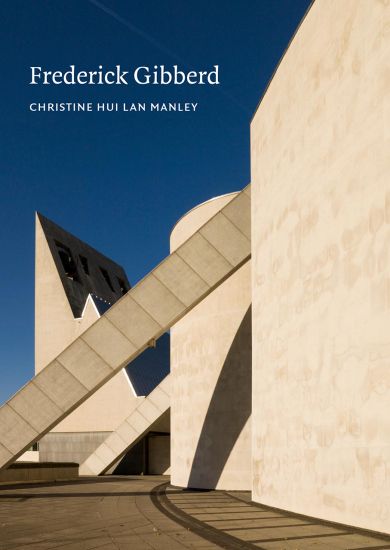
Frederick Gibberd

Frederick Gibberd

Christine Hui Lan Manley

Historic England
2017
nidottu
This book gives, for the first time, a comprehensive account of the works of architect, town planner and landscape architect, Sir Frederick Gibberd. At the beginning of his diverse and far-reaching career, Gibberd was a pioneer of modern architecture in Britain – he designed Pullman Court in 1933, one of the first International Style buildings in the country. His association with the Modern Architectural Research (MARS) Group and his influential publications put him at the forefront of the establishment of modern architecture in Britain. During the 1940s, however, Gibberd’s interest shifted to the aesthetics of English market towns and Georgian streets; his diaries reveal a belief that the Modern Movement had ‘done its job’, allowing architects to consider the visual, rather than functional qualities of materials, colour and texture. After the Second World War, his master plan for Harlow New Town and his influential book Town Design conveyed his growing interest in ‘visual planning’; he had become an international authority on the subject. His later projects, Liverpool Metropolitan Cathedral (1967) and Regent’s Park Mosque (1977) for example, also reflected his aesthetic approach, prompting many to question his role as a key figure in the history of modern British architecture. This reassessment of Gibberd’s work demonstrates, that with his visual approach to the design of buildings, spaces, townscapes and landscapes, Gibberd was at the forefront of the development of a softer, distinctly English form of modern architecture and town planning, thus, reaffirming his role as a significant architect of the 20th century.
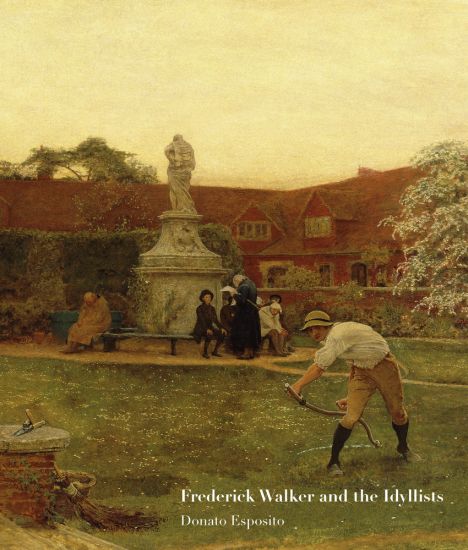
Frederick Walker and the Idyllists

Frederick Walker and the Idyllists

Donato Esposito

Lund Humphries Publishers Ltd
2017
sidottu
This is the first book in over a century to examine the important work of the watercolour artist and illustrator Frederick Walker (1840–1875) and his closest artistic allies. He was greatly admired (and collected) by Vincent van Gogh and was described by Millais as ‘the greatest artist of the century’ and yet his premature death at the age of 35 cut short his promising career. Walker, together with his close friends George John Pinwell (1842–1875) and John William North (1842–1924), forged new artistic identities that sought the perfection of the world around them and the distillation of beauty from seemingly mundane subjects.Donato Esposito focuses successive chapters on the lives and works of each of the core members of Walker’s group, charting their unconventional journey from a loosely bound collective rooted in the London-based black-and-white world of commercial illustration to a renowned grouping known as the Idyllists, respected and eagerly collected by galleries and private individuals in Europe, America and Australia.The book, which reproduces many of the Idyllists’ works in colour for the first time, represents a vital contribution to the literature on Victorian art and restores the Idyllists to their rightful place in the history of British 19th-century art.
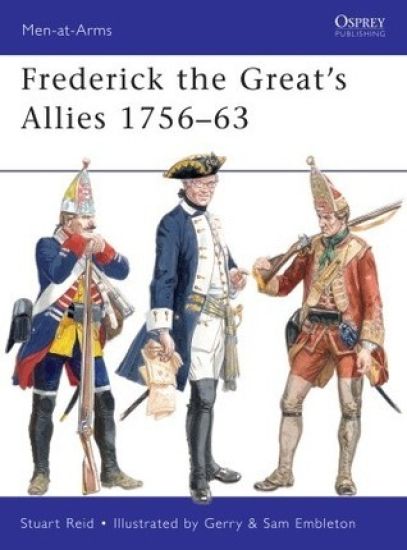
Frederick the Great’s Allies 1756–63

Frederick the Great’s Allies 1756–63

Stuart Reid

Osprey Publishing
2010
nidottu
The Seven Years' War in Germany was characterised by an increasing use of 'light' troops in conjunction with regular infantry and cavalry as part of an ongoing evolution in military tactics. This book draws attention to these tactical developments and also provides an analysis of the allied army that fought alongside Frederick the Great in Germany. Composed of troops from the electorate of Hanover and contingents from Hessen-Kassel, Brunswick and Prussia, this force was funded by Britain and led by a Prussian officer, Prince Ferdinand of Brunswick. Later, British troops joined this army as it operated throughout western Germany, and together the allied army won a great victory at the famous battle of Minden in 1759.
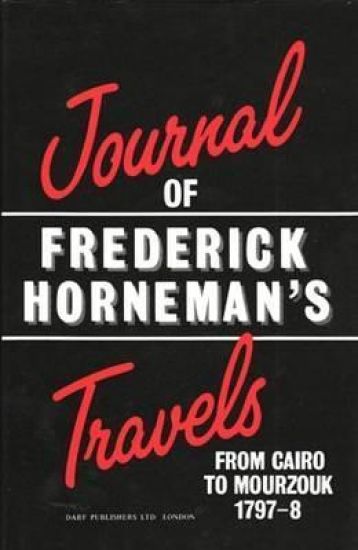
The Journal of Frederick Horneman's Travels from Cairo to Mourzouk
The African Society was formed in 1788 'for the purpose of exploring the interior of Africa'. Among the explorers they sponsored was the great Mungo Park, who followed the course of the Niger. Another was the young German, Frederick Horneman, 'robust, and, in point of constitution and health, suited to a struggle with different climates and fatigues'. Setting out from Cairo in September 1797, Horneman joins a caravan bound for Mourzoul (Marzuq) in the heart of the Libyan desert, the Fezzan. To read the contemporary account of his journey is to savour the sense of awe and wonder under which such expeditions set forth. To Europeans the African interior was then as mysterious and remote as any of the planets in our solar system, and the strangeness of the inhabitants no less wondrous than a being from another world. Charged with recording his journey in detail, Horneman visits places 'the very existence of which, for centuries past, has been rather a matter of rumour than of information...'. Despite the appalling hardship he succeeds in reaching his destination, Mourzouk, in November 1798. Eager to press on, Horneman's plans are thwarted by illness and the ever-present threat of violence against one who is seen as an unbeliever. On the death of his servant, Horneman returns via Tripoli, all the while taking meticulous notes on every aspect of life and custom amongst the people he meets. Topographical cartographic data is also noted, from which the beautifully detailed maps that appear in this work are drawn. Though less well-known than many of his contemporary explorers, Horneman's travels are worthy of reappraisal, and this fine facsimile edition will help bring his work within reach of a wider readership.
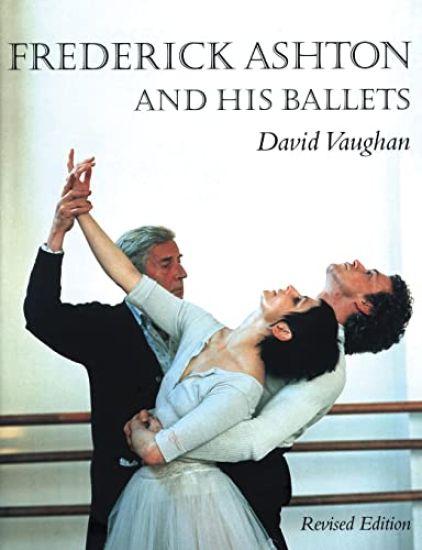
Frederick Ashton and His Ballets

Frederick Ashton and His Ballets

David Vaughan

DANCE BOOKS LTD
2022
pokkari
Sir Frederick Ashton (1904 - 1988) remains one of the great figures of twentieth-century ballet, whose place in British ballet is comparable to Balanchine's in America. Ashton's choreographic career began in 1926, when his first ballet was presented as part of a London revue. In this book, David Vaughan traces that entire career, during which Ashton became first a leading dancer and choreographer, and later Director of the Royal Ballet.Ashton created more than eighty ballets, as well as innumerable smaller works, including dances for operas, musical comedies, and films. Vaughan follows Ashton's development through this immensely creative life, from early works such as Facade and Les Rendezvous, to such masterpieces of his maturity as Symphonic Variations, Scenes de ballet, Daphnis and Chloe, La Fille mal gard e, The Dream, Enigma Variations, and A Month in the Country. Each of his important ballets is described and analysed in detail, and most are illustrated, with over 260 drawings and photographs.As a parallel theme to the accomplishments of this one master, the history of British ballet is presented, from its humble beginnings in the 1920s and 1930s through to the late twentieth century - a story in which Ashton played a crucial part as the choreographer whose works have formed and defined what has come to be recognised as the English style of classical ballet.Finally, though the book is not a biography in the conventional sense, a picture emerges of a wise and witty man, the most modest of geniuses, beloved by all who worked with him.David Vaughan's Frederick Ashton and his Ballets, originally published in 1977 and long unavailable, remains the definitive chronicle of Ashton's choreographic career. This revised edition of Vaughan's seminal work includes a new final chapter and an updated chronology of work, and is an essential book both for historians of twentieth-century ballet and for lover of Ashton's work.