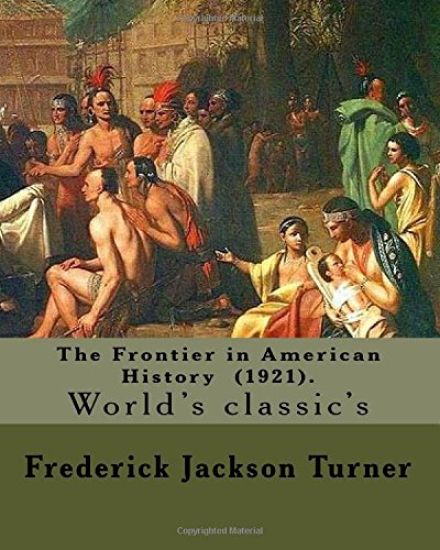
Frederick Jackson Turner (November 14, 1861 - March 14, 1932) was an American historian in the early 20th century, based at the University of Wisconsin until 1910, and then at Harvard. He trained many PhDs who came to occupy prominent places in the history profession. He promoted interdisciplinary and quantitative methods, often with a focus on the Midwest. He is best known for his essay "The Significance of the Frontier in American History", whose ideas formed the Frontier Thesis. He argued that the moving western frontier shaped American democracy and the American character from the colonial era until 1890. He is also known for his theories of geographical sectionalism. In recent years historians and academics have argued strenuously over Turner's work; all agree that the Frontier Thesis has had an enormous impact on historical scholarship and the American mind. Early life, education, and career: Born in Portage, Wisconsin, the son of Andrew Jackson Turner and Mary Olivia Hanford Turner, Turner grew up in a middle-class family. His father was active in Republican politics, an investor in the railroad, and was a newspaper editor and publisher. His mother taught school.Turner was very much influenced by the writing of Ralph Waldo Emerson, a poet known for his focus on nature; so too was Turner influenced by scientists such as Charles Darwin, Herbert Spencer, and Julian Huxley, and the development of Cartography.He graduated from the University of Wisconsin (now University of Wisconsin-Madison) in 1884, where he was a member of Phi Kappa Psi Fraternity. He earned his Ph.D. in history from Johns Hopkins University in 1890 with a thesis on the Wisconsin fur trade, titled "The Character and Influence of the Indian Trade in Wisconsin", directed by Herbert Baxter Adams. Turner did not publish extensively; his influence came from tersely expressed interpretive theories (published in articles), which influenced his hundreds of disciples. Two theories in particular were influential, the "Frontier Thesis" and the "Sectional Hypothesis". Although he published little, he did more research than almost anyone and had an encyclopedic knowledge of American history, earning a reputation by 1910 as one of the two or three most influential historians in the country. He proved adept at promoting his ideas and his students, whom he systematically placed in leading universities, including Merle Curti and Marcus Lee Hansen. He circulated copies of his essays and lectures to important scholars and literary figures, published extensively in highbrow magazines, recycled favorite material, attaining the largest possible audience for key concepts, and wielded considerable influence within the American Historical Association as an officer and advisor for the American Historical Review. His emphasis on the importance of the frontier in shaping American character influenced the interpretation found in thousands of scholarly histories. By the time Turner died in 1932, 60% of the leading history departments in the U.S. were teaching courses in frontier history along Turnerian lines. Annoyed by the university regents who demanded less research and more teaching and state service, Turner sought out an environment that would support research. Declining offers from California, he accepted a call to Harvard in 1910 and remained a professor there until 1922, being succeeded in 1924 by Arthur M. Schlesinger, Sr. In 1907 Turner was elected a member of the American Antiquarian Society, and in 1911 he was elected a fellow of the American Academy of Arts and Sciences. Turner was never comfortable at Harvard; when he retired in 1922 he became a visiting scholar at the Huntington Library in Los Angeles, where his note cards and files continued to pile up, although few monographs got published. His The Frontier in American History (1920) was a collection of older essays....
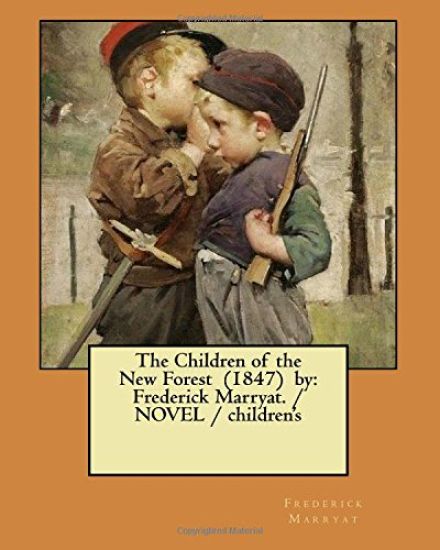
The Children of the New Forest is a children's novel published in 1847 by Frederick Marryat. It is set in the time of the English Civil War and the Commonwealth. The story follows the fortunes of the four Beverley children who are orphaned during the war, and hide from their Roundhead oppressors in the shelter of the New Forest where they learn to live off the land.
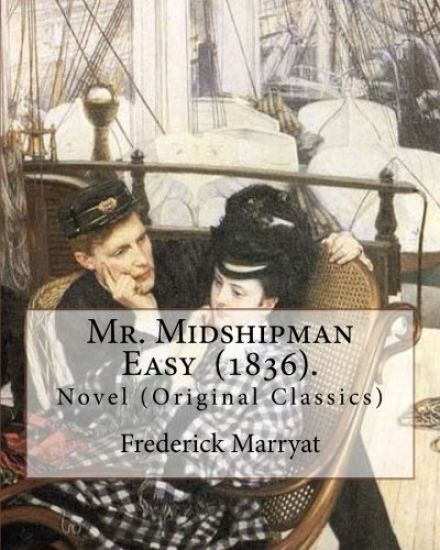
Mr. Midshipman Easy is an 1836 novel by Frederick Marryat, a retired captain in the Royal Navy. The novel is set during the Napoleonic Wars, in which Marryat himself served with distinction. Plot summary: Easy is the son of foolish parents, who spoiled him. His father, in particular, regards himself as a philosopher, with a firm belief in the "rights of man, equality, and all that; how every person was born to inherit his share of the earth, a right at present only admitted to a certain length that is, about six feet, for we all inherit our graves, and are allowed to take possession without dispute. But no one would listen to Mr Easy's philosophy. The women would not acknowledge the rights of men, whom they declared always to be in the wrong; and, as the gentlemen who visited Mr Easy were all men of property, they could not perceive the advantages of sharing with those who had none. However, they allowed him to discuss the question, while they discussed his port wine. The wine was good, if the arguments were not, and we must take things as we find them in this world." By the time he is a teenager Easy has adopted his father's point of view, to the point where he no longer believes in private property. Easy joins the navy, which his father believes to be the best example of an equal society, and Easy becomes friendly with a lower deck seaman named Mesty (Mephistopheles Faust), an escaped slave, who had been a prince in Africa. Mesty is sympathetic to Easy's philosophizing, which seems to offer him a way up from his lowly job of "boiling kettle for de young gentlemen"; but once Mesty is promoted to ship's corporal and put in charge of discipline, he changes his mind: "...now I tink a good deal lately, and by all de power, I tink equality all stuff." "All stuff, Mesty, why? you used to think otherwise." "Yes, Massa Easy, but den I boil de kettle for all young gentleman. Now dat I ship's corporal and hab cane, I tink so no longer." In some way Mesty is the real hero of the novel, as he pulls Easy out of several scrapes the impulsive 17-year-old gets himself into as he cruises the Mediterranean on several British ships. Easy becomes a competent officer, in spite of his notions. Easy's mother dies, and he returns home to find his father is completely mad. Easy senior has developed an apparatus for reducing or enlarging phrenological bumps on the skull, but as he attempts to reduce his own benevolence bump, the machine kills him. Easy throws out the criminal servants his father has employed and puts the estate to rights, demanding back rents from the tenants, and evicting those who will not pay. Using his new-found wealth, he formally quits the navy, rigs out his own privateering vessel, and returns to Sicily to claim his bride Agnes. As he is a wealthy gentleman now, no longer a junior midshipman, her family cannot refuse him, and he and Agnes live happily ever after...... Captain Frederick Marryat (10 July 1792 - 9 August 1848) was a British Royal Navy officer, a novelist, and an acquaintance of Charles Dickens. He is noted today as an early pioneer of the sea story, particularly for his semi-autobiographical novel Mr Midshipman Easy (1836), for his children's novel The Children of the New Forest (1847), and for a widely used system of maritime flag signalling, known as Marryat's Code. Early life and naval career: Marryat was born in Great George Street, Westminster, London, the son of Joseph Marryat (1757-1824), a "merchant prince" and member of Parliament, and his American wife Charlotte, n e von Geyer. After trying to run away to sea several times, Marryat was permitted to enter the Royal Navy in 1806 as a midshipman on board HMS Imperieuse, a frigate commanded by Lord Cochrane (who later served as inspiration for Marryat as well as other authors)....
Captain Frederick Marryat (July 10, 1792 - August 9, 1848) was an English novelist, a contemporary and acquaintance of Charles Dickens, noted today as an early pioneer of the sea story.... Captain Frederick Marryat (10 July 1792 - 9 August 1848) was a British Royal Navy officer, a novelist, and an acquaintance of Charles Dickens. He is noted today as an early pioneer of the sea story, particularly for his semi-autobiographical novel Mr Midshipman Easy (1836), for his children's novel The Children of the New Forest (1847), and for a widely used system of maritime flag signalling, known as Marryat's Code. Early life and naval career: Marryat was born in Great George Street, Westminster, London, the son of Joseph Marryat (1757-1824), a "merchant prince" and member of Parliament, and his American wife Charlotte, n e von Geyer. After trying to run away to sea several times, Marryat was permitted to enter the Royal Navy in 1806 as a midshipman on board HMS Imperieuse, a frigate commanded by Lord Cochrane (who later served as inspiration for Marryat as well as other authors). Marryat's time aboard the Imperieuse included action off the Gironde, the rescue of a fellow midshipman who had fallen overboard, captures of many ships off the Mediterranean coast of Spain, and the capture of the castle of Montgat. The Imperieuse shifted to operations in the Scheldt in 1809, where Marryat contracted malaria; he returned to England on the 74-gun HMS Victorious. After recuperating, Marryat returned to the Mediterranean in the 74-gun HMS Centaur and again saved a shipmate by leaping into the sea after him. He then sailed as a passenger to Bermuda in the 64-gun HMS Atlas, and from there to Halifax, Nova Scotia on the schooner HMS Chubb, where he joined the 32-gun frigate HMS Aeolus on 27 April 1811. A few months later, Marryat again earned distinction by leading the effort to cut away the Aeolus's mainyard to save the ship during a storm and, continuing a pattern, he also saved one of the men from the sea. Shortly thereafter, he moved to the frigate HMS Spartan, participating in the capture of a number of American ships (the War of 1812 having begun). On 26 December 1812, he was promoted to lieutenant, and as such served in the sloop HMS Espiegle and in HMS Newcastle. Marryat led four barges from the latter ship on a punishing raid to Orleans, Massachusetts on December 19, 1814, the last combat in New England during the war. The affair had mixed results. Initially, Marryat cut out an American schooner and three sloops, but managed to escape with just one sloop. The local militia avoided casualties while killing one Royal marine. He was promoted to commander on 13 June 1815, just as peace broke out.......... From 1832 to 1835, Marryat edited The Metropolitan Magazine.Additionally, he kept producing novels; his biggest success came with Mr Midshipman Easy in 1836. He lived in Brussels for a year, travelled in Canada and the United States, then moved to London in 1839, where he was in the literary circle of Charles Dickens and others. He was in North America in 1837 when the Rebellion of that year broke out in Lower Canada, and served with the British forces in suppressing it. Marryat was named a Fellow of the Royal Society in recognition of his invention and other achievements. In 1843, he moved to a small farm at Manor Cottage in Norfolk, where he died in 1848. His daughter Florence Marryat later became well known as a writer and actress. His son Francis Samuel Marryat completed his late novel The Little Savage...........
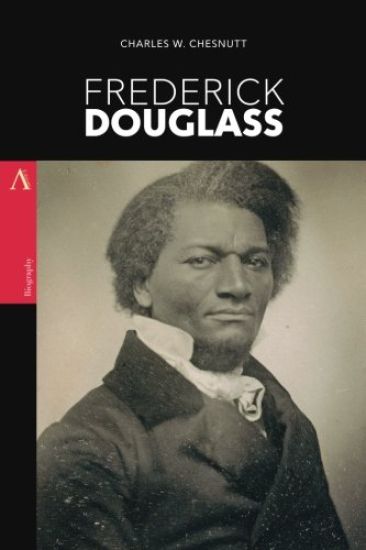
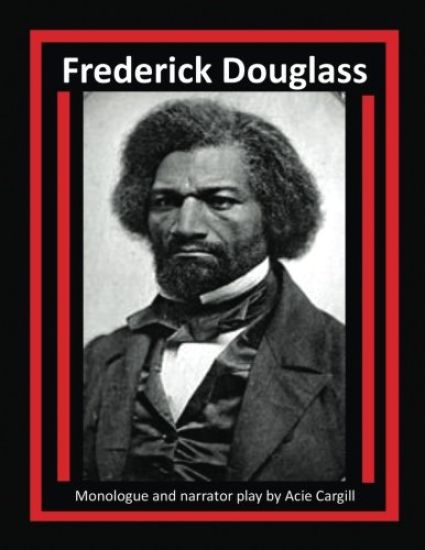
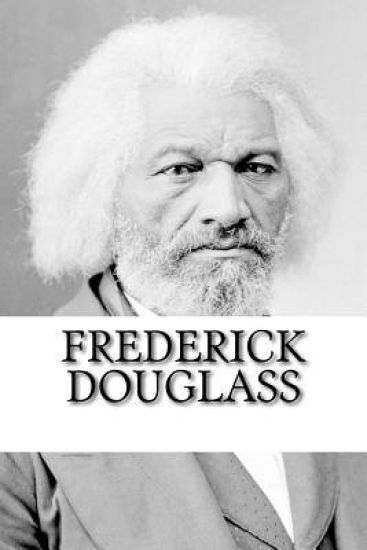
This is a 3500 word play especially suitable for a staged reading. It features the words and wisdom of Frederick Douglass, an escaped slave who became an orator and author. He presented the plight of the slave better than any abolitionist who had never experienced slavery. He became a conductor on the Underground Railroad and befriended other abolitionists and rights workers such as Wendell Phillips, John Brown, Harriet Tubman, Sojourner Truth, Ida B. Wells, and Susan B. Anthony, with whom he shared many stages speaking for women's right to vote. Douglass was called upon for his advice by President Abraham Lincoln and later received presidential appointments to government positions including ambassador to Haiti. He was a brilliant, persuasive speaker and writer and was in high demand for appearances throughout the northern United States and In Britain. His works will live forever as a testament of this period transitioning slavery and freedom. This play is but a small tribute to a great man.
Lieutenant-Colonel John Henry Patterson, (10 November 1867 - 18 June 1947), known as J. H. Patterson, was an Irish born British soldier, hunter, author and Christian Zionist, best known for his book The Man-Eaters of Tsavo (1907), which details his experiences while building a railway bridge over the Tsavo river in British East Africa (now Kenya) in 1898-99. The book has inspired three Hollywood films - Bwana Devil (1952), Killers of Kilimanjaro (1959) and The Ghost and the Darkness (1996) in which he was portrayed by Val Kilmer. In the First World War, Patterson was the commander of the Jewish Legion, "the first Jewish fighting force in nearly two millennia", and has been described as the godfather of the modern Israel Defense Forces.Patterson was born in 1867 in Forgney, Ballymahon, County Longford, Ireland, to a Protestant father and Roman Catholic mother. He joined the British Army at the age of seventeen and eventually attained the rank of Lieutenant-Colonel 2] and was awarded the DSO. He finally retired from the military in 1920.
La Souabe est une des r gions les plus po tiques de l'Allemagne. Contigu la Suisse par sa fronti re m ridionale, ses sites la reproduisent en miniature. Les torrents de ses vall es n' tourdissent point le laboureur. Dans la belle saison, leur courant diaphane voile peine le sol; ils g missent doucement contre les roches anguleuses qui g nent leur marche, et leur voix m lancolique r sonne travers les for ts, comme le chant d'un orgue lointain. Les basses terres et pentes vineuses sont les seuls endroits que l'on cultive. Les hauteurs ont gard leur physionomie originelle, et cette nature sauvage, formant contraste avec une nature moins rude, oppose les harmonies du d sert aux gr ces de la civilisation. Dans la plaine, des chaumi res fumantes, des bl s ondoyants, un villageois qui b che et fredonne quelque antique ballade; sur la montagne, le cri du lammergeier, et les pointes granitiques dress es au milieu des arbres, comme un pic au milieu des flots. Une tour presque d truite charge ordinairement leur cime. Par ses crois es b antes, on aper oit vers le midi une longue cha ne de glaciers. Leur ternelle p leur rehausse les noirs sommets qui les pr c dent, et, comme l'id e de la mort dans les festins antiques, augmente le charme du tableau d ploy devant vous. Plusieurs fois j'ai vu l'orage envelopper le Schwartzwald et redoubler la nuit de ses for ts. Le tonnerre planait sur elles, ainsi qu'un envoy du Seigneur en courroux. Mais tandis que le vent remuait les pins et fouettait les nuages, les blouissants pitons de la Suisse conservaient toute leur s r nit . A leur inalt rable magnificence on e t dit une rang e de blanches d esses attir es par cette lugubre f le...
== Special Edition for Low Vision Readers ==A detailed account of the brutal battle near Sharpsburg, Maryland on September 17, 1862, which was the bloodiest single-day battle in American history. About Super Large PrintAll our books are published with a font designed for maximum readability at twice the size of traditional Large Print books. You can see a sample of it at our website superlargeprint.com To view all our books available on Amazon, click the link for Super Large Print above, where it says (Author) for more information visit: superlargeprint.com KEEP ON READING
In the month of August, 1841, I attended an anti-slavery convention in Nantucket, at which it was my happiness to become acquainted with FREDERICK DOUGLASS, the writer of the following Narrative. He was a stranger to nearly every member of that body; but, having recently made his escape from the southern prison-house of bondage, and feeling his curiosity excited to ascertain the principles and measures of the abolitionists, -of whom he had heard a somewhat vague description while he was a slave, -he was induced to give his attendance, on the occasion alluded to, though at that time a resident in New Bedfor
This Autobiography of Frederick Douglass is an 1845 memoir and treatise on abolition written by famous orator and former slave Frederick Douglass. It is generally held to be the most famous of a number of narratives written by former slaves during the same period. In factual detail, the text describes the events of his life and is considered to be one of the most influential pieces of literature to fuel the abolitionist movement of the early 19th century in the United States. This piece encompasses eleven chapters that recount Douglass's life as a slave and his ambition to become a free man.
A collection of the three most famous Black History Biographies: Narrative of the Life of Frederick Douglass, Up from Slavery, and The Souls of Black Folk.
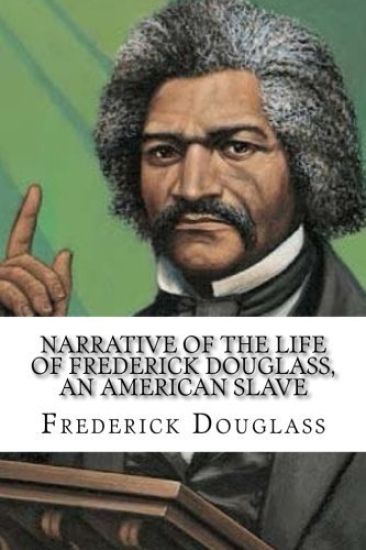
Narrative of the Life of Frederick Douglass is an 1845 memoir and treatise on abolition written by famous orator and former slave Frederick Douglass. It is generally held to be the most famous of a number of narratives written by former slaves during the same period. In factual detail, the text describes the events of his life and is considered to be one of the most influential pieces of literature to fuel the abolitionist movement of the early 19th century in the United States. Narrative of the Life of Frederick Douglass encompasses eleven chapters that recount Douglass's life as a slave and his ambition to become a free man.
ABOUT NARRATIVE OF THE LIFE OF FREDERICK DOUGLASS, AN AMERICAN SLAVE Frederick Douglass's dramatic autobiographical account of his early life as a slave in America. Born into a life of bondage, Frederick Douglass secretly taught himself to read and write. It was a crime punishable by death, but it resulted in one of the most eloquent indictments of slavery ever recorded. His gripping narrative takes us into the fields, cabins, and manors of pre-Civil War plantations in the South and reveals the daily terrors he suffered as a slave. Written more than a century and a half ago by an African-American who went on to become a famous orator, U.S. minister to Haiti, and leader of his people, this timeless classic still speaks directly to our age. It is a record of savagery and inhumanity that goes far to explain why America still suffers from the great injustices of the past.
Do you want to read Narrative of the Life of Frederick Douglass, an American Slave? If so then keep reading... Former slave, impassioned abolitionist, brilliant writer, newspaper editor and eloquent orator whose speeches fired the abolitionist cause, Frederick Douglass (1818-1895) led an astounding life. Physical abuse, deprivation and tragedy plagued his early years, yet through sheer force of character he was able to overcome these obstacles to become a leading spokesman for his people. In this, the first and most frequently read of his three autobiographies, Douglass provides graphic descriptions of his childhood and horrifying experiences as a slave as well as a harrowing record of his dramatic escape to the North and eventual freedom. Published in 1845 to quell doubts about his origins -- since few slaves of that period could write -- the Narrative is admired today for its extraordinary passion, sensitive and vivid descriptions and storytelling power. It belongs in the library of anyone interested in African-American history and the life of one of the country's most courageous and influential champions of civil rights. A selection of the Common Core State Standards Initiative. What are you waiting for Narrative of the Life of Frederick Douglass, an American Slave is one click away, select the "Buy Now" button in the top right corner NOW