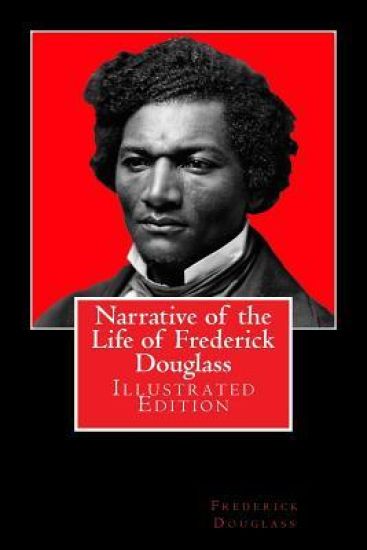
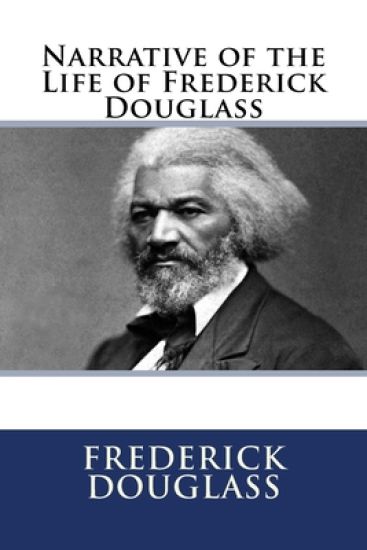
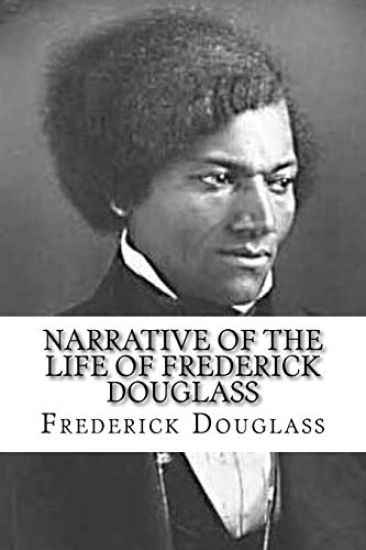
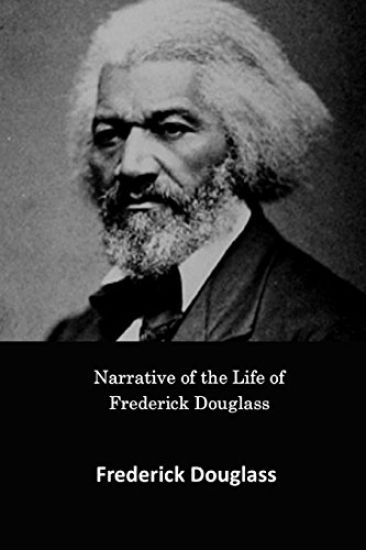
Narrative of the Life of Frederick Douglass is a memoir and treatise on abolition written by famous orator and ex-slave, Frederick Douglass. It is generally held to be the most famous of a number of narratives written by former slaves during the same period. In factual detail, the text describes the events of his life and is considered to be one of the most influential pieces of literature to fuel the abolitionist movement of the early 19th century in the United States.
Narrative of the Life of Frederick Douglass is an 1845 memoir and treatise on abolition written by famous orator and former slave Frederick Douglass. It is generally held to be the most famous of a number of narratives written by former slaves during the same period. The text describes the events of his life and is considered to be one of the most influential pieces of literature to fuel the abolitionist movement of the early 19th century in the United States.Narrative of the Life of Frederick Douglass encompasses eleven chapters that recount Douglass's life as a slave and his ambition to become a free man.Illustrated Edition includes period related historical pictures.
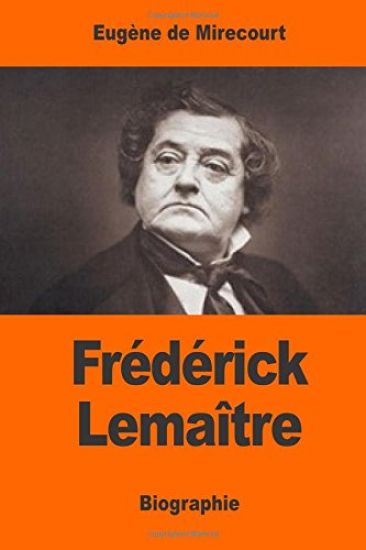
" Nous sommes en pr sence du g nie le plus original et le plus excentrique du si cle. Pour peindre Fr d rick Lema tre, il faudrait avoir la fois en main le crayon de Jacques Callot et le pinceau de Van Dyck, la plume de Lesage et celle de Plutarque. Ici, la caricature se m le au tableau, le grotesque se fond avec le sublime, et, - chose bizarre - on se demande si ce m lange n' tait pas n cessaire pour donner au th tre moderne un digne interpr te. Notez, s'il vous pla t, que nous n'avons pas l'intention de faire une pigramme. Ainsi que le Prot e mythologique, l'art a des m tamorphoses sans nombre. Il se r v le sous le haillon comme sous la pourpre; il peut tour tour avoir pour pi destal l'or ou la fange, et passer du rayonnement aux t n bres sans tre d sh rit de l'admiration, sans rien perdre de ses droits l' loge. L'histoire tout enti re de Fr d rick Lema tre est l pour appuyer cette remarque. Il est n au Havre, le 21 juillet 1800, d'un p re architecte..."
Former slave, impassioned abolitionist, brilliant writer, newspaper editor and eloquent orator whose speeches fired the abolitionist cause, Frederick Douglass (1818-1895) led an astounding life. Physical abuse, deprivation and tragedy plagued his early years, yet through sheer force of character he was able to overcome these obstacles to become a leading spokesman for his people.In this, the first and most frequently read of his three autobiographies, Douglass provides graphic descriptions of his childhood and horrifying experiences as a slave as well as a harrowing record of his dramatic escape to the North and eventual freedom.Published in 1845 to quell doubts about his origins - since few slaves of that period could write - the Narrative is admired today for its extraordinary passion, sensitive and vivid descriptions and storytelling power. It belongs in the library of anyone interested in African-American history and the life of one of the country's most courageous and influential champions of civil rights. A selection of the Common Core State Standards Initiative.
Uncle Remus is the fictional title character and narrator of a collection of African-American folktales adapted and compiled by Joel Chandler Harris, published in book form in 1881. A journalist in post-Reconstruction Atlanta, Georgia, Harris produced seven Uncle Remus books. Harris wanted to show that life in the Southern United States was hard and they did struggle a lot. The term that comes along with this is "folk uncanny". 1] Harris wrote these stories to represent the struggle in the Southern United States, more specifically, in the plantations. He did so, by introducing tales he had heard and framing them in the plantation context. These stories were written in a dialect that represented the voice of the narrators and their subculture. It is for this choice of framing that his collection has led to controversy.Uncle Remus is a collection of animal stories, songs, and oral folklore, collected from southern African Americans. Many of the stories are didactic, much like those of Aesop's Fables and Jean de La Fontaine's stories. Uncle Remus is a kindly old freedman who serves as a storytelling device, passing on the folktales to children gathered around him. The stories are written in an eye dialect devised by Harris to represent a Deep South Gullah dialect. The genre of stories is the trickster tale. At the time of Harris's publication, his work was praised for its ability to capture plantation Negro dialect. 3] Br'er Rabbit ("Brother Rabbit") is the main character of the stories, a likable character, prone to tricks and trouble-making, who is often opposed by Br'er Fox and Br'er Bear. In one tale, Br'er Fox constructs a lump of tar and puts clothing on it. When Br'er Rabbit comes along, he addresses the "tar baby" amiably but receives no response. Br'er Rabbit becomes offended by what he perceives as Tar Baby's lack of manners, punches it, and becomes stuck........ Joel Chandler Harris (December 9, 1848 - July 3, 1908) was an American journalist, fiction writer, and folklorist best known for his collection of Uncle Remus stories. Harris was born in Eatonton, Georgia, where he served as an apprentice on a plantation during his teenage years. He spent most of his adult life in Atlanta working as an associate editor at the Atlanta Constitution...... Arthur Burdett Frost (January 17, 1851 - June 22, 1928), usually cited as A. B. Frost, was an American illustrator, graphic artist and comics writer. He was also well known as a painter. Frost's work is well known for its dynamic representation of motion and sequence. Frost is considered one of the great illustrators in the "Golden Age of American Illustration". Frost illustrated over 90 books and produced hundreds of paintings; in addition to his work in illustrations, he is renowned for realistic hunting and shooting prints..... James Henry Moser Also Known as: J. H. Moser Born: Whitby, Ontario, Canada 1854 Died: Washington, District of Columbia 1913 Active in: West Cornwall, Connecticut.
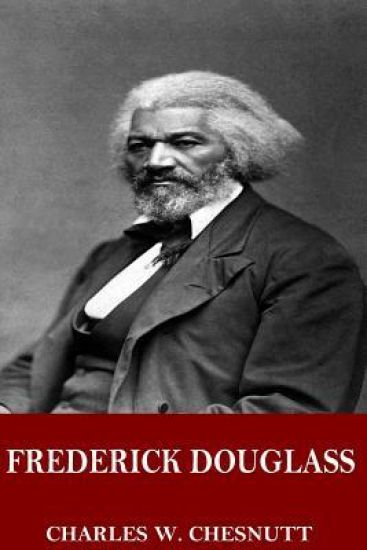
THE BOOKOriginally published in 1845, Narrative of the Life of Frederick Douglass: An American Slave is a memoir and treatise on abolition written by famous orator and former slave Frederick Douglass. It was influential in promoting the cause of abolition. THE AUTHOR "The most influential African American of the nineteenth century, Douglass made a career of agitating the American conscience. He spoke and wrote on behalf of a variety of reform causes: women's rights, temperance, peace, land reform, free public education, and the abolition of capital punishment. But he devoted the bulk of his time, immense talent, and boundless energy to ending slavery and gaining equal rights for African Americans. These were the central concerns of his long reform career. Douglass understood that the struggle for emancipation and equality demanded forceful, persistent, and unyielding agitation. And he recognized that African Americans must play a conspicuous role in that struggle. Less than a month before his death, when a young black man solicited his advice to an African American just starting out in the world, Douglass replied without hesitation: "Agitate Agitate Agitate " -- Roy Finkenbine Frederick Douglass (born Frederick Augustus Washington Bailey; c. February 1818 - February 20, 1895) was an American social reformer, abolitionist, orator, writer, and statesman. After escaping from slavery in Maryland, he became a national leader of the abolitionist movement (or anti-slavement movement) in Massachusetts and New York, gaining note for his oratory and incisive antislavery writings. In his time, he was described by abolitionists as a living counter-example to slaveholders' arguments that slaves lacked the intellectual capacity to function as independent American citizens. Northerners at the time found it hard to believe that such a great orator had once been a slave.Douglass wrote several autobiographies. He described his experiences as a slave in his 1845 autobiography, Narrative of the Life of Frederick Douglass, an American Slave, which became a bestseller, and was influential in promoting the cause of abolition, as was his second book, My Bondage and My Freedom (1855). After the Civil War, Douglass remained an active campaigner against slavery and wrote his last autobiography, Life and Times of Frederick Douglass. First published in 1881 and revised in 1892, three years before his death, it covered events during and after the Civil War. Douglass also actively supported women's suffrage, and held several public offices. Without his approval, Douglass became the first African American nominated for Vice President of the United States as the running mate and Vice Presidential nominee of Victoria Woodhull, on the Equal Rights Party ticket.Douglass was a firm believer in the equality of all peoples, whether white, black, female, Native American, or Chinese immigrants. He was also a believer in dialogue and in making alliances across racial and ideological divides, and in the liberal values of the U.S. Constitution. When radical abolitionists, under the motto "No Union with Slaveholders", criticized Douglass' willingness to engage in dialogue with slave owners, he replied: "I would unite with anybody to do right and with nobody to do wrong."
Of the many captivity stories or 'slave narratives' that emerged in the first half of the nineteenth century, the Narrative of the Life of Frederick Douglass is widely considered to be the most important. The author, known for his eloquence, brings the same mastery of the English language to his memoir. His book describes the events of his life and is considered to be one of the most influential pieces of literature to fuel the abolitionist movement of the early 19th century in the United States.