Kirjojen hintavertailu. Mukana 12 016 292 kirjaa ja 12 kauppaa.

Kirjahaku

Etsi kirjoja tekijän nimen, kirjan nimen tai ISBN:n perusteella.

1000 tulosta hakusanalla French Hacking

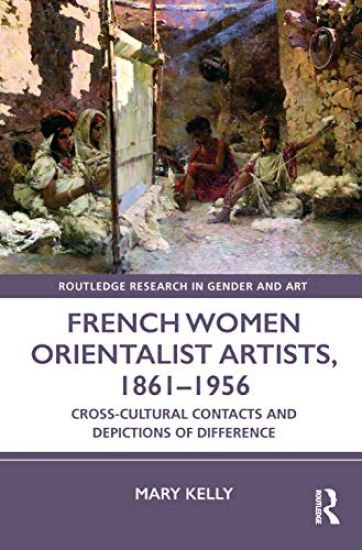
French Women Orientalist Artists, 1861–1956
This book is the first full-length study dedicated to French women Orientalist artists. Mary Kelly has gathered primary documentation relating to seventy-two women artists whose works of art can be placed in the canon of French Orientalism between 1861 and 1956. Bringing these artists together for the first time and presenting close contextual analyses of works of art, attention is given to artists’ cross-cultural interactions with painted/sculpted representations of the Maghreb particularly in Algeria, Tunisia and Morocco. Using an interdisciplinary ‘open platform of discussion’ approach, Kelly builds on established theory which places emphases on the gendered gaze. This entails a discussion on women’s painted perspectives of and contacts with Muslim women as well as various Maghrebi cultures and land—all the while remaining mindful of the subject position of the French artist and the problematic issues which can arise when discussing European-made ‘ethnographic’ scenes. Kelly argues that French women’s perspectives of the Maghreb differed from the male gaze and were informed by their artistic training and social positions in Europe. In so doing, French women’s socio-cultural modernity is also examined. Moreover, executed between 1861 and 1956, the works of art presented show influences of Modernism; therefore, this book also pays close attention to progressive Realism and Naturalism in art and the Orientalist shift into Modernist subject matter and form. Through this research into French women Orientalists, Kelly engages with important discussions on the crossing view of the historical female other with the cultural other, artistic hybridity and influence in art as well as the postcolonial response to French activities in colonial Algeria and the protectorates of Tunisia and Morocco. On giving focus to women’s art and the impact of cross-cultural interchanges, this book rethinks Orientalism in French art. This book will be of particular interest to scholars in the history of art, gender studies, history, and Middle Eastern and North African studies.
French Thought and Literary Theory in the UK
This collection presents a sort of counter-history or counter-genealogy of the globalization of French thought from the point of view of scholars working in the UK. While the dominating discourse would attribute the US as the source of that globalization, particularly through the 1966 conference on the Languages of Criticism and the Sciences of Man at Johns Hopkins University, this volume of essays serves as a reminder that the UK has also been a principal motor of that globalization. The essays take into account how French thought and literary theory have institutionally taken shape in the UK from the 70s to today, highlight aspects of French thought that have been of particular pertinence or importance for scholars there, and outline how researchers in the UK today are bringing French thought further in terms of teaching and research in this twenty-first century. In short, this volume traces how the country has been behind the reception and development of French thought in Anglophone worlds from the late 70s to the present.
French and Japanese Economic Relations with Vietnam Since 1975
This book, first published in 1999, compares the strategies of France and Japan in trying to win economic and political influence in the newly emerging Vietnam, which opened to the international community only after the Vietnamese Communist Party had started economic reforms in 1986. These reforms are aimed at transforming the country’s centrally-planned economy into a government-controlled market economy and at opening Vietnam to foreign capital, technology and know-how. This setting provides a unique opportunity for comparing the strategies of two nations from different continents in conducting their economic relations with a unified Vietnam.
French and Japanese Economic Relations with Vietnam Since 1975
This book, first published in 1999, compares the strategies of France and Japan in trying to win economic and political influence in the newly emerging Vietnam, which opened to the international community only after the Vietnamese Communist Party had started economic reforms in 1986. These reforms are aimed at transforming the country’s centrally-planned economy into a government-controlled market economy and at opening Vietnam to foreign capital, technology and know-how. This setting provides a unique opportunity for comparing the strategies of two nations from different continents in conducting their economic relations with a unified Vietnam.
French Comic Drama from the Sixteenth to the Eighteenth Century
In tracing the course of French comedy from the Renaissance, through the age of Louis XIV and the eighteenth century, to the eve of the Revolution, originally published in 1977, Geoffrey Brereton shows how it evolved from the crude farces and experimental plays of the sixteenth century to become a rich and highly sophisticated dramatic genre.The main emphasis is on the work of the principal dramatists, notably Molière (whose plays and career are given a detailed and enlightening treatment), Corneille, Scarron, Marivaux and Beaumarchais, with some space devoted to the more neglected writers, such as the ‘cynical generation’ of Dancourt, Regnard, Lesage and others; and all the plays are seen in the context of the theatrical conventions that helped to shape them. Different types of comedy are analysed, including comedy of character and of manners, as well as the romantic, burlesque and bourgeois forms and the development of the opéra-comique. At the same time Dr Brereton examines the influences on French comedy – influences as varied as those of the farce, the Italian commedia dell’arte, the Spanish comedia and the eighteenth century drame – and the way in which these were absorbed and exploited by French comic dramatists. Since comedy, more than any other kind of drama, reflects the contemporary social scene, attention is drawn to social conditions and attitudes, and some of the more striking parallels with modern social preoccupations are pointed out.Written in a very lively and readable style, and containing much stimulating and original comment, as well as providing the basic facts, it gives a considerable insight into the nature of French comedy during its most formative and fruitful period. A substantial bibliography and other reference material increase the usefulness of this book to the student of French drama.