Kirjojen hintavertailu. Mukana 12 390 323 kirjaa ja 12 kauppaa.

Kirjahaku

Etsi kirjoja tekijän nimen, kirjan nimen tai ISBN:n perusteella.

1000 tulosta hakusanalla Gary Griffiths

Death before Dying

Death before Dying

Gary Belkin

Oxford University Press Inc
2014
sidottu
Brain death-the condition of a non-functioning brain, has been widely adopted around the world as a definition of death since it was detailed in a Report by an Ad Hoc Committee of Harvard Medical School faculty in 1968. It also remains a focus of controversy and debate, an early source of criticism and scrutiny of the bioethics movement. Death before Dying: History, Medicine, and Brain Death looks at the work of the Committee in a way that has not been attempted before in terms of tracing back the context of its own sources-the reasoning of it Chair, Henry K Beecher, and the care of patients in coma and knowledge about coma and consciousness at the time. That history requires re-thinking the debate over brain death that followed which has tended to cast the Committee's work in ways this book questions. This book, then, also questions common assumptions about the place of bioethics in medicine. This book discusses if the advent of bioethics has distorted and limited the possibilities for harnessing medicine for social progress. It challenges historical scholarship of medicine to be more curious about how medical knowledge can work as a potentially innovative source of values.

A Guide to Composition Pedagogies

A Guide to Composition Pedagogies

Gary Tate; Brooke Hessler; Amy Rupiper-Taggart; Kurt Schick

Oxford University Press Inc
2014
nidottu
A Guide to Composition Pedagogies is the essential bibliographic guide written for newcomers to the field. Since our field has evolved quite a lot over the last decade, this long-awaited second edition contains many important changes, additions, and updates. At the same time, the practical organization and educational intent of the book have remained the same: The pedagogies themselves are categories commonly recognized in the disciplinary scholarship, and as with the first edition, each essay introduces the most important work in the field on the pedagogy, while attempting to offer readers a sense of the spirit of the approach, often through personal teaching narratives. t In short, this best-selling bibliographic guide familiarizes writing instructors with the current topography of Composition Studies and directs them to the best books and articles for further exploration. For this second edition, each author discusses some of the implications of technology for each pedagogy. In addition, the essays now focus more on practice and slightly less on theory.
Misunderstanding Financial Crises

Misunderstanding Financial Crises

Gary B. Gorton

Oxford University Press Inc
2012
sidottu
Prior to the financial crisis of 2007-2008, economists thought that no such crisis could or would ever happen again in the United States, that financial events of such magnitude were a thing of the distant past. In fact, observers of that distant past--the period from the half century prior to the Civil War up to the passage of deposit insurance during the Great Depression, which was marked by repeated financial crises--note that while legislation immediately after crises reacted to their effects, economists and policymakers continually failed to grasp the true lessons to be learned. Gary Gorton, considered by many to be the authority on the financial crisis of our time, holds that economists fundamentally misunderstand financial crises--what they are, why they occur, and why there were none in the U.S. between 1934 and 2007. In Misunderstanding Financial Crises, he illustrates that financial crises are inherent to the production of bank debt, which is used to conduct transactions, and that unless the government designs intelligent regulation, crises will continue. Economists, he writes, looked from a certain point of view and missed everything that was important: the evolution of capital markets and the banking system, the existence of new financial instruments, and the size of certain money markets like the sale and repurchase market. Delving into how such a massive intellectual failure could have happened, Gorton offers a back-to-basics elucidation of financial crises, and shows how they are not rare, idiosyncratic, unfortunate events caused by a coincidence of unconnected factors. By looking back to the "Quiet Period " from 1934 to 2007 when there were no systemic crises, and to the "Panic of 2007-2008, " he brings together such issues as bank debt and liquidity, credit booms and manias, and moral hazard and too-big-too-fail, to illustrate the costs of bank failure and the true causes of financial crises. He argues that the successful regulation that prevented crises did not adequately keep pace with innovation in the financial sector, due in large part to economists' misunderstandings. He then looks forward to offer both a better way for economists to conceive of markets, as well as a description of the regulation necessary to address the historical threat of financial crises.
The Locust Effect

The Locust Effect

Gary A. Haugen; Victor Boutros

Oxford University Press Inc
2014
sidottu
World poverty is both an intractable and ever-mutable problem. It has afflicted humanity since the earliest times, but its basic features -- aside from the constant, want -- have evolved as history has moved from epoch to epoch. Today, there is broad recognition that a significant segment of the global population (the 'bottom billion,' to use Paul Collier's term) is impoverished despite the globalization of the world economy. Two questions -- why destitution is so persistent despite massive global economic growth and what can be done about it -- have animated debates among development scholars and poverty researchers for decades. Those who concentrate on the first question focus on the failure of anti-poverty efforts and typically stress why particular solutions on offer have not worked. Those addressing the second question have focused on either improving material conditions or on creating institutional frameworks (economic, social and political) that will allow the masses in poor countries to escape from poverty. Yet until now, virtually no one has addressed in a substantial way the most basic precondition for alleviating poverty: human safety. In most poverty-stricken areas of the world, violence is endemic. Whether it is generated by criminals who operate with complete abandon or by the state itself via predatory police forces, violence and threat of it have locked hundreds of millions of people into poverty. Gary Haugen and Victor Boutros's The Locust Effect focuses on the central role of violence in perpetuating poverty, and shows that if any headway is to be made, this issue has to become a top priority for policymakers. Simply put, if people aren't safe, nothing else matters. Shipping grain to the poor, helping them vote, or assisting their efforts to start a farm is irrelevant. Whatever material improvements we provide will simply wash away in the face of the corrupt police forces, out-of-control, armies, private militias, organized criminals, and -- not least -- failed justice systems that plague poor countries. Throughout, the book will feature real-world stories ranging from Thailand to Bolivia to India to Nigeria that vividly depict how violence undercuts antipoverty efforts. While they argue that this violence is the fundamental issue facing the antipoverty movement, they do not merely identify the problem. They also draw from their experience running the International Justice Mission to show that ground-up efforts to reform legal and public justice systems can generate real, positive results. Sweeping in geographical scope and filled with unforgettable stories of individuals trapped within the mutually reinforcing cycle of poverty and violence, The Locust Effect will force us to rethink everything we know about the causes of poverty and why it is so difficult to root out.
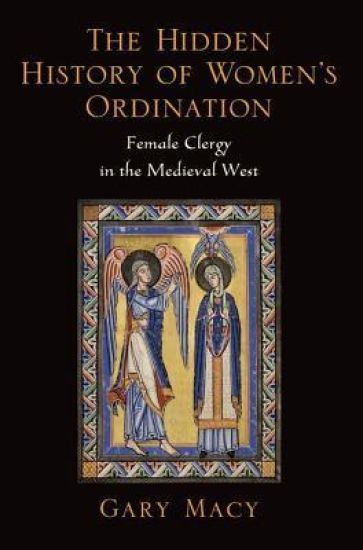
The Hidden History of Women's Ordination

The Hidden History of Women's Ordination

Gary Macy

Oxford University Press Inc
2012
nidottu
The Roman Catholic leadership still refuses to ordain women officially or even to recognize that women are capable of ordination. But is the widely held assumption that women have always been excluded from such roles historically accurate? In the early centuries of Christianity, ordination was the process and the ceremony by which one moved to any new ministry (ordo) in the community. By this definition, women were in fact ordained into several ministries. A radical change in the definition of ordination during the eleventh and twelfth centuries not only removed women from the ordained ministry, but also attempted to eradicate any memory of women's ordination in the past. The debate that accompanied this change has left its mark in the literature of the time. However, the triumph of a new definition of ordination as the bestowal of power, particularly the power to confect the Eucharist, so thoroughly dominated western thought and practice by the thirteenth century that the earlier concept of ordination was almost completely erased. The ordination of women, either in the present or in the past, became unthinkable. References to the ordination of women exist in papal, episcopal and theological documents of the time, and the rites for these ordinations have survived. Yet, many scholars still hold that women, particularly in the western church, were never "really" ordained. A survey of the literature reveals that most scholars use a definition of ordination that would have been unknown in the early middle ages. Thus, the modern determination that women were never ordained, Macy argues, is a premise based on false terms. Not a work of advocacy, this important book applies indispensable historical background for the ongoing debate about women's ordination.
The Global Grapevine

The Global Grapevine

Gary Alan Fine; Bill Ellis

Oxford University Press Inc
2013
nidottu
Far from mere idle tales, rumors are a valuable window into our anxieties and fears. In The Global Grapevine, two leading authorities on rumor, folklore, and urban legend-Gary Alan Fine and Bill Ellis-shed light on what contemporary rumors can tell us about the fears and pressures of globalization. In particular, they examine four major themes that emerge over and over again: rumors about terrorism, about immigration, about international trade, and about tourism. The authors analyze how various rumors underscore American reactions to perceived global threats, show how we interpret our changing world, and highlight fears, fantasies, and cherished beliefs about our place in the world. These rumors, the authors argue, are the visible tip of a vast iceberg of hidden anxieties. Illuminating the most widely circulated rumors in America in recent years, The Global Grapevine offers an invaluable portrait of what these tales reveal about contemporary society.
Point Blank

Point Blank

Gary Kleck

AldineTransaction
2005
nidottu
By 1990 there were approximately 200 million guns in private hands in the United States, and around half of American households contained a gun. Over 30,000 people a year are killed with guns in suicides, homicides, and accidents, and Americans use guns for defensive purposes as many as a million times a year. There is little doubt that gun violence and control are issues of vital importance, and they continue to inspire national debate. It is doubtful, however, that most gun debates are worth listening to. Not surprisingly, they generally leave their participants exactly where they began, with their biases intact, and onlookers perplexed. Written deliberately to counter an atmosphere of hysteria and extremism, Point Blank, now in paperback, offers logical argument supported by empirical information. It confronts fundamental questions head-on. On its initial publication in 1993, Point Black won the Michael J. Hindelang Award of the American Society of Criminology for the book that "made the most outstanding contribution to criminology," Point Blank reports both original research and assesses existing evidence drawn from a wide variety of academic disciplines, including criminology, sociology, law, and medicine.
Economic Theory

Economic Theory

Gary Becker

AldineTransaction
2007
nidottu
Others might have called this book Micro Theory or Price Theory. Becker's choice of Economic Theory as the title for his book reflects his deep belief that there is only one kind of economic theory, not separate theories for micro problems, macro problems, non-market decisions, and so on. Indeed, as he notes, the most promising development in recent years in the literature on large scale economic problems such as unemployment has been the increasing reliance on utility maximization, a concept generally identified with microeconomics.Microeconomics is the subject matter of this volume, but it is emphatically not confined to microeconomics in the literal sense of micro units like firms or households. Becker's main interest is in market behavior of aggregations of firms and households. Although important inferences are drawn about individual firms and households, the author tries to understand aggregate responses to changes in basic economic parameters like tax rates, tariff schedules, technology, or antitrust provisions. His discussion is related to the market sector in industrialized economies, but the principles developed are applied to other sectors and different kinds of choices.Becker argues that economic analysis is essential to understand much of the behavior traditionally studied by sociologists, anthropologists, and other social scientists. The broad definition of economics in terms of scarce means and competing ends is taken seriously and should be a source of pride to economists since it provides insights into a wide variety of problems. Practically all statements proved mathematically are also provided geometrically or verbally in the body of the text.
Scaling

Scaling

Gary Maranell

AldineTransaction
2007
nidottu
Despite the obvious importance of measurement in any scientific endeavor, few students of the social sciences receive adequate training in the principles and problems of assigning numerical values to the subjects, objects, events, groups and operations they study, and still less in the process of translating theoretical ideas and concepts into variables. This kind of casualness with respect to measurement is often in marked contrast to their methodically designed research, which has grown out of subtle and sophisticated theoretical consideration.Scaling is intended to remedy this deficiency by providing a broad and detailed description of the major processes for developing measurement scales. The chapters, which include both classics in the field and the best of modern work, require no great mathematical sophistication, and go well beyond the conventional study of attitudes to the more general uses of scaling. They enable the student and researcher to examine the development of measures of scalability and the problems and weaknesses they present, to become familiar with the development of tests of significance for reproducibility and scalability and the need for them, and to examine the lively history of the subject and experience the excitement that can be secured from sharing with a creative author the first report of his insight.Part One presents a series of general articles that deal in philosophic terms with the problem of measurement, with what is meant by measurement and scaling as well as the notions underlying the process of measuring. Part Two deals with the scaling methods developed by L. L. Thurstone, including paired comparison scaling, equal-appearing interval scaling, and successive interval scaling. The third part focuses upon scalogram analysis, presenting the background, rationale and procedures for Guttman scaling. The fourth part is concerned with summated rating, or Likert scaling. Part Five is a consideration of unfolding theory and methods. Part Six is made up of articles that focus on various special cases and problems relevant to scaling. The book also contains an unusually full reference bibliography and a set of convenient reference tables associated with the development and use of measurement scales.
How to Think Logically

How to Think Logically

Gary Seay; Susana Nuccetelli

Pearson
2012
nidottu
ALERT: Before you purchase, check with your instructor or review your course syllabus to ensure that you select the correct ISBN. Several versions of Pearson's MyLab & Mastering products exist for each title, including customized versions for individual schools, and registrations are not transferable. In addition, you may need a CourseID, provided by your instructor, to register for and use Pearson's MyLab & Mastering products. Packages Access codes for Pearson's MyLab & Mastering products may not be included when purchasing or renting from companies other than Pearson; check with the seller before completing your purchase. Used or rental books If you rent or purchase a used book with an access code, the access code may have been redeemed previously and you may have to purchase a new access code. Access codes Access codes that are purchased from sellers other than Pearson carry a higher risk of being either the wrong ISBN or a previously redeemed code. Check with the seller prior to purchase. -- Concise Principles of Reasoning Concise, yet covering all the basics of a 15-week course in informal logic or critical reasoning, this text engages students with a lively format and clear writing style. The small scale of the book keeps the cost low, a vital consideration in today’s economy, yet without compromising on logical rigor. The author’s presentation strikes a careful balance: it offers clear, jargon-free writing while preserving rigor. Brimming with numerous pedagogical features, this accessible text assists students with analysis, reconstruction, and evaluation of arguments and helps them become independent, analytical thinkers. Introductory students are exposed to the basic principles of reasoning while also having their appetites whetted for future courses in philosophy. Teaching and Learning Experience Improve Critical Thinking - Abundant pedagogical aids -- including exercises and study questions within each chapter -- encourage students to examine their assumptions, discern hidden values, evaluate evidence, assess their conclusions, and more! Engage Students - Chapter and section outlines, summaries, illustrative examples, special-emphasis boxes and key terms present new ideas in manageable-sized units of information so students can digest each concept before moving on to the next one, and ensure students key-in on crucial points to remember. Support Instructors -Teaching your course just got easier! You can create a Customized Text or use our Instructor’s Manual, or PowerPoint Presentation Slides. Plus, this concise textbook contains only as much material as you can cover in a course, creating an affordable alternative you can assign with confidence to a cost-conscious student population. Additionally, each chapter in How to Think Logically is designed as a self-contained unit so that you can choose the combination and order of chapters according to the needs of your courses; making the text a flexible base for courses in logic, critical thinking, and rhetoric.
My Father And Other Working Class Football Heroes
Shows how the author faces his growing alienation from the game he was born into, as he revisits key periods in his father's career to build up a picture of his football life and through him a whole era. This book recaptures a lost world and the way it changed, blending the personal and the historical into a soccer story.
Montague Terrace

Montague Terrace

Gary Pleece; Warren Pleece

Jonathan Cape Ltd
2013
nidottu
In Montague Terrace, nothing is quite what is seems. Within its boundaries live an array of strange and extraordinary residents, including Paul Gregory, self-exiled pop crooner holed up in his Montague hovel for close to forty years, with only fading memories of a semi-successful music career and a bottle of JD for company. Mrs Beatrice Green, codename Babushka, an aged former special ops agent fighting a new war against overzealous council officials. Marvo the Magic Bunny and Mystical Marvin, a pair of down-on-their luck entertainers, shielding a disturbing past. The Puppeteer, toiling away day and night, pulling the strings of world events and causing chaos out of order. Landlocked sailors, fake pet psychics, hounded inventors and randy postmen. Welcome to Montague Terrace...
The Eloquent Shakespeare

The Eloquent Shakespeare

Gary Logan

University of Chicago Press
2012
nidottu
An actor's deepest desire is to be understood. But when asked to pronounce such words as "chanson," "phantasime," or "quaestor," many otherwise unflappable actors can be rendered speechless. The "Eloquent Shakespeare" aims to untie those tongues and help anyone speak Shakespeare's language with ease. More than 17,500 entries make it the most comprehensive pronunciation guide to Shakespeare's words, from the common to the arcane. Each entry is written in the International Phonetic Alphabet and represents standard American pronunciations, making this dictionary perfect for teachers, actors, and directors all over North America. Renowned Shakespearean voice and text coach Gary Logan has spent years teaching Shakespeare's works to some of the best actors in the world. His book includes proper names and foreign words and phrases, as well as an extensive introduction that covers everything from how to interpret the entries to scansion dynamics. Designed especially for actors, directors, stage managers, and teachers, "The Eloquent Shakespeare" is a one-of-a-kind resource for performing Shakespeare's dramatic works.
Uncommon Sense

Uncommon Sense

Gary S. Becker; Richard A. Posner

University of Chicago Press
2009
sidottu
On December 5, 2004, the still-developing blogosphere took one of its biggest steps toward mainstream credibility, as Nobel Prize - winning economist Gary S. Becker and renowned jurist and legal scholar Richard A. Posner announced the formation of the Becker-Posner Blog. In no time, the blog had established a wide readership and reputation as a reliable source of lively, thought-provoking commentary on current events, its pithy and profound weekly essays highlighting the value of economic reasoning when applied to unexpected topics. "Uncommon Sense" gathers the most important and innovative entries from the blog, arranged by topic, along with updates and even reconsiderations when subsequent events have shed new light on a question. Whether it's Posner making the economic case for the legalization of gay marriage, Becker arguing in favor of the sale of human organs for transplant, or even the pair of scholars vigorously disagreeing about the utility of collective punishment, the writing is always clear, the interplay energetic, and the resulting discussion deeply informed and intellectually substantial. To have a single thinker of the stature of a Becker or Posner addressing questions of this nature would make for fascinating reading; to have both, writing and responding to each other, is an exceptionally rare treat. With "Uncommon Sense", they invite the adventurous reader to join them on a whirlwind intellectual journey. All they ask is that you leave your preconceptions behind.
Uncommon Sense

Uncommon Sense

Gary S. Becker; Richard A. Posner

University of Chicago Press
2010
nidottu
On December 5, 2004, the still-developing blogosphere took one of its biggest steps toward mainstream credibility, as Nobel Prize - winning economist Gary S. Becker and renowned jurist and legal scholar Richard A. Posner announced the formation of the Becker-Posner Blog. In no time, the blog had established a wide readership and reputation as a reliable source of lively, thought-provoking commentary on current events, its pithy and profound weekly essays highlighting the value of economic reasoning when applied to unexpected topics. "Uncommon Sense" gathers the most important and innovative entries from the blog, arranged by topic, along with updates and even reconsiderations when subsequent events have shed new light on a question. Whether it's Posner making the economic case for the legalization of gay marriage, Becker arguing in favor of the sale of human organs for transplant, or even the pair of scholars vigorously disagreeing about the utility of collective punishment, the writing is always clear, the interplay energetic, and the resulting discussion deeply informed and intellectually substantial. To have a single thinker of the stature of a Becker or Posner addressing questions of this nature would make for fascinating reading; to have both, writing and responding to each other, is an exceptionally rare treat. With "Uncommon Sense", they invite the adventurous reader to join them on a whirlwind intellectual journey. All they ask is that you leave your preconceptions behind.
The Economic Approach to Human Behavior

The Economic Approach to Human Behavior

Gary S. Becker

University of Chicago Press
1978
nidottu
Since his pioneering application of economic analysis to racial discrimination, Gary S. Becker has shown that an economic approach can provide a unified framework for understanding all human behavior. In a highly readable selection of essays Becker applies this approach to various aspects of human activity, including social interactions; crime and punishment; marriage, fertility, and the family; and "irrational" behavior."Becker's highly regarded work in economics is most notable in the imaginative application of 'the economic approach' to a surprising breadth of human activity. Becker's essays over the years have inevitably inspired a surge of research activity in testimony to the richness of his insights into human activities lying 'outside' the traditionally conceived economic markets. Perhaps no economist in our time has contributed more to expanding the area of interest to economists than Becker, and a number of these thought-provoking essays are collected in this book."—ChoiceGary Becker was awarded the Nobel Prize in Economic Science in 1992.
Human Capital

Human Capital

Gary S. Becker

University of Chicago Press
1994
nidottu
"Human Capital" is Becker's study of how investment in an individual's education and training is similar to business investments in equipment. Becker looks at the effects of investment in education on earnings and employment, and shows how his theory measures the incentive for such investment, as well as the costs and returns from college and high school education. Another part of the study explores the relation between age and earnings. This edition includes four new chapters, covering recent ideas about human capital, fertility and economic growth, the division of labour, economic considerations within the family, and inequality in earnings.
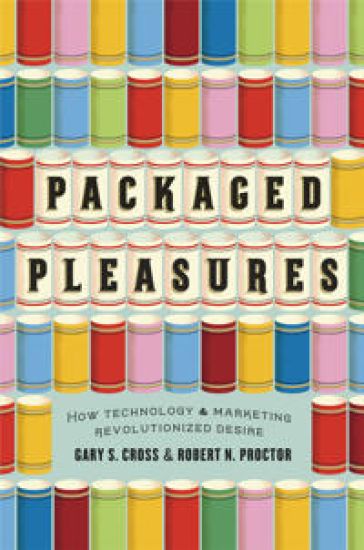
Packaged Pleasures

Packaged Pleasures

Gary S. Cross; Robert N. Proctor

University of Chicago Press
2014
sidottu
From the candy bar to the cigarette, records to roller coasters, a technological revolution during the last quarter of the nineteenth century precipitated a colossal shift in human consumption and sensual experience. Food, drink, and many other consumer goods came to be mass-produced, bottled, canned, condensed, and distilled, unleashing new and intensified surges of pleasure, delight, thrill - and addictions. In Packaged Pleasures, Gary S. Cross and Robert N. Proctor delve into an unchartered chapter of American history, shedding new light on the origins of modern consumer culture and how technologies have transformed human sensory experience. In the space of only a few decades, junk foods, cigarettes, movies, recorded sound, and thrill rides brought about a revolution in what it means to taste, smell, see, hear, and touch. New techniques of boxing, labeling, and tubing gave consumers virtually unlimited access to pleasures they could simply unwrap and enjoy. Manufacturers generated a seemingly endless stream of sugar-filled, high-fat foods that were delicious but detrimental to health. Mechanically rolled cigarettes entered the market and quickly addicted millions. And many other packaged pleasures dulled or displaced natural and social delights. Yet many of these same new technologies also offered convenient and effective medicines, unprecedented opportunities to enjoy music and the visual arts, and more hygienic, varied, and nutritious food and drink. For better or for worse, sensation became mechanized, commercialized, and, to a large extent, democratized by being made cheap and accessible. Cross and Proctor have delivered an ingeniously constructed history of consumerism and consumer technology that will make us all rethink some of our favorite things.
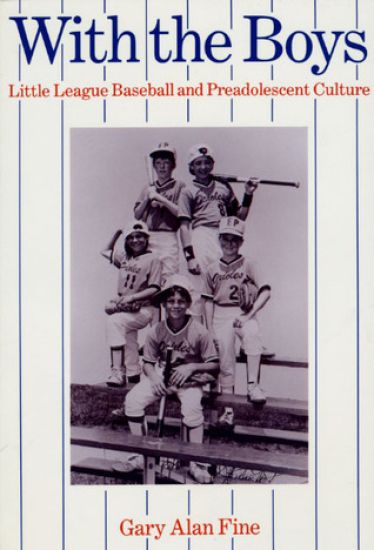
With the Boys

With the Boys

Gary Alan Fine

University of Chicago Press
1987
nidottu
What are boys like? Who is the creature inhabiting the twilight zone between the perils of the Oedipus complex and the Strum und Drang of puberty? In With the Boys, Gary Alan Fine examines the American male preadolescent by studying the world of Little League baseball. Drawings on three years of firsthand observation of five Little Leagues, Fine describes how, through organized sport and its accompanying activities, boys learn to play, work, and generally be "men."