Kirjojen hintavertailu. Mukana 12 402 024 kirjaa ja 12 kauppaa.

Kirjahaku

Etsi kirjoja tekijän nimen, kirjan nimen tai ISBN:n perusteella.

1000 tulosta hakusanalla Gary Moore

Shakespeare and the Law

Shakespeare and the Law

Gary Watt

Oxford University Press
2024
nidottu
Shakespeare and the Law appreciates Shakespeare and his works as expressions of an English early modern culture in which the shared rhetorical practices of dramatists and lawyers were informed by the renaissance of classical practice. It argues that Shakespeare was not primarily concerned with the technical accuracy of law, legal ideas, and legal performances, but with their capacity to generate dramatic interest through dispute, trial, the breaking of bonds, and the bending of rules. It follows that all Shakespeare's plays are in a sense “law plays”. Rhetorical practices can emerge as performances of power, but in Shakespeare's works they show more as instances of the human instinct to challenge power by playing with rules. Shakespeare employs the special magic of legal language, actions, and materials to conjure playgoers to act as a critical jury to events transacted on stage. This calls for close attention to Shakespeare's poetic sound effects and the ways they prompt audiences to confer a fair hearing.
Equity & Trusts Law Directions

Equity & Trusts Law Directions

Gary Watt

Oxford University Press
2025
nidottu
This is the most student-friendly guide to the subject; empowering students to evaluate the law, understand its practical application, and approach assessments with confidence. Watt's Equity & Trusts Law Directions presents students with a considered balance of depth, detail, context, and critique on the topic. Key features · Gain a balanced understanding of the topic: the right amount of detail conveyed clearly · Understand the law in context: with scene-setting introductions and highlighted case extracts the practical importance of the law becomes clear · Identify when and how to critically evaluate the law: the key areas of debate are set out, with support to confidently question the law · Direct and consolidate knowledge: self-testing features aid understanding and help students tackle assessments with confidence · Elevate learning: inspiring students to take their learning to the next level, the author provides direction on going further · Also available as an e-book with functionality, navigation features, and links that offer extra learning support New to this edition · Discusses the implications of cryptocurrency for the specific performance of agreements and the tracing of funds in equity · Reviews the use of 'massively discretionary trusts' and sham trusts to hide wealth from the tax authorities · Covers ethical investment of trusts and the implications of political controversies for the funding of charitable trusts · References the Court of Appeal on the relationship between the fiduciary duty and the duty care, as well as remedies where fiduciary gains and careless losses arise from the same transaction · Includes updates from the Supreme Court on a claimant's ability to recover in an action tainted by their illegality and an innocent claimant’s recovery of wrongful fiduciary gains that the CPS wants to confiscate for criminality Digital formats and resources The eighth edition is available for students and institutions to purchase in a variety of formats: the e-book and Law Trove offer a mobile experience and convenient access along with video lectures by the author, sample essay questions and problem scenarios with guidance on answering, self-test questions, functionality tools, navigation features, and links that offer extra learning support.
Thinking the Impossible

Thinking the Impossible

Gary Gutting

Oxford University Press
2011
sidottu
The late 20th century saw a remarkable flourishing of philosophy in France. The work of French philosophers is wide ranging, historically informed, often reaching out beyond the boundaries of philosophy; they are public intellectuals, taken seriously as contributors to debates outside the academy. Gary Gutting tells the story of the development of a distinctively French philosophy in the last four decades of the 20th century. His aim is to arrive at an account of what it was to 'do philosophy' in France, what this sort of philosophizing was able to achieve, and how it differs from the analytic philosophy dominant in Anglophone countries. His initial focus is on the three most important philosophers who came to prominence in the 1960s: Michel Foucault, Gilles Deleuze, and Jacques Derrida. He sets out the educational and cultural context of their work, as a basis for a detailed treatment of how they formulated and began to carry out their philosophical projects in the 1960s and 1970s. He gives a fresh assessment of their responses to the key influences of Hegel and Heidegger, and the fraught relationship of the new generation to their father-figure Sartre. He concludes that Foucault, Derrida, and Deleuze can all be seen as developing their fundamental philosophical stances out of distinctive readings of Nietzsche. The second part of the book considers topics and philosophers that became prominent in the 1980s and 1990s, such as the revival of ethics in Levinas, Derrida, and Foucault, the return to phenomenology and its use to revive religious experience as a philosophical topic, and Alain Badiou's new ontology of the event. Finally Gutting brings to the fore the meta-philosophical theme of the book, that French philosophy since the 1960s has been primarily concerned with thinking the impossible.
Perception and Cognition

Perception and Cognition

Gary Hatfield

Oxford University Press
2009
sidottu
How do we see? This question has fascinated and perplexed philosophers and scientists for millennia. In visual perception, mind and world meet, when light reflected from objects enters the eyes and stimulates the nerves leading to activity in the brain near the back of the head. This neural activity yields conscious experiences of a world in three dimensions, clothed in colors, and immediately recognized as (say) ground, sky, grass, trees, and friends. The visual brain also produces nonconscious representations that interact with other brain systems for perception and cognition and that help to regulate our visually guided actions. But how does all of this really work? The answers concern the physiology, psychology, and philosophy of visual perception and cognition. Gary Hatfield's essays address fundamental questions concerning, in Part I, the psychological processes underlying spatial perception and perception of objects; in Part II, psychological theories and metaphysical controversies about color perception and qualia; and, in Part III, the history and philosophy of theories of vision, including methodological controversies surrounding introspection and involving the relations between psychology and the fields of neuroscience and cognitive science. An introductory chapter provides a unified overview; an extensive reference list rounds out the volume.
Perception and Cognition

Perception and Cognition

Gary Hatfield

Oxford University Press
2009
nidottu
How do we see? This question has fascinated and perplexed philosophers and scientists for millennia. In visual perception, mind and world meet, when light reflected from objects enters the eyes and stimulates the nerves leading to activity in the brain near the back of the head. This neural activity yields conscious experiences of a world in three dimensions, clothed in colors, and immediately recognized as (say) ground, sky, grass, trees, and friends. The visual brain also produces nonconscious representations that interact with other brain systems for perception and cognition and that help to regulate our visually guided actions. But how does all of this really work? The answers concern the physiology, psychology, and philosophy of visual perception and cognition. Gary Hatfield's essays address fundamental questions concerning, in Part I, the psychological processes underlying spatial perception and perception of objects; in Part II, psychological theories and metaphysical controversies about color perception and qualia; and, in Part III, the history and philosophy of theories of vision, including methodological controversies surrounding introspection and involving the relations between psychology and the fields of neuroscience and cognitive science. An introductory chapter provides a unified overview; an extensive reference list rounds out the volume.
Essential Quantum Mechanics

Essential Quantum Mechanics

Gary Bowman

Oxford University Press
2007
sidottu
Quantum mechanics - central not only to physics, but also to chemistry, materials science, and other fields - is notoriously abstract and difficult. Essential Quantum Mechanics is a uniquely concise and explanatory book that fills the gap between introductory and advanced courses, between popularizations and technical treatises. By focusing on the fundamental structure, concepts, and methods of quantum mechanics, this introductory yet sophisticated work emphasizes both physical and mathematical understanding. A modern perspective is adopted throughout - the goal, in part, being to gain entry into the world of 'real' quantum mechanics, as used by practicing scientists. With over 60 original problems, Essential Quantum Mechanics is suitable as either a text or a reference. It will be invaluable to physics students as well as chemists, electrical engineers, philosophers, and others whose work is impacted by quantum mechanics, or who simply wish to better understand this fascinating subject.
Essential Quantum Mechanics

Essential Quantum Mechanics

Gary Bowman

Oxford University Press
2007
nidottu
Quantum mechanics - central not only to physics, but also to chemistry, materials science, and other fields - is notoriously abstract and difficult. Essential Quantum Mechanics is a uniquely concise and explanatory book that fills the gap between introductory and advanced courses, between popularizations and technical treatises. By focusing on the fundamental structure, concepts, and methods of quantum mechanics, this introductory yet sophisticated work emphasizes both physical and mathematical understanding. A modern perspective is adopted throughout - the goal, in part, being to gain entry into the world of 'real' quantum mechanics, as used by practicing scientists. With over 60 original problems, Essential Quantum Mechanics is suitable as either a text or a reference. It will be invaluable to physics students as well as chemists, electrical engineers, philosophers, and others whose work is impacted by quantum mechanics, or who simply wish to better understand this fascinating subject.
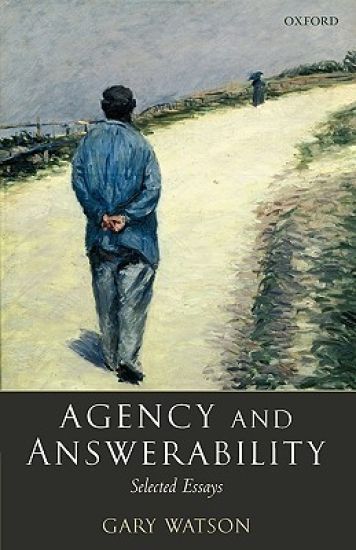
Agency and Answerability

Agency and Answerability

Gary Watson

Clarendon Press
2004
sidottu
Since the 1970s Gary Watson has published a series of brilliant and highly influential essays on human action, examining such questions as: in what ways are we free and not free, rational and irrational, responsible or not for what we do? Moral philosophers and philosophers of action will welcome this collection, representing one of the most important bodies of work in the field.
The Puzzle of Peace

The Puzzle of Peace

Gary Goertz; Paul F. Diehl; Alexandru Balas

Oxford University Press Inc
2016
sidottu
The Puzzle of Peace moves beyond defining peace as the absence of war and develops a broader conceptualization and explanation for the increasing peacefulness of the international system. The authors track the rise of peace as a new phenomenon in international history starting after 1945. International peace has increased because international society has developed a set of norms dealing with territorial conflict, by far the greatest source of international war over previous centuries. These norms prohibit the use of military force in resolving territorial disputes and acquiring territory, thereby promoting border stability. This includes the prohibition of the acquisition of territory by military means as well as attempts by secessionist groups to form states through military force. International norms for managing international conflict have been accompanied by increased mediation and adjudication as means of managing existing territorial conflicts.
The Puzzle of Peace

The Puzzle of Peace

Gary Goertz; Paul F. Diehl; Alexandru Balas

Oxford University Press Inc
2016
nidottu
The Puzzle of Peace moves beyond defining peace as the absence of war and develops a broader conceptualization and explanation for the increasing peacefulness of the international system. The authors track the rise of peace as a new phenomenon in international history starting after 1945. International peace has increased because international society has developed a set of norms dealing with territorial conflict, by far the greatest source of international war over previous centuries. These norms prohibit the use of military force in resolving territorial disputes and acquiring territory, thereby promoting border stability. This includes the prohibition of the acquisition of territory by military means as well as attempts by secessionist groups to form states through military force. International norms for managing international conflict have been accompanied by increased mediation and adjudication as means of managing existing territorial conflicts.
Organometallic Chemistry

Organometallic Chemistry

Gary O. Spessard; Gary L. Miessler

Oxford University Press Inc
2015
sidottu
Designed with the needs of both undergraduate and graduate students in mind, Organometallic Chemistry, Third Edition, covers the fundamentals of organometallic chemistry by presenting seminal experiments, analyzing real data, and offering the most comprehensive problem sets available. The text opens with careful explanations of the structure and bonding of organometallic compounds, providing a uniquely accessible introduction to the subject for undergraduate students. Later chapters build on this foundation with in-depth coverage of more advanced topics such as organometallic reaction mechanisms, catalysis, carbene complexes, metathesis, applications of organometallic chemistry to organic synthesis, and bioorganometallic chemistry.
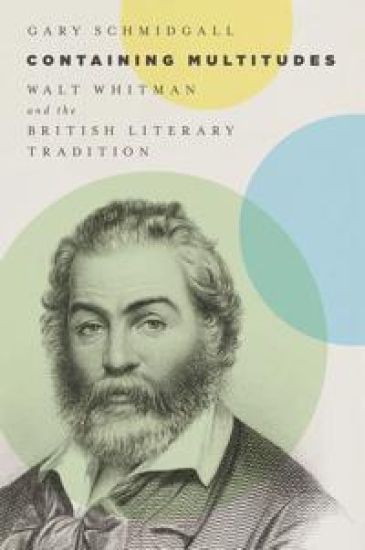
Containing Multitudes

Containing Multitudes

Gary Schmidgall

Oxford University Press Inc
2015
sidottu
This study explores Walt Whitman's contradictory response to and embrace of several great prior British poets: Shakespeare, Milton, Burns, Blake, and Wordsworth (with shorter essays on Scott, Carlyle, Tennyson, Wilde, and Swinburne). Through reference to his entire oeuvre, his published literary criticism, and his private conversations, letters and manuscripts, it seeks to understand the extent to which Whitman experienced the anxiety of influence as he sought to establish himself as America's poet-prophet or bard (and the extent to which he sought to conceal such influence). An attempt is also made to lay out the often profound aesthetic, cultural, political, and philosophical affinities Whitman shared with these predecessors. It also focuses on all of Whitman's extant comments on these iconic authors. Because Whitman was a deeply autobiographical writer, attention is also paid to how his comments on other poets reflect on his image of himself and on the ways he shaped his public image. Attention is also given to how Whitman's attitudes to his British fore-runners changed over the nearly fifty years of his active career.
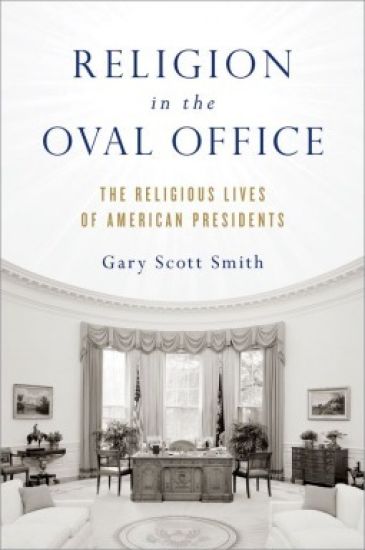
Religion in the Oval Office

Religion in the Oval Office

Gary Scott Smith

Oxford University Press Inc
2015
sidottu
In Faith and the Presidency, Gary Scott Smith offered comprehensive, even-handed examinations of the role of religion in the lives, politics, and policies of eleven US presidents. In this book he takes on eleven more chief executives, drawing on a wide range of sources, and paying close attention to historical context and America's shifting social and moral values. Smith scrutinizes the convictions, use of religious rhetoric, and character of these eleven presidents by examining their lives, beliefs, policies, elections, and relationships of some of the nation's more colorful, charismatic, and complex leaders: John Adams, James Madison, John Quincy Adams, Andrew Jackson, William McKinley, Herbert Hoover, Harry Truman, Richard Nixon, George H. W. Bush, Bill Clinton, and Barack Obama. Religious commitments, Smith shows, strongly affected policy, from John Quincy Adams' treatment of native Americans and diplomacy, to William McKinley's decision to declare war against Spain in 1898 and take control of the Philippines, to Herbert Hoover's quest to reform prisons and defend civil liberties, to Harry Truman's approach to the Cold War and decision to recognize Israel, to Bill Clinton's promotion of religious liberty and reform of welfare, to Barack Obama's policies on poverty and gay rights. This volume will offer an invaluable resource for anyone interested in the presidency and the role of religion in politics.
The Oxford Handbook of Human Capital

The Oxford Handbook of Human Capital

Gary S. Becker

Oxford University Press
2011
sidottu
Macroeconomic research on human capital - the stock of human capabilities and knowledge - has been extensively published but to date the literature has lacked a comprehensive analysis of human capital within the organization. The Oxford Handbook of Human Capital has been designed to fill that gap, providing an authoritative, inter-disciplinary, and up to date survey of relevant concepts, research areas, and applications. Specially commissioned contributions from over 40 authors reveal the importance of human capital for contemporary organizations, exploring its conceptual underpinnings, relevance to theories of the firm, implications for organizational effectiveness, interdependencies with other resources, and role in the future economy. Unlike neoclassical macroeconomic concepts of human capital, human capital in organizations is shown to be dynamic and heterogeneous, requiring new theories and management frameworks. The systemic role of human capital is explored, revealing it as the lynchpin of social, structural and other forms of intangible and tangible capital. Connections between human capital and organizational performance are investigated from HR management, procurement, alignment, value appropriation, and accounting perspectives. Links between micro and macro perspectives are provided through analyses of inter firm human capital mobility, national and regional human capital formation regimes and industry employment relations practices. This Handbook is designed for scholars and graduate students of organization and management theory, strategy, entrepreneurship, knowledge and intellectual capital, accounting, IT, HR, IR, economic sociology and cultural studies. For policy makers and practitioners it should provide an up to date guide to the nature and role of human capital in contemporary organizations and the roles that government, industry and other extra firm institutions can play in facilitating its development.
Manufacturing Possibilities

Manufacturing Possibilities

Gary Herrigel

Oxford University Press
2010
sidottu
Manufacturing Possibilities examines adjustment dynamics in the steel, automobile and machinery industries in Germany, the U.S., and Japan since World War II. As national industrial actors in each sector try to compete in global markets, the book argues that they recompose firm and industry boundaries, stakeholder identities and interests and governance mechanisms at all levels of their political economies. Micro level study of industrial transformation in this way provides a significant window on macro level processes of political economic change in the three societies. Theoretically, the book marks a departure from both neoliberal economic and historical institutionalist perspectives on change in advanced political economies. It characterizes industrial change as a creative, bottom up process driven by reflective social actors. This alternative view consists of two distinctive claims. The first is that action is social, reflective, and ultimately creative. When their interactive habits are disrupted, industrial actors seek to repair their relations by reconceiving them. Such imaginative interaction redefines interest and causes unforeseen possibilities for action to emerge, enabling actors to trump existing rules and constraints. Second, industrial change driven by creative action is recompositional. In the social process of reflection, actors rearrange, modify, reconceive, and reposition inherited organizational forms and governance mechanisms as they experiment with solutions to the challenges that they face. Continuity in relations is interwoven with continuous reform and change. Most remarkably, creativity in the recomposition process makes the introduction of entirely new practices and relations possible. Ultimately, the message of Manufacturing Possibilities is that social study of change in advanced political economies should devote itself to the discovery of possibility. Preoccupation with constraint and failure to appreciate the capaciousness of reflective social action has led much of contemporary debate to misrecognize the dynamics of change. As a result, discussion of the range of adjustment possibilities in advanced political economies has been unnecessarily limited.
Truth and Words

Truth and Words

Gary Ebbs

Oxford University Press
2009
sidottu
To clarify and facilitate our inquiries we need to define a disquotational truth predicate that we are directly licensed to apply not only to our own sentences as we use them now, but also to other speakers' sentences and our own sentences as we used them in the past. The conventional wisdom is that there can be no such truth predicate. For it appears that the only instances of the disquotational pattern that we are directly licensed to accept are those that define 'is true' for our own sentences as we use them now. Gary Ebbs shows that this appearance is illusory. He constructs an account of words that licenses us to rely not only on formal (spelling-based) identifications of our own words, but also on our non-deliberative practical identifications of other speakers' words and of our own words as we used them in the past. To overturn the conventional wisdom about disquotational truth, Ebbs argues, we need only combine this account of words with our disquotational definitions of truth for sentences as we use them now. The result radically transforms our understanding of truth and related topics, including anti-individualism, self-knowledge, and the intersubjectivity of logic.
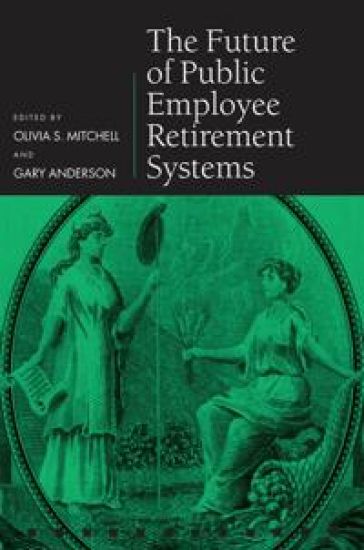
The Future of Public Employee Retirement Systems

The Future of Public Employee Retirement Systems

Gary Anderson

Oxford University Press
2009
sidottu
People covered by public pensions are often the subject of 'pension envy:' that is, their benefits might seem more generous and their contributions lower than those offered by the private sector. Yet this book points out that such judgments are often inaccurate, since civil servants hold jobs with few counterparts in private industry, such as firefighters, police, judges, and teachers. Often these are riskier, dirtier, and demand more loyalty and discretion than would be required of a more mobile labor force in the private sector. The debate challenges traditional ideas about how the public employee labor contract is structured and raises questions about how such employees are attracted to the public sector, retained and motivated on the job, and retired, via an entire compensation package of wages and benefits. Authors explore aspects of these schemes, addressing the cost and valuation debate, along with the political economy of how public pension asset pools are perceived and managed, an increasingly important topic in times of global financial turmoil. The discussion also explores ways that public pensions can be strengthened in the US, Japan, Canada, and Germany. The volume captures a vigorous debate currently underway by academics, financial experts, regulators, and plan sponsors, all seeking to define a new future for public retirement systems. It will be of substantial interest to a wide range of readers, since public sector employees and their representatives will naturally find the comparisons and arguments over valuation of keen interest. Public pension administrators and policymakers seeking an explanation of what makes these plans so costly will gain a new understanding of how the arguments stack up. Private sector employers and plan sponsors can learn much from efforts to reform these retirement systems in states and countries around the world. Finally, investors and the taxpaying public more generally may be at risk to cover these long-term promises, so it behoves them to pay close attention to the financing and investment practices of these plans, along with their valuation. This volume represents an invaluable addition to the Pension Research Council / Oxford University Press series as it includes actuarial, economic, and financial perspectives making it useful for academics, retirement plan administrators, and public employees wishing to understand the challenges facing public pensions.
Music in Our Lives

Music in Our Lives

Gary E. McPherson

Oxford University Press
2012
nidottu
Why do some children take up music, while others dont? Why do some excel, whilst others give up? Why do some children favour classical music, whilst others prefer rock? These are questions that have puzzled music educators, psychologists, and musicologists for many years. Yet, they are incredibly difficult and complex questions to answer. 'Music in our lives' takes an innovative approach to trying to answer these questions. It is drawn from a research project that spanned fourteen years, and closely followed the lives of over 150 children learning music - from their seventh to their twenty second birthdays. This detailed longitudinal approach helped the authors probe a number of important issues. For example, how do you define musical skill and ability? Is it true, as many assume, that continuous engagement in performance is the sole way in which those skills can be developed? What are the consequences of trends and behaviours observed amongst the general public, and their listening consumption. After presenting an overview and detailed case study explorations of musical lives, the book provides frameworks and theory for further investigation and discussion. It tries to present an holistic interpretation of these studies, and looks at their implications for musical development and education. Accessibly written by three leading researchers in the fields of music education and music psychology, this book makes a powerful contribution to understanding the dynamic and vital context ofmusic in our lives.
The Market Makers

The Market Makers

Gary G. Hamilton; Benjamin Senauer; Misha Petrovic

Oxford University Press
2011
sidottu
The huge expansion of new marketplaces and new retailers over the last fifty years has created a retail revolution.These large and globally sophisticated retailers have harnessed the new technologies in communications and logistics to build consumer markets around the world and to create suppliers, new types of manufacturers, that provide consumers with whatever goods they want to buy. These global retailers are at the hub of the new global economy. They are the new Market Makers, and they have changed the way the global economy works. Despite the fact that this retail revolution unfolded right before our eyes, this book is the first to describe the market-making capabilities of these retailers. In eleven chapters by leading scholars, The Market Makers provides a detailed and highly readable analysis of how retailers have become the leading drivers of the new global economy.