

Kirjahaku
Etsi kirjoja tekijän nimen, kirjan nimen tai ISBN:n perusteella.
1000 tulosta hakusanalla Geoffrey H. Block
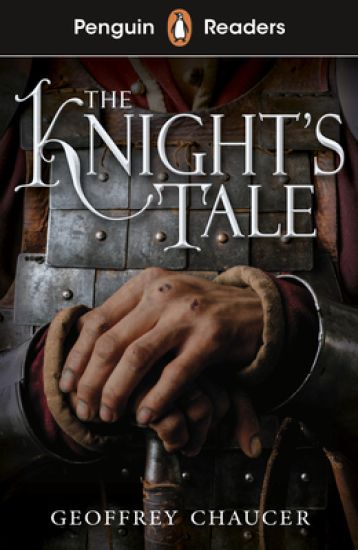
Penguin Readers Starter Level: The Knight's Tale (ELT Graded Reader)
Geoffrey Chaucer
Penguin Books Ltd
2021
pokkari
Penguin Readers is an ELT graded reader series for learners of English as a foreign language. With carefully adapted text, new illustrations and language learning exercises, the print edition also includes instructions to access supporting material online.Titles include popular classics, exciting contemporary fiction, and thought-provoking non-fiction, introducing language learners to bestselling authors and compelling content.The eight levels of Penguin Readers follow the Common European Framework of Reference for language learning (CEFR). Exercises at the back of each Reader help language learners to practise grammar, vocabulary, and key exam skills. Before, during and after-reading questions test readers' story comprehension and develop vocabulary.The Knight's Tale, a Starter level Reader, is A1 in the CEFR framework. Starter level is ideal for readers who are learning English for the first time. Short sentences contain a maximum of two clauses, using the present simple and continuous tenses, possessives, regular and irregular verbs, and simple adjectives. Illustrations support the text throughout, and many titles at this level are graphic novels.The Knight's Tale is a very old story about two knights, Arcita and Palamon. The two men love the Queen's sister, Emily. Do they fight for her?Visit the Penguin Readers websiteExclusively with the print edition, readers can unlock online resources including a digital book, audio edition, lesson plans and answer keys.

You've seen Manhunt, now read Geoffrey Wansell's chilling portrait of notorious serial killer Levi Bellfield- the only man in modern British legal history to be given two whole-life sentences.On 23 Jun 2011 the convicted double-murderer Levi Bellfield was found guilty of the murder of 13-year-old school girl Milly Dowler.Milly disappeared on her way home from school in Walton-on-Thames, Surrey in 2002. Six months later her body was discovered many miles away. A massive police investigation, the largest manhunt in Surrey's history, got nowhere. Only when nightclub bouncer and bare-knuckle boxer Levi Bellfield was arrested for the murder of another young woman did it become clear to police that they had a serial killer on their hands.This is the full story of the murders, the victims and the pain-staking nine-year investigation and trial by police and prosecutors. It tells of Bellfield's terrifying, controlling personality - a man who went from charming to monstrous in the blink of an eye - and his depraved stalking of young women.Geoffrey Wansell has been acknowledged as one of Britain's leading authorities on serial killers. He was short-listed for the Whitbread Prize (now the Costa Book Award) for his biography of Terence Rattigan, and was appointed by the Official Solicitor to the Supreme Court to write the biography of Gloucester-based serial killer Frederick West.

In The Case of the Pope Geoffrey Robertson QC delivers a devastating indictment of the way the Vatican has run a secret legal system that shields paedophile priests from criminal trial around the world. Is the Pope morally or legally responsible for the negligence that has allowed so many terrible crimes to go unpunished? Should he and his seat of power, the Holy See, continue to enjoy an immunity that places them above the law? Geoffrey Robertson QC, a distinguished human rights lawyer and judge, evinces a deep respect for the good works of Catholics and their church. But, he argues, unless Pope Benedict XVI can divest himself of the beguilements of statehood and devotion to obsolescent canon law, the Vatican will remain a serious enemy to the advance of human rights. 'Robertson is an adept QC and this is a devastating case' Daily Telegraph 'Combines moral passion with steely forensic precision ... It is one of the most formidable demolition jobs one could imagine on a man who has done more to discredit the cause of religion than Rasputin and Pat Robertson put together' Terry Eagleton, Guardian 'Forceful, wide-ranging' The Tablet 'Robertson has not become a successful lawyer by muddling his arguments and distorting his facts ... He writes clearly, at times passionately, as counsel for the prosecution' John Lloyd, Financial Times Geoffrey Robertson QC is founder and head of Doughty Street Chambers, the largest human rights practice in the UK. In 2008, he was appointed as a distinguished jurist member of the UN Justice Council. His books include Crimes Against Humanity: The Struggle for Global Justice, a memoir, The Justice Game and The Tyrannicide Brief, an award winning study of the trial of Charles I.
A classic anthology of American poetry, from the colonial beginnings in the seventeenth century right through to the twentieth century. From Anne Bradstreet to Ralph Waldo Emerson, from William Carlos Williams to Walt Whitman, from Emily Dickenson to Ai, this collection ranges widely across the American poetic spectrum.

'Vivid, wholly convincing, compelling. One of the best memoirs for years about the experience of flying in war' Max Hastings, Sunday TelegraphTwo months before the outbreak of WWII, seventeen-year-old Geoffrey Wellum becomes a fighter pilot with the RAF . . .Desperate to get in the air, he makes it through basic training to become the youngest Spitfire pilot in the prestigious 92 Squadron. Thrust into combat almost immediately, Wellum finds himself flying several sorties a day, caught up in terrifying dogfights with German Me 109s. Over the coming months he and his fellow pilots play a crucial role in the Battle of Britain. But of the friends that take to the air alongside Wellum, many never return.***'An intimate account . . . rich in detail' James Holland, Wall Street Journal, 'Five Best World War II Memoirs''An extraordinarily deeply moving and astonishingly evocative story. Reading it, you feel you are in the Spitfire with him, at 20,000ft, chased by a German Heinkel, with your ammunition gone' Independent'A brilliantly fresh, achingly written memoir. Thrilling and frightening on virtually every page . . . Wellum takes you into battle with him. A book for all ages and generations, a treasure' Daily Express

This book is written as a personal memoir of an extraordinary life, in which the author deals with serious life challenges, including being shot, the death of his youngest son and cancer. Practising medicine in Africa as a UK trained physician proves to be endlessly challenging, but deeply rewarding. Geoffrey makes the first HIV diagnosis in Swaziland, the country that now has the highest HIV rate in the world. In his retirement, he headed up a UK charity and came face to face with the global nutrition crisis. He applied his scientific mind to the claims and counter claims of the dysfunctional food and supplements industries. This fascinating book will impart many useful life skills and explain in simple terms what is meant by good nutrition. Geoffrey wrote it whilst living in Malvern, Worcestershire. He now lives in Haute-Garonne, France.

Kinship, Islam, and the Politics of Marriage in Jordan
Geoffrey F. Hughes
Indiana University Press
2021
sidottu
In Kinship, Islam, and the Politics of Marriage in Jordan, Geoffrey Hughes sets out to trace the "marriage crisis" in Jordan and the Middle East. Rapid institutional, technological, and intellectual shifts in Jordan have challenged the traditional notions of marriage and the role of powerful patrilineal kin groups in society by promoting an alternative ideal of romantic love between husband and wife. Drawing on many years of fieldwork in rural Jordan, Kinship, Islam, and the Politics of Marriage in Jordan provides a firsthand look at how expectations around marriage are changing for young people in the Middle East even as they are still expected to raise money for housing, bridewealth, and a wedding. Kinship, Islam, and the Politics of Marriage in Jordan offers an intriguing look at the contrasts between the traditional values and social practices of rural Jordanians around marriage and the challenges and expectations of young people as their families negotiate the concept of kinship as part of the future of politics, family dynamics, and religious devotion

Kinship, Islam, and the Politics of Marriage in Jordan
Geoffrey F. Hughes
Indiana University Press
2021
pokkari
In Kinship, Islam, and the Politics of Marriage in Jordan, Geoffrey Hughes sets out to trace the "marriage crisis" in Jordan and the Middle East. Rapid institutional, technological, and intellectual shifts in Jordan have challenged the traditional notions of marriage and the role of powerful patrilineal kin groups in society by promoting an alternative ideal of romantic love between husband and wife. Drawing on many years of fieldwork in rural Jordan, Kinship, Islam, and the Politics of Marriage in Jordan provides a firsthand look at how expectations around marriage are changing for young people in the Middle East even as they are still expected to raise money for housing, bridewealth, and a wedding. Kinship, Islam, and the Politics of Marriage in Jordan offers an intriguing look at the contrasts between the traditional values and social practices of rural Jordanians around marriage and the challenges and expectations of young people as their families negotiate the concept of kinship as part of the future of politics, family dynamics, and religious devotion
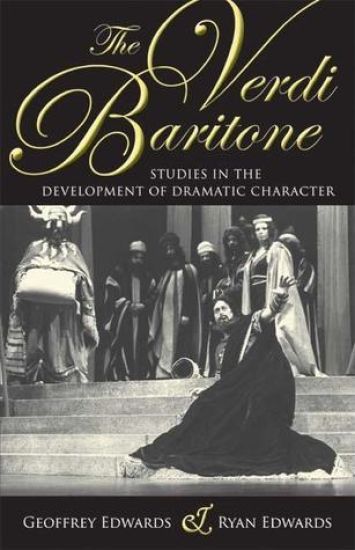
One of the most significant developments in 19th-century Italian opera was the genesis of the Verdi baritone. The authors argue that the composer's baritone characters embody "a quintessential humanity, expressing needs and temptations, confusions and understandings, griefs and joys that transcend the particulars of time and place." The Verdi Baritone explores seven of the most fascinating roles in the repertory, revealing how they were conceived and executed. This eloquent book opens with a discussion of Verdi's early triumph, Nabucco; proceeds with Ernani, Macbeth, Rigoletto, La Traviata, and Simon Boccanegra; and concludes with his final great tragedy, Otello. Voice students, professional performers, their teachers and coaches, and opera lovers, will gain insight into Verdi's masterful use of text, music, and staging to portray each character's inner self.
Whilst it is impossible to argue that the earth is flat without fearing ridicule, fallacies in economics are widespread. Such fallacies pervade the intellectual sphere and even influence policy. Professor Geoffrey Wood of the University of Buckingham exposes such popular economic fallacies in this revised edition of Fifty Economic Fallacies Exposed. Professor Wood looks at, for example, the supposed dangers of free trade, the abilities of governments to control the economy, the effects of government regulation and whether millions of jobs depend on our continued membership of the European Union. These lucid and stimulating articles are invaluable to students struggling to master some of the complexities of economic theory and its applications, who often find that the most effective way to learn economic analysis is to see such fallacies exposed. It is a text particularly suitable for first-year economics students, complementing existing textbooks as it does, and clarifying basic concepts in economics while demonstrating the practical uses of economic theory

How game designers can use the psychological phenomenon of loss aversion to shape player experience.Getting something makes you feel good, and losing something makes you feel bad. But losing something makes you feel worse than getting the same thing makes you feel good. So finding $10 is a thrill; losing $10 is a tragedy. On an "intensity of feeling" scale, loss is more intense than gain. This is the core psychological concept of loss aversion, and in this book game creator Geoffrey Engelstein explains, with examples from both tabletop and video games, how it can be a tool in game design. Loss aversion is a profound aspect of human psychology, and directly relevant to game design; it is a tool the game designer can use to elicit particular emotions in players. Engelstein connects the psychology of loss aversion to a range of phenomena related to games, exploring, for example, the endowment effect-why, when an object is ours, it gains value over an equivalent object that is not ours-as seen in the Weighted Companion Cube in the game Portal; the framing of gains and losses to manipulate player emotions; Deal or No Deal's use of the utility theory; and regret and competence as motivations, seen in the context of legacy games. Finally, Engelstein examines the approach to Loss Aversion in three games by Uwe Rosenberg, charting the designer's increasing mastery.
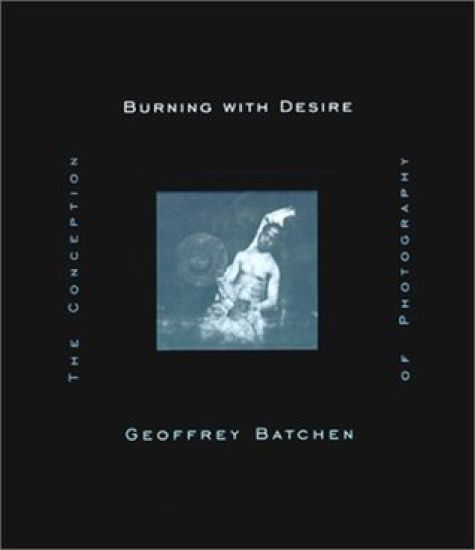
In an 1828 letter to his partner, Nicephore Niepce, Louis Daguerre wrote, "I am burning with desire to see your experiments from nature." In this book, Geoffrey Batchen analyzes the desire to photograph as it emerged within the philosophical and scientific milieus that preceded the actual invention of photography. Recent accounts of photography's identity tend to divide between the postmodern view that all identity is determined by context and a formalist effort to define the fundamental characteristics of photography as a medium. Batchen critiques both approaches by way of a detailed discussion of photography's conception in the late eighteenth and early nineteenth centuries. He examines the output of the various nominees for "first photographer," then incorporates this information into a mode of historical criticism informed by the work of Michel Foucault and Jacques Derrida. The result is a way of thinking about photography that persuasively accords with the medium's undeniable conceptual, political, and historical complexity.

A revealing and surprising look at how classification systems can shape both worldviews and social interactions.What do a seventeenth-century mortality table (whose causes of death include "fainted in a bath," "frighted," and "itch"); the identification of South Africans during apartheid as European, Asian, colored, or black; and the separation of machine- from hand-washables have in common? All are examples of classification-the scaffolding of information infrastructures.In Sorting Things Out, Geoffrey C. Bowker and Susan Leigh Star explore the role of categories and standards in shaping the modern world. In a clear and lively style, they investigate a variety of classification systems, including the International Classification of Diseases, the Nursing Interventions Classification, race classification under apartheid in South Africa, and the classification of viruses and of tuberculosis.The authors emphasize the role of invisibility in the process by which classification orders human interaction. They examine how categories are made and kept invisible, and how people can change this invisibility when necessary. They also explore systems of classification as part of the built information environment. Much as an urban historian would review highway permits and zoning decisions to tell a city's story, the authors review archives of classification design to understand how decisions have been made. Sorting Things Out has a moral agenda, for each standard and category valorizes some point of view and silences another. Standards and classifications produce advantage or suffering. Jobs are made and lost; some regions benefit at the expense of others. How these choices are made and how we think about that process are at the moral and political core of this work. The book is an important empirical source for understanding the building of information infrastructures.
How the way we hold knowledge about the past-in books, in file folders, in databases-affects the kind of stories we tell about the past.The way we record knowledge, and the web of technical, formal, and social practices that surrounds it, inevitably affects the knowledge that we record. The ways we hold knowledge about the past-in handwritten manuscripts, in printed books, in file folders, in databases-shape the kind of stories we tell about that past. In this lively and erudite look at the relation of our information infrastructures to our information, Geoffrey Bowker examines how, over the past two hundred years, information technology has converged with the nature and production of scientific knowledge. His story weaves a path between the social and political work of creating an explicit, indexical memory for science-the making of infrastructures-and the variety of ways we continually reconfigure, lose, and regain the past.At a time when memory is so cheap and its recording is so protean, Bowker reminds us of the centrality of what and how we choose to forget. In Memory Practices in the Sciences he looks at three "memory epochs" of the nineteenth, twentieth, and twenty-first centuries and their particular reconstructions and reconfigurations of scientific knowledge. The nineteenth century's central science, geology, mapped both the social and the natural world into a single time package (despite apparent discontinuities), as, in a different way, did mid-twentieth-century cybernetics. Both, Bowker argues, packaged time in ways indexed by their information technologies to permit traffic between the social and natural worlds. Today's sciences of biodiversity, meanwhile, "database the world" in a way that excludes certain spaces, entities, and times. We use the tools of the present to look at the past, says Bowker; we project onto nature our modes of organizing our own affairs.
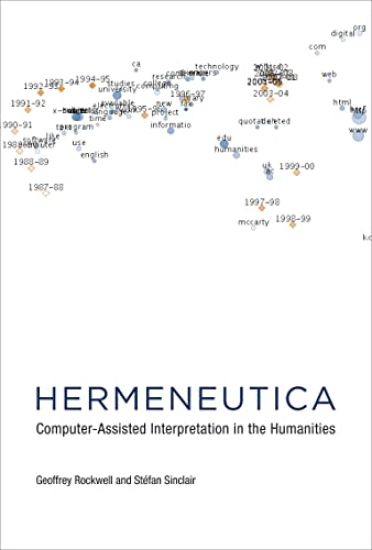
An introduction to text analysis using computer-assisted interpretive practices, accompanied by example essays that illustrate the use of these computational tools. The image of the scholar as a solitary thinker dates back at least to Descartes' Discourse on Method. But scholarly practices in the humanities are changing as older forms of communal inquiry are combined with modern research methods enabled by the Internet, accessible computing, data availability, and new media. Hermeneutica introduces text analysis using computer-assisted interpretive practices. It offers theoretical chapters about text analysis, presents a set of analytical tools (called Voyant) that instantiate the theory, and provides example essays that illustrate the use of these tools. Voyant allows users to integrate interpretation into texts by creating hermeneutica--small embeddable "toys" that can be woven into essays published online or into such online writing environments as blogs or wikis. The book's companion website, Hermeneuti.ca, offers the example essays with both text and embedded interactive panels. The panels show results and allow readers to experiment with the toys themselves.The use of these analytical tools results in a hybrid essay: an interpretive work embedded with hermeneutical toys that can be explored for technique. The hermeneutica draw on and develop such common interactive analytics as word clouds and complex data journalism interactives. Embedded in scholarly texts, they create a more engaging argument. Moving between tool and text becomes another thread in a dynamic dialogue.

Jean Jaurès was a towering intellectual and political leader of the democratic Left at the turn of the twentieth century, but he is little remembered today outside of France, and his contributions to political thought are little studied anywhere. In Jean Jaurès: The Inner Life of Social Democracy, Geoffrey Kurtz introduces Jaurès to an American audience. The parliamentary and philosophical leader of French socialism from the 1890s until his assassination in 1914, Jaurès was the only major socialist leader of his generation who was educated as a political philosopher. As he championed the reformist method that would come to be called social democracy, he sought to understand the inner life of a political tradition that accepts its own imperfection. Jaurès's call to sustain the tension between the ideal and the real resonates today.In addition to recovering the questions asked by the first generation of social democrats, Kurtz’s aim in this book is to reconstruct Jaurès’s political thought in light of current theoretical and political debates. To achieve this, he gives readings of several of Jaurès’s major writings and speeches, spanning work from his early adulthood to the final years of his life, paying attention to not just what Jaurès is saying, but how he says it.
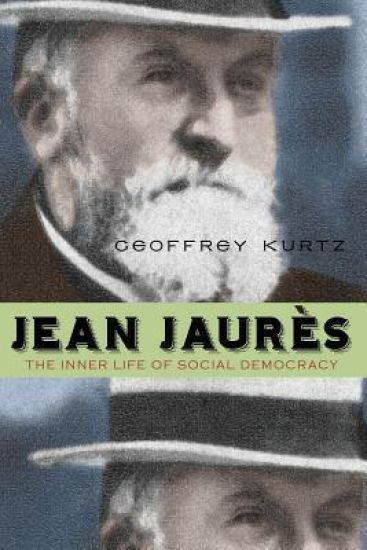
Jean Jaurès was a towering intellectual and political leader of the democratic Left at the turn of the twentieth century, but he is little remembered today outside of France, and his contributions to political thought are little studied anywhere. In Jean Jaurès: The Inner Life of Social Democracy, Geoffrey Kurtz introduces Jaurès to an American audience. The parliamentary and philosophical leader of French socialism from the 1890s until his assassination in 1914, Jaurès was the only major socialist leader of his generation who was educated as a political philosopher. As he championed the reformist method that would come to be called social democracy, he sought to understand the inner life of a political tradition that accepts its own imperfection. Jaurès's call to sustain the tension between the ideal and the real resonates today.In addition to recovering the questions asked by the first generation of social democrats, Kurtz’s aim in this book is to reconstruct Jaurès’s political thought in light of current theoretical and political debates. To achieve this, he gives readings of several of Jaurès’s major writings and speeches, spanning work from his early adulthood to the final years of his life, paying attention to not just what Jaurès is saying, but how he says it.

Interpreting Company Reports
Geoffrey Holmes; Alan Sugden; Paul Gee
Pearson Education Limited
2008
pokkari
Packed with interesting real world examples, this is a highly practical book which shows readers how to analyse company reports and accounts, both qualitatively and quantitatively.