

Kirjahaku
Etsi kirjoja tekijän nimen, kirjan nimen tai ISBN:n perusteella.
1000 tulosta hakusanalla Gerhard Hauser

Comprehensive and practical, The Internet and CBT: A Clinical Guide describes how cognitive behavioural therapy can be delivered via the Internet, email, open access programmes, online communities and via smartphone. Detailing how these alternative methods of CBT support can be integrated within a busy practice, it is invaluable for all CBT clinicians and students wishing to find out more about assessing and supporting people in innovative ways. This book enables you to: Learn how to best give advice concerning online support communities and when to recommend guided self help online Understand how to integrate online and smartphone CBT delivery into your daily practice Explore the resources and treatment programmes available Perform online assessments Guide and supervise the people in your care Comprehend issues of patient confidentiality and what you need to do to ensure safe and ethical practice With its no-nonsense and down-to-earth approach, this book covers the dos and don'ts of CBT delivery online and via smartphone and provides a highly accessible guide for students and practitioners wishing to incorporate online CBT into their work. It will be of great interest to CBT clinicians, psychologists, psychotherapists, counsellors and mental health nurses.
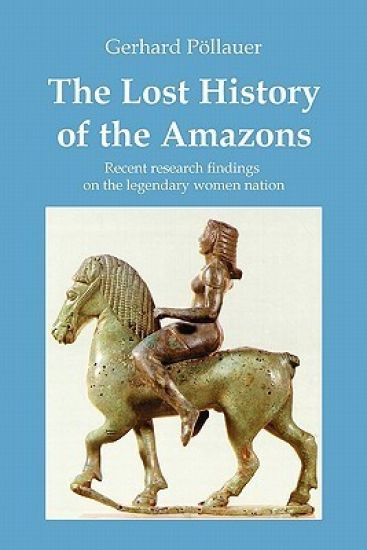
In SEARCH of the HISTORY of the AMAZONS. This book attempts to look at the phenomenon of Amazons from all sides, in order to shed more light on it and bring us close to its explanation. To fathom this legend, it is necessary first of all to refer to its earliest tradition that forms the foundation, without which the solution itself would be inconceivable. In the following, we look beyond the narrow confines of classic antiquity, to find where else in the world such Amazon-like myths exist. Our next step will be to moot different approaches to the question of Amazons. A central theme is the archeological research and our on-site investigation in those regions which are considered to have been the homelands of the Amazons, namely the land of the river Thermodon and Lemnos Island. According to this latest investigation, the lost history of the Amazons can be reconstructed.

Engineering Design
Gerhard Pahl; W. Beitz; Jörg Feldhusen; Karl-Heinrich Grote
Springer London Ltd
2014
nidottu
Engineering design must be carefully planned and systematically executed. In particular, engineering design methods must integrate the many different aspects of designing and the priorities of the end-user. Engineering Design (3rd edition) describes a systematic approach to engineering design. The authors argue that such an approach, applied flexibly and adapted to a particular task, is essential for successful product development. The design process is first broken down into phases and then into distinct steps, each with its own working methods. The third edition of this internationally-recognised text is enhanced with new perspectives and the latest thinking. These include extended treatment of product planning; new sections on organisation structures, simultaneous engineering, leadership and team behaviour; and updated chapters on quality methods and estimating costs. New examples have been added and existing ones extended, with additions on design to minimise wear, design for recycling, mechanical connections, mechatronics, and adaptronics. Engineering Design (3rd edition) is translated and edited from the sixth German edition by Ken Wallace, Professor of Engineering Design at the University of Cambridge, and Luciënne Blessing, Professor of Engineering Design and Methodology at the Technical University of Berlin. Topics covered include: fundamentals; product planning and product development; task clarification and conceptual design; embodiment design rules, principles and guidelines; mechanical connections, mechatronics and adaptronics; size ranges and modular products; quality methods; and cost estimation methods. The book provides a comprehensive guide to successful product development for practising designers, students, and design educators. Fundamentals are emphasised throughout and short-term trends avoided; so the approach described provides a sound basis for design courses that help students move quickly and effectively into design practice.

I seemingly had it all; The cars, the bikes, the boats, the houses. A beautiful wife who loved me and my own successful business. What could possibly be wrong.? Maybe the fact that I didn't take interest in any of it. I was lost in depression and didn't know why. So I drank and drank and drank. Sleep and alcohol seems my only refuge. Come with me through the looking glass and back again and see what I have found. It could possibly save your life. In this memoir, Wagner explores his substance abuse, shares his experiences, discusses what he's learned, examines the twelve-step program, and imparts the principles he believes in that help him to lead a joyful and productive life. From his birth in Germany, immigrating to the United States at age five, and surviving a volatile upbringing, Wagner highlights key events in his life and examines his descent into substance abuse and his journey back to sobriety. In "Tears of the Son, " Wagner relives some of his darkest days, but he shows how those experiences shaped him as a person and are helping him transform from just a human doing to a true human being.

I seemingly had it all; The cars, the bikes, the boats, the houses. A beautiful wife who loved me and my own successful business. What could possibly be wrong.? Maybe the fact that I didn't take interest in any of it. I was lost in depression and didn't know why. So I drank and drank and drank. Sleep and alcohol seems my only refuge. Come with me through the looking glass and back again and see what I have found. It could possibly save your life. In this memoir, Wagner explores his substance abuse, shares his experiences, discusses what he's learned, examines the twelve-step program, and imparts the principles he believes in that help him to lead a joyful and productive life. From his birth in Germany, immigrating to the United States at age five, and surviving a volatile upbringing, Wagner highlights key events in his life and examines his descent into substance abuse and his journey back to sobriety. In "Tears of the Son, " Wagner relives some of his darkest days, but he shows how those experiences shaped him as a person and are helping him transform from just a human doing to a true human being.
This concise yet comprehensive text surveys the field of bacterial metabolism in terms useful to students and researchers. Emphasis is on those metabolic reactions occurring only in bacteria. Thus, the book describes in detail the energy metabolism of the various groups of bacteria. In addition, it examines pathways used by bacteria for the degradation of organic compounds, the synthesis of cellular constituents, the regulation of bacterial metabolism and the fixation of molecular nitrogen.

Some 350 years ago, in his Discorsi e Dimostrationi Matematici [Galilei], Galileo Galilei discussed whether or not light propagated with a finite though very high velocity, or with infinite speed, instantaneously. The ques tion was an open one then, with prominent proponents for either position. For example, Rene Descartes argued on philosophical grounds that light dispersed itself into all of space instantaneously, whereas Galileo was more inclined toward the idea of a finite velocity. In fact, he even reported about an early experiment, which, however, would have to be refined and per 1 formed again to reach a definite conclusion. "Sagredo: ... However, of which kind, and how high might we estimate the velocity of light? Is the appearance instantaneous, momentaneous, or, like other movements, temporal? Could one decide this experimentally? Simplicio: Daily experience teaches us, that the spreading of light be instantaneous; if in a large distance the artillery per forms shooting exercises, we see the glare of the flame without the ear perceives the sound only after some time delay, while considerable time.

Supply Chain Optimization through Segmentation and Analytics
Gerhard J. Plenert
CRC Press Inc
2014
sidottu
We live in a world where we try to solve similar problems in structurally the same way. But they simply are not optimally solved all the same. Supply Chain Optimization through Segmentation and Analytics addresses the issue of optimizing the planning and scheduling process and asks the question; "Is there a ‘one size fits all’ solution for planning and scheduling?" The answer is a resounding "No!" We migrated through EOQ, MRP, JIT, and TOC, each time hoping to find that one size fits all. Each of these systems looked at the facility as if it had one focused problem, either optimizing work schedules, materials movement, or machine utilization. But what if you have two, or possibly even all three of these problems? Then what system do you use? Or what if your critical resource is not labor, materials, or machinery? Then which planning and scheduling solution do you utilize? This book introduces the concept of segmentation as the planning and scheduling tool that facilitates the optimization of the supply chain. If you have one type of problem in a part of your supply chain, you use the solution that appropriately focuses on that problem. If you have a different problem in a different part of your supply chain, then you use a different and appropriate tool for that part of the supply chain, and so forth. Or, if your product is in different stages of its life cycle, it probably requires a different set of tools for each stage of that life cycle. In addition, the book discusses how to integrate planning and scheduling tools using a segmentation approach that results in a world-class supply chain environment. It clearly details the power of segmentation and offers a systematic plan for implementation in the supply chain. To facilitate this, the author covers the components of an integrated segmentation policy, including the analytics elements and the measures that define segmentation success. He helps you build a strategy and methodology for introducing segmentation principles that allow you to break free from "one size fits all" thinking.

Gerhart Hauptmann's “Before Daybreak”
Gerhard Hauptmann
The University of North Carolina Press
2016
nidottu
Before Daybreak, the first important drama of German naturalism, was also the first play of Gerhart Hauptmann, the most significant naturalist of the theater. The translation, preceded by a critical introduction which places this play in historical context and discusses its form and content, is the first colloquially convincing English version that captures the several levels of diction in this seminal modern drama.Originally published in 1978.A UNC Press Enduring Edition -- UNC Press Enduring Editions use the latest in digital technology to make available again books from our distinguished backlist that were previously out of print. These editions are published unaltered from the original, and are presented in affordable paperback formats, bringing readers both historical and cultural value.
Imprimitive Irreducible Modules for Finite Quasisimple Groups
Gerhard Hiss; William J. Husen; Kay Magaard
Amer Mathematical Society
2015
pokkari


Gerhard Richter examines, in the work of Walter Benjamin, one of the central problems of modernity: the question of how to receive an intellectual inheritance. Covering aspects of Benjamin’s complex relationship to the legacies of such writers as Kant, Nietzsche, Kafka, Heidegger, and Derrida, each chapter attends to a key concern in Benjamin’s writing, while reflecting on the challenges that this issue presents for the question of inheritability and transmissibility. Both reading Benjamin and watching himself reading Benjamin, Richter participates in the act of inheriting while also inquiring into the conditions of possibility for inheriting Benjamin’s corpus today.

Gerhard Richter examines, in the work of Walter Benjamin, one of the central problems of modernity: the question of how to receive an intellectual inheritance. Covering aspects of Benjamin’s complex relationship to the legacies of such writers as Kant, Nietzsche, Kafka, Heidegger, and Derrida, each chapter attends to a key concern in Benjamin’s writing, while reflecting on the challenges that this issue presents for the question of inheritability and transmissibility. Both reading Benjamin and watching himself reading Benjamin, Richter participates in the act of inheriting while also inquiring into the conditions of possibility for inheriting Benjamin’s corpus today.

How do our ceaseless conversations with what has passed and with those who have passed something on to us propel us into a precarious future? In a series of evocatively titled theses, including 'Wrinkles', 'Inheriting a Feeling', 'Weight of the World' and 'Making Treasures Speak', Gerhard Richter engages the quintessentially human dilemma of how to receive an intellectual, cultural or political inheritance. In dialogue with philosophers including Heraclitus, Arendt and Derrida; writers such as Montaigne, Holderlin, Kafka and Knausgaard; artists such as Michelangelo, Picasso, Anselm Kiefer and Art Spiegelman; filmmakers such as Jean-Marie Straub; scholars and scientists Freud and Einstein; and pop-cultural phenomena the rock band The Who and the Broadway play The Inheritance, Richter contemplates the problem of interpreting an inheritance that resists full transparency. Richter argues that inheriting is not the same as yearning for a former presence or nostalgically striving to preserve an identity. At once philosophical and poetic, his aphoristic theses illuminate how the constantly shifting nature of our relationship to what we inherit from others makes us who we are.

How do our ceaseless conversations with what has passed and with those who have passed something on to us propel us into a precarious future? In a series of evocatively titled theses, including 'Wrinkles', 'Inheriting a Feeling', 'Weight of the World' and 'Making Treasures Speak', Gerhard Richter engages the quintessentially human dilemma of how to receive an intellectual, cultural or political inheritance. In dialogue with philosophers including Heraclitus, Arendt and Derrida; writers such as Montaigne, Holderlin, Kafka and Knausgaard; artists such as Michelangelo, Picasso, Anselm Kiefer and Art Spiegelman; filmmakers such as Jean-Marie Straub; scholars and scientists Freud and Einstein; and pop-cultural phenomena the rock band The Who and the Broadway play The Inheritance, Richter contemplates the problem of interpreting an inheritance that resists full transparency. Richter argues that inheriting is not the same as yearning for a former presence or nostalgically striving to preserve an identity. At once philosophical and poetic, his aphoristic theses illuminate how the constantly shifting nature of our relationship to what we inherit from others makes us who we are.

Creating a Generative Capability for Mindscape Theory
Gerhard Fink; Maurice Yolles
Createspace Independent Publishing Platform
2013
nidottu

Geistliches Blumengärtlein
Gerhard Tersteegen
Createspace Independent Publishing Platform
2013
nidottu
Gerhard Tersteegen: Geistliches Blumeng rtlein Edition Holzinger. Taschenbuch Berliner Ausgabe, 2017, 4. Auflage Durchgesehener Neusatz mit einer Biographie des Autors bearbeitet und eingerichtet von Michael Holzinger Erstdruck: Frankfurt a.M./ Leipzig 1729. Es folgten unmittelbar mehrere Auflagen ebenda 1735, 1738, 1745, und in Solingen 1751, 1757, 1768. Textgrundlage ist die Ausgabe: Gerhard Tersteegen: Geistliches Blumeng rtlein. Neue Ausgabe, Stuttgart: J. F. Steinkopf, 1956. Herausgeber der Reihe: Michael Holzinger Reihengestaltung: Viktor Harvion Gesetzt aus der Minion Pro, 10 pt.