Kirjojen hintavertailu. Mukana 11 244 527 kirjaa ja 12 kauppaa.

Kirjahaku

Etsi kirjoja tekijän nimen, kirjan nimen tai ISBN:n perusteella.

1000 tulosta hakusanalla Graham M. Simons

Financier and the finances of the American revolution (1891). By: William Graham Sumner ( Complete set volume 1 and 2 ): William Graham Sumner (Octobe
William Graham Sumner (October 30, 1840 - April 12, 1910) was a classical liberal (now a branch of "libertarianism" in American political philosophy) American social scientist. He taught social sciences at Yale, where he held the nation's first professorship in sociology. He was one of the most influential teachers at Yale or any major schools. Sumner was a polymath with numerous books and essays on American history, economic history, political theory, sociology, and anthropology. He supported laissez-faire economics, free markets, and the gold standard. He adopted the term "ethnocentrism" to identify the roots of imperialism, which he strongly opposed. He was a spokesman against imperialism and in favor of the "forgotten man" of the middle class, a term he coined. He had a long-term influence on conservatism in the United States.Sumner wrote an autobiographical sketch for the fourth of the histories of the Class of 1863 Yale College. In 1925, Rev. Harris E. Starr, class of 1910 Yale Department of Theology, published the first full length biography of Sumner. A second full length biography by Bruce Curtis was published in 1981. Other authors have included biographical information about Sumner as shown by citations in this "Biography" section.Sumner was born in Paterson, New Jersey, on October 30, 1840. His father, Thomas Sumner, was born in England and immigrated to the United States in 1836. His mother, Sarah Graham, was also born in England. She was brought to the United States in 1825 by her parents. Sumner's mother died when he was eight.In 1841, Sumner's father went prospecting as far west as Ohio, but came back east to New England and settled in Hartford, Connecticut, in about 1845. Sumner wrote about his high regard for his father: "His principles and habits of life were the best possible." Earlier in his life, Sumner said, that he accepted from others "views and opinions" different from his father's. However, "at the present time," Sumner wrote, "in regard to those matters, I hold with him and not with the others." Sumner did not name the "matters". Sumner was educated in the Hartford public schools. After graduation, he worked for two years as a clerk in a store before going to Yale College from which he graduated in 1863. Sumner achieved an impressive record at Yale as a scholar and orator. He was elected to the Phi Beta Kappa Society in his junior year and in his senior year to the secretive Skull and Bones society. Sumner avoided being drafted to fight in the American Civil War by paying a "substitute" $250, given to him by a friend, to enlist for three years. This and money given to him by his father and friends allowed Sumner to go to Europe for further studies. He spent his first year in the University of Geneva studying Latin and Hebrew and the following two years in the University of G ttingen studying ancient languages, history and Biblical science.All told, in his formal education, Sumner learned Hebrew, Greek, Latin, French, and German. In addition, after middle age he taught himself Dutch, Spanish, Portuguese, Italian, Russian, Polish, Danish, and Swedish. In May 1866, he went to Oxford University to study theology. At Oxford, Henry Thomas Buckle planted the sociology seed in Sumner's mind. However, Herbert Spencer was to have the "dominating influence upon Sumner's thought"....
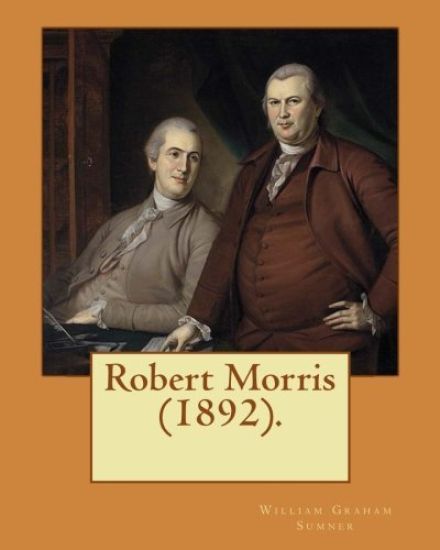
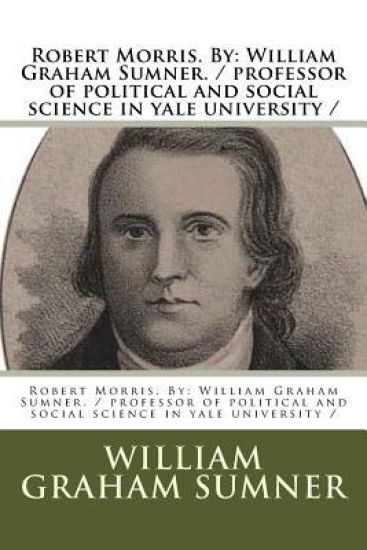
Robert Morris (1892). By: William Graham Sumner: Robert Morris, Jr. (January 20, 1734 - May 8, 1806), a Founding Father of the United States.
Robert Morris, Jr. ((January 20, 1734 - May 8, 1806), a Founding Father of the United States, was a Liverpool-born American merchant who financed the American Revolution and signed the Declaration of Independence, the Articles of Confederation, and the United States Constitution. Along with Alexander Hamilton and Albert Gallatin, he is widely regarded as one of the founders of the financial system of the United States. Born in Liverpool, Morris migrated to the United States in his teens, quickly becoming a successful businessman. In the aftermath of the French and Indian War, Morris became a prominent opponent of unpopular British policies like the Stamp Act. He was elected to the Pennsylvania Assembly, became the Chairman of the Pennsylvania Committee of Safety, and was chosen as a delegate to the Second Continental Congress. He served as chairman of the "Secret Committee of Trade" and as a member of the Committee of Correspondence. Though reluctant to break with Britain, he ultimately came to support the independence movement and emerged as an important financier of the American Revolutionary War. From 1781 to 1784, he served as the Superintendent of Finance of the United States, a forerunner to the position of Secretary of the Treasury. As the central civilian in the government, Morris was, next to General George Washington, "the most powerful man in America." 1] His successful administration led to the sobriquet, "Financier of the Revolution." At the same time he was Agent of Marine, a position he took without pay, and from which he controlled the Continental Navy. He successfully proposed numerous reforms including the creation of a national bank, but many of his ideas were not enacted. In 1787, he was elected as a delegate to the Philadelphia Convention, which created a more powerful federal government.................. William Graham Sumner (October 30, 1840 - April 12, 1910) was a classical liberal (now a branch of "libertarianism" in American political philosophy) American social scientist. He taught social sciences at Yale, where he held the nation's first professorship in sociology. He was one of the most influential teachers at Yale or any major schools. Sumner was a polymath with numerous books and essays on American history, economic history, political theory, sociology, and anthropology. He supported laissez-faire economics, free markets, and the gold standard. He adopted the term "ethnocentrism" to identify the roots of imperialism, which he strongly opposed. He was a spokesman against imperialism and in favor of the "forgotten man" of the middle class, a term he coined. He had a long-term influence on conservatism in the United States.Sumner wrote an autobiographical sketch for the fourth of the histories of the Class of 1863 Yale College. In 1925, Rev. Harris E. Starr, class of 1910 Yale Department of Theology, published the first full length biography of Sumner. A second full length biography by Bruce Curtis was published in 1981. Other authors have included biographical information about Sumner as shown by citations in this "Biography" section.Sumner was born in Paterson, New Jersey, on October 30, 1840. His father, Thomas Sumner, was born in England and immigrated to the United States in 1836. His mother, Sarah Graham, was also born in England. She was brought to the United States in 1825 by her parents. Sumner's mother died when he was eight.In 1841, Sumner's father went prospecting as far west as Ohio, but came back east to New England and settled in Hartford, Connecticut, in about 1845. Sumner wrote about his high regard for his father: "His principles and habits of life were the best possible." Earlier in his life, Sumner said, that he accepted from others "views and opinions" different from his father's. However, "at the present time," Sumner wrote, "in regard to those matters, I hold with him and not with the others." Sumner did not name the "matters"....
Alexander Graham Bell: The Man Behind the Telephone
A world without telephones? Impossible for most young readers to imagine. Let them know they can thank inventor Alexander Graham Bell for every ringtone Filled with facts and photos, Bell's story highlights the scientific process he followed, failures and all, from identifying a problem to getting his communication technology into the hands of users.
Robert Morris. By: William Graham Sumner. / professor of political and social science in yale university /
William Graham Sumner (October 30, 1840 - April 12, 1910) was a classical liberal (now a branch of "libertarianism" in American political philosophy) American social scientist. He taught social sciences at Yale, where he held the nation's first professorship in sociology. He was one of the most influential teachers at Yale or any major schools. Sumner wrote widely within the social sciences, with numerous books and essays on American history, economic history, political theory, sociology, and anthropology. He supported laissez-faire economics, free markets, and the gold standard. He adopted the term "ethnocentrism" to identify the roots of imperialism, which he strongly opposed. He was a spokesman against imperialism and in favor of the "forgotten man" of the middle class, a term he coined. He had a long-term influence on conservatism in the United States.Sumner wrote an autobiographical sketch for the fourth of the histories of the Class of 1863 Yale College. In 1925, Rev. Harris E. Starr, class of 1910 Yale Department of Theology, published the first full length biography of Sumner.A second full length biography by Bruce Curtis was published in 1981. Other authors have included biographical information about Sumner as shown by citations in this "Biography" section.Sumner was born in Paterson, New Jersey, on October 30, 1840. His father, Thomas Sumner, was born in England and immigrated to the United States in 1836. His mother, Sarah Graham, was also born in England. She was brought to the United States in 1825 by her parents. Sumner's mother died when he was eight.
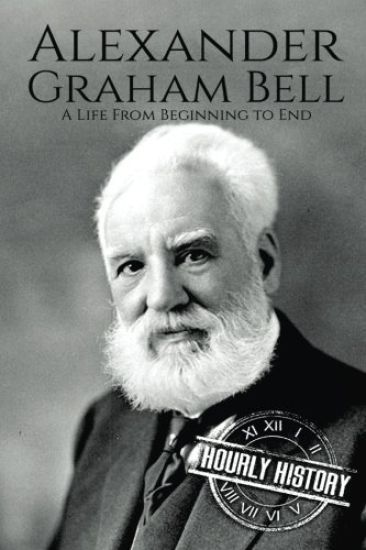
Alexander Graham Bell

Alexander Graham Bell

Hourly History

Createspace Independent Publishing Platform
2018
pokkari
Alexander Graham BellEducator. Innovator. Inventor. These three words sum up Alexander Graham Bell, one of the greatest scientific men of his era. He is most famous for the invention of the telephone, a device which he predicted would transform human society. And it did. But the telephone is just one of the many innovations and inventions that Bell brought into being.Inside you will read about...- Childhood- Emigration to North America- The Bell Telephone Company- The Race to Save the President- A Rival to the Wright Brothers- Later Years and DeathAnd much more A man who epitomizes the word visionary, Alexander Graham Bell predicted the use of light as a medium for transmitting information and how humanity would be transformed by flight. This is his story.
James Graham

James Graham

Maryam Philpott

Springer International Publishing AG
2024
sidottu
James Graham is one of the UK’s leading dramatists, a multi-award-winning writer who for almost 20 years has analysed and articulated concepts of power and authority in modern British society. James Graham: State of the Nation Playwright is the first full-length assessment of the writer’s output, applying core thematic areas - Democracy, Anarchy, Famous Faces and Television - to understand how different power bases operate in modern society, their effectiveness and influence, and how they came to pre-eminence during the last 70 years. The book concludes with an evaluation of Graham’s contribution to state-of-the-nation debates, Britain’s cycles of decline and its consequences for understanding contemporary national identity.
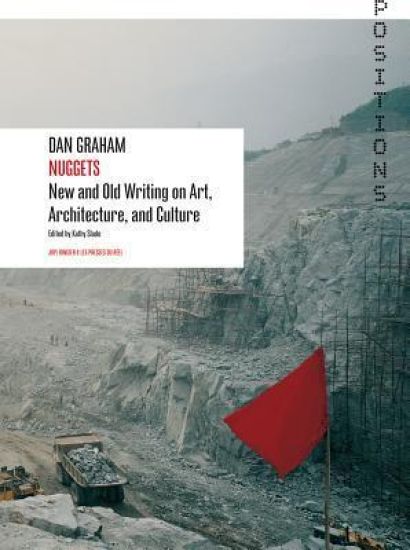
Dan Graham

Dan Graham

Dan Graham

JRP Ringier
2012
nidottu
Dan Graham (born 1942) began his career directing the John Daniels Gallery in New York City in 1964, where he mounted Sol LeWitt's first one-man show. His acclaimed group shows included works by artists such as Donald Judd, Dan Flavin and Robert Smithson. Like them, Graham considered himself a writer-artist, publishing essays and reviews on topics ranging from rock music to Eisenhower's paintings and Dean Martin's television show. His earliest projects dealt with the magazine page, and one of his seminal early works was a series of magazine-style photographs with text, "Homes for America" (1966-1967). Today he is among America's most prominent artists, both as a practitioner and as a well-respected critic and theorist. This important and substantial collection brings together an assortment of texts both old and new, with writings on art, artists' books, architecture and various artists Graham admires, such as Carl Andre, Sol LeWitt, Claes Oldenburg, Jeff Wall and John Chamberlain. Also included is a selection of interviews conducted since the 1990s, most notably on his large-scale installations and pavilions incorporating mirrors--a culmination of his long examination of the psychological relationship between people and architecture. This book is part of JRP-Ringier's Positions series, co-published with Les Presses du reel.
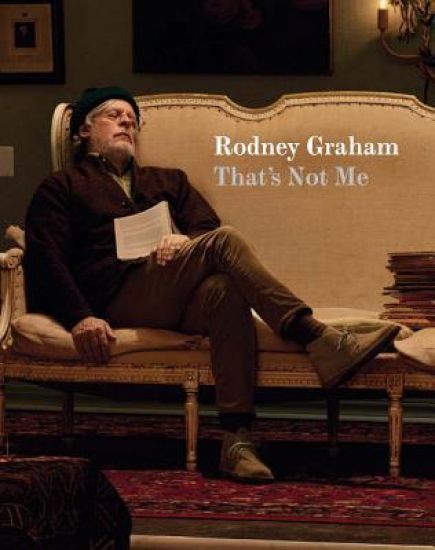
Rodney Graham

Rodney Graham

Patrik Andersson; Briony Fer; Rodney Graham; Robert Linsley; Sarah Munro; Harry Pearson; Alessandro Vincentelli

JRP Ringier
2017
nidottu
The figure of the artist remains a central subject of investigation for Vancouver artist Rodney Graham (born 1949), who is known for straddling many vocations simultaneously: painter, photographer, writer, philosopher, actor, psychologist, scientist and musician. This new monograph, published for Graham's exhibition at the BALTIC Centre in the UK, gathers works made between 1994 and 2017--in particular his photographic lightboxes and his musical production--that focus on the self-portrait. Graham shows himself starring in various fictional roles (artist, musician, actor, lighthouse keeper, paddler, reader). In her essay, Briony Fer observes that "as much as Graham makes pictures that cohere as mise-en-sc nes, and that operate self-reflexively to speculate on the very mechanics of the image, so it is impossible to keep all the allusions in check."
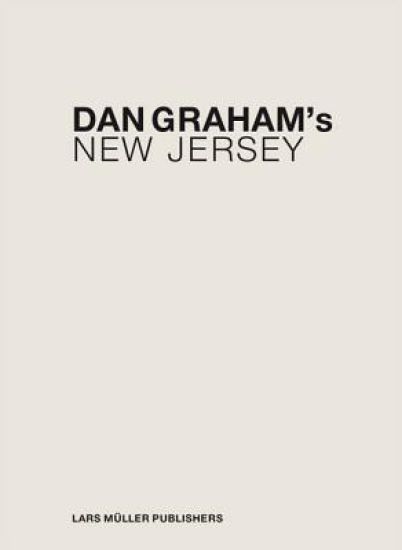
Dan Graham's New Jersey

Dan Graham's New Jersey

Mark Wigley; Mark Wasiuta

Lars Muller Publishers
2011
sidottu
Dan Graham, one of America's most important contemporary artists, is best known today for his sculptural works and installations. His photographic works are generally not so well known, despite the fact that he first became famous for his photographic series, Homes for America, pictures of typical American suburbia. To this day the theme of architecture and its surfaces represents an extremely important facet of his work, as does the question of what role it plays in postmodern society and in the context of everyday culture. This publication presents new photographs by Dan Graham, taken in the context of a study trip with the architecture faculty of Columbia University, together with a selection of original photographs from the Homes for America series. The new images exhibit stark similarities to the old pictures, because they were taken in the same locations, in the same deserts of suburban streets and housing that Graham had photographed in the 1960s. This creates a fascinating reference system of repetitions and differences, in terms of both the temporal and the spatial, that asks questions of the viewer about architecture, public space, and their function in society.
Dan Graham Video - Architecture - Television
This title, published in 1979 and long since out of print, now appears as a reprint from Lars Muller Publishers. The original book was released in the series of publications Source Materials of the Contemporary Arts initiated by Kasper Konig and produced by the Press of the Nova Scotia College of Art and Design. The publication represents an important document in Dan Graham's artistic examination of the video medium. Graham's installations and performances with video from the years 1970 - 78 are documented with numerous illustrations, photos, and brief descriptions. In addition, the volume contains an essay by the artist in which he examines the various possibilities and forms of representation offered by the video medium, and draws the boundaries between these and representational spaces in television, film, or architecture. The book also offers contributions by Michael Asher and Dara Birnbaum, as well as an annex with a biography and bibliography.
Walter Graham, Statesman

Walter Graham, Statesman

Thomas Whitson; Richard Hooker Wilmer

Hansebooks
2017
pokkari
Walter Graham, Statesman - An American Romance is an unchanged, high-quality reprint of the original edition of 1891. Hansebooks is editor of the literature on different topic areas such as research and science, travel and expeditions, cooking and nutrition, medicine, and other genres. As a publisher we focus on the preservation of historical literature. Many works of historical writers and scientists are available today as antiques only. Hansebooks newly publishes these books and contributes to the preservation of literature which has become rare and historical knowledge for the future.
Memoir of General Graham

Memoir of General Graham

Samuel Graham; James John Graham

Hansebooks
2019
pokkari
Memoir of General Graham is an unchanged, high-quality reprint of the original edition of 1862. Hansebooks is editor of the literature on different topic areas such as research and science, travel and expeditions, cooking and nutrition, medicine, and other genres. As a publisher we focus on the preservation of historical literature. Many works of historical writers and scientists are available today as antiques only. Hansebooks newly publishes these books and contributes to the preservation of literature which has become rare and historical knowledge for the future.
Dr. Graham Has Had the Honour

Dr. Graham Has Had the Honour

James Graham

Hansebooks
2021
pokkari
Dr. Graham Has Had the Honour - A few of the cures which Dr. Graham has had the happiness, under God of performing by earth-bathing, and by well-adapted medicines, regimen, etc. is an unchanged, high-quality reprint of the original edition of 1793. Hansebooks is editor of the literature on different topic areas such as research and science, travel and expeditions, cooking and nutrition, medicine, and other genres. As a publisher we focus on the preservation of historical literature. Many works of historical writers and scientists are available today as antiques only. Hansebooks newly publishes these books and contributes to the preservation of literature which has become rare and historical knowledge for the future.
Fred Graham's Resolve

Fred Graham's Resolve

Anatiposi Verlag
2023
pokkari
Reprint of the original, first published in 1872. The publishing house Anatiposi publishes historical books as reprints. Due to their age, these books may have missing pages or inferior quality. Our aim is to preserve these books and make them available to the public so that they do not get lost.