
Kirjahaku
Etsi kirjoja tekijän nimen, kirjan nimen tai ISBN:n perusteella.
1000 tulosta hakusanalla Hans Rust; Rust Hans 1879-
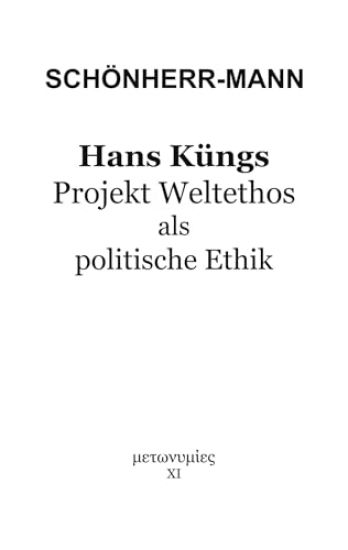
Hans Küngs Projekt Weltethos als politische Ethik
Hans-Martin Schönherr-Mann
BoD - Books on Demand
2024
pokkari
Das 'Projekt Weltethos' hatte an seinen Anf ngen prim r einen kumenischen Sinn und wollte zum Frieden zwischen den Religionen beitragen, als sich religi se Konflikte wieder versch rften. Die 'Weltethos-Erkl rung' des Parlaments der Weltreligionen 1993 beruht auf den ethischen Gemeinsamkeiten der Weltreligionen. hnliches l sst sich auch f r die Philosophie bemerken. Der philosophischen Ethik in demokratischer Perspektive geht es um die Vermittlung von Konflikten, beispielsweise zwischen Staat und Individuum. Im 20. Jahrhundert fordern viele Menschen M ndigkeit und politische Teilhabe ein und bestimmen ihre ethischen Orientierungen selbst. Wenn viele dabei hnlichen Grundwerten folgen, erh lt das Weltethos ein lebendiges Fundament. Das Weltethos avanciert dadurch zu einem einflussreichen Projekt der politischen Ethik.
Hans Tietgens und die Erwachsenenbildung
Wiltrud Gieseke; Bernd Käpplinger
wbv Media GmbH
2023
pokkari
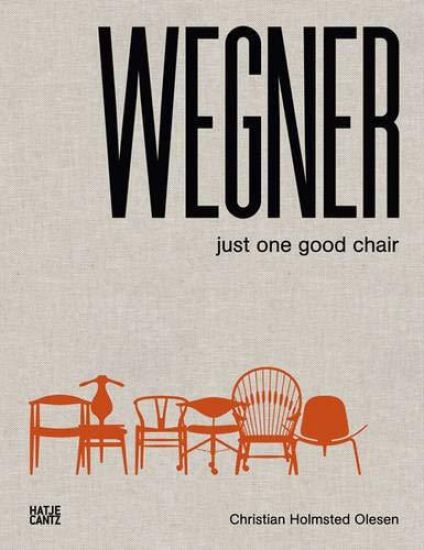
Hans J. Wegner (German Edition)
Hatje Cantz
2014
sidottu
The name Hans J. Wegner (1914–2007) is inseparable from his unrivalled chairs, which helped Danish design to achieve its international breakthrough. Every design fan has his or her favorite from among Wegner’s approximately five hundred creations. Today, there is a hardly a glossy interior design magazine that does not include an illustration of the elegant China Chair (1943) or the Y Chair (1950), and even John F. Kennedy sat on his Round Chair, which is now simply called The Chair (1949). Trained as a furniture maker, Wegner usually made his prototypes himself by hand, using traditional joinery techniques such as tongue-and-groove or finger joints. In the process he pushed the limitations of wood, giving his designs an unmatched elegance. His sense of humor did not fall by the wayside, either, as evidenced by his splendid Peacock Chair (1947) or the masculine Ox Chair (1960), that latter of which is available with or without horns. (English edition ISBN 978-3-7757-3809-5)
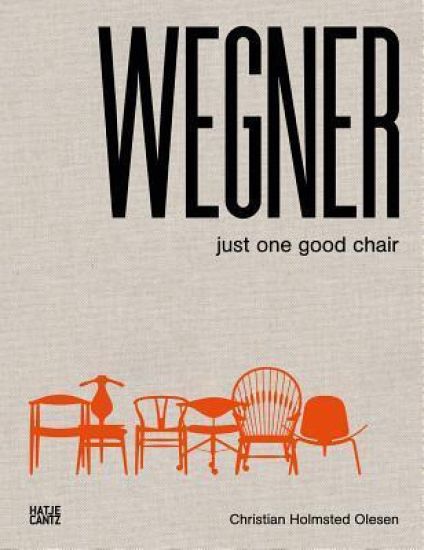
The name Hans J. Wegner (1914–2007) is inseparable from his unrivalled chairs, which helped Danish design to achieve its international breakthrough. Every design fan has his or her favorite from among Wegner’s approximately five hundred creations. Today, there is a hardly a glossy interior design magazine that does not include an illustration of the elegant China Chair (1943) or the Y Chair (1950), and even John F. Kennedy sat on his Round Chair, which is now simply called The Chair (1949). Trained as a furniture maker, Wegner usually made his prototypes himself by hand, using traditional joinery techniques such as tongue-and-groove or finger joints. In the process he pushed the limitations of wood, giving his designs an unmatched elegance. His sense of humor did not fall by the wayside, either, as evidenced by his splendid Peacock Chair (1947) or the masculine Ox Chair (1960), that latter of which is available with or without horns. (German edition ISBN 978-3-7757-3808-8)
HANS UHLMANN
THAMESHUDSON
2022
sidottu
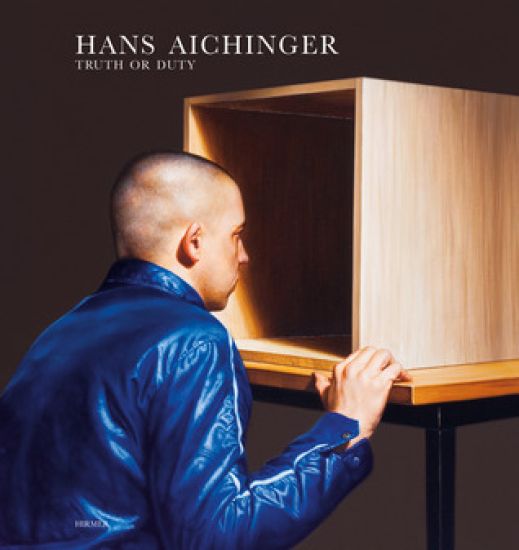
The oeuvre of the Leipzig-based artist Hans Aichinger (1959) is dedicated to the representational. Figural compositions with a great density of content that can be ascribed to the New Leipzig School are executed in a hyper-realistic manner of painting and virtuoso artistic technique.
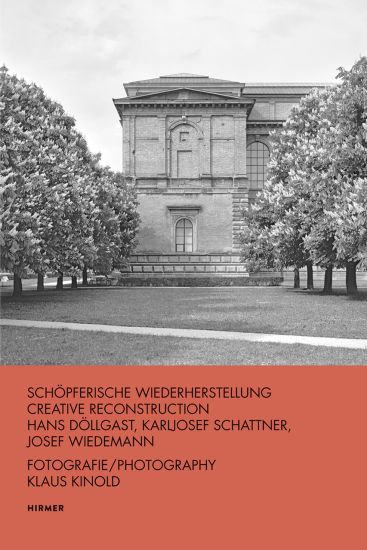
The “creative reconstruction” of damaged buildings was an important topic in architecture after the Second World War, particularly in Bavaria. The Munich architect Hans Döllgast (1891–1974) was one of the pioneers of this development. His most important achievements include the repairs to the Alte Pinakothek, the Basilica of St. Bonifaz and the main municipal cemeteries. Hans Döllgast was succeeded above all by two of his students, whose work can be seen as exemplary. Karljosef Schattner (1924–2012), for many years the diocesan architect of the Bishopric of Eichstätt, saved threate-ned build ings in the episcopal city such as the Old Orphanage by adding a contemporary extension, or gave a new lease of life to historic buildings such as the Ulmer Hof by means of functional additions. In the case of Hirschberg Palace he boldly placed a modern wing in front of the south façade. Josef Wiedemann (1910–2001) was an outstanding architect of the reconstruction of Munich. The interpretative reconstruction of the badly damaged Glyptothek on Königsplatz is regarded as one of his masterpieces.
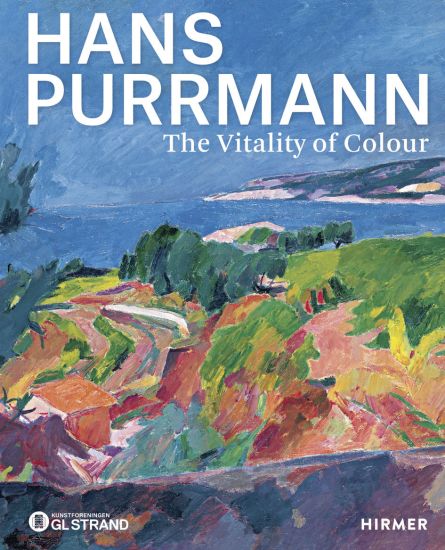
A master of colour and an ambitious cosmopolite: Hans Purrmann (1880–1966) was an authoritative figure who forged links in European Modernism both as an artist and a personality, as a stylist and a figure of social integration. The balance between a record of what he saw and the visual reflexion of painting as a form of expression hovers lightly in his pictures.As a young man Purrmann encountered the latest movements of the art of his time in Munich and Berlin, but after moving to Paris he established contact with the avant-garde in the circle of artists at the Café du Dôme. He became a student and friend of Henri Matisse, with whom he ran an art school. Political events and the world wars turned Purrmann into an artist who travelled through Europe and who knew how to find his subjects based on the beauties of the world in every location. The book offers a representative cross-section through hisopulently colourful work.Text in English and Danish.
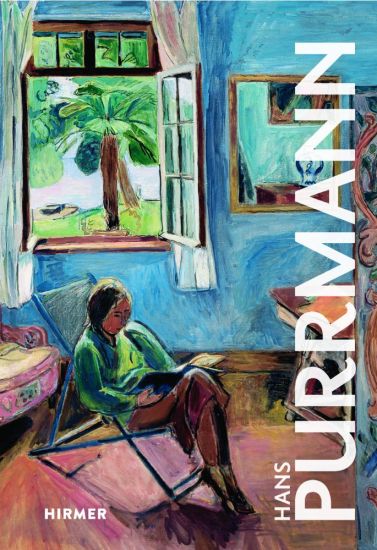
The painter Hans Purrmann (1880–1966) ranks among the most important colourists of twentieth- entury art. Drawing on Henri Matisse and the expressionists, he developed a distinct and acclaimed artistic practice over the course of a life lived in places from Munich to Paris to Berlin to Florence to Switzerland. Part of the secret of Hans Purrmann’s art is that in his work he translated the visible in a very specific and vibrant manner. With irrepressible curiosity, attentiveness and an unerring eye for beauty and the primal and essential, he produced works whose classification as “representational painting” falls short. In fact, his place in art history is one which continues to offer points of departure for modernism [“einen für die Moderne bis heute anschlussfähigen Rang”: in der Kunst ist die Moderne eine abgeschlossene Epoche]: in 1955 Purrmann was included in documenta I in Kassel, and in 1962 he was the subject of a major retrospective at the Haus der Kunst in Munich which was hailed by the press as a sensation. Based on new sources, Christoph Wagner presents the life and work of Hans Purrmann and places the painter as a prominent protagonist within the coordinates of twentieth-century art history.
Hans Haacke
Hirmer Verlag GmbH
2024
sidottu
Hans Haacke
HIRMER VERLAG
2025
sidottu
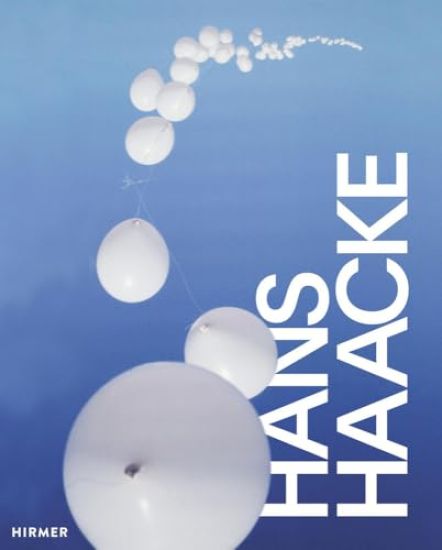
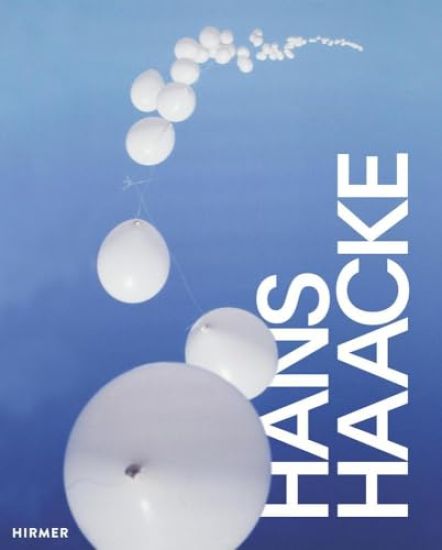
Engage in pursuit of democracy and social change through the provocative and political art of Hans Hacke. Hans Haacke is a legend of political conceptual art, and at the same time, his work is highly topical and of great relevance today. As a founding figure of artistic institutional critique, Haacke redefined the relationship between art and society, as well as influenced generations of artists. This lavishly illustrated volume, Hans Haacke, presents a comprehensive introduction to the German-American artist with works from 1959 to the present day. Haacke's works are provocative and political, but also humorous and poetical. In his early work of the 1960s, he initially reflected on biological and physical (eco-)systems before turning his attention to socio-political structures, which he then subjected to a sharp--often unsparing--analysis. Thus, he examines the abuse of power, historical and political upheavals, the entanglement of public institutions, politics and the economy, and anti-democratic tendencies. He insists on the societal relevance of art and its transformative potential.
Hans S. Falck: Nicht Wohltätigkeit, sondern Gerechtigkeit
Timm Kunstreich
Juventa Verlag GmbH
2022
pokkari