Kirjojen hintavertailu. Mukana 12 595 353 kirjaa ja 12 kauppaa.

Kirjahaku

Etsi kirjoja tekijän nimen, kirjan nimen tai ISBN:n perusteella.

1000 tulosta hakusanalla Harris

John Law, the projector. By: William Harrison Ainsworth: Novel

John Law, the projector. By: William Harrison Ainsworth: Novel

William Harrison Ainsworth

Createspace Independent Publishing Platform
2017
nidottu
William Harrison Ainsworth (4 February 1805 - 3 January 1882) was an English historical novelist born at King Street in Manchester. He trained as a lawyer, but the legal profession held no attraction for him. While completing his legal studies in London he met the publisher John Ebers, at that time manager of the King's Theatre, Haymarket. Ebers introduced Ainsworth to literary and dramatic circles, and to his daughter, who became Ainsworth's wife. Ainsworth briefly tried the publishing business, but soon gave it up and devoted himself to journalism and literature. His first success as a writer came with Rookwood in 1834, which features Dick Turpin as its leading character. A stream of 39 novels followed, the last of which appeared in 1881. Ainsworth died in Reigate on 3 January 1882. EARLY LIFE: Ainsworth was born on 4 February 1805 in the family house at 21 King Street, Manchester, to Thomas Ainsworth, a prominent Manchester lawyer, and Ann (Harrison) Ainsworth, the daughter of the Rev. Ralph Harrison, the Unitarian minister at Manchester Cross Street Chapel. On 4 October 1806, Ainsworth's brother, Thomas Gilbert Ainsworth, was born. Although the family home was eventually destroyed, it was a three-storey Georgian home in a well-to-do community. The area influenced Ainsworth with its historical and romantic atmosphere, which existed until the community was later replaced by commercial buildings. Besides the community, Ainsworth read romantic works as a child and enjoyed stories dealing with either adventure or supernatural themes. Of these, Dick Turpin was a favourite of Ainsworth. During his childhood, he adopted Jacobean ideas and held Tory ideas in addition to his Jacobite sympathies, even though his community was strict Whig and Nonconformist. During this time, Ainsworth began to write prolifically. The Ainsworth family moved to Smedly Lane, north of Manchester in Cheetham Hill, during 1811. They kept the old residence in addition to the new, but resided in the new home most of the time. The surrounding hilly country was covered in woods, which allowed Ainsworth and his brother to act out various stories. When not playing, Ainsworth was tutored by his uncle, William Harrison. In March 1817, he was enrolled at Manchester Grammar School, which was described in his novel Mervyn Clitheroe. The work emphasised that his classical education was of good quality but was reinforced with strict discipline and corporal punishment. Ainsworth was a strong student and was popular among his fellow students. His school days were mixed; his time within the school and with his family was calm even though there were struggles within the Manchester community, the Peterloo Massacre taking place in 1819. Ainsworth was connected to the event because his uncles joined in protest at the incident, but Ainsworth was able to avoid most of the political after-effects. During the time, he was able to pursue his own literary interests and even created his own little theatre within the family home at King Street. Along with his friends and brother, he created and acted in many plays throughout 1820. During 1820, Ainsworth began to publish many of his works under the name "Thomas Hall". .......
Old court; a novel By: William Harrison Ainsworth: Novel (World's classic's)

Old court; a novel By: William Harrison Ainsworth: Novel (World's classic's)

William Harrison Ainsworth

Createspace Independent Publishing Platform
2017
nidottu
William Harrison Ainsworth (4 February 1805 - 3 January 1882) was an English historical novelist born at King Street in Manchester. He trained as a lawyer, but the legal profession held no attraction for him. While completing his legal studies in London he met the publisher John Ebers, at that time manager of the King's Theatre, Haymarket. Ebers introduced Ainsworth to literary and dramatic circles, and to his daughter, who became Ainsworth's wife. Ainsworth briefly tried the publishing business, but soon gave it up and devoted himself to journalism and literature. His first success as a writer came with Rookwood in 1834, which features Dick Turpin as its leading character. A stream of 39 novels followed, the last of which appeared in 1881. Ainsworth died in Reigate on 3 January 1882. EARLY LIFE: Ainsworth was born on 4 February 1805 in the family house at 21 King Street, Manchester, to Thomas Ainsworth, a prominent Manchester lawyer, and Ann (Harrison) Ainsworth, the daughter of the Rev. Ralph Harrison, the Unitarian minister at Manchester Cross Street Chapel. On 4 October 1806, Ainsworth's brother, Thomas Gilbert Ainsworth, was born. Although the family home was eventually destroyed, it was a three-storey Georgian home in a well-to-do community. The area influenced Ainsworth with its historical and romantic atmosphere, which existed until the community was later replaced by commercial buildings. Besides the community, Ainsworth read romantic works as a child and enjoyed stories dealing with either adventure or supernatural themes. Of these, Dick Turpin was a favourite of Ainsworth. During his childhood, he adopted Jacobean ideas and held Tory ideas in addition to his Jacobite sympathies, even though his community was strict Whig and Nonconformist. During this time, Ainsworth began to write prolifically. The Ainsworth family moved to Smedly Lane, north of Manchester in Cheetham Hill, during 1811. They kept the old residence in addition to the new, but resided in the new home most of the time. The surrounding hilly country was covered in woods, which allowed Ainsworth and his brother to act out various stories. When not playing, Ainsworth was tutored by his uncle, William Harrison. In March 1817, he was enrolled at Manchester Grammar School, which was described in his novel Mervyn Clitheroe. The work emphasised that his classical education was of good quality but was reinforced with strict discipline and corporal punishment. Ainsworth was a strong student and was popular among his fellow students. His school days were mixed; his time within the school and with his family was calm even though there were struggles within the Manchester community, the Peterloo Massacre taking place in 1819. Ainsworth was connected to the event because his uncles joined in protest at the incident, but Ainsworth was able to avoid most of the political after-effects. During the time, he was able to pursue his own literary interests and even created his own little theatre within the family home at King Street. Along with his friends and brother, he created and acted in many plays throughout 1820. During 1820, Ainsworth began to publish many of his works under the name "Thomas Hall"............
Myddleton Pomfret. A novel By: William Harrison Ainsworth: Novel (World's classic's)

Myddleton Pomfret. A novel By: William Harrison Ainsworth: Novel (World's classic's)

William Harrison Ainsworth

Createspace Independent Publishing Platform
2017
nidottu
William Harrison Ainsworth (4 February 1805 - 3 January 1882) was an English historical novelist born at King Street in Manchester. He trained as a lawyer, but the legal profession held no attraction for him. While completing his legal studies in London he met the publisher John Ebers, at that time manager of the King's Theatre, Haymarket. Ebers introduced Ainsworth to literary and dramatic circles, and to his daughter, who became Ainsworth's wife. Ainsworth briefly tried the publishing business, but soon gave it up and devoted himself to journalism and literature. His first success as a writer came with Rookwood in 1834, which features Dick Turpin as its leading character. A stream of 39 novels followed, the last of which appeared in 1881. Ainsworth died in Reigate on 3 January 1882. EARLY LIFE: Ainsworth was born on 4 February 1805 in the family house at 21 King Street, Manchester, to Thomas Ainsworth, a prominent Manchester lawyer, and Ann (Harrison) Ainsworth, the daughter of the Rev. Ralph Harrison, the Unitarian minister at Manchester Cross Street Chapel. On 4 October 1806, Ainsworth's brother, Thomas Gilbert Ainsworth, was born. Although the family home was eventually destroyed, it was a three-storey Georgian home in a well-to-do community. The area influenced Ainsworth with its historical and romantic atmosphere, which existed until the community was later replaced by commercial buildings. Besides the community, Ainsworth read romantic works as a child and enjoyed stories dealing with either adventure or supernatural themes. Of these, Dick Turpin was a favourite of Ainsworth. During his childhood, he adopted Jacobean ideas and held Tory ideas in addition to his Jacobite sympathies, even though his community was strict Whig and Nonconformist. During this time, Ainsworth began to write prolifically. The Ainsworth family moved to Smedly Lane, north of Manchester in Cheetham Hill, during 1811. They kept the old residence in addition to the new, but resided in the new home most of the time. The surrounding hilly country was covered in woods, which allowed Ainsworth and his brother to act out various stories. When not playing, Ainsworth was tutored by his uncle, William Harrison. In March 1817, he was enrolled at Manchester Grammar School, which was described in his novel Mervyn Clitheroe. The work emphasised that his classical education was of good quality but was reinforced with strict discipline and corporal punishment. Ainsworth was a strong student and was popular among his fellow students. His school days were mixed; his time within the school and with his family was calm even though there were struggles within the Manchester community, the Peterloo Massacre taking place in 1819. Ainsworth was connected to the event because his uncles joined in protest at the incident, but Ainsworth was able to avoid most of the political after-effects. During the time, he was able to pursue his own literary interests and even created his own little theatre within the family home at King Street. Along with his friends and brother, he created and acted in many plays throughout 1820. During 1820, Ainsworth began to publish many of his works under the name "Thomas Hall". ...
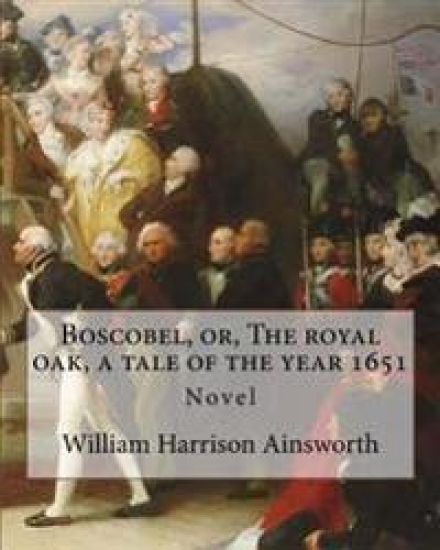
Boscobel, or, The royal oak, a tale of the year 1651. By: William Harrison Ainsworth (illustrated): Novel
William Harrison Ainsworth (4 February 1805 - 3 January 1882) was an English historical novelist born at King Street in Manchester. He trained as a lawyer, but the legal profession held no attraction for him. While completing his legal studies in London he met the publisher John Ebers, at that time manager of the King's Theatre, Haymarket. Ebers introduced Ainsworth to literary and dramatic circles, and to his daughter, who became Ainsworth's wife. Ainsworth briefly tried the publishing business, but soon gave it up and devoted himself to journalism and literature. His first success as a writer came with Rookwood in 1834, which features Dick Turpin as its leading character. A stream of 39 novels followed, the last of which appeared in 1881. Ainsworth died in Reigate on 3 January 1882. EARLY LIFE: Ainsworth was born on 4 February 1805 in the family house at 21 King Street, Manchester, to Thomas Ainsworth, a prominent Manchester lawyer, and Ann (Harrison) Ainsworth, the daughter of the Rev. Ralph Harrison, the Unitarian minister at Manchester Cross Street Chapel. On 4 October 1806, Ainsworth's brother, Thomas Gilbert Ainsworth, was born. Although the family home was eventually destroyed, it was a three-storey Georgian home in a well-to-do community. The area influenced Ainsworth with its historical and romantic atmosphere, which existed until the community was later replaced by commercial buildings. Besides the community, Ainsworth read romantic works as a child and enjoyed stories dealing with either adventure or supernatural themes. Of these, Dick Turpin was a favourite of Ainsworth. During his childhood, he adopted Jacobean ideas and held Tory ideas in addition to his Jacobite sympathies, even though his community was strict Whig and Nonconformist. During this time, Ainsworth began to write prolifically. The Ainsworth family moved to Smedly Lane, north of Manchester in Cheetham Hill, during 1811. They kept the old residence in addition to the new, but resided in the new home most of the time. The surrounding hilly country was covered in woods, which allowed Ainsworth and his brother to act out various stories. When not playing, Ainsworth was tutored by his uncle, William Harrison. In March 1817, he was enrolled at Manchester Grammar School, which was described in his novel Mervyn Clitheroe. The work emphasised that his classical education was of good quality but was reinforced with strict discipline and corporal punishment. Ainsworth was a strong student and was popular among his fellow students. His school days were mixed; his time within the school and with his family was calm even though there were struggles within the Manchester community, the Peterloo Massacre taking place in 1819. Ainsworth was connected to the event because his uncles joined in protest at the incident, but Ainsworth was able to avoid most of the political after-effects. During the time, he was able to pursue his own literary interests and even created his own little theatre within the family home at King Street. Along with his friends and brother, he created and acted in many plays throughout 1820. During 1820, Ainsworth began to publish many of his works under the name "Thomas Hall".
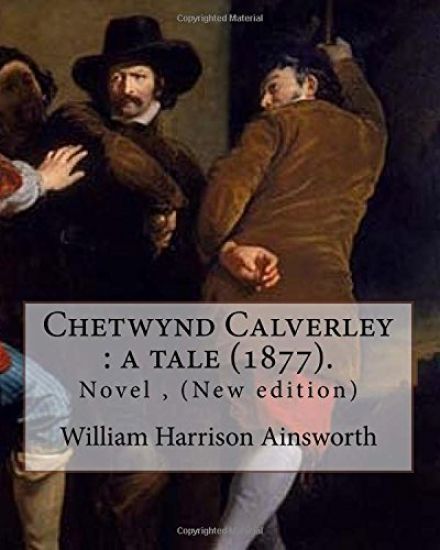
Chetwynd Calverley: a tale (1877). By: William Harrison Ainsworth: Novel ( New edition )

Chetwynd Calverley: a tale (1877). By: William Harrison Ainsworth: Novel ( New edition )

William Harrison Ainsworth

Createspace Independent Publishing Platform
2017
nidottu
William Harrison Ainsworth (4 February 1805 - 3 January 1882) was an English historical novelist born at King Street in Manchester. He trained as a lawyer, but the legal profession held no attraction for him. While completing his legal studies in London he met the publisher John Ebers, at that time manager of the King's Theatre, Haymarket. Ebers introduced Ainsworth to literary and dramatic circles, and to his daughter, who became Ainsworth's wife. Ainsworth briefly tried the publishing business, but soon gave it up and devoted himself to journalism and literature. His first success as a writer came with Rookwood in 1834, which features Dick Turpin as its leading character. A stream of 39 novels followed, the last of which appeared in 1881. Ainsworth died in Reigate on 3 January 1882. EARLY LIFE: Ainsworth was born on 4 February 1805 in the family house at 21 King Street, Manchester, to Thomas Ainsworth, a prominent Manchester lawyer, and Ann (Harrison) Ainsworth, the daughter of the Rev. Ralph Harrison, the Unitarian minister at Manchester Cross Street Chapel. On 4 October 1806, Ainsworth's brother, Thomas Gilbert Ainsworth, was born. Although the family home was eventually destroyed, it was a three-storey Georgian home in a well-to-do community. The area influenced Ainsworth with its historical and romantic atmosphere, which existed until the community was later replaced by commercial buildings. Besides the community, Ainsworth read romantic works as a child and enjoyed stories dealing with either adventure or supernatural themes. Of these, Dick Turpin was a favourite of Ainsworth. During his childhood, he adopted Jacobean ideas and held Tory ideas in addition to his Jacobite sympathies, even though his community was strict Whig and Nonconformist. During this time, Ainsworth began to write prolifically. The Ainsworth family moved to Smedly Lane, north of Manchester in Cheetham Hill, during 1811. They kept the old residence in addition to the new, but resided in the new home most of the time. The surrounding hilly country was covered in woods, which allowed Ainsworth and his brother to act out various stories. When not playing, Ainsworth was tutored by his uncle, William Harrison. In March 1817, he was enrolled at Manchester Grammar School, which was described in his novel Mervyn Clitheroe. The work emphasised that his classical education was of good quality but was reinforced with strict discipline and corporal punishment. Ainsworth was a strong student and was popular among his fellow students. His school days were mixed; his time within the school and with his family was calm even though there were struggles within the Manchester community, the Peterloo Massacre taking place in 1819. Ainsworth was connected to the event because his uncles joined in protest at the incident, but Ainsworth was able to avoid most of the political after-effects. During the time, he was able to pursue his own literary interests and even created his own little theatre within the family home at King Street. Along with his friends and brother, he created and acted in many plays throughout 1820. During 1820, Ainsworth began to publish many of his works under the name "Thomas Hall". The first work, a play called The Rivals, was published on 5 March 1821 in Arliss's Pocket Magazine. Throughout 1821, the magazine printed seventeen other works of Ainsworth's under the names "Thomas Hall", "H A" or "W A". The genre and forms of the work greatly varied, with one being a claim to have found plays of a 17th-century playwright "William Aynesworthe", which ended up being his own works. This trick was later exposed. In December 1821, Ainsworth submitted his play Venice, or the Fall of the Foscaris to The Edinburgh Magazine....
The fall of Somerset By: William Harrison Ainsworth ( Volume 1 ).: Novel in three volumes

The fall of Somerset By: William Harrison Ainsworth ( Volume 1 ).: Novel in three volumes

William Harrison Ainsworth

Createspace Independent Publishing Platform
2017
nidottu
William Harrison Ainsworth (4 February 1805 - 3 January 1882) was an English historical novelist born at King Street in Manchester. He trained as a lawyer, but the legal profession held no attraction for him. While completing his legal studies in London he met the publisher John Ebers, at that time manager of the King's Theatre, Haymarket. Ebers introduced Ainsworth to literary and dramatic circles, and to his daughter, who became Ainsworth's wife. Ainsworth briefly tried the publishing business, but soon gave it up and devoted himself to journalism and literature. His first success as a writer came with Rookwood in 1834, which features Dick Turpin as its leading character. A stream of 39 novels followed, the last of which appeared in 1881. Ainsworth died in Reigate on 3 January 1882. EARLY LIFE: Ainsworth was born on 4 February 1805 in the family house at 21 King Street, Manchester, to Thomas Ainsworth, a prominent Manchester lawyer, and Ann (Harrison) Ainsworth, the daughter of the Rev. Ralph Harrison, the Unitarian minister at Manchester Cross Street Chapel. On 4 October 1806, Ainsworth's brother, Thomas Gilbert Ainsworth, was born. Although the family home was eventually destroyed, it was a three-storey Georgian home in a well-to-do community. The area influenced Ainsworth with its historical and romantic atmosphere, which existed until the community was later replaced by commercial buildings. Besides the community, Ainsworth read romantic works as a child and enjoyed stories dealing with either adventure or supernatural themes. Of these, Dick Turpin was a favourite of Ainsworth. During his childhood, he adopted Jacobean ideas and held Tory ideas in addition to his Jacobite sympathies, even though his community was strict Whig and Nonconformist. During this time, Ainsworth began to write prolifically. The Ainsworth family moved to Smedly Lane, north of Manchester in Cheetham Hill, during 1811. They kept the old residence in addition to the new, but resided in the new home most of the time. The surrounding hilly country was covered in woods, which allowed Ainsworth and his brother to act out various stories. When not playing, Ainsworth was tutored by his uncle, William Harrison. In March 1817, he was enrolled at Manchester Grammar School, which was described in his novel Mervyn Clitheroe. The work emphasised that his classical education was of good quality but was reinforced with strict discipline and corporal punishment. Ainsworth was a strong student and was popular among his fellow students. His school days were mixed; his time within the school and with his family was calm even though there were struggles within the Manchester community, the Peterloo Massacre taking place in 1819. Ainsworth was connected to the event because his uncles joined in protest at the incident, but Ainsworth was able to avoid most of the political after-effects. During the time, he was able to pursue his own literary interests and even created his own little theatre within the family home at King Street. Along with his friends and brother, he created and acted in many plays throughout 1820. During 1820, Ainsworth began to publish many of his works under the name "Thomas Hall".
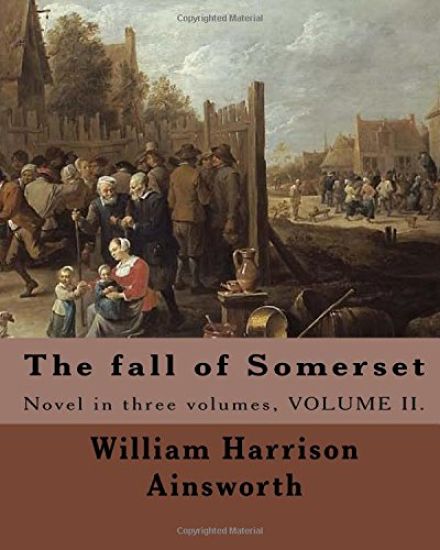
The fall of Somerset By: William Harrison Ainsworth ( Volume 2 ).: Novel in three volumes, VOLUME II.

The fall of Somerset By: William Harrison Ainsworth ( Volume 2 ).: Novel in three volumes, VOLUME II.

William Harrison Ainsworth

Createspace Independent Publishing Platform
2017
nidottu
William Harrison Ainsworth (4 February 1805 - 3 January 1882) was an English historical novelist born at King Street in Manchester. He trained as a lawyer, but the legal profession held no attraction for him. While completing his legal studies in London he met the publisher John Ebers, at that time manager of the King's Theatre, Haymarket. Ebers introduced Ainsworth to literary and dramatic circles, and to his daughter, who became Ainsworth's wife. Ainsworth briefly tried the publishing business, but soon gave it up and devoted himself to journalism and literature. His first success as a writer came with Rookwood in 1834, which features Dick Turpin as its leading character. A stream of 39 novels followed, the last of which appeared in 1881. Ainsworth died in Reigate on 3 January 1882. EARLY LIFE: Ainsworth was born on 4 February 1805 in the family house at 21 King Street, Manchester, to Thomas Ainsworth, a prominent Manchester lawyer, and Ann (Harrison) Ainsworth, the daughter of the Rev. Ralph Harrison, the Unitarian minister at Manchester Cross Street Chapel. On 4 October 1806, Ainsworth's brother, Thomas Gilbert Ainsworth, was born. Although the family home was eventually destroyed, it was a three-storey Georgian home in a well-to-do community. The area influenced Ainsworth with its historical and romantic atmosphere, which existed until the community was later replaced by commercial buildings. Besides the community, Ainsworth read romantic works as a child and enjoyed stories dealing with either adventure or supernatural themes. Of these, Dick Turpin was a favourite of Ainsworth. During his childhood, he adopted Jacobean ideas and held Tory ideas in addition to his Jacobite sympathies, even though his community was strict Whig and Nonconformist. During this time, Ainsworth began to write prolifically. The Ainsworth family moved to Smedly Lane, north of Manchester in Cheetham Hill, during 1811. They kept the old residence in addition to the new, but resided in the new home most of the time. The surrounding hilly country was covered in woods, which allowed Ainsworth and his brother to act out various stories. When not playing, Ainsworth was tutored by his uncle, William Harrison. In March 1817, he was enrolled at Manchester Grammar School, which was described in his novel Mervyn Clitheroe. The work emphasised that his classical education was of good quality but was reinforced with strict discipline and corporal punishment. Ainsworth was a strong student and was popular among his fellow students. His school days were mixed; his time within the school and with his family was calm even though there were struggles within the Manchester community, the Peterloo Massacre taking place in 1819. Ainsworth was connected to the event because his uncles joined in protest at the incident, but Ainsworth was able to avoid most of the political after-effects. During the time, he was able to pursue his own literary interests and even created his own little theatre within the family home at King Street. Along with his friends and brother, he created and acted in many plays throughout 1820. During 1820, Ainsworth began to publish many of his works under the name "Thomas Hall".
Deathworld by Harry Harrison, Science Fiction, Fantasy

Deathworld by Harry Harrison, Science Fiction, Fantasy

Harry Harrison

Createspace Independent Publishing Platform
2017
nidottu
While on a gambling trip to the casino on the planet Cassylia, he is challenged by a man named Kerk Pyrrus (who turns out to be the ambassador from the planet Pyrrus) to turn a large amount of money into an immense sum by gambling at a government-run casino. Some planet in the galaxy must -- by definition -- be the toughest, meanest, nastiest of all. If Pyrrus wasn't it . . . it was an awfully good approximation I started this story in an old issue of Astounding Stories that was kicking around - and was very happy to find the rest of it on Kindle. A quick read, really a novella. A solid page turner with lots of action, fun plot twists, and a satisfactory ending. If you like old Heinlein's I think you will like this.
Deathworld by Harry Harrison, Science

Deathworld by Harry Harrison, Science

Harry Harrison

Createspace Independent Publishing Platform
2017
nidottu
While on a gambling trip to the casino on the planet Cassylia, he is challenged by a man named Kerk Pyrrus (who turns out to be the ambassador from the planet Pyrrus) to turn a large amount of money into an immense sum by gambling at a government-run casino. Some planet in the galaxy must -- by definition -- be the toughest, meanest, nastiest of all. If Pyrrus wasn't it . . . it was an awfully good approximation
Jim Harrison: The Essential Poems

Jim Harrison: The Essential Poems

Jim Harrison

Copper Canyon Press
2019
pokkari
An untrammeled renegade genius... Here is a poet talking to you instead of around himself, while doing absolutely brilliant and outrageous things with language.--Publishers Weekly Starred Review in Booklist: " C]hoices of poems from each of Harrison's books are passionate and sharp... Of special note is a section from Letters to Yesenin, a book-length poem, and the title poem from The Theory and Practice of Rivers , which contains these echoing lines, 'I forgot where I heard that poems / are designed to waken sleeping gods.' Reading this essential volume, one might imagine that the gods are, indeed, staying up late, reading lights on, turning the pages." Jim Harrison: The Essential Poems is distilled from fourteen volumes--from visionary lyrics and meditative suites to shape-shifting ghazals and prose-poem letters. Teeming throughout these pages are Harrison's legendary passions and appetites, his meditations, rages, and love-songs to the natural world. The New York Times concluded a review from early in Harrison's career with a provocative quote: "This is poetry worth loving, hating, and fighting over, a subjective mirror of our American days and needs." That sentiment still holds true, as Jim Harrison's essential poems continue to call for our fiercest attention. Also included are full-color images of poem drafts--both typescripts and holographs--as well as the letter Denise Levertov sent to publisher W.W. Norton in the early 1960s, advocating for Harrison's debut collection. In his essay Poetry as Survival, Jim Harrison wrote, Poetry, at its best, is the language your soul would speak if you could teach your soul to speak. The Essential Poems is proof positive that Jim Harrison taught his soul to speak. In this unforgiving literary moment, we must deal honestly with Harrison's] life and work, as they are inextricable in a way that is not true of other poets...These poems bear-crawl gorgeously after a genuine connection to being, thrashing in giant leaps through the underbrush to find consolation, purpose, and redemption. In his raw, original keening he ambushes moments of unimaginable beauty, one after another, line after line...The Essential Poems demonstrates perfectly why we should turn to Harrison again. He lived and breathed an American confrontation with the physical earth, married himself to a universe of bodies and stumps and birds, did not try to shuck his grotesque masculinity and stared hard with his one good eye (the left was blinded when he was seven) at the inescapable, beckoning finger of death. --Dean Kuipers, LitHub "The Essential Poems provides a good introduction--or reintroduction--to the work of this singular writer... these pieces illustrate Harrison's range and his ease with various formats, from lyric poems to meditative suites to prose poems. They also spotlight his deep, rugged kinship with rural landscapes and the natural world, where 'the cost of flight is landing.'" --The Washington Post Jim Harrison's latest collection, The Essential Poems, contains...engaging and enlightening poems that] should be taught, learned, and loved. Remember this.--New York Journal of Books Had he been a chef, all the other foodies would have talked about how Jim Harrison dealt with big flavors. In his poems, they're all there -- love and death, remorse and longing, the rocket contrails of living. There's not a lot of small talk in The Essential Poems... this book grabs you by the collar and tells you in eleven hundred ways to wake up.--John Freeman, Executive Editor, Recommended Reading from Lit Hub Staff Jim Harrison had an appetite. He devoured the natural world with gusto and wrote about it with wild energy and sweetly caustic wit...Harrison was also a prodigious poet, and this thoughtfully curated collection The Essential Poems] showcases him at his best. Like his fiction, the poems observe the collision between civilization and the wildness outside our cities; they act like geocaches both harrowing and beautiful... Organized chronologically, the material here becomes a time line distilling Harrison's signature concerns.--Alta It is hard-boiled poetry, some of the best of its kind, and one is not surprised to know that Harrison has written very tough novels... His poetic vision is at the heart of it all.--Harper's
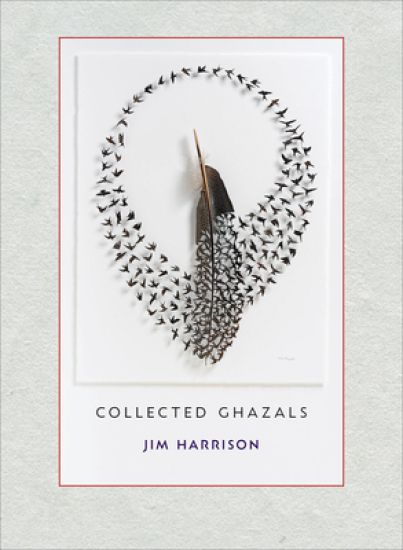
Jim Harrison: Collected Ghazals

Jim Harrison: Collected Ghazals

Jim Harrison; Denver Butson

Copper Canyon Press,U.S.
2020
pokkari
This collection arrives from the spirit world buoyant, its rowdy soul intact.-- Ra l Ni o, Booklist The ghazal, a poetic form rooted in seventh century Arabia, became popular in the United States through the translations of Rumi, Hafiz, and Ghalib. As a young poet, Jim Harrison became enamored with ghazals, and while he ignored most of the formal rules, within the energized couplets he discovered a welcome vehicle for his driving passions, muscular genius, and wrecking-ball rages. The year Outlyer & Ghazals appeared, The New York Times honored the book with inclusion on their coveted "Noteworthy Titles" list, provocatively noting that these poems were "worth loving, hating, and fighting over." Collected Ghazals gathers all of Harrisons's published ghazals into a single volume, accompanied by an "Afterword" by poet and noted ghazal writer Denver Butson, who writes that with this collection, Harrison's ghazals "are ours to witness again in all their messy, brave, honest, grieving, lustful, longing humanity." These are raucous, boozy, at times sexually explicit journeys beyond standard forms, often expressing a young poet's exuberance. Harrison wills us to follow him: 'When I slept in the woods I awoke before dawn / and drank brandy and listened to the birds until the moon / disappeared.' Closing with an illuminating afterword by poet Denver Butson, this collection arrives from the spirit world buoyant, its rowdy soul intact.--Booklist
Jim Harrison: Complete Poems

Jim Harrison: Complete Poems

Jim Harrison

Copper Canyon Press,U.S.
2022
sidottu
The Complete Poems by Jim Harrison (1937-2016) is the definitive collection from one of America's iconic writers. Introduced by activist and naturalist writer Terry Tempest Williams, this tour de force contains every poem Harrison published over his fifty-year career and displays his wide range of poetic styles and forms. Here are the nature-based lyrics of his early work, the high-velocity ghazals, a harrowing prose-poem "correspondence" with a Russian suicide, the riverine suites, fearless meditations inspired by the Zen monk Crazy Cloud, and a joyous conversation in haiku-like gems with friend and fellow poet Ted Kooser. Weaving throughout these 1000 pages are Harrison's legendary passions and appetites, his love songs and lamentations, and a clarion call to pay attention to the life you are actually living. The Complete Poems confirms that Jim Harrison is a talented storyteller with a penetrating eye for details, or as Publishers Weeklycalled him, "an untrammeled renegade genius... a poet talking to you instead of around himself, while doing absolutely brilliant and outrageous things with language."
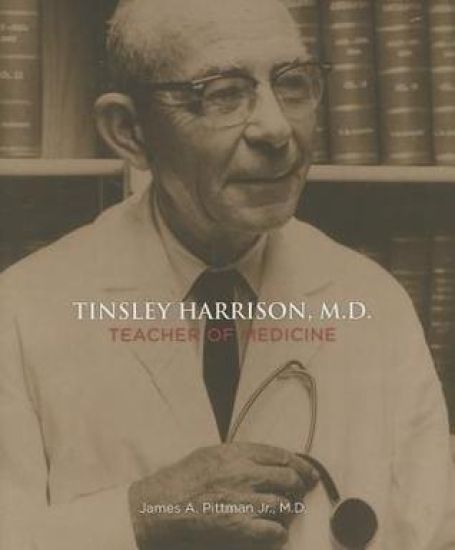
Tinsley Harrison, M.D.

Tinsley Harrison, M.D.

James A. Pittman

UNIVERSITY OF GEORGIA PRESS
2013
sidottu
Tinsley Harrison—doctor, teacher, researcher, medical school leader—is one of the most important medical figures of the 20th century. He edited the first five editions of Harrison’s Principles of Internal Medicine, regarded as a quintessential medical text and perhaps the best-selling medical textbook of all time. He traveled the world in his capacity as a teaching doctor, made significant contributions to scholarship, and served as the dean/medical chairman at four medical schools. He is a titan of the field, an enormous presence central to the narrative of American medicine.Author Dr. James Pittman knew Harrison well, studying and teaching with him from the 1950s until Harrison’s death. Pittman spent six years interviewing Harrison near the end of Harrison’s life, and these lengthy interviews, as well as interviews with his colleagues, family, and friends, form the bulk of the scholarship of this compulsively readable book. Pittman brings his own medical knowledge to the fore, as well as his personal friendship with the subject, in this beautifully written character study of one of science’s great but not well-known men. Harrison lived a long, exciting life, and in these pages, readers will get a glimpse of the historical forces that shaped and in turn were shaped by this legendary doctor.
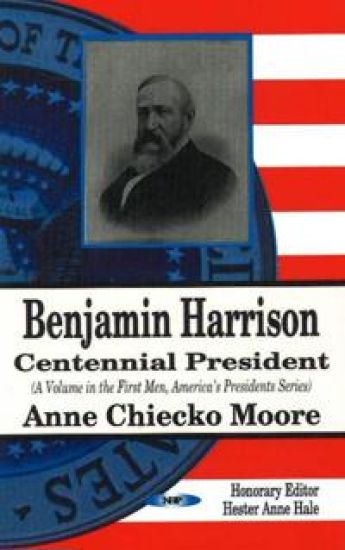
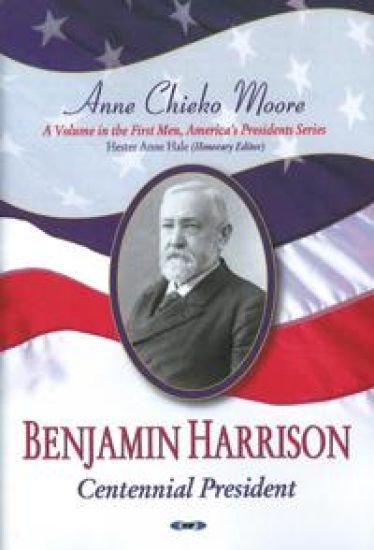
Benjamin Harrison

Benjamin Harrison

Anne Chiecko Moore

Nova Science Publishers Inc
2006
nidottu
Benjamin Harrison was an honest, intelligent, hardworking lawyer from Indiana who became the twenty-third President of the United States. During his term in office, he signed important legislation and provided leadership in negotiating foreign policy, striving to advance the United States toward becoming a world power. The book presents an up-to-date and cogent biography of this president who is now considered one of the better presidents of the late nineteenth century.
Benjamin Harrison

Benjamin Harrison

Anne Chieko Moore

Nova Science Publishers Inc
2009
nidottu
Benjamin Harrison was an honest, intelligent, hardworking lawyer from Indiana who became the twenty-third President of the United States. During his term in office, he signed important legislation and provided leadership in negotiating foreign policy, striving to advance the United States toward becoming a world power. This book presents an up-to-date and cogent biography of this president who is now considered one of the better presidents of the late nineteenth century.
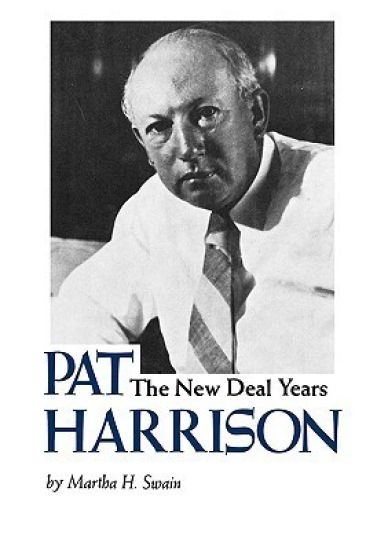
Pat Harrison

Pat Harrison

Martha H. Swain

University Press of Mississippi
2009
nidottu
Byron Patton ""Pat"" Harrison was chairman of the Senate Committee on Finance during the New Deal, and under his tutelage the committee handled many of the major measures of the decade. Harrison brought to his post enormous influence based not only upon congressional longevity dating from his entry into the House of Representatives in 1911 and the Senate in 1919 but also upon a happy combination of personal qualities that made him perhaps the most popular man in the Senate during his time.Although never the author of any major legislation, Harrison was a master tactician and broker for the ideas of others. Defeated by one vote in 1937 in a contest with Alben W. Barkley for the position of majority leader, the Mississippi senator was named President Pro Tempore in January 1941, six months before his death.Harrison was an ardent supporter of Franklin D. Roosevelt during the first years of the New Deal. By 1935 the senator had become, as Fortune magazine reported, ""a New Deal wheelhorse . . . suspicious of his load."" One of the major purposes of this study is to explain how Harrison's basic conservatism, subdued by the exigencies of total depression, became manifest during the latter years of the decade.His reservations, which appeared in the open at the time of the wealth tax of 1935, grew out of his basic belief that revenue bills should be written for revenue only. After he became disenchanted with the later New Deal's emphasis upon deficit spending and social control programs, disillusioned by the treatment accorded him by the President, and convinced that the economic emergency was over, Harrison's attitudinal modifications were obvious. Subsequently his refusal to support the administration, his open leadership of the Finance Committee in diminishing the effect of administrative measures, and his affection for senators cast off by the President all began to indicate that the Mississippian was ready to match his Senate performance with the beliefs that he probably had always held. The Harrison-Roosevelt estrangement did not end until the two agreed upon the need for preparedness in 1940.This study focuses to a lesser extent upon Pat Harrison's relationships with major New Deal figures. Considerable attention is also devoted to his difficulties with his colleague Theodore G. Bilbo and his easier associations with other Mississippi officials. Finally, this work sheds some light upon the nature of depression and recovery in Mississippi and the political vagaries of the state during this decade. This book is based primarily upon public documents, newspaper accounts, and a number of manuscript collections. Other important sources are private interviews of the author with contemporaries of Harrison and the interviews found in the Columbia Oral History Collection.