Kirjojen hintavertailu. Mukana 12 390 323 kirjaa ja 12 kauppaa.

Kirjahaku

Etsi kirjoja tekijän nimen, kirjan nimen tai ISBN:n perusteella.

1000 tulosta hakusanalla Henry Festing Jones

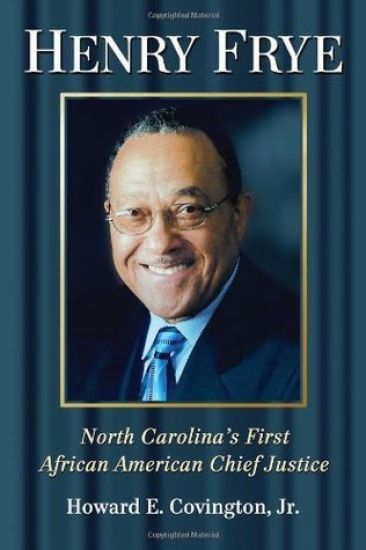
Henry Frye

Henry Frye

Howard E. Covington

McFarland Co Inc
2013
pokkari
Henry E. Frye came of age just as the South was beginning a transformational change. When he graduated from college in 1953, African Americans like him could only hope that the future would be different from the past. At the close of his public career in 2001, he was chief justice of the North Carolina Supreme Court--the head of the state's third branch of government. Throughout their lives, Frye and his wife, Shirley, were in the vanguard of the advances that shaped the lives of African Americans. His election to the state legislature in 1968 was the beginning of steady, determined efforts to expand opportunities for African Americans in politics, business and society at large. This book traces, along with his career, the growing participation of African Americans in the civic, political and social life of North Carolina.
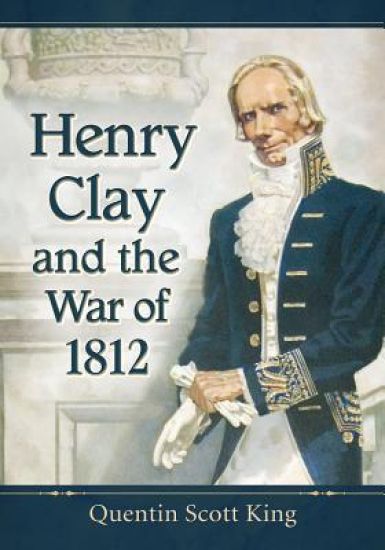
Henry Clay and the War of 1812

Henry Clay and the War of 1812

Quentin Scott King

McFarland Co Inc
2014
pokkari
Any biography of Henry Clay's 46 year political career quickly becomes entangled with his monumental, though youthful, political leadership of the War Hawks in urging the Madison Administration to arm the United States for war with Great Britain. He continued to advise in the war's progress and ended by being one of the five distinguished Americans to treat for peace with a difficult team of mediocre British envoys. There has been no detailed treatment of his major role in this early American war until this present work.
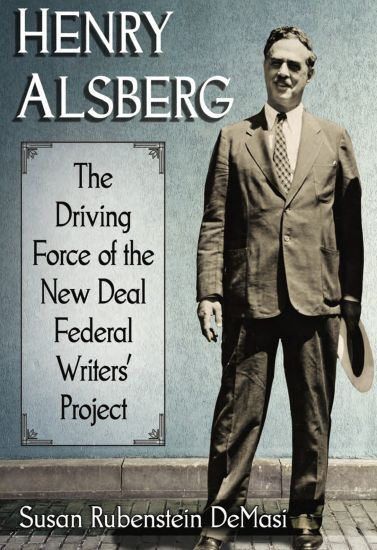
Henry Alsberg

Henry Alsberg

Susan Rubenstein DeMasi

McFarland Co Inc
2016
pokkari
During the Great Depression, Henry Alsberg, a journalist with a passion for social justice, directed the Federal Writers' Project, a New Deal program of the Works Progress Administration. Under his guidance, thousands of unemployed writers were hired. Despite attacks from the House Committee on Un-American Activities, the Project produced more than 1,000 publications from 1935 to 1939, including the still highly acclaimed American Guide series. Some writers, such as Richard Wright, went on to storied careers. Alsberg led the Project's collection of more than 10,000 oral histories from ex-slaves, immigrants and others. Alsberg was also a leader in the struggle to save Jewish pogrom survivors in Eastern Europe. Later, he initiated the first major effort to assist international political prisoners. His friends included anarchist revolutionary Emma Goldman and U.S. Supreme Court Justice Felix Frankfurter. This book brings Alsberg to light as an important but forgotten figure of the 20th century.
Henry Clay Frick

Henry Clay Frick

Sanger Martha Frick Symington

ABBEVILLE PRESS INC.,U.S.
1998
sidottu
With unprecedented access to personal letters, private family diaries, and the Frick archives at the Frick Collection in New York City and at family residences in Pittsburgh, Martha Frick Symington Sanger has written a unique and penetrating account of the life and times of Henry Clay Frick and his family. In addition, the author explains in this meticulously researched book the reason why Frick and his daughter Helen selected the paintings, sculpture, and other items that are included in the collection. Since 1935 the magnificent art treasures of the Frick Collections have been open to the public in the New York City mansion that the family occupied. This book will enrich any visitor's experience of the Frick Collection in a way that had not been possible in previous books. The intriguing topics covered here include Frick's complex relationship with Andrew Carnegie and with other well-known business magnates; his harsh personal life darkened by the deaths of a younger daughter and infant son; and a sensitive portrayal of his daughter Helen, who was a Frick Collection trustee and chairman of the Art Acquisitions Committee after her father's death. Illustrating this book are 370 pictures ranging from paintings and sculpture in the Frick Collection to family portraits and historical images. This biography of a key figure in the development of American industry will appeal to both art history lovers and to historians, offering a singular and compelling reading and visual experience.
Henry More (1614–1687) Tercentenary Studies
Of all the Cambridge Platonists, Henry More has attracted the most scholar­ ly interest in recent years, as the nature and significance of his contribution to the history of thought has come to be better understood. This revival of interest is in marked contrast to the neglect of More's writings lamented even by his first biographer, Richard Ward, a regret echoed two centuries after his 1 death. Since then such attention as there has been to More has not always served him well. He has been dismissed as credulous on account of his belief in witchcraft while his reputation as the most mystical of the Cambridge 2 school has undermined his reputation as a philosopher. Much of the interest in More in the present century has tended to focus on one particular aspect of his writing. There has been considerable interest in his poems. And he has come to the attention of philosophers thanks to his having corresponded with Descartes. Latterly, however, interest in More has been rekindled by renewed interest in the intellectual history of the seventeenth century and Renaissance. And More has been studied in the context of seventeenth-cen­ tury science and the wider context of seventeenth-century philosophy. Since More is a figure who belongs to the Renaissance tradition of unified sapientia he is not easily compartmentalised in the categories of modern disciplines. Inevitably discussion of anyone aspect of his thought involves other aspects.
Henry James

Henry James

Fred Kaplan

Johns Hopkins University Press
1999
pokkari
One of the most influential novelists, Henry James led a life that was as rich as his writing. Born into an eccentric and difficult family, he left the United States for Europe, where he quickly became a fixture of the expatriate writing community. Fred Kaplan recreates the world of Henry James: his friendships with Edith Wharton and Joseph Conrad, his love of all things exquisite-including exquisite writing-and his quest for understanding human nature. As James himself advocated and would have wanted, this is an artful, dramatic biography, placing the chronological narrative of James's life in the historical context of his times. "The twenty-one-year-old Henry James, Jr., preferred to be a writer rather than a soldier. His motives for writing were clear to himself, and they were not unusual: he desired fame and fortune. Whatever additional enriching complications that were to make him notorious for the complexity of his style and thought, the initial motivation remained constant. Deeply stubborn and persistently willful, he wanted praise and money, the rewards of recognition of what he believed to be his genius, on terms that he himself wanted to establish. The one battle he thought most worth fighting was that of the imagination for artistic expression. The one empire he most coveted, the land that he wanted for his primary home, was the empire of art."-from Henry James: The Imagination of Genius
Henry Walters and Bernard Berenson

Henry Walters and Bernard Berenson

Stanley Mazaroff; William R. Johnston

Johns Hopkins University Press
2010
sidottu
Collecting Italian Renaissance paintings during America's Gilded Age was fraught with risk because of the uncertain identities of the artists and the conflicting interests of the dealers. Stanley Mazaroff's fascinating account of the close relationship between Henry Walters, founder of the legendary Walters Art Museum in Baltimore, and Bernard Berenson, the era's preeminent connoisseur of Italian paintings, richly illustrates this important chapter of America's cultural history. When Walters opened his Italianate museum in 1909, it was labeled as America's "Great Temple of Art." With more than 500 Italian paintings, including self-portraits purportedly by Raphael and Michelangelo, Walters's collection was compared favorably with the great collections in London, Paris, and Berlin. In the midst of this fanfare, Berenson contacted Walters and offered to analyze his collection, sell him additional paintings, and write a scholarly catalogue that would trumpet the collection on both sides of the Atlantic. What Berenson offered was what Walters desperately needed-a badge of scholarship that Berenson's invaluable imprimatur would undoubtedly bring. By 1912, Walters had become Berenson's most active client, their business alliance wrapped in a warm and personal friendship. But this relationship soon became strained and was finally severed by a confluence of broken promises, inattention, deceit, and ethical conflict. To Walters's chagrin, Berenson swept away the self-portraits allegedly by Raphael and Michelangelo and publicly scorned paintings that he was supposed to praise. Though painful to Walters, Berenson's guidance ultimately led to a panoramic collection that beautifully told the great history of Italian Renaissance painting. Based primarily on correspondence and other archival documents recently discovered at the Walters Art Museum and the Villa I Tatti in Florence, the intriguing story of Walters and Berenson offers unusual insight into the pleasures and perils of collecting Italian Renaissance paintings, the ethics in the marketplace, and the founding of American art museums.
Henry VIII

Henry VIII

Tracy Borman

Black Cat
2020
nidottu
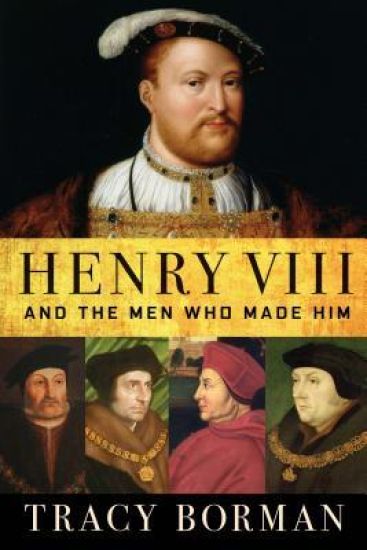
Henry VIII is best known in history for his tempestuous marriages and the fates of his six wives. However, as acclaimed historian Tracy Borman makes clear in her illuminating new chronicle of Henry's life, his reign and reputation were hugely influenced by the men who surrounded and interacted with him as companions and confidants, servants and ministers, and occasionally as rivals--many of whom have been underplayed in previous biographies. These relationships offer a fresh, often surprising perspective on the legendary king, revealing the contradictions in his beliefs, behavior, and character in a nuanced light. They show him capable of fierce but seldom abiding loyalty, of raising men up only to destroy them later. He loved to be attended by boisterous young men, the likes of his intimate friend Charles Brandon, who shared his passion for sport, but could also be diverted by men of intellect, culture, and wit, as his longstanding interplay with Cardinal Wolsey and his reluctant abandonment of Thomas More attest. Eager to escape the shadow of his father, Henry VII, he was often trusting and easily led by male attendants and advisors early in his reign (his coronation was just shy of his 18th birthday in 1509); in time, though, he matured into a profoundly suspicious and paranoid king whose ruthlessness would be ever more apparent, as Thomas Howard, Duke of Norfolk and uncle to two of Henry's wives, discovered to his great discomfort, and as Eustace Chapuys, the ambassador of Charles V of Spain, often reported. Recounting the great Tudor's life and signal moments through the lens of his male relationships, Tracy Borman's new biography reveals Henry's personality in all its multi-faceted, contradictory glory, and sheds fresh light on his reign for anyone fascinated by the Tudor era and its legacy.
Henry Chadwick

Henry Chadwick

Henry Chadwick; Rowan Williams

William B. Eerdmans Publishing Company
2017
pokkari
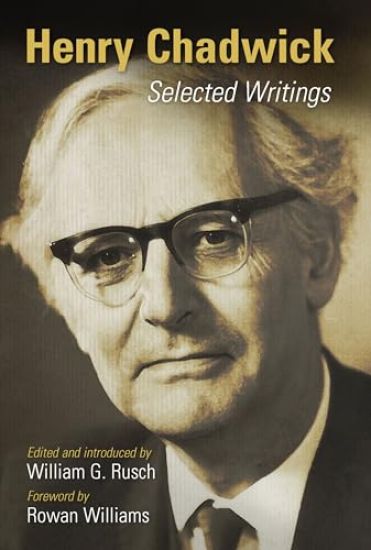
Rare scholarly insight into the early church -- still relevant for the church today This anthology offers a choice selection of writings by one of the twentieth century's premier church historians, Sir Henry Chadwick. Many of Chadwick's considerable contributions to a fuller understanding of the early church were unpublished or not circulated widely during his lifetime, but here they are compiled in a convenient, accessible form. Reflecting Chadwick's wide-ranging expertise, this volume contains his essays on a variety of themes pertaining to the early church, including the emerging faith's relationship to classical culture; the interaction between piety, politics, and theology; councils in the early church; the power of music in the church; and more. As relevant for the study of early Christianity today as when they were first written, Chadwick's essays remain a valuable resource for better understanding the church both past and present, shedding light on ecumenical problems that still keep Christians visibly divided.
The Complete Letters of Henry James, 1872–1876

The Complete Letters of Henry James, 1872–1876

Henry James

University of Nebraska Press
2009
sidottu
Recipient of the “Approved Edition” seal from the Modern Language Association’s Committee on Scholarly EditionsThe Complete Letters of Henry James fills a crucial gap in modern literary studies by presenting in a scholarly edition the complete letters of one of the great novelists and letter writers of the English language. Comprising more than ten thousand letters reflecting on a remarkably wide range of topics-from James’s own life and literary projects to broader questions on art, literature, and criticism-this edition is an indispensable resource for students of James and of American and English literature, culture, and criticism as well as for research libraries throughout North America and Europe and for scholars who specialize in James, the European novel, and modern literature. This volume is the first of three to include James's letters from 1872 to 1876.
The Complete Letters of Henry James, 1872–1876

The Complete Letters of Henry James, 1872–1876

Henry James

University of Nebraska Press
2009
sidottu
Recipient of the “Approved Edition” seal from the Modern Language Association’s Committee on Scholarly EditionsThe Complete Letters of Henry James fills a crucial gap in modern literary studies by presenting in a scholarly edition the complete letters of one of the great novelists and letter writers of the English language. Comprising more than ten thousand letters reflecting on a remarkably wide range of topics-from James’s own life and literary projects to broader questions about art, literature, and criticism-this edition is an indispensable resource for students of James and of American and English literature, culture, and criticism as well as for research libraries throughout North America and Europe and for scholars of James, the European novel, and modern literature. This volume is the second of three to include James’s letters from 1872 to 1876.
The Complete Letters of Henry James, 1855–1872

The Complete Letters of Henry James, 1855–1872

Henry James

University of Nebraska Press
2006
sidottu
The Complete Letters of Henry James fills a crucial gap in modern literary studies by presenting in a scholarly edition the complete letters of one of the great novelists and letter writers of the English language. Comprising more than ten thousand letters reflecting on a remarkably wide range of topics-from James’s own life and literary projects to broader questions on art, literature, and criticism-this edition will be an indispensable resource for students of James and of American and English literature, culture, and criticism. It will also be essential for research libraries throughout North America and Europe and for scholars who specialize in James, the European novel, and modern literature. Pierre A. Walker and Greg W. Zacharias have conceived this edition according to the exacting standards of the Modern Language Association’s committee on scholarly editions. The first in the series, this two-volume work includes the letters from James's first extant one to those from 1869 in volume one and the letters from 1869 to 1872 in volume two.
Henry James on Culture

Henry James on Culture

Henry James; Pierre A. (EDT) Walker

University of Nebraska Press
1999
sidottu
"Henry James on Culture" is a collection of eighteen articles by Henry James on the social and political issues of his day. Eight of them have never before been published in book form, and the remainder have not, until now, been easily accessible. These essays reveal a previously neglected side of James. Some of the writings concern British imperial politics and crises in the Balkans, Afghanistan, and South Africa. Others were written during and after James's 1904-5 tour of the United States. They focus on questions of gender and manners and complement the best-known work resulting from that trip, The American Scene. Also included is James's only publication on religion and metaphysics, "Is There a Life after Death?". It presents James's view of the possibility of an afterlife and is also interesting in the light of work by his philosopher brother and his theologian father on the same subject. Finally, the book groups for the first time in one volume all of James's writings on the First World War. Deeply affected by the war's outbreak, James wrote touching and profound essays on the meaning of the war to the world he knew.These articles are among the great works of First World War literature. Pierre A. Walker is an associate professor of English at Salem State College. He is the co-general editor of "The Complete Letters of Henry James" (Nebraska forthcoming).
The Complete Letters of Henry James, 1855–1872

The Complete Letters of Henry James, 1855–1872

Henry James

University of Nebraska Press
2006
sidottu
The Complete Letters of Henry James fills a crucial gap in modern literary studies by presenting in a scholarly edition the complete letters of one of the great novelists and letter writers of the English language. Comprising more than ten thousand letters reflecting on a remarkably wide range of topics-from James’s own life and literary projects to broader questions on art, literature, and criticism-this edition is an indispensable resource for students of James and of American and English literature, culture, and criticism. It will also be essential for research libraries throughout North America and Europe and for scholars who specialize in James, the European novel, and modern literature. Pierre A. Walker and Greg W. Zacharias have conceived this edition according to the exacting standards of the Committee on Scholarly Editions. The first in the series, this two-volume work includes the letters from 1854 to 1869 in volume one and the letters from 1869 to 1872 in volume two.
The Complete Letters of Henry James, 1872–1876

The Complete Letters of Henry James, 1872–1876

Henry James

University of Nebraska Press
2011
sidottu
Recipient of the “Approved Edition” seal from the Modern Language Association’s Committee on Scholarly EditionsThe Complete Letters of Henry James fills a gap in literary studies today by presenting in a critical and scholarly edition the complete letters of one of the great novelists and letter writers of the English language. Comprising more than ten thousand letters and addressing a remarkably wide range of topics, this edition is an indispensable resource for students and scholars of James, the European novel and modern literature, and of American and English literature, culture, and criticism. Written between November 1875 and November 1876, the letters in this volume find James settling in Paris; befriending Ivan Turgenev and mixing company with writers such as Gustave Flaubert, Emile Zola, and Alphonse Daudet; publishing travel essays and critical notices as well as the novels Roderick Hudson and The American; leaving Paris and settling in London, where he would live for much of the rest of his life.
The Complete Letters of Henry James, 1876–1878

The Complete Letters of Henry James, 1876–1878

Henry James

University of Nebraska Press
2012
sidottu
This critical and scholarly edition presents the complete letters of Henry James, one of the great novelists and letter writers of the English language. Comprising more than ten thousand letters and addressing a remarkably wide range of topics, this edition is an indispensable resource for students and scholars of James, of the European novel and modern literature, and of American and English literature, culture, and criticism. Written between December 1876 and December 1877, the letters in this volume trace James's departure from Paris and his arrival and domestication in London, where he would live at least part of each year for most of the rest of his life. In London, James quickly becomes immersed in the social and literary life of the city and of the nation. He is invited as an honorary guest to the Athenaeum Club; dines with Lord Houghton, William Gladstone, Alfred Tennyson, Heinrich Schliemann, and "half a dozen other men of 'high culture'"; and continues his friendship with Turgenev, who lives in Paris. In addition to his regular production of critical and travel essays, he completes The American, contracts with Macmillan to publish French Poets and Novelists, revises Watch and Ward for book publication, and travels to France and Italy.
The Complete Letters of Henry James, 1876–1878

The Complete Letters of Henry James, 1876–1878

Henry James

University of Nebraska Press
2013
sidottu
Recipient of the “Approved Edition” seal from the Modern Language Association’s Committee on Scholarly Editions This critical and scholarly edition presents the complete letters of Henry James, one of the great novelists and letter writers of the English language. Comprising more than ten thousand letters and addressing a remarkably wide range of topics, this edition is an indispensable resource for students and scholars of James, of the European novel and modern literature, and of American and English literature, culture, and criticism.This volume contains letters written from December 21, 1877, to September 29, 1878, when, having settled comfortably into London life, James finished preparing the foundation for the career that would define his reputation as a critic and fiction writer. During this time James published Daisy Miller and The Europeans as well as other fiction, reviews, and cultural criticism.
The Complete Letters of Henry James, 1878–1880

The Complete Letters of Henry James, 1878–1880

Henry James

University of Nebraska Press
2014
sidottu
Containing letters written between October 3, 1878, and August 30, 1879, this volume of The Complete Letters of Henry James reveals Henry James establishing control of his writing career and finding confidence in himself not only as a professional author on both sides of the Atlantic but also as an important social figure in London. In this volume of 114 letters, of which 58 are published for the first time, we see James learning to negotiate, pitting one publisher against another, and working to secure simultaneous publication in the United States and England. He establishes a working relationship with Frederick Macmillan and with the Macmillan publishing house, cultivates reviewers, basks in the success—and notoriety—of his novella Daisy Miller, and visits Alfred Tennyson and George Eliot, among others. James also produces essays on political subjects and continues to publish reviews and travel essays. Perhaps most important, James negotiates terms for and begins planning The Portrait of a Lady.