

Kirjahaku
Etsi kirjoja tekijän nimen, kirjan nimen tai ISBN:n perusteella.
1000 tulosta hakusanalla Hermann Hesse; Bengt Samuelson

This book introduces and assesses the main contributions of Hermann Lotze (1817-1881) to philosophy of psychology and philosophy of mind. Lotze was the most influential thinker of his time; he revitalised German philosophy after Hegel's death, inspiring American pragmatists as well as British idealists. He brought medical research, metaphysics, and psychology together in his work to argue for an approach to psychology in which the soul is central. Lotze defended the soul, the irreducibility of the mental, and the interaction between soul and body; in doing so, he proposed views of feeling, attention, self-consciousness, and the unity of consciousness. While Lotze's views were widely discussed at the end of the nineteenth and the beginning of the twentieth century, they are now unjustly neglected. In this volume, Mark Textor provides a rational reconstruction of Lotze's philosophy of psychology. He examines in detail Lotze's affective theory of self-consciousness and his account of comparing, the activity in which we attain awareness of relations. The latter fuels an original argument for the existence of the soul and its importance for psychology. This argument is also seen as a refutation of panpsychism, the view that fundamental reality is made of 'mind-stuff'. The book pays close attention to the historical background of Lotze's thought, as well as discussions of his work in American and British philosophy, and thereby sheds light on how his thought shaped American Pragmatism and British Idealism.

This book is the first complete intellectual biography of Hermann Cohen (1842-1918) and the only work to cover all his major philosophical and Jewish writings. Frederick C. Beiser pays special attention to all phases of Cohen's intellectual development, its breaks and its continuities, throughout seven decades. The guiding goal behind Cohen's intellectual career, he argues, was the development of a radical rationalism, one committed to defending the rights of unending enquiry and unlimited criticism. Cohen's philosophy was therefore an attempt to defend and revive the Enlightenment belief in the authority of reason; his critical idealism an attempt to justify this belief and to establish a purely rational worldview. According to this interpretation, Cohen's thought is resolutely opposed to any form of irrationalism or mysticism because these would impose arbitrary and artificial limits on criticism and enquiry. It is therefore critical of those interpretations which see Cohen's philosophy as a species of proto-existentialism (Rosenzweig) or Jewish mysticism (Adelmann and Köhnke). Hermann Cohen: An Intellectual Biography attempts to unify the two sides of Cohen's thought, his philosophy and his Judaism. Maintaining that Cohen's Judaism was not a limit to his radical rationalism but a consistent development of it, Beiser contends that his religion was one of reason. He concludes that most critical interpretations have failed to appreciate the philosophical depth and sophistication of his Judaism, a religion which committed the believer to the unending search for truth and the striving to achieve the cosmopolitan ideals of reason.

Hermann Cohen (1842–1918) is often held to be one of the most important Jewish philosophers of the nineteenth century. Paul E. Nahme, in this new consideration of Cohen, liberalism, and religion, emphasizes the idea of enchantment, or the faith in and commitment to ideas, reason, and critique—the animating spirits that move society forward. Nahme views Cohen through the lenses of the crises of Imperial Germany—the rise of antisemitism, nationalism, and secularization—to come to a greater understanding of liberalism, its Protestant and Jewish roots, and the spirits of modernity and tradition that form its foundation. Nahme's philosophical and historical retelling of the story of Cohen and his spiritual investment in liberal theology present a strong argument for religious pluralism and public reason in a world rife with populism, identity politics, and conspiracy theories.
Altitalische Inschriften. Ausgewählt von Hermann Jacobsohn
Hermann Jacobsohn
Wentworth Press
2018
pokkari

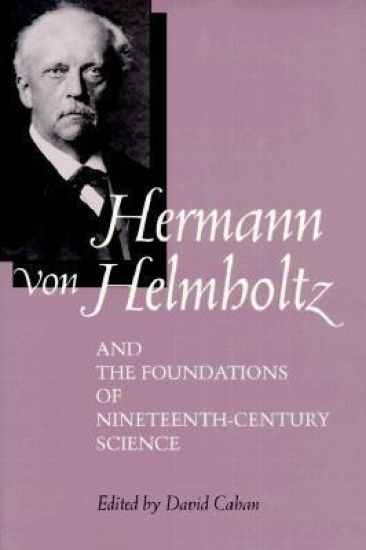
Hermann von Helmholtz and the Foundations of Nineteenth-Century Science
University of California Press
1994
sidottu
Hermann von Helmholtz (1821-1894) was a polymath of dazzling intellectual range and energy. Renowned for his co-discovery of the second law of thermodynamics and his invention of the ophthalmoscope, Helmholtz also made many other contributions to physiology, physical theory, philosophy of science and mathematics, and aesthetic thought. During the late nineteenth century, Helmholtz was revered as a scientist-sage - much like Albert Einstein in this century. David Cahan has assembled an outstanding group of European and North American historians of science and philosophy for this intellectual biography of Helmholtz, the first ever to critically assess both his published and unpublished writings. It represents a significant contribution not only to Helmholtz scholarship but also to the history of nineteenth-century science and philosophy in general.
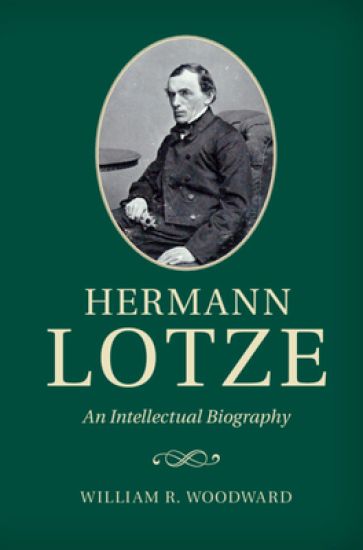
As a philosopher, psychologist, and physician, the German thinker Hermann Lotze (1817–81) defies classification. Working in the mid-nineteenth-century era of programmatic realism, he critically reviewed and rearranged theories and concepts in books on pathology, physiology, medical psychology, anthropology, history, aesthetics, metaphysics, logic, and religion. Leading anatomists and physiologists reworked his hypotheses about the central and autonomic nervous systems. Dozens of fin-de-siècle philosophical contemporaries emulated him, yet often without acknowledgment, precisely because he had made conjecture and refutation into a method. In spite of Lotze's status as a pivotal figure in nineteenth-century intellectual thought, no complete treatment of his work exists, and certainly no effort to take account of the feminist secondary literature. Hermann Lotze: An Intellectual Biography is the first full-length historical study of Lotze's intellectual origins, scientific community, institutional context, and worldwide reception.


Hermann Von Helmholtz
Leo Koenigsberger; Frances A. (TRN) Welby; Lord Kelvin
Kessinger Pub
2008
pokkari


Hermann-Peter Piwitt
University of Wales Press
2000
nidottu
Born in 1935, Hermann Peter Piwitt falls between the generation of writers who experienced National Socialism as adults and went on to shape the early literary landscape of the Federal Republic, and the generation whose careers were influenced by direct participation in the Student Movement of the late 1960s. Although from the beginning of his career, he combined formal experimentation with an attempt to uncover the social realities that are concealed behind the dominance of capitalism, a growing sense of disillusionment at the absence of any alternative to capitalism and a developing awareness of green issues mark Piwitt's literary development. This volume begins with a previously unpublished essay by Piwitt and an interview held during his visit to the Centre for Contemporary German Literature in Swansea. Subsequent critical essays include an overview of Piwitt's work, an analysis of his attitudes towards the Student Movement, a reinterpretation of his critical essays and of Deutschland. Versuch einer Heimkehr, and an examination of the bleak conclusions he draws at the end of the millennium in Ein unversohnlich sanftes Ende. The volume concludes with a full bibliography.
Hermann-Peter Piwitt
University of Wales Press
2000
sidottu
Hermann-Peter Piwitt belongs to the generation of West German writers the beginning of whose careers coincided with the student movement of 1968. His career is of particular interest from the perspective of a Europe in which a left-wing alternative to the politics of the centre, has disappeared. Through a series of academic articles in English and German, this volume charts his career, from early left-wing commitment, through portraits of life in the Federal Republic of the 1970s and 1980s, to an assessment of his literary and political stance following unification. The volume also includes a previously unpublished essay by Piwitt himself, and an interview with the author held during his period as writer-in-residence at the University of Wales, Swansea.

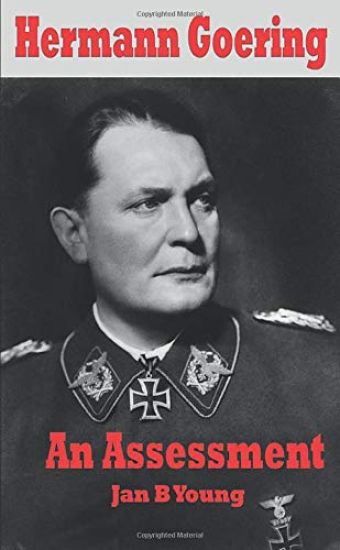
They were the most unlikely of siblings – one, Adolf Hitler’s most trusted henchman, the other a fervent anti-Nazi.Hermann Goering was a founder member of the Nazi Party, who became commander of the Luftwaffe, ordering the terror bombing of civilians and promoting the use of slave labour in his factories.His brother, Albert, loathed Hitler’s regime and saved hundreds – possibly thousands – across Europe from Nazi persecution. He deferred to Hermann as head of the family but spent nearly a decade working against his brother’s regime. If he had been anyone else, he would have been imprisoned or executed. Despite their extreme and differing beliefs, Hermann sheltered his brother from prosecution and they remained close throughout the war.Here, for the first time, James Wyllie brings Albert out of the shadows and explores the extraordinary relationship of the Goering brothers.
A collection of essays on various aspects of the life, thought, and ministry of Hermann Sasse, a theologian at the university in Erlangen. Essays contributed by numerous Sasse scholars, many of whom knew Dr. Sasse personally.These essays are from the 1995 Lutheran Life Lectures at Concordia Lutheran Theological Seminary, St Catharines, Ontario, Canada.

During World War II, the Nazis plundered from occupied countries millions of items of incalculable value estimated in the hundreds of millions of dollars. Spearheaded by Hermann Goring the looting program quickly created the largest private art collection in the world, exceeding the collections amassed by the Metropolitan in New York, the British Museum in London, the Louvre in Paris and the Tretiakov Gallery in Moscow. By the end of the war, the Nazis had stolen roughly one-fifth of the entire art treasures of the world. This book explores the formation of the Nazi art collection and the methods used by Goring and his party to strip occupied Europe of a large part of its artistic heritage.

Hermann Günther Graßmann (1809-1877): Visionary Mathematician, Scientist and Neohumanist Scholar
Springer
1996
sidottu
In this volume specialists in mathematics, physics, and linguistics present the first comprehensive analysis of the ideas and influence of Hermann G. Grassmann (1809-1877), the remarkable universalist whose work recast the foundations of these disciplines and shaped the course of their modern development.