

Kirjahaku
Etsi kirjoja tekijän nimen, kirjan nimen tai ISBN:n perusteella.
1000 tulosta hakusanalla Irene Fast


Deaf People and Society
Irene W. Leigh; Jean F. Andrews; Cara A. Miller; Ju-Lee A. Wolsey
TAYLOR FRANCIS LTD
2022
nidottu
Deaf People and Society is an authoritative text that emphasizes the complexities of being D/deaf, DeafBlind, Deaf-Disabled, or hard of hearing, drawing on perspectives from psychology, education, and sociology. This book also explores how the lives of these individuals are impacted by decisions made by professionals in clinics, schools, or other settings. This new edition offers insights on areas critical to Deaf Studies and Disability Studies, with particular emphasis on multiculturalism and multilingualism, as well as diversity, equity, and inclusion. Accessibly written, the chapters include objectives and suggested further reading that provides valuable leads and context. Additionally, these chapters have been thoroughly revised and incorporate a range of relevant topics including etiologies of deafness; cognition and communication; bilingual, bimodal, and monolingual approaches to language learning; childhood psychological issues; psychological and sociological viewpoints of deaf adults; the criminal justice system and deaf people; psychodynamics of interaction between deaf and hearing people; and future trends. The book also includes case studies covering hearing children of deaf adults, a young deaf adult with mental illness, and more.Written by a seasoned D/deaf/hard of hearing and hearing bilingual team, this unique text continues to be the go-to resource for students and future professionals interested in working with D/deaf, DeafBlind, and hard-of-hearing persons. Its contents will resonate with anyone interested in serving and enhancing their knowledge of their lived experiences of D/deaf, DeafBlind, Deaf-Disabled, and hard-of-hearing people and communities.
Deaf People and Society
Irene W. Leigh; Jean F. Andrews; Cara A. Miller; Ju-Lee A. Wolsey
TAYLOR FRANCIS LTD
2022
sidottu
Deaf People and Society is an authoritative text that emphasizes the complexities of being D/deaf, DeafBlind, Deaf-Disabled, or hard of hearing, drawing on perspectives from psychology, education, and sociology. This book also explores how the lives of these individuals are impacted by decisions made by professionals in clinics, schools, or other settings. This new edition offers insights on areas critical to Deaf Studies and Disability Studies, with particular emphasis on multiculturalism and multilingualism, as well as diversity, equity, and inclusion. Accessibly written, the chapters include objectives and suggested further reading that provides valuable leads and context. Additionally, these chapters have been thoroughly revised and incorporate a range of relevant topics including etiologies of deafness; cognition and communication; bilingual, bimodal, and monolingual approaches to language learning; childhood psychological issues; psychological and sociological viewpoints of deaf adults; the criminal justice system and deaf people; psychodynamics of interaction between deaf and hearing people; and future trends. The book also includes case studies covering hearing children of deaf adults, a young deaf adult with mental illness, and more.Written by a seasoned D/deaf/hard of hearing and hearing bilingual team, this unique text continues to be the go-to resource for students and future professionals interested in working with D/deaf, DeafBlind, and hard-of-hearing persons. Its contents will resonate with anyone interested in serving and enhancing their knowledge of their lived experiences of D/deaf, DeafBlind, Deaf-Disabled, and hard-of-hearing people and communities.
This book reconsiders imitation as a valuable pedagogical approach in Writing Studies. Countering concerns about product-oriented teaching, formulaic writing, paternalistic or elitist pedagogy, and plagiarism, the book maintains that the use of imitation can offer a writer greater insight and help to develop a clear writerly identity.Positing that writers often use imitation as a step toward developing new directions, structures, and styles, and that this imitation is indeed a form of performance, the author explores the neuropsychological aspect of imitation to show how it is a valid form of writing instruction. She explains how learning, experience, and role playing are manifested in the brain and influence one’s sense of self, one’s identity. The book emphasizes that imitation can provide students with opportunities to perform habitually as writers, readers, and critical thinkers, enabling them to develop new understandings and confidence in their ability to improve. It also includes suggestions for classroom application, written by Craig A. Meyer.This book offers important insights for scholars and teachers of writing and composition, education, and communication studies.
This book reconsiders imitation as a valuable pedagogical approach in Writing Studies. Countering concerns about product-oriented teaching, formulaic writing, paternalistic or elitist pedagogy, and plagiarism, the book maintains that the use of imitation can offer a writer greater insight and help to develop a clear writerly identity.Positing that writers often use imitation as a step toward developing new directions, structures, and styles, and that this imitation is indeed a form of performance, the author explores the neuropsychological aspect of imitation to show how it is a valid form of writing instruction. She explains how learning, experience, and role playing are manifested in the brain and influence one’s sense of self, one’s identity. The book emphasizes that imitation can provide students with opportunities to perform habitually as writers, readers, and critical thinkers, enabling them to develop new understandings and confidence in their ability to improve. It also includes suggestions for classroom application, written by Craig A. Meyer.This book offers important insights for scholars and teachers of writing and composition, education, and communication studies.
This book offers the reader tools to recognize, analyze, and fight back against the fake news, misinformation, and disinformation that come at us from every corner.This volume: Uses real, lively examples to help readers detect fake news, false claims, suspicious information/data, biased reporting, and hate speech;Demonstrates through case studies where to look for information, what to look for, how to analyze the logic/illogic involved, and uncover the truth value of a story;Discusses fact-checking sites, what they examine, and their reliability;Provides examples and analyzes the components, purposes, and consequences of conspiracy theories;Illustrates the tricks of using numbers/data to mislead readers;Explains what to look for to help decide whether to believe the conclusions of stories based on surveys;Offers a range of concrete, effective responses to dangerous, exaggerated, distorted, and false narratives;Examines policy responses to fake news, disinformation, and misinformation across the world. A key manual to negotiate the information age, this book will be essential reading for students, scholars, and professionals of journalism and mass communication, public policy, politics, and the social sciences. It will also be an indispensable handbook for the lay reader.
Empire, Political Economy, and the Diffusion of Chocolate in the Atlantic World
Irene Fattacciu
TAYLOR FRANCIS LTD
2021
nidottu
Chocolate is one of the most visible examples of how a deeply exotic consumer product penetrating our daily lives fascinated Europeans during the Early Modern period. Today, over fifty percent of the four million tons of cocoa produced globally come from Sub-Saharan Africa. Ecuadorian cocoa, on the other hand, is considered premium quality. Yet the fact that Ecuadorian cocoa is preferred by today's artisanal chocolate makers is one of history’s ironic turns. During the eighteenth century, production and exports of Ecuadorian cocoa dramatically expanded due to its fast growth rate, high yield and low price, though certainly not due to its qualities of taste. This book analyzes the transition of chocolate from an exotic curiosity to an Atlantic commodity. It shows how local, inter-regional, and Atlantic markets interacted with one another and with imperial political economies. It explains how these interactions, intertwined with the resilience of local artisanal production, promoted the partial democratization of chocolate consumption as well as economic growth.
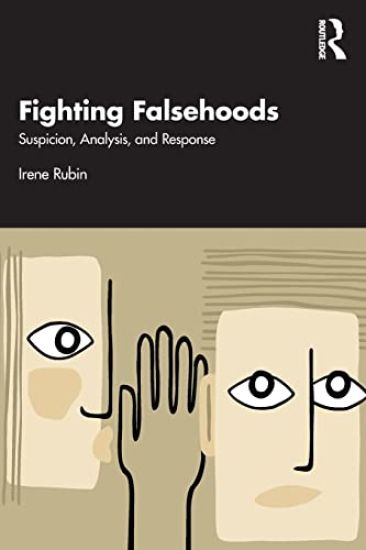
This book offers the reader tools to recognize, analyze, and fight back against the fake news, misinformation, and disinformation that come at us from every corner.This volume: Uses real, lively examples to help readers detect fake news, false claims, suspicious information/data, biased reporting, and hate speech;Demonstrates through case studies where to look for information, what to look for, how to analyze the logic/illogic involved, and uncover the truth value of a story;Discusses fact-checking sites, what they examine, and their reliability;Provides examples and analyzes the components, purposes, and consequences of conspiracy theories;Illustrates the tricks of using numbers/data to mislead readers;Explains what to look for to help decide whether to believe the conclusions of stories based on surveys;Offers a range of concrete, effective responses to dangerous, exaggerated, distorted, and false narratives;Examines policy responses to fake news, disinformation, and misinformation across the world. A key manual to negotiate the information age, this book will be essential reading for students, scholars, and professionals of journalism and mass communication, public policy, politics, and the social sciences. It will also be an indispensable handbook for the lay reader.
Everyday Silence and the Holocaust examines Irene Levin’s experiences of her family’s unspoken history of the Holocaust and the silence that surrounded their war experiences as non-topics.A central example of what C. Wright Mills considered the core of sociology – the intersection of biography and history – the book covers the process by which the author came to understand that notes found in her mother’s apartment following her death were not unimportant scribbles, but in fact contained elements of her mother’s biographical narrative, recording her parents’ escape from occupied Norway to unoccupied Sweden in late 1942. From the mid-1990s, when society began to open up about the atrocities committed against the Jews, so too did the author find that her mother and the wider Jewish population ceased to be silent about their war experiences and began to talk. Charting the process by which the author traced the family’s broader history, this book explores the use of silence, whether in the family or in society more widely, as a powerful analytic tool and examines how these silences can intertwine. This book provides insight into social processes often viewed through a macro-historical lens by way of analysis of the life of an "ordinary" Jewish woman as a survivor.An engaging, grounded study of the biographical method in sociology and the role played by silence, this book will appeal to readers with an interest in the Holocaust and World War II, as well as in social scientific research methods. It will be of use to both undergraduate and postgraduate scholars in the fields of history, social science, psychology, philosophy, and the history of ideas.The Open Access version of this book, available at http://www.taylorfrancis.com, has been made available under a Creative Commons [Attribution-Non Commercial-No Derivatives (CC-BY-NC-ND)] 4.0 license.
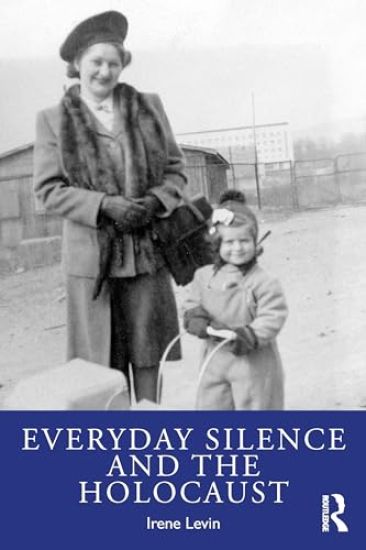
Everyday Silence and the Holocaust examines Irene Levin’s experiences of her family’s unspoken history of the Holocaust and the silence that surrounded their war experiences as non-topics.A central example of what C. Wright Mills considered the core of sociology – the intersection of biography and history – the book covers the process by which the author came to understand that notes found in her mother’s apartment following her death were not unimportant scribbles, but in fact contained elements of her mother’s biographical narrative, recording her parents’ escape from occupied Norway to unoccupied Sweden in late 1942. From the mid-1990s, when society began to open up about the atrocities committed against the Jews, so too did the author find that her mother and the wider Jewish population ceased to be silent about their war experiences and began to talk. Charting the process by which the author traced the family’s broader history, this book explores the use of silence, whether in the family or in society more widely, as a powerful analytic tool and examines how these silences can intertwine. This book provides insight into social processes often viewed through a macro-historical lens by way of analysis of the life of an "ordinary" Jewish woman as a survivor.An engaging, grounded study of the biographical method in sociology and the role played by silence, this book will appeal to readers with an interest in the Holocaust and World War II, as well as in social scientific research methods. It will be of use to both undergraduate and postgraduate scholars in the fields of history, social science, psychology, philosophy, and the history of ideas.The Open Access version of this book, available at http://www.taylorfrancis.com, has been made available under a Creative Commons [Attribution-Non Commercial-No Derivatives (CC-BY-NC-ND)] 4.0 license.
In The Generation Jigsaw, originally published in 1976, Irene Gore explores some of the problems which face older people in the family and the community. Her attitude, differing from many attitudes and practices at the time, was that people in old age are capable of expanding their interests and activities, given encouragement and opportunity.Dr Gore is specifically not concerned with ill people, invalids or the severely disadvantaged. ‘It is my conviction’, she writes, ‘that the problems of the reasonably fit, reasonably independent majority of older people deserve to be considered … The injunction to honour one’s father and mother is part of our ethic, and we traditionally interpret this as “taking care” of them. But “taking care” of older people carries the risk of making them too passive and dependent, of blurring their individuality.’ Whereas in former times a person had a position to look forward to in later years – the regard of the family and the community and the status that experience gave – now the tendency is to channel and guide our elders into a mode of life which someone else thinks is best for them.Dr Gore points the way forward to a livelier, more fulfilled community of people of all ages. She has a scientifically trained mind capable of seeing to the core of the problem, and a genuine concern for the true welfare of older people – and of their younger relatives who will become old in their turn. She approaches her subject with lucidity and an unsentimental humanity, based on years of research on the biological aspects of ageing and hard thinking about the personal and social problems encountered by the elderly. She dispels myths and suggests commonsense solutions and guidelines for improving the quality of life for us all.
In The Generation Jigsaw, originally published in 1976, Irene Gore explores some of the problems which face older people in the family and the community. Her attitude, differing from many attitudes and practices at the time, was that people in old age are capable of expanding their interests and activities, given encouragement and opportunity.Dr Gore is specifically not concerned with ill people, invalids or the severely disadvantaged. ‘It is my conviction’, she writes, ‘that the problems of the reasonably fit, reasonably independent majority of older people deserve to be considered … The injunction to honour one’s father and mother is part of our ethic, and we traditionally interpret this as “taking care” of them. But “taking care” of older people carries the risk of making them too passive and dependent, of blurring their individuality.’ Whereas in former times a person had a position to look forward to in later years – the regard of the family and the community and the status that experience gave – now the tendency is to channel and guide our elders into a mode of life which someone else thinks is best for them.Dr Gore points the way forward to a livelier, more fulfilled community of people of all ages. She has a scientifically trained mind capable of seeing to the core of the problem, and a genuine concern for the true welfare of older people – and of their younger relatives who will become old in their turn. She approaches her subject with lucidity and an unsentimental humanity, based on years of research on the biological aspects of ageing and hard thinking about the personal and social problems encountered by the elderly. She dispels myths and suggests commonsense solutions and guidelines for improving the quality of life for us all.
This book is about the dynamic processes that generate novel-reading. It takes the view that the world is composed of dynamic processes and introduces a process dynamics approach to articulate this stance. This fresh perspective draws on literary studies, process philosophy and neuroscience to argue that dynamic literary and microcognitive processes constantly reconfigure the conditions that they co-create during reading. Analyses of The PowerBook by Jeanette Winterson, The Curious Incident of the Dog in the Night-time by Mark Haddon and Oryx and Crake by Margaret Atwood consider style, narration, allusion and creativity in interaction with diverse microcognitive processes involved in reading. The analyses are strengthened by taking live action into account, illuminating changes that many critical perspectives miss or standardise and avoiding reliance on illusory ideal readers and readings. In proposing a process approach to dynamics and its analysis, this book paves the way for new research across disciplines.