

Kirjahaku
Etsi kirjoja tekijän nimen, kirjan nimen tai ISBN:n perusteella.
1000 tulosta hakusanalla Isabel Funke




This book of poetry was created by a Portugese Woman whose father and mother moved to Canada when she was very young. She describes the good and bad times in their journey from Portugal to Canada, the events that took place during the adjustment time to a brand new country and culture. The heart-aches she endured in school and dating men as well as her feelings in the deliverance of her son and the blessings of Jesus in their life.

And what you ask, is a Tuxedo Cat?Well, it's obvious It's a cat who seems to wear a tuxedo dinner suit black with a white shirt and a sometimes even a black bow tie. A James Bond sort of cat: intelligent, smart, strong, agile and with abilities beyond those usually found in your average cat.

And what you ask, is a Tuxedo Cat?Well, it's obvious It's a cat who seems to wear a tuxedo dinner suit black with a white shirt and a sometimes even a black bow tie. A James Bond sort of cat: intelligent, smart, strong, agile and with abilities beyond those usually found in your average cat.

Rejected by his family, Hairy the lonely caterpillar searches for a true friend, meeting a variety of creatures in the garden along the way. The Hairy Caterpillar is a tale of transformation, perseverance and hope, reminding us that all is not always as it appears and our lives can become better after all.
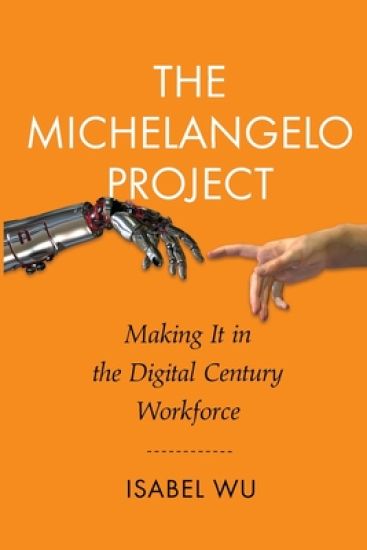
The Michelangelo Project: Making it in the digital century workforce
Isabel Wu
Meta Management Press
2019
nidottu
Has your career stalled?Are you struggling to get your abilities recognised?Do you feel under-valued and unfulfilled at work?Are you concerned about job stability in a rapidly transforming digital century? For over a century, workers were set up for their employer's success, not their own. The Michelangelo Project provides a frank assessment of our faulty employer/employee relationship dynamic and empowers workers to unchain themselves from the broken system. Using Michelangelo's story as a narrative framework, work expert and organisation management specialist, Isabel Wu shows you how to adapt to unanticipated workplace revolutions and thrive in the economy of the future. In the Michelangelo Project, you'll uncover: -The dark secrets of work no one tells you that keep you in jobs even when you hate them-Your personal definition of success to help you feel confident about pursuing a career that fulfills your whole person-How to identify your own opportunities and overcome the fear of dwindling jobs-Why social capital has emerged as the greatest source of economic value in today's economy and how you can use it to get ahead-Tips for becoming a self-learner and embracing internal motivation...and much, much more The Michelangelo Project is a unique handbook to help you take control of your career in a digitally amplified age. If you like cutting-edge insights, tactics from an expert and strategies to improve your value and confidence, then you'll love Isabel Wu's transformative manual. Let The Michelangelo Project open your mind to new possibilities today ISABEL WU has spent nearly three decades helping people build the skills they need for their professional success. She runs a future of work consultancy showing clients how to adapt to unanticipated workplace revolutions and thrive in a technology-driven world.




At the same time that Gandhi, as a young lawyer in South Africa, began fashioning the tenets of his political philosophy, he was absorbed by a seemingly unrelated enterprise: creating a newspaper. Gandhi’s Printing Press is an account of how this project, an apparent footnote to a titanic career, shaped the man who would become the world-changing Mahatma. Pioneering publisher, experimental editor, ethical anthologist—these roles reveal a Gandhi developing the qualities and talents that would later define him.Isabel Hofmeyr presents a detailed study of Gandhi’s work in South Africa (1893–1914), when he was the some-time proprietor of a printing press and launched the periodical Indian Opinion. The skills Gandhi honed as a newspaperman—distilling stories from numerous sources, circumventing shortages of type—influenced his spare prose style. Operating out of the colonized Indian Ocean world, Gandhi saw firsthand how a global empire depended on the rapid transmission of information over vast distances. He sensed that communication in an industrialized age was becoming calibrated to technological tempos.But he responded by slowing the pace, experimenting with modes of reading and writing focused on bodily, not mechanical, rhythms. Favoring the use of hand-operated presses, he produced a newspaper to contemplate rather than scan, one more likely to excerpt Thoreau than feature easily glossed headlines. Gandhi’s Printing Press illuminates how the concentration and self-discipline inculcated by slow reading, imbuing the self with knowledge and ethical values, evolved into satyagraha, truth-force, the cornerstone of Gandhi’s revolutionary idea of nonviolent resistance.
The Warmth of Other Suns: The Epic Story of America's Great Migration
Isabel Wilkerson
Random House
2010
sidottu
NEW YORK TIMES BESTSELLER - NATIONAL BOOK CRITICS CIRCLE AWARD WINNER - TIME'S TEN BEST NONFICTION BOOKS OF THE DECADE - ONE OF THE NEW YORK TIMES'S FIVE BEST BOOKS OF THE 21ST CENTURY - A KIRKUS REVIEWS BEST NONFICTION BOOK OF THE CENTURY - A LOS ANGELES TIMES BEST NONFICTION BOOK OF THE LAST 30 YEARS "A brilliant and stirring epic . . . Ms. Wilkerson does for the Great Migration what John Steinbeck did for the Okies in his fiction masterpiece, The Grapes of Wrath; she humanizes history, giving it emotional and psychological depth."--John Stauffer, The Wall Street Journal "What she's done with these oral histories is stow memory in amber."--Lynell George, Los Angeles Times WINNER: The Mark Lynton History Prize - The Anisfield-Wolf Award for Nonfiction - The Chicago Tribune Heartland Prize - The Hurston-Wright Award for Nonfiction - The Hillman Prize for Book Journalism - NAACP Image Award for Best Literary Debut - Stephen Ambrose Oral History Prize FINALIST: The PEN/John Kenneth Galbraith Award for Nonfiction - Dayton Literary Peace Prize ONE OF THE TEN BEST BOOKS OF THE YEAR: The New York Times - USA Today - Publishers Weekly - O: The Oprah Magazine - Salon - Newsday - The Daily Beast ONE OF THE BEST BOOKS OF THE YEAR: The New Yorker - The Washington Post - The Economist -Boston Globe - San Francisco Chronicle - Chicago Tribune - Entertainment Weekly - Philadelphia Inquirer - The Guardian - The Seattle Times - St. Louis Post-Dispatch - The Christian Science Monitor In this beautifully written masterwork, Pulitzer Prize-winning author Isabel Wilkerson presents a definitive and dramatic account of one of the great untold stories of American history: the Great Migration of six million Black citizens who fled the South for the North and West in search of a better life, from World War I to 1970. Wilkerson tells this interwoven story through the lives of three unforgettable protagonists: Ida Mae Gladney, a sharecropper's wife, who in 1937 fled Mississippi for Chicago; sharp and quick-tempered George Starling, who in 1945 fled Florida for Harlem, and Robert Foster, a surgeon who left Louisiana in 1953 in hopes of making it in California. Wilkerson brilliantly captures their first treacherous cross-country journeys by car and train and their new lives in colonies in the New World. The Warmth of Other Suns is a bold, remarkable, and riveting work, a superb account of an "unrecognized immigration" within our own land. Through the breadth of its narrative, the beauty of the writing, the depth of its research, and the fullness of the people and lives portrayed herein, this book is a modern classic.
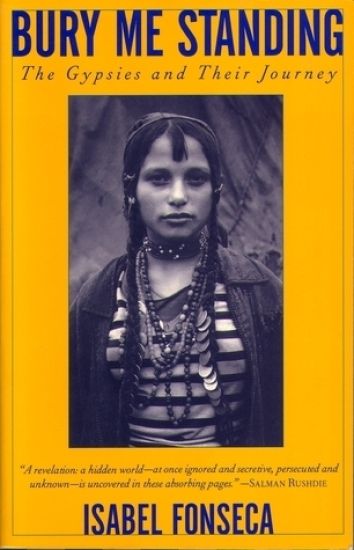
A masterful work of personal reportage, this volume is also a vibrant portrait of a mysterious people and an essential document of a disappearing culture. Fabled, feared, romanticized, and reviled, the Gypsies--or Roma--are among the least understood people on earth. Their culture remains largely obscure, but in Isabel Fonseca they have found an eloquent witness. In Bury Me Standing, alongside unforgettable portraits of individuals--the poet, the politician, the child prostitute--Fonseca offers sharp insights into the humor, language, wisdom, and taboos of the Roma. She traces their exodus out of India 1,000 years ago and their astonishing history of persecution: enslaved by the princes of medieval Romania; massacred by the Nazis; forcibly assimilated by the communist regimes; evicted from their settlements in Eastern Europe, and most recently, in Western Europe as well. Whether as handy scapegoats or figments of the romantic imagination, the Gypsies have always been with us--but never before have they been brought so vividly to life. Includes fifty black and white photos.

In this epic, beautifully written masterwork, Pulitzer Prize-winning author Isabel Wilkerson chronicles one of the great untold stories of American history: the decades-long migration of black citizens who fled the South for northern and western cities, in search of a better life. NATIONAL BOOK CRITICS CIRCLE AWARD WINNERLYNTON HISTORY PRIZE WINNERHEARTLAND AWARD WINNER DAYTON LITERARY PEACE PRIZE FINALIST NAMED ONE OF THE TEN BEST BOOKS OF THE YEAR BY"The New York Times - USA Today - O: The Oprah Magazine - Amazon - Publishers Weekly - Salon - Newsday - The Daily Beast"" "NAMED ONE OF THE BEST BOOKS OF THE YEAR BY"The New Yorker - The Washington Post - The Economist - Boston Globe - San Francisco Chronicle - Chicago Tribune - Entertainment Weekly - Philadelphia Inquirer - The Guardian - The Seattle Times - St. Louis Post-Dispatch - The Christian Science Monitor " From 1915 to 1970, this exodus of almost six million people changed the face of America. Wilkerson compares this epic migration to the migrations of other peoples in history. She interviewed more than a thousand people, and gained access to new data and official records, to write this definitive and vividly dramatic account of how these American journeys unfolded, altering our cities, our country, and ourselves. With stunning historical detail, Wilkerson tells this story through the lives of three unique individuals: Ida Mae Gladney, who in 1937 left sharecropping and prejudice in Mississippi for Chicago, where she achieved quiet blue-collar success and, in old age, voted for Barack Obama when he ran for an Illinois Senate seat; sharp and quick-tempered George Starling, who in 1945 fled Florida for Harlem, where he endangered his job fighting for civil rights, saw his family fall, and finally found peace in God; and Robert Foster, who left Louisiana in 1953 to pursue a medical career, the personal physician to Ray Charles as part of a glitteringly successful medical career, which allowed him to purchase a grand home where he often threw exuberant parties. Wilkerson brilliantly captures their first treacherous and exhausting cross-country trips by car and train and their new lives in colonies that grew into ghettos, as well as how they changed these cities with southern food, faith, and culture and improved them with discipline, drive, and hard work. Both a riveting microcosm and a major assessment, The Warmth of Other Suns is a bold, remarkable, and riveting work, a superb account of an "unrecognized immigration" within our own land. Through the breadth of its narrative, the beauty of the writing, the depth of its research, and the fullness of the people and lives portrayed herein, this book is destined to become a classic.
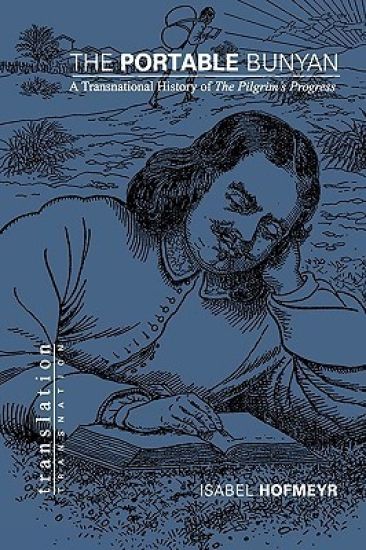
How does a book become an international bestseller? What happens to it as it is translated into different languages, contexts, and societies? How is it changed by the intellectual environments it encounters? What does the transnational circulation mean for its reception back home? Exploring the international life of a particularly long-lived and widely traveled book, Isabel Hofmeyr follows The Pilgrim's Progress as it circulates through multiple contexts--and into some 200 languages--focusing on Africa, where 80 of the translations occurred. This feat of literary history is based on intensive research that criss-crossed among London, Georgia, Kingston, Bedford (John Bunyan's hometown), and much of sub-Saharan Africa. Finely written and unusually wide-ranging, it accounts for how The Pilgrim's Progress traveled abroad with the Protestant mission movement, was adapted and reworked by the societies into which it traveled, and, finally, how its circulation throughout the empire affected Bunyan's standing back in England. The result is a new intellectual approach to Bunyan--one that weaves together British, African, and Caribbean history with literary and translation studies and debates over African Christianity and mission. Even more important, this book is a rare example of a truly worldly study of "world literature"--and of the critical importance of translation, both linguistic and cultural.

Isabel MacCaffrey contends that, in allegory, the mind makes a model of itself, and she shows that The Faerie Queene, mirroring as it does the mind's structure, is both a treatise on and an example of the central role that imagination plays in human life. Viewing the poem as a model of Spenser's universe, the author investigates the poet's theory of knowledge and the role of imagination in the construction of cosmic models. She begins with a survey of theories of the imagination and the creation of fictions, establishing a context in which allegorical images may be understood throughout the European allegorical tradition to which The Faerie Queene belongs. Isabel MacCaffrey's new readings show that insofar as Spenser's poem concerns modes of knowledge, it offers the reader an anatomy of its own composition, an analysis of imagination in its varied relations to the world. Originally published in 1976. The Princeton Legacy Library uses the latest print-on-demand technology to again make available previously out-of-print books from the distinguished backlist of Princeton University Press. These editions preserve the original texts of these important books while presenting them in durable paperback and hardcover editions. The goal of the Princeton Legacy Library is to vastly increase access to the rich scholarly heritage found in the thousands of books published by Princeton University Press since its founding in 1905.