Kirjojen hintavertailu. Mukana 12 016 292 kirjaa ja 12 kauppaa.

Kirjahaku

Etsi kirjoja tekijän nimen, kirjan nimen tai ISBN:n perusteella.

1000 tulosta hakusanalla Jackson Burrows

Mercy Philbrick's choice. By: Helen Jackson (H.H): Helen Maria Hunt Jackson, born Helen Fiske (October 15, 1830 - August 12, 1885). Novel (World's c
Helen Maria Hunt Jackson, born Helen Fiske (October 15, 1830 - August 12, 1885), was an American poet and writer who became an activist on behalf of improved treatment of Native Americans by the U.S. government. She described the adverse effects of government actions in her history A Century of Dishonor (1881). Her novel Ramona (1884) dramatized the federal government's mistreatment of Native Americans in Southern California after the Mexican-American War and attracted considerable attention to her cause. Commercially popular, it was estimated to have been reprinted 300 times and most readers liked its romantic and picturesque qualities rather than its political content.The novel was so popular that it attracted many tourists to Southern California who wanted to see places from the book.She was born Helen Maria Fiske in Amherst, Massachusetts, the daughter of Nathan Welby Fiske and Deborah Waterman Vinal Fisk. Helen's father was a minister, author, and professor of Latin, Greek, and philosophy at Amherst College. She had two brothers, both of whom died soon after birth, and a sister Anne. They were raised as Unitarian.Anne became the wife of E. C. Banfield, a federal government official who served as Solicitor of the United States Treasury. The girls lost their mother in 1844, when Helen was fifteen. Three years later their father died. He had provided financially for Helen's education and arranged for an uncle to care for her. Fiske attended Ipswich Female Seminary and the Abbott Institute, a boarding school in New York City run by Reverend J.S.C. Abbott. She was a classmate of Emily Dickinson, also from Amherst; Emily became a renowned poet. The two corresponded for the rest of their lives, but few of their letters have surviveed.In 1852 at age 22, Fiske married U.S. Army Captain Edward Bissell Hunt. They had two sons, one of whom, Murray Hunt, died as an infant in 1854 of a brain disease. In 1863, her husband died in a military accident. Her second son Rennie Hunt died of diphtheria in 1865. Hunt traveled widely. In the winter of 1873-1874 she was in Colorado Springs, Colorado at the resort of Seven Falls, seeking rest in hopes of a cure for tuberculosis, which was often fatal before the invention of antibiotics. (See Tuberculosis treatment in Colorado Springs).While in Colorado Springs, Hunt met William Sharpless Jackson, a wealthy banker and railroad executive. They married in 1875 and she took the name Jackson, under which she was best known for her later writings.Helen Hunt began writing after the deaths of her family members. She published her early work anonymously, usually under the name "H.H."Ralph Waldo Emerson admired her poetry and used several of her poems in his public readings. He included five of them in his Parnassus: An Anthology of Poetry (1880). Over the next two years, she published three novels in the anonymous No Name Series, including Mercy Philbrick's Choice and Hetty's Strange History.She also encouraged a contribution from Emily Dickinson to A Masque of Poets as part of the same series........
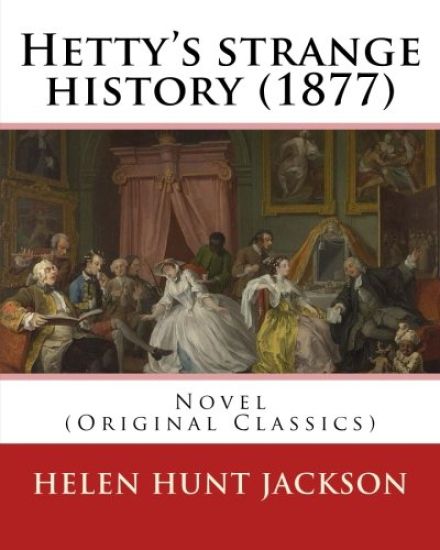
Hetty's strange history (1877). By: Helen Jackson (H.H). Helen Maria Hunt Jackson, born Helen Fiske (October 15, 1830 - August 12, 1885): Novel (Origi
Helen Maria Hunt Jackson, born Helen Fiske (October 15, 1830 - August 12, 1885), was an American poet and writer who became an activist on behalf of improved treatment of Native Americans by the U.S. government. She described the adverse effects of government actions in her history A Century of Dishonor (1881). Her novel Ramona (1884) dramatized the federal government's mistreatment of Native Americans in Southern California after the Mexican-American War and attracted considerable attention to her cause. Commercially popular, it was estimated to have been reprinted 300 times and most readers liked its romantic and picturesque qualities rather than its political content.The novel was so popular that it attracted many tourists to Southern California who wanted to see places from the book.She was born Helen Maria Fiske in Amherst, Massachusetts, the daughter of Nathan Welby Fiske and Deborah Waterman Vinal Fisk. Helen's father was a minister, author, and professor of Latin, Greek, and philosophy at Amherst College. She had two brothers, both of whom died soon after birth, and a sister Anne. They were raised as Unitarian.Anne became the wife of E. C. Banfield, a federal government official who served as Solicitor of the United States Treasury. The girls lost their mother in 1844, when Helen was fifteen. Three years later their father died. He had provided financially for Helen's education and arranged for an uncle to care for her. Fiske attended Ipswich Female Seminary and the Abbott Institute, a boarding school in New York City run by Reverend J.S.C. Abbott. She was a classmate of Emily Dickinson, also from Amherst; Emily became a renowned poet. The two corresponded for the rest of their lives, but few of their letters have surviveed.In 1852 at age 22, Fiske married U.S. Army Captain Edward Bissell Hunt. They had two sons, one of whom, Murray Hunt, died as an infant in 1854 of a brain disease. In 1863, her husband died in a military accident. Her second son Rennie Hunt died of diphtheria in 1865. Hunt traveled widely. In the winter of 1873-1874 she was in Colorado Springs, Colorado at the resort of Seven Falls, seeking rest in hopes of a cure for tuberculosis, which was often fatal before the invention of antibiotics. (See Tuberculosis treatment in Colorado Springs).While in Colorado Springs, Hunt met William Sharpless Jackson, a wealthy banker and railroad executive. They married in 1875 and she took the name Jackson, under which she was best known for her later writings.Helen Hunt began writing after the deaths of her family members. She published her early work anonymously, usually under the name "H.H."Ralph Waldo Emerson admired her poetry and used several of her poems in his public readings. He included five of them in his Parnassus: An Anthology of Poetry (1880). Over the next two years, she published three novels in the anonymous No Name Series, including Mercy Philbrick's Choice and Hetty's Strange History.She also encouraged a contribution from Emily Dickinson to A Masque of Poets as part of the same series......
Zeph: A Posthumous Story (1885). By: Helen Jackson (Original Classics): Helen Maria Hunt Jackson, born Helen Fiske (October 15, 1830 - August 12, 1885
Helen Maria Hunt Jackson, born Helen Fiske (October 15, 1830 - August 12, 1885), was an American poet and writer who became an activist on behalf of improved treatment of Native Americans by the U.S. government. She described the adverse effects of government actions in her history A Century of Dishonor (1881). Her novel Ramona (1884) dramatized the federal government's mistreatment of Native Americans in Southern California after the Mexican-American War and attracted considerable attention to her cause. Commercially popular, it was estimated to have been reprinted 300 times and most readers liked its romantic and picturesque qualities rather than its political content.The novel was so popular that it attracted many tourists to Southern California who wanted to see places from the book.She was born Helen Maria Fiske in Amherst, Massachusetts, the daughter of Nathan Welby Fiske and Deborah Waterman Vinal Fisk. Helen's father was a minister, author, and professor of Latin, Greek, and philosophy at Amherst College. She had two brothers, both of whom died soon after birth, and a sister Anne. They were raised as Unitarian.Anne became the wife of E. C. Banfield, a federal government official who served as Solicitor of the United States Treasury. The girls lost their mother in 1844, when Helen was fifteen. Three years later their father died. He had provided financially for Helen's education and arranged for an uncle to care for her. Fiske attended Ipswich Female Seminary and the Abbott Institute, a boarding school in New York City run by Reverend J.S.C. Abbott. She was a classmate of Emily Dickinson, also from Amherst; Emily became a renowned poet. The two corresponded for the rest of their lives, but few of their letters have surviveed.In 1852 at age 22, Fiske married U.S. Army Captain Edward Bissell Hunt. They had two sons, one of whom, Murray Hunt, died as an infant in 1854 of a brain disease. In 1863, her husband died in a military accident. Her second son Rennie Hunt died of diphtheria in 1865. Hunt traveled widely. In the winter of 1873-1874 she was in Colorado Springs, Colorado at the resort of Seven Falls, seeking rest in hopes of a cure for tuberculosis, which was often fatal before the invention of antibiotics. (See Tuberculosis treatment in Colorado Springs).While in Colorado Springs, Hunt met William Sharpless Jackson, a wealthy banker and railroad executive. They married in 1875 and she took the name Jackson, under which she was best known for her later writings.Helen Hunt began writing after the deaths of her family members. She published her early work anonymously, usually under the name "H.H."Ralph Waldo Emerson admired her poetry and used several of her poems in his public readings. He included five of them in his Parnassus: An Anthology of Poetry (1880). Over the next two years, she published three novels in the anonymous No Name Series, including Mercy Philbrick's Choice and Hetty's Strange History.She also encouraged a contribution from Emily Dickinson to A Masque of Poets as part of the same series
Glimpses of Three Coasts (1886). By: Helen Jackson: Novel (Original Classics). Helen Maria Hunt Jackson, born Helen Fiske (October 15, 1830 - August 1
Helen Maria Hunt Jackson, born Helen Fiske (October 15, 1830 - August 12, 1885), was an American poet and writer who became an activist on behalf of improved treatment of Native Americans by the U.S. government. She described the adverse effects of government actions in her history A Century of Dishonor (1881). Her novel Ramona (1884) dramatized the federal government's mistreatment of Native Americans in Southern California after the Mexican-American War and attracted considerable attention to her cause. Commercially popular, it was estimated to have been reprinted 300 times and most readers liked its romantic and picturesque qualities rather than its political content.The novel was so popular that it attracted many tourists to Southern California who wanted to see places from the book.She was born Helen Maria Fiske in Amherst, Massachusetts, the daughter of Nathan Welby Fiske and Deborah Waterman Vinal Fisk. Helen's father was a minister, author, and professor of Latin, Greek, and philosophy at Amherst College. She had two brothers, both of whom died soon after birth, and a sister Anne. They were raised as Unitarian.Anne became the wife of E. C. Banfield, a federal government official who served as Solicitor of the United States Treasury. The girls lost their mother in 1844, when Helen was fifteen. Three years later their father died. He had provided financially for Helen's education and arranged for an uncle to care for her. Fiske attended Ipswich Female Seminary and the Abbott Institute, a boarding school in New York City run by Reverend J.S.C. Abbott. She was a classmate of Emily Dickinson, also from Amherst; Emily became a renowned poet. The two corresponded for the rest of their lives, but few of their letters have surviveed.In 1852 at age 22, Fiske married U.S. Army Captain Edward Bissell Hunt. They had two sons, one of whom, Murray Hunt, died as an infant in 1854 of a brain disease. In 1863, her husband died in a military accident. Her second son Rennie Hunt died of diphtheria in 1865. Hunt traveled widely. In the winter of 1873-1874 she was in Colorado Springs, Colorado at the resort of Seven Falls, seeking rest in hopes of a cure for tuberculosis, which was often fatal before the invention of antibiotics. (See Tuberculosis treatment in Colorado Springs).While in Colorado Springs, Hunt met William Sharpless Jackson, a wealthy banker and railroad executive. They married in 1875 and she took the name Jackson, under which she was best known for her later writings.Helen Hunt began writing after the deaths of her family members. She published her early work anonymously, usually under the name "H.H."Ralph Waldo Emerson admired her poetry and used several of her poems in his public readings. He included five of them in his Parnassus: An Anthology of Poetry (1880). Over the next two years, she published three novels in the anonymous No Name Series, including Mercy Philbrick's Choice and Hetty's Strange History.She also encouraged a contribution from Emily Dickinson to A Masque of Poets as part of the same series.......
The Frontier in American History: (1921) by: Frederick Jackson Turner

The Frontier in American History: (1921) by: Frederick Jackson Turner

Frederick Jackson Turner

Createspace Independent Publishing Platform
2016
nidottu
Frederick Jackson Turner (November 14, 1861 - March 14, 1932) was an American historian in the early 20th century, based at the University of Wisconsin until 1910, and then at Harvard. He trained many PhDs who came to occupy prominent places in the history profession. He promoted interdisciplinary and quantitative methods, often with a focus on the Midwest. He is best known for his essay "The Significance of the Frontier in American History", whose ideas formed the Frontier Thesis. He argued that the moving western frontier shaped American democracy and the American character from the colonial era until 1890. He is also known for his theories of geographical sectionalism. In recent years historians and academics have argued strenuously over Turner's work; all agree that the Frontier Thesis has had an enormous impact on historical scholarship and the American mind.
Michael Jackson Magic

Michael Jackson Magic

Daniele Boerci

Createspace Independent Publishing Platform
2017
nidottu
Daniele Boerci, classe 1968, grafico, illustratore, appassionato di informatica, musica, lettura e presidente, nonch direttore responsabile di Michaelmania dal 1985, accompagna il lettore in questo primo volume della trilogia dedicata a Michael Jackson, MAGIC. Un artista straordinario del quale verranno ripercorse tutte le tappe pi importanti della vita artistica e personale. Per la prima volta in un libro dedicato a Michael Jackson, nessun argomento sar considerato tab . L'autore invita il lettore a riflettere e ad addentrarsi nella scoperta di uno degli artisti pi straordinari di sempre attraverso le sue opere e le sue gesta. Perch di Michael Jackson non ne esister pi un altro.
Dr. Jackson Speaks Kingdom Quest

Dr. Jackson Speaks Kingdom Quest

Cecilia Jackson

Authorhouse
2017
pokkari
A quest is a search, a journey, a pursuit, or a chase after something. A quest for understanding and perfecting one's life in the kingdom of God is a noble odyssey. The book Kingdom Quest: (A Trio of Revelation on the Pursuit of Victorious Living) guides and counsels the reader in overcoming challenges with depression, anger, resentment, bitterness, emotional and physical depletion, and a mindset of mediocrity in approaches to life in general. The reader's thinking is propelled with fresh discoveries and approaches to mending goals on life's journey, recovering passion for living, and gaining wholeness and healing for one's entire being The book Kingdom Quest includes a trio of books within a book that target problem trends in the lives of individuals; furthermore, each section generates renewed insight and inspires suggested strategies in specific areas that solve problems and foster kingdom dominion.
Soledad Brother: The Prison Letters of George Jackson
"The power of George Jackson's personal story remains painfully relevant to our nation today, with its persistent racism, its hellish prisons, its unjust judicial system, and the poles of wealth and poverty that are at the root of all that. I hope the younger generation, black and white, will read Soledad Brother." --Howard Zinn, author, A People's History of the United States A collection of Jackson's letters from prison, Soledad Brother is an outspoken condemnation of the racism of white America and a powerful appraisal of the prison system that failed to break his spirit but eventually took his life. Jackson's letters make palpable the intense feelings of anger and rebellion that filled black men in America's prisons in the 1960s. But even removed from the social and political firestorms of the 1960s, Jackson's story still resonates for its portrait of a man taking a stand even while locked down.
Andrew Jackson

Andrew Jackson

Richard E. Ellis

CQ Press
2003
sidottu
Each volume in the American Presidents Reference Series is organized around an individual presidency and gathers a host of biographical, analytical, and primary source historical material that will analyze the presidency and bring the president, his administration, and his times to life. The series focuses on key moments in U.S. political history as seen through the eyes of the most influential presidents to take the oath of office. Unique headnotes provide the context to data, tables and excerpted primary source documents. Andrew Jackson, born in 1767, attained the rank of major general. Through his military exploits during the war of 1812, Jackson was nicknamed "Old Hickory." His victory in the Battle of New Orleans helped launch his political career. Although Senator Jackson won the most electoral votes in the 1824 presidential election, the race was thrown in the House of Representatives where John Quincy Adams prevailed. Four years later he defeated Adams and became the seventh president of the United States. He was the first westerner to be elected by the common man and not the elite, and the first to be a target of a presidential assassin. With the turmoil of the times, Jackson was confronted with sectional politics, nullification threats, and the responsibility of removing Native Americans from their ancestral homes. Jackson died in 1845. This new volume on the Andrew Jackson presidency will cover: Economic developmentThe new Democratic PartyNative AmericansThe Bank of the United StatesSectionalismHis military careerPersonal scandal
The Papers of Andrew Jackson

The Papers of Andrew Jackson

Andrew Jackson

University of Tennessee Press
2002
sidottu
This sixth volume of The Papers of Andrew Jackson documents the election on Andrew Jackson, the first westerner and the last veteran of the American Revolution, to the presidency.The four years of this volume chronicle the presidential campaign of 1828. Jackson, winner of the popular vote in 1824 but loser of the election, was once again the reluctant candidate, called into service by the voice of the voters. The campaign, one of the longest in American history, pitted Jackson against the incumbent John Quincy Adams; it was also one of the dirtiest campaigns in American history.The brunt of the mudslinging was aimed at Jackson, and it is covered in detail in this volume. Every aspect of the public and private life of the fifty-eight-year-old former major general in the United States Army came under scrutiny, and in both his opponents found him deficient. According to his detractors, he lacked the moral principles, the temperament, the education, and the family background requisite for a president of the United States. In sum, Jackson resembled the “devil incarnate,” to use his own words. The mudslinging left Jackson livid, anxious for retribution but constrained by the cause in which he was engaged. The presidential campaign of 1828, in the minds of Jackson and his supporters, was for the cause of truth and democracy against corrupt, self-seeking politicians, an aristocracy of power built upon bargains and dubious political alliances dedicated to its perpetuation in office.The four years covered in this volume were some of the most trying in Jackson’s life, but the one event that hurt Jackson the most was the death of his wife. Until his dying day, Jackson contended that her death had been hastened by the slanders of his opponents in the campaign. As great as the loss was for him personally, Jackson nonetheless rejoiced in the results of the election for, in his eyes, the voice of the people had finally been heard. Liberty, not power, had triumphed. Reform was at hand, and retribution would surely follow.
The Papers of Andrew Jackson, Volume 7, 1829

The Papers of Andrew Jackson, Volume 7, 1829

Andrew Jackson

University of Tennessee Press
2007
sidottu
With this seventh volume, The Papers of Andrew Jackson enters the heart of Jackson's career: his tumultuous two terms as president of the United States. The year 1829 began with Jackson fresh from a triumphant victory over incumbent John Quincy Adams in the 1828 campaign, yet mourning the sudden death of his beloved wife, Rachel. In January, having hired an overseer for his Hermitage plantation and arranged for Rachel's tomb, he left Tennessee for Washington. Jackson assumed the presidency with two objectives already fixed in mind: purging the federal bureaucracy of recreant officeholders and removing the southern Indian tribes westward beyond state authority. By year's end he had added two more: purchasing Texas and destroying the Bank of the United States. But meanwhile he found himself diverted, and nearly consumed, by the notorious Peggy Eaton affair--a burgeoning scandal which pitted the president, his Secretary of War John Eaton, and the latter's vivacious wife against the Washington guardians of feminine propriety. This first presidential volume reveals all these stories, and many more, in a depth never seen before. It presents full texts of more than four hundred documents, most printed for the first time. Gathered from a vast array of libraries, archives, and individual owners, they include Jackson's intimate exchanges with family and friends, private notes and musings, and formative drafts of public addresses. Administrative papers range from presidential pardons to military promotions to plans for discharging the public debt. They exhibit Jackson's daily conduct of the executive office in close and sometimes startling detail, and cast new light on such controversial mattersas Indian removal and political patronage. Included also are letters to the president from people in every corner of the country and every walk of life: Indian delegations presenting grievances, distraught mothers pleading help for wayward sons, aged veterans begging pensions, politicians offering advice and seeking jobs. Embracing a broad spectrum of actors and events, this volume offers an incomparable window not only into Jackson and his presidency, but into America itself in 1829.
Andrew Jackson Andrew Jackson and the Politics of Martial Law

Andrew Jackson Andrew Jackson and the Politics of Martial Law

Matthew Warshauer

University of Tennessee Press
2007
nidottu
“Lucid and well-researched.” —The New YorkerIn order to win the famous battle of New Orleans, Andrew Jackson believed that it was necessary to declare martial law and suspend the writ of habeas corpus. In doing so, he achieved both a great victory and the notoriety of being the first American general to ever suspend civil liberties in America. Andrew Jackson and the Politics of Martial Law tells the history of Jackson’s use of martial law and how the controversy surrounding it followed him throughout his life. The work engages the age-old controversy over if, when, and who should be able to subvert the Constitution during times of national emergency. It also engages the continuing historical controversy over Jackson’s political prowess and the importance of the rise of party politics during the early republic. As such, the book contributes to both the scholarship on Jackson and the legal and constitutional history of the intersection between the military and civilian spheres. To fully understand the history of martial law and the subsequent evolution of a theory of emergency powers, Matthew Warshauer asserts, one must also understand the political history surrounding the discussion of civil liberties and how Jackson’s stature as a political figure and his expertise as a politician influenced such debates. Warshauer further explains that Abraham Lincoln cited Jackson’s use of the military and suspension of civil liberties as justification for similar decisions during the Civil War. During both Jackson’s and Lincoln’s use of martial law, critics declared that such an action stood in opposition to both the Constitution and the nation’s cherished republican principles of protecting liberty from dangerous power, especially that of the military. Supporters of martial law insisted that saving the nation became the preeminent cause when the republic was endangered. At the heart of such arguments lurked the partisan maneuvering of opposing political parties. Andrew Jackson and the Politics of Martial Law is a powerful examination of the history of martial law, its first use in the United States, and the consequent development of emergency powers for both military commanders and presidents.Matthew Warshauer is associate professor of history at Central Connecticut State University. He is the author of the forthcoming Andrew Jackson: First Men, America’s Presidents. His articles have appeared in Tennessee Historical Quarterly, Connecticut History, Louisiana History, and New York History.