Kirjojen hintavertailu. Mukana 11 717 486 kirjaa ja 12 kauppaa.

Kirjahaku

Etsi kirjoja tekijän nimen, kirjan nimen tai ISBN:n perusteella.

1000 tulosta hakusanalla James Carson

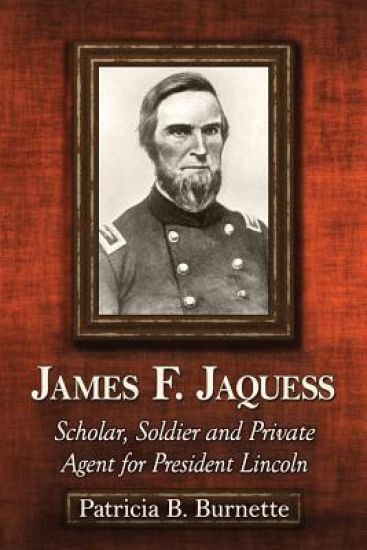
James F. Jaquess

James F. Jaquess

Patricia B. Burnette

McFarland Co Inc
2013
pokkari
Tall, handsome and charismatic, James Jaquess impressed men and charmed ladies who knew him as a preacher, a college president or colonel of an Illinois regiment. In 1864 he and James Gilmore talked to Jefferson Davis about terms of peace. Lincoln recognized his many abilities and invited Jaquess to serve as one of his personal agents. But after the Civil War ended, this biography reveals, Jaquess' life changed for the worse. He was tried in Kentucky for the death of a woman and failed as a carpetbagger in Arkansas and Mississippi. Then he convinced his family and friends in Indiana and numerous residents of New York to invest in Lawrence-Townley bonds and share in a fortune waiting in England. This venture ended in poverty for him and a sentence in a British prison. When he returned to America for his final years, Jaquess still held the respect of the men of the 73rd Infantry and the affection of the women who knew him as president of their college in Jacksonville. His misadventures having turned his black hair to white, he still possessed the charisma that had led to his national fame.
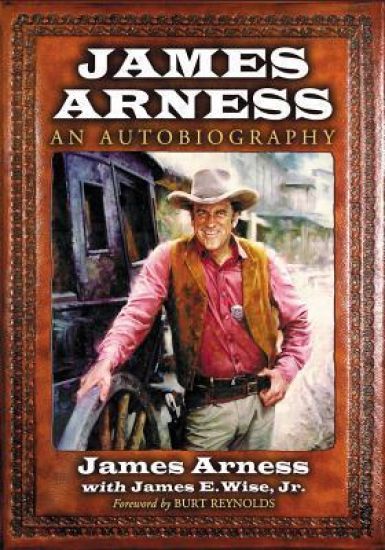
James Arness

James Arness

James Arness; James E. Wise Jr.

McFarland Co Inc
2012
nidottu
James Arness was born May 26, 1923, in Minneapolis. He entered college just as World War II began and dreamed of being a naval aviator. It seemed as if every night his fraternity was having a party to send off a brother to the service. Young Arness got his interview with a naval flight programme officer, but his hopes vanished as he was informed that his six foot seven inch height disqualified him automatically. He wrote his draft board asking that they call him up as soon as possible and so he ended up as a private in the famed Third Infantry Division where he earned a Bronze Star and the Purple Heart. Because of his stature, he was chosen to be first off the landing craft (to test the depth of the water) when his division landed at Anzio, Italy. He was subsequently wounded by enemy machine gun fire and spent eighteen months recovering in overseas and stateside hospitals. Later his height would help him strike a commanding figure in the role of U.S. Marshal Matt Dillon of Dodge City. After Arness had toiled in Hollywood for a decade, John Wayne recommended him to CBS executives for the Gunsmoke part (after Wayne turned it down). As the principal performer of Gunsmoke for twenty years (1955-1975), the actor and the character took on mythic proportions--a born leader, honest and strong. Rare is the actor who has been cast in a role that so deeply fits his true self. James Arness gives a full account of his early years, his family, his military career, his film work in Hollywood which included appearances in the cult-favorite science fiction movies Them! and The Thing. He had a long run on Gunsmoke, a role in the highly popular television miniseries How The West Was Won, and his post-theatrical period is also covered. This is the long anticipated, never-before-told account of one of the icons of twentieth-century television. There are many personal revelations of interacting with some of the Gunsmoke family ensemble, such as Miss Kitty, Doc and Festus. His own work as a producer is covered. Throughout are rare, previously unpublished photographs from the author's personal collection. Appendices include comments by show biz colleagues and fellow Gunsmoke alumni, and a sampling of letters received from his legions of fans. As befits the man, this large-size book is a beautifully printed work in accord with the highest library standards--a luxurious and extra-strong cloth binding, acid-free paper, carefully designed photographic and textual layouts and sophisticated typography. Actor and fellow Gunsmoke performer Burt Reynolds has written a foreword to the book.
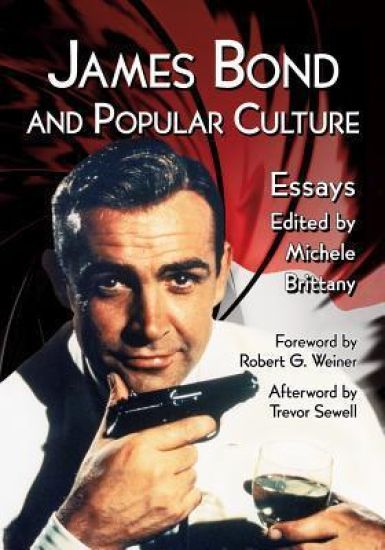
James Bond and Popular Culture
The most recognizable fictional spy and one of the longest running film franchises, James Bond has inspired a host of other pop culture contributions, including Doctor Who (the Jon Pertwee era), the animated television comedy series Archer, Matt Kindt's comic book series Mind MGMT, Japan's Nakano Spy School Films, the 1960s Italian Eurospy genre, and the recent 007 Legends video game. This collection of new essays analyzes Bond's phenomenal literary and filmic influence over the past 50-plus years. The 14 essays are categorized into five parts: film, television, literature, lifestyle (emphasis on fashion and home decor), and the Bond persona reinterpreted.
Augusta County, Virginia Survey Book of James Patton and William Preston, 1752-1755
The survey book provided in this publication is one of Augusta County, Virginia's earliest land records, covering the years 1752 through 1755. The records offer an abstracted version of the material, detailing the names of persons, creeks/rivers, and mountains or meadows when given that will put you in the neighborhood of the property. The author concludes this work with an index to full names and places.
James Rodriguez

James Rodriguez

Illugi Jökulsson

Abbeville Kids,US
2015
sidottu
For the past decade, the same remarkable players have been dominating the headlines for soccer, but, finally, they have met their match! Colombia's young star James Rodriguez burst onto the scene in the 2014 World Cup in Brazil, where he was awarded the Golden Boot as the tournament's top scorer, with six impressive goals-he is the one to watch. In this entertaining and informative book, we follow Rodriguez from his humble beginnings in Ibagué, Colombia, to his meteoric superstardom as a midfielder with Spain's Real Madrid. Learn about his personality, family, and favourite hobbies, along with his strengths and playing style. Get to know the major star of tomorrow-James Rodriguez!
The Dynamic Individualism of William James

The Dynamic Individualism of William James

James O. Pawelski

State University of New York Press
2007
sidottu
Explores James's concept of the individual in terms of physiology, psychology, philosophy, and religion.The Dynamic Individualism of William James analyzes James's rich and complex thought through an examination of his individualism. A central theme of James's writings, individualism underlies his basic views on freedom, society, government, psychology, education, religion, pragmatism, and metaphysics-yet, until now, no one has undertaken a careful study of this important aspect of James's thought. With close readings of texts that include The Principles of Psychology, The Varieties of Religious Experience, and A Pluralistic Universe, James O. Pawelski engages the range of contexts in which James discusses individualism, offers a refreshingly new reading of his work, and, in seeking to resolve James's own psychology, presents an original and convincing case for his dynamic individualism.
The Dynamic Individualism of William James

The Dynamic Individualism of William James

James O. Pawelski

State University of New York Press
2008
pokkari
Explores James's concept of the individual in terms of physiology, psychology, philosophy, and religion.The Dynamic Individualism of William James analyzes James's rich and complex thought through an examination of his individualism. A central theme of James's writings, individualism underlies his basic views on freedom, society, government, psychology, education, religion, pragmatism, and metaphysics-yet, until now, no one has undertaken a careful study of this important aspect of James's thought. With close readings of texts that include The Principles of Psychology, The Varieties of Religious Experience, and A Pluralistic Universe, James O. Pawelski engages the range of contexts in which James discusses individualism, offers a refreshingly new reading of his work, and, in seeking to resolve James's own psychology, presents an original and convincing case for his dynamic individualism.
James and Jude

James and Jude

John Painter; David A. deSilva; Mikeal Parsons; Charles Talbert

Baker Academic, Div of Baker Publishing Group
2012
nidottu
In this addition to the well-received Paideia series, two respected New Testament scholars offer a practical commentary on James and Jude that is conversant with contemporary scholarship, draws on ancient backgrounds, and attends to the theological nature of the texts.This commentary, like each in the projected eighteen-volume series, proceeds by sense units rather than word-by-word or verse-by-verse. Paideia commentaries explore how New Testament texts form Christian readers by• attending to the ancient narrative and rhetorical strategies the text employs• showing how the text shapes theological convictions and moral habits• commenting on the final, canonical form of each New Testament book• focusing on the cultural, literary, and theological settings of the text• making judicious use of maps, photos, and sidebars in a reader-friendly formatStudents, pastors, and other readers will appreciate the historical, literary, and theological insight that John Painter and David deSilva offer in interpreting James and Jude.
James, First, Second, and Third John

James, First, Second, and Third John

Kelly Anderson; Daniel Keating; Peter Williamson; Mary Healy

Baker Academic, Div of Baker Publishing Group
2017
nidottu
Examine the New Testament from within the living tradition of the Catholic ChurchIn this addition to the successful Catholic Commentary on Sacred Scripture, two respected scholars and Bible teachers interpret James and First, Second, and Third John from within the living tradition of the Church. The CCSS relates Scripture to Christian life today, is faithfully Catholic, and is supplemented by features designed to help pastoral ministers, lay readers, and students better comprehend the Bible and use it more effectively.Commentary features include:? Biblical text from the New American Bible, Revised Edition (NABRE)? References to the Catechism, the Lectionary, and related biblical texts? Theological insights from Church fathers, saints, and popes? Reflection and application sections for daily Christian living? Suggested resources and an index of pastoral subjectsAttractively packaged and accessibly written, the CCSS aims to help readers understand their faith more deeply, nourish their spiritual life, and share the good news with others.
James, 1 & 2 Peter, and Jude

James, 1 & 2 Peter, and Jude

Jim Samra; Mark Strauss; John Walton

Baker Academic, Div of Baker Publishing Group
2016
nidottu
Focused Biblical Scholarship to Teach the TextThe Teach the Text Commentary Series utilizes the best of biblical scholarship to provide the information a pastor needs to communicate the text effectively. The carefully selected preaching units and focused commentary allow pastors to quickly grasp the big idea and key themes of each passage of Scripture. Each unit of the commentary includes the big idea and key themes of the passage and sections dedicated to understanding, teaching, and illustrating the text.The newest New Testament release in this innovative commentary series is Jim Samra's treatment of James, 1 & 2 Peter, and Jude.
James Joseph Sylvester

James Joseph Sylvester

Karen Hunger Parshall

Johns Hopkins University Press
2006
sidottu
Here, in this first biographical study of James Joseph Sylvester, Karen Hunger Parshall makes a signal contribution to the history of mathematics, Victorian history, and the history of science. A brilliant Cambridge student at first denied a degree because of his faith, Sylvester came twice to America to teach mathematics, ultimately becoming one of Daniel Coit Gilman's faculty recruits at Johns Hopkins in 1876 and winning the coveted Savilian Professorship of Geometry at Oxford in 1883. He held professorships of natural philosophy, worked as an actuary, was called to the bar, and taught mathematics to cadets training for engineering and artillery posts in the British Army. During his long, distinguished career he also edited England's Quarterly Journal of Pure and Applied Mathematics and established the American Journal of Mathematics, the first sustained mathematics research journal in the United States. Situating Sylvester's life within the political, religious, mathematical, and social currents of nineteenth-century England, Parshall penetrates the myth of this venerated figure, revealing how he lived, the choices he made and why, how the world in which he lived affected him-and how he affected that world. The story of Sylvester's life sheds light on the evolution of mathematical thought. It also examines the ways in which mathematics may be done and what factors may shape a mathematician's ideas. Parshall explores the development of academic professionalization, nineteenth-century mathematical culture, and the emergence of modern algebra as a mathematical discipline. She highlights the human side of what many view as that most arcane and otherworldly of intellectual endeavors, mathematics, which indeed answers to such diverse factors as religion, ego, and depression.
James Joyce's Techno-Poetics

James Joyce's Techno-Poetics

Donald Theall

University of Toronto Press
1997
sidottu
James Joyce's Techno-Poetics is on the cutting edge of an original and exciting new trend in Joycean studies, as it combines the study of literature, technology, and communication to reveal James Joyce as 'a key figure in the history of cyberculture.' Donald Theall examines for the first time how Joyce conceived of the artist as an engineer and the artist's works as constructions, and reveals the importance of Joyce's understanding of the direction of a developing technoculture. Theall explores the interrelationships between the machinic and the processes of encoding, decoding, reading, writing, and interpreting in Joyce's self-reflexive treatment of the book in Finnegans Wake. By situating this project in relation to memory and cultural production, Theall argues that Joyce's radical paramodern poetic practice has important implications for a wide variety of subsequent cultural and theoretical movements: dramatism, poststructuralism, semiology, and hypertextuality. Theall places Joyce in the context of other modern thinkers, such as Benjamin and Bataille, and draws a direct line of influence from Joyce to Marshall McLuhan and Neuromancer author William Gibson. This is a remarkable and innovative work that makes an important contribution not only to Joycean studies, but to literary theory, modernism, cultural analysis, the history of ideas, and the relationship between literature, science, and technology.
St. James

St. James

James B. Adamson

William B Eerdmans Publishing Co
1989
pokkari
Ageless in its appeal, the Epistle of James, says James B. Adamson, is essentially a prophetic protest that is supremely relevant to the urgent ethical and social issues confronting the modern church. This book is an independent sequel, companion, and complement to the author's commentary on James in the New International Commentary on the New Testament series. Writing primarily for interested laypersons, students, and pastors, but also for scholars, Adamson thoroughly investigates the intriguing questions surrounding the epistle and its author and offers some fresh solutions.
James River Chiefdoms

James River Chiefdoms

Martin D. Gallivan

University of Nebraska Press
2003
sidottu
James River Chiefdoms explores puzzling discrepancies between the ethnohistoric and archaeological records of the Powhatan and Monacan societies Jamestown colonists met in 1607. The colonists described the coastal Powhatans and the Monacans of the James River interior in terms that evoke the anthropological notion of a chiefdom, but the Chesapeake region's archaeological record lacks elements typically associated with complex polities. In an effort to account for these apparent incongruities, Martin D. Gallivan synthesizes ethnohistoric accounts with the archaeology of thirty-five Native settlements dating from A.D. 1–1610 to identify and illuminate social changes largely undetected by previous research. A comparative, quantitative analysis of residential archaeology in the James River Valley highlights a rearrangement of daily practices within Native villages between 1200 and 1500. James River villagers reorganized their domestic production, settlements, and regional interactions to create new funds of power within social settings perched between communally oriented cultural practices and exclusionary political strategies. During the early-seventeenth-century colonial encounter, Native leaders were thus positioned to employ strategies that, for a time, eclipsed communal decision-making structures in the Chesapeake. James River Chiefdoms presents a novel perspective on an important chapter in the history of Native peoples in eastern North America and on early colonial America. It offers an innovative interpretive approach to Native American culture history and the emergence of hierarchical political organizations in the Americas.
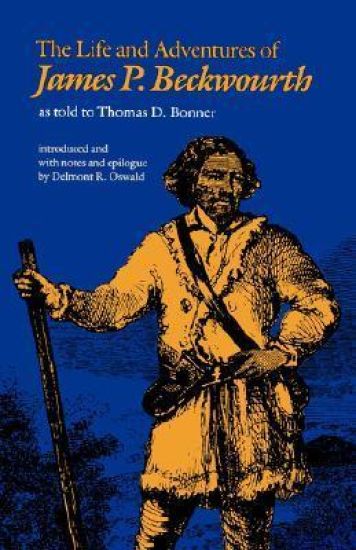
The Life and Adventures of James P. Beckwourth

The Life and Adventures of James P. Beckwourth

James P. Beckwourth

University of Nebraska Press
1981
pokkari
Throughout his long and lusty life, James P. Beckwourth epitomized much of the best and the worst of a fabulous breed, the mountain men of the early West. Trapper, hunter, guide, horse thief, Indian fighter, and Indian chief, he also took part in the Seminole and Mexican wars and the California gold rush before he dictated his memoirs to an itinerant newspaperman, Thomas D. Bonner. Beckwourth was the only black mountain man to record his story; his autobiography, first published in 1856, is a classic of its kind, the western adventure story par excellence. But because it mixes fact and fiction it has long been regarded with suspicion. This edition reproduces the original 1856 printing, and adds notes and an epilogue by Professor Delmont R. Oswald to assist the reader in sifting Beckwourth's life from the legend Beckwourth preferred to create.
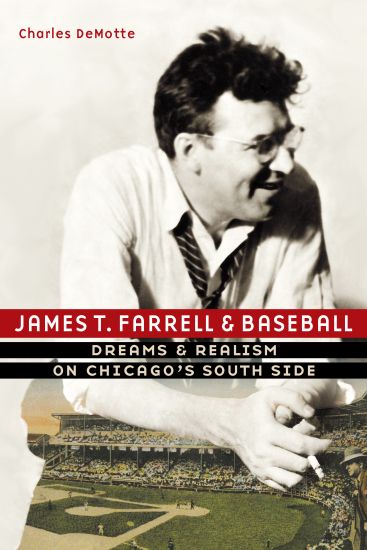
James T. Farrell and Baseball

James T. Farrell and Baseball

Charles DeMotte

University of Nebraska Press
2019
sidottu
James T. Farrell and Baseball is a social history of baseball on Chicago’s South Side, drawing on the writings of novelist James T. Farrell along with historical sources. Charles DeMotte shows how baseball in the early decades of the twentieth century developed on all levels and in all areas of Chicago, America’s second largest city at the time, and how that growth intertwined with Farrell’s development as a fan and a writer who used baseball as one of the major themes of his work. DeMotte goes beyond Farrell’s literary focus to tell a larger story about baseball on Chicago’s South Side during this time-when Charles Comiskey’s White Sox won two World Series and were part of a rich baseball culture that was widely played at the amateur, semipro, and black ball levels. DeMotte highlights the 1919–20 Black Sox fix and scandal, which traumatized not only Farrell and Chicago but also baseball and the broader culture. By tying Farrell’s fictional and nonfictional works to Chicago’s vibrant baseball history, this book fills an important gap in the history of baseball during the Deadball Era.
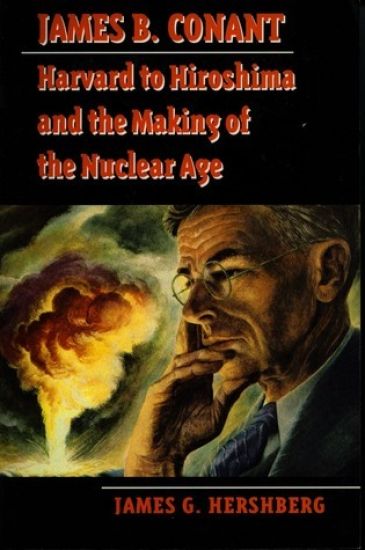
James B. Conant

James B. Conant

James G. Hershberg

Stanford University Press
1995
nidottu
James B. Conant (1893-1978) was one of the giants of the American establishment in the twentieth century. President of Harvard University from 1933 to 1953, he was also a scientist who led the US government's effort to develop weapons of mass destruction, and his story mirrors the transition of the United States from isolationism to global superpower at the dawn of the nuclear age. 'This splendid portrait of Conant ...illuminates the life of a pivotal figure in the making of US nuclear, scientific, educational, and foreign policy for almost half a century. But the book is much more: it is not only an insightful narration of Conant's life, it is also a brilliant and important account of the making of the nuclear age, a chronicle that contains much that is new.' TheWashington Post 'The bomb would be as much Conant's as it was anyone's in government. His inner response to that burden of responsibility has long been obscured, but it is illumined here ...This is a model of historiography that is evocative reading.' The New York Times Book Review 'Vibrantly written and compelling, it breaches Conant's shield of public discretion in masterly fashion ...It is a huge, ambitious work - a history of the Cold War as Conant encountered it as well as a study of the man.' The New Yorker 'Magnificent ...Any reader interested in nuclear weapons, Cold War history, or American politics from FDR to JFK will find this biography riveting.'
James Joyce's Judaic Other

James Joyce's Judaic Other

Marilyn Reizbaum

Stanford University Press
1999
sidottu
How does recent scholarship on ethnicity and race speak to the Jewish dimension of James Joyce's writing? What light has Joyce himself already cast on the complex question of their relationship? This book poses these questions in terms of models of the other drawn from psychoanalytic and cultural studies and from Jewish cultural studies, arguing that in Joyce the emblematic figure of otherness is "the Jew." The work of Emmanuel Levinas, Sander Gilman, Gillian Rose, Homi Bhabha, among others, is brought to bear on the literature, by Jews and non-Jews alike, that has forged the representation of Jews and Judaism in this century. Joyce was familiar with this literature, like that of Theodor Herzl. Joyce sholarship has largely neglected even these sources, however, including Max Nordau, who contributed significantly to the philosophy of Zionism, and the literature on the "psychobiology" of race—so prominent in the fin de siècle—all of which circulates around and through Joyce's depictions of Jews and Jewishness. Several Joyce scholars have shown the significance of the concept of the other for Joyce's work and, more recently, have employed a variety of approaches from within contemporary deliberations of the ideology of race, gender, and nationality to illuminate its impact. The author combines these approaches to demonstrate how any modern characterization of otherness must be informed by historical representations of "the Jew" and, consequently, by the history of anti-Semitism. She does so through a thematics and poetics of Jewishness that together form a discourse and method for Joyce's novel.