

Kirjahaku
Etsi kirjoja tekijän nimen, kirjan nimen tai ISBN:n perusteella.
1000 tulosta hakusanalla James Runciman

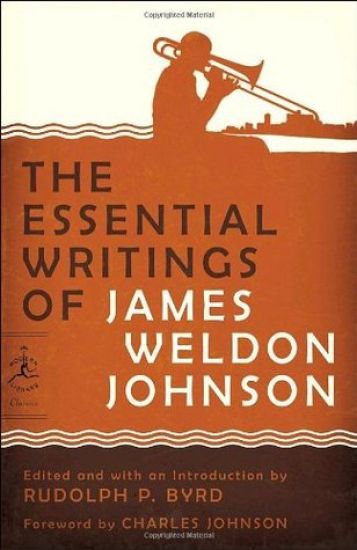
The Essential Writings of James Weldon Johnson
James Weldon Johnson; Charles Johnson
Modern Library Inc
2008
pokkari
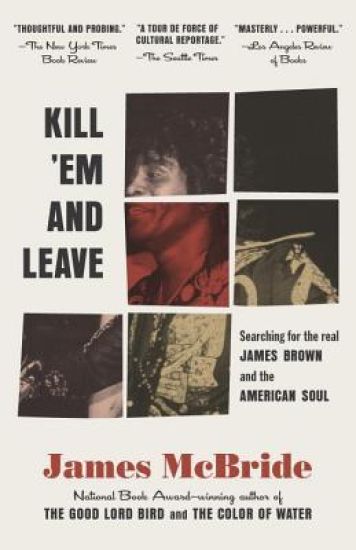
Kill 'Em and Leave: Searching for James Brown and the American Soul
James McBride
Random House Publishing Group
2016
nidottu
"You won't leave this hypnotic book without feeling that James Brown is still out there, howling."--The Boston Globe From the New York Times bestselling author of The Good Lord Bird, winner of the 2013 National Book Award for Fiction, Deacon King Kong, and Five-Carat Soul Kill 'Em and Leave is more than a book about James Brown. Brown embodied the contradictions of American life: He was an unsettling symbol of the tensions between North and South, black and white, rich and poor. After receiving a tip that promises to uncover the man behind the myth, James McBride goes in search of the "real" James Brown. McBride's travels take him to forgotten corners of Brown's never-before-revealed history, illuminating not only our understanding of the immensely troubled, misunderstood, and complicated Godfather of Soul, but the ways in which our cultural heritage has been shaped by Brown's enduring legacy. Praise for Kill 'Em and Leave "A tour de force of cultural reportage."--The Seattle Times "Thoughtful and probing."--The New York Times Book Review "Masterly . . . powerful."--Los Angeles Review of Books "McBride provides something lacking in most of the books about James Brown: an intimate feeling for the musician, a veracious if inchoate sense of what it was like to be touched by him. . . . It may be as close to 'the real James Brown'] as we'll ever get."--David Hajdu, The Nation "A feat of intrepid journalistic fortitude."--USA Today " McBride is] the biographer of James Brown we've all been waiting for. . . . McBride's true subject is race and poverty in a country that doesn't want to hear about it, unless compelled by a voice that demands to be heard."--Boris Kachka, New York "Illuminating . . . engaging."--The Washington Post "A gorgeously written piece of reportage that gives us glimpses of Brown's genius and contradictions."--O: The Oprah Magazine
James Joyce and Popular Culture
University Press of Florida
1996
sidottu
Joyce not only used popular culture, he contributed to it. These essays employ a variety of critical techniques to bring out his involvement in the popular culture of his time. Treating all of Joyce's work from ""Dubliners"" through ""Finnegan's Wake"", they question the conventional idea that popular culture is the inverse of modernist high art, showing instead how popular culture intertwines with modernist (and postmodernist) art. In a general historical introduction, R.B. Kershner looks at the entire question of Joyce and popular cutlure within the context of Joyce criticism and the cultural studies movement.
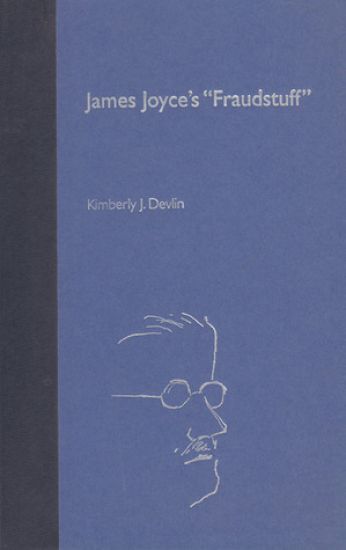
In James Joyce's ""Fraudstuff,"" Kimberly Devlin considers Stephen Hero in illuminating juxtaposition to the developing artistic subject portrayed in Portrait and Ulysses. By tracing the concepts of ""fraudulence"" and ""inauthenticity"" in Joyce, Devlin reveals his increasingly sophisticated exploration of modern identity from Stephen Hero to Finnegans Wake. Devlin examines Joyce's continual rethinking of what it means to have a ""self,"" of the acting that passes as being. She demonstrates how Joyce explored the various ways identity is constructed, sustained, subverted, and dissolved. Whereas Stephen Hero presents a narrator who feels authentic compared to the fraudulence all around him, the Stephen of Portrait becomes aware of how his own identity is a pastiche of borrowed narratives and his actions a series of posturings. Moving deftly from Stephen Hero, to Portrait, to Ulysses and Finnegans Wake, Devlin traces Joyce's increasing interest in and experimentation with the theatrical props that support identity, from his early concern with moments of epiphanic truth and authentic insight to an obsessive celebration of selfhood as imposture and fraud - and as an ultimately unknowable entity. Building on studies of the performative dimension of selfhood, Devlin demonstrates that Joyce grew increasingly skeptical about locating a core of being, and she explores his ""Fraudstuff"" in an array of forms: mimetic identifications, female masquerade, male parade, trans-gender impersonations, verbal mimicry, and police fantasies that induce elaborate posturings. In a refreshingly clear application of Lacanian theory, she also shows how modern identity, for Joyce, is based on the imagined gaze of the ""Other."" Her sophisticated, nonreductive application of contemporary psychoanalytic theory to Joyce's preoccupation with identity will challenge established Joyce scholars and will appeal broadly to scholars and students of literary modernism.

James Buchanan and the Coming of the Civil War
University Press of Florida
2013
sidottu
James Buchanan took office just as the schism surrounding states’ rights had grown so wide in the national consciousness that it could no longer be ignored. His presidency was defined by the Dred Scott case, his choices for cabinet, and the secession crisis. Despite his central role in a crucial hour in U.S. history, few presidents have been more ignored by historians. Michael Birkner and John Quist seek to fix this oversight with this collection of cutting-edge essays analysing Buchanan and his presidency. This highly focused and groundbreaking work will significantly alter how James Buchanan is remembered as man, politician, and president. It forces historians to reconsider whether Buchanan’s failures stemmed from his own mistakes or from circumstances that no president could have overcome. By taking a closer look at some of the defining moments in his presidency—including his contentious Kansas Policy and the Star of the West incident—the contributors paint a much clearer picture of the man who came to be known as one of America’s worst presidents. Analysing everything from the president’s dealings with Brigham Young to his foreign policy, interpretations of Buchanan and his presidency differ widely throughout the collection. These essays truly grappled with the complexities of the debate surrounding the man who sat in the White House prior to the towering figure of Lincoln.
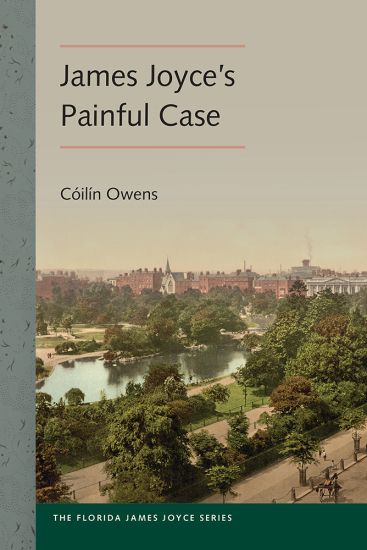
In order to demonstrate that one story from the Dubliners is not only a turning point in that book but also a microcosm of a wide range of important Joycean influences and preoccupations, Cóilín Owens examines the dense intertextuality of "A Painful Case." Assuming the position of the ideal contemporary Irish reader that Joyce might have anticipated, Owens argues that the main character, James Duffy, is a "spoiled priest," emotionally arrested by his guilt at having rejected the call to the priesthood. Duffy's intellectual life thereafter progresses through German idealism to eventual nihilism. The contrast of nihilist thought and Christian belief is Owens's main focus, and he demonstrates how this dichotomy is evident at various points in the life of James Duffy. From this springboard, Owens constructs a larger discussion of Joyce's cultural influences, including Schopenhauer, Wagner, Tolstoy, and others. He considers many other complex interrelationships that inform Joyce's text--theology, philosophy, music, opera, literary history, Irish cultural history, and Joyce's own poetry--and offers detailed elucidations informed by historical, geographical, linguistic, and biographical information.

Despite serving his country for 50 years and being among the most qualified men to hold the office of president, James Monroe is an oft-forgotten Founding Father. In this book, Brook Poston reveals how Monroe attempted to craft a legacy for himself as a champion of American republicanism. Monroe's dedication to the vision of a modern republic built on liberty began when he joined the American Revolution. His devotion to the cause further developed under his apprenticeship to Thomas Jefferson. These experiences spurred him to support the virtues of republicanism during the French Revolution, where he tried to create an alliance between the United States and the French republic despite ire from the U.S. Federalist party. As he climbed the political ranks, Monroe’s achievements began to add up: he played a significant role in the Louisiana Purchase, helped lead the fight against Great Britain in the War of 1812, oversaw the acquisition of Florida from Spain, and created the Monroe Doctrine to protect the Americas from the influence of European monarchies. Focusing exclusively on America’s fifth president and his complete commitment to republicanism, this book offers new interpretations of James Monroe as a patriot who dedicated his life to what he believed was perhaps the most important cause in human history.A volume in the series Contested Boundaries, edited by Gene Allen Smith.
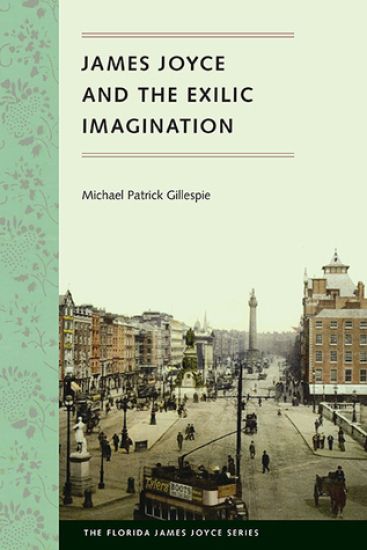
James Joyce and the Exilic Imagination
Michael Patrick Gillespie
University Press of Florida
2015
nidottu
James Joyce left Ireland in 1904 in self-imposed exile. Though he never permanently returned to Dublin, he continued to characterize the city in his prose throughout the rest of his life. This volume elucidates the ways Joyce wrote about his homeland with conflicting bitterness and affection - a common ambivalence in expatriate authors, whose time in exile tends to shape their creative approach to the world. Yet this duality has not been explored in Joyce’s work until now.The first book to read Joyce’s writing through the lens of exile studies, James Joyce and the Exilic Imagination challenges the tendency of scholars to stress the writer’s negative view of Ireland. Instead, it showcases the often-overlooked range of emotional attitudes imbuing Joyce’s work and produces a fuller understanding of Joyce’s canon.

James Buchanan and the Coming of the Civil War
University Press of Florida
2014
nidottu
As James Buchanan took office in 1857, the United States found itself at a crossroads. Dissolution of the Union had been averted and the Democratic Party maintained control of the federal government, but the nation watched to see if Pennsylvania's first president could make good on his promise to calm sectional tensions.Despite Buchanan's central role in a crucial hour in U.S. history, few presidents have been more ignored by historians. In assembling the essays for this volume, Michael Birkner and John Quist have asked leading scholars to reconsider whether Buchanan’s failures stemmed from his own mistakes or from circumstances that no president could have overcome. Buchanan's dealings with Utah shed light on his handling of the secession crisis. His approach to Dred Scott reinforces the image of a president whose doughface views were less a matter of hypocrisy than a thorough identification with southern interests. Essays on the secession crisis provide fodder for debate about the strengths and limitations of presidential authority in an existential moment for the young nation.Although the essays in this collection offer widely differing interpretations of Buchanan's presidency, they all grapple honestly with the complexities of the issues faced by the man who sat in the White House prior to the towering figure of Lincoln, and contribute to a deeper understanding of a turbulent and formative era.

Despite serving his country for 50 years and being among the most qualified men to hold the office of president, James Monroe is an oft-forgotten Founding Father. In this book, Brook Poston reveals how Monroe attempted to craft a legacy for himself as a champion of American republicanism. ?Monroe's dedication to the vision of a modern republic built on liberty began when he joined the American Revolution. His devotion to the cause further developed under his apprenticeship to Thomas Jefferson. These experiences spurred him to support the virtues of republicanism during the French Revolution, when he tried to create an alliance between the United States and the French republic despite ire from the U.S. Federalist party. As Monroe climbed the political ranks, his achievements began to add up: he played a significant role in the Louisiana Purchase, helped lead the fight against Great Britain in the War of 1812, oversaw the acquisition of Florida from Spain, and created the Monroe Doctrine to protect the Americas from the influence of European monarchies. Focusing exclusively on America's fifth president and his complete commitment to republicanism, this book offers new interpretations of James Monroe as a patriot who dedicated his life to what he believed was perhaps the most important cause in human history. A volume in the series Contested Boundaries, edited by Gene Allen Smith.

This book offers the first critical edition of the forty short texts James Joyce called “epiphanies.” Among Joyce’s earliest literary compositions, although published posthumously, the epiphanies are a series of highly polished miniatures, many of which Joyce reused in his later writings. By presenting the epiphanies with background details and thorough annotations, this edition provides a vivid insight into his art.Collected Epiphanies of James Joyce features an introduction to the texts that summarizes Joyce’s concept of epiphany; their biographical and cultural context; their echoes and adaptations in Stephen Hero, Dubliners, A Portrait of the Artist as a Young Man, Ulysses, and Finnegans Wake; and their critical reception and editorial history. Each epiphany is transcribed directly from its original manuscript, accompanied by extensive notes that include more information specific to each piece, as well as textual variants.Styled as prose poems, dramatic sketches, or combinations of the two, the epiphanies can be seen not only as lyrical counterparts to Joyce’s poetry in Chamber Music but also as bridges to the writer’s landmark fiction. This collection demonstrates that the epiphanies offer a paradigm case for studying the development of Joyce’s work as a whole, prompting a reassessment of their literary significance.
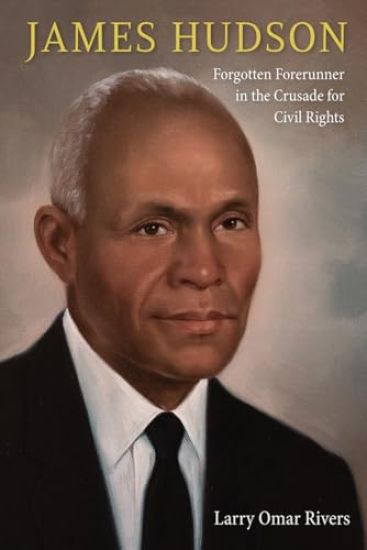
A brilliant philosopher and his influence on the rise of Martin Luther King Jr. and the civil rights movementWhile intellectual histories of the civil rights movement often center Martin Luther King Jr.’s writings, author Larry Omar Rivers argues that this approach leaves out the scholar-activists who set the path for King. In this volume, Rivers tells the mostly unknown story of James Hudson (1903–1980), a Black philosopher, Florida A&M University professor, activist, and religious leader whose philosophical contributions laid a key piece of the groundwork for the emergence of the civil rights movement.Drawing on little-used primary source documents and original interviews with people who knew Hudson well, Rivers examines how Hudson’s training at Morehouse College, Colgate-Rochester Divinity School, and Boston University shaped his approach to activism, including his decision to become a Personalist philosopher. As Rivers shows, Hudson crafted an influential philosophy of life—a blend of Socratic inquiry, moral imagination, African American spirituality, and Gandhian nonviolence—that became an essential foundation for the rise of King, another Personalist philosopher. The book also sheds new light on the connections between the 1955 Montgomery Bus Boycott and the lesser-known 1956 Tallahassee Bus Boycott, which together helped spark the formation of the Southern Christian Leadership Conference.This long-overdue biography is not only an insightful exploration of the intellectual and activist landscape of the Black community from the 1930s to the 1960s but also the story of an unsung hero and his involvement with important scholarly communities that influenced the trajectory of the civil rights movement.Publication of this work made possible by a Sustaining the Humanities through the American Rescue Plan grant from the National Endowment for the Humanities.
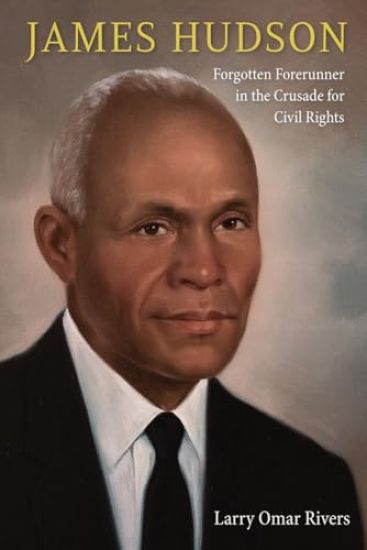
A brilliant philosopher and his influence on the rise of Martin Luther King Jr. and the civil rights movementWhile intellectual histories of the civil rights movement often center Martin Luther King Jr.’s writings, author Larry Omar Rivers argues that this approach leaves out the scholar-activists who set the path for King. In this volume, Rivers tells the mostly unknown story of James Hudson (1903–1980), a Black philosopher, Florida A&M University professor, activist, and religious leader whose philosophical contributions laid a key piece of the groundwork for the emergence of the civil rights movement.Drawing on little-used primary source documents and original interviews with people who knew Hudson well, Rivers examines how Hudson’s training at Morehouse College, Colgate-Rochester Divinity School, and Boston University shaped his approach to activism, including his decision to become a Personalist philosopher. As Rivers shows, Hudson crafted an influential philosophy of life—a blend of Socratic inquiry, moral imagination, African American spirituality, and Gandhian nonviolence—that became an essential foundation for the rise of King, another Personalist philosopher. The book also sheds new light on the connections between the 1955 Montgomery Bus Boycott and the lesser-known 1956 Tallahassee Bus Boycott, which together helped spark the formation of the Southern Christian Leadership Conference.This long-overdue biography is not only an insightful exploration of the intellectual and activist landscape of the Black community from the 1930s to the 1960s but also the story of an unsung hero and his involvement with important scholarly communities that influenced the trajectory of the civil rights movement.Publication of this work made possible by a Sustaining the Humanities through the American Rescue Plan grant from the National Endowment for the Humanities.
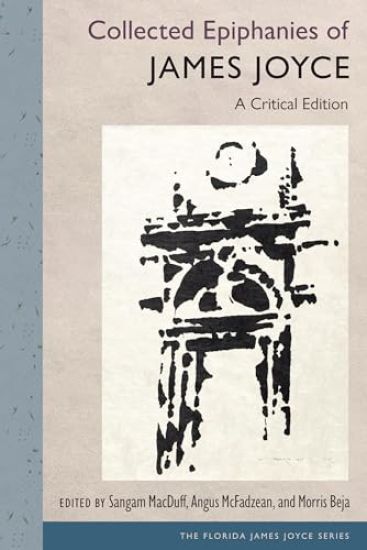
Joyce’s early texts, which informed his later masterpieces, available for the first time in a comprehensive critical edition This book offers the first critical edition of the forty short texts James Joyce called “epiphanies.” Among Joyce’s earliest literary compositions, although published posthumously, the epiphanies are a series of highly polished miniatures, many of which Joyce reused in his later writings. By presenting the epiphanies with background details and thorough annotations, this edition provides a vivid insight into his art.Collected Epiphanies of James Joyce features an introduction to the texts that summarizes Joyce’s concept of epiphany; their biographical and cultural context; their echoes and adaptations in Stephen Hero, Dubliners, A Portrait of the Artist as a Young Man, Ulysses, and Finnegans Wake; and their critical reception and editorial history. Each epiphany is transcribed directly from its original manuscript, accompanied by extensive notes that include more information specific to each piece, as well as textual variants.Styled as prose poems, dramatic sketches, or combinations of the two, the epiphanies can be seen not only as lyrical counterparts to Joyce’s poetry in Chamber Music but also as bridges to the writer’s landmark fiction. This collection demonstrates that the epiphanies offer a paradigm case for studying the development of Joyce’s work as a whole, prompting a reassessment of their literary significance.A volume in the Florida James Joyce Series, edited by Sam Slote
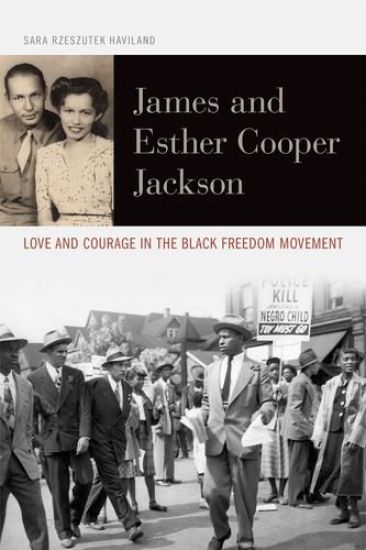
James Jackson and Esther Cooper Jackson grew up understanding that opportunities came differently for blacks and whites, men and women, rich and poor. In turn, they devoted their lives to the fight for equality, serving as career activists throughout the black freedom movement. Having grown up in Virginia during the depths of the Great Depression, the Jacksons also saw a path to racial equality through the Communist Party. This choice in political affiliation would come to shape and define not only their participation in the black freedom movement but also the course of their own marriage as the Cold War years unfolded.In this dual biography, Sara Rzeszutek examines the couple's political involvement as well as the evolution of their personal and public lives in the face of ever-shifting contexts. She documents the Jacksons' significant contributions to the early civil rights movement, discussing their time leading the Southern Negro Youth Congress, which laid the groundwork for youth activists in the 1960s; their numerous published writings in periodicals such as Political Affairs; and their editorial involvement in The Worker and the civil rights magazine Freedomways.Drawing upon a rich collection of correspondence, organizational literature, and interviews with the Jacksons themselves, Haviland follows the couple through the years as they bore witness to economic inequality, war, political oppression, and victory in the face of injustice. Her study reveals a portrait of a remarkable pair who lived during a transformative period of American history and whose story offers a vital narrative of persistence, love, and activism across the long arc of the black freedom movement.

The Papers of James Madison v. 12; 2 March 1789 - 20 January 1790 ; with a Supplement 24 October 1775-24 January 1789
James Madison; Robert A. Rutland
University of Virginia Press
1979
sidottu
The Papers of James Madison project, housed at the University of Virginia, was established in 1956 to publish annotated volumes of the correspondence and writings of James Madison, the Virginia statesman most often remembered for his public service as "Father of the Constitution" and as fourth president of the United States.The published volumes provide accurate texts of Madison's incoming and outgoing correspondence, informative notes on textual and subject matters, and comprehensive indexes. They are incomparably rich sources for students of Madison's life and valuable research tools for those interested in the general history of the period in which Madison lived (1751-1836). The project has collected more than 27,000 copies of documents related to Madison's life, including letters, essays, notes, diaries, account books, ledgers, wills, legal papers, and inventories. The project serves the public by translating into print these decaying and often nearly illegible manuscripts, thereby preserving them for future generations and making them easier to use. The published volumes also make the contents of Madison-related documents--the originals of which are housed in some 250 archives worldwide--easily accessible to libraries and interested individuals anywhere books travel.The Congressional Series (seventeen volumes) is devoted to the years 1751 to 1801, containing the fullest possible record of Madison's contributions to the creation of the federal government, including his service in the Continental Congress, the Virginia General Assembly, the Constitutional Convention of 1787, the Virginia Ratifying Convention of 1788, and the first four Federal Congresses.

The Papers of James Madison 1 March - 30 September 1809
James Madison; Robert A. Rutland
University of Virginia Press
1984
sidottu
Edited by Robert A. Rutland and Thomas A. MasonPresidential style is an important attribute for holders of the nation's highest office, but the first volume of James Madison's presidential papers indicate that he was a reserved and unpretentious man concerned more with the substance than the style of the office. As the 1809 letters show, President Madison was besieged by office seekers and eccentric citizens who expected the chief executive to show concern for their personal problem. Ravenous politicians sought jobs for themselves and relatives. Madison personally answered at length the many testimonials from citizens' rallies and political gatherings. The domestic side of White House life--the decorating and improvement of the President's House--also forms an important segment of the documentary record. The multiplicity of presidential concerns revealed in the volume add a new perspective to our historic view of the nation's highest office.
The Papers of James Madison
James Madison; Robert J. Brugger
University of Virginia Press
1987
sidottu
The Papers of James Madison project, housed at the University of Virginia, was established in 1956 to publish annotated volumes of the correspondence and writings of James Madison, the Virginia statesman most often remembered for his public service as "Father of the Constitution" and as fourth president of the United States.The published volumes provide accurate texts of Madison's incoming and outgoing correspondence, informative notes on textual and subject matters, and comprehensive indexes. They are incomparably rich sources for students of Madison's life and valuable research tools for those interested in the general history of the period in which Madison lived (1751-1836). The project has collected more than 27,000 copies of documents related to Madison's life, including letters, essays, notes, diaries, account books, ledgers, wills, legal papers, and inventories. The project serves the public by translating into print these decaying and often nearly illegible manuscripts, thereby preserving them for future generations and making them easier to use. The published volumes also make the contents of Madison-related documents--the originals of which are housed in some 250 archives worldwide--easily accessible to libraries and interested individuals anywhere books travel.The Secretary of State Series documents Madison's diplomatic and political career in the two administrations of Thomas Jefferson, 1801-9, during which he oversaw the negotiations for the Louisiana Purchase and the integration of those territories into the United States and attempted to maintain a viable neutrality for the United States vis-a-vis warring France and Great Britain. As secretary of state, Madison presided over one of the busiest offices in Washington. He was responsible for the Patent Office, issued all federal commissions, saw that the public laws were put into print, and served as the official liaison between the president and the governors of states and territories. Most important for these volumes, Madison was the addressee of diplomatic pouches and letters from five ministers and over fifty consuls worldwide, as well as about a dozen commissioners.