Kirjojen hintavertailu. Mukana 11 342 296 kirjaa ja 12 kauppaa.

Kirjahaku

Etsi kirjoja tekijän nimen, kirjan nimen tai ISBN:n perusteella.

1000 tulosta hakusanalla James Stratton

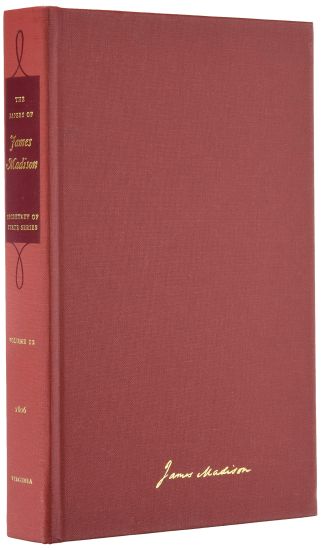
The Papers of James Madison

The Papers of James Madison

James Madison

University of Virginia Press
2019
sidottu
The tenth volume of the Presidential Series covers the period from Madison's return to Washington from Montpelier in October 1815 to the publication of the incendiary letters of the pseudonymous "Americanus" throughout April 1816. In the months between, Madison fielded requests for support from rebel governments in Spanish America, urged his diplomats to stand firm on U.S. claims in the settlement of post- war boundary disputes with Great Britain, and contemplated retaliation for British restrictions on American trade with its West Indian colonies. Increasingly, however, his attention was focused on domestic issues. These included putting in place a viable financial system with a central bank at its core, which Madison had come to believe was a necessity; increasing the nation's revenue stream through reductions in military expenditures; exports of American goods; and the imposition of tariffs on foreign imports that threatened domestic manufactures. He was, furthermore, required to remove squatters from the public lands and to referee disputes between white settlers and Indian nations over their post-1815 boundaries. He supervised the Commissioners for the Public Buildings as they rebuilt the capital and issued pardons to those who had committed petty crimes or who had violated U.S. revenue laws.
The Papers of James Madison

The Papers of James Madison

James Madison

University of Virginia Press
2020
sidottu
The final volume of the Presidential Series covers Madison's last ten months in office, during which he maintained a busy schedule despite taking the longest summer vacation in all his time in Washington. Foreign policy was dominated by crises with Spain and Algiers. Negotiations with Great Britain continued over trade access and the implementation of the Treaty of Ghent. On the home front, new treaties were negotiated with Indian nations on the frontier, and Madison issued several proclamations on the sale of public lands. The Treasury Department negotiated an agreement with leading banks to restore specie payments, laying the foundation for a uniform system of currency. Before returning to Washington for his final meeting with Congress, Madison wrote a sketch for a biography that never appeared. After delivering a farewell address to the nation, Madison concluded his public service with a controversial veto on his last day in office.
The Papers of James Madison

The Papers of James Madison

James Madison

University of Virginia Press
2021
sidottu
Volume 12 of the Secretary of State Series covers June through October 1806, during which Madison waited in vain for his diplomatic initiatives with Great Britain, Spain, and France to yield results, and received mounting evidence of Aaron Burr's suspicious activities in the West. Tensions with Great Britain over impressments and attacks on U.S. shipping persisted, as efforts to negotiate met with delays in London. Spain and France threatened U.S. territories to the south and west, while Napoleon hedged on his agreement to pressure Spain into selling the Floridas to the Americans. Spain avoided the issue by complaining about the U.S. government's treatment of its minister and the handling of Francisco de Miranda's expedition against Venezuela. Madison faced criticism at home for his role in these matters, multiplied by his refusal to testify at the trials of Samuel G. Odgen and William Stephens Smith for aiding Miranda. His patience was also tested over the summer and fall by unexpected difficulties in getting the capricious Tunisian ambassador, Soliman Melimeni, out of the country. Returning to Washington in October from a two-month visit to Montpelier, Madison prepared to address the additional complications in domestic and foreign policy created by Burr's alleged conspiracy.
The Papers of James Madison Volume 13

The Papers of James Madison Volume 13

James Madison

UNIVERSITY OF VIRGINIA PRESS
2024
sidottu
Secretary of State James Madison grappled with conflicts in both Europe and the American West during the period included in this volume. Diplomats James Monroe and William Pinkney recorded some breakthroughs in their negotiations with Great Britain, but a new anti-British policy from France, the Berlin Decree, complicated progress. Britain responded with an order-in-council, and US neutral commerce became more precarious than it had been since the 1802–3 Peace of Amiens. After the two US representatives reached agreement with British negotiators on what became known as the Monroe-Pinkney Treaty, Madison helped President Thomas Jefferson assess its merits and determine whether to submit it to the Senate for advice and consent. To secure French Catholics’ loyalty to the United States, Madison reluctantly intervened in a dispute over the Roman Catholic Church’s episcopal authority over the Louisiana diocese when he feared that Napoleon had overstepped his boundaries. The Jefferson administration escalated its interest in former vice president Aaron Burr’s suspicious activities in the West, resulting in Burr’s arrest in early 1807. Madison played an integral role in the investigation and apprehension of Burr, maintaining a correspondence with governors of western territories and government agents charged with probing and countering Burr’s nebulous plans. The supplement contains notes that Madison took as he attempted to read law during the 1780s. The document, which is misfiled among Thomas Jefferson’s papers at the Library of Congress, represents the only surviving set of legal notes made by Madison.
The Papers of James Madison Volume 14

The Papers of James Madison Volume 14

James Madison

UNIVERSITY OF VIRGINIA PRESS
2025
sidottu
This volume covers documents from the life and career of James Madison from 1 April 1807 to 30 September 1807. Madison evaluated the December 1806 treaty that diplomats James Monroe and William Pinkney had concluded with Great Britain and drafted instructions for renegotiating the agreement. While aiding preparations for Aaron Burr’s treason trial in Richmond, the secretary of state continued to await definitive news from France and Spain regarding the enforcement of the Berlin Decree against American ships and the resolution of US-Spanish territorial questions. In August, Madison evaded a summons to testify in a Connecticut seditious libel trial that would have re-exposed President Thomas Jefferson’s attempted seduction of his married neighbor Betsy Walker nearly forty years earlier. All of these events and concerns, however, were overshadowed and altered by the British ship Leopard’s 22 June attack on the US frigate Chesapeake. Many Americans anticipated war with Great Britain as a result of the attack, and its ramifications were felt throughout US foreign affairs as well as in many domestic matters requiring Madison’s attention.
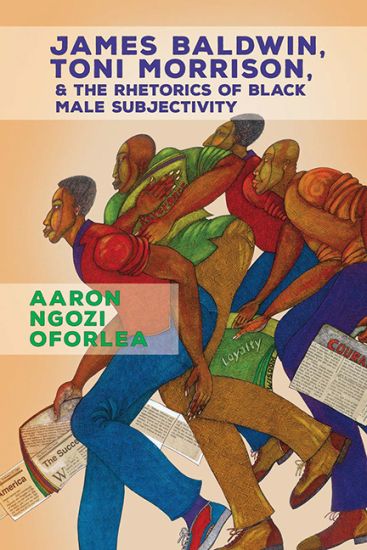
James Baldwin, Toni Morrison, and the Rhetorics of Black Male Subjectivity
InJames Baldwin, Toni Morrison, and the Rhetorics of Black Male Subjectivity, Aaron Ngozi Oforlea explores the rhetorical strategies that Baldwin s and Morrison s black male characters employ as they negotiate discourses of race, class, gender, and sexuality. According to Oforlea, these characters navigate a discursive divide that separates limiting representations of black males in dominant discourses from a decolonized and empowered subjectivity. Specifically, the discursive divide creates an invisible boundary between how black subjects are seen, imagined, and experienced in dominant culture on the one hand, and how they understand themselves on the other. Oforlea s book offers new analyses of the character dynamics in Baldwin sGo Tell It on the Mountain, Tell Me How Long the Train s Been Gone, andIf Beale Street Could Talkand Morrison sBeloved, Song of Solomon, andTar Baby. The black male characters in these novels encounter the discursive divide, or a cultural dissonance, when they encounter dominant representations of black male identities. They use these opportunities to construct a counter-discourse about black male subjectivity. Ultimately, Oforlea argues, these characters are strategic about when and how they want to appropriate and subvert dominant ideologies. Their awareness that post-racial discourses perpetuate racial inequality serves as a gateway toward participation in collective struggles for racial justice. "
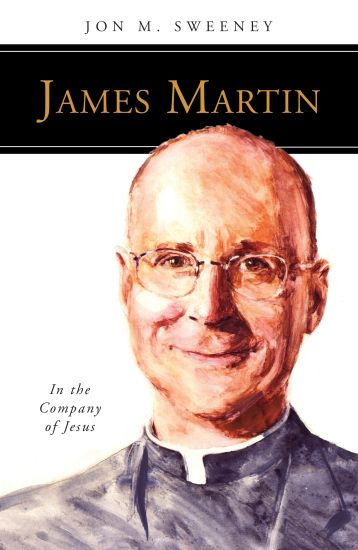
James Martin, SJ

James Martin, SJ

Jon M. Sweeney

Liturgical Press
2020
pokkari
2021 Catholic Media Association Award first place award in best new religious book series 2021 Catholic Media Association Award third place award in biography Fr. James Martin, SJ, is one of the most recognized Catholic priests in the United States. His book My Life with the Saints introduced hundreds of thousands of readers to many saintly heroes. More recently, Building a Bridge called the Catholic Church to more respect and compassion for the LGBT Community—and made Martin not only a friend to LGBT people but a lightning rod for some “traditionalist” Roman Catholics. His articulate and winsome personality has endeared him to millions inside and outside the Church. Now it is time to tell the story of his own life, to explore the experiences that made him the person he is today.And there’s no better narrator for the story than Jon M. Sweeney, an award-winning and highly accomplished writer in his own right. In James Martin, SJ: In the Company of Jesus, Sweeney probes Martin’s early life, his experiences as a corporate executive, his call to religious life, his ministry and spirituality, his feelings about both the adoration and the criticism he receives from so many, and much more. Readers will come away with a much better understanding of one of today’s most interesting and influential Catholics.
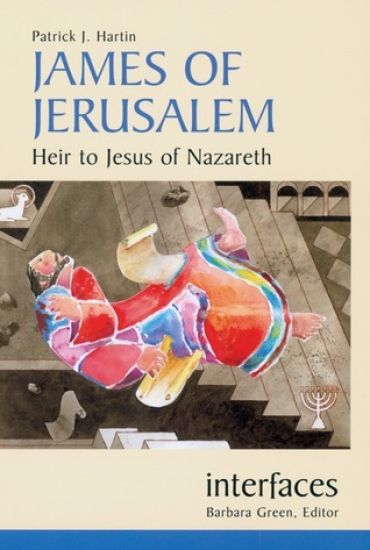
James Of Jerusalem

James Of Jerusalem

Patrick J. Hartin

Liturgical Press
2004
pokkari
Through the world of James of Jerusalem we discover the development of Christianity and its struggle for self-definition amidst Jewish roots and a rising congregation of newly converted Gentiles. In this time of early Christianity, James' presence testified to the church's diversity and he influenced Christianity beyond the literature of the New Testament. Patrick J. Hartin studies the character of James in his various life-roles: as a member of Jesus' family, as a leader and spokesperson of Jerusalem, and as an important figure in early Christian writing, including that of Paul, and the Acts of the Apostles. The use of historical critical method illustrates for students the growth of traditions and the sources behind the texts.Chapters are Jesus, James and his family," *James as leader of the Jerusalem Community, - *James and Paul, - *James in Tradition, - and conclusion.
James Baldwin Now

James Baldwin Now

New York University Press
1999
pokkari
One of the most prolific and influential African American writers, James Baldwin was for many a harbinger of hope, a man who traversed the genres of art-writing novels, essays, and poetry. James Baldwin Now takes advantage of the latest interdisciplinary work to understand the complexity of Baldwin's vision and contributions without needing to name him as exclusively gay, expatriate, black, or activist. It was, in fact, Baldwin who said, "it is quite impossible to write a worthwhile novel about a Jew or a Gentile or a Homosexual, for people refuse . . . to function in so neat and one-dimensional a fashion." McBride has gathered a unique group of new scholars to interrogate Baldwin's life, his presence, and his political thought and work. James Baldwin Now finally addresses the man who spoke, and continues to speak, so eloquently to crucial issues of the twentieth century.
James Joyce and Censorship

James Joyce and Censorship

Paul Vanderham

New York University Press
1997
sidottu
When James Joyce's Ulysses began to appear in installments in 1918, it provoked widespread outrage and disgust. The novel violated a long list of taboos by denigrating English royalty, describing masturbation, and mingling the erotic with the excremental--in a style that some early reviewers called literary bolshevism. As a result, U.S. Postal authorities denied several installments of Ulysses access to the mails, initiating a series of suppressions that would result in a thirteen-year ban on Joyce's novel. Obscenity trials spanned the next decade. Using personal interviews and primary sources never before discussed in depth, James Joyce and Censorship closely examines the legal trials of Ulysses from 1920 to 1934. Paying particular attention to the decision that lifted the ban on Ulysses in 1933, a decision that the ACLU cites to this day in cases involving censorship, Vanderham traces the growth of the fallacy that literature is incapable of influencing individuals. He argues persuasively that underneath every esthetic lie ethical, political, philosophical, and religious convictions.The legal and the literary aspects of the Ulysses controversy, Vanderham insists, are virtually inseparable. By analyzing the writing and revising of Ulysses in the context of Joyce's lifelong struggle with the censors, he argues that the censorship of Ulysses affected not only the critical reception of the novel but its very shape.
James W.C. Pennington

James W.C. Pennington

Herman E. Thomas

CRC Press Inc
1995
sidottu
The story of James W.C. Pennington who was a former slave, then a Yale scholar, minister, and international leader of the Antebellum abolitionist movement. He escaped from slavery aged 19 in 1827 and soon became one of the leading voices against slavery before the Civil War. In 1837 he was ordained as a priest after studying at Yale and was soon traveling all over the world as an anti-slavery advocate.
James Madison

James Madison

CRC Press Inc
2017
sidottu
James Madison (1751-1836) - 'the Father of the American Constitution' - was a legal and political thinker of great originality and range. The essays by eminent scholars reprinted in this volume explore various facets and aspects of Madison's legal, constitutional and political thought. These include his views of human nature, republican political theory and practice, federalism, natural and civil rights, religious liberty, and constitutional interpretation. The volume is edited and introduced by Terence Ball whose scholarly publications include an authoritative annotated edition of Hamilton, Madison and Jay's The Federalist (Cambridge University Press, 2003).
James Ussher and John Bramhall

James Ussher and John Bramhall

Jack Cunningham

CRC Press Inc
2017
sidottu
This book examines the lives of two leading Irish ecclesiastics, James Ussher (1581-1656) and John Bramhall (1594-1663). Both men were key players in the religious struggles that shook the British Isles during the first half of the seventeenth century, and their lives and works provide important insights into the ecclesiastical history of early modern Europe. As well as charting the careers of Ussher and Bramhall, this study introduces an original and revealing method for examining post-Reformation religion. Arguing that the Reformation was stimulated by religious impulses that pre-date Christianity, it introduces a biblical concept of 'Justice' and 'Numinous' motifs to provide a unique perspective on ecclesiastical development. Put simply, these motifs represent on the one hand, the fear of God's judgement, and on the other, the sacred conception of the fear of God. These subtle understandings that co-existed in the Catholic church were split apart at the Reformation and proved to be separate poles around which different interpretations of Protestantism gathered. By applying these looser concepts to Ussher and Bramhall, rather than rigid labels such as Arminian, Laudian or Calvinist, a more subtle understanding of their careers is possible, and provides an altogether more satisfactory method of denominational categorisation than the ones presently employed, not just for the British churches but for the history of the Reformation as a whole.
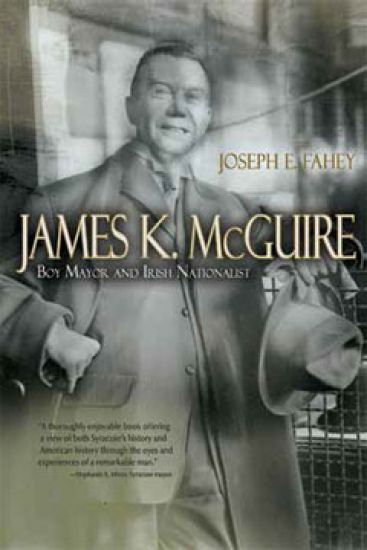
James K. McGuire

James K. McGuire

Joseph E. Fahey

Syracuse University Press
2014
sidottu
This is the story of a self-educated, charismatic, gifted leader who overcame personal tragedy in childhood and was elected the youngest mayor of a major city in America at age twenty-six. It is the story of a reformer who possessed a genius for politics. James K. McGuire (1868–1923) was elected mayor of Syracuse three times as a Democrat in a Republican bastion. As a candidate for governor in 1898, he nearly derailed the rise of Theodore Roosevelt. His ideas and positions informed the candidacy of William Jennings Bryan in his quest for the presidency and the platform of the Democratic Party in those elections. Fahey narrates McGuire’s remarkable rise to become a major figure in national politics as well as his questionable business dealings along the way. Indicted twice during his life, he was investigated by Congress and the Department of Justice for his advocacy of Irish freedom. McGuire befriended and aided Éamon de Valera and the Irish freedom fighters of that time, using his influence at the highest levels of the American government to further the cause of Ireland. This fascinating portrait reveals a complex man who earned a place on the national political stage and battled for the causes in which he deeply believed.
James Gould Cozzens - American Writers 58

James Gould Cozzens - American Writers 58

Hicks Granville

UNIVERSITY OF MINNESOTA PRESS
1966
nidottu
James Gould Cozzens - American Writers 58 was first published in 1966. Minnesota Archive Editions uses digital technology to make long-unavailable books once again accessible, and are published unaltered from the original University of Minnesota Press editions.