Kirjojen hintavertailu. Mukana 11 424 842 kirjaa ja 12 kauppaa.

Kirjahaku

Etsi kirjoja tekijän nimen, kirjan nimen tai ISBN:n perusteella.

1000 tulosta hakusanalla Jason Webster

The 9/11 Wars

The 9/11 Wars

Jason Burke

Penguin Books Ltd
2012
pokkari
From the author of Al-Qaeda, Jason Burke's The 9/11 Wars is an essential book for understanding the dangerous and unstable world of the twenty-first century. On September 11th 2001, in a series of coordinated suicide attacks, terrorists destroyed New York's World Trade Center and a substantial portion of the Pentagon. Since the Twin Towers fell, the world has seen the invasion of Afghanistan and Iraq, the downfall of Saddam Hussein and Osama bin Laden, bombings, battles and riots. Hundreds of thousands of people have died in the 'war on terror'. Whether reporting on the riots in France or the attack on Mumbai, suicide bombers in Iraq or British troops fighting in Helmand Province in Afghanistan, Jason Burke's The 9/11 Wars, named 2011 Book of the Year by the Daily Telegraph, Economist and Independent, tells the story of a world that changed forever when the hijacked planes flew out of the brilliant blue sky above Manhattan on September 11th. 'The best overview of the 9/11 decade so far in print' Economist 'A magisterial history of the last decade' Pankaj Mishra, Guardian 'At a time when there are more books out on terrorism than ever before ... this is likely to be among the best' Sunday Telegraph'Potent ... journalism of a high order ... essential for understanding the past decade' Sherard Cowper-Coles, Sunday Times Jason Burke is the South Asia correspondent for the Guardian. He has reported around the world for both the Guardian and the Observer. He is the author of two other widely praised books, both published by Penguin: Al-Qaeda and On the Road to Kandahar. He lives in New Delhi.
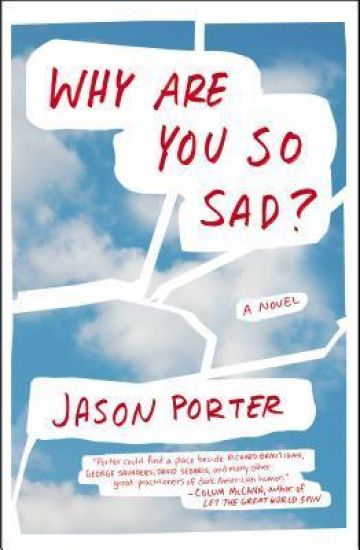
Why Are You So Sad?

Why Are You So Sad?

Jason Porter

Penguin Putnam Inc
2014
pokkari
"Jason Porter could find a place on the shelf beside Richard Brautigan, George Saunders, and David Sedaris. This is a quick, odd, wonderful book, one that pinned me back on my heels and made me laugh."-Colum McCann, author of Let the Great World Spin Have we all sunken into a species-wide bout of clinical depression? Porter's uproarious, intelligent debut centers on Raymond Champs, an illustrator of assembly manuals for a home furnishings corporation, who is charged with a huge task: To determine whether or not the world needs saving. It comes to him in the midst of a losing battle with insomnia -- everybody he knows, and maybe everybody on the planet, is suffering from severe clinical depression. He's nearly certain something has gone wrong. A virus perhaps. It's in the water, or it's in the mosquitoes, or maybe in the ranch flavored snack foods. And what if we are all too sad and dispirited to do anything about it? Obsessed as he becomes, Raymond composes an anonymous survey to submit to his unsuspecting coworkers -- "Are you who you want to be?", "Do you believe in life after death?", "Is today better than yesterday?" -- because what Raymond needs is data. He needs to know if it can be proven. It's a big responsibility. People might not believe him. People, like his wife and his boss, might think he is losing his mind. But only because they are also losing their minds. Or are they? Reminiscent of Gary Shteyngart, George Saunders, Douglas Coupland and Jennifer Egan, Porter's debut is an acutely perceptive and sharply funny meditation on what makes people tick.
American Dream: Three Women, Ten Kids, and a Nation's Drive to End Welfare
In this definitive work, two-time Pulitzer finalist Jason DeParle, author of A Good Provider Is One Who Leaves, cuts between the mean streets of Milwaukee and the corridors of Washington to produce a masterpiece of literary journalism. At the heart of the story are three cousins whose different lives follow similar trajectories. Leaving welfare, Angie puts her heart in her work. Jewell bets on an imprisoned man. Opal guards a tragic secret that threatens her kids and her life. DeParle traces their family history back six generations to slavery and weaves poor people, politicians, reformers, and rogues into a spellbinding epic. With a vivid sense of humanity, DeParle demonstrates that although we live in a country where anyone can make it, generation after generation some families don't. To read American Dream is to understand why.
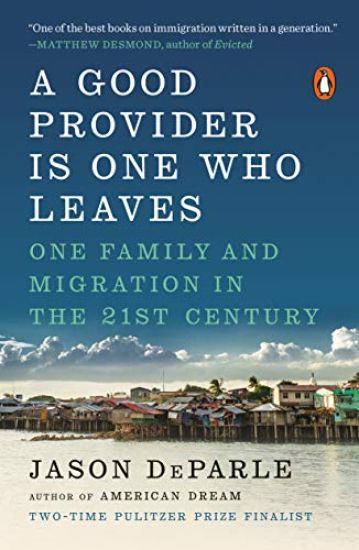
A Good Provider Is One Who Leaves: One Family and Migration in the 21st Century
One of The Washington Post's 10 Best Books of the Year"A remarkable book...indispensable."--The Boston Globe "A sweeping, deeply reported tale of international migration...DeParle's understanding of migration is refreshingly clear-eyed and nuanced."--The New York Times "This is epic reporting, nonfiction on a whole other level...One of the best books on immigration written in a generation."--Matthew Desmond, author of Evicted The definitive chronicle of our new age of global migration, told through the multi-generational saga of a Filipino family, by a veteran New York Times reporter and two-time Pulitzer Prize finalist. When Jason DeParle moved into the Manila slums with Tita Comodas and her family three decades ago, he never imagined his reporting on them would span three generations and turn into the defining chronicle of a new age--the age of global migration. In a monumental book that gives new meaning to "immersion journalism," DeParle paints an intimate portrait of an unforgettable family as they endure years of sacrifice and separation, willing themselves out of shantytown poverty into a new global middle class. At the heart of the story is Tita's daughter, Rosalie. Beating the odds, she struggles through nursing school and works her way across the Middle East until a Texas hospital fulfills her dreams with a job offer in the States. Migration is changing the world--reordering politics, economics, and cultures across the globe. With nearly 45 million immigrants in the United States, few issues are as polarizing. But if the politics of immigration is broken, immigration itself--tens of millions of people gathered from every corner of the globe--remains an underappreciated American success. Expertly combining the personal and panoramic, DeParle presents a family saga and a global phenomenon. Restarting her life in Galveston, Rosalie brings her reluctant husband and three young children with whom she has rarely lived. They must learn to become a family, even as they learn a new country. Ordinary and extraordinary at once, their journey is a twenty-first-century classic, rendered in gripping detail.
Shock Value: How a Few Eccentric Outsiders Gave Us Nightmares, Conquered Hollywood, and Invented Modern Horror
In the dark underbelly of 1970s cinema, an unlikely group of directors rewrote the rules of horror, breathing new life into the genre and captivating audiences like never before Much has been written about the storied New Hollywood of the 1970s, but while Steven Spielberg and Martin Scorcese were producing their first classic movies, a parallel universe of directors gave birth to the modern horror film. Shock Value tells the unlikely story of how directors like Wes Craven, Roman Polanski, and John Carpenter revolutionized the genre, plumbing their deepest anxieties to bring a gritty realism and political edge to their craft. From Rosemary's Baby to Halloween, the films they unleashed on the world created a template for horror that has been relentlessly imitated but rarely matched. Based on unprecedented access to the genre's major players, this is an enormously entertaining account of a hugely influential golden age in American film.
Desert Journal

Desert Journal

Jason Edwards

Cengage Learning Australia
2003
nidottu
This book is written as a journal, as the auther sets out to find out all about deserts: where they are, the various types, and how people, animals and plants survive in them.
Business Ethics for Better Behavior

Business Ethics for Better Behavior

Jason Brennan; William English; John Hasnas; Peter Jaworski

Oxford University Press Inc
2021
sidottu
A clear and concise roadmap for ethical business behavior using commonsense moral principles Business Ethics for Better Behavior concisely answers the three most pressing ethical questions business professionals face: What makes business practices right or wrong?; Why do normal, decent businesspeople of good will sometimes do the wrong thing?; and How can we use the answer to these questions to get ourselves, our coworkers, our bosses, and our employees to behave better? Bad behavior in business rarely results from bad will. Most people mean well much of the time. But most of us are vulnerable. We all fall into moral traps, usually without even noticing. Business Ethics for Better Behavior teaches business professionals, students, and other readers how to become aware of those traps, how to avoid them, and how to dig their way out if they fall in. It integrates the best work in psychology, economics, management theory, and normative philosophy into a simple action plan for ensuring the best ethical performance at all levels of business practice. This is a book anyone in business, from an entry-level employee to CEO, can use.
Business Ethics for Better Behavior

Business Ethics for Better Behavior

Jason Brennan; William English; John Hasnas; Peter Jaworski

Oxford University Press Inc
2021
nidottu
A clear and concise roadmap for ethical business behavior using commonsense moral principles Business Ethics for Better Behavior concisely answers the three most pressing ethical questions business professionals face: What makes business practices right or wrong?; Why do normal, decent businesspeople of good will sometimes do the wrong thing?; and How can we use the answer to these questions to get ourselves, our coworkers, our bosses, and our employees to behave better? Bad behavior in business rarely results from bad will. Most people mean well much of the time. But most of us are vulnerable. We all fall into moral traps, usually without even noticing. Business Ethics for Better Behavior teaches business professionals, students, and other readers how to become aware of those traps, how to avoid them, and how to dig their way out if they fall in. It integrates the best work in psychology, economics, management theory, and normative philosophy into a simple action plan for ensuring the best ethical performance at all levels of business practice. This is a book anyone in business, from an entry-level employee to CEO, can use.
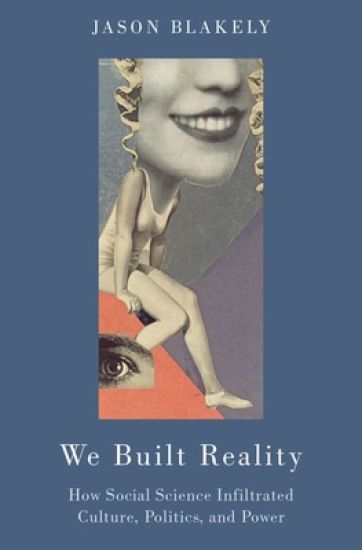
We Built Reality

We Built Reality

Jason Blakely

Oxford University Press Inc
2020
sidottu
Over the last fifty years, pseudoscience has crept into nearly every facet of our lives. Popular sciences of everything from dating and economics, to voting and artificial intelligence, radically changed the world today. The abuse of popular scientific authority has catastrophic consequences, contributing to the 2008 financial crisis; the failure to predict the rise of Donald Trump; increased tensions between poor communities and the police; and the sidelining of nonscientific forms of knowledge and wisdom. In We Built Reality, Jason Blakely explains how recent social science theories have not simply described political realities but also helped create them. But he also offers readers a way out of the culture of scientism: hermeneutics, or the art of interpretation. Hermeneutics urges sensitivity to the historical and cultural contexts of human behavior. It gives ordinary people a way to appreciate the insights of the humanities in guiding decisions. As Blakely contends, we need insights from the humanities to see how social science theories never simply neutrally describe reality, they also help build it.
We Built Reality

We Built Reality

Jason Blakely

Oxford University Press Inc
2020
nidottu
Over the last fifty years, pseudoscience has crept into nearly every facet of our lives. Popular sciences of everything from dating and economics, to voting and artificial intelligence, radically changed the world today. The abuse of popular scientific authority has catastrophic consequences, contributing to the 2008 financial crisis; the failure to predict the rise of Donald Trump; increased tensions between poor communities and the police; and the sidelining of nonscientific forms of knowledge and wisdom. In We Built Reality, Jason Blakely explains how recent social science theories have not simply described political realities but also helped create them. But he also offers readers a way out of the culture of scientism: hermeneutics, or the art of interpretation. Hermeneutics urges sensitivity to the historical and cultural contexts of human behavior. It gives ordinary people a way to appreciate the insights of the humanities in guiding decisions. As Blakely contends, we need insights from the humanities to see how social science theories never simply neutrally describe reality, they also help build it.
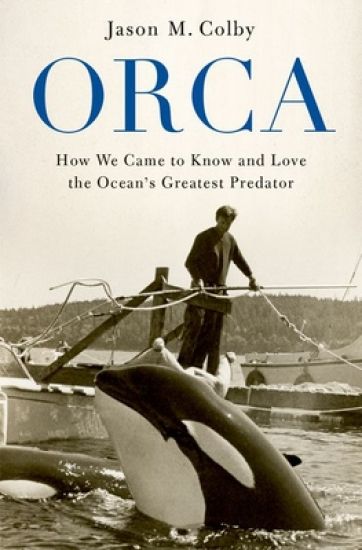
Orca

Orca

Jason M. Colby

Oxford University Press Inc
2020
nidottu
Since the release of the documentary Blackfish in 2013, millions around the world have focused on the plight of the orca, the most profitable and controversial display animal in history. Yet, until now, no historical account has explained how we came to care about killer whales in the first place. Drawing on interviews, official records, private archives, and his own family history, Jason M. Colby tells the exhilarating and often heartbreaking story of how people came to love the ocean's greatest predator. Historically reviled as dangerous pests, killer whales were dying by the hundreds, even thousands, by the 1950s--the victims of whalers, fishermen, and even the US military. In the Pacific Northwest, fishermen shot them, scientists harpooned them, and the Canadian government mounted a machine gun to eliminate them. But that all changed in 1965, when Seattle entrepreneur Ted Griffin became the first person to swim and perform with a captive killer whale. The show proved wildly popular, and he began capturing and selling others, including Sea World's first Shamu. Over the following decade, live display transformed views of Orcinus orca. The public embraced killer whales as charismatic and friendly, while scientists enjoyed their first access to live orcas. In the Pacific Northwest, these captive encounters reshaped regional values and helped drive environmental activism, including Greenpeace's anti-whaling campaigns. Yet even as Northwesterners taught the world to love whales, they came to oppose their captivity and to fight for the freedom of a marine predator that had become a regional icon. This is the definitive history of how the feared and despised "killer" became the beloved "orca"--and what that has meant for our relationship with the ocean and its creatures.
Spirits Rejoice!

Spirits Rejoice!

Jason Bivins

Oxford University Press Inc
2015
sidottu
Spirits Rejoice! takes its name from a record by jazz saxophonist of the mid-1960s, Albert Ayler--later used, with an exclamation point added, by Louis Moholo-Moholo--and is appropriated in Jason Bivins's book to express the overlap of religion and jazz music through history. Bivins explore themes that have resounded throughout the musical genre that are also integral to the practice of religions in the United States. Much writing about jazz falls into one of three categories: glorified record reviews or discographies; impressionistic descriptions of the actual sounds and dense musicological analyses; or contextualizing it within institutions or extant narratives that are easier to analyze. Using religious studies as a point of comparison Bivins seeks to go beyond these approaches. Instead, he takes to heart a commonly invoked characteristic of jazz, and improvises on the standard questions and stories that might be told. Rather than producing a history or a series of biographical entries, Spirits Rejoice! will generate a collection of themes, pursuits, reoccurring foci, and interpretations. When ranging across the cultural history of American jazz, these themes emerge not just in the musicians' own words (in interviews, liner notes, or journals) but also from the bandstand, audience reception, and critical interrogation. Bivins looks at themes such as musical creativity as related to specific religious traditions, jazz as a form of ritual and healing, and jazz cosmologies and metaphysics, drawing conclusions that explore how "the sound of spirits rejoicing" challenges not only prevailing understandings of race and music, but also the way we think about "religion."
Faith with Benefits

Faith with Benefits

Jason King

Oxford University Press Inc
2017
sidottu
Hookup culture has become widespread on college campuses, and Catholic colleges are no exception. Indeed, most studies have found no difference between Catholic colleges and their secular counterparts when it comes to hooking up, despite the fact that most students report being unhappy with casual sexual encounters. Drawing on a survey of over 1000 students from 26 institutions, as well as follow-up interviews, Jason King argues that religious culture on Catholic campuses can, in fact, have an impact on the school's hookup culture, but the relationship is complicated. In Faith with Benefits, King shows the complex way these dynamics play out at Catholic colleges and universities. There is no straightforward relationship, for example, between orthodoxy and hookup culture--some of the schools with the weakest Catholic identities also have weaker hookup cultures. And not all students see hookup culture the same way. Some see a hookup is just a casual encounter, but others see hooking up as a gateway to a relationship. Faith with Benefits gives voice to students and so reveals how their faith, the faith of their friends, and the institutional structures of their campus give rise to different hookup cultures. In doing so, King addresses the questions of students who don't know where to turn for practical guidance on how to navigate an ever-shifting network of hookups.
Hearts, Minds, Voices

Hearts, Minds, Voices

Jason C. Parker

Oxford University Press Inc
2016
sidottu
For over four decades, the Cold War superpowers endeavored mightily to "win hearts and minds" abroad through strategies that came to be called public diplomacy. While many target audiences were on the original front lines of the conflict in Europe, other larger audiences resided in areas outside Europe, regions then in the throes of decolonization. This book explores how, for all the blood and drama of intervention, crisis, and revolution during the Cold War, the vast majority of these non-Europeans experienced it as a media war for their allegiance rather than as a violent war for their lives. In these outlying regions, superpower public diplomacy encountered volatile issues of race, empire, poverty, and decolonization--all of which intersected unpredictably with the dynamics of the Cold War and anti-imperialist currents. The challenge to U.S. public diplomacy was acute. At a time when the United States' image was inseparable from Jim Crow and Washington's European-imperial alliances, the cresting of these issues put U.S. outreach on the defensive. Yet, as Jason Parker argues, the greater consequence of these Cold War campaigns was international, not U.S.-centric, in scope. The non-European world responded to this media war by joining it. A proliferation of newly independent voices launched public diplomacy campaigns of their own, offering a roundabout validation of strategic public diplomacy while articulating an alternative vision of the postwar world. By reappropriating the geopolitical and intellectual space between the Cold War superpowers, this global conversation formulated a "Third World project" that coalesced around principals of nonalignment, post-imperial economic development, and anti-colonial racial solidarity. The global South's response to the injection of the Cold War into their social, economic, and political reality thus helped to create the "Third World" as a transnational, imagined community on the postwar global landscape.
Queer: A Reader for Writers

Queer: A Reader for Writers

Jason Schneiderman

Oxford University Press
2016
nidottu
Developed for courses in first-year writing, Queer: A Reader for Writers includes an interdisciplinary mix of public, academic, and cultural reading selections. It provides students with the rhetorical knowledge and analytical strategies required to participate effectively in discussions about queer theory and culture. Chapters include numerous pedagogical features and are organized thematically around a range of issues and topics that fall under the queer umbrella. Queer: A Reader for Writers is part of a series of brief, single-topic readers from Oxford University Press designed for today's college writing courses. Each reader in this series approaches a topic of contemporary conversation from multiple perspectives.
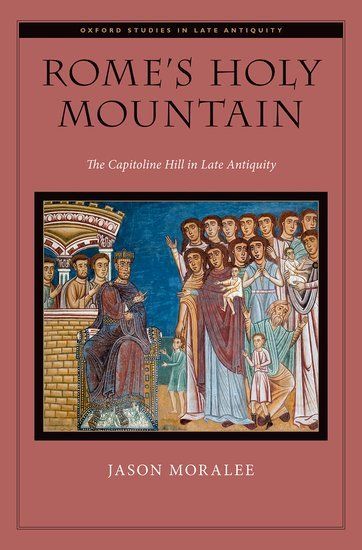
Rome's Holy Mountain

Rome's Holy Mountain

Jason Moralee

Oxford University Press Inc
2018
sidottu
Rome's Capitoline Hill was the smallest of the Seven Hills of Rome. Yet in the long history of the Roman state it was the empire's holy mountain. The hill was the setting of many of Rome's most beloved stories, involving Aeneas, Romulus, Tarpeia, and Manlius. It also held significant monuments, including the Temple of Jupiter Optimus Maximus, a location that marked the spot where Jupiter made the hill his earthly home in the age before humanity. This is the first book that follows the history of the Capitoline Hill into late antiquity and the early middle ages, asking what happened to a holy mountain as the empire that deemed it thus became a Christian republic. This is not a history of the hill's tonnage of marble and gold bedecked monuments, but rather an investigation into how the hill was used, imagined, and known from the third to the seventh centuries CE. During this time, the imperial triumph and other processions to the top of the hill were no longer enacted. But the hill persisted as a densely populated urban zone and continued to supply a bridge to fragmented memories of an increasingly remote past through its toponyms. This book is also about a series of Christian engagements with the Capitoline Hill's different registers of memory, the transmission and dissection of anecdotes, and the invention of alternate understandings of the hill's role in Roman history. What lingered long after the state's disintegration in the fifth century were the hill's associations with the raw power of Rome's empire.
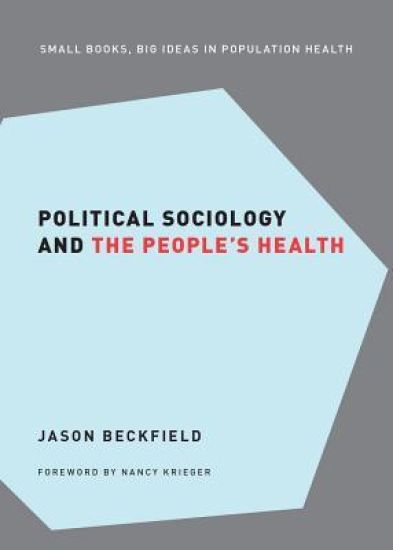
Political Sociology and the People's Health

Political Sociology and the People's Health

Jason Beckfield

Oxford University Press Inc
2018
sidottu
A social epidemiologist looks at health inequalities in terms of the upstream factors that produced them. A political sociologist sees these same inequalities as products of institutions that unequally allocate power and social goods. Neither is wrong -- but can the two talk to one another? In a stirring new synthesis, Political Sociology and the People's Health advances the debate over social inequalities in health by offering a new set of provocative hypotheses around how health is distributed in and across populations. It joins political sociology's macroscopic insights into social policy, labor markets, and the racialized and gendered state with social epidemiology's conceptualizations and measurements of populations, etiologic periods, and distributions. The result is a major leap forward in how we understand the relationships between institutions and inequalities -- and essential reading for those in public health, sociology, and beyond.
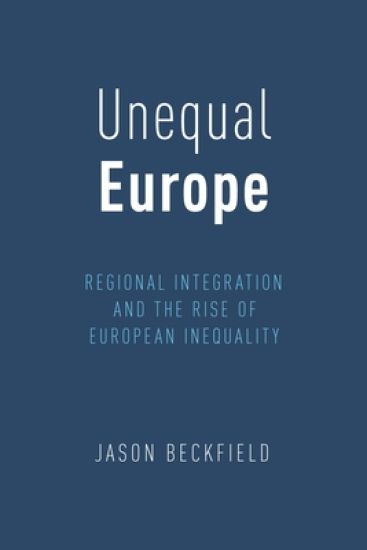
Unequal Europe

Unequal Europe

Jason Beckfield

Oxford University Press Inc
2019
sidottu
The Euro-crisis of 2009-2012 vividly demonstrated that European Union policies matter for the distribution of resources within and between European nation-states. Throughout the crisis, distributive conflicts between the EU's winners and losers worsened, and are still reverberating in European politics today. In Unequal Europe, Jason Beckfield demonstrates that there is a direct connection between European integration and the increase in European income inequality over the past four decades. He places the recent crisis into a broader sociological, political, and economic perspective by analyzing how European integration has reshaped the distribution of income across the households of Europe. Using individual-and household-level income survey data, combined with macro-level data on social policies, and case studies of welfare reforms in EU and non-EU states, Beckfield shows how European integration has re-stratified Europe by simultaneously drawing national economies closer together and increasing inequality among households. Explaining how, where, and why income inequality has changed in the EU, Unequal Europe answers the question: who wins and who loses from European integration?
Unequal Europe

Unequal Europe

Jason Beckfield

Oxford University Press Inc
2019
nidottu
The Euro-crisis of 2009-2012 vividly demonstrated that European Union policies matter for the distribution of resources within and between European nation-states. Throughout the crisis, distributive conflicts between the EU's winners and losers worsened, and are still reverberating in European politics today. In Unequal Europe, Jason Beckfield demonstrates that there is a direct connection between European integration and the increase in European income inequality over the past four decades. He places the recent crisis into a broader sociological, political, and economic perspective by analyzing how European integration has reshaped the distribution of income across the households of Europe. Using individual-and household-level income survey data, combined with macro-level data on social policies, and case studies of welfare reforms in EU and non-EU states, Beckfield shows how European integration has re-stratified Europe by simultaneously drawing national economies closer together and increasing inequality among households. Explaining how, where, and why income inequality has changed in the EU, Unequal Europe answers the question: who wins and who loses from European integration?
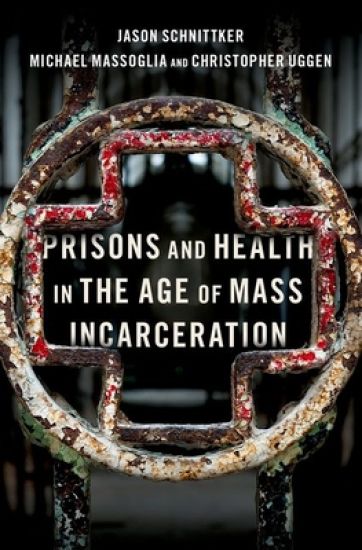
Prisons and Health in the Age of Mass Incarceration

Prisons and Health in the Age of Mass Incarceration

Jason Schnittker; Michael Massoglia; Christopher Uggen

OXFORD UNIVERSITY PRESS INC
2022
sidottu
A comprehensive examination of the connection between mass incarceration and health In an age when over two million people are incarcerated in the United States alone, the wide-reaching impact of prisons in our society is impossible to deny, and the paradoxical relationship between prisons and health has never been more controversial. Prisons are charged at the same time with being punitive and therapeutic, with denying freedom and administering treatment, with confining and rehabilitating. And they are not living up to the charge. Prisons and Health in the Age of Mass Incarceration examines the connection between prisons and health. Based on a decade of empirical research, this book explores the consequences of incarceration on inmates themselves; on the families they leave behind; on the larger communities to which they return; and, ultimately, on entire health care systems at the state and national level. Jason Schnittker, Michael Massoglia, and Christopher Uggen demonstrate that the relationship between incarceration and health is sustained by a combination of social, cultural, and legal forces, and by a failure to recognize that prisons are now squarely in the business of providing care. With an eye to the history that led us to this point, the book investigates these connections and shows how prisons undermine health and well-being. An evenhanded and comprehensive analysis, this groundbreaking volume demonstrates that the prison system produces unintended and far-reaching consequences for the health of our nation and points the way for a fairer and more effective justice system.