Kirjojen hintavertailu. Mukana 12 427 231 kirjaa ja 12 kauppaa.

Kirjahaku

Etsi kirjoja tekijän nimen, kirjan nimen tai ISBN:n perusteella.

1000 tulosta hakusanalla Jeffrey B. Perry

A Century of Spies

A Century of Spies

Jeffrey T. Richelson

Oxford University Press Inc
1997
nidottu
Spy-masters, moles, and double-agents. Ciphers, saboteurs, and atomic secrets. The shady world of real-life espionage is as alarming and mysterious as any John Le Carré novel or James Bond movie. This outstanding book chronicles the international history of intelligence in the 20th century, exploring the impact of spies on world events during both war and peacetime. The work highlights the key events and breakthroughs in the history of intelligence and espionage - from the codebreaking and sabotage operations in the World Wars to the U2 incident and the CIA's secret war in Nicaragua. It also offers fascinating details of the colourful individuals who have made a mark as spies, defectors, and counterspies. The increasing importance of technology is a central theme in the book, from the advances in reconnaissance that make modern warfare possible to the spy satellites that help to verify arms control treaties. With the end of the cold war Richelson examines the role of intelligence in the 1990s and beyond, including the possibility of US-Soviet co-operation to combat terrorism and to halt the proliferation of nuclear, chemical, and biological weapons to developing countries.

New Directions for Organization Theory

New Directions for Organization Theory

Jeffrey Pfeffer

Oxford University Press Inc
1997
sidottu
This is a comprehensive analysis of the present state of organization theory. The author traces the evolution and particularly the more recent history of the field, and its scope and content. He then considers the relevant literature organized by major issues and concepts. Jeffrey Pfeffer makes the point that the world of organizations the book surveys has changed in four important ways: the increasing externalization of the employment relation and the development of the "new employment contract;" the change in the size distribution of organizations, with a comparative growth in the proportion of smaller organizations; the increasing influence of external capital markets on organizational governance and decision making; and the increasing salary inequality within organizations in the U.S. compared both to the past and to other industrialized nations. These changes make it especially important to understand the organizations themselves. The author is a major scholar in the field of organizations and his perspective should be of considerable interest to scholars and students in the field.
Rhetoric and Poetics in Antiquity

Rhetoric and Poetics in Antiquity

Jeffrey Walker

Oxford University Press Inc
2000
sidottu
This book offers a counter-traditional account of the history of both rhetoric and poetics. In reply to traditional rhetorical histories, which view "rhetoric" as an art of practical civic oratory, the book argues in four extended essays that epideictic-poetic eloquence was central, even fundamental, to the rhetorical tradition in antiquity. In essence, Walker's study accomplishes what in the world of rhetoric studies amounts to a revolution: he demonstrates that in antiquity rhetoric and poetry could not be viewed separately.
Collaborative Advantage

Collaborative Advantage

Jeffrey H. Dyer

Oxford University Press Inc
2000
sidottu
Why has Chrysler been twice as profitable as GM and Ford during the 1990s even though it is a much smaller company with plants that are less efficient than Ford's? Why does Toyota continue to have substantial productivity and quality advantages long after knowledge of the Toyota Production System has diffused to competitors? The answer, according to Jeff Dyer, is that Toyota and Chrysler have been the first in their industry to recognize that the fundamental unit of competition has changed--from the individual firm to the extended enterprise. In this book Dyer demonstrates the power of collaborative advantage, arguing that, in the future, competitive advantage will increasingly be created by teams of companies, rather than by the single firm. Managers who do not recognize this development--regardless of their industry--are in danger of adopting the wrong strategies for their firms. Dyer draws on eight years of study of the automotive industry, including a wealth of data from interviews with over 200 executives and surveys of over 500 suppliers, as he offers detailed case studies of Toyota and Chrysler to show managers how to create collaborative advantage with their supplier networks. Dyer demonstrates how to build trust in the extended enterprise, how to exploit and manage knowledge (describing how Toyota manages knowledge across organizational boundaries), and how to create advantages through dedicated asset investments. In turn, these processes generate stunning performance advantages and an identity for the extended enterprise. To be successful in future years, executives will have to convert their corporations into fully integrated, extended enterprises. In Collaborative Advantage, Jeff Dyer shows them how.
Muslim Rebels

Muslim Rebels

Jeffrey T. Kenney

Oxford University Press Inc
2006
sidottu
The Kharijites were a splinter group that broke away from the main forces of Islam during the formative medieval period, purportedly refusing arbitration and committing bloody outrages against their fellow Muslims. Their influence in the political and theological life of the nascent faith has ensured their place in both critical and religious accounts of early Islamic history. Over the centuries, the Kharijites have repeatedly been invoked whenever militant opposition arose and today the label is frequently applied to extremist Islamic movements. After a brief look at Kharijite origins, this book focuses on contemporary Egypt. Kenney shows how religious images of the Kharijites have dominated public discussion about political opposition movements, effectively undermining attempts to discuss the real issues generating such movements.
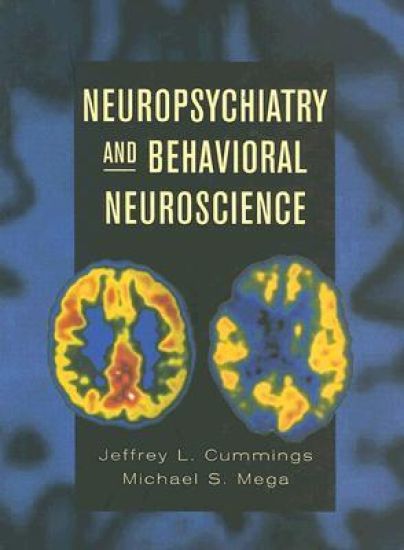
Neuropsychiatry and Behavioural Neuroscience

Neuropsychiatry and Behavioural Neuroscience

Jeffrey L. Cummings; Michael S. Mega

Oxford University Press Inc
2003
sidottu
This is the long-awaited new edition of Jeffrey Cummings' classic work, Clinical Neuropsychiatry, originally published in 1985. That book represented an integration of behavioural neurology and biological psychiatry into a single volume devoted to explicating brain-behaviour relationships. It was clinically oriented and intended for practitioners caring for patients with neuropsychiatric disorders. The new title reflects the authors' effort to link the recent explosion of new information from neurochemistry, neuroanatomy, genetics, neuropharmacology, neuropathology, and neuroimaging to the clinical descriptions. Yet the clinical emphasis of its predecessor has been maintained. Each chapter has a consistent approach and the book as whole provides a practical, easy-to-use synthesis of clinical advice and basic science. The volume is enchanced by 4-colour images throughout. It is intended for students, residents, fellows, and practitioners of neurology, psychiatry, neuropsychology, and cognitive neuroscience. It will also be interest to individuals in neuroimaging.
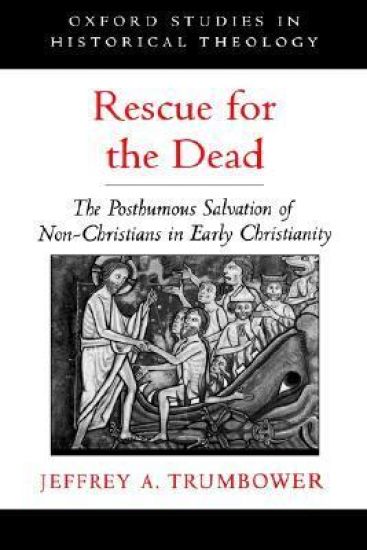
Rescue for the Dead

Rescue for the Dead

Jeffrey A. Trumbower

Oxford University Press Inc
2001
sidottu
Christianity is a religion of salvation in which believers have always anticipated some type of post-mortem bliss. This belief in salvation for the faithful has usually meant non-salvation for others. The Christian imagination in the West has usually drawn a sharp boundary at death, on the principle that, if someone did not join up with the saved community during this life, joining it after death would be impossible. In this book, Jeffrey Trumbower examines how and why death came to be perceived as such a firm boundary of salvation. Analyzing exceptions to this principle from ancient Christianity, he finds that the principle itself was slow to develop and not universally accepted in the Christian movement's first four hundred years. In fact, only in the West was this principle definitively articulated, due in large part to the work and influence of Augustine.
Paradise Mislaid

Paradise Mislaid

Jeffrey Burton Russell

Oxford University Press Inc
2006
sidottu
The Christian concept of heaven flourished for almost two millennia, but it has lost much of its power in the last hundred years. Indeed today even theologians tend to avoid the topic. But heaven has always been a central tenet of the Christian faith, writes Jeffrey Burton Russell. If there is no heaven, no resurrection of the dead, the entire Christian story makes no sense. In this stimulating book, Russell sets out to rehabilitate heaven by forcefully attacking a series of ideas that have made belief in heaven, not to mention belief in God, increasingly difficult for modern people. Russell provides elegant and persuasive refutations of arguments ranging from the idea that science has disproved the existence of the supernatural, to the notion that biblical criticism has emptied the scripture of meaning. Along the way, as Russell looks at the ideas of Charles Darwin and Herbert Spencer, Mark Twain and Alfred Lord Tennyson, Marx and Freud, and a host of others, he sheds light not only on the history of Christian thought, but on the process of secularization in the West. One by one, Russell refutes these anti-religious ideologies, pinpointing the deficiencies of their reasoning. Throughout the book, Russell invites the reader, whatever his or her beliefs, to take the concept of heaven seriously both as a worldview in itself and as one with enormous influence on the world. It is a book that will be welcomed by thinking Christians, who often feel beleaguered by the forces of modernity and sometimes find it hard to defend their own beliefs.
The Civil Sphere

The Civil Sphere

Jeffrey C. Alexander

Oxford University Press Inc
2006
sidottu
How do real individuals live together in real societies in the real world? Jeffrey Alexander's masterful work, The Civil Sphere, addresses this central paradox of modern life. Feelings for others--the solidarity that is ignored or underplayed by theories of power or self-interest--are at the heart of this novel inquiry into the meeting place between normative theories of what we think we should do and empirical studies of who we actually are. A grand and sweeping statement, The Civil Sphere is a major contribution to our thinking about the real but ideal world in which we all reside.
The Most Democratic Branch

The Most Democratic Branch

Jeffrey Rosen

Oxford University Press Inc
2006
sidottu
A penetrating look at some of the most important Supreme Court cases in history is provided in this provocative argument that illustrates that the Supreme Court is most successful when it defers to the constitutional views of the American people.
American Genesis

American Genesis

Jeffrey P. Moran

Oxford University Press Inc
2012
sidottu
Teaching evolution in the public schools has been a perennial problem in America. From the courthouse in Dayton, Tennessee, in 1925, to modern fights over "intelligent design" and creation science, evolution and its critics have battled over the role of science and religion in American public life. But the antievolution controversies are not merely political problems. In American Genesis, Jeffrey P. Moran explores the ways in which the evolution struggles also have reverberated beyond the confines of legislatures and courthouses. In addition to offering a careful analysis of antievolutionism's ideological and strategic development, this wide-ranging social history argues that evolution's reception has been shaped by four peculiarly American forces: a diverse population, regional divisions, a sometimes shaky Protestant dominance, and a tradition of democratic populism. In each area, the battles over evolution exposed and polarized existing divisions. Using extensive research in newspapers, periodicals, and archives, Moran investigates the critical influence that gender ideals have had in antievolutionism, as well as the complex role women play in modern controversies. Similarly, he analyzes the unexamined relationship between African Americans and antievolution. Moran's reading of regional differences explains how fundamentalism, a movement born in the North, came to flourish primarily in the South. Throughout the nation, Moran argues, antievolutionist ideology has retained strong continuities from its roots in the early twentieth century, despite its modern packaging as creation science or Intelligent Design. Finally, Moran balances scholars' understandable focus on the unfamiliar territory of antievolutionism by considering the self-conceptions and preconceptions of modern scientists as activists, teachers, and bystanders in the struggle.
Skeleton Keys

Skeleton Keys

Jeffrey H. Schwartz

Oxford University Press Inc
2006
sidottu
In Skeleton Keys: An Introduction to Human Skeletal Morphology, Development, and Analysis, Second Edition, Jeffrey H. Schwartz presents a detailed yet highly accessible introduction to the study of the human skeleton. This unique volume examines the skeleton from its developmental basis to the expression of individual variation. It reviews a variety of different approaches used to determine an individual's sex, age, and pathological history and challenges readers to think critically about how to analyze a human skeleton rather than learning formulas for quick results. An ideal text for courses in human osteology, skeletal analysis, and bioarchaeology, this book is also a helpful reference for professionals. Thoroughly revised and updated, the second edition of Skeleton Keys features: * The companion website contains hundreds of color images of skeletons and skeletal elements--demonstrating morphology, pathology, and nonmetric variation--that can be used as classroom projections or for individual study. * Coverage of the most recent developments in the field, including the molecular regulation of bone and tooth formation * Expanded studies in each area of analysis: sex, age, nonmetric variation, pathology, biodistance and bioarchaeology, and stable isotope analysis * Additional photographic images, especially in the pathology and sexing chapters * Two separate and extensively illustrated chapters on the skull, one dealing with articulated elements and one with isolated bones (these topics were covered in one chapter in the first edition) * Integration of material--such as anthropometric landmarks--from appendices in the previous edition into relevant chapters as tables * More accessible language throughout and an extensive glossary
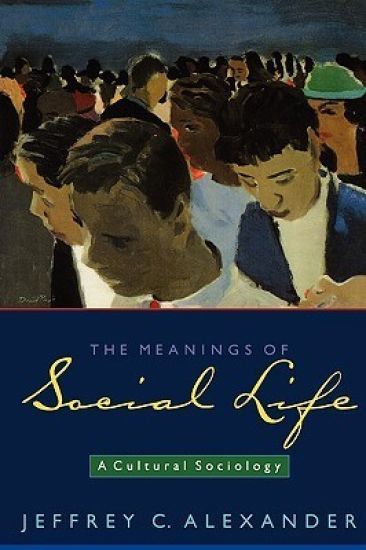
The Meanings of Social Life

The Meanings of Social Life

Jeffrey C. Alexander

Oxford University Press Inc
2005
nidottu
In The Meanings of Social Life , Jeffrey Alexander presents a new approach to how culture works in contemporary societies. Exposing our everyday myths and narratives in a series of empirical studies that range from Watergate to the Holocaust, he shows how these unseen yet potent cultural structures translate into concrete actions and institutions. Only when these deep patterns of meaning are revealed, Alexander argues, can we understand the stubborn staying power of violence and degradation, but also the steady persistence of hope. By understanding the darker structures that restrict our imagination, we can seek to transform them. By recognizing the culture structures that sustain hope, we can allow our idealistic imaginations to gain more traction in the world. A work that will transform the way that sociologists think about culture and the social world, this book confirms Jeffrey Alexander's reputation as one of the major social theorists of our day.
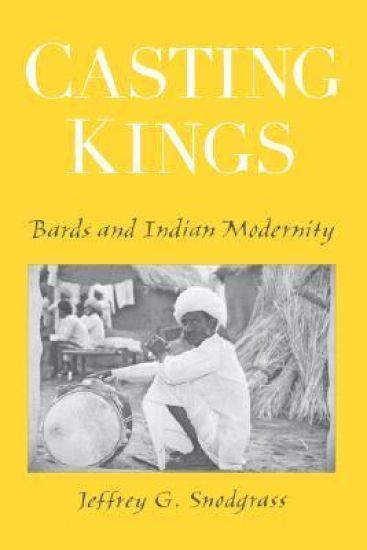
Casting Kings

Casting Kings

Jeffrey G. Snodgrass

Oxford University Press Inc
2006
nidottu
Based on three years of anthropological fieldwork in the Indian state of Rajasthan, Casting Kings explores the manner in which semi-nomadic performers known as Bhats understand, and also subvert, caste hierarchies. A number of scholars have recently contended that caste is invented and thus a fiction of a kind. But focus in these studies is typically placed on the way caste is imagined according to the agendas and desires of elite Westerners such as colonial officials. In this book, by contrast, the author argues that Bhats themselves understand the imaginative dimensions of caste relations. Indeed, such insights are shown to lie at the heart of the Bhats traditional profession of praise- and insult-singing. Likewise, the author demonstrates how the ability to cleverly rework and even sabotage lingering caste inequalities continues to form the basis for Bhat claims to status and dignity in contemporary India.
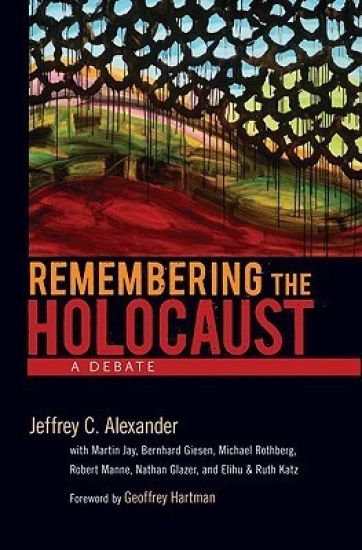
Remembering the Holocaust

Remembering the Holocaust

Jeffrey C. Alexander; Geoffrey Hartman

Oxford University Press Inc
2009
sidottu
Remembering the Holocaust explains why the Holocaust has come to be considered the central event of the 20th century, and what this means. Presenting Jeffrey Alexander's controversial essay that, in the words of Geoffrey Hartman, has already become a classic in the Holocaust literature, and following up with challenging and equally provocative responses to it, this book offers a sweeping historical reconstruction of the Jewish mass murder as it evolved in the popular imagination of Western peoples, as well as an examination of its consequences. Alexander's inquiry points to a broad cultural transition that took place in Western societies after World War II: from confidence in moving past the most terrible of Nazi wartime atrocities to pessimism about the possibility for overcoming violence, ethnic conflict, and war. The Holocaust has become the central tragedy of modern times, an event which can no longer be overcome, but one that offers possibilities to extend its moral lessons beyond Jews to victims of other types of secular and religious strife. Following Alexander's controversial thesis is a series of responses by distinguished scholars in the humanities and social sciences--Martin Jay, Bernhard Giesen, Michael Rothberg, Robert Manne, Nathan Glazer, and Elihu & Ruth Katz--considering the implications of the universal moral relevance of the Holocaust. A final response from Alexander in a postscript focusing on the repercussions of the Holocaust in Israel concludes this forthright and engaging discussion. Remembering the Holocaust is an all-too-rare debate on our conception of the Holocaust, how it has evolved over the years, and the profound effects it will have on the way we envision the future.
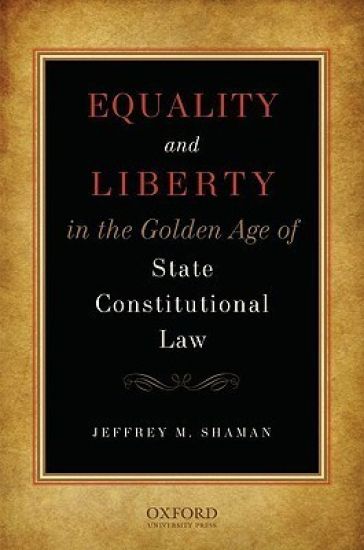
Equality and Liberty in the Golden Age of State Constitutional Law
In Equality and Liberty in the Golden Age of State Constitutional Law, Jeffrey Shaman closely examines the evolution of liberty and equality under state constitutions from both a historical and jurisprudential perspective. The rise of New Judicial Federalism has allowed many states to rediscover their own empowerment in enacting their own constitutions. As the New Judicial Federalism gained ground, it was found to be that state constitutional law is an extremely important source for the protection of individual rights and liberties. These state constitutions can be interpreted however the state sees fit, and act independently of federal constitutional law. Shaman explains that this rise has caused these states to recognize individual civil rights or liberties beyond those recognized under the Federal Constitution. Professor Shaman emphasizes how important state constitutional law is in the protection of the rights of the individual. Since these states are acting under their own constitutional law and guidance, their constitutions provide an extension of the individual's rights to privacy, civil rights, and liberties. State courts and constitutions have also pioneered a trend in recognizing and expanding abortion rights and some have granted rights to same-sex civil unions, and in some states, same-sex marriages. This trend eventually caught the attention of the U.S. Supreme Court to finally follow suit. This book will prove to be an intriguing read for lawyers, judges and scholars alike who are interested in the protection of their individual state rights as well as their federal rights.
Paradise Mislaid

Paradise Mislaid

Jeffrey Burton Russell

Oxford University Press Inc
2007
nidottu
In this book Jeffrey Burton Russell explores the many and complex reasons for the gradual erosion of the idea of heaven in the modern era. Although the seeds of skepticism were planted in the Enlightenment, he shows, the real decline dates to the nineteenth century. This is a fascinating tale that sheds light not only on the history of Christian thought, but on the process of secularization in the West; Russell shows us the grubby soul of our materialistic and uncritically scientific society. Finally he argues that we can and should make room for paradise for the spiritual health of our culture and points the way towards metaphors of perfection and transcendence that resonate in our time.
The Uncrowned King of Swing

The Uncrowned King of Swing

Jeffrey Magee

Oxford University Press Inc
2008
nidottu
Fletcher Henderson (1897 - 1952) is a major figure in the history of jazz. He led the premier black jazz band of the 1920s and the early 1930s, and wrote the swing arrangements that helped make Benny Goodman the 'King of Swing'. The Uncrowned King of Swing is the first interpretive study of his music and career, using the full range of sources documenting his work.
Limits of Legality

Limits of Legality

Jeffrey Brand-Ballard

Oxford University Press Inc
2010
sidottu
Judges sometimes hear cases in which the law, as they honestly understand it, requires results that they consider morally objectionable. Most people assume that, nevertheless, judges have an ethical obligation to apply the law correctly, at least in reasonably just legal systems. This is the view of most lawyers, legal scholars, and private citizens, but the arguments for it have received surprisingly little attention from philosophers. Combiming ethical theory with discussions of caselaw, Jeffrey Brand-Ballard challenges arguments for the traditional view, including arguments from the fact that judges swear oaths to uphold the law, and arguments from our duty to obey the law, among others. He then develops an alternative argument based on ways in which the rule of law promotes the good. Patterns of excessive judicial lawlessness, even when morally motivated, can damage the rule of law. Brand-Ballard explores the conditions under which individual judges are morally responsible for participating in destructive patterns of lawless judging. These arguments build upon recent theories of collective intentionality and presuppose an agent-neutral framework, rather than the agent-relative framework favored by many moral philosophers. Defying the conventional wisdom, Brand-Ballard argues that judges are not always morally obligated to apply the law correctly. Although they have an obligation not to participate in patterns of excessive judicial lawlessness, an individual departure from the law so as to avoid an unjust result is rarely a moral mistake if the rule of law is otherwise healthy. Limits of Legality will interest philosophers, legal scholars, lawyers, and anyone concerned with the ethics of judging.
The Civil Sphere

The Civil Sphere

Jeffrey C. Alexander

Oxford University Press Inc
2008
nidottu
What binds societies together and how can these social orders be structured in a fair way? Jeffrey C. Alexander's masterful work, The Civil Sphere, addresses this central paradox of modern life. Feelings for others - the solidarity that is ignored or underplayed by theories of power or self-interest - are at the heart of this novel inquiry into the meeting place between normative theories of what we think we should do and empirical studies of who we actually are. Solidarity, Alexander demonstrates, creates inclusive and exclusive social structures and shows how they can be repaired. It is not perfect, it is not absolute, and the horrors which occur in its lapses have been seen all too frequently in the forms of discrimination, genocide, and war. Despite its worldly flaws and contradictions, however, solidarity and the project of civil society remain our best hope: the antidote to every divisive institution, every unfair distribution, every abusive and dominating hierarchy. This grand, sweeping statement and rigorous empirical investigation is a major contribution to our thinking about the real but ideal world in which we all reside.