Kirjojen hintavertailu. Mukana 12 476 959 kirjaa ja 12 kauppaa.

Kirjahaku

Etsi kirjoja tekijän nimen, kirjan nimen tai ISBN:n perusteella.

1000 tulosta hakusanalla Jeffrey Toobin

Robin Hood

Robin Hood

Jeffrey L. Forgeng

Praeger Publishers Inc
1998
sidottu
Among the narrative traditions of the Middle Ages, the Robin Hood legend holds a unique, important, and often overlooked position. Robin Hood's uniqueness and importance begins with his status as the only English contribution to world mythology. His is also the only lasting myth to arise from the High Middle Ages and the last Western legend to achieve a sustained international appeal. Several Robin Hood ballads survive from the Middle Ages, and from the 15th to the 17th centuries he figured prominently in folk drama. Since then, he has appeared in numerous proverbs, placenames, operas, novels, children's stories, films, and television series. A tale told so often must be profoundly significant to the society that retells it. Yet in spite of its importance and popularity, the legend of Robin Hood has received surprisingly little study. This book overviews the genesis and development of the Robin Hood legend from the Middle Ages to 1700. As is appropriate for a work that bridges the divide between the worlds of fiction and history, this volume incorporates the strengths of both historical and literary approaches, respecting both the circumstances of the historic setting and the legend's status as a fictive creation. The principal focus of the book is the interaction between the text and the social context in which the legend arose and developed. The first two chapters examine the early Robin Hood tradition, including the initial nondramatic manifestations of the legend and the later dramatic representations. The volume then looks at the transformation of the legend in the 16th and 17th centuries and considers how the various elements of the legend interacted with each other and with society as a whole.
Graph Theoretical Models of Abstract Musical Transformation
An introduction to a new way of modeling musical surfaces for theorists and for generating precompositional relationships for composers, this unique music theory reference work introduces, classifies, and enumerates graph theoretical models for musical transformations in compositional and analytical applications. It also provides a practical application of musical applications for students of graph theory and could serve as an introduction to the further cross-integration of these two disciplines. Of interest to scholars, advanced music theory students, and composers, this work endeavors to facilitate the expression and understanding of musical ideas by presenting an unexplored way of notating relationships between transformational objects that is not attached to specific compositional or analytical systems. Graph theoretical models of abstract musical transformations supplement and refine the ability to articulate orderings with pitch structures in analytical environments. An extended analysis of the opening section of Form IV: Broken Sequences by Stefan Wolpe is used as a demonstration. The use of these diagrams to generate compositional surfaces differs slightly from their use in analysis: an analytical model relates to a single musical surface, whereas compositional applications can be used to generate any potential surface derived from construction of the graphs.
Using Literature to Help Troubled Teenagers Cope with Identity Issues
The search for one's identity is an ancient quest reflected throughout history in stories where human glory and conquest are often layered with great pain and self doubt, meant to help people discover themselves and who they are. Today, this quest is found prevalently in young adult novels, where characters wrestle with modern dilemmas in order to find themselves. This reference resource provides a link for teachers, media specialists, parents, and other adults to those novels and how to use them effectively. Educators and therapists explore the literature where common identity issues are addressed in ways intriguing to teens. Using fictional characters, these experts provide guidance on how to encourage adolescents to cope while improving their reading and writing skills.Twelve novels are examined from both a literary and psychological perspective, allowing the readers to meet the central figures as if they were living human beings. Each chapter is written by a literature specialist who has teamed up with a therapist and confronts a different identity issue, examining such dilemmas as body image, the father/son relationship, bigotry, and peer relations. This pair of experts tries to define the central character's struggle in each novel to discover who they are and to become self-actualized individuals. Each chapter also provides an annotated bibliography of other works, both fiction and nonfiction, that explore these same issues to give readers not only the insight into helping teenagers with similar problems, but also the tools with which to get teenagers reading and addressing these problems. This innovative approach is meant to provide the opportunity for adults and adolescents to better understand each other.
Comparative History and Legal Theory

Comparative History and Legal Theory

Jeffrey Seitzer

Praeger Publishers Inc
2001
sidottu
It is a commonplace of Schmitt scholarship that the controversial thinker sought to recapture some of the elan of the pre-Weimar state through his advocacy of effectively almost unlimited presidential government. Seitzer demonstrates how Schmitt believed comparative history itself could reinvigorate the ailing German state by subtly altering prevailing understandings of the relation of theory and practice in law and politics.Treating Schmitt's Constitutional Theory and Guardian of the Constitution as methodologically sophisticated comparative histories, Seitzer turns Schmitt's argument against itself. He shows how Schmitt's comparative histories, when properly executed, support a decentralized solution to the Republic's difficulties directly contrary to Schmitt's in terms of its purpose and effect. Problem-oriented, comparative-historical studies of key features of the Weimar system suggest that the dispersion of political power facilitates an institutional dialogue over constitutional principle and practice that better provides for political stability and democratic experimentation. These studies also suggest that linking forms of justification with institutions establishes a productive tension among norms and institutions that is essential to maintaining the viability of constitutional democracy, both in the short- and long-term. This work will be of considerable value to Schmitt scholars and those interested in German legal and political theory as well as those concerned with broad issues in comparative law and European history and political theory.
The Last Word?

The Last Word?

Jeffrey Grey

Praeger Publishers Inc
2003
sidottu
Official history is a misunderstood genre of historical writing, which attracts much negative comment from (non-official) historians but about which very little detail is actually known. This book examines the development of official history programs in Canada, South Africa, Australia, and New Zealand over the course of the twentieth century, looking at the ways in which they developed and the contributions each made to their respective national historiography. The second part of the work develops some themes from the first and takes the official histories of the Second World War as case studies. Drawing on programs in Australia, Britain, and the United States, these essays examine the relationship between the histories, the historians, and their sponsoring institutions. They assess the impact of the histories on historical understanding of the Second World War. They also consider the impact that contemporary events during the Cold War had on the writing of the official history.
Constitutional Interpretation

Constitutional Interpretation

Jeffrey M. Shaman

Praeger Publishers Inc
2000
sidottu
This study analyzes the process of constitutional interpretation, that is, the methodology by which the Supreme Court goes about interpreting the Constitution, and offers a comprehensive view of constitutional law through the lens of history, political science, and jurisprudence. Shaman examines the practice of creating meaning for the Constitution, the dichotomy of legal formalism and realism, the levels of judicial scrutiny, the perception of reality, and the puzzle of legislative motive. While the book traces the historical development of constitutional law, its main focus is on modern jurisprudence, including analyses of the major themes of constitutional interpretation developed by the Warren, Burger, and Rehnquist Courts.Shaman details the Warren Court's move to a more realistic jurisprudence and its development of a multi-level system of judicial review that has become increasingly more complex under the Burger and Rehnquist Courts. He critiques the Supreme Court's reversion in recent years to an old-fashioned formalistic jurisprudence and the growing tendency of the Court to look to the past rather than to future to interpret the Constitution. The book also includes discussion of recent major doctrinal developments such as constitutional theory underlying Supreme Court decisions on gender discrimination, discrimination on the basis of sexual preference, the right to die, abortion, and freedom of speech.
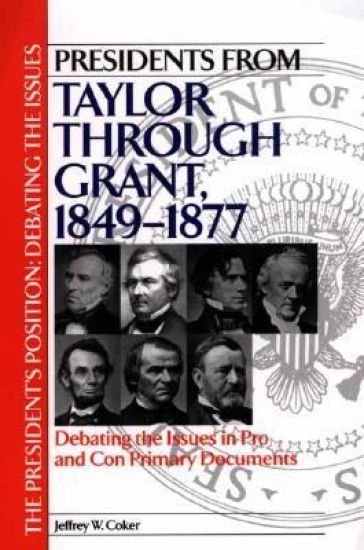
Presidents from Taylor through Grant, 1849-1877

Presidents from Taylor through Grant, 1849-1877

Jeffrey W. Coker

Greenwood Press
2002
sidottu
The years 1849-1877 were among the most pivotal in the nation's history. Over the course of three decades, the United States endured a catastrophic civil war, abolished slavery, expanded westward and added eight states to the Union, and witnessed the beginnings of industrialization. In politics, the era saw the demise of one national party, the birth of another, and the historic leadership of Abraham Lincoln. The country also faced difficult questions of state sovereignty and federal responsibility answered ultimately by secession and war. In short, it was a time of growth, consolidation, tragedy, and triumph for a dynamic and youthful nation. This resource of primary documents and commentary covers the Taylor through Grant administrations by selecting and describing five to ten of the foremost issues of the day and showing the actual text of the president's position along with the opposing viewpoint.The presidents from 1849-1877 were men of varied backgrounds and talents. Northerners and Southerners and even Northerners with Southern sensibilities occupied the White House. The period began and ended with war heroes as presidents; among the other men who served as president were a former textile worker, a country lawyer, and lifelong diplomat. Most of the chief executives struggled and perhaps even failed to overcome the immense challenges placed before them. By providing helpful background information and commentary about the presidents and the issues of the day in addition to the primary sources, this reference guide accurately depicts this fractious time in the country's past and provides an invaluable resources to any student of American history.
Interfering Values in the Nineteenth-Century British Novel
Classic 19th-century British novels that give full expression to complex ethical problems necessarily project the claims of conflicting or interfering values and thus complicate the strategies for resolving the dilemmas they dramatize. This book reasserts the importance of the ethics of reading. It analyzes a developing dialogue between moral philosophers and literary critics, all of whom in their different ways celebrate literature's capacity to confront us with values in conflict. They agree that a key reason for rereading and arguing about classic novels is that they often hypothesize moral dilemmas in more realistically particularized detail than any abstract, rational discussion of ethics could match. But even if novels provide specifically situated explorations of moral issues, this does not mean that they can resolve the problems they dramatize.This book considers interfering values in novels by Austen, Dickens, Eliot, and Hardy and the difficulties in interpreting these works. Each novel has caused protracted disputes among critics because of its heroine and its conflicting values. Different readings of these novels reveal how critics engage in interpretive strategies to defend or deplore what they read. But while they try to articulate and limit the reader's responses, the novels break through the frames they would impose, thus enlarging our awareness of the problems of making judgments.
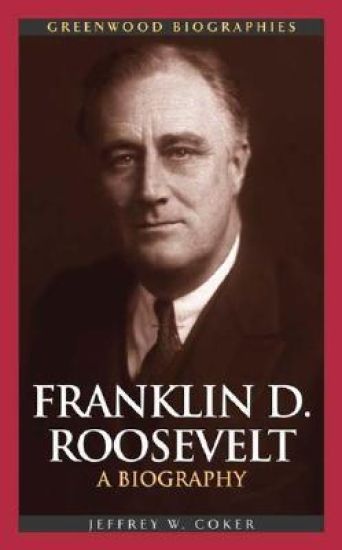
Franklin D. Roosevelt

Franklin D. Roosevelt

Jeffrey W. Coker

Greenwood Press
2005
sidottu
A brief, thorough introduction to the life and times of the most influential and effective president in modern America, this volume is ideal for students researching the Great Depression or World War II. Franklin Delano Roosevelt was one of the best and most influential presidents in U.S. history. Successfully guiding the stricken nation through the Great Depression and World War II, FDR also forever changed the office of the President of the United States and the future course of American politics. The scion of a wealthy upstate New York family, and cousin to President Theodore Roosevelt, Franklin Roosevelt was beloved by ordinary Americans and reviled by the elite as a class traitor for his New Deal policies. Here, FDR's life from childhood to midlife struggle with crippling polio to his death in office in 1944 is detailed, offering both personal and public perspectives. Starting with his privileged prep school and Harvard upbringing, readers follow this masterful politician's development as New York senator and Assistant Secretary of the Navy during World War I. During a brief retreat from the public eye, Roosevelt is struck by polio and regroups personally and professionally. Next comes his triumphant return to national politics and his election to president in 1932. The pivotal years during which he was elected president an unprecedented four times during the Depression and World War II round out the final third of the book. An annotated bibliography and index conclude the work.
Daily Life in Stuart England

Daily Life in Stuart England

Jeffrey L. Forgeng

Greenwood Press
2007
sidottu
England witnessed an overall rising standard of living in the seventeenth century. Still very much an agrarian society, approximately 80% of the population lived in rural settlements, and even citydwellers were in walking distance of farmland. However, as the the century came to an end a growing proportion of the population was living in urban areas. London in particular grew from some 200,000 people in 1600 to 575,000 by 1700 and went from being the 3rd largest city in Europe to the largest. Homes were larger than previously and the wealth of a family could be determined by how many fireplaces were in the home. Clothing was another important facet of Stuart culture and not only protected the wearer against the elements but was a statement of their position in society. Clothing and homes weren't the only marker of social status, even sports and games were often divided along class lines - many in the lower classes played football while the upper-classes were consumed with billiards. Forgeng brings life in Stuart England alive for students and general readers alike. Chapters devoted to the course of life and cycles of time; the living environment; clothing and accoutrements; food and drink; and entertainments detail the day-to-day lives of those living in Stuart England; while the role of women; religion; science and technology; the military; and trade and economy are also explored. Greenwood's Daily Life through History series looks at the everyday lives of common people. This book will illuminate the lives of those living in Stuart England and provide a basis for further research. Black and white photographs, maps and charts are interspersed throughout the text to assist readers. Reference features include a timeline of historic events, sources for further reading, glossary of terms, bibliography and index.
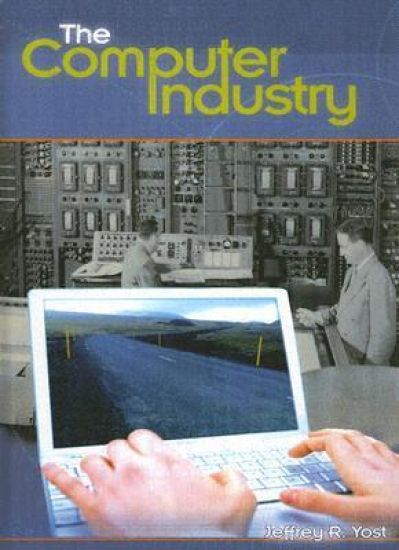
The Computer Industry

The Computer Industry

Jeffrey R. Yost

Greenwood Press
2005
sidottu
Originally a military and scientific computational tool of a small number of government, scientific, and corporate elites in the late 1940s, the computer has evolved significantly in less than 70 years to become a revolutionary technology and the basis for one the largest industries in America. The Internet, email and personal computer have become necessities in most offices and college dorm rooms and many homes. Narrative chapters trace the emergence and development of the computer industry in the United States as seen in the economic, historical, and social context of its times from the early 20th century to the present. From punched cards and tabulating machines to the first digital computer companies in the early 1950s, Yost clearly describes how the concept of the computer was born in the late 1800s but did not evolve into the personal computer until the late 1970s and 1980s. The computer has emerged from a relatively narrow scientific computational machine to a vast data processing and communication technology. Such well-known concepts and terms as IBM and Bill Gates, Apple and Macintosh, and the Internet and the World Wide Web, along with lesser known histories of the mainframe digital computer, the invention of the transistor, software development, supercomputing and minicomputing are discussed. Includes an appendix of over twenty company profiles of key businesses in the industry, a timeline, and suggestions for further reading and research. Ideal for students and general readers interested in the development of computers and related technology, such as its software and hardware, and the history of the computer industry.
Homosexuality and Religion

Homosexuality and Religion

Jeffrey S. Siker

Greenwood Press
2006
sidottu
Few issues today cause more public - and private - debate than the interaction of homosexuality and religion. From the question of gay marriage to the place of gays and lesbians within faith communities, religious leaders and lay members must deal with these issues for now and for years to come. What is the historical position of the major denominations? How are people of faith balancing their beliefs? This encyclopedia provides an overview of the various attitudes and responses that religions have had to the presence of gay, lesbian, bisexual, and transgendered persons within their communities. This is the most comprehensive volume to date on the intersections between religion and homosexuality.The coverage in Homosexuality and Religion: An Encylopedia is comprehensive: Synthetic overview essays examine topics such as Homosexuality, Religion, and the Law, Homosexuality, Religion, and the Biological Sciences, and Homosexuality, Religion, and the Social Sciences. The A-Z entries cover a wide range of religious traditions across the world. From African American Churches to Buddhism, Episcopalians, Hinduism, Islam, Judaism, the Metropolitan Community Church, Mormonism, Presbyterians, the Roman Catholic Church, Seventh Day Adventists, Southern Baptist Churches, Unitarian Universalist, and more. Entries contain significant bibliographic references, including websites, for further study Homosexuality and Religion treats the complete cross-section of religious traditions and their understanding of and approaches to gay, lesbian, bisexual, and transgendered persons.
Science and Technology in Medieval European Life

Science and Technology in Medieval European Life

Jeffrey R. Wigelsworth

Greenwood Press
2006
sidottu
Despite the popular view of medieval Europe as a Dark Age of intellectual stagnation, scientific and technological achievement thrived during this time. As any vacationer to Europe knows, churches and castles remain lasting testaments to the ingenuity of that period in history. Through carefully chosen examples which are presented in easily accessible thematic chapters, Science and Technology in Medieval European Life demonstrates how these two aspects of human achievement, far from being ivory-tower enterprises, impacted the daily life of people in medieval Europe. These topics will also resonate with modern readers in their own daily lives. This reference work begins with an historical introduction that situates medieval science and technology into its social, intellectual and religious context. Among the varied topics found in the chapters are: armor making, waterwheels and waterpower, chimneys, stained glass, communication technology, ship building, medicine both academic and village, mechanical clocks, calendar creation, and astrology. For those interested in pursuing further research into this area of history, the book concludes with a chronology of events, a suggested list of further reading and a glossary.
Hoodoo, Voodoo, and Conjure

Hoodoo, Voodoo, and Conjure

Jeffrey E. Anderson

Greenwood Press
2008
sidottu
Hoodoo, voodoo, and conjure are part of a mysterious world of African American spirituality that has long captured the popular imagination. These magical beliefs and practices have figured in literary works by such authors as Toni Morrison, Alice Walker, and Ishmael Reed, and they have been central to numerous films, such as The Skeleton Key. Written for students and general readers, this book is a convenient introduction to hoodoo, voodoo, and conjure. The volume begins by defining and classifying elements of these spiritual traditions. It then provides a wide range of examples and texts, which illustrate the richness of these beliefs and practices. It also examines the scholarly response to hoodoo, voodoo, and conjure, and it explores the presence of hoodoo, voodoo, and conjure in popular culture. The volume closes with a glossary and bibliography. Students in social studies classes will use this book to learn more about African American magical beliefs, while literature students will enjoy its exploration of primary sources and literary works.
Daily Life in Chaucer's England

Daily Life in Chaucer's England

Jeffrey L. Forgeng; Will Mclean

Greenwood Press
2008
sidottu
Experience the medieval world firsthand in this indispensable hands-on resource, and examine life as it was actually lived. The first book on medieval England to arise out of the living history movement, this volume allows readers to understand-and, if possible, recreate-what life was like for ordinary people in the days of Geoffrey Chaucer. Readers will learn not only what types of games medieval Britons played, what clothes they wore, or what food they ate, but actual rules for games, clothing patterns, and recipes. Written with impeccable detail, this volume examines all aspects of life in medieval England, down to basic fundamentals like nutrition, waste management, and table manners. Parallel situations and quoted material from The Canterbury Tales draw direct connections to Chaucer's work. Student researchers will benefit from a multitude of resources, including primary source sidebars, a chapter on online resources and digital research, information on medieval reenactments, a timeline of events, a glossary of terms, numerous illustrations, and a comprehensive print and nonprint bibliography of accessible sources. Supporting the world history curriculum and offering an interactive supplement to literature curricula, this volume is a must-have for students and interested readers. Detailed and meticulous, this volume examines all aspects of life in medieval England, down to basic fundamentals like nutrition, waste management, and table manners. Readers will explore, seasons, holidays and holy days, the prevalence and normalcy of death, the average workday, crafts and trade, decorating practices, and recreational activities like archery and falconry. Parallel situations and quoted material from The Canterbury Tales also draw direct connections to Chaucer's work.
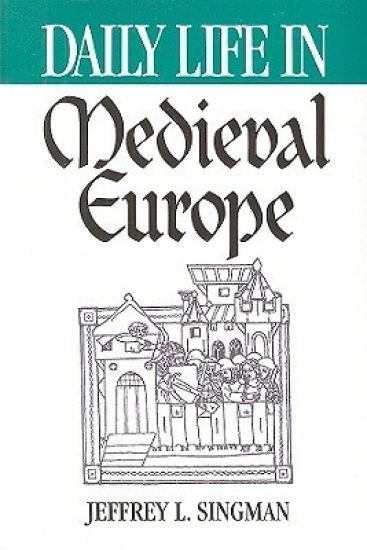
Daily Life in Medieval Europe

Daily Life in Medieval Europe

Jeffrey L. Forgeng

Greenwood Press
1999
nidottu
Explore the Middle Ages, a complex and often misunderstood period in European history, through this vivid examination. Details of everyday living recreate the time period for modern readers, conveying the foreignness of the medieval world while bringing it into focus. The volume provides a two-pronged approach to history beginning with a broad sketch of the general dynamics that shaped the medieval experience while at the same time creating a detailed and clear portrait of what life would have been like for real individuals living in specific settings at the time. The reader is introduced to medieval society in the first three chapters, which include information on the life cycle, material culture, and the economy. These chapters provide an understanding of what people ate, what their social lives were like, what they wore, what kinds of jobs they had, and much more. Following are portraits of life in four specific medieval settings, offering in each case a particular example of the type: the village (Cuxham in Oxfordshire), the castle (Dover), the monastery (Cluny) and the town (Paris). Extensive use of documentary sources from each place sketch the broad contours of the social setting and provide details of the everyday experiences of real individuals. The volume concludes with an exploration of how ordinary people perceived the world in which they lived. Original games, recipes, and music are also provided to round out this rich introduction to life in medieval Europe.
Daily Life in Elizabethan England

Daily Life in Elizabethan England

Jeffrey L. Forgeng

Greenwood Press
2009
sidottu
This book offers an experiential perspective on the lives of Elizabethans—how they worked, ate, and played—with hands-on examples that include authentic music, recipes, and games of the period. Daily Life in Elizabethan England: Second Edition offers a fresh look at Elizabethan life from the perspective of the people who actually lived it. With an abundance of updates based on the most current research, this second edition provides an engaging—and sometimes surprising—picture of what it was like to live during this distant time. Readers will learn, for example, that Elizabethans were diligent recyclers, composting kitchen waste and collecting old rags for papermaking. They will discover that Elizabethans averaged less than 2 inches shorter than their modern British counterparts, and, in a surprising echo of our own age, that many Elizabethan city dwellers relied on carryout meals—albeit because they lacked kitchen facilities. What further sets the book apart is its "hands-on" approach to the past with the inclusion of actual music, games, recipes, and clothing patterns based on primary sources.