More than two months after Robert E. Lee surrendered the Army of Northern Virginia on April 9, 1865, the New York Times reported a most surprising piece of news. On May 12-13, the last battle of the Civil War had been fought at the southernmost tip of Texas-resulting in a Confederate victory. Although Palmetto Ranch did nothing to change the war's outcome, it added the final irony to a conflict replete with ironies, unexpected successes, and lost opportunities. For these reasons, it has become both one of the most forgotten and most mythologized battles of the Civil War.In this book, Jeffrey Hunt draws on previously unstudied letters and court martial records to offer a full and accurate account of the battle of Palmetto Ranch. As he recreates the events of the fighting that pitted the United States' 62nd Colored Troops and the 34th Indiana Veteran Volunteer Infantry against Texas cavalry and artillery battalions commanded by Colonel John S. "Rip" Ford, Hunt lays to rest many misconceptions about the battle. In particular, he reveals that the Texans were fully aware of events in the East-and still willing to fight for Southern independence. He also demonstrates that, far from fleeing the battle in a panic as some have asserted, the African American troops played a vital role in preventing the Union defeat from becoming a rout.
Whether from the perspective of Islamic law's advocates, secularism's partisans, or communities caught in their crossfire, many people see the relationship between Islamic law and secularism as antagonistic and increasingly discordant. In the United States there are calls for "sharia bans" in the courts, in western Europe legal limitations have been imposed on mosques and the wearing of headscarves, and in the Arab Middle East conflicts between secularist old guards and Islamist revolutionaries persist—suggesting that previously unsteady coexistences are transforming into outright hostilities.Jeffrey Redding's exploration of India's non-state system of Muslim dispute resolution—known as the dar-ul-qaza system and commonly referred to as "Muslim courts" or "shariat courts"—challenges conventional narratives about the inevitable opposition between Islamic law and secular forms of governance, demonstrating that Indian secular law and governance cannot work without the significant assistance of non-state Islamic legal actors.
Whether from the perspective of Islamic law's advocates, secularism's partisans, or communities caught in their crossfire, many people see the relationship between Islamic law and secularism as antagonistic and increasingly discordant. In the United States there are calls for "sharia bans" in the courts, in western Europe legal limitations have been imposed on mosques and the wearing of headscarves, and in the Arab Middle East conflicts between secularist old guards and Islamist revolutionaries persist—suggesting that previously unsteady coexistences are transforming into outright hostilities.Jeffrey Redding's exploration of India's non-state system of Muslim dispute resolution—known as the dar-ul-qaza system and commonly referred to as "Muslim courts" or "shariat courts"—challenges conventional narratives about the inevitable opposition between Islamic law and secular forms of governance, demonstrating that Indian secular law and governance cannot work without the significant assistance of non-state Islamic legal actors.
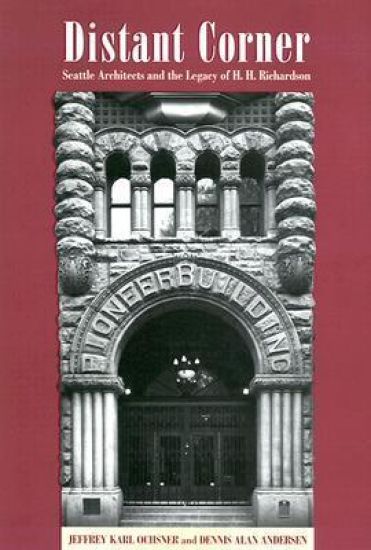
On the afternoon of 6 June 1889, a fire in a cabinet shop in downtown Seattle spread to destroy more than thirty downtown blocks covering 116 acres. Disaster soon became opportunity as Seattle's citizens turned their full energies to rebuilding: widening and regrading streets, laying new water pipes and sewer lines, promulgating a new building ordinance requiring construction in the commercial core, and creating a new professional fire department. A remarkable number of buildings, most located in Seattle's present-day Pioneer Square Historic District, were permitted within a few months and constructed within a few years of the Great Seattle Fire. As a result, the post-fire rebuilding of Seattle offers an extraordinarily focused case study of late-nineteenth-century American urban architecture.Seattle's architects, seeking design solutions that would meet the new requirements, most often found them in the Romanesque Revival mode of the country's most famous architect, Henry Hobson Richardson. In October 1889, Elmer Fisher, Seattle's most prolific post-fire architect, specifically cited the example of H. H. Richardson in describing the city's new buildings. In contrast to Victorian Gothic, Second Empire, and other mid-nineteenth-century architectural styles, Richardson's Romanesque Revival vocabulary of relatively unadorned stone and brick with round-arched openings conveyed strength and stability without elaborate decorative treatment. For Seattle's fire-conscious architects it offered a clear architectural system that could be applied to a variety of building types - including office blocks, warehouses, and hotels - and ensure a safer, progressive, and more visually coherent metropolitan center.Distant Corner examines the brief but powerful influence of H. H. Richardson on the building of America's cities, and his specific influence on the architects charged with rebuilding the post-fire city of Seattle. Chapters on the pre-fire city and its architecture, the technologies and tools available to designers and builders, and the rise of Richardson and his role in defining a new American architecture provide a context for examining the work of the city's architects. Seattle's leading pre- and post-fire architects - William Boone, Elmer Fisher, John Parkinson, Charles Saunders and Edwin Houghton, Willis Ritchie, Emil DeNeuf, Warren Skillings, and Arthur Chamberlin - are profiled. Distant Corner describes the new post-fire commercial core and the emerging network of schools, firehouses, and other public institutions that helped define Seattle's neighborhoods. It closes with the sudden collapse of Seattle's economy in the Panic of 1893 and the ensuing depression that halted the city's building boom, saw the closing of a number of architects' offices, and forever ended the dominance of Romanesque Revival in American architecture.With more than 200 illustrations, detailed endnotes, and an appendix listing the major works of the city's leading architects, Distant Corner offers an analysis of both local and national influences that shaped the architecture of the city in the 1880s and 1890s. It has much to offer those interested in Seattle's early history, the building of the city, and the preservation of its architecture. Because this period of American architecture has received only limited study, it is also of importance for those interested in the influence of Boston-based H. H. Richardson and his contemporaries on American architecture at the end of the nineteenth century.
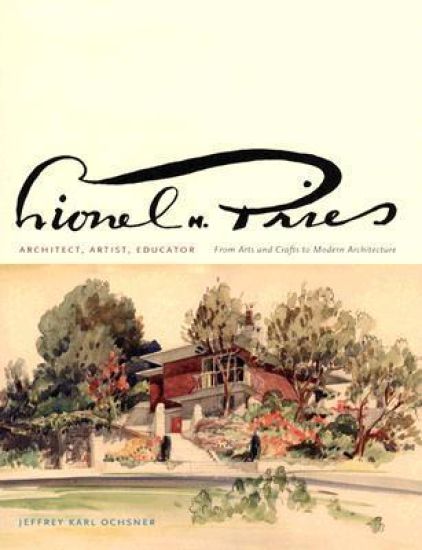
On the evening of May 16, 1958, architecture alumni of the University of Washington converged on Seattle from all over the country. The event was a banquet to celebrate the founding of their alma mater's new College of Architecture and Urban Planning. One by one, the dean introduced the college's faculty members. At the name of Lionel "Spike" Pries, one alumnus recalled, "there was a special charge in the air. . . . Everyone rose and cheered and clapped; it appeared to go on forever." But within six months, Lionel Pries was abruptly and mysteriously gone from the university. After thirty years of service, he lost his job, his major source of income, and, just four years short of retirement, his pension. The official explanation was illness; friends "sensed a large injustice," in what they believed was a dismissal based on Pries's sexual orientation.With Lionel H. Pries, Architect, Artist, Educator: From Arts and Crafts to Modern Architecture, Jeffrey Karl Ochsner redresses that injustice. Pries (1897-1968) was one of the most influential teachers of architecture and design at the University of Washington. Minoru Yamasaki, A. Q. Jones, Fred Bassetti, Wendell Lovett, Victor Steinbrueck, and many other prominent twentieth-century architects were trained by Pries, whose highly artistic style of design helped shape the development of American Modernism in architecture.Ochsner offers an erudite celebration of Pries's professional legacy, tracing his evolution as a designer, architect, teacher, and artist. He shows how Pries absorbed and synthesized disparate influences and movements in design--the California Arts and Crafts and Mission Revival movements, the Ecole des Beaux-Arts tradition, Art Nouveau and Art Deco, Mexican and Japanese motifs, and the International Style and other permutations of the Modern movement.Ochsner paints a vivid portrait of Pries as a teacher and mentor: an unapologetic elitist, one who challenged weak students by openly fostering stronger ones; a classroom autocrat who would fling one student's radio out a second-story window but offer rent-free lodging to another in need. This is a nuanced character study that offers a clear but sympathetic view of a major talent who sometimes clashed with his colleagues and was often in conflict with himself. For some readers, it will be an introduction to Lionel Pries. For others, it will be an occasion to remember him with warmth and gratitude.This comprehensive, lavishly illustrated work will appeal not only to architects and architectural historians, but also to those interested in American studies, the decorative arts, and Northwest history and culture. Its depth of research broadens our understanding of twentieth-century Modernism and of the history of architectural education.
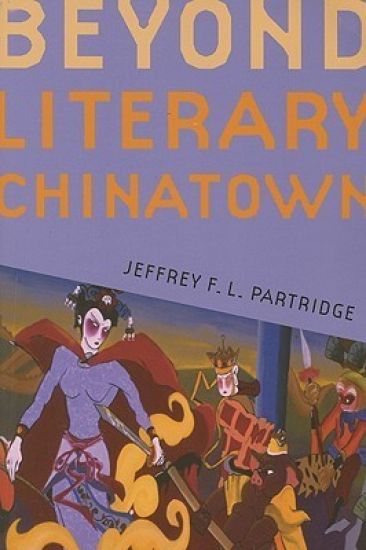
American Book Award Winner (Before Columbus Foundation)The phenomenon of "literary Chinatown"--the ghettoization of Chinese American literature--was produced by the same dynamics of race and representation that ghettoized the Chinese American community into literal Chinatowns. In a 1982 response to reviews of Woman Warrior, Maxine Hong Kingston pinpointed the crux of the matter: "How dare they make their ignorance our inscrutability!"Jeffrey F. L. Partridge examines the dynamic relationship between reader expectations of Chinese American literature and the challenges to these expectations posed by recent Chinese American texts, challenges that push our understanding of a multicultural society to new horizons. Partridge builds on the concept of a "reading horizon"--a set of expectations and assumptions that a reader brings to a text--to explore the crucial interplay between reader, author, and text. Arguing that authors like Kingston, Li-Young Lee, Gish Jen, Shawn Wong, Shirley Geok-lin Lim, and David Wong Louie are aware of their readers' horizons and write to challenge those assumptions, Partridge demonstrates how their writings function as a potent medium of cultural transformation.With attentive readings not only of literary texts but also of book reviews and publishers' marketing materials, Partridge enables us to chart and to understand the changes in Chinese American literature and its reception in the past fifty years. In doing so, he threads a new path forward in the discussion of race and ethnicity in America, one that encompasses the historical valence of multiculturalism and the cross-fertilizing perspectives of postmodern hybridity theory while remaining cognizant of the persistence of racist and racialized thinking in contemporary American society. Beyond Literary Chinatown demonstrates how Chinese American literature has come to negotiate the tensions between the expression of ethnic identity and a resistance to racialization.This important contribution to the growing body of critical works on Asian American literature will be of interest to reception theorists and scholars of American ethnic studies and American literature.
Although there are thousands of community gardens across North America, only Seattle and a few other cities include them in their urban development plans. While the conditions and experiences in Seattle may be unique, the city's programs offer insights and lessons for other cities and communities. Greening Cities, Growing Communities examines:-- Planning and design strategies that support the development of urban community gardens as sustainable places for education and recreation-- Approaches to design processes, construction, and stewardship that utilize volunteer and community participation and create a sense of community-- Programs that enable gardens to serve as a resource for social justice for low income and minority communities, immigrants, and seniors-- Opportunities to develop active-living frameworks by strategically locating community gardens and linking them with other forms of recreation and open space as part of pedestrian-accessible networksGreening Cities, Growing Communities focuses on six community gardens in Seattle where there has been a strong network of knowledge and resources. These case studies reveal the capacity of community gardens to serve larger community issues, such as food security; urban ecosystem health; demonstration of sustainable gardening and building practices; active living and pedestrian-friendly neighborhoods; and equity concerns. The authors also examine how landscape architects, planners, and allied design professionals can better interact in the making of these unique urban open spaces, and how urban community gardens offer opportunities for professionals to have a more prominent role in community activism and urban sustainability.
Furniture Studio explores the origins, methods, results, and influence of the unique and highly successful furniture design and fabrication studios offered by the University of Washington Department of Architecture. The furniture program, initiated by Andris Vanags, is an immersion into the role of materials, design, and making in architectural education. Students directly engage the physical properties of materials, and the knowledge gained through this engagement enriches the design and fabrication process. The experiences of its graduates reveal that the studio fosters creative thinking that truly integrates design and making.Ochsner presents historical background to shop-based courses, including furniture studio; traces the careers of four representative graduates of the program; and suggests implications from this program for architectural education and individual achievement beyond the University of Washington. Eleven students and the projects they created in the winter 2009 studio are profiled, and the book contains a fully illustrated catalogue of exemplary student projects from 1989 to the present. Illustrations and descriptions throughout the book showcase the heirloom-quality projects created by the students, many of which won awards in competitions.
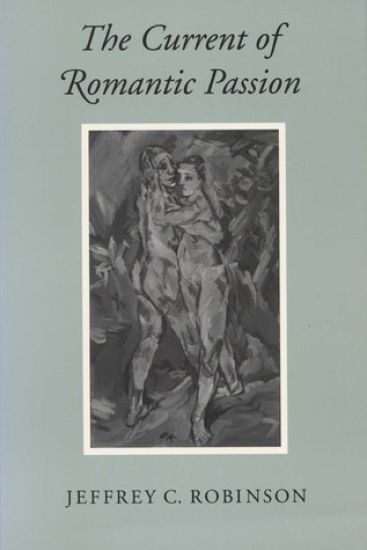
Probing the ambivalence of Romantic writers on the subjects of "passion" and "beauty", the author shows how this ambivalence is also central to the experience of the modern critic in Western society. In doing so, he also explores the problematic place of passion and beauty in Romantic radicalism.
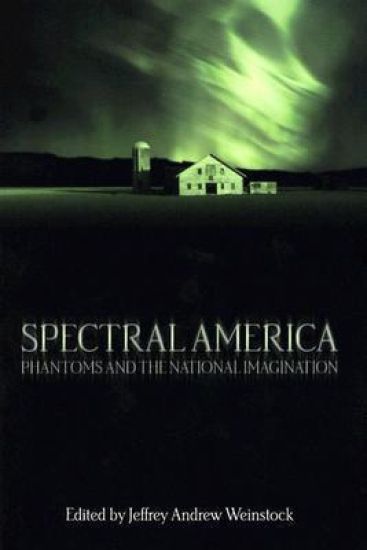
From essays about the Salem witch trials to literary uses of ghosts by Twain, Wharton, and Bierce to the cinematic blockbuster The Sixth Sense, this book is the first to survey the importance of ghosts and hauntings in American culture across time. From the Puritans' conviction that a thousand preternatural beings appear every day before our eyes, to today's resurgence of spirits in fiction and film, the culture of the United States has been obsessed with ghosts. In each generation, these phantoms in popular culture reflect human anxieties about religion, science, politics, and social issues.
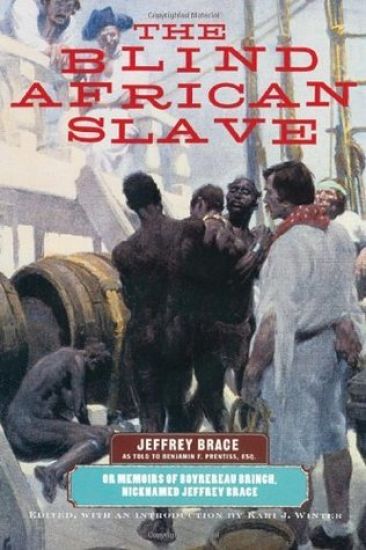
Born in West Africa around 1742, Jeffrey Brace was captured by slave traders at sixteen and shipped to Barbados, where he was sold. After fighting as an enslaved sailor in the Seven Years War, Brace was taken to Connecticut and sold again. Brace later enlisted in the Continental Army in hopes of winning his manumission. After military service, he was honorably discharged and was freed from slavery. In 1784, he moved to Vermont, the first state to make slavery illegal. There he married, bought a farm, and raised a family. Although literate, he was blind when he narrated his life story to an antislavery lawyer, Benjamin Prentiss. Brace died in 1827, a well-respected abolitionist. In this first new edition since 1810, Kari J. Winter supplements our knowledge of Brace's life and times with original documents and new material.
One bitterly cold winter afternoon, a nine-month-old colt—extremely weak, starving, left to die—was frozen to the rock-hard white landscape of a northern Wisconsin pasture. His whinny for help barely carried through thirty-mile-an-hour winds lashing snow and ice against his thin coat. But somewhere inside him a light refused to go out.The colt's call for help was answered, and that light inspired a worldwide response to his story. The struggle of the little colt, called Windchill by his rescuers, was reported widely, and soon 1.2 million people were following Windchill's progress on a blog and webcam.Warmed by Windchill tells how Jeffrey L. Tucker, owner of nearby Raindance Farms, and Kathi Davis, owner of a horse training operation co-located at Raindance, rescued and cared for the colt, aided by an outpouring of assistance. Donations of money, feed, blankets, and other supplies streamed in as round-the-clock volunteers tried to save Windchill. Warmed by Windchill is both heartening and heartbreaking.
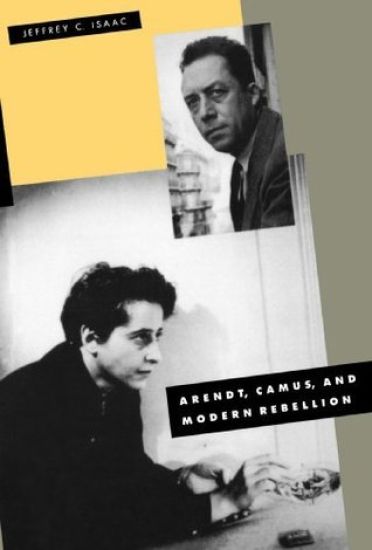
The works of Hannah Arendt and Albert Camus--two of the most compelling political thinkers of the "resistance generation" that lived through World War II--can still provide penetrating insights for contemporary political reflection. Jeffrey C. Isaac offers new interpretations of these writers, viewing both as engaged intellectuals who grappled with the possibilities of political radicalism in a world in which liberalism and Marxism had revealed their inadequacy by being complicit in the rise of totalitarianism.According to Isaac, self-styled postmodern writers who proclaim the death of grandiose ideologies often fail to recognize that such thinkers as Camus and Arendt had already noted this. But unlike many postmodernists, these two sought to preserve what was worthy in modern humanism--the idea of a common human condition and a commitment to human rights and the dignity of individuals. Isaac shows that both writers advanced the idea of a democratic civil society made up of self-limiting groups. Although they criticized the typical institutions of mass democratic politics, they endorsed alternative forms of local and international organization that defy the principle of state sovereignty. Isaac also shows how Arendt's writings on the Middle East, and Camus's on Algeria, urged the creation of such institutions. The vision of a "rebellious politics" that Arendt and Camus shared is of great relevance to current debates in democratic theory and to the transformations taking place in Europe and the states of the former Soviet Union.
The remarkable, peaceful end of the Cold War dramatically—and unexpectedly—transformed international politics toward the end of the twentieth century. At the heart of this amazing change was the struggle over new and old ideas. Drawing on rich data from interviews with key Soviet architects of "new thinking" and of Gorbachev-era policy reforms, Jeffrey Checkel offers an absorbing historical narrative of political change in the late Soviet period, along with theoretical insights into the effect of ideas on state behavior. International structure and domestic institutions account for variations from country to country in how ideas influence state policy, Checkel argues. While a changing international political environment creates opportunities for the carriers of new ideas, these entrepreneurs must operate within domestic institutional settings that sharply affect their ability to influence policy. In the late Soviet period, entrenched assumptions about international politics were close to breaking down, creating a rare opportunity for new thinking. Checkel draws on this analysis of policy change in Soviet Moscow at the end of the Cold War, as well as in post-Soviet Russia, to illuminate the role of ideas in international political change.
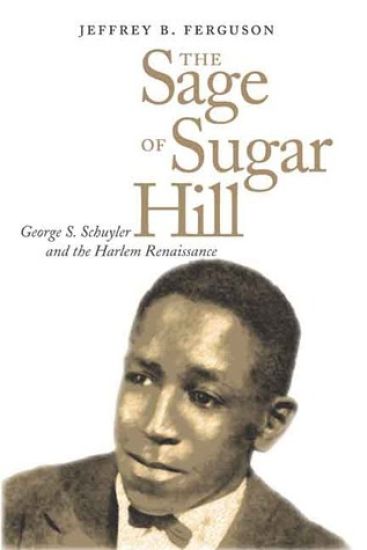
This book is the first to focus a bright light on the life and early career of George S. Schuyler, one of the most important intellectuals of the Harlem Renaissance. A popular journalist in black America, Schuyler wielded a sharp, double-edged wit to attack the foibles of both blacks and whites throughout the 1920s. Jeffrey B. Ferguson presents a new understanding of Schuyler as public intellectual while also offering insights into the relations between race and satire during a formative period of African-American cultural history.Ferguson discusses Schuyler’s controversial career and reputation and examines the paradoxical ideas at the center of his message. The author also addresses Schuyler’s drift toward the political right in his later years and how this has affected his legacy.
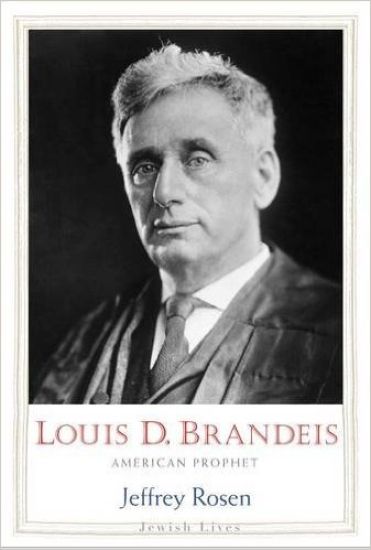
From the prizewinning Jewish Lives series, a riveting new examination of Supreme Court Justice Louis D. Brandeis, the leading progressive justice of his era "Concise and sympathetic. . . . Mr. Rosen persuasively makes his case that recognizing Brandeis as an 'American prophet' . . . 'seems more important today than ever.'"—Adam Cohen, New York Times "An ideal introduction to Brandeis’ life for general readers."—Booklist (starred review) According to Jeffrey Rosen, Louis D. Brandeis was “the Jewish Jefferson,” the greatest critic of what he called “the curse of bigness,” in business and government, since the author of the Declaration of Independence. Published to commemorate the hundredth anniversary of his Supreme Court confirmation on June 1, 1916, Louis D. Brandeis: American Prophet argues that Brandeis was the most farseeing constitutional philosopher of the twentieth century. In addition to writing the most famous article on the right to privacy, he also wrote the most important Supreme Court opinions about free speech, freedom from government surveillance, and freedom of thought and opinion. And as the leader of the American Zionist movement, he convinced Woodrow Wilson and the British government to recognize a Jewish homeland in Palestine. Combining narrative biography with a passionate argument for why Brandeis matters today, Rosen explores what Brandeis, the Jeffersonian prophet, can teach us about historic and contemporary questions involving the Constitution, monopoly, corporate and federal power, technology, privacy, free speech, and Zionism. About Jewish Lives: Jewish Lives is a prizewinning series of interpretative biography designed to explore the many facets of Jewish identity. Individual volumes illuminate the imprint of Jewish figures upon literature, religion, philosophy, politics, cultural and economic life, and the arts and sciences. Subjects are paired with authors to elicit lively, deeply informed books that explore the range and depth of the Jewish experience from antiquity to the present. In 2014, the Jewish Book Council named Jewish Lives the winner of its Jewish Book of the Year Award, the first series ever to receive this award. More praise for Jewish Lives: "Excellent" –New York Times "Exemplary" –Wall Street Journal "Distinguished" –New Yorker "Superb" –The Guardian
This indispensable monograph synthesizes current debates and offers a new historical and literary analysis of the book of Deuteronomy “In this exciting addition to the Anchor Yale Bible Reference Library, Stackert offers something genuinely new: he brilliantly weaves together biblical scholarship, cuneiform literature, and contemporary literary theory. This clearly written and engaging volume examines how the concept of scripture shaped ancient readers’ understanding of Deuteronomy.”—Bernard M. Levinson, University of Minnesota The book of Deuteronomy introduces and develops many of the essential ideas, events, and texts of both Judaism and Christianity, and it has thus been a resource—and in some instances even a starting point—for investigations of themes and concepts beyond it. In this volume, Jeffrey Stackert deftly guides the reader through major topics in the interpretation of Deuteronomy and its relationship to the other four pentateuchal books. Considering subjects such as the relationship between law and narrative, the role of Deuteronomy in Israel’s history, its composition and reception history, the influence of cuneiform legal and treaty traditions, textual and archaeological evidence from the Levant and Mesopotamia, and the status of Deuteronomy within the larger biblical canon, this book introduces ongoing debates surrounding the book of Deuteronomy and offers a contemporary evaluation of the latest textual and material evidence.
In this bold and timely work, law professor Jeffrey Shulman argues that the United States Constitution does not protect a fundamental right to parent. Based on a rigorous reconsideration of the historical record, Shulman challenges the notion, held by academics and the general public alike, that parental rights have a long-standing legal pedigree. What is deeply rooted in our legal tradition and social conscience, Shulman demonstrates, is the idea that the state entrusts parents with custody of the child, and it does so only as long as parents meet their fiduciary duty to serve the developmental needs of the child. Shulman’s illuminating account of American legal history is of more than academic interest. If once again we treat parenting as a delegated responsibility—as a sacred trust, not a sacred right—we will not all reach the same legal prescriptions, but we might be more willing to consider how time-honored principles of family law can effectively accommodate the evolving interests of parent, child, and state.
Albrecht Dürer (1471–1528) was hailed in his lifetime as a founder of the Northern Renaissance, and his work revolutionized the art of printmaking. Dürer was also the first artist outside Italy to leave behind a large body of writing. Contemporaries and succeeding generations added their accounts of him to this documentary legacy. Jeffrey Ashcroft’s new book provides the first English translation of the whole corpus of Dürer’s writings; the legal, financial, and administrative documentation of his life and work; and what others wrote about him during his life and in the following century. Translations of primary documents are accompanied by extensive commentary, providing Anglophone scholars access to German-language research. This unique combination of documentary evidence, current research, and exhaustive bibliography will doubtless become a definitive source for students and scholars of Dürer and his work, as well as for historians of early modern culture, language, and literature.
The art and craft of playwriting as explored in candid conversations with some of the most important contemporary dramatists Edward Albee, Lanford Wilson, Lynn Nottage, A. R. Gurney, and a host of other major creative voices of the theater discuss the art of playwriting, from inspiration to production, in a volume that marks the tenth anniversary of the Yale Drama Series and the David Charles Horn Foundation Prize for emerging playwrights. Jeffrey Sweet, himself an award-winning dramatist, hosts a virtual roundtable of perspectives on how to tell stories onstage featuring extensive interviews with a gallery of gifted contemporary dramatists. In their own words, Arthur Kopit, Marsha Norman, Christopher Durang, David Hare, and many others offer insights into all aspects of the creative writing process as well as their personal views on the business, politics, and fraternity of professional theater. This essential work will give playwrights and playgoers alike a deeper and more profound appreciation of the art form they love.