Kirjojen hintavertailu. Mukana 11 717 486 kirjaa ja 12 kauppaa.

Kirjahaku

Etsi kirjoja tekijän nimen, kirjan nimen tai ISBN:n perusteella.

1000 tulosta hakusanalla Jennifer Awes Freeman

Parliament Under the Tudors

Parliament Under the Tudors

Jennifer Loach

Clarendon Press
1991
sidottu
This is an examination of the role and development of parliament throughout the Tudor period, now a central topic in the study of Tudor history. Jennifer Loach examines the constitutional position, political activities, and relationships of the two houses of parliament from the late Middle Ages until the accession of the Stuarts. She explores the growing importance of the Commons and examines the ways in which the Tudor monarchs, from Henry VII to Elizabeth I, attempted to exert their royal power. Topics covered include elections, patronage, and constitutional issues such as the succession to the throne; the fundamental part played by parliament in taxation and other financial matters; the social and economic background; and the vexed and vital question of religion. Thoroughly grounded in contemporary sources, this is a comprehensive and lucid account, which will be invaluable to students of Tudor history.
The Future

The Future

Jennifer M. Gidley

Oxford University Press
2017
nidottu
From the beginning of time, humans have been driven by both a fear of the unknown and a curiosity to know. We have always yearned to know what lies ahead, whether threat or safety, scarcity or abundance. Throughout human history, our forebears tried to create certainty in the unknown, by seeking to influence outcomes with sacrifices to gods, preparing for the unexpected with advice from oracles, and by reading the stars through astrology. As scientific methods improve and computer technology develops we become ever more confident of our capacity to predict and quantify the future by accumulating and interpreting patterns form the past, yet the truth is there is still no certainty to be had. In this Very Short Introduction Jennifer Gidley considers some of our most burning questions: What is "the future "?; Is the future a time yet to come?; Or is it a utopian place?; Does the future have a history?; Is there only one future or are there many possible futures? She asks if the future can ever be truly predicted or if we create our own futures - both hoped for and feared - by our thoughts, feelings, and actions, and concludes by analysing how we can learn to study the future. ABOUT THE SERIES: The Very Short Introductions series from Oxford University Press contains hundreds of titles in almost every subject area. These pocket-sized books are the perfect way to get ahead in a new subject quickly. Our expert authors combine facts, analysis, perspective, new ideas, and enthusiasm to make interesting and challenging topics highly readable.
The Lazy Universe

The Lazy Universe

Jennifer Coopersmith

Oxford University Press
2017
sidottu
This is a rare book on a rare topic: it is about 'action' and the Principle of Least Action. A surprisingly well-kept secret, these ideas are at the heart of physical science and engineering. Physics is well known as being concerned with grand conservatory principles (e.g. the conservation of energy) but equally important is the optimization principle (such as getting somewhere in the shortest time or with the least resistance). The book explains: why an optimization principle underlies physics, what action is, what `the Hamiltonian' is, and how new insights into energy, space, and time arise. It assumes some background in the physical sciences, at the level of undergraduate science, but it is not a textbook. The requisite derivations and worked examples are given but may be skim-read if desired. The author draws from Cornelius Lanczos's book "The Variational Principles of Mechanics" (1949 and 1970). Lanczos was a brilliant mathematician and educator, but his book was for a postgraduate audience. The present book is no mere copy with the difficult bits left out - it is original, and a popularization. It aims to explain ideas rather than achieve technical competence, and to show how Least Action leads into the whole of physics.
Lying, Misleading, and What is Said

Lying, Misleading, and What is Said

Jennifer Mather Saul

Oxford University Press
2015
nidottu
Many people (both philosophers and not) find it very natural to think that deceiving someone in a way that avoids lying--by merely misleading--is morally preferable to simply lying. Others think that this preference is deeply misguided. But all sides agree that there is a distinction. In Lying, Misleading, and What is Said, Jennifer Saul undertakes a close examination of the lying/misleading distinction. Saul begins by using this very intuitive distinction to shed new light on entrenched debates in philosophy of language over notions like what is said. Next, she tackles the puzzling but widespread moral preference for misleading over lying, and arrives at a new view regarding the moral significance of the distinction. Finally, Saul draws her conclusions together to examine a range of historically important and interesting cases, from a consideration of modern politicians to the early Jesuits.
Financial Accounting, Reporting, and Analysis

Financial Accounting, Reporting, and Analysis

Jennifer Maynard

Oxford University Press
2017
nidottu
Are you looking for an engaging, decision-focussed approach to financial reporting that encourages students to develop their interpretative skills? Building on the success of the first edition, this textbook takes a 'how, why, what' approach to financial accounting, interwoven in each chapter. From chapter one, students understand how financial information is prepared and presented, why it is prepared and presented in this way, and what the resulting financial information means for users. Designed for students taking a step beyond their introductory financial accounting training, the textbook equips them with all the key tools they will require when they enter professional practice. Reflective of the latest International Financial Reporting Standards (IFRS) and International Accounting Standards (IAS), this textbook delivers concise, clear explanations of all the key issues in accounting standards that students need to know. Content maps to professional accounting body syllabi, making this the perfect choice for accounting courses which offer exemptions. Chapters are rich with 3 types of examples to enhance understanding: - Illustrative examples of real-world situations; - Worked examples demonstrating the calculation of figures required for financial statements; - Extracts from company annual reports demonstrate how the theory relates to financial reporting in practice. More engaging, more balanced, and more applied than other offerings, this is exactly the textbook your financial reporting students need! Extensive online resources accompany the textbook and include: For students: · Solutions to all the end-of-chapter questions in the book including walkthroughs of solutions to key questions; · Additional graded questions including professional body questions; · Additional interpretative case studies based on real-life companies; · A guided tour through a company report · Specific study skills tips for accounting students For lecturers: · Customisable PowerPoint slides · Solutions to all the additional online questions · Outline solutions to the interpretative case studies · Group discussion questions
Rape and the Legal Process

Rape and the Legal Process

Jennifer Temkin

Oxford University Press
2002
nidottu
Public disquiet has been intermittently but vehemently expressed about the crime of rape and the way it is handled by the criminal justice system. But in the 21st century the legal process still fails to provide an adequate response to sexual violation and abuse. This text examines some of the difficulties which this crime presents and analyses in detail how the legal system could and should be addressing them. Central issues considered include the experience of rape victims, their treatment by the police and the courts and the inadequacies of the present law and the rules of evidence surrounding it. Changes enacted in many different jurisdictions, such as schemes for legal representation for victims of sexual violence are evaluated.
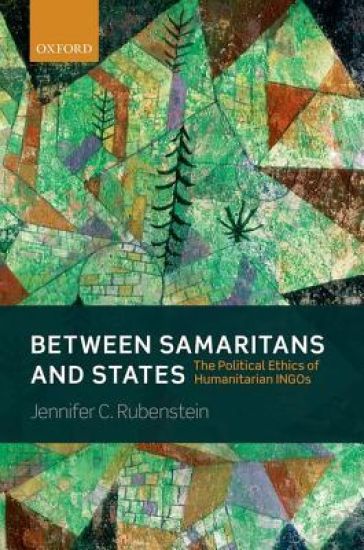
Between Samaritans and States

Between Samaritans and States

Jennifer Rubenstein

Oxford University Press
2016
nidottu
This book provides the first book-length, English-language account of the political ethics of large-scale, Western-based humanitarian INGOs, such as Oxfam, CARE, and Doctors Without Borders. These INGOs are often either celebrated as 'do-gooding machines' or maligned as incompetents 'on the road to hell'. In contrast, this book suggests the picture is more complicated. Drawing on political theory, philosophy, and ethics, along with original fieldwork, this book shows that while humanitarian INGOs are often perceived as non-governmental and apolitical, they are in fact sometimes somewhat governmental, highly political, and often 'second-best' actors. As a result, they face four central ethical predicaments: the problem of spattered hands, the quandary of the second-best, the cost-effectiveness conundrum, and the moral motivation trade-off. This book considers what it would look like for INGOs to navigate these predicaments in ways that are as consistent as possible with democratic, egalitarian, humanitarian and justice-based norms. It argues that humanitarian INGOs must regularly make deep moral compromises. In choosing which compromises to make, they should focus primarily on their overall consequences, as opposed to their intentions or the intrinsic value of their activities. But they should interpret consequences expansively, and not limit themselves to those that are amenable to precise cost-benefit analysis. The book concludes by explaining the implications of its 'map' of humanitarian INGO political ethics for individual donors to INGOs, and for how we all should conceive of INGOs' role in addressing pressing global problems.
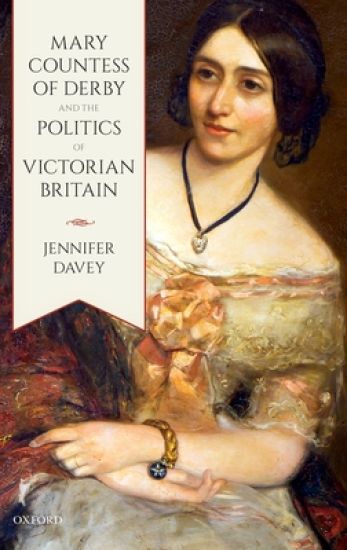
Mary, Countess of Derby, and the Politics of Victorian Britain
Lady Mary Derby (1824-1900) occupied a pivotal position in Victorian politics, yet her activities have largely been overlooked or ignored. This volume places Mary back into the political position she occupied and offers the first dedicated account of her career. Based on extensive archival research, including hitherto neglected or lost sources, this study reconstructs the political worlds Mary inhabited. Her political landscape was dominated by the machinations and intrigues of high politics and diplomacy. As Jennifer Davey uncovers, Mary's political skill and acumen were highly valued by leading politicians of the day, including Benjamin Disraeli and William Gladstone, and she played a significant role in many of the key events of the mid-Victorian era. This included the passing of the Second Reform Act, the formation of Disraeli's 1874 Government, the Eastern Crisis of 1875-1878, and Gladstone's 1880-1885 Government. By exploring how one woman was able to exercise influence at the heart of Victorian politics, this book considers what Mary's career tells us about the nature of political life in the mid-nineteenth century. It sheds new light on the connections between informal and formal political culture, incorporating the politics of the home, letter-writing, and social relations into a consideration of the politics of Parliament and Government. It provides a rich investigation of how a woman, with few legal or constitutional rights, was able to become a significant figure in mid-Victorian political life.
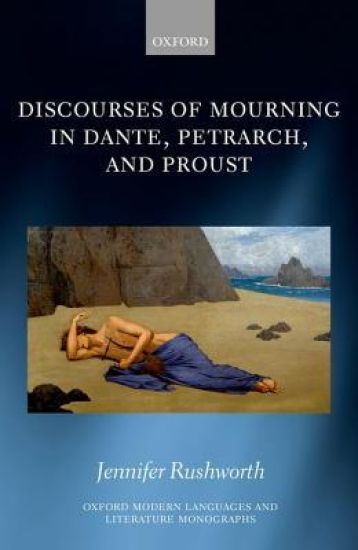
Discourses of Mourning in Dante, Petrarch, and Proust

Discourses of Mourning in Dante, Petrarch, and Proust

Jennifer Rushworth

Oxford University Press
2016
sidottu
This book brings together, in a novel and exciting combination, three authors who have written movingly about mourning: two medieval Italian poets, Dante Alighieri and Francesco Petrarca, and one early twentieth-century French novelist, Marcel Proust. Each of these authors, through their respective narratives of bereavement, grapples with the challenge of how to write adequately about the deeply personal and painful experience of grief. In Jennifer Rushworth's analysis, discourses of mourning emerge as caught between the twin, conflicting demands of a comforting, readable, shared generality and a silent, solitary respect for the uniqueness of any and every experience of loss. Rushworth explores a variety of major questions in the book, including: what type of language is appropriate to mourning? What effect does mourning have on language? Why and how has the Orpheus myth been so influential on discourses of mourning across different time periods and languages? Might the form of mourning described in a text and the form of closure achieved by that same text be mutually formative and sustaining? In this way, discussion of the literary representation of mourning extends to embrace topics such as the medieval sin of acedia, the proper name, memory, literary epiphanies, the image of the book, and the concept of writing as promise. In addition to the three primary authors, Rushworth draws extensively on the writings of Sigmund Freud, Julia Kristeva, Jacques Derrida, and Roland Barthes. These rich and diverse psychoanalytical and French theoretical traditions provide terminological nuance and frameworks for comparison, particularly in relation to the complex term melancholia.
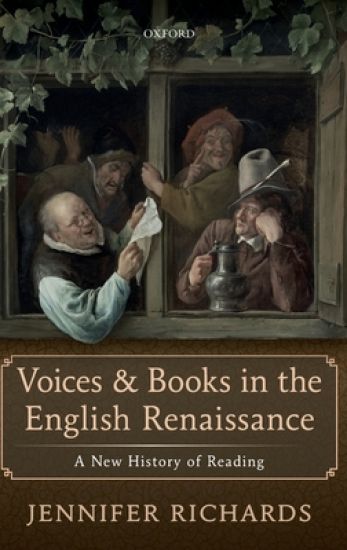
Voices and Books in the English Renaissance

Voices and Books in the English Renaissance

Jennifer C. Richardson

Oxford University Press
2019
sidottu
Voices and Books in the English Renaissance offers a new history of reading that focuses on the oral reader and the voice- or performance-aware silent reader, rather than the historical reader, who is invariably male, silent, and alone. It recovers the vocality of education for boys and girls in Renaissance England, and the importance of training in pronuntiatio (delivery) for oral-aural literary culture. It offers the first attempt to recover the voice--and tones of voice especially--from textual sources. It explores what happens when we bring voice to text, how vocal tone realizes or changes textual meaning, and how the literary writers of the past tried to represent their own and others' voices, as well as manage and exploit their readers' voices. The volume offers fresh readings of key Tudor authors who anticipated oral readers including Anne Askew, William Baldwin, and Thomas Nashe. It rethinks what a printed book can be by searching the printed page for vocal cues and exploring the neglected role of the voice in the printing process. Renaissance printed books have often been misheard and a preoccupation with their materiality has led to a focus on them as objects. However, Renaissance printed books are alive with possible voices, but we will not understand this while we focus on the silent reader.
Masculine Plural

Masculine Plural

Jennifer Ingleheart

Oxford University Press
2018
sidottu
The Classics were core to the curriculum and ethos of the intensely homosocial Victorian and Edwardian public schools, yet ancient homosexuality and erotic pedagogy were problematic to the educational establishment, which expurgated classical texts with sexual content. This volume analyses the intimate and uncomfortable nexus between the Classics, sex, and education primarily through the figure of the schoolmaster Philip Gillespie Bainbrigge (1890-1918), whose clandestine writings not only explore homoerotic desires but also offer insightful comments on Classical education. Now a marginalized figure, Bainbrigge's surviving works - a verse drama entitled Achilles in Scyros featuring a cross-dressing Achilles and a Chorus of lesbian schoolgirls, and a Latin dialogue between schoolboys - vividly demonstrate the queer potential of Classics and are marked by a celebration of the pleasures of sex and a refusal to apologize for homoerotic desire. Reprinted here in their entirety, they are accompanied by chapters setting them in their social and literary context, including their parallels with the writings of Bainbrigge's contemporaries and near contemporaries, such as John Addington Symonds, E. M. Forster, and A. E. Housman. What emerges is a provocative new perspective on the history of sexuality and the place of the Classics within that history, which demonstrates that a highly queer version of Classics was possible in private contexts.
Philo of Alexandria and the Construction of Jewishness in Early Christian Writings
Philo of Alexandria and the Construction of Jewishness in Early Christian Writings investigates portrayals of the first-century philosopher and exegete Philo of Alexandria, in the writings of Clement of Alexandria, Origen, and Eusebius. It argues that early Christian invocations of Philo are best understood not as attempts simply to claim an illustrious Jew for the Christian fold, but as examples of ongoing efforts to define the continuities and distinctive features of Christian beliefs and practices in relation to those of the Jews. This study takes as its starting point the curious fact that none of the first three Christians to mention Philo refer to him unambiguously as a Jew. Clement, the first in the Christian tradition to openly cite Philo's works, refers to him twice as a Pythagorean. Origen, who mentions Philo by name only three times, makes far more frequent reference to him in the guise of an anonymous "one who came before us." Eusebius, who invokes Philo on many more occasions than does Clement or Origen, most often refers to Philo as a Hebrew. These epithets construct Philo as an alternative "near-other" to both Christians and Jews, through whom ideas and practices may be imported to the former from the latter, all the while establishing boundaries between the "Christian" and "Jewish" ways of life. The portraits of Philo offered by each author reveal ongoing processes of difference-making and difference-effacing that constituted not only the construction of the Jewish "other," but also the Christian "self."
Imagination

Imagination

Jennifer Gosetti-Ferencei

Oxford University Press
2023
nidottu
Very Short Introductions: Brilliant, Sharp, Inspiring Imagination: A Very Short Introduction explores imagination as a cognitive power and an essential dimension of human flourishing, demonstrating how imagination plays multiple roles in human cognition and shapes humanity in profound ways. Examining philosophical, evolutionary, and literary perspectives on imagination, the author shows how this facility, while potentially distorting, both frees us from immediate reality and enriches our sense of it, making possible our experience of a meaningful world. Long regarded by philosophers as an elusive and mysterious capacity of the human mind, imagination has been the subject of extraordinary ambivalence, described as both dangerous and divine, as merely peripheral to rationality and as essential to all thinking. Drawing on philosophy, aesthetics, literary and cognitive theory as well as the human sciences, this book engages the dramatic conceptual history of imagination together with contemporary explanations of its role in cognition to explain its importance in everyday life as well as the exquisite creativity of the arts, scientific discovery, and invention. Engaging examples from cave paintings to modern painting, performance art to pop art, physics to phenomenology, technological inventions to literary worlds, the Nazca geoglyphs to dramatic theatre, poetry, and jazz improvisation, the author illuminates with clarity and vision the philosophy of imagination and the stakes of its involvement in human thinking. ABOUT THE SERIES: The Very Short Introductions series from Oxford University Press contains hundreds of titles in almost every subject area. These pocket-sized books are the perfect way to get ahead in a new subject quickly. Our expert authors combine facts, analysis, perspective, new ideas, and enthusiasm to make interesting and challenging topics highly readable.
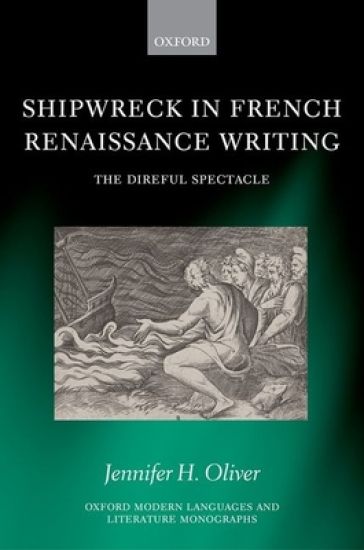
Shipwreck in French Renaissance Writing

Shipwreck in French Renaissance Writing

Jennifer H. Oliver

Oxford University Press
2019
sidottu
In the sixteenth century, a period of proliferating transatlantic travel and exploration, and, latterly, religious civil wars in France, the ship is freighted with political and religious, as well as poetic, significance; symbolism that reaches its height when ships--both real and symbolic--are threatened with disaster. The Direful Spectacle argues that, in the French Renaissance, shipwreck functions not only as an emblem or motif within writing, but as a part, or the whole, of a narrative, in which the dynamics of spectatorship and of co-operation are of constant concern. The possibility of ethical distance from shipwreck--imagined through the Lucretian suave mari magno commonplace--is constantly undermined, not least through a sustained focus on the corporeal. This book examines the ways in which the ship and the body are made analogous in Renaissance shipwreck writing; bodies are described and allegorized in nautical terms, and, conversely, ships themselves become animalized and humanized. Secondly, many texts anticipate that the description of shipwreck will have an affect not only on its victims, but on those too of spectators, listeners, and readers. This insistence on the physicality of shipwreck is also reflected in the dynamic of bricolage that informs the production of shipwreck texts in the Renaissance. The dramatic potential of both the disaster and the process of rebuilding is exploited throughout the century, culminating in a shipwreck tragedy. By the late Renaissance, shipwreck is not only the end, but often forms the beginning of a story.
Superior Women

Superior Women

Jennifer C. Edwards

Oxford University Press
2019
sidottu
Superior Women examines the claims of abbesses of the abbey of Sainte-Croix in medieval Poitiers to authority from the abbey's foundation to its 1520 reform. These women claimed to hold authority over their own community, over dependent chapters of male canons, and over extensive properties in Poitou; male officials such as the king of France and the pope repeatedly supported these claims. To secure this support, the abbesses relied on two strategies that the abbey's founder, the sixth-century Saint Radegund, established: they documented support from a network of allies made up of powerful secular and ecclesiastical officials, and they used artefacts left from Radegund's life to shape her cult and win new patrons and allies. Abbesses across the 900 years of this study routinely turned to these strategies successfully when faced with conflict from dependents, or more local officials such as the bishop of Poitiers. Sainte-Croix's nuns proved adept at tailoring these strategies to shifting historical contexts, turning from Frankish bishops to the kings of Frankia, then to the Pope and finally to the King of France as former allies became unavailable to them. The book demonstrates respectful cooperation between men and monastic women, and more extensive respect for female monastic authority than scholars typically recognize. Chapters focus on the cult's manuscripts, church decoration, procession, jurisdictions between cult institutions, reform, and rebellion.
Literature and Law in the Era of Magna Carta

Literature and Law in the Era of Magna Carta

Jennifer Jahner

Oxford University Press
2019
sidottu
The monograph series Oxford Studies in Medieval Literature and Culture showcases the plurilingual and multicultural quality of medieval literature and actively seeks to promote research that not only focuses on the array of subjects medievalists now pursue in literature, theology, and philosophy, in social, political, jurisprudential, and intellectual history, the history of art, and the history of science but also that combines these subjects productively. It offers innovative studies on topics that may include, but are not limited to, manuscript and book history; languages and literatures of the global Middle Ages; race and the post-colonial; the digital humanities, media and performance; music; medicine; the history of affect and the emotions; the literature and practices of devotion; the theory and history of gender and sexuality, ecocriticism and the environment; theories of aesthetics; medievalism. ^l Literature and Law in the Era of Magna Carta traces processes of literary training and experimentation across the early history of the English common law, from its beginnings in the reign of Henry II to its tumultuous consolidations under the reigns of John and Henry III. The period from the mid-twelfth through the thirteenth centuries witnessed an outpouring of innovative legal writing in England, from Magna Carta to the scores of statute books that preserved its provisions. An era of civil war and imperial fracture, it also proved a time of intensive self-definition, as communities both lay and ecclesiastic used law to articulate collective identities. Literature and Law in the Era of Magna Carta uncovers the role that grammatical and rhetorical training played in shaping these arguments for legal self-definition. Beginning with the life of Archbishop Thomas Becket, the book interweaves the histories of literary pedagogy and English law, showing how foundational lessons in poetics helped generate both a language and theory of corporate autonomy. In this book, Geoffrey of Vinsauf's phenomenally popular Latin compositional handbook, the Poetria nova, finds its place against the diplomatic backdrop of the English Interdict, while Robert Grosseteste's Anglo-French devotional poem, the Château d'Amour, is situated within the landscape of property law and Jewish-Christian interactions. Exploring a shared vocabulary across legal and grammatical fields, this book argues that poetic habits of thought proved central to constructing the narratives that medieval law tells about itself and that later scholars tell about the origins of English constitutionalism.
Class, Patronage, and Poetry in Hanoverian England

Class, Patronage, and Poetry in Hanoverian England

Jennifer Batt

Oxford University Press
2020
sidottu
In 1730 Stephen Duck became the most famous agricultural labourer in the Hanoverian England when his writing won him the patronage of Queen Caroline. Duck and his writing intrigued his contemporaries. How was it possible for an agricultural labourer to become a poet? What would a thresher write? Did he really deserve royal patronage, and what would he do with such an honour? How should he be supported? And was he an isolated prodigy, or were there others like him, equally deserving of support? Duck's remarkable story reveals the tolerances, and intolerances, of the Hanoverian social order. Class, Patronage, and Poetry in Hanoverian England: Stephen Duck, The Famous Threshing Poet explores these complex and contested relationships through Duck's life and work. It sheds new light on the poet's early life, revealing how the farm labourer developed an interest in poetry; how he wrote his most famous poem, 'The Thresher's Labour'; how his public identity as the 'famous Threshing Poet' took shape; and how he came to be positioned as a figurehead of labouring-class writing. It explores how the patronage Duck received shaped his writing; how he came to reconceive his relationship with land, labour, and leisure; and how he made use of his newly acquired classical learning to develop new friendships and career opportunities. Finally, it reveals how, after Duck's death, rumours about his suicide came to overshadow the achievements of his life. Both in life, and in death, this book argues, Duck provided both opportunity and provocation for thinking through the complex interplay of class, patronage, and poetry in Hanoverian England.
Literacy Instruction for Students Who are Deaf and Hard of Hearing

Literacy Instruction for Students Who are Deaf and Hard of Hearing

Jennifer S. Beal; Hannah M. Dostal; Susan R Easterbrooks

Oxford University Press
2024
nidottu
Most students who are deaf or hard of hearing (DHH) struggle with acquiring literacy skills, some as a direct result of their hearing loss, some because they are receiving insufficient modifications to access the general education curriculum, and some because they have additional learning challenges necessitating significant program modifications. This second edition of Literacy Instruction for Students who are Deaf and Hard of Hearing updates previous findings and describes current, evidence-based practices in teaching literacy to DHH learners. Beal, Dostal, and Easterbrooks provide educators and parents with a process for determining which literacy and language assessments are appropriate for individual DHH learners and whether an instructional practice is supported by evidence or causal factors. They describe the literacy process with an overview of related learning theories, language and literacy assessments, and evidence-based instructional strategies across the National Reading Panel's five areas of literacy instruction: phonemic awareness, phonics, vocabulary, fluency, and comprehension. The volume includes evidence-based writing strategies and case vignettes that highlight application of assessments and instructional strategies within each of these literacy areas. Crucially, it reviews the remaining challenges related to literacy instruction for DHH learners. Educators and parents who provide literacy instruction to DHH learners will benefit from the breadth and depth of literacy content provided in this concise literacy textbook.
World War II Memory and Contested Commemorations in Europe and Russia
Instrumentalization of the wartime past for political gain is the subject of this study of eleven World War II commemorations. Using a comparative, conceptually original approach, Yoder identifies the actors who manipulate memory surrounding wartime anniversaries, such as the bombing of Dresden and ceremonies to honor fallen soldiers and fascist collaborators. The cases of memory contestation span three geographic regions, Western Europe, Eastern Europe, and Russia, recognizing that each developed distinctive interpretations of the war and different patterns of memory politics. This empirically rich study reveals the grievances that motivate memory challengers and their strategies for shaping the commemoration discourses and rituals. The memory challengers' toolkit includes varieties of emotional manipulation, subtle distortion, revisionism and full-scale denial. The study finds that, while there are differences in context and strategy across cases and regions, there are also areas of convergence. Moreover, a memory challenge in one country can spill over into others with serious consequences for foreign relations. While World War II Memory and Contested Commemorations in Europe and Russia deals with debates and narratives about events in the last century, its focus is on power, persuasion, and identity in the present.
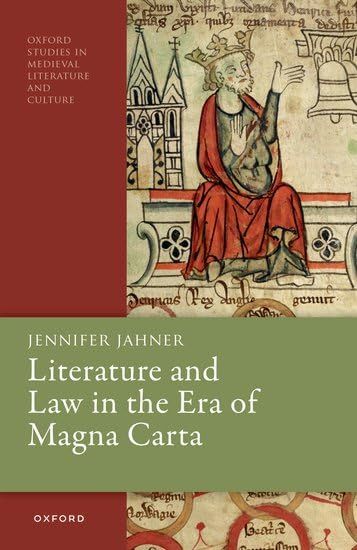
Literature and Law in the Era of Magna Carta

Literature and Law in the Era of Magna Carta

Jennifer Jahner

Oxford University Press
2024
nidottu
The monograph series Oxford Studies in Medieval Literature and Culture showcases the plurilingual and multicultural quality of medieval literature and actively seeks to promote research that not only focuses on the array of subjects medievalists now pursue in literature, theology, and philosophy, in social, political, jurisprudential, and intellectual history, the history of art, and the history of science but also that combines these subjects productively. It offers innovativeand interdisciplinary studies of every kind, including but not limited to manuscript and book history, linguistics and literature, post-colonial and global studies, the digital humanities and media studies, performance studies, the history of affect and the emotion, the theory and history of sexuality, ecocriticism and environmental studies, theories of the lyric, of aesthetics, of the practices of devotion, and ideas of medievalism. Literature and Law in the Era of Magna Carta traces processes of literary training and experimentation across the early history of the English common law, from its beginnings in the reign of Henry II to its tumultuous consolidations under the reigns of John and Henry III. The period from the mid-twelfth through the thirteenth centuries witnessed an outpouring of innovative legal writing in England, from Magna Carta to the scores of statute books that preserved its provisions. An era of civil war and imperial fracture, it also proved a time of intensive self-definition, as communities both lay and ecclesiastic used law to articulate collective identities. Literature and Law in the Era of Magna Carta uncovers the role that grammatical and rhetorical training played in shaping these arguments for legal self-definition. Beginning with the life of Archbishop Thomas Becket, the book interweaves the histories of literary pedagogy and English law, showing how foundational lessons in poetics helped generate both a language and theory of corporate autonomy. In this book, Geoffrey of Vinsauf's phenomenally popular Latin compositional handbook, the Poetria nova, finds its place against the diplomatic backdrop of the English Interdict, while Robert Grosseteste's Anglo-French devotional poem, the Château d'Amour, is situated within the landscape of property law and Jewish-Christian interactions. Exploring a shared vocabulary across legal and grammatical fields, this book argues that poetic habits of thought proved central to constructing the narratives that medieval law tells about itself and that later scholars tell about the origins of English constitutionalism.